- LOGIN
- MemberShip
- 2026-09-17 20:02:54
- Gov’t raises service fee for difficult surgeries
- by Lee, Tak-Sun | translator Kang, Shin-Kook | 2024-08-14 05:51:27

For this, the government is reviewing whether to raise the compensation level for severe surgeries and reforming the relative value system and conversion index used to calculate medical service fees.
Kyung-sil Jeong, Head of the Healthcare Reform Promotion Team at MOHW explained so at a briefing on the progress of Korea’s healthcare reform on the 13th.
"Korea's reimbursement system is based on a 'fee-for-service system' that sets a unit price for every individual act of service," Jeong said, pointing out that "among the types of services, basic medical treatment, surgery, and treatment have lower fee levels, while testing, imaging, and functional type services have higher fee levels." The system has constantly been criticized as it incentivizes more tests than serious, high-risk surgeries.
"We are promoting an overall reform to increase the compensation level in low-compensated areas and decrease the compensation level in high-compensated areas," Jeong said, adding, "First of all, we are considering raising the compensation level of about 1,000 severe surgeries, which are mainly performed at tertiary hospitals and general hospitals but have low fees." The government has established a 'Medical Cost Analysis Committee' within the Health Insurance Policy Review Committee to establish a system where medical fees can be quickly adjusted based on scientific evidence.
The committee is also looking to reform the relative value system and conversion index, which are the basis of the fee-for-service system.
"The committee has identified 6 priority areas that require concentrated investment: severe disease treatment, difficult essential medical treatment, emergency treatment, night and holiday treatment, pediatrics and childbirth, and vulnerable regions," Jeong said, adding, "In consideration of these priorities, we plan to more systemically introduce the public policy fee.” Furthermore, the government plans to transform the fee-for-service system into a "value-based payment system" to fundamentally improve the problem of how the current fee-for-service system increases the volume of procedures rather than improves the outcome of treatment.
"The current system, which applies a uniform 15% premium to the reimbursement rate for services provided at tertiary general hospitals without distinguishing between severe and mild cases, will be converted to a system in which hospitals will be rewarded more for treating severe cases and less for treating mild cases," said Jeong, adding, "To this end, we will select and apply ‘appropriate disease groups' that are suited to the functions of each medical institution." Discussions are also underway to reform the management of non-reimbursed items and indemnity insurance.
In July, the government formed a non-reimbursement and indemnity insurance subcommittee within the Specialized Committee for Essential Healthcare and Fair Compensation under the Special Committee on Healthcare Reform to discuss non-reimbursed management and indemnity insurance reform.
During subcommittee discussions, it was suggested that non-reimbursed items with obvious excessive use concerns, such as manual therapy, cataract surgery with non-reimbursed lenses, and non-valve reconstruction, should be restricted, and that a management system should be established using the current positive listing system to set standard prices for non-reimbursed items that bring concerns over excessive use based on the non-reimbursed item status monitoring result and continuously manage the items through data analysis and re-evaluation.
Regarding the reform of indemnity insurance, the role of the indemnity insurance as a complement to health insurance should be clarified and the system should be improved in line with this principle.
During subcommittee discussions, an opinion was raised that the statutory coinsurance rate of the national health insurance should be adjusted to a reasonable level to minimize some of the negative impacts of indemnity insurance on the healthcare delivery system and access to healthcare.
In particular, Jeong explained that there were suggestions that the scope of non-reimbursed coverage should be rationalized in conjunction with the government’s non-reimbursed item management measures to improve the issue of insufficient examination and follow-up due to the nature of indemnity insurance, where an agreement is made only between the insurer and the patient, and to reinforce the review and management system for proper use and supply of healthcare, "In order for the healthcare reform to succeed, we need to change the way people use healthcare, different to what they have been accustomed to," Jeong said, adding, "If you have relatively minor symptoms, please refrain from visiting emergency rooms of tertiary hospitals to make room for severe and urgent patients."
-

- 0
댓글 운영방식은
댓글은 실명게재와 익명게재 방식이 있으며, 실명은 이름과 아이디가 노출됩니다. 익명은 필명으로 등록 가능하며, 대댓글은 익명으로 등록 가능합니다.
댓글 노출방식은
댓글 명예자문위원(팜-코니언-필기모양 아이콘)으로 위촉된 데일리팜 회원의 댓글은 ‘게시판형 보기’와 ’펼쳐보기형’ 리스트에서 항상 최상단에 노출됩니다. 새로운 댓글을 올리는 일반회원은 ‘게시판형’과 ‘펼쳐보기형’ 모두 팜코니언 회원이 쓴 댓글의 하단에 실시간 노출됩니다.
댓글의 삭제 기준은
다음의 경우 사전 통보없이 삭제하고 아이디 이용정지 또는 영구 가입제한이 될 수도 있습니다.
-
저작권·인격권 등 타인의 권리를 침해하는 경우
상용 프로그램의 등록과 게재, 배포를 안내하는 게시물
타인 또는 제3자의 저작권 및 기타 권리를 침해한 내용을 담은 게시물
-
근거 없는 비방·명예를 훼손하는 게시물
특정 이용자 및 개인에 대한 인신 공격적인 내용의 글 및 직접적인 욕설이 사용된 경우
특정 지역 및 종교간의 감정대립을 조장하는 내용
사실 확인이 안된 소문을 유포 시키는 경우
욕설과 비어, 속어를 담은 내용
정당법 및 공직선거법, 관계 법령에 저촉되는 경우(선관위 요청 시 즉시 삭제)
특정 지역이나 단체를 비하하는 경우
특정인의 명예를 훼손하여 해당인이 삭제를 요청하는 경우
특정인의 개인정보(주민등록번호, 전화, 상세주소 등)를 무단으로 게시하는 경우
타인의 ID 혹은 닉네임을 도용하는 경우
-
게시판 특성상 제한되는 내용
서비스 주제와 맞지 않는 내용의 글을 게재한 경우
동일 내용의 연속 게재 및 여러 기사에 중복 게재한 경우
부분적으로 변경하여 반복 게재하는 경우도 포함
제목과 관련 없는 내용의 게시물, 제목과 본문이 무관한 경우
돈벌기 및 직·간접 상업적 목적의 내용이 포함된 게시물
게시물 읽기 유도 등을 위해 내용과 무관한 제목을 사용한 경우
-
수사기관 등의 공식적인 요청이 있는 경우
-
기타사항
각 서비스의 필요성에 따라 미리 공지한 경우
기타 법률에 저촉되는 정보 게재를 목적으로 할 경우
기타 원만한 운영을 위해 운영자가 필요하다고 판단되는 내용
-
사실 관계 확인 후 삭제
저작권자로부터 허락받지 않은 내용을 무단 게재, 복제, 배포하는 경우
타인의 초상권을 침해하거나 개인정보를 유출하는 경우
당사에 제공한 이용자의 정보가 허위인 경우 (타인의 ID, 비밀번호 도용 등)
※이상의 내용중 일부 사항에 적용될 경우 이용약관 및 관련 법률에 의해 제재를 받으실 수도 있으며, 민·형사상 처벌을 받을 수도 있습니다.
※위에 명시되지 않은 내용이더라도 불법적인 내용으로 판단되거나 데일리팜 서비스에 바람직하지 않다고 판단되는 경우는 선 조치 이후 본 관리 기준을 수정 공시하겠습니다.
※기타 문의 사항은 데일리팜 운영자에게 연락주십시오. 메일 주소는 dailypharm@dailypharm.com입니다.


-
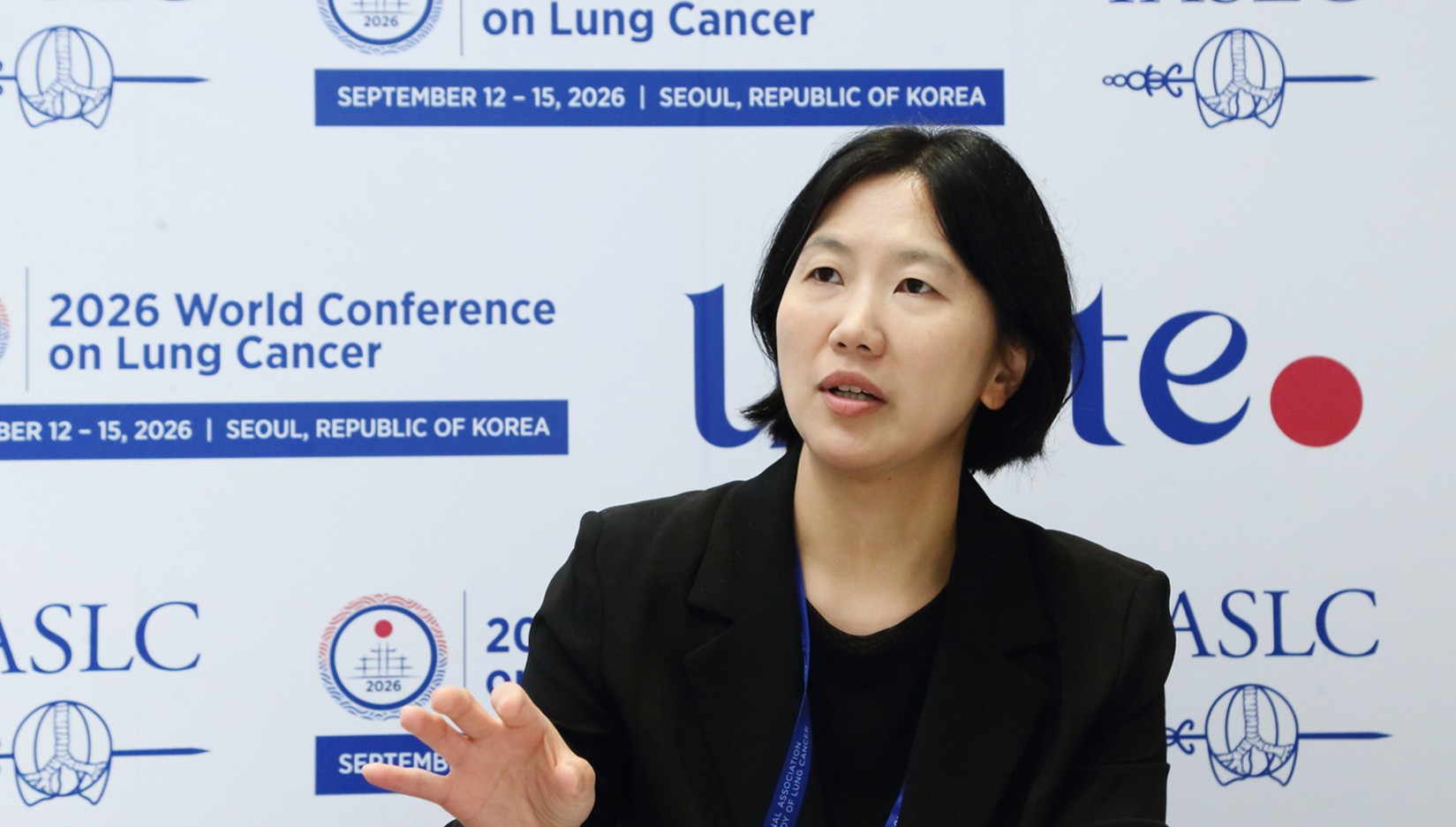
- "Leclaza, the best first-line option…expanded reimb will increase accessibility"
- PALOMA-2 recorded an objective response rate (ORR) of 90 and the 3-year overall survival (OS) rate of 70%…mOS has not yet been reached