- LOGIN
- MemberShip
- 2026-09-16 22:51:12
- 'Drug pricing reform is overdue in Korea'
- by Son, Hyung Min | translator Alice Kang | 2025-09-25 06:11:47
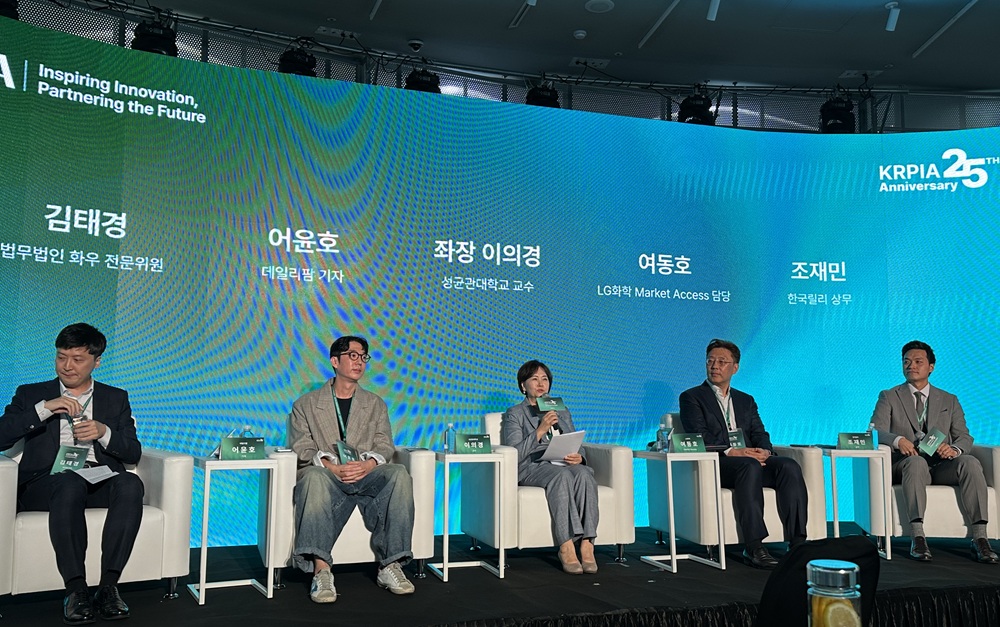
During the panel discussion held that day, experts raised the opinion that the industry and government must work together to improve patient-centered access to new drugs Concerns persist that domestic patients still face slow progress in accessing global new drugs.
Although the government has introduced system reforms such as expansion of the risk-sharing scheme and pilot projects linking regulatory approval and reimbursement evaluation, experts argue that the current incentive system for innovative drugs is still insufficient, hindering both industry growth and patient treatment opportunities.
On the 24th, the Korean Research-based Pharmaceutical Industry Association (KRPIA) held a roundtable to mark its 25th anniversary at Some Chavit in Banpo, Seoul.
During the panel discussion, domestic and international pharmaceutical experts emphasized the need to improve patient-focused access to innovative drugs, pricing systems, and value recognition structures.
Dong-ho Yeo from LG Chem, who has experience in both multinational and Korean pharmaceutical companies, stressed the importance of properly recognizing the value of innovative new drugs.
Yeo said, “Although Korean companies don’t yet have many achievements that can truly be called innovation, they are continuing development.
How the global innovative new drugs are evaluated will serve as an important signal for Korean companies as well.” “For Korean companies to move from being fast followers to first movers, innovative drugs must be appropriately valued.
It would be difficult for a domestic drug to prove competitiveness in overseas markets if its innovativeness is not even recognized in its home country.” Panelists noted that despite systems being in place, it still takes a long time before actual patients gain treatment opportunities.
They added that price negotiations and the financial savings logic often delay companies’ local launch strategies.
Jae-min Cho, Senior Director at Eli Lilly Korea, said: “It’s encouraging that the government has designated biotechnology as a strategic national industry.
However, the conservative value assessment practices of innovation hinder access for patients.” Cho pointed to ▲ Conservative evaluations that focus on price cuts rather than value recognition; ▲ Short evaluation periods (5–10 years) that fail to reflect long-term drug value; and ▲ even groundbreaking drugs developed after decades are often compared against the cost of outdated, low-priced drugs, as main challenges that hinder “Social consensus is needed on setting appropriate weighting factors and premiums that meet the Korean context.
Only through continuous institutional improvements by the government, academia, and industry can we simultaneously achieve patient accessibility and industrial innovation.”
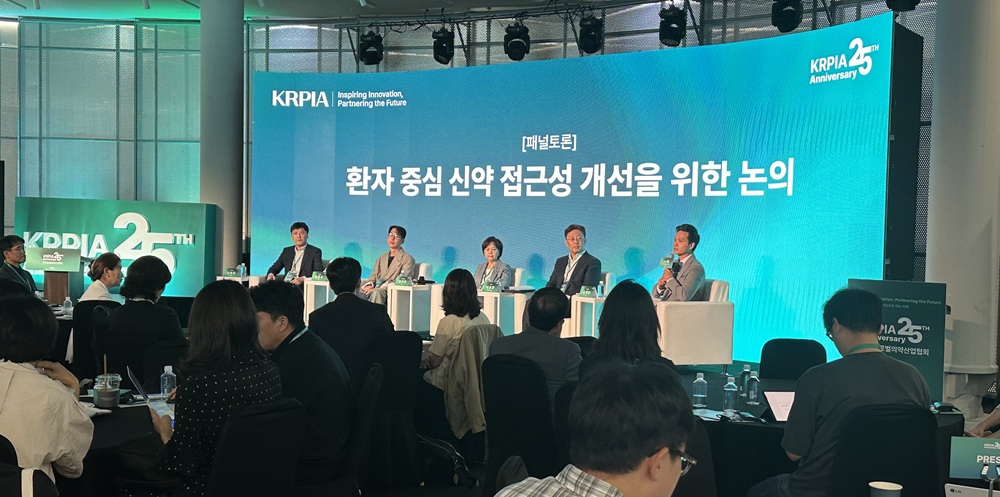
industry bears responsibility too” Responsibility within the industry itself was mentioned, alongside systemic limitations.
Calls continued for the pharmaceutical industry to prioritize patient access as its foremost value.
Dailypharm journalist Yoon-ho Eo remarked, “While the government and industry engage in reimbursement battles, many drugs are being pushed out of the priority list and disappearing.
As a result, patients are losing timely access to essential medicines.” He added, “Companies tend to concentrate reimbursement strategies only on flagship products.
Alongside government efforts, the industry must itself prioritize expanding patient access.” Specific improvement tasks were also proposed.
Tae-Kyung Kim, a specialist at Yoon&Yang criticized the practice of cost-effectiveness-centric evaluations and stressed the need for new approaches.
Kim noted, “It's a positive change that various values beyond cost-effectiveness are now reflected in evaluations, leading to higher reimbursement rates for new drugs that would have struggled to gain listing in the past.
However, in practice, rather than recognizing the value of new drugs, the structure has solidified into one where the government reduces uncertainty through risk-sharing agreements (RSAs).” “The transfer of uncertainty via risk-sharing agreements is effectively resulting in ‘self-pay by pharmaceutical companies.
Health technology assessments must become more flexible to reflect realistic real-world treatment patterns.” Moderator Eui-Kyung Lee, Professor at Sungkyunkwan University’s College of Pharmacy, said, “Post-COVID-19, two values—patient safety and speed—have simultaneously come to the fore.
It is essential to find a balance between health insurance finances, timeliness, and safety, while adopting a more multi-dimensional and flexible approach for evaluating the value of innovative medicines.”
-

- 0
댓글 운영방식은
댓글은 실명게재와 익명게재 방식이 있으며, 실명은 이름과 아이디가 노출됩니다. 익명은 필명으로 등록 가능하며, 대댓글은 익명으로 등록 가능합니다.
댓글 노출방식은
댓글 명예자문위원(팜-코니언-필기모양 아이콘)으로 위촉된 데일리팜 회원의 댓글은 ‘게시판형 보기’와 ’펼쳐보기형’ 리스트에서 항상 최상단에 노출됩니다. 새로운 댓글을 올리는 일반회원은 ‘게시판형’과 ‘펼쳐보기형’ 모두 팜코니언 회원이 쓴 댓글의 하단에 실시간 노출됩니다.
댓글의 삭제 기준은
다음의 경우 사전 통보없이 삭제하고 아이디 이용정지 또는 영구 가입제한이 될 수도 있습니다.
-
저작권·인격권 등 타인의 권리를 침해하는 경우
상용 프로그램의 등록과 게재, 배포를 안내하는 게시물
타인 또는 제3자의 저작권 및 기타 권리를 침해한 내용을 담은 게시물
-
근거 없는 비방·명예를 훼손하는 게시물
특정 이용자 및 개인에 대한 인신 공격적인 내용의 글 및 직접적인 욕설이 사용된 경우
특정 지역 및 종교간의 감정대립을 조장하는 내용
사실 확인이 안된 소문을 유포 시키는 경우
욕설과 비어, 속어를 담은 내용
정당법 및 공직선거법, 관계 법령에 저촉되는 경우(선관위 요청 시 즉시 삭제)
특정 지역이나 단체를 비하하는 경우
특정인의 명예를 훼손하여 해당인이 삭제를 요청하는 경우
특정인의 개인정보(주민등록번호, 전화, 상세주소 등)를 무단으로 게시하는 경우
타인의 ID 혹은 닉네임을 도용하는 경우
-
게시판 특성상 제한되는 내용
서비스 주제와 맞지 않는 내용의 글을 게재한 경우
동일 내용의 연속 게재 및 여러 기사에 중복 게재한 경우
부분적으로 변경하여 반복 게재하는 경우도 포함
제목과 관련 없는 내용의 게시물, 제목과 본문이 무관한 경우
돈벌기 및 직·간접 상업적 목적의 내용이 포함된 게시물
게시물 읽기 유도 등을 위해 내용과 무관한 제목을 사용한 경우
-
수사기관 등의 공식적인 요청이 있는 경우
-
기타사항
각 서비스의 필요성에 따라 미리 공지한 경우
기타 법률에 저촉되는 정보 게재를 목적으로 할 경우
기타 원만한 운영을 위해 운영자가 필요하다고 판단되는 내용
-
사실 관계 확인 후 삭제
저작권자로부터 허락받지 않은 내용을 무단 게재, 복제, 배포하는 경우
타인의 초상권을 침해하거나 개인정보를 유출하는 경우
당사에 제공한 이용자의 정보가 허위인 경우 (타인의 ID, 비밀번호 도용 등)
※이상의 내용중 일부 사항에 적용될 경우 이용약관 및 관련 법률에 의해 제재를 받으실 수도 있으며, 민·형사상 처벌을 받을 수도 있습니다.
※위에 명시되지 않은 내용이더라도 불법적인 내용으로 판단되거나 데일리팜 서비스에 바람직하지 않다고 판단되는 경우는 선 조치 이후 본 관리 기준을 수정 공시하겠습니다.
※기타 문의 사항은 데일리팜 운영자에게 연락주십시오. 메일 주소는 dailypharm@dailypharm.com입니다.