- LOGIN
- MemberShip
- 2026-09-17 11:05:06
- Anticipation for the survival-extending effects of Fruzaqla
- by Hwang, byoung woo | translator Hong, Ji Yeon | 2025-09-12 06:18:43
A new option has emerged for fourth-line metastatic colorectal cancer (CRC) treatment.
Previously, there were no more drugs available to use, increasing expectations in clinical practice.
In Korea, the survival-extending effect of Fruzaqla (fruquintinib) is evaluated as a potential solution to the unmet needs of CRC patients.
The number of patients with CRC is rapidly increasing, making it the number one cancer in Korea, excluding thyroid cancer.
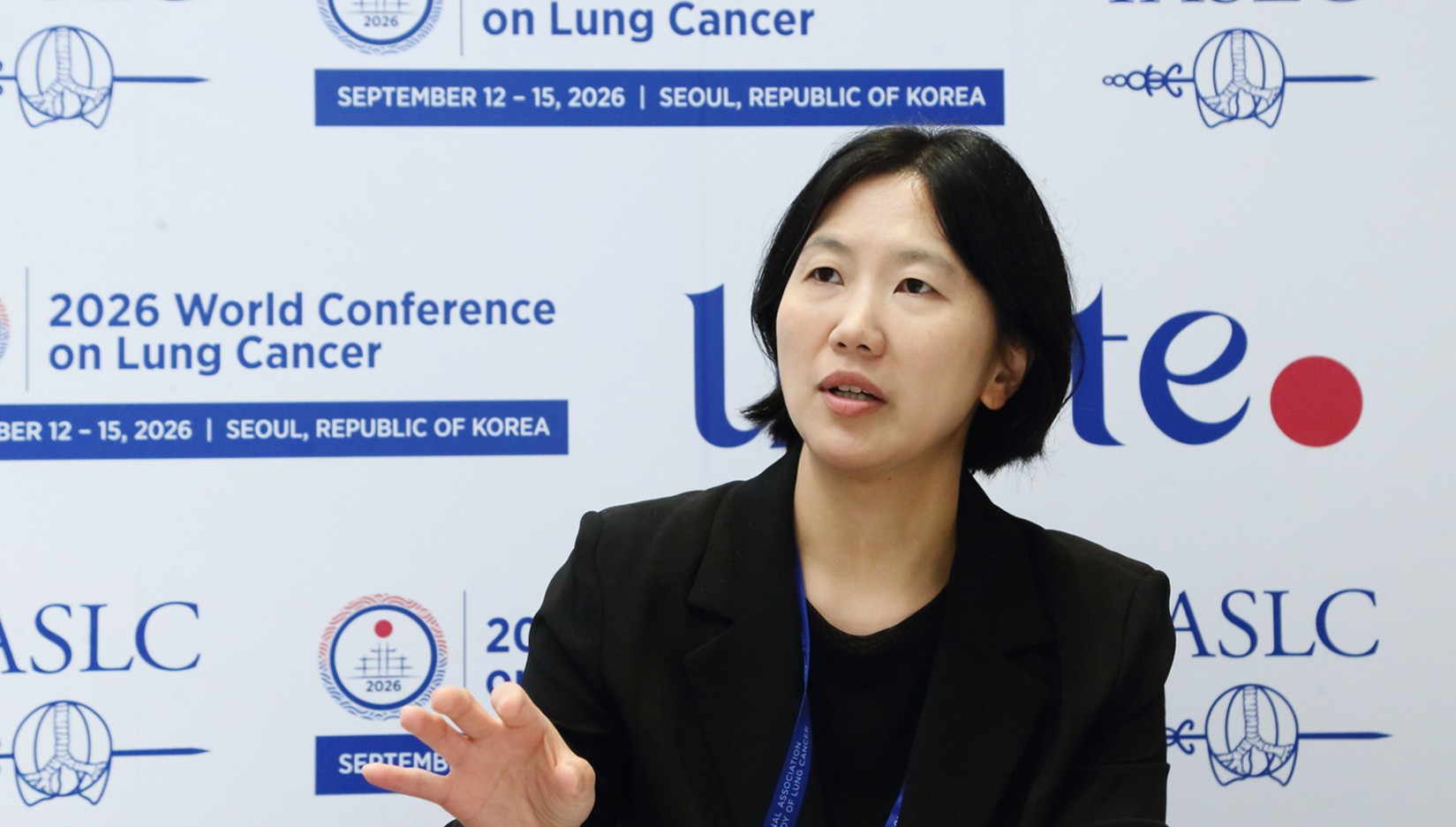
DailyPharm met with Professor Jin Won Kim of Seoul National University Bundang Hospital's Division of Hematology and Medical Oncology and Professor Dirk Arnold of Asklepios Tumorzentrum Hamburg's Division of Hematology and Oncology to discuss Fruzaqla's potential as a standard of care for fourth-line treatment.
Young patients with colorectal cancer surging...20% still diagnosed at stage 4 Approximately 20% of colorectal cancer patients are first diagnosed at the metastatic Stage 4, and even half of those diagnosed with early localized disease develop distant metastasis during treatment.
While the 5-year survival rate drops to about 20% when metastasis occurs, there were virtually no treatment options available after the third line, leading to high unmet needs for patients.

In later lines, such as the third line and beyond, effective drugs are rare, and development is slow.
Professor Arnold said, "In the typically-defined first- and second-line treatments, anti-VEGF or anti-EGFR monoclonal antibodies are used in combination with chemotherapy based on fluoropyrimidine, oxaliplatin, and irinotecan." He added, "In later lines, maintaining quality of life becomes the main goal.
Third-line and later treatments require a balanced approach that simultaneously considers both prognosis improvement (life extension) and maintaining quality of life." According to Professor Kim, chemotherapy is the key treatment for Stage 4 colorectal cancer.
If the diseases are concentrated in a localized area, such as a liver-only metastasis, surgery is attempted after chemotherapy to reduce tumor size, or surgery is performed immediately depending on the situation.
Professor Kim said, "The pace of new drug development for colorectal cancer is very slow compared to other cancer types, and options remain limited, with treatments used 10 years ago still holding a major position," and added, "Colorectal cancer patients can survive for a little over two years with basic treatment alone, which makes it difficult to prove a 'definite improvement' over existing therapies, often leading to clinical trial failures." He pointed out that various pharmaceutical companies were reluctant to develop fourth-line treatments for colorectal cancer because profits are uncertain.
As a result, the launch of new drugs has been slow compared to other cancer types, forcing patients to continue treatment with drugs that have been in use for over 10 years.
Professor Kim also said, "The first and second-line treatments are well-covered by insurance in Korea.
However, third-line and beyond have limited coverage, which significantly reduces treatment options." He added, "Because of this, treatment options decrease, and drug efficacy tends to diminish as the treatment line advances." VEGFR-targeting Fruzaqla effective after anti-VEGF treatment Takeda Pharmaceutical Korea's oral targeted anti-cancer drug, Fruzaqla, is expected to shed light on the fourth-line treatment landscape for metastatic colorectal cancer in Korea.
Fruzaqla is a tyrosine kinase inhibitor (TKI) that selectively inhibits vascular endothelial growth factor receptors (VEGFR) 1, 2, and 3, which are essential for tumor angiogenesis.
Notably, this drug demonstrated effectiveness even in patients who have become resistant to prior anti-VEGF treatment.

It has been reported to be effective even in patients who have failed prior anti-VEGF treatment." In other words, this drug maximizes drug exposure while minimizing toxicity by precisely targeting only the VEGF pathway and not attacking unnecessary targets.
Professor Arnold explained that in real-world clinical settings, a survival-prolonging effect was confirmed with Fruzaqla administration even in a patient group that had already received various anti-VEGF drugs.
The efficacy and safety of Fruzaqla were proven in the large-scale global Phase 3 FRESCO-2 study.
This randomized controlled trial included 691 metastatic colorectal cancer patients who had received treatments such as trifluridine/tipiracil (TAS-102) or regorafenib after failing standard therapy.
Professor Arnold said, "Even in some patients who had received both TAS-102 and regorafenib, Fruzaqla's effect was at a level almost identical to the original study." He added, "This is a very encouraging result that shows Fruzaqla provides patients with a consistent and robust therapeutic effect." Professor Kim also commented, "Fourth-line treatment refers to treatment administered after all existing treatments have been used.
Considering this, Fruzaqla is noteworthy for showing a significant therapeutic effect in a patient group with no other alternatives." Non-reimbursed status·reimbursement listing present challenges...advantage of oral formulation gains attention Meanwhile, Fruzaqla as an oral formulation is considered a major advantage in terms of patient convenience.
Professor Kim said, "Most colorectal cancer patients have no difficulty with oral intake, and oral drugs can be more effective and convenient for colorectal cancer patients compared to gastric cancer or other cancer types." In Korea, Fruzaqla was officially launched in June after receiving approval from the MFDS in March, but it has not yet been approved for insurance reimbursement.
Currently, drugs for third-line and later stages of colorectal cancer are not covered by insurance due to concerns about their cost-effectiveness relative to efficacy, resulting in a high burden on patients.
Professor Kim emphasized, "While there are a few drugs that can be used for third-line and later treatments for colorectal cancer, none of them are covered by insurance," and added, "If a new drug comes out and helps patients, we believe it should definitely be covered by insurance." However, since the requirement for a health-economic evaluation for reimbursement listing is high, it appears that Fruzaqla will also need to undergo subsequent procedures to be included in the reimbursement list, just like other non-reimbursed drugs.
Finally, the experts shared the opinion that it is most important not to give up on treatment for metastatic colorectal cancer.
Professor Kim said, "Colorectal cancer is not a disease that can be completely resolved at once.
Continuously pursuing treatment and using every drug available is key to prolonging a patient's survival," and added, "It is important not to give up even during difficult times in the treatment process and to continue with it."
-

- 0
댓글 운영방식은
댓글은 실명게재와 익명게재 방식이 있으며, 실명은 이름과 아이디가 노출됩니다. 익명은 필명으로 등록 가능하며, 대댓글은 익명으로 등록 가능합니다.
댓글 노출방식은
댓글 명예자문위원(팜-코니언-필기모양 아이콘)으로 위촉된 데일리팜 회원의 댓글은 ‘게시판형 보기’와 ’펼쳐보기형’ 리스트에서 항상 최상단에 노출됩니다. 새로운 댓글을 올리는 일반회원은 ‘게시판형’과 ‘펼쳐보기형’ 모두 팜코니언 회원이 쓴 댓글의 하단에 실시간 노출됩니다.
댓글의 삭제 기준은
다음의 경우 사전 통보없이 삭제하고 아이디 이용정지 또는 영구 가입제한이 될 수도 있습니다.
-
저작권·인격권 등 타인의 권리를 침해하는 경우
상용 프로그램의 등록과 게재, 배포를 안내하는 게시물
타인 또는 제3자의 저작권 및 기타 권리를 침해한 내용을 담은 게시물
-
근거 없는 비방·명예를 훼손하는 게시물
특정 이용자 및 개인에 대한 인신 공격적인 내용의 글 및 직접적인 욕설이 사용된 경우
특정 지역 및 종교간의 감정대립을 조장하는 내용
사실 확인이 안된 소문을 유포 시키는 경우
욕설과 비어, 속어를 담은 내용
정당법 및 공직선거법, 관계 법령에 저촉되는 경우(선관위 요청 시 즉시 삭제)
특정 지역이나 단체를 비하하는 경우
특정인의 명예를 훼손하여 해당인이 삭제를 요청하는 경우
특정인의 개인정보(주민등록번호, 전화, 상세주소 등)를 무단으로 게시하는 경우
타인의 ID 혹은 닉네임을 도용하는 경우
-
게시판 특성상 제한되는 내용
서비스 주제와 맞지 않는 내용의 글을 게재한 경우
동일 내용의 연속 게재 및 여러 기사에 중복 게재한 경우
부분적으로 변경하여 반복 게재하는 경우도 포함
제목과 관련 없는 내용의 게시물, 제목과 본문이 무관한 경우
돈벌기 및 직·간접 상업적 목적의 내용이 포함된 게시물
게시물 읽기 유도 등을 위해 내용과 무관한 제목을 사용한 경우
-
수사기관 등의 공식적인 요청이 있는 경우
-
기타사항
각 서비스의 필요성에 따라 미리 공지한 경우
기타 법률에 저촉되는 정보 게재를 목적으로 할 경우
기타 원만한 운영을 위해 운영자가 필요하다고 판단되는 내용
-
사실 관계 확인 후 삭제
저작권자로부터 허락받지 않은 내용을 무단 게재, 복제, 배포하는 경우
타인의 초상권을 침해하거나 개인정보를 유출하는 경우
당사에 제공한 이용자의 정보가 허위인 경우 (타인의 ID, 비밀번호 도용 등)
※이상의 내용중 일부 사항에 적용될 경우 이용약관 및 관련 법률에 의해 제재를 받으실 수도 있으며, 민·형사상 처벌을 받을 수도 있습니다.
※위에 명시되지 않은 내용이더라도 불법적인 내용으로 판단되거나 데일리팜 서비스에 바람직하지 않다고 판단되는 경우는 선 조치 이후 본 관리 기준을 수정 공시하겠습니다.
※기타 문의 사항은 데일리팜 운영자에게 연락주십시오. 메일 주소는 dailypharm@dailypharm.com입니다.


-
- "Leclaza, the best first-line option…expanded reimb will increase accessibility"
- PALOMA-2 recorded an objective response rate (ORR) of 90 and the 3-year overall survival (OS) rate of 70%…mOS has not yet been reached