- LOGIN
- MemberShip
- 2026-09-18 14:17:27
- "200-day extension for the CMV preemptive therapy Prevymis"
- by Whang, byung-woo | translator Hong, Ji Yeon | 2025-08-28 06:10:56
Prevymis (letermovir), a treatment for preventing cytomegalovirus (CMV) infection in allogeneic hematopoietic stem cell transplant patients, is bringing in another paradigm shift as it has entered the '200-day extension criteria.' This drug's influence is expected to grow as the National Health Insurance (NHI) coverage period has been extended from the previous 100 days post-transplant to 200 days.
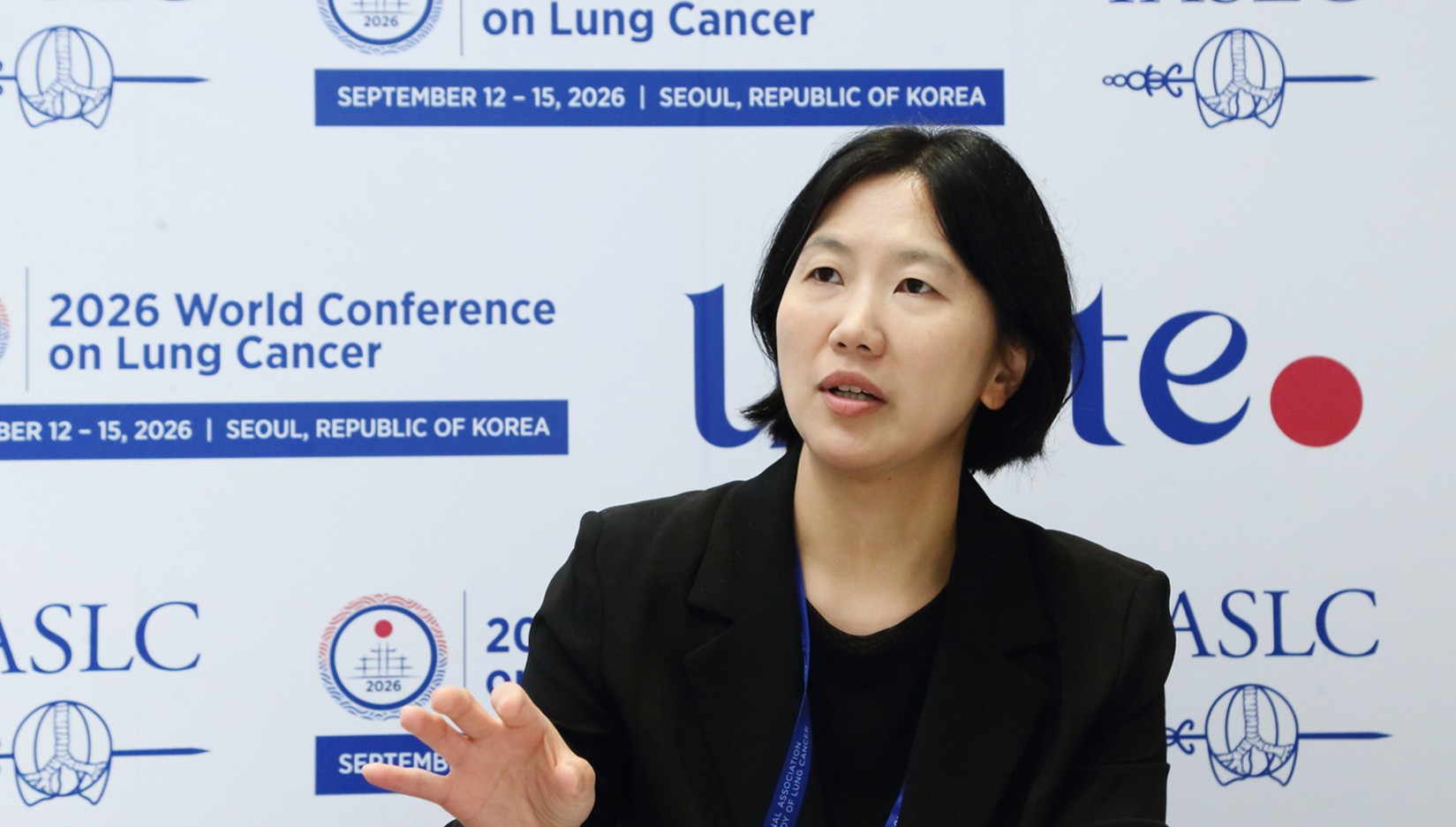
DailyPharm met with Professor Dong-Gun Lee of Seoul St.
Mary's Hospital's Division of Infectious Diseases (President of the Korean Society of Infectious Diseases) to discuss the significance of Prevymis's reimbursement and future challenges.
The launch of Prevymis has brought a paradigm shift in infection management

MaryCMV is a type of herpesvirus that lies dormant in the human body.
Although it's common enough that 95% of Korean adults are seropositive for its antibodies, it is one of the most fatal infections for patients with weakened immunity due to hematopoietic stem cell transplantation or other factors.
Notably, CMV is reactivated in about two-thirds of patients within the first three to four months post-transplant.
This can lead to serious complications such as pneumonia, gastroenteritis, retinitis, myelitis, and myelosuppression, and in some cases, can result in death.
Prevymis was approved by the Ministry of Food and Drug Safety (MFDS) in 2018 and approved for reimbursement in Korea in September of the same year.
It is regarded as leading a paradigm shift from a preemptive therapy, defined as administering antiviral drugs to prevent infection, to a preventive therapy using Prevymis.
Professor Lee explained, "Typically, in 5 out of 10 allogeneic hematopoietic stem cell transplant patients, CMV is reactivated, and they endure lengthy anti-cancer treatments of up to 9 months and multiple hospitalizations before transplantation." He added, "Among existing antivirals, ganciclovir is an intravenous injection, requiring re-hospitalization for administration.
Even with the oral valganciclovir, severe side effects like leukopenia often made it difficult to avoid hospitalization." In this context, Professor Lee explained, Prevymis, which is available in both injectable and oral formulations and has a low toxicity burden, made it possible to continue preventive treatment without hospitalizing the patient.
It is particularly praised for its significant role in improving patient survival rates and treatment success rates by reducing the CMV reactivation rate to less than one-third of what it was, thereby significantly delaying the occurrence of CMV disease and the associated risk of death.
According to Professor Lee, when Prevymis was administered preventively, the reactivation rate within 100 days was lowered to about 5-6% in a U.S.
clinical trial, and it was confirmed to be around 12-13% in data from Seoul St.
Mary's Hospital.
Professor Lee stated, "If acute graft-versus-host disease (GVHD) occurs within approximately 100 days post-transplant, the patient's immune function is compromised, not only leading to CMV reactivation but also increasing the risk of other infections." He added, "If CMV is prevented during this period with Prevymis, the occurrence of CMV infection and related complications can be reduced." Extended Prevymis Administration Shows Clear Efficacy, Prevents CMV Reactivation There were also limitations to the 100-day prevention regimen with Prevymis.
While the CMV reactivation rate decreased from the previous 50% to approximately 11-12% when Prevymis was administered for up to 100 days, the reactivation rate rose again once the drug was discontinued.
Data from Seoul St.
Mary's Hospital showed that approximately one-third of patients experienced CMV reactivation between 100 and 200 days after completing the 100-day prevention regimen.
This means that since immunosuppression persists for up to six months post-transplant, and the risk of other viral or fungal infections remains high, patients can be exposed to various infection risks if there is a gap in preventive medication.
Professor Lee emphasized, "Extending the administration period to 200 days lowers the reactivation rate that occurs after 100 days to about 11%." He added, "This means that depending on how long Prevymis is administered, the timing of CMV reactivation can be delayed accordingly." Based on this, the criteria for Prevymis reimbursement were expanded from 100 days to 200 days, effective June 1.
Reimbursement is limited to high-risk adult patients who are CMV seropositive after allogeneic hematopoietic stem cell transplantation.
Professor Lee stated, "High-risk groups include patients with GVHD or those who received high-intensity conditioning regimens, and these are the patients eligible for the 200-day extended administration." He added, "In fact, more than 7-8 out of 10 hematopoietic stem cell transplant patients at Seoul St.
Mary's Hospital fall into the high-risk group, and most of them receive extended Prevymis administration for up to 200 days." In a pivotal Phase 3 study, which served as the basis for Prevymis's expanded reimbursement, the patient group that continued the prevention regimen for up to 200 days showed a 16.1% lower incidence of CMV infection compared to the placebo group.
It also demonstrated a safety profile comparable to that of the placebo group during long-term administration.
Professor Lee emphasized, "During the recovery period, when immunity is compromised, there is a high risk of co-infections with other infectious diseases (respiratory viruses, other bacteria or viruses, and fungal infections) in addition to CMV.
Extending Prevymis administration to 200 days to prevent CMV reactivation until the immune system recovers can also contribute to reducing the possibility of co-infections." Despite expanded reimbursement criteria, unmet needs remain However, challenges still exist.
According to the reimbursement criteria, extended administration beyond 200 days is not possible for patients who are not classified as high-risk.
In clinical practice, the high-risk status is meticulously evaluated around the 100-day mark to decide whether to extend the administration.
The problem arises in cases where patients are not high-risk at 100 days and stop taking the drug, only to see their risk increase later due to GVHD or other factors.
Professor Lee pointed out that under the current criteria, Prevymis cannot be re-administered to the same patient once it has been stopped.
This results in an unmet need, as patients who require ongoing treatment are unable to receive it.
He stated, "Although continued administration would be clinically beneficial, there are actual cases where we cannot use Prevymis due to concerns about reimbursement cuts," and added, "Ultimately, these patients are exposed to the risk of CMV reactivation when their immunity is suppressed." Overseas, there are reports of re-administering Prevymis within 200 days after a temporary treatment with other drugs.
However, Professor Lee advised that this is not easy in Korea due to concerns about reimbursement cuts, necessitating additional institutional improvements.
Finally, as President of the Korean Society of Infectious Diseases, Professor Lee emphasized the need for a change in the public perception of preemptive or preventive drug administration for infectious diseases, which is often viewed as drug misuse or abuse.
Professor Lee explained, "For patient groups with severely compromised immunity, such as transplant or cancer patients, treating the disease after it has occurred is too late and dangerous," and added, "Preventive treatment for diseases with a high risk of onset is a matter of life and death for patients." Professor Lee added, "Perceiving this as drug misuse overlooks the characteristics of infectious diseases and the reality of high-risk patients.
Given that a significant portion of antibiotic misuse is in non-medical areas like livestock farming, we need to adjust the perception that attributes the cause of antibiotic resistance solely to doctors' misuse."
-

- 0
댓글 운영방식은
댓글은 실명게재와 익명게재 방식이 있으며, 실명은 이름과 아이디가 노출됩니다. 익명은 필명으로 등록 가능하며, 대댓글은 익명으로 등록 가능합니다.
댓글 노출방식은
댓글 명예자문위원(팜-코니언-필기모양 아이콘)으로 위촉된 데일리팜 회원의 댓글은 ‘게시판형 보기’와 ’펼쳐보기형’ 리스트에서 항상 최상단에 노출됩니다. 새로운 댓글을 올리는 일반회원은 ‘게시판형’과 ‘펼쳐보기형’ 모두 팜코니언 회원이 쓴 댓글의 하단에 실시간 노출됩니다.
댓글의 삭제 기준은
다음의 경우 사전 통보없이 삭제하고 아이디 이용정지 또는 영구 가입제한이 될 수도 있습니다.
-
저작권·인격권 등 타인의 권리를 침해하는 경우
상용 프로그램의 등록과 게재, 배포를 안내하는 게시물
타인 또는 제3자의 저작권 및 기타 권리를 침해한 내용을 담은 게시물
-
근거 없는 비방·명예를 훼손하는 게시물
특정 이용자 및 개인에 대한 인신 공격적인 내용의 글 및 직접적인 욕설이 사용된 경우
특정 지역 및 종교간의 감정대립을 조장하는 내용
사실 확인이 안된 소문을 유포 시키는 경우
욕설과 비어, 속어를 담은 내용
정당법 및 공직선거법, 관계 법령에 저촉되는 경우(선관위 요청 시 즉시 삭제)
특정 지역이나 단체를 비하하는 경우
특정인의 명예를 훼손하여 해당인이 삭제를 요청하는 경우
특정인의 개인정보(주민등록번호, 전화, 상세주소 등)를 무단으로 게시하는 경우
타인의 ID 혹은 닉네임을 도용하는 경우
-
게시판 특성상 제한되는 내용
서비스 주제와 맞지 않는 내용의 글을 게재한 경우
동일 내용의 연속 게재 및 여러 기사에 중복 게재한 경우
부분적으로 변경하여 반복 게재하는 경우도 포함
제목과 관련 없는 내용의 게시물, 제목과 본문이 무관한 경우
돈벌기 및 직·간접 상업적 목적의 내용이 포함된 게시물
게시물 읽기 유도 등을 위해 내용과 무관한 제목을 사용한 경우
-
수사기관 등의 공식적인 요청이 있는 경우
-
기타사항
각 서비스의 필요성에 따라 미리 공지한 경우
기타 법률에 저촉되는 정보 게재를 목적으로 할 경우
기타 원만한 운영을 위해 운영자가 필요하다고 판단되는 내용
-
사실 관계 확인 후 삭제
저작권자로부터 허락받지 않은 내용을 무단 게재, 복제, 배포하는 경우
타인의 초상권을 침해하거나 개인정보를 유출하는 경우
당사에 제공한 이용자의 정보가 허위인 경우 (타인의 ID, 비밀번호 도용 등)
※이상의 내용중 일부 사항에 적용될 경우 이용약관 및 관련 법률에 의해 제재를 받으실 수도 있으며, 민·형사상 처벌을 받을 수도 있습니다.
※위에 명시되지 않은 내용이더라도 불법적인 내용으로 판단되거나 데일리팜 서비스에 바람직하지 않다고 판단되는 경우는 선 조치 이후 본 관리 기준을 수정 공시하겠습니다.
※기타 문의 사항은 데일리팜 운영자에게 연락주십시오. 메일 주소는 dailypharm@dailypharm.com입니다.