- LOGIN
- MemberShip
- 2026-09-18 20:15:28
- "A paradigm shift in ulcerative colitis treatment"
- by Whang, byung-woo | translator Hong, Ji Yeon | 2025-07-29 06:04:43
The treatment strategy for ulcerative colitis is rapidly evolving with the emergence of new global drugs.
Global guidelines recommend a rapid transition to advanced therapies (ATs) early on if 5-ASA treatment fails.
In line with these recommendations, Korea also needs a shift in its treatment paradigm.
However, the early utilization of high-efficacy treatments is limited due to factors such as insurance reimbursement criteria.
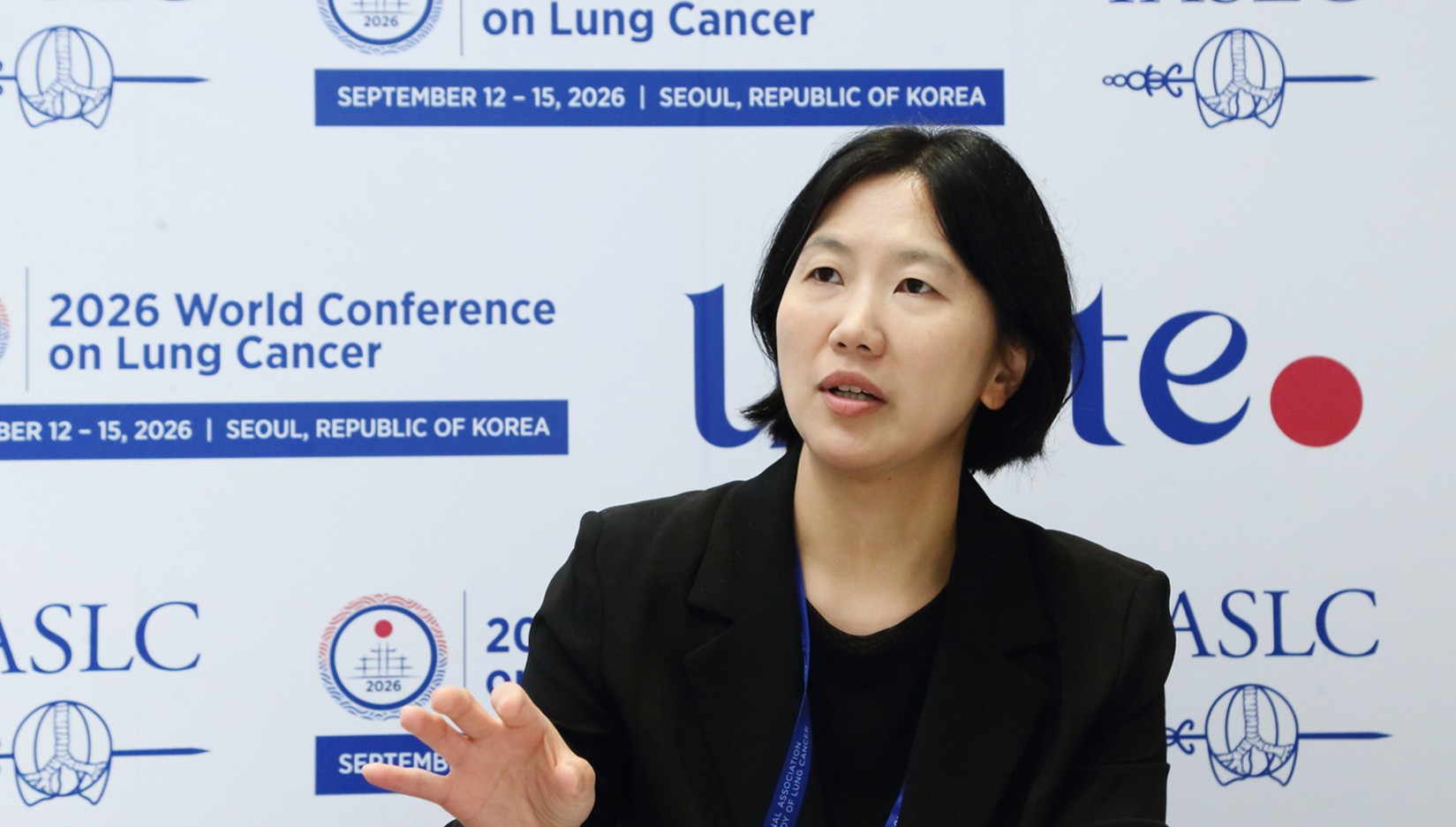
In a meeting with DailyPharm, Professor Sang-Bum Kang of Daejeon St.
Mary's Hospital (Chairman of the Korean Association for the Study of Intestinal Diseases' Insurance Committee) emphasized the need for re-establishing ulcerative colitis treatment standards and improving the reimbursement system.
Ulcerative Colitis Treatment Paradigm Shifting from 'Sequential Therapy' to 'Treat-to-Target' Approach Ulcerative colitis is a chronic inflammatory disease of unknown cause that primarily affects the large intestine, potentially spreading inflammation from the rectum upwards.

MaryNotably, uncontrolled ulcerative colitis can be associated with an increased risk of colectomy and hospitalization.
Therefore, in moderate and severe cases, strategies involving the early use of treatment options, such as biologics or small-molecule drugs, are being considered to achieve remission.
Professor Kang explained, "Ulcerative colitis symptoms have a vast spectrum, and the course of the disease, including the extent of inflammation and disease activity, can continuously change, making it difficult to determine a patient's condition with fragmented numerical values definitively." According to Professor Kang, ulcerative colitis treatment usually begins with 5-ASA agents.
However, if a patient has high severity at the time of diagnosis and multiple risk factors, it is a principle to use Advanced Therapy (AT) from the early stage.
In this process, Professor Kang emphasizes a personalized treatment strategy tailored to the patient's specific condition.
Previously, a 'step-up' approach was typical, where patients who did not respond to conventional treatments, such as 5-ASA, would progressively move to steroids, immunosuppressants, and then ATs.
However, recently, the standard has shifted to 'Treat-to-Target (T2T),' which involves setting clear treatment goals from the beginning and pursuing aggressive treatment accordingly.
Professor Kang explained, "The current ultimate goal of ulcerative colitis treatment is 'mucosal healing,' confirmed endoscopically.
Patients who achieve mucosal healing have a lower risk of relapse and can expect a good long-term prognosis.
Therefore, rapid achievement of mucosal healing and maintenance of a relapse-free remission state are key indicators of treatment success." The problem is that conventional drugs alone have limitations in achieving mucosal healing.
In contrast, ATs are considered core options in ulcerative colitis treatment due to their higher mucosal healing rates and better response and maintenance effects in mucosal healing.
Indeed, the American Gastroenterological Association (AGA) also, in its latest guideline revision, recommended the early use of proven high-efficacy treatments rather than dose escalation if 5-ASA treatment fails, explicitly naming Zeposia, an S1P modulator, as one of the high-efficacy treatment options.
"Paradigm shift in ulcerative colitis treatment, potential for oral therapy zeposia" Based on this evidence, Professor Kang emphasized the importance of the initial treatment strategy.
He stated, "Realistically, it's not possible to try every treatment sequentially, and it's meaningless to look back after failing the first treatment and think 'what if I had used something else first'." He stressed, "Above all, it's crucial to make an accurate judgment in initial treatment to select the optimal drug and achieve maximum effect." Some reports indicate that 70-80% of all ulcerative colitis patients can achieve symptom control with first-line treatment alone, suggesting the need for a strategy that deploys the best "weapon" tailored to the patient's characteristics.
During the treatment paradigm shift, the once-daily oral new drug Zeposia (ozanimod) is also gaining attention as a new alternative for ulcerative colitis treatment.
Zeposia is a sphingosine 1-phosphate (S1P) receptor modulator, featuring an innovative mechanism that inhibits inflammation by blocking the migration pathways of inflammatory immune cells.
Professor Kang stated, "Zeposia is expected to be effective when used as a first-line treatment for moderate ulcerative colitis patients who have failed conventional therapies like 5-ASA agents." He added, "This efficacy was proven in Zeposia's Phase 3 clinical trials, and consistent results have been confirmed in long-term follow-up and real-world data." Professor Kang also shared an experience where a patient who had previously used biologics but showed insufficient efficacy was switched to Zeposia, and their prognosis significantly improved within 8 weeks.
He also said, "Among various AT options, Zeposia is evaluated as a less burdensome drug that can be used long-term.
When considering treatment effects, patients who are typically young and actively engaged in socioeconomic activities are suitable for Zeposia treatment." "Diversified ulcerative colitis treatment options require reimbursement system support" While the emergence of new drugs like Zeposia has further diversified treatment options for ulcerative colitis, there's a growing call for the insurance reimbursement environment to support their practical utilization.
Regarding this, Professor Kang pointed out, "In Korea, reimbursement is only approved for ATs if patients have tried steroids or immunosuppressants and shown no effect or experienced side effects," and added, "The currently applied reimbursement criteria were established 20 years ago, creating a significant disparity from both the latest treatment trends and clinical reality." Currently, domestic reimbursement criteria stipulate that patients must score 6 points or more out of 12 on the Mayo Scoring System for Assessment of Ulcerative Colitis Activity.
However, experts evaluate that some assessment indicators, such as stool frequency and the presence of bloody stools, rely heavily on patient statements and exhibit significant variations in physician assessment, resulting in a lack of objectivity.
Professor Kang emphasized, "Ulcerative colitis, an unpredictable, intractable disease, requires flexible treatment access.
However, due to rigid reimbursement conditions, the latest treatments cannot be utilized appropriately." He stressed, "While it's impossible to accommodate all demands with limited finances, reimbursement criteria must be adjusted to match current clinical standard so that severe patients can receive high-efficacy treatment on time." In line with these demands, the Korean Association for the Study of Intestinal Diseases is working on a revision of its ulcerative colitis treatment guidelines to reflect the evolving treatment landscape.
Professor Kang stated, "We have formed a TF team within the association and are working on new guidelines." He added, "We plan to prepare more practical treatment guidelines by differentiating recommendation grades and evidence levels, similar to the AGA." He explained that they are particularly considering factors like the national health insurance reimbursement system to tailor the recommendations to the Korean context.
Professor Kang said, "It has already been 5 years since the ulcerative colitis guidelines were released, and during that time, various new drugs have emerged, significantly changing the treatment environment.
I believe now is the opportune time to re-establish treatment standards and push for improvements in the reimbursement system." Finally, Professor Kang said, "In the future, research on personalized treatment should be strengthened, selecting the optimal treatment for each patient based on biomarkers such as intestinal microbes or genetic information." He concluded, "We plan to strive not only for the introduction of the latest treatments but also for the advancement of precision medicine and the training of next-generation specialized personnel."
-

- 0
댓글 운영방식은
댓글은 실명게재와 익명게재 방식이 있으며, 실명은 이름과 아이디가 노출됩니다. 익명은 필명으로 등록 가능하며, 대댓글은 익명으로 등록 가능합니다.
댓글 노출방식은
댓글 명예자문위원(팜-코니언-필기모양 아이콘)으로 위촉된 데일리팜 회원의 댓글은 ‘게시판형 보기’와 ’펼쳐보기형’ 리스트에서 항상 최상단에 노출됩니다. 새로운 댓글을 올리는 일반회원은 ‘게시판형’과 ‘펼쳐보기형’ 모두 팜코니언 회원이 쓴 댓글의 하단에 실시간 노출됩니다.
댓글의 삭제 기준은
다음의 경우 사전 통보없이 삭제하고 아이디 이용정지 또는 영구 가입제한이 될 수도 있습니다.
-
저작권·인격권 등 타인의 권리를 침해하는 경우
상용 프로그램의 등록과 게재, 배포를 안내하는 게시물
타인 또는 제3자의 저작권 및 기타 권리를 침해한 내용을 담은 게시물
-
근거 없는 비방·명예를 훼손하는 게시물
특정 이용자 및 개인에 대한 인신 공격적인 내용의 글 및 직접적인 욕설이 사용된 경우
특정 지역 및 종교간의 감정대립을 조장하는 내용
사실 확인이 안된 소문을 유포 시키는 경우
욕설과 비어, 속어를 담은 내용
정당법 및 공직선거법, 관계 법령에 저촉되는 경우(선관위 요청 시 즉시 삭제)
특정 지역이나 단체를 비하하는 경우
특정인의 명예를 훼손하여 해당인이 삭제를 요청하는 경우
특정인의 개인정보(주민등록번호, 전화, 상세주소 등)를 무단으로 게시하는 경우
타인의 ID 혹은 닉네임을 도용하는 경우
-
게시판 특성상 제한되는 내용
서비스 주제와 맞지 않는 내용의 글을 게재한 경우
동일 내용의 연속 게재 및 여러 기사에 중복 게재한 경우
부분적으로 변경하여 반복 게재하는 경우도 포함
제목과 관련 없는 내용의 게시물, 제목과 본문이 무관한 경우
돈벌기 및 직·간접 상업적 목적의 내용이 포함된 게시물
게시물 읽기 유도 등을 위해 내용과 무관한 제목을 사용한 경우
-
수사기관 등의 공식적인 요청이 있는 경우
-
기타사항
각 서비스의 필요성에 따라 미리 공지한 경우
기타 법률에 저촉되는 정보 게재를 목적으로 할 경우
기타 원만한 운영을 위해 운영자가 필요하다고 판단되는 내용
-
사실 관계 확인 후 삭제
저작권자로부터 허락받지 않은 내용을 무단 게재, 복제, 배포하는 경우
타인의 초상권을 침해하거나 개인정보를 유출하는 경우
당사에 제공한 이용자의 정보가 허위인 경우 (타인의 ID, 비밀번호 도용 등)
※이상의 내용중 일부 사항에 적용될 경우 이용약관 및 관련 법률에 의해 제재를 받으실 수도 있으며, 민·형사상 처벌을 받을 수도 있습니다.
※위에 명시되지 않은 내용이더라도 불법적인 내용으로 판단되거나 데일리팜 서비스에 바람직하지 않다고 판단되는 경우는 선 조치 이후 본 관리 기준을 수정 공시하겠습니다.
※기타 문의 사항은 데일리팜 운영자에게 연락주십시오. 메일 주소는 dailypharm@dailypharm.com입니다.