- LOGIN
- MemberShip
- 2026-09-21 19:13:10
- Listing period for new drugs to be reduced up to 60 days
- by Kim, Jung-Ju | translator Alice Kang | 2022-06-16 05:57:40

Also, the government plans to expand pharmacoeconomic evaluation (PE) exemptions, a mechanism that plays a key role in the deliberations made on the reimbursement adequacy of new drugs.
This is a specified plan set by the Ministry of Health and Welfare based on the national pledge that was presented by the Yoon administration to reinforce access to new drugs using the Risk-sharing Assessment (RSA) system.
Based on the specificities that were planned, relevant regulations of the Health Insurance Review and Assessment Service (HIRA) and National Health Insurance Service (NHIS) will be revised within the 3rd quarter of this year.
In the case of the reimbursement adequacy reassessment that will be conducted on listed drugs, the contents of their assessment will be first notified to subject companies within the next month, then be conducted sequentially after collecting opinions in the following August.
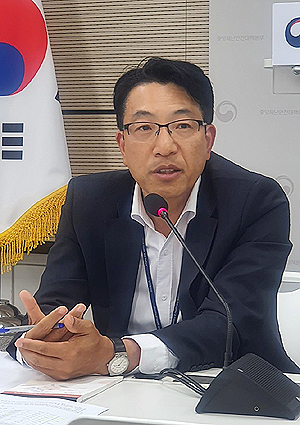
Chang-Hyun Oh (53·Chung Ang University College of Pharmacy, Technical Secretary), Director of Pharmaceutical Benefits at MOHW, had answered so to the questions raised by the MOHW press corp on the 14th regarding the present state of affairs.
Director Oh, who has now served as director for 4 months in MOHW’s Division of Pharmaceutical Benefits, is in charge of effectively promoting the pharmaceutical policy tasks that remain for the First Comprehensive Plan of National Health Insurance that was implemented in 2019 while performing the national tasks set by the new administration.
Oh said, “The new administration’s task of reinforcing coverage of severe and rare diseases is an agenda we need to continuously pursue.
We are also working to prevent a significant rise in the spending of national health insurance finances by rationalizing the pharmaceutical expenses through the better operation of the post-management mechanisms that are already in place.” The following are questions and responses provided by Director Oh.
The new government’s task on improving drug accessibility
How is MOHW planning to effectively implement this task? “The national tasks related to drug pricing that was set by the new government can largely be divided into two parts - accelerating listing of anticancer and severe disease treatments and expanding application of the RSA scheme.
To accelerate listing, the HIRA and NHIS’s administrative procedures need to be improved to reduce the authorities' review period, and the application of the RSA scheme needs to be expanded.
As a working-level official, reducing the reimbursement period and expanding eligibility of PE exemptions seem to be the most pressing matters at hand as expanding eligibility of PE exemptions will also expand RSA.
The current PE exemption regulations in place are more often applied to rare diseases that severely deteriorate the patients’ quality of life rather than severe, life-threatening diseases, therefore, we are considering expanding this system to align with the purpose of the national task.
We can improve the reimbursement review procedure so that drugs that may skip PE evaluations need not undergo review by the Pharmacoeconomic Evaluation Subcommittee.
This can reduce the period required by around a month at HIRA’s level.
Also, we can reduce another month from NHIS’s drug pricing negotiations by submitting the data necessary for negotiations to the NHIS in advance when HIRA’s evaluations are nearly complete.
By reducing 30 days each from HIRA and NHIS, we can expect to save up to 60 days from the evaluation period and promote the faster listing of drugs." ▶Among the many kind of rare diseases, to what scope will the RSA PE exemption be applied to? “RSA PE exemptions are generally applied to anticancer or rare disease treatments.
The rare disease treatments here are defined under a different concept from the orphan drugs designated by the MFDS.
It refers to rare disease treatments that are used for drugs that receive a special exemption of calculation in the reimbursement process.
We are considering applying the same standards for RSA PE exemptions.
To implement this, we need to first revise both HIRA and NHIS’s regulations, which would be possible by the third quarter this year before September.
Also, we would need to issue an administrative pre-announcement on the new drug negotiation guidelines, for which we will be fixing the operational guidelines.
I believe we will be able to attempt this in the second half of the year.
This would include changes made to data provision, data submission exemptions, drugs eligible for PE exemption, additional drugs, etc.
In the case of PE exemptions, we would need to reform the ‘Regulations on Evaluation Standard Procedure for Pharmaceuticals Eligible for Reimbursement.’ I believe we will be able to apply the changes by the end of this year at the latest.” ▶Does this mean that the expanded scope of PE exemptions may be applied immediately from early next year?
By saying that the specifics changes needed may be applied within the third quarter, do you mean that the standards and subjects for the expanded PE exemption have been at least roughly outlined already? “Expanding PE exemptions will accelerate the reimbursement process of drugs, and products that apply for reimbursement after the regulations are revised will all be eligible for PE exemptions and be more easily reimbursed.
The standard will be set to ‘MFDS-approved products that have high social need.
Therefore, we are trying to select items that have a clear clinically stated need in literature.
A standard for eligible drugs has not been set year, but we will be able to prepare the specific standards soon.” ▶Will the accelerated reimbursement listing process only be applied to drugs eligible for PE exemptions? “It would have to be so for the time being.
An accelerated reimbursement listing procedure is currently used in the approval-assessment linkage system.
And we would need to newly add what I have previously mentioned to the approval-assessment linkage system, PE exemption system, and drug pricing negotiation exemptions.” ▶If the PE exemption drugs are listed through expediated pathways, the overall pharmaceutical expense spent by the government has to increase.
How do you plan to manage this?. "I don’t think the expenses would increase to a great extent just because of the expanded PE exemption standards due to the limited use of the PE exemption system.
The RSA scheme has been implemented since 2014, and then expanded in 2019 and 2020.
The PE exemption has been implemented in 2015, then expanded in 2020.
The scope of its application cannot be expanded much due to its limited and exceptional use and will be applied to areas that may not be life-threatening but greatly deteriorates the patients' quality of life.
Also, these drugs will be exempt from receiving PE exemptions but be applied to the RSA scheme.
We aim to match the cost-effectiveness of high-priced new drugs that are being listed recently, such as ‘one-shot’ treatments or cancer immunotherapies, through the RSA scheme.
For ultra-high priced new drugs, 3 types of RSA – the refund type, expenditure cap type, and performance-based type-are being applied.
We may also add a condition to require pre-approval before use.
For new drugs, their fiscal uncertainty will be negotiated as much as possible upon entry, and then the conditions for RSA will be applied in the Drug Reimbursement Evaluation Committee's stage for reimbursement.
The finances required would naturally increase with an increase in new drug listings.
This is why we carried out reevaluations to rationalize the total amount of expenditures spent on existing drugs.
We aimed to reduce the drug price to some extent through post-management of existing drugs.
Also, through post-management processes such as the clinical usefulness reevaluations, the premium pricing reevaluations that were already completed, and the prescription reduction incentive system, usage-drug price linkage systems, etc., we will see to it that an appropriate amount of expenses are spent on already listed drugs.
These cost-saving measures will allow the increase in NHI spending to be kept to a normal level as much as possible." ▶What percentage would be considered an appropriate level in terms of pharmaceutical expenditures?. “We do not have a cap set on expenditures, but history shows that the proportion of pharmaceutical expenditures accounted for 27 to 28% of NHI finances after the government made special measures to unanimously cut drug prices in 2012.
So this would be considered a warning signal and is when social demand for reform starts rising.
Currently, the level is around 23-24%, but the problem is that the total amount of expenditures are increasing by 1 trillion won every year.” ▶The Working Group for the improvement of the foreign drug price reference standard (A7 weighted average price) is being operated until next month.
I heard the plan was to expand the number of reference countries by 2-3 countries.
If the standards are made, can they be immediately applied next year for the foreign drug price comparison evaluations?
"When assessing the adequacy of reimbursement on new drugs, we usually refer to A7 or A8 countries, and this system has been established quite a long time ago.
Referencing foreign drug prices is important in new drug listings.
Therefore, we sought to seek rationality and improve the older regulations.
Fortunately, the research service that was carried out by Professor Seon-mi Jang was completed then, based on which we organized a Working Group.
The MOHW, HIRA, and NHIS are involved in the group.
The formula shows that there is a set standard for the exchange rate, the percentage set to calculate the ex-factory price (EXP), and a ‘distribution margin’ of the 7 reference countries.
How to proceed afterward is an issue.
The reevaluation is already scheduled in the Comprehensive Health Insurance Plan.
So the formula will be used when it is derived.
However, whether reevaluation will be solely based on the formula or will consider other areas for revision will be decided upon when we issue the reevaluation notice.
In particular, the price of generics, which is set at 53.55% of the original price in Korea, is set at a lower level abroad.
We will use this when looking at foreign reference standards for original drugs.
The new formula will be used for reevaluations, but when this will be has not been confirmed yet.”
Pharma industry requests regarding Price-Volume Linkage system, etc.

One was to exclude PVA for drugs that were prescribed under the COVID-19 disease code.
Although this didn’t happen with the Delta variant, the Omicron variant had led to a shortage in stock of cold medicines, and the MFDS had encouraged its manufacture at the time.
Under the PVA guidelines, if a certain drug’s reference price for negotiations may be adjusted if its use has increased temporarily in response to an infectious disease crisis for the treatment of the infectious disease.
We cannot disregard the increase in sales completely, but as this increase in sales was made in response to COVID-19, we told the companies that the MOHW will make adjustments for this during negotiations, and so will the NHIS.
This is applied to drugs under the price-volume linkage-type 'C', but the production of cold medicine did not increase in 2021.
Production of the drugs increased and the drugs ran out of stock at the beginning of this year, but the 175 drugs subject to type 'C' in 2021, which compares the subject drugs’ sales in 2021 to those in 2020 do not contain cold medicines.
However, the companies' requests will be reflected in our 2022 review, when we compare sales in 2022 with 2021 for negotiations next year.
Also, there are some data that the industry needs to submit by the end of February next year with the 3-year grace period set for the generic drug pricing reform.
During the period, the companies were required to conduct self-bioequivalence tests and satisfy the conditions for the use of raw materials and submit the data by February 28th next year.
The companies have been asking the MOHW to extend this deadline, as the COVID-19 crisis had rendered companies difficult to recruit healthy subjects for bioequivalence tests due to the increase in infected patients.
For injection-type drugs that cannot undergo bioequivalence tests, the products were required to conduct physicochemical tests in laboratories.
This data also needs to be submitted by February next year, but the Korea Pharmaceutical and Bio-Pharma Manufacturers Association had held a meeting with the MFDS on postponing the deadline due to delays made in the selection of reference drugs.
We plan to set a more flexible deadline for data submission in consideration of the ongoing COVID-19 situation.
Also, the opinion has been raised that some companies have conducted self-bioequivalence tests but do not own evidentiary data because the tests were conducted before the regulation was changed.
The MFDS regulations only indicate tests conducted after 2015, so we replied that we will accept such cases if the MFDS provides an authoritative interpretation.
However, in the case of reassessments made for standard requirements, this data should be submitted by February 28th next year so that we could complete evaluations by end of July.
Items that cannot verify that it had satisfied standards will receive a price cut of 15 to 30%.
But I believe we should understand if submissions are delayed due to inevitable reasons.
Therefore, we plan to accept plausible requests along with the MFDS and NHIS." Other issues ▶The Anti-Corruption and Civil Rights Commission had recommended on introducing a pre-listing post-evaluation system for pharmaceuticals directly related to life.
What is your opinion on this? “This has been continuously proposed by patient groups and multinational pharmaceutical companies, but I believe it cannot be implemented in Korea’s reality.
Evaluations are a must to be listed for initial reimbursement.
For post-evaluation to happen, an agreement needs to be first made between the government and each company that states that the ‘actual review will be conducted at a certain level, and the company will accept the evaluation result as is,’ but I doubt that the companies will be willing accept the results ‘as is.’ Therefore, when considering various aspects, it would not be realistically easy.
A similar system that is currently in place is the system for the urgent introduction of pharmaceuticals, which is not approved by the MFDS but is sought and introduced by the Korea Orphan & Essential Drug Center from abroad.
Around 20 drugs are applied for reimbursement under the system.
However, the process for the official import and reimbursement process for these drugs had not been as negotiable as other products as there are patients that are already using the drugs at a certain price level.
It was difficult to lower the price to an appropriate level during negotiations.
Although the situation may not be the same, drugs that are already listed are not negotiated to the level desired by the government, and this is why the working-level officials believe it would be difficult to implement a pre-listing post-evaluation system.
We will be receiving data from the multinational pharmaceutical industry on its implementation cases abroad, and although we are waiting for the data, it would be difficult to implement the data soon.
It would be easier to expedite the reimbursement listing of the drugs.
Even from the practical point of view, even if a pre-listing post-evaluation system is introduced, it would have to undergo procedures similar to the current one in place, and will not be cost-effective."
-

- 0
댓글 운영방식은
댓글은 실명게재와 익명게재 방식이 있으며, 실명은 이름과 아이디가 노출됩니다. 익명은 필명으로 등록 가능하며, 대댓글은 익명으로 등록 가능합니다.
댓글 노출방식은
댓글 명예자문위원(팜-코니언-필기모양 아이콘)으로 위촉된 데일리팜 회원의 댓글은 ‘게시판형 보기’와 ’펼쳐보기형’ 리스트에서 항상 최상단에 노출됩니다. 새로운 댓글을 올리는 일반회원은 ‘게시판형’과 ‘펼쳐보기형’ 모두 팜코니언 회원이 쓴 댓글의 하단에 실시간 노출됩니다.
댓글의 삭제 기준은
다음의 경우 사전 통보없이 삭제하고 아이디 이용정지 또는 영구 가입제한이 될 수도 있습니다.
-
저작권·인격권 등 타인의 권리를 침해하는 경우
상용 프로그램의 등록과 게재, 배포를 안내하는 게시물
타인 또는 제3자의 저작권 및 기타 권리를 침해한 내용을 담은 게시물
-
근거 없는 비방·명예를 훼손하는 게시물
특정 이용자 및 개인에 대한 인신 공격적인 내용의 글 및 직접적인 욕설이 사용된 경우
특정 지역 및 종교간의 감정대립을 조장하는 내용
사실 확인이 안된 소문을 유포 시키는 경우
욕설과 비어, 속어를 담은 내용
정당법 및 공직선거법, 관계 법령에 저촉되는 경우(선관위 요청 시 즉시 삭제)
특정 지역이나 단체를 비하하는 경우
특정인의 명예를 훼손하여 해당인이 삭제를 요청하는 경우
특정인의 개인정보(주민등록번호, 전화, 상세주소 등)를 무단으로 게시하는 경우
타인의 ID 혹은 닉네임을 도용하는 경우
-
게시판 특성상 제한되는 내용
서비스 주제와 맞지 않는 내용의 글을 게재한 경우
동일 내용의 연속 게재 및 여러 기사에 중복 게재한 경우
부분적으로 변경하여 반복 게재하는 경우도 포함
제목과 관련 없는 내용의 게시물, 제목과 본문이 무관한 경우
돈벌기 및 직·간접 상업적 목적의 내용이 포함된 게시물
게시물 읽기 유도 등을 위해 내용과 무관한 제목을 사용한 경우
-
수사기관 등의 공식적인 요청이 있는 경우
-
기타사항
각 서비스의 필요성에 따라 미리 공지한 경우
기타 법률에 저촉되는 정보 게재를 목적으로 할 경우
기타 원만한 운영을 위해 운영자가 필요하다고 판단되는 내용
-
사실 관계 확인 후 삭제
저작권자로부터 허락받지 않은 내용을 무단 게재, 복제, 배포하는 경우
타인의 초상권을 침해하거나 개인정보를 유출하는 경우
당사에 제공한 이용자의 정보가 허위인 경우 (타인의 ID, 비밀번호 도용 등)
※이상의 내용중 일부 사항에 적용될 경우 이용약관 및 관련 법률에 의해 제재를 받으실 수도 있으며, 민·형사상 처벌을 받을 수도 있습니다.
※위에 명시되지 않은 내용이더라도 불법적인 내용으로 판단되거나 데일리팜 서비스에 바람직하지 않다고 판단되는 경우는 선 조치 이후 본 관리 기준을 수정 공시하겠습니다.
※기타 문의 사항은 데일리팜 운영자에게 연락주십시오. 메일 주소는 dailypharm@dailypharm.com입니다.