- LOGIN
- MemberShip
- 2026-07-05 18:23:09
- “Developing lazertinib as dramatic as movie production”
- by Moon, sung-ho | translator Byun Kyung A | 2021-02-04 06:09:08
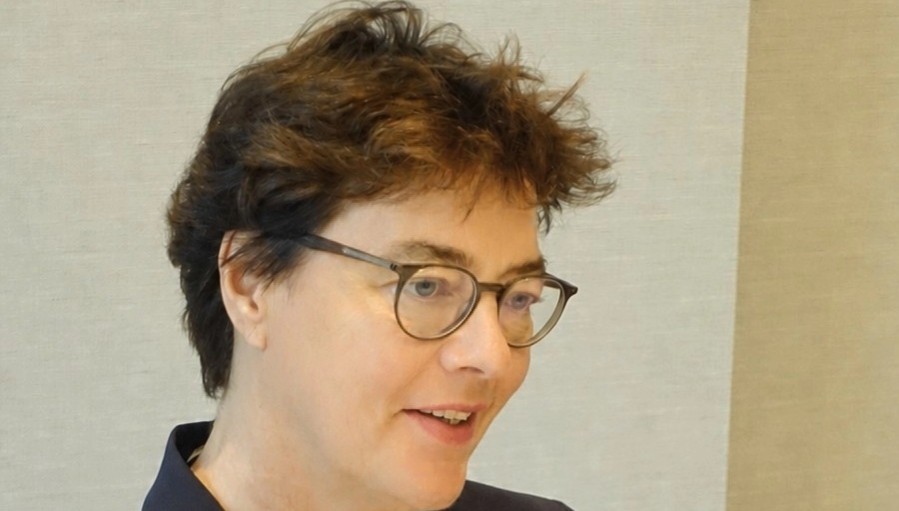
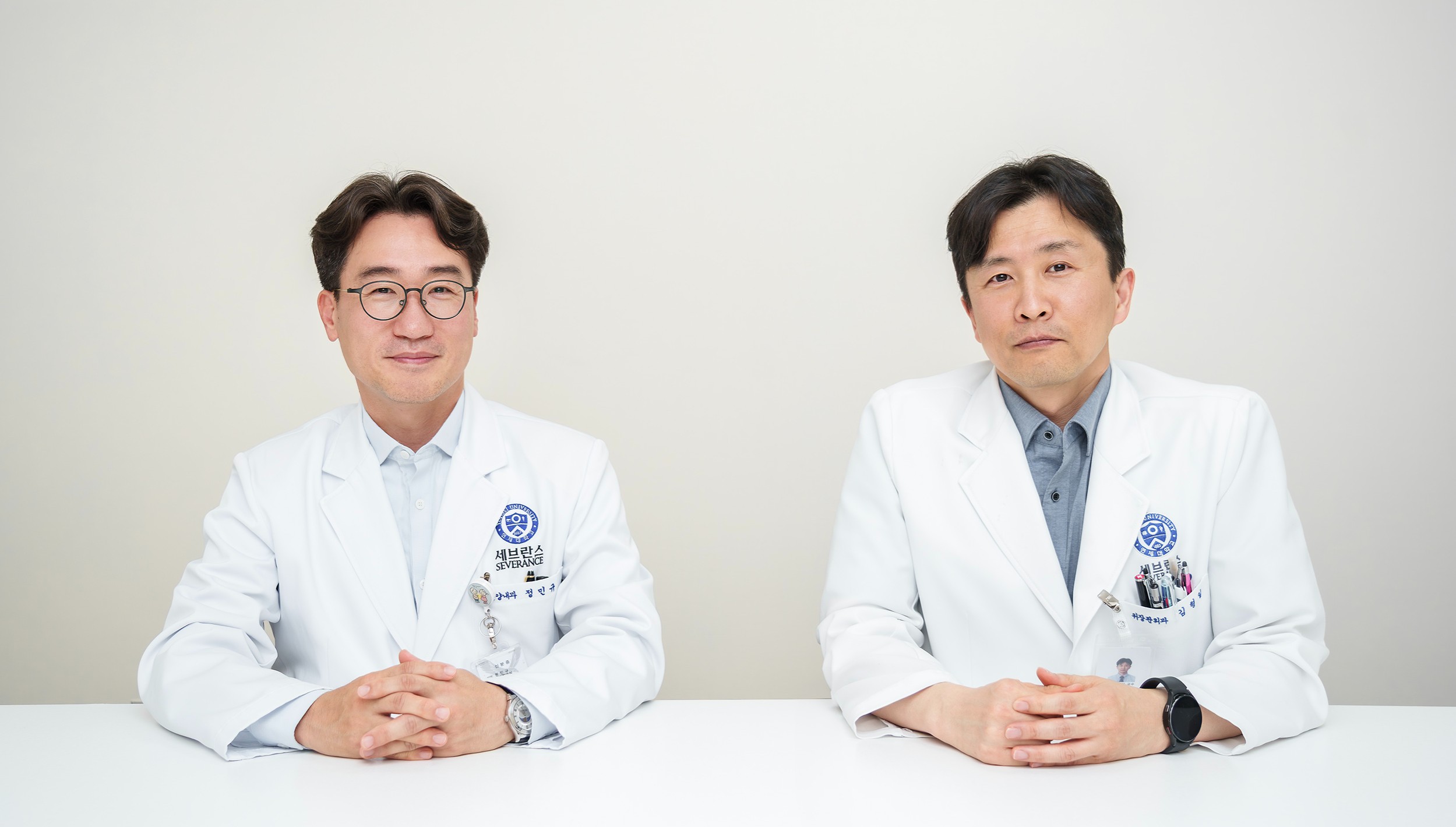
The developer of South Korean-made lung cancer new drug Leclaza (lazertinib), Professor Cho Byoungchul at Yonsei Cancer Center compared his dramatic five-year journey of seeking South Korea’s Ministry of Food and Drug Safety (MFDS) approval on the drug as a movie production; discovering the candidate substance was a casting call, clinical finding presentation was a premiere and lastly, the authorization was the grand opening.
Based on a young director’s unique perspective and passion, a work worthy of the global spotlight was complete.
In the end, the drug was licensed out to a global pharmaceutical company and won the South Korean health authority’s clearance.
Like how a nameless director emerges as an international star director, Professor Cho is now a principal investigator (PI) of global clinical trial backed by his performance so far.
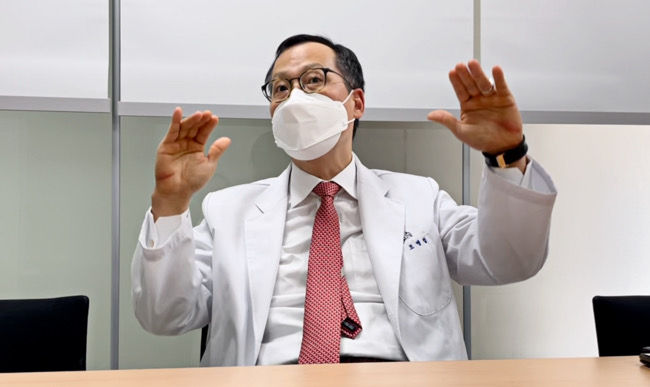
Recently, MFDS has authorized lazertinib, with condition to provide further clinical evidence, as a treatment in EGFR T790M mutation-positive patients with locally advanced or metastatic non-small cell lung cancer (NSCLC).
Professor Cho Byoungchul has been leading the development and clinical studies of lazertinib from the time when Yuhan Corporation licensed in the candidate medicine from a South Korean bio venture Oscotec at the pre-clinical phase in 2015.
The professor said it like he was destined to encounter the candidate medicine at an early stage.
Professor Cho reminisced and commented, “I was offered to lead the clinical trial, when the drug was still a candidate medicine in 2012, but I had to turn it down because the lab was too small and the company offering the job could not afford the entire project.
But in 2015, I visited Yuhan Corporation’s central R&D lab invited by Professor Nam Soo Yeon, and I thought it was a destiny to receive the clinical study offer again there.
For five years then on, I put my everything into the research and the result is now out finally.” Besides the romantic metaphor, the professor faced a number of challenges to this date.
The biggest shake-up of the new drug development process was the news of a competing drug obtaining the National Health Insurance (NHI) reimbursement in South Korea.
After receiving the market authorization in May 2016, another third-generation EGFR TKI Tagrisso (osimertinib) by AstraZeneca was listed for reimbursement in December 2017, with a second-line treatment indication lazertinib was also targeting for.
Currently, AstraZeneca is negotiating with South Korean health authority like the Health Insurance Review and Assessment Service (HIRA) to expand Tagrisso’s reimbursement as a first-line therapy.
Basically, when lazertinib was trying out for the South Korean market, the competitor was already working on indication expansion from second-line to first-line.
Professor Cho confessed the devastating year 2017, when Tagrisso got the NHI benefit, demotivated him the most.
“I remember experiencing the biggest challenge in the clinical studies as Tagrisso received the NHI reimbursement.
Our registration for clinical participants was excruciating.
I was deeply concerned that the company would lose its motivation in the pipeline.
Lazertinib’s Phase I only started when the competitor was conducting a Phase III, and so many were pessimistic that the drug development was too late already,” he elaborated.
"Lazertinib’s global clinical study to confirm efficacy and safety as a first-line treatment” Currently, lazertinib is in process of conducting a global Phase III trial (LASER301) to overcome the limitation of the conditional approval.
The Phase III trial aims to evaluate the potential of lazertinib as a first-line treatment in 380 patients with EGFR mutation-positive NSCLC.
At the moment, 27 hospitals, including Severance Hospital, Samsung Medical Center, Seoul National University Hospital, Seoul St.
Mary's Hospital and Seoul Asan Medical Center, are participating in the clinical trial.
Also, the drug is conducting another Phase III trial as a combination therapy with a bispecific antibody anticancer treatment amivantamab developed by a multinational pharmaceutical company Janssen.
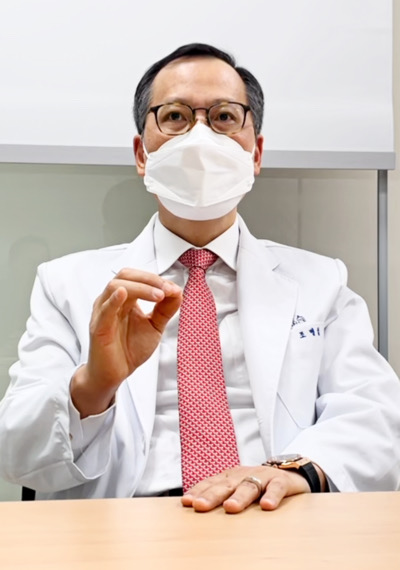
It would be directly compared against a first-generation Iressa (gefitinib).
We also have to conduct a head-to-head clinical trial comparing lazertinib plus amivantamab combination therapy against Tagrisso to confirm progression-free survival (PFS).” He also noted Tagrisso and lazertinib should also step away from a strict competitor relationship, but should rather come together as a mutual relationship to survive in the EGFR TKI market.
He stressed, “I think lazertinib and Tagrisso should be good friends.
Global pharmaceutical giants like Pfizer and Novartis have given up on the new drug development for various reasons, but think how unfortunate the lung cancer patients would be to have only one treatment.
Considering all lung cancer patients, a wide variety of combination therapy is needed to provide more treatment options.” At the same time, he was confident to claim lazertinib does not shows notable difference between Asian and non-Asian races, which can be one of toughest challenges to overcome when shooting for the international market.
The professor explained, “Regarding the treatment for advanced or metastatic NSCLCL, EGFR TKI would unlikely to show much difference in Asian and non-Asian races.
Already there has been a study done to test the pharmacokinetics in different races, and I do not see much of a difference in efficacy.
The ongoing LASER301 study would also give more detailed answer to the question.” Finally, Professor Cho also gave a personal view on the lazertinib pricing procedure to follow after the conditional approval.
He firmly argues there should not be a discount for being a home-grown new drug.
He emphasized, “Considering the level of efficacy and safety lazertinib performs, it should be priced on par with Tagrisso until the Phase III trial outcome is out.
Basically, the health authority should not press for a discounted pricing, only because the drug is made in Korea.
The people of the country worked on the drug and even a global company licensed out the technology.
Based on the new drug development infrastructure in Korea, they should properly acknowledge the value of the drug.”
-

- 0
댓글 운영방식은
댓글은 실명게재와 익명게재 방식이 있으며, 실명은 이름과 아이디가 노출됩니다. 익명은 필명으로 등록 가능하며, 대댓글은 익명으로 등록 가능합니다.
댓글 노출방식은
댓글 명예자문위원(팜-코니언-필기모양 아이콘)으로 위촉된 데일리팜 회원의 댓글은 ‘게시판형 보기’와 ’펼쳐보기형’ 리스트에서 항상 최상단에 노출됩니다. 새로운 댓글을 올리는 일반회원은 ‘게시판형’과 ‘펼쳐보기형’ 모두 팜코니언 회원이 쓴 댓글의 하단에 실시간 노출됩니다.
댓글의 삭제 기준은
다음의 경우 사전 통보없이 삭제하고 아이디 이용정지 또는 영구 가입제한이 될 수도 있습니다.
-
저작권·인격권 등 타인의 권리를 침해하는 경우
상용 프로그램의 등록과 게재, 배포를 안내하는 게시물
타인 또는 제3자의 저작권 및 기타 권리를 침해한 내용을 담은 게시물
-
근거 없는 비방·명예를 훼손하는 게시물
특정 이용자 및 개인에 대한 인신 공격적인 내용의 글 및 직접적인 욕설이 사용된 경우
특정 지역 및 종교간의 감정대립을 조장하는 내용
사실 확인이 안된 소문을 유포 시키는 경우
욕설과 비어, 속어를 담은 내용
정당법 및 공직선거법, 관계 법령에 저촉되는 경우(선관위 요청 시 즉시 삭제)
특정 지역이나 단체를 비하하는 경우
특정인의 명예를 훼손하여 해당인이 삭제를 요청하는 경우
특정인의 개인정보(주민등록번호, 전화, 상세주소 등)를 무단으로 게시하는 경우
타인의 ID 혹은 닉네임을 도용하는 경우
-
게시판 특성상 제한되는 내용
서비스 주제와 맞지 않는 내용의 글을 게재한 경우
동일 내용의 연속 게재 및 여러 기사에 중복 게재한 경우
부분적으로 변경하여 반복 게재하는 경우도 포함
제목과 관련 없는 내용의 게시물, 제목과 본문이 무관한 경우
돈벌기 및 직·간접 상업적 목적의 내용이 포함된 게시물
게시물 읽기 유도 등을 위해 내용과 무관한 제목을 사용한 경우
-
수사기관 등의 공식적인 요청이 있는 경우
-
기타사항
각 서비스의 필요성에 따라 미리 공지한 경우
기타 법률에 저촉되는 정보 게재를 목적으로 할 경우
기타 원만한 운영을 위해 운영자가 필요하다고 판단되는 내용
-
사실 관계 확인 후 삭제
저작권자로부터 허락받지 않은 내용을 무단 게재, 복제, 배포하는 경우
타인의 초상권을 침해하거나 개인정보를 유출하는 경우
당사에 제공한 이용자의 정보가 허위인 경우 (타인의 ID, 비밀번호 도용 등)
※이상의 내용중 일부 사항에 적용될 경우 이용약관 및 관련 법률에 의해 제재를 받으실 수도 있으며, 민·형사상 처벌을 받을 수도 있습니다.
※위에 명시되지 않은 내용이더라도 불법적인 내용으로 판단되거나 데일리팜 서비스에 바람직하지 않다고 판단되는 경우는 선 조치 이후 본 관리 기준을 수정 공시하겠습니다.
※기타 문의 사항은 데일리팜 운영자에게 연락주십시오. 메일 주소는 dailypharm@dailypharm.com입니다.
- [Reporter's View] CSO Association set to receive official legal status
- Reporter's view | Kim, Jin-Gu

- "CHE, limitations of steroids…attention is now focused on 'Anzupgo'"
- Reporter's view | Son, Hyung Min