- LOGIN
- MemberShip
- 2026-09-19 11:52:28
- ‘Bispecific antibodies gain attention as option for DLBCL'
- by Whang, byung-woo | translator Alice Kang | 2025-05-21 06:36:57
Diffuse large B-cell lymphoma (DLBCL) is considered a difficult disease to treat due to its aggressive nature, but the emergence of new drugs has brought about a paradigm shift in its treatment.
As efforts for DLBCL progress towards a cure beyond extending survival, the role of bispecific antibody therapies is garnering attention.
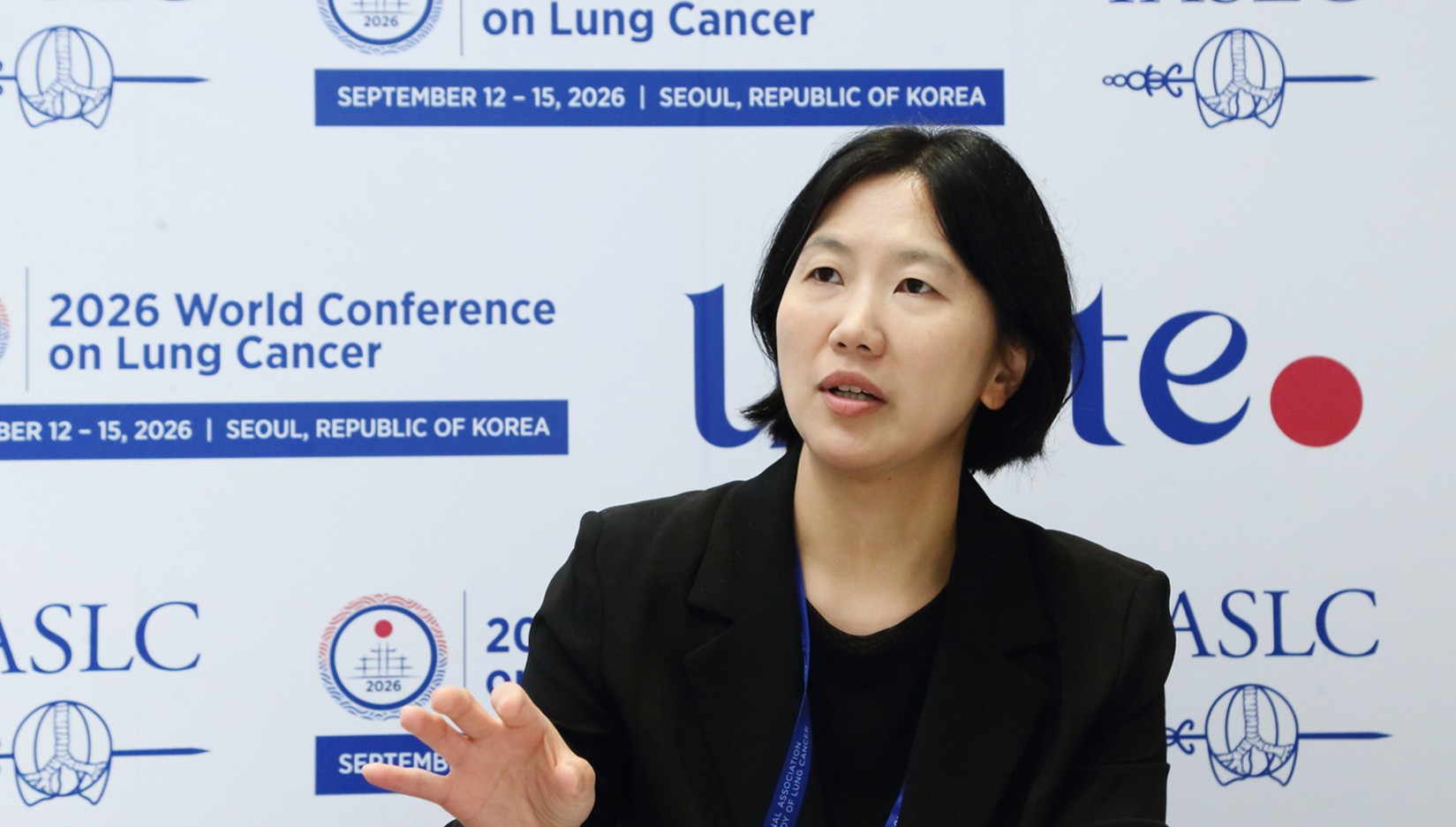
Georg Lenz, Professor at Münster University Hospital in Germany, and Jung-ok Lee, Professor of Hematology and Oncology at Seoul National University Bundang Hospital, emphasized the diversified DLBCL treatment options and the importance of timely treatment for maximizing treatment efficacy during their interview with Daily Pharm.

Although no two patients are in the same situation, the two professors explained that achieving complete remission remains the primary goal, even for patients with relapsed or refractory (r/r) disease or those who have undergone third-line or later-line treatments.
Innovative new drugs such as “bispecific antibodies” and “antibody-drug conjugates (ADC)” are playing a major role in this process.
However, DLBCL, which is characterized by rapid progression and aggressive characteristics among non-Hodgkin's lymphomas, is one disease that is difficult to cure.
Overseas, particularly in countries such as Germany, CAR-T therapy and bispecific antibody therapies have become clear treatment options depending on the recurrence period and health status of DLBCL patients.
According to Professor Georg, Germany uses various bispecific antibody therapies, including Epkinly, glofitamab, and odronextamab in the third-line treatment stage.
Professor Georg explained, “For r/r DLBCL patients receiving third-line treatment, bispecific antibody therapies become a treatment option.
If CAR-T therapy was not administered in previous treatment stages, CAR-T therapy can also be considered as a treatment option in the third-line treatment stage.” In contrast, in South Korea, the only CAR-T therapy available after second-line treatment is Kymriah, and bispecific antibody therapies are not reimbursed.
Regarding this, Professor Lee stated, “Polatuzumab vedotin in combination with R-CHP improved progression-free survival (PFS) compared to R-CHOP in the first-line treatment of DLBCL, and it is being used as a first-line treatment in several countries overseas.
However, in Korea, R-CHOP remains the standard of care, so the rate of recurrence after first-line treatment will be relatively high.” In particular, the difference in treatment access between Korea and other countries is evident after second-line treatment.
This is because while three CAR-T therapies have been approved in the United States, only one, Kymriah, has been approved in Korea.
Professor Lee emphasized, “The domestic treatment environment falls short of global standards, and patients are missing out on real treatment opportunities.
In addition to Kymriah, it is urgent to introduce additional CAR-T therapies such as Axi-cel and Liso-cel and apply reimbursement to bispecific antibodies such as Epkinly.” With Epkinly prescriptions on the rise, the challenge is to overcome the remaining “treatment hurdles” The reason why it is important for new drugs such as Epkinly, a bispecific antibody, to enter the regulatory system is because the ultimate goal of r/r DLBCL treatment is a complete cure.
Although bispecific antibodies lack long-term data compared to CAR-T therapies, which were developed earlier, they are considered to be a useful treatment option due to their relatively lower toxicity for elderly patients and others who cannot receive CAR-T therapy.

Considering the rapid changes in the treatment environment and the various data, I think there is a high possibility that Epkinly will firmly establish itself in the second-line treatment area in the near future.” He added, “Based on the clinical data disclosed to date, the results of Epkinly combination therapy are showing positive trends.
We optimistically anticipate that Epkinly may advance into an earlier line treatment option or even become a first-line treatment option used before the r/r stage, rather than completely replacing CAR-T therapy.” According to three-year follow-up data presented at the American Society of Hematology (ASH) 2024 Annual Meeting, Epkinly achieved an overall response rate (ORR) of 59%, with 41% achieving complete remission.
Professor Lee explained, “It is encouraging that the 36-month survival rate of patients that reached complete remission was 63%.
Additionally, the fact that the progression-free survival (PFS) curve showed a stable ‘plateau’ pattern after a certain point is a positive signal that the treatment effect may persist in the long term.” Although direct comparison is difficult as long-term follow-up data has not yet been accumulated as much as for CAR-T therapy, Professor Lee believes that Epkinly is also expected to achieve high response rates, complete remission, and sustained response.
Clear differences exist in the global and domestic treatment environments… reimbursement needs to be realized There are various conflicting opinions regarding the current position of CAR-T therapy and bispecific antibody therapy, including their complementary positions as a 'bridge therapy' before CAR-T therapy.
Both professors stated that it is difficult to determine the exact order considering reimbursement conditions and their clinical experience, but mentioned that Epkinly may be considered over CAR-T therapy in elderly patients in terms of adverse reaction management.
Professor Georg explained, “Epkinly has shown meaningful clinical efficacy in elderly or refractory patients who are difficult to treat with CAR-T therapy.
In particular, it has a low and predictable incidence of cytokine release syndrome (CRS) and has been reported to be associated with minimal neurotoxicity in the form of Immune Effector Cell-Associated Neurotoxicity Syndrome (ICANS), making it highly safe.” He added, “CAR-T therapy takes about a month to manufacture, so Epkinly may be considered first when time is limited.
Although there are no age restrictions for either Epkinly or CAR-T, Epkinly may be a more appropriate choice for patients who are in poor overall health or are elderly.” The problem remains that the reimbursement situation in Korea is still lacking in terms of a global standard of care.
He emphasized the need to improve the reimbursement system and access to treatment so that DLBCL patients in Korea can receive the latest global standard treatment.
Professor Lee said, “In South Korea, there is a gap between the global standard and Korea’s treatment in all lines of treatment, from the first to the third.
Therefore, other effective CAR-T therapies besides Kymriah should be introduced as soon as possible, and bispecific antibody therapies, including Epkinly, should be included in the health insurance reimbursement system.” Finally, he added, “As a hematologist treating DLBCL patients and a member of the Korean Society of Hematology, I hope that a medical environment is established where patients can receive bispecific antibody therapy as soon as possible.
I feel a sense of responsibility as an expert and plan to actively voice my opinions and fulfill my role in both my academic society and as an individual physician.”
-

- 0
댓글 운영방식은
댓글은 실명게재와 익명게재 방식이 있으며, 실명은 이름과 아이디가 노출됩니다. 익명은 필명으로 등록 가능하며, 대댓글은 익명으로 등록 가능합니다.
댓글 노출방식은
댓글 명예자문위원(팜-코니언-필기모양 아이콘)으로 위촉된 데일리팜 회원의 댓글은 ‘게시판형 보기’와 ’펼쳐보기형’ 리스트에서 항상 최상단에 노출됩니다. 새로운 댓글을 올리는 일반회원은 ‘게시판형’과 ‘펼쳐보기형’ 모두 팜코니언 회원이 쓴 댓글의 하단에 실시간 노출됩니다.
댓글의 삭제 기준은
다음의 경우 사전 통보없이 삭제하고 아이디 이용정지 또는 영구 가입제한이 될 수도 있습니다.
-
저작권·인격권 등 타인의 권리를 침해하는 경우
상용 프로그램의 등록과 게재, 배포를 안내하는 게시물
타인 또는 제3자의 저작권 및 기타 권리를 침해한 내용을 담은 게시물
-
근거 없는 비방·명예를 훼손하는 게시물
특정 이용자 및 개인에 대한 인신 공격적인 내용의 글 및 직접적인 욕설이 사용된 경우
특정 지역 및 종교간의 감정대립을 조장하는 내용
사실 확인이 안된 소문을 유포 시키는 경우
욕설과 비어, 속어를 담은 내용
정당법 및 공직선거법, 관계 법령에 저촉되는 경우(선관위 요청 시 즉시 삭제)
특정 지역이나 단체를 비하하는 경우
특정인의 명예를 훼손하여 해당인이 삭제를 요청하는 경우
특정인의 개인정보(주민등록번호, 전화, 상세주소 등)를 무단으로 게시하는 경우
타인의 ID 혹은 닉네임을 도용하는 경우
-
게시판 특성상 제한되는 내용
서비스 주제와 맞지 않는 내용의 글을 게재한 경우
동일 내용의 연속 게재 및 여러 기사에 중복 게재한 경우
부분적으로 변경하여 반복 게재하는 경우도 포함
제목과 관련 없는 내용의 게시물, 제목과 본문이 무관한 경우
돈벌기 및 직·간접 상업적 목적의 내용이 포함된 게시물
게시물 읽기 유도 등을 위해 내용과 무관한 제목을 사용한 경우
-
수사기관 등의 공식적인 요청이 있는 경우
-
기타사항
각 서비스의 필요성에 따라 미리 공지한 경우
기타 법률에 저촉되는 정보 게재를 목적으로 할 경우
기타 원만한 운영을 위해 운영자가 필요하다고 판단되는 내용
-
사실 관계 확인 후 삭제
저작권자로부터 허락받지 않은 내용을 무단 게재, 복제, 배포하는 경우
타인의 초상권을 침해하거나 개인정보를 유출하는 경우
당사에 제공한 이용자의 정보가 허위인 경우 (타인의 ID, 비밀번호 도용 등)
※이상의 내용중 일부 사항에 적용될 경우 이용약관 및 관련 법률에 의해 제재를 받으실 수도 있으며, 민·형사상 처벌을 받을 수도 있습니다.
※위에 명시되지 않은 내용이더라도 불법적인 내용으로 판단되거나 데일리팜 서비스에 바람직하지 않다고 판단되는 경우는 선 조치 이후 본 관리 기준을 수정 공시하겠습니다.
※기타 문의 사항은 데일리팜 운영자에게 연락주십시오. 메일 주소는 dailypharm@dailypharm.com입니다.