- LOGIN
- MemberShip
- 2026-07-07 03:46:54
- FDA and EMA warn patients taking high dose of Xeljanz
- by Nho, Byung Chul | translator Byun Kyung A | 2019-11-19 06:34:22
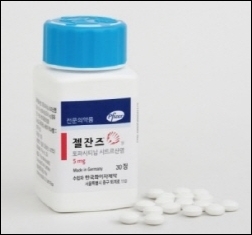
Food and Drug Administration (FDA), and now Korean Ministry of Food and Drug Safety (MFDS) is also expected to make a similar decision in response.
On Nov.
15 (local time), EMA officially confirmed that the maintenance therapy taking 10mg twice daily should not be used in patients with ulcerative colitis who are at high risk of blood clots unless there is no suitable alternative treatment.
Previously, EMA’s safety committee, also known as Pharmacovigilance Risk Assessment Committee (PRAC), issued a statement in last May and warned healthcare providers “must not prescribe” 10mg twice daily dose of Xeljanz to patients with high risk of pulmonary embolism (PE), who take combined hormonal contraceptives, are receiving hormone replacement therapy or undergoing major surgery.
While 10mg is higher dose only recommended to patients with ulcerative colitis, PRAC has recommended patients with the condition and are at high risk of blood clots “must not” start with Xeljanz, but to choose another option.
EMA then stated it would announce a revised guidance as soon as a review result is out.
And on Nov.
15, the agency officially confirmed its restriction on the JAK inhibitor.
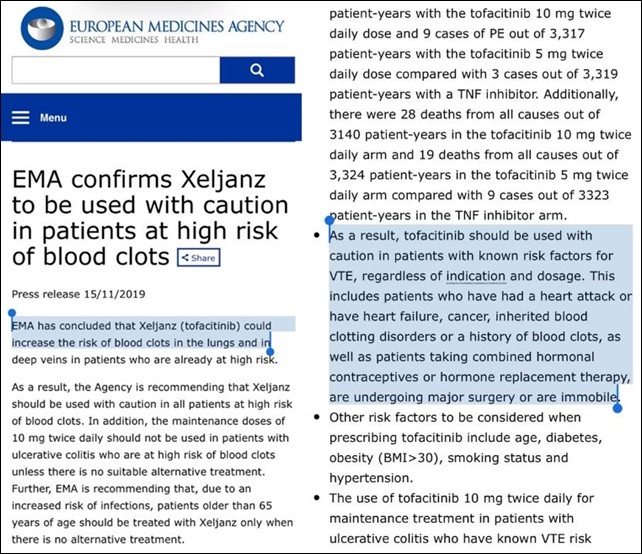
15, EMA posted an official statement about Xeljanz on its website In last July, the U.S.
FDA also amended one of Xeljanz’s indications as first-line treatment for patients with ulcerative colitis to second-line treatment of the condition.
Negotiating with FDA, Pfizer cited the Xeljanz’s risks on its ‘black-box warning’ and revised indication for ulcerative colitis around the same time.
With the FDA’s most stringent warning labeled, Xeljanz can now be prescribed to ulcerative colitis patients who took conventional therapy, but did not have a response with tumor necrosis factor (TNF) inhibitor.
In a nutshell, Xeljanz in the U.S.
has been removed from first-line treatment for ulcerative colitis and was pushed down to second-line, and also the drug has a formal restriction on prescription for patients at high risk of blood clot in Europe.
Initially, Xeljanz was approved as a treatment for rheumatoid arthritis, psoriatic arthritis and ulcerative colitis.
The approved dose for rheumatoid arthritis is 5mg twice daily, whereas for ulcerative colitis is 10mg twice daily for the first eight weeks and either maintain 10mg or decrease to 5mg twice daily depending on the treatment reaction.
Xeljanz treatment for ulcerative colitis previously required starting dose of 10mg for the first eight weeks.
But the interim analysis on post-marketing clinical trial studying Xeljanze in comparison to a TNF blocker, a same class as Humira and Remicade, significantly influenced the U.S.
and the European health authorities’ decisions to amend approval and restrict prescription.
The analysis apparently found concerning reporting of 19 cases of blood clots in the lung and 45 cases of death from all causes out of 3,884 patient-years of follow-up in patients who received Xeljanz, compared to three cases of blood clots in the lung and 25 cases of death out of 3,982 patient-years in patients who received TNF blockers.
On the foreign health authorities’ decisions, MFDS and Pfizer Korea officials noted, “We are paying a close attention on the FDA and EMA’s decision and actions.
The ministry and the company are in mutually cooperative talks to take an appropriate action considering the safety of Korean patients.” When EMA issued a temporary restriction on the drug in last May, Pfizer Korea disseminated a letter of safety warning and held seminars for healthcare providers in Korea.
But the company has not yet made a decision on the news of the drug being pushed down to second-line treatment or prescription restriction on patients at high risk of blood clots.
Meanwhile, Japanese Ministry of Health, Labor and Welfare in last August added venous thromboembolism (VTE) as a ‘serious adverse reaction’ on Xeljanz’s label, and recommended doctors to consider other options when prescribing a treatment to a patient at high risk of cardiovascular events.
-

- 0
댓글 운영방식은
댓글은 실명게재와 익명게재 방식이 있으며, 실명은 이름과 아이디가 노출됩니다. 익명은 필명으로 등록 가능하며, 대댓글은 익명으로 등록 가능합니다.
댓글 노출방식은
댓글 명예자문위원(팜-코니언-필기모양 아이콘)으로 위촉된 데일리팜 회원의 댓글은 ‘게시판형 보기’와 ’펼쳐보기형’ 리스트에서 항상 최상단에 노출됩니다. 새로운 댓글을 올리는 일반회원은 ‘게시판형’과 ‘펼쳐보기형’ 모두 팜코니언 회원이 쓴 댓글의 하단에 실시간 노출됩니다.
댓글의 삭제 기준은
다음의 경우 사전 통보없이 삭제하고 아이디 이용정지 또는 영구 가입제한이 될 수도 있습니다.
-
저작권·인격권 등 타인의 권리를 침해하는 경우
상용 프로그램의 등록과 게재, 배포를 안내하는 게시물
타인 또는 제3자의 저작권 및 기타 권리를 침해한 내용을 담은 게시물
-
근거 없는 비방·명예를 훼손하는 게시물
특정 이용자 및 개인에 대한 인신 공격적인 내용의 글 및 직접적인 욕설이 사용된 경우
특정 지역 및 종교간의 감정대립을 조장하는 내용
사실 확인이 안된 소문을 유포 시키는 경우
욕설과 비어, 속어를 담은 내용
정당법 및 공직선거법, 관계 법령에 저촉되는 경우(선관위 요청 시 즉시 삭제)
특정 지역이나 단체를 비하하는 경우
특정인의 명예를 훼손하여 해당인이 삭제를 요청하는 경우
특정인의 개인정보(주민등록번호, 전화, 상세주소 등)를 무단으로 게시하는 경우
타인의 ID 혹은 닉네임을 도용하는 경우
-
게시판 특성상 제한되는 내용
서비스 주제와 맞지 않는 내용의 글을 게재한 경우
동일 내용의 연속 게재 및 여러 기사에 중복 게재한 경우
부분적으로 변경하여 반복 게재하는 경우도 포함
제목과 관련 없는 내용의 게시물, 제목과 본문이 무관한 경우
돈벌기 및 직·간접 상업적 목적의 내용이 포함된 게시물
게시물 읽기 유도 등을 위해 내용과 무관한 제목을 사용한 경우
-
수사기관 등의 공식적인 요청이 있는 경우
-
기타사항
각 서비스의 필요성에 따라 미리 공지한 경우
기타 법률에 저촉되는 정보 게재를 목적으로 할 경우
기타 원만한 운영을 위해 운영자가 필요하다고 판단되는 내용
-
사실 관계 확인 후 삭제
저작권자로부터 허락받지 않은 내용을 무단 게재, 복제, 배포하는 경우
타인의 초상권을 침해하거나 개인정보를 유출하는 경우
당사에 제공한 이용자의 정보가 허위인 경우 (타인의 ID, 비밀번호 도용 등)
※이상의 내용중 일부 사항에 적용될 경우 이용약관 및 관련 법률에 의해 제재를 받으실 수도 있으며, 민·형사상 처벌을 받을 수도 있습니다.
※위에 명시되지 않은 내용이더라도 불법적인 내용으로 판단되거나 데일리팜 서비스에 바람직하지 않다고 판단되는 경우는 선 조치 이후 본 관리 기준을 수정 공시하겠습니다.
※기타 문의 사항은 데일리팜 운영자에게 연락주십시오. 메일 주소는 dailypharm@dailypharm.com입니다.


- [Reporter's View] CSO Association set to receive official legal status
- Reporter's view | Kim, Jin-Gu