- LOGIN
- MemberShip
- 2026-09-28 22:46:58
- 'Leqembi will reshape early dementia care landscape'
- by Hwang, byoung woo | translator Alice Kang | 2025-11-05 06:23:18
Leqembi (lecanemab), a therapy that directly removes the pathogenic protein driving Alzheimer's disease and slows disease progression, is opening a new treatment paradigm in a super-aged society.
Unlike existing drugs that primarily focused on symptomatic relief, Leqembi has demonstrated disease-modifying potential, signaling broad changes across clinical practice and policy.
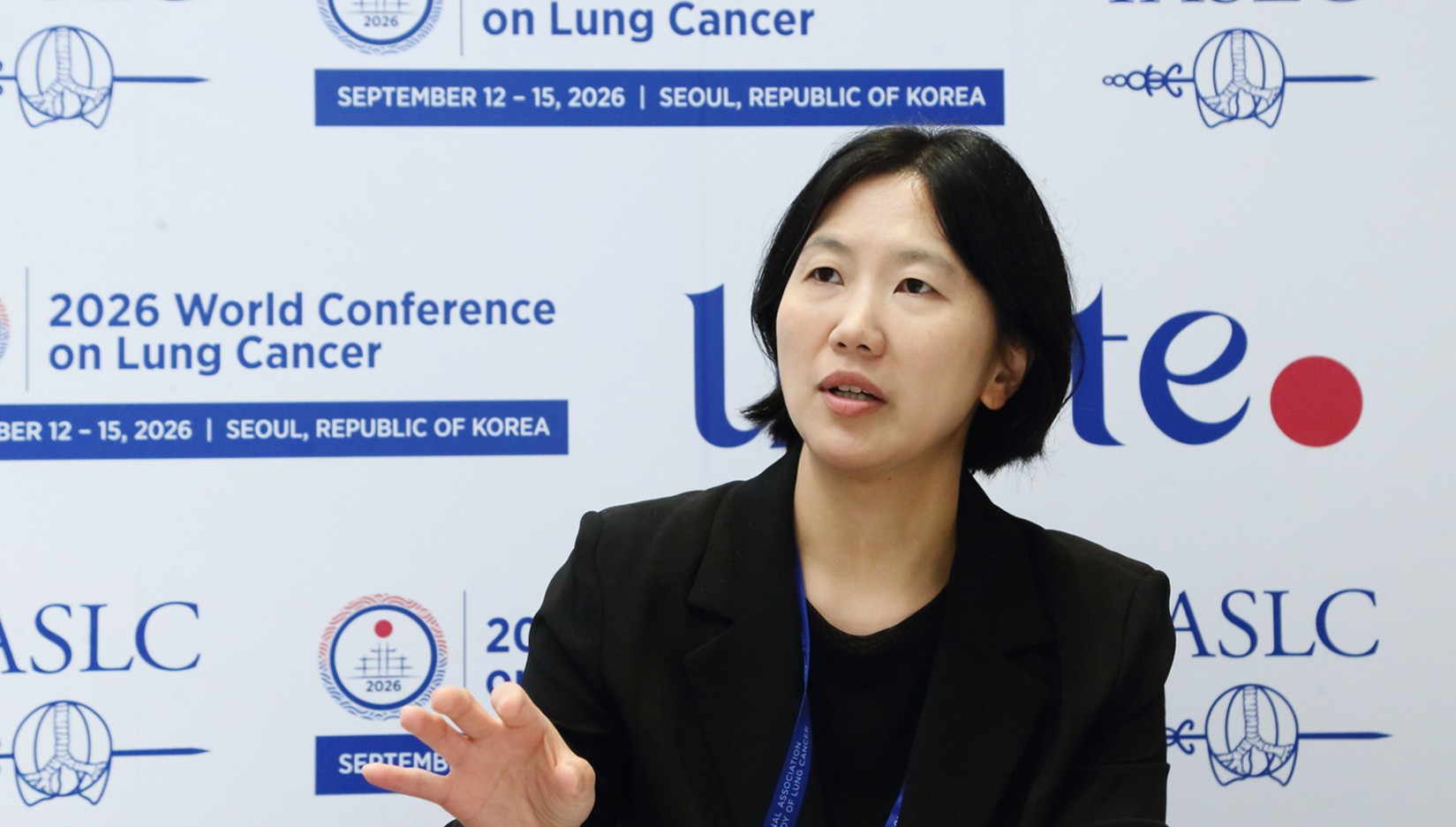
Dailypharm spoke with Professor Min-young Chun, neurologist at Yongin Severance Hospital, regarding Leqembi’s long-term evidence, real-world clinical implications, and the importance of early diagnosis and early intervention in Alzheimer's disease.
“Leqembi delays disease progression by one year, which is a significant extension in the survival period”

Since the 1990s and early 2000s, there have been almost no new drugs developed for Alzheimer's disease, resulting in a prolonged 20-year innovation gap without any new drug approvals.
While existing drugs focus on symptom relief, Leqembi is drawing attention for its mechanism that directly removes amyloid beta to slow the fundamental progression of the disease.
Professor Chun stated, “Leqembi is the first treatment option that directly targets amyloid beta to slow the fundamental progression of the disease, marking a significant advancement that ends the 20-year gap in new drug development.” She further explained, “In the recently published 4-year long-term analysis, the Leqembi treatment group showed a delay in disease progression of approximately one year compared to the natural decline in Alzheimer's disease.
Based on the CDR-SB score, it was 1.75 points lower versus ADNI and 2.17 points lower versus BioFINDER.” Furthermore, no new safety concerns were observed during the 4-year OLE study, and the ARIA incidence rate decreased after the initial 12 months of treatment and remained stable without significant change over the 4 years.
Professor Chun emphasized, “Some may underestimate a one-year delay, but just as a 6-month survival gain in oncology is considered a meaningful outcome, delaying the time when independent daily living becomes impossible by even one year holds immense value.” Lower ARIA rate in Asians…Will also strengthen domestic monitoring system As Leqembi has not been released in Korea for long, sufficient data has not yet accumulated to yield statistically significant results.
Concerns also exist regarding the management of amyloid-related imaging abnormalities (ARIA), the most notable adverse reaction requiring caution during Leqembi treatment.
On this, Professor Chun explained, “ARIA-E occurred in 6.2% and ARIA-H in 14.4% of Asian patients %, lower than the overall population.
This could be attributed to complex factors like differences in APOE ε4 gene frequency or drug dosage variations due to body weight.” She further noted, “South Korea has well-established imaging infrastructure, including MRI and PET, enabling systematic monitoring before and after administration.
This environment supports the safe use of new drugs like Leqembi.” According to Professor Chun, the Asian subgroup analysis of Leqembi’s Phase III Clarity AD clinical trial showed an ARIA-E incidence rate of 6.2% in Asians, lower than the 12.6% rate in the overall population.
The ARIA-H incidence rate was also lower in Asians at 14.4%, compared to 17.3% in the overall population.
She added, “Adverse reactions are being closely managed through regular monitoring.
When they occur, treatment is guided by established medication-related guidelines.
Currently, multiple institutions are compiling and analyzing Leqembi treatment data, and clearer results are expected as early as the beginning of next year.
Regarding the approval of the subcutaneous (SC) maintenance therapy formulation in the U.S., Professor Chun noted, “The Leqembi SC formulation offers similar efficacy to the intravenous (IV) formulation while having a lower incidence of infusion-related adverse events.
This allows patients or caregivers to administer the drug themselves, offering significant advantages in terms of accessibility and compliance.” “Early diagnosis and treatment of Alzheimer's reduces socioeconomic burden” With South Korea entering a super-aged society, dementia has emerged as a socioeconomic challenge beyond an individual disease.
Professor Chun emphasized that advancing the timing of treatment is key to reducing the national burden.
She stated, “Domestic dementia care costs approximately KRW 25 trillion annually.
Delaying progression to severe stages through early diagnosis and treatment can significantly reduce long-term care and medical expenditure.” Long-term simulation data showed Leqembi confirmed such an effect.
Leqembi delayed progression to mild-and-moderate stages by 2.7 years and 2.9 years, respectively — supporting meaningful savings in healthcare costs.
Regarding this, Professor Chun explained, “These results can enhance the efficiency of the dementia management system and positively impact national healthcare finances.” Institutional challenges remain.
The treatment remains non-reimbursed, and while MRI scans are covered, amyloid PET scans remain non-reimbursed, resulting in patient out-of-pocket costs.
Professor Chun noted, “Beyond amyloid, the long-term therapeutic effect of new drugs like Leqembi is more pronounced in patients with lower tau protein accumulation.
As Alzheimer's disease progresses, tau protein accumulation increases.
Therefore, I believe it would be efficient to prioritize coverage for the early stages when tau levels are lower.” Professor Chun further explained, “We are conducting amyloid PET scans to compare how much amyloid is removed before and after Leqembi administration, but this process incurs significant cost burdens.
If amyloid PET scans were covered, it would greatly aid patients in receiving early diagnosis and treatment.” Finally, Professor Chun reiterated the necessity of early intervention for Alzheimer's disease.
Professor Chun added, “Early detection and intervention are paramount for Alzheimer's disease, yet some delay hospital visits due to fear of dementia diagnosis.
The sooner diagnosis and treatment occur, the greater the effect.
If treatments become reimbursed, it would alleviate household medical expenses and could positively impact socioeconomic aspects and reduce national healthcare costs in the long term.”
-

- 1
댓글 운영방식은
댓글은 실명게재와 익명게재 방식이 있으며, 실명은 이름과 아이디가 노출됩니다. 익명은 필명으로 등록 가능하며, 대댓글은 익명으로 등록 가능합니다.
댓글 노출방식은
댓글 명예자문위원(팜-코니언-필기모양 아이콘)으로 위촉된 데일리팜 회원의 댓글은 ‘게시판형 보기’와 ’펼쳐보기형’ 리스트에서 항상 최상단에 노출됩니다. 새로운 댓글을 올리는 일반회원은 ‘게시판형’과 ‘펼쳐보기형’ 모두 팜코니언 회원이 쓴 댓글의 하단에 실시간 노출됩니다.
댓글의 삭제 기준은
다음의 경우 사전 통보없이 삭제하고 아이디 이용정지 또는 영구 가입제한이 될 수도 있습니다.
-
저작권·인격권 등 타인의 권리를 침해하는 경우
상용 프로그램의 등록과 게재, 배포를 안내하는 게시물
타인 또는 제3자의 저작권 및 기타 권리를 침해한 내용을 담은 게시물
-
근거 없는 비방·명예를 훼손하는 게시물
특정 이용자 및 개인에 대한 인신 공격적인 내용의 글 및 직접적인 욕설이 사용된 경우
특정 지역 및 종교간의 감정대립을 조장하는 내용
사실 확인이 안된 소문을 유포 시키는 경우
욕설과 비어, 속어를 담은 내용
정당법 및 공직선거법, 관계 법령에 저촉되는 경우(선관위 요청 시 즉시 삭제)
특정 지역이나 단체를 비하하는 경우
특정인의 명예를 훼손하여 해당인이 삭제를 요청하는 경우
특정인의 개인정보(주민등록번호, 전화, 상세주소 등)를 무단으로 게시하는 경우
타인의 ID 혹은 닉네임을 도용하는 경우
-
게시판 특성상 제한되는 내용
서비스 주제와 맞지 않는 내용의 글을 게재한 경우
동일 내용의 연속 게재 및 여러 기사에 중복 게재한 경우
부분적으로 변경하여 반복 게재하는 경우도 포함
제목과 관련 없는 내용의 게시물, 제목과 본문이 무관한 경우
돈벌기 및 직·간접 상업적 목적의 내용이 포함된 게시물
게시물 읽기 유도 등을 위해 내용과 무관한 제목을 사용한 경우
-
수사기관 등의 공식적인 요청이 있는 경우
-
기타사항
각 서비스의 필요성에 따라 미리 공지한 경우
기타 법률에 저촉되는 정보 게재를 목적으로 할 경우
기타 원만한 운영을 위해 운영자가 필요하다고 판단되는 내용
-
사실 관계 확인 후 삭제
저작권자로부터 허락받지 않은 내용을 무단 게재, 복제, 배포하는 경우
타인의 초상권을 침해하거나 개인정보를 유출하는 경우
당사에 제공한 이용자의 정보가 허위인 경우 (타인의 ID, 비밀번호 도용 등)
※이상의 내용중 일부 사항에 적용될 경우 이용약관 및 관련 법률에 의해 제재를 받으실 수도 있으며, 민·형사상 처벌을 받을 수도 있습니다.
※위에 명시되지 않은 내용이더라도 불법적인 내용으로 판단되거나 데일리팜 서비스에 바람직하지 않다고 판단되는 경우는 선 조치 이후 본 관리 기준을 수정 공시하겠습니다.
※기타 문의 사항은 데일리팜 운영자에게 연락주십시오. 메일 주소는 dailypharm@dailypharm.com입니다.