- LOGIN
- MemberShip
- 2026-08-01 03:32:08
- "Leclaza comb included in the U.S. guideline"
- by Cha, Ji-Hyun | translator Hong, Ji Yeon | 2026-02-20 10:04:01

The global status of Korea-made novel anticancer drug 'Leclaza' (ingredient: lazertinib) is shifting. The shift was brought by the 2026 National Comprehensive Cancer Network (NCCN) Clinical Practice Guidelines for Non-Small Cell Lung Cancer (NSCLC), which included the combination therapy of Leclaza + 'Rybrevant' (ingredient: amivantamab) as a 'Preferred Regimen' for first-line treatment, while Leclaza monotherapy was included as an option that is 'Useful in Certain Circumstances.'
Analysis suggests that this is highly significant as the first Korea-made novel drug has been included in the NCCN Category 1 first-line treatment bracket. DailyPharm met with Professor Se Hoon Lee of the Division of Hematology-Oncology at Samsung Medical Center, who led the follow-up studies of the Phase 3 MARIPOSA trial, to discuss the significance of this guideline revision and the evolving treatment strategies in clinical practice.
OS data changed the standard... "Combination therapy enters the stage of discussion"
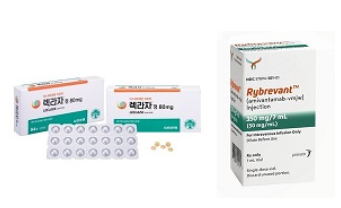
Leclaza is a third-generation NSCLC treatment targeting Epidermal Growth Factor Receptor (EGFR) mutations, which received domestic approval in January 2021 as South Korea's 31st novel drug. The Leclaza-Rybrevant combination therapy was approved by the U.S. Food and Drug Administration (FDA) in August 2024 as a first-line treatment for adult patients with locally advanced or metastatic NSCLC with EGFR exon 19 deletions or exon 21 L858R substitution mutations.
Professor Lee identified the foundation of this revision in the Overall Survival (OS) data.
Professor Lee stated, "The Phase 3 MARIPOSA trial, which served as the basis for this revision, was a study comparing the Leclaza-Rybrevant combination therapy against the existing standard of care, 'Tagrisso' (ingredient: osimertinib) monotherapy. Given that monotherapy has already established itself as the standard treatment, demonstrating whether clinical benefits actually translate into OS improvement was paramount, especially considering the inevitable toxicity burden of combination therapy."
Professor Lee added, "If it were a comparison between monotherapies with similar efficacy and toxicity profiles, a shift in the standard could be discussed based on Progression-Free Survival (PFS) results alone. However, for combination therapies, the criteria for decision differ," and added, "It is meaningful that by confirming statistical significance for OS through this study, the grounds for discussing combination therapy as a standard treatment option have been established."
According to the Phase 3 MARIPOSA OS results presented at the European Lung Cancer Congress (ELCC) last March, the Leclaza-Rybrevant combination therapy demonstrated statistical significance, reducing the risk of death by approximately 25% (HR 0.75, 95% CI 0.61–0.92) compared with Tagrisso monotherapy.
The median Overall Survival (mOS) has not yet been reached (not reached). This means that more than half of the patients in the combination therapy group survived during the follow-up period, and a sufficient number of death events did not occur to calculate a median value. Considering that the mOS of Tagrisso monotherapy was confirmed at 36.7 months, there are projections that once the mOS for the Leclaza-Rybrevant combination therapy is finalized in the future, the gap between the two groups could widen to more than a year.
Professor Lee also expected that this revision could serve as a starting point for restructuring international treatment guidelines. He noted, "The NCCN guidelines are be revised relatively quickly among global guidelines, so this change is highly likely to become the starting point for revisions of other international guidelines in the future. While European guidelines may take a more cautious approach as they consider economic evaluations simultaneously, I expect the general direction itself to unfold similarly."
Changes in the guidelines are also influencing the domestic clinical field.
Professor Lee stated, "Following the changes in global guidelines, a shift in perception regarding first-line treatment strategies is emerging in the domestic medical field. Since OS has improved by more than a year, many medical professionals believe that combination therapy should be considered a priority."
He added, "Compared to when the MARIPOSA study's PFS data was first released, I can feel that the perception of medical staff is changing over time. While individual opinions vary, it is a clear trend that as more experts gather to discuss, the proportion of those considering combination therapy is gradually expanding."
Comparison of monotherapies…attention on safety differences
The double-blind, Head-to-Head direct-comparison data between Leclaza and Tagrisso monotherapy are gaining attention.
Generally, it has been perceived that studies directly comparing two drugs with proven efficacy are difficult to establish. Regarding a standard treatment that has already preempted the market, a result showing inferiority could pose significant commercial risks, and the practice of randomly assigning patients when a standard treatment is established can provoke ethical controversies.
Professor Lee explained, "As the FDA required the individual contribution of each component drug in the combination therapy study to be proven, a design involving a direct comparison of monotherapies within the same study could be included," added, "This data is unique globally and is precious data that will be difficult to replicate in the future."
As this was an exploratory analysis, it has limitations regarding the number of patients. However, the professor explained that the reliability of the interpretation is enhanced by the fact that the two drugs were directly compared under the same conditions within the same clinical trial, rather than through indirect methods that compare results from different studies. Such data can serve as evidence for fine-tuning treatment strategies in clinical practice.
The direct comparison showed that the two drugs had similar efficacy, as evidenced by their survival curves, but differences in their safety profiles were observed. Among these, the point of clinical interest is cardiac toxicity.
Professor Lee stated, "Tagrisso showed a tendency toward more reports of cardiac-related adverse events such as heart failure or QT prolongation compared to Leclaza," added, "It has been suggested that this may be due to Tagrisso's characteristic of more broadly inhibiting HER2 (ERBB2), which is associated with cardioprotection."
Professor Lee further explained, "While the incidence of cardiac toxicity itself is low at less than 2%, it is a clinically important consideration as it is a life-threatening adverse event," added, "Peripheral neuropathy is observed more frequently in Leclaza monotherapy, but this is not a life-threatening adverse event, and its clinical impact tends to be limited."
Consistent survival benefit confirmed in Asian patients... "Combination will become the basic option"
Leclaza is also securing consistent clinical data in the Asian patient population. This contrasts with the FLAURA2 study, which evaluated the Tagrisso-chemotherapy combination, where the efficacy in the Asian subgroup excluding China appeared limited.
In the FLAURA2 study, the OS Hazard Ratio (HR) for the Asian subgroup excluding China was 1.00 (95% CI 0.71–1.40), showing no additional survival benefit compared to monotherapy. In contrast, the MARIPOSA study reported an OS HR of approximately 0.77 for the total population, including Asian patients, confirming a death risk reduction effect.
Professor Lee stated, "The mechanism explaining the HR difference observed in the Asian patient population is not yet clear, making it difficult to draw conclusions based on subgroup analysis alone. However, since consistent OS improvement was confirmed in the total population, including Asian patients, in the MARIPOSA study, these differences need to be scrutinized through further research in the future."
Professor Lee believes the focus on first-line treatment strategies is gradually shifting toward combination therapy.
Professor Lee said, "In the past, monotherapy was the default, with combination therapy considered for some patients; however, recently, there is a spreading view that combination therapy should be the baseline strategy, with monotherapy applied selectively," added, "This is similar to the trend where the combination of immunotherapy and chemotherapy has become the standard of care in NSCLC."
Furthermore, Professor Lee stated, "In my opinion, a strategy of first checking the response with monotherapy for about three to six weeks and then switching to combination therapy for patients who need it is desirable," added, "However, in a reimbursement system, it is important to secure the option of combination therapy, so an approach starting with combination therapy whenever possible can be rational."
Ultimately, Professor Lee predicted that future first-line treatment strategies will be restructured as a matter of choice between combination therapies. He concluded, "If both Leclaza + Rybrevant and Tagrisso + chemotherapy combination therapies are included in the reimbursement system, the focus of discussion will move beyond simply whether to use combination therapy to which of the two combination strategies to choose,'' and concluded, "At that stage, further discussions will be necessary, considering not only survival indicators but also the mechanistic differences, immunological changes, and molecular biological characteristics of each treatment strategy."
-

- 0
댓글 운영방식은
댓글은 실명게재와 익명게재 방식이 있으며, 실명은 이름과 아이디가 노출됩니다. 익명은 필명으로 등록 가능하며, 대댓글은 익명으로 등록 가능합니다.
댓글 노출방식은
댓글 명예자문위원(팜-코니언-필기모양 아이콘)으로 위촉된 데일리팜 회원의 댓글은 ‘게시판형 보기’와 ’펼쳐보기형’ 리스트에서 항상 최상단에 노출됩니다. 새로운 댓글을 올리는 일반회원은 ‘게시판형’과 ‘펼쳐보기형’ 모두 팜코니언 회원이 쓴 댓글의 하단에 실시간 노출됩니다.
댓글의 삭제 기준은
다음의 경우 사전 통보없이 삭제하고 아이디 이용정지 또는 영구 가입제한이 될 수도 있습니다.
-
저작권·인격권 등 타인의 권리를 침해하는 경우
상용 프로그램의 등록과 게재, 배포를 안내하는 게시물
타인 또는 제3자의 저작권 및 기타 권리를 침해한 내용을 담은 게시물
-
근거 없는 비방·명예를 훼손하는 게시물
특정 이용자 및 개인에 대한 인신 공격적인 내용의 글 및 직접적인 욕설이 사용된 경우
특정 지역 및 종교간의 감정대립을 조장하는 내용
사실 확인이 안된 소문을 유포 시키는 경우
욕설과 비어, 속어를 담은 내용
정당법 및 공직선거법, 관계 법령에 저촉되는 경우(선관위 요청 시 즉시 삭제)
특정 지역이나 단체를 비하하는 경우
특정인의 명예를 훼손하여 해당인이 삭제를 요청하는 경우
특정인의 개인정보(주민등록번호, 전화, 상세주소 등)를 무단으로 게시하는 경우
타인의 ID 혹은 닉네임을 도용하는 경우
-
게시판 특성상 제한되는 내용
서비스 주제와 맞지 않는 내용의 글을 게재한 경우
동일 내용의 연속 게재 및 여러 기사에 중복 게재한 경우
부분적으로 변경하여 반복 게재하는 경우도 포함
제목과 관련 없는 내용의 게시물, 제목과 본문이 무관한 경우
돈벌기 및 직·간접 상업적 목적의 내용이 포함된 게시물
게시물 읽기 유도 등을 위해 내용과 무관한 제목을 사용한 경우
-
수사기관 등의 공식적인 요청이 있는 경우
-
기타사항
각 서비스의 필요성에 따라 미리 공지한 경우
기타 법률에 저촉되는 정보 게재를 목적으로 할 경우
기타 원만한 운영을 위해 운영자가 필요하다고 판단되는 내용
-
사실 관계 확인 후 삭제
저작권자로부터 허락받지 않은 내용을 무단 게재, 복제, 배포하는 경우
타인의 초상권을 침해하거나 개인정보를 유출하는 경우
당사에 제공한 이용자의 정보가 허위인 경우 (타인의 ID, 비밀번호 도용 등)
※이상의 내용중 일부 사항에 적용될 경우 이용약관 및 관련 법률에 의해 제재를 받으실 수도 있으며, 민·형사상 처벌을 받을 수도 있습니다.
※위에 명시되지 않은 내용이더라도 불법적인 내용으로 판단되거나 데일리팜 서비스에 바람직하지 않다고 판단되는 경우는 선 조치 이후 본 관리 기준을 수정 공시하겠습니다.
※기타 문의 사항은 데일리팜 운영자에게 연락주십시오. 메일 주소는 dailypharm@dailypharm.com입니다.
- “Drug pricing intervention contributes to the crisis in essential healthcare and shortage of drugs”
- Reporter's view | Lee, Jeong-Hwan