
- LOGIN
- MemberShip
- 2026-05-04 03:20:09

- Policy
- 'Apply preferential pricing to non-inferior new drugs'
- by Lee, Tak-Sun Aug 11, 2023 05:35am
- With the government planning to release a drug price reform plan that includes a fair value compensation plan for innovative new drugs as early as next month, attention is focused on whether the reform will include a preferential measure for new drugs that demonstrate non-inferiority. This is because most of the new drugs that domestic pharmaceutical companies have successfully developed are new drugs that have demonstrated non-inferiority to existing drugs. Until now, non-inferior new drugs have been listed at a price below the weighted average of its alternatives. Therefore, the industry has been criticizing how the prices do not properly reflect the innovativeness of the developed new drugs. In addition, industry officials have pointed out that the low drug prices set in Korea render it difficult for companies to release their drugs overseas. To address this, domestic pharmaceutical companies have requested the government to provide additional scores for non-inferior new drugs as compensation while discussing the fair value of innovative new drugs. The government's policy on providing preferred measures for non-inferior new drugs was partially revealed on the 9th at the 'Policy Discussion for the Industry’s Leap to Become a Global Pharma & Bio Center (sub: Applying an Appropriate Value to New Drugs and Measures to Revitalize the API Industry)' that was co-hosted by Rep. Choi Jae-Hyung of the People Power Party and the Korea Pharmaceutical and Bio-Pharma Manufacturers Association. Director Chang-Hyun Oh from MOHW is discussing measures to compensate for the innovativeness of new drugs at a NA policy debate At the debate, Chang-Hyun Oh, Director of the Pharmaceutical Benefits Division of the Bureau of Health Insurance Policy at MOHW introduced, ▲clinical superiority, ▲innovative company designation status ▲expedited review subject status, and ▲domestic trial status as categories that the MOHW recognizes as innovative. Although Oh did not specify whether the clinical superiority of non-inferior drugs will be accepted, industry officials believe that this is highly likely. However, while explaining the point of Korea's positive listing system, Director Oh said that the current system’s structure does not provide preferential treatment to non-inferior new drugs and that he will work to take into account the pharmaceutical companies’ opinions to the extent that it would not jeopardize health insurance’s finances. An industry official who attended the event said, “Oh’s remarks may mean that only drugs that show clinical superiority can receive preferential treatment under Korea’s positive listing system and that non-inferior drugs are not subject to such treatment. However, the government also said it will consider reflecting the concept of an innovative new drug that was discussed by the public-private consultative body, such as taking into account the company’s innovative company status, domestic clinical trial status, MFDS expedited approval track status, etc., In that case, the non-inferiority criteria may not be important." Oh also added that the announcement was delayed due to the financial impact simulations the government conducted to assess the impact of the innovative new drug value compensation plan, and the results are likely to be released next month. The value of compensating non-inferior drugs was also emphasized by Gwan-Woo Park, a lawyer at Kim & Chang, who gave a presentation that day. Park, who had worked at the Health Insurance Review and Assessment Service for 4 years after graduating from Sahmyook University College of Pharmacy, said that most new best-in-class drugs that treat chronic conditions are being listed at 90% of the weighted average price of alternative drugs. Park said, “When a new drug for a chronic disease is released, it is difficult to convert the drug’s benefit into life expectancy extension or health-related life indicators required for QALY (quality-adjusted life year) calculation even if the drug has demonstrated clinical superiority. Therefore, a very low ICER (Incremental Cost-Effective Ratio) threshold is applied to those drugs. In particular, for indications that have generics drugs released, it is difficult for new drugs to obtain a price higher than that of the generics." Park explained that this was why most of the new drugs for chronic diseases are listed at 90% of the weighted average price of alternative drugs that were already listed for reimbursement. New drugs that were recently developed by domestic pharmaceutical companies are non-inferior drugs that target chronic diseases and are often listed at the weighted average price level of alternative drugs. On this, the pharmaceutical industry believes that for non-inferior new drugs to be properly valued, compensation should be provided so that the patients can receive the highest price of its alternatives.
- Policy
- Health insurance finance approved by the government alone
- by Lee, Jeong-Hwan Aug 11, 2023 05:35am
- It was pointed out again that health insurance finance should be included in the national finance and operated as a fund. There are concerns that if the health insurance finances are managed without going through deliberation by the National Assembly as it is now, transparency will be reduced and it can lead to negligence. The current method of independently reviewing and approving health insurance finances by the Ministry of Health and Welfare has also been criticized for being excessively discretionary and reducing the authority of health insurance subscribers. On the 10th, the National Assembly Budget Office announced this through an analysis of the Ministry of Health and Welfare’s financial statements for fiscal year 2022. Currently, health insurance finance is being operated through the health insurance general account of the National Health Insurance Corporation. The national pension, public servants pension, military pension, teacher pension, employment insurance, industrial accident compensation insurance, and long-term care insurance for the elderly are included in the national finance and operated as a fund. The Ministry of Budget and Policy considered it a problem that decision-making on health insurance finances was made without external control by the Health Insurance Policy Deliberation Committee, which was established and operated under the Ministry of Health and Welfare, and the Ministry of Health and Welfare approved NHIS accounting, budget, and settlement. It is unreasonable that the Ministry of Health and Welfare, which is the main body of health insurance policy establishment, has the right to review the budget and settlement of health insurance projects at the same time. The Ministry of Budget and Policy said that it is necessary to strengthen the National Assembly's control over the health insurance finance managed outside of the national finance, and to strengthen the transparency and accountability of financial operations. As a basis for this, it was said that national insurance premiums, which are the main financial source of health insurance finances, are in fact a quasi-tax, and that the government subsidizes a total of 20% of the expected income from health insurance premiums for that year, which causes limitations in figuring out the national fiscal balance. It pointed out the problem that if the increase in health insurance fiscal expenditure is not properly controlled, subscribers and the general public who pay insurance premiums and taxes will cover the cost. In particular, the National Fiscal Management Plan includes only a portion of the health insurance budget, which underestimates the scale of health and welfare expenditures and limits the ability to accurately grasp the actual total national expenditure. In addition, it was criticized that the health insurance policyholders' voting rights were not sufficiently guaranteed as the Ministry of Health and Welfare could take the lead in making decisions on major agendas related to health insurance finance input through a separate advisory meeting without deliberation and resolution by the Health Policy Deliberation Committee. During the deliberation on the calculation of the amount of compensation for losses in the medical sector caused by the promotion of reimbursement for ultrasound and MRI examinations, there were also cases where the Ministry of Health and Welfare did not provide enough data necessary for deliberation, such as reporting to the Health Policy Deliberation Committee on reduced profits in the medical sector. In response, the Ministry of Budget and Policy ordered the establishment of a health insurance fund, reconsideration of transparency in financial operations such as health insurance expenditure and income, and concrete measures to strengthen democratic control of the National Assembly, taking into account the characteristics and conditions of health insurance finances and the lack of a control function. The Ministry of Budget and Policy explained, “If the health insurance finance is operated as a fund, it is possible to operate it flexibly compared to the budget so that it can respond appropriately to the characteristics of short-term insurance.” Next, the Office of Budget and Policy pointed out, "Political issues in the National Assembly basically conform to the principle of representative democracy. The current decision-making structure rather exaggerates the scope of the government's discretion." “Expanding health insurance coverage and securing financial soundness is the premise and goal of health insurance finance operation, and the criticism that the expansion of coverage is hindered when funded is insufficiently grounded in logic,” he said.
- Policy
- Out of stock of GLP-1 injections
- by Moon, sung-ho Aug 10, 2023 05:33am
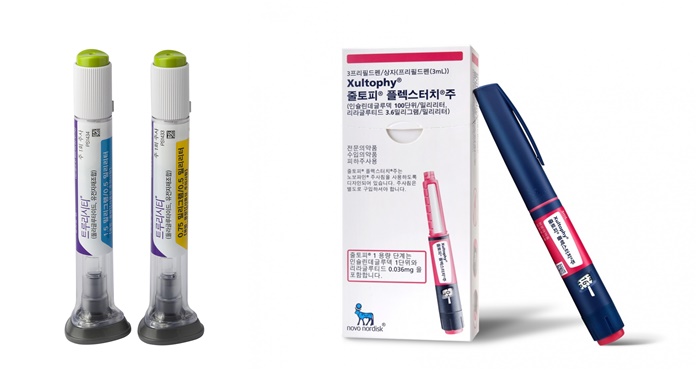
- As the news of GLP-1 (Glucagon-like peptide-1)-type diabetes treatments being used in clinical settings is reported one after another, concerns about this are growing. According to the medical community on the 4th, Novo Nordisk Pharmaceutical Korea is currently informing the clinical site of the out-of-stock news of Xultophy, a GLP-1 series diabetes treatment. Xultophy is a drug that controls blood sugar in adult type 2 diabetic patients and is a fixed ratio combination (FRC) of our company's basal insulin degludec and the GLP-1 analog liraglutide. After approval by the Ministry of Food and Drug Safety in Korea in 2019, it was applied as a benefit in May 2021 and is being used in clinical settings. However, due to the imbalance between demand and supply around the world, the aftermath also affected domestic clinical sites, resulting in out-of-stock products. The problem is that Lilly Trulicity, which was widely used as a GLP-1 diabetes treatment in domestic clinical settings prior to Xultophy, is also out of stock. In the clinical field, in the case of Trulicity out of stock, it is evaluated as the effect of concentration of production of Mounjaro, which is expected as a new drug for diabetes and obesity. A professor of endocrinology at general hospital A, who requested anonymity, said, "I heard that Xultophy may be out of stock soon after Trulicity. We inform patients in advance during treatment." The professor explained, "While checking the inventory status of the drugstore, some patients who were prescribed Trulicity are replacing it with DPP-4 inhibitor drugs." As a result, Soliqua is the only GLP-1 diabetes treatment that can be used as reimbursement in clinical settings. In the case of Xultophy, it can be replaced with Soliqua, but in the case of Trulicity, it is not easy to replace it with the corresponding treatment, the clinical field explains. Another professor of endocrinology at a tertiary general hospital who is an executive officer of the Korean Diabetes Association said, “There is no GLP-1 treatment that can be replaced with reimbursement for Trulicity, so the burden of non-reimbursement drugs will increase for patients. "For patients who are prescribed both insulin and Trulicity, Soliqua or Xultophy can be substituted, but there is no direct substitute for Trulicity," he pointed out. He said, “In this situation, as even Xultophy is out of stock, it seems that only Soliqua will be able to prescribe normally for the time being.” It is expected that the prescription of type 1 diabetes drugs will be disrupted." Meanwhile, current domestic and international diabetes treatment guidelines recommend preferentially considering GLP-1 injections, which have proven cardiovascular benefits, with SGLT-2 inhibitors in patients with atherosclerosis. Due to the high weight loss effect of GLP-1 injection, it is considered first in obese patients. Thanks to the guidelines, the domestic GLP-1 injection market, which is being applied as a benefit, is growing day by day. According to UBIST, a drug research institute, Trulicity recorded 54.7 billion won in sales last year, expanding its influence in the domestic clinical field. It recorded sales of 27.9 billion won in the first half of this year, continuing the upward trend of the previous year. Similarly, Xultophy recorded sales of 7.9 billion won in the first half of this year following the prescription record of 11.1 billion won last year. Soliqua is also showing sales growth, recording 6.3 billion won last year and 3.4 billion won in the first half of this year.
- Policy
- MOHW to expand ‘approval-assessment-negotiation’ project
- by Moon, sung-ho Aug 09, 2023 05:49am
- With the pilot project for the parallel operation of the ‘approval-assessment-negotiation linkage’ system that was implemented to shorten the drug reimbursement process in full swing, additional drugs are expected to be selected for the project in 2H this year. This is because the health authorities started a demand survey to select additional candidates for the pilot project in the second half of the year. Therefore, industry interest is rising on which items will additionally benefit. Pic. MOHW, HIRA, and NHIS have been operating the pilot project for the parallel operation of the ‘approval-assessment-negotiation linkage’ system this year According to industry sources on the 3rd, the Ministry of Health and Welfare, Health Insurance Review and Assessment Service, and National Health Insurance Service are planning to expand the operation of the ‘approval-assessment-negotiation linkage’ pilot project in 2H this year. The health authorities have been promoting a pilot project that included the parallel operation of the approval, benefit evaluation, and drug price negotiation system. The system was implemented to address the issue of how long and complicated the process for the reimbursement of high-priced rare diseases is. The authorities prepared a system that simultaneously operates the whole approval to reimbursement and drug price negotiation process. President Suk-Yeol Yoon had pledged to expedite the listing of ultra-high-priced drugs and expand reimbursement during his presidential campaign. Accordingly, the health authorities recently selected the neuroblastoma treatment Qarziba Inj (dinutuximab, Recordati) and the progressive familial intrahepatic cholestasis treatment advanced Bylvay (odevixibat, Ipsen) as priority candidates for its pilot project. Qarziba Inj, which is manufactured by the Italian pharmaceutical company Recordati, is being supplied by the Korea Orphan & Essential Drug Center in Korea. The drug is indicated for the treatment of high-risk neuroblastoma in patients aged 12 months and above. Bylvay is indicated for the treatment of pruritus in patients 3 months of age and older with progressive familial intrahepatic cholestasis. The drug received FDA approval in 2021. In Europe, the drug was approved to treat patients from the age of 6 months with progressive familial intrahepatic cholestasis. The French pharmaceutical company Ipsen had acquired Albiero which owns Bylvay earlier this year. The health authorities are now planning to select additional candidates for the project through a demand survey in 2H this year. The drug currently being discussed is 'Pluvicto (lutetium (177Lu) vipivotide tetraxetan), Novartis' prostate cancer drug. Also, Cablivi (caplacizumab), Sanofi's acquired thrombotic thrombocytopenic purpura (aTTP) treatment, is also being considered as a candidate. An industry official who requested anonymity, said, “The pilot project will be conducted in 2H 2023 to minimize the registration period for drugs that have proven superior treatment effects for patients with no appropriate treatment and a life expectancy of less than 1 year. The authorities will select candidates for the pilot project in 1H and carry out the project in 2H.” He added, “A demand survey may be conducted for Novartis’s ‘Pluvicto’ and Sanofi’s ‘Cablivi’ in 2H this year. The drugs subject to the project need to go through the MFDS’s Global Innovative products on Fast Track (GIFT), so the GIFT system is also being extended.”
- Policy
- Insurance price ceiling reeval negotiations to end on Aug 18
- by Lee, Tak-Sun Aug 09, 2023 05:49am
- The pricing negotiations for items subject to revaluations of their insurance price ceiling in Korea are taking place from the 4th to the 18th of this month. The negotiations are expected to be completed within the deadline as the National Health Insurance Service has been discussing the measures with pharmaceutical companies in advance. Therefore, the adjusted drug price will be announced on the 1st of next month after the results of the negotiations are reported to the Health Insurance Policy Deliberation Committee at the end of this month. According to the NHIS on the 8th, the Ministry of Health and Welfare issued a negotiation order on a total of 12,800 items by 206 companies that received insurance price ceiling reevaluations. Although 16,000 items were known to have received reevaluations, items that had already completed negotiations and were adjusted accordingly were excluded from the negotiations. The Generic Drug Division of the Pharmaceutical Benefits Department of NHIS plans to divide the companies subject to negotiation into 3 types and complete the negotiations by the 18th. HIRA had received data from pharmaceutical companies until last February and conducted a re-evaluation on the price ceiling of subject drugs. The first results were released in May after the results were reviewed by the Drug Reimbursement Evaluation Committee. After the results of the first evaluation were released, companies filed objections on 1,300 items, and the review results of the objections were finally deliberated by DREC on the 3rd. Afterward, HIRA transferred the results of the re-evaluation to NHIS. The NHIS had held discussions in advance with pharmaceutical companies before the main negotiations since last April and agreed on most of the terms of the negotiations. An NHIS corporation explained, "The pharmaceutical companies cooperated well with the NHIS during the preliminary discussion period and there seems to be no problem in completing the negotiations as scheduled." The reevaluation of the insurance price ceiling has been in progress to maintain or lower the upper limit set for insured drugs depending on whether or not the listed drugs meet the criteria for bioequivalence tests and DMF listing. Drugs that satisfy both requirements – DMF and self-bioequivalence tests – can maintain their price as is, and the price of those that only meet one of the requirements is adjusted to 85%, and those that meet none are adjusted to 72.25% of the previous price. Meanwhile, the 5,000 drugs subject to the second round of reevaluations by NHIS also submitted their data last month, and their review is expected to begin soon.
- Policy
- When will domestic COVID-19 Txs be officially approved?
- by Lee, Hye-Kyung Aug 08, 2023 05:30am
- Voices calling for the approval of domestic COVID-19 treatments are rising. Petitions and heated discussions are being made on the free bulletin board of the Ministry of Food and Drug Safety’s website for the marketing authorization and accelerated review of homegrown COVID-19 treatments. The items that are receiving attention on the yay or nay of approvals are Ildong Pharmaceutical’s ‘Xocova (ensitrelvir)’ and Hyundai Bioscience’s ‘Xafty.’ Xocova was developed by Japan’s Shionogi Pharmaceutical. Ildong Pharmaceutical conducted a domestic clinical trial for the drug. The drug was unable to receive EUA in Korea last year, and the company applied for official marketing authorization for the drug in January this year. However, 8 months have passed and the drug has not even been designated as a subject for expedited review until now. On this, an MFDS official said, "It is difficult to disclose specifics on why a certain drug’s EUA review is being delayed. In some cases, the pharmaceutical company is unable to make follow-up measures after the MFDS gives feedback like insufficient supplementary data after primary review. The reason may differ by individual drug.” In the case of Xafty, a new drug candidate for COVID-19, Hyundai Bioscience submitted the results of its Phase II trial on Xafty to the Korea Disease Control and Prevention Agency in April to request emergency use approval. According to Hyundai Bioscience, in a Phase II trial conducted on 300 patients, Xafty reduced the time to improvement of COVID-19 symptoms by 4 days compared with the placebo. In particular, the company stressed that niclosamide, the main active ingredient of Xafty, has a verified profile as it has been used as an insect repellent for 60 years around the world. Xocova applied for marketing authorization in January and and Xafty for EUA in April. With their results still unknown, voices urging for results have been rising through public petitions and MFDS’s online bulletin board. One person said, “It has been 6 months since Xocova applied for approval, and 3 months since the start of the EUA review for Xafty has started. Why hasn’t the government decided upon their approval or non-approval still? We’re talking about the same authorities that approved Paxlovid in only 7 days.” Another person wrote, "3 months have passed since the drug’s Phase II trial was completed, and the drug has not been granted the EUA still. This is contrary to the purpose of granting EUAs.” Another added, "It is ironic that we seek to become a pharmaceutical powerhouse with pharmaceutical sovereignty in this state. What is the reason for the delay in approval?”
- Policy
- The price of 6 items of Choline alfoscerate is cut
- by Lee, Tak-Sun Aug 08, 2023 05:30am
- Despite the government's decision to limit reimbursement, the brain function-improving drug Choline Alfoscerate continues to come out with price cuts due to increased usage. It was found that 6 Choline Alfoscerate items were included in the PVA type Da negotiations this year as well. According to the industry on the 7th, negotiations were conducted as Gliatamin drugs such as Gliatamin were included in the Type Da target this year. Choline Alfoscerate ingredient items that have been negotiated are Ahn-gook Kanoa Soft Cap., Korea Prime Pharmaceuticals Gria Soft, Daewoong Bio Gliatamine Soft Cap, and Gliatamine. They negotiated for the number of claims in 2022 to exceed the PVA Type Da standard. Criteria for each type is when the claim amount for the calculated drug increased by 60% or more from the previous year's claim amount or increased by 10% or more and the increase amount was 5 billion won or more. In the case of Ahn-gook Kanoa, the number of outpatient prescriptions based on UBIST was 6.8 billion won in 2022, up 68% from the previous year, Korea Prime Pharm. Gria’s sales were 29 billion won, up 17% from the previous year, and Daewoong Bio Gliatamin’s sales increased by 5% to 115.6 billion won. Kanoa and Gliatamine had their drug prices reduced last year as PVA. The use of Choline alfoscerate continues to increase despite the decision to reduce benefits in 2020. In September 2020, the government decided to allow reimbursement for Choline Alfoscerate drugs only for dementia patients and apply selective reimbursement by applying 80% patient copayment for the remaining indications. Specifically, 'secondary symptoms and degenerative or degenerative brain organic mental syndrome due to cerebrovascular defects: memory loss and confusion, disorientation due to decreased motivation and spontaneity, decreased motivation and spontaneity, and decreased concentration' in patients diagnosed with dementia It was agreed that reimbursement would be recognized for administration and 80% patient copayment would be applied to prescriptions other than the accreditation standards. The implementation has been suspended as related pharmaceutical companies filed lawsuits for suspension of execution and cancellation of benefit reduction. Since then, even the indications have been reduced in the process of clinical re-evaluation planning, but the amount of prescriptions in the field has not decreased. Even last year, the Choline Alfoscerate preparation Chongkundang Gliatirin Soft Cap. 10 items, including original drugs, were included in the PVA target, and the drug price was reduced.

- Policy
- Cough Syrup and Synatura Syrup complete PVA negotiations
- by Lee, Tak-Sun Aug 08, 2023 05:30am
- Respiratory drugs such as Cough Syrup and Synatrua Syrup were found to have been added as subjects for drug pricing negotiations under the Price-Volume Agreement (PVA) this year. The use of the items had increased significantly last year due to the sharp increase in confirmed COVID-19 cases last year. According to industry sources on the 7th, the National Health Insurance Service added 134 items and updated the list of drugs that completed drug pricing negotiations as ‘Type C PVA drugs’ recently. Previously, the number of items subject to PVA Type C negotiations this time was known to be 138, and a similar number of items had been added to the list as those that completed negotiations as of July 31st. Among the added items, antitussive expectorants, antibiotics, and antivirals stand out as the use of the drugs was presumed to have increased due to the increase in confirmed COVID-19 cases last year. Specifically, the drugs include Yuhan Corp’s ‘Cough Syrup,’ Daewon Pharmaceutical’s ‘Codaewon Forte Syrup,’ Ahngook Pharm’s ‘Synatrua Syrup,’ Hanmi Pharm’s ‘Cossac-L Tab,’ Hanwha Pharma’s ‘Muteran Cap. 200mg,’ Korea United Pharm’s ‘Kalomin Tab And Kalomin S Tab.’ According to UBIST, outpatient prescriptions of the Cough Syrup had increased 111% YoY to record ‘KRW 26.7 billion’ last year. Prescriptions of Codaewon Forte Syrup had also increased 88% YoY to reach KRW 21.6 billion, and Synatrua Syrup by 96% to record KRW 35 billion. Prescriptions of Cossac-L Tab increased by 121% to reach KRW 5.6 billion. Prescriptions of major items increased by around 100%, and the dominant analysis in the industry is that this is because prescriptions for respiratory drugs, such as antitussive expectorants and antibiotics increased significantly with the rise of confirmed COVID-19 patients last year. Drugs are subject to drug pricing negotiations as Type C of the PVA if its claims amount of a drug increases by over 60%, or by 10% but the increased amount exceeds KRW 5 billion. Therefore, drugs whose claims have increased by around 100% due to the influence of COVID-19 were highly likely to be included in the PVA negotiations and subject to price cuts. Regarding the issue, the pharmacuetical industry insisted that drugs whose use increased due to COVID-19 should be excluded from PVA negotiations, and the health authorities partially accepted this claim and decided to adjust the use amount of drugs related to COVID-19. For example, the government prepared a correction formula that excludes the 10 months last year when the number of COVID-19 patients surged and converts the claims amount of the 2 remaining months into 12 months to compare with the claims amount of the previous year. As a result, the use amount of 36 items of the same product group was corrected and completed negotiations with the NHIS. In addition to respiratory drugs, blockbuster drugs used to treat chronic conditions such as Boryung’s ‘Dukarb Tab,’ Hanmi Pharm’s ‘Rosuzet Tab,’ Chong Kun Dang’s ‘Telminuvo Tab,’ and AstraZeneca’s ‘Xigduo XR Tab’ were also found to have completed negotiations this time.
- Policy
- Paxlovid and Dong-A’s Diosmin Powder were approved in July
- by Lee, Hye-Kyung Aug 07, 2023 05:23am
- The number of prescription drug approvals decreased significantly in July. The approvals, which had continuously increased from 70 in May to 93 in June, had fallen to record 29 in July. However, the drugs approved were nevertheless as significant as Pfizer Korea’s COVID-19 treatment ‘Paxlovid (nirmatrelvir, ritonavir)’, which had first been introduced to Korea through the EUA (emergency use authorization) during the COVID-19 outbreak, received formal approval as a new drug in Korea, and the Takeda-developed Celltrion-owned ‘Alo Gliptinpio Tab’ was approved for export. Drugs Approved in 2023 In July, a total of 76 drugs were approved by the Ministry of Food and Drug Safety. Compared to the previous month, the ETC approvals were reduced by 64, and OTC approvals increased to 47 and exceeded the number of ETC approvals. ◆OTC drugs== A total of 47 over-the-counter drugs were approved (registered) in July. Among those, 3 were data submission drugs(incrementally modified drugs, IMDs), which are modified versions of existing drugs that underwent safety and efficacy reviews due to changes in ingredient, salt base, or dosage form. OTCs approved in July KyungDong Pharma’s Gnal-N Ace Soft Cap (IMD, approved on July 12) Gnal-N is the first product that made KyungDong Pharm, a pharmaceutical company that had previously been focused on clinical areas, familiar to the public. The Gnal-N series was first released in 2009 with the ibuprofen combo ‘Gnal-N Tab,’ followed by ‘Gnal-N Q Tab', ‘Gnal-N Nose Soft Cap, ‘Gnal-N Cold Soft Cap,’ ‘Gnal-N Cough Soft Cap,’ ‘Gnal-N Nose Plus Soft Cap.’ The company received additional approval for ‘Gnal-N Ace Soft Cap’ which contains a combination of acetaminophen and riboflavin on July 12, and increased its Gnal-N product line-up to 13. Gnal-N Ace Soft Cap is indicated for headache, toothache, pain after tooth extraction, sore throat, ear pain, joint pain, neuralgia, back pain, muscle pain, shoulder pain (stiff shoulder), bruise pain, fracture pain, sprain pain, menstrual pain. analgesia of traumatic pain, chills, and fever. Dong-A Pharmaceutical’s Dong-A Pharm Diosmin Suspension Powder (IMD, approved on July 18) Dong-A Pharmaceutical will soon be releasing its approved ‘Dong-A Pharm Diosmin Suspension Powder’ that offers improved convenience in intake to pharmacies in Korea. Each packet of the drug contains diosmin 600mg that can be dissolved into water for intake. It is indicated to improve symptoms related to venous insufficiency (leg heaviness, pain), as supplementary treatment for disorders caused by capillary fragility, and treatment of symptoms related to hemorrhoids. It will be released to pharmacies as a box with 10 packets. Meanwhile, latecomers such as Dong-A Pharmaceutical, Hanmi Pharm, Chodang Pharm, and Samjin Pharm have increased their presence in the diosmin market by releasing high-dose oral hemorrhoids treatments one after another. Dong-A Pharmaceutical's annual sales of Diomax Tab doubled from KRW 500 million in 2020 to KRW 1 billion in 2021, based on IQVIA data. Last year, Diomax posted sales of KRW 1.1 billion, occupying 48% of the market the high-dose (600mg) oral hemorrhoids treatment market. ETCs approved in July ◆ETC=Two new prescription drugs were approved in July. 14 data submission drugs and 13 generics and others were also approved the same month. Celltrion’s ‘Celltrion Alo Gliptinpio Tab 25·15mg, 25·30mg (for export, Approved on July 6 and 7) Celltrion received approval for Celltrion Alo Gliptinpio Tab 25·15mg, and 25·30mg for export on July 6 and 7, respectively. The drug is a new combination made by the company using its rights for ‘Nesina' and 'Actos', which it acquired from the Japanese pharmaceutical company Takeda Pharmaceuticals. Takeda Pharmaceuticals had been directly selling Nesina in Korea until 2020, but in December 2020, it sold all rights, including sales rights and patents, of 12 ETC drug brands and 6 OTC drugs in 9 Asia-Pacific countries to Celltrion Pharm to adjust the size of its debt. I did. Alogliptin and pioglitazone can help patients control blood sugar levels, and patients with Type 2 diabetes can take them to control blood sugar along with diet and exercise. Since last year, Celltrion Pharm has been strengthening its product lineup receiving approval for drugs to export overseas. Sanofi-Aventis Korea’s Enjaymo Inj (new drug, Approved on July 12) Sanofi’s ‘Enjaymo Inj,’ which is indicated to treat adults with cold agglutinin disease (CAD), was also recently approved in Korea. The drug is used to treat the breakdown of red blood cells (hemolysis) in adults with cold agglutinin disease (CAD), which is a form of autoimmune hemolytic anemia (AIHA), CAD is a rare type of autoimmune hemolytic anemia caused when antibodies called cold agglutinins bind to the surface of red blood cells. When cold agglutinins bind to the surface of red blood cells, the body's immune system mistakenly attacks and destroys healthy red blood cells. Pfizer Korea’s Paxlovid Tab (new drug, Approved on July 14) Pfizer Korea’s ‘Paxlovid,’ which was first introduced in Korea through the emergency use authorization (EAU) track during the spread of COVID-19, received official approval in Korea. Paxlovid was granted EAU by the MFDS on December 27, 2021, the same year the number of confirmed and seriously ill patients with COVID-19 surged and the Omicron variant spread, raising the need for an oral treatment for COVID-19. It has been formally approved as a prescription drug 1 year and 7 months after its introduction to Korea. Patients who take Paxlovid take two tablets at the same time. Nirmatrelvir blocks protease (3CL protease) to prevent the production of proteins necessary for viral replication, thereby inhibiting the proliferation of the virus, and ritonavir inhibits the enzyme (CYP3A4) that breaks down nirmatrelvir, extending its duration of effect. After a careful review of the results of the Phase III clinical trial (therapeutic confirmatory trial) conducted on adult patients, the drug was officially approved in Korea in accordance with the 'Pharmaceutical Affairs Act,’ The EAU for Paxlovid, which has allowed patients to use the drug free of charge, will remain in place as is.
- Policy
- Sotyktu, the world's first TYK2I, received domestic approval
- by Lee, Hye-Kyung Aug 04, 2023 05:38am
- The Ministry of Food and Drug Safety (Minister Oh Yoo-Kyung) approved BMS Korea's new plaque psoriasis drug 'Sotyktu 6mg' on the 3rd. Psoriasis is a chronic skin disease caused by immune abnormalities, and plaque psoriasis is the most common form. Sotyktu treats psoriasis by selectively inhibiting 'tyrosine kinase-2 (TYK2)' receptors related to inflammation and immune response by oral administration. The drug was approved by the US FDA in 2022 for use in adult patients with moderate to severe psoriasis who require systemic therapy or phototherapy. Sotyktu is the world's first and only TYK2 inhibitor approved for use and is the first oral drug available for moderate to severe psoriasis in 10 years. It is based on the comparative phase 3 POETYK PSO-1 and POETYK PSO-2 studies. This drug confirmed improved efficacy at 16 and 24 weeks after administration compared to the placebo and Otezla, and the clinical efficacy was found to last up to 52 weeks. This drug is expected to provide a new treatment opportunity for adult patients with moderate to severe plaque psoriasis who require phototherapy or systemic treatment. The Ministry of Food and Drug Safety said it would continue to do its best to expand treatment opportunities for patients by promptly supplying treatments whose safety and efficacy have been sufficiently confirmed based on regulatory science expertise.
