
- LOGIN
- MemberShip
- 2026-05-04 17:16:28
- Policy
- Voluntary price reduction of Diacomit/Olpadine up to↓40%
- by Lee, Hye-Kyung Jun 05, 2023 05:37am
- The drug prices of Diacomit, a treatment for Dravet syndrome, and Olpadine, a treatment for hereditary tyrosinemia, which is a rare essential drug, fell by up to 40%. The KOEDC said in a press release on the 1st, “In the case of Diacomit and Olpadine, insurance prices were voluntarily reduced on April 1 and May 1, respectively.” As a result, the price of Diacomit per capsule was reduced by about 23% from 19,160 won to 14,700 won. This is due to the fact that overseas wholesalers can reduce transportation costs by importing directly from the manufacturer, and as export certification by the manufacturer becomes possible, tariff exemption is possible under the Korea-EU FTA. Olpadine cut the price by about 40% from 37,386 won per capsule to 22,420 won to adjust for the difference between the cost of import and insurance drug price. As a drug subject to tariff exemption, the insurance price of Enhertu, a breast cancer treatment, was cut from 5.4 million won to 5 million won, and the Alzheimer's drug, Aduhelm, was cut from 3.44 million won to 3.2 million won. The Korea Customs Service imposes a basic tariff rate of 8% when importing medicines from abroad, but no duty is imposed on immune products. The KOEDC took note of this and reduced drug prices through tariff reductions on Enhertu, a breast cancer treatment, and Aduhelm, an Alzheimer's treatment. Enhertu applied for a preliminary review to the Korea Customs Service in June 2022 and was notified of the result in August 2022, and the drug price per vial was reduced from 5.4 million won to 5 million won through tariff reduction. Aduhelm applied for a preliminary review to the Korea Customs Service on March 7, 2023, and was notified of the result on March 20, 2023. Through tariff reduction, the drug price per vial increased from 2.04 million won to 1.9 million won for 170 mg, and 3.44 million won for 300 mg was reduced to 320 million won. In the case of Quinidine, a rare arrhythmia treatment, an attempt was made to import and supply it as an Epic Pharma drug due to Sandoz’s suspension of supply in June 2022, but the cost of the drug was 75 times higher than the existing drug price (50,000 won/bottle), adding to the patient’s burden. The KODC announced that it has been able to supply Nisco Quinidine, which can be imported directly from the manufacturer, by lowering the price to 35,000 won through continuous efforts.
- Policy
- Evrysdi, a tx for Roche's spinal muscular dystrophy, passed
- by Lee, Hye-Kyung Jun 05, 2023 05:37am
- Roche Korea's oral 5q spinal muscular atrophy treatment Evrysdi Dry Syrup has been recognized for its benefits and has crossed the insurance threshold. The HIRA released the results of the '2023 6th Pharmaceutical Reimbursement Evaluation Committee' deliberation on the 1st. Ace Pharma's Megval 50mg and H.I.Pharm's Melpspal 50mg, both of which are Evrysdi and Melphalan Hydrochloride-component multiple myeloma treatments, were all approved for reimbursement. Evrysdi is a liquid formulation that is taken orally once a day and can be applied to patients who have difficulty in spinal treatment. The effect of improving motor function and the safety profile was confirmed in patients with a wide range of disease types, including patients of a wide age range from 2.2 months to 25 months of age and patients with scoliosis-related surgery experience. Since self-administration is possible at home, it reduces not only the additional direct medical costs related to hospitalization and visitation, which occurred during the existing intrathecal injection treatment, but also the burden of indirect medical costs such as study and work interruption, transportation costs, and nursing care, which are accompanied by this, reducing insurance finance It is evaluated that it can produce the effect of reducing the socio-economic burden. In addition, it is a customized prescription according to age and weight, and the liquid formulation corresponding to the recommended dose can be taken once a day. Megval and Melpspal 50mg, whose main ingredient is Melphalan Hydrochloride, have been approved for multiple myeloma treatment. The dosage is 0.4 mg per kg of body weight (16 mg/m2) intravenously over 15 to 20 minutes for adults, and for patients with renal impairment (BUN > 30 mg/dL), reduce the dose by half.
- Policy
- Non-face-to-face demonstration will be alternative relief ?
- by Lee, Jeong-Hwan Jun 05, 2023 05:37am
- While the non-face-to-face treatment pilot project started on the 1st, it is attracting attention that the government will "seek ways to use substitute drugs" as a way to prevent inconvenience caused by the lack of prescription drugs at the pharmacy near the patient after treatment. There is a lot of interest in whether the alternative treatment simplification method can be implemented within the pilot project period, such as exempting the follow-up notification of alternative treatment limited to non-face-to-face treatment. In particular, the government also announced that it will prepare guidelines such as banning automatic allocation of pharmacies after prescribing for non-face-to-face treatment platform management and regulation measures, and to induce improvement in case of problems after monitoring the platform by operating a pilot project advisory group such as the pharmaceutical society. On the 1st, the Ministry of Health and Welfare answered a question about the non-face-to-face treatment operation plan of Rep. Jeon Hye-sook, a member of the National Assembly Health and Welfare Committee. First, the government said that it would use alternative drugs to prevent cases of inconvenience because the medicines prescribed by medical institutions that have performed non-face-to-face treatment are not in pharmacies located near the patient's area. Starting from the pilot project, the method of receiving prescription drugs after the non-face-to-face treatment will be changed from delivery to the patient's (agent)'s direct visit to the pharmacy. The government's will to minimize the situation where the pilot project has a hard time because there is no medicine in the pharmacy through alternative medicine. In order to improve this inconvenience and lack, pharmacists are demanding that non-face-to-face treatment be allowed to 'simplify post-notification of replacement drugs' and 'prescribe ingredients'. However, the Ministry of Health and Welfare did not take a specific position regarding the exemption of non-face-to-face treatment substitutes, the introduction of simpletion, or ingredient name prescriptions. I answered only with the intention of using the alternative medicine system to solve the problem that occurs when non-face-to-face prescription drugs are not in pharmacies. The Ministry of Health and Welfare announced that it has prepared guidelines such as 'prohibition of automatic allocation of pharmacy' on ways to manage and control expedient, illegal, and deviant behavior of non-face-to-to-face treatment platforms. In particular, he said that he would monitor the platform through the operation of a non-face-to-face treatment pilot project advisory group in which health and medical organizations such as the Korean Pharmaceutical Society participate, and would demand improvement if there were any problems. However, the Ministry of Health and Welfare has made it clear that in order to impose legal obligations on platform laws, or to make effective regulations such as data submission requirements and corrective orders, it is necessary to legislate the institutionalization of non-face-to-face treatment. The Ministry of Health and Welfare said it would "promote amendments to the health care law based on the legislation proposed by the National Assembly" regarding platform regulation. The Ministry of Health and Welfare did not provide a specific position or method on the 'electronic prescription' that electronically transfers a prescription issued by a doctor to a patient-designated pharmacy after a non-face-to-face treatment. "The method of sending and delivering prescriptions from medical institutions to pharmacies is to deliver faxes, e-mails, etc. to pharmacies designated by patients," the Ministry of Health and Welfare explained. In addition, during the pilot project period, we reaffirmed our position that it is in principle to implement non-face-to-face treatment with video treatment rather than telephone consultation. He said that the principle of video treatment is to conduct non-face-to-face treatment as a 'means that can communicate with real-time video communication', not just by phone call or voice. "Elderly people who have difficulty making voice calls or do not have smartphones can have non-face-to-face treatment with voice calls," the Ministry of Health and Welfare said. It is read that even if a non-face-to-face patient lies that it is difficult to make a video call or does not have a smartphone, there is no way to specifically isolate or regulate it. When asked if the government plans to support the cost of building a video care system for medical institutions during the pilot period, the Ministry of Health and Welfare said, "there is no separate cost support plan."
- Policy
- The method of revaluation of wages that Godex has changed
- by Lee, Tak-Sun Jun 05, 2023 05:36am
- It is noteworthy whether HIRA will act as a variable by changing the evaluation method starting with the re-evaluation of benefit adequacy this year. The improved evaluation method is to increase the objectivity of the social demand part, which is the third evaluation item. Accordingly, in the case of drugs whose clinical usefulness is unclear but whose cost-effectiveness has been recognized, the evaluation of social needs is expected to be evaluated in more detail. The Ministry of Health and Welfare announced on the 30th of last month that the Health Insurance Policy Deliberation Committee deliberated on ways to partially improve the 2024 benefit adequacy re-evaluation target and benefit adequacy re-evaluation method. The proposal to improve the re-evaluation of benefit adequacy reported to this committee was prepared at a meeting held in December of last year to reinforce the method of evaluating social needs. The beginning was because of the Godex capsule. Although the clinical usefulness of Godex Capsule was unclear in the re-evaluation of reimbursement adequacy last year, the cost-effectiveness was recognized due to the drug price cut, and the benefit was finally maintained. In response, the members of the relevant committee raised an issue, and after re-submitting the agenda, the deliberation was finalized. At the same time, it was requested to strengthen the evaluation method such as social demand. The HIRA prepared and reported an improvement plan by reflecting only the part of the evaluation method requested by the committee in the 'review of drug benefit adequacy rationalization plan', which ended in March. In the improvement plan, the terms of the clinical usefulness item were changed to specify the purpose of the evaluation contents, and the quality level was considered in addition to the literature ratio that recognized the effect when evaluating clinical effectiveness. Accordingly, it was decided to judge that it is clinically useful only when it is evaluated above 'some' in terms of medical recommendation and clinical effectiveness. In addition, the social demand item is greatly improved. It will be specified in three evaluation items, including medical factors, and will be evaluated in a score method by determining details. Afterward, the scores were summed up and the final evaluation was decided by a committee composed of 11 members. In the meantime, social demand items have not been evaluated with points, but have been assessed by reviewing society's opinion collection, civic and patient group opinion submissions, financial impact through calculation of financial impact, medical importance, age, and patient's economic burden. In order to maintain benefits, it is possible if it is judged to be primarily clinically helpful or if the clinical usefulness is unclear, but cost-effective and social demand is high. In the revised plan, the conditions for maintaining reimbursement for drugs with unclear clinical usefulness are expected to become much more stringent. In particular, as this improvement plan is decided to be applied for re-evaluation this year, it is expected to affect drugs whose clinical usefulness is unclear. A total of six ingredients are in the process of being re-evaluated this year. Rebamipide, Limaprost Alfadex, Loxoprofen Sodium, Levosulpiride, Epinastine, and Sodium Hyaluronate eye drops will likely have mixed results for pharmaceutical companies.
- Policy
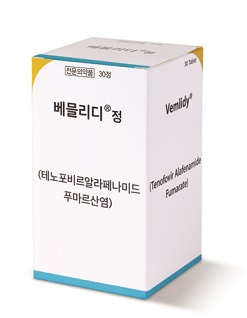
- Vemlidy IMDs compete with lower price
- by Lee, Tak-Sun May 31, 2023 05:37am
- Gilead The latecomers of the hepatitis B treatment Vemlidy that entered the market this year are focusing on their price competitiveness to occupy more shares of the market. Companies that had already reduced their price upon entry are also seemingly holding in check their competitors' prices. According to industry sources on the 29th, Daewoong Pharmaceutical reduced its insurance price ceiling for Vemliver Tab. (tenofovir ala fenamide hemitartar hydrochloride) from KRW 2,828 to KRW 2,473 from June. This is only 3 months after the drug was listed for reimbursement in March. Daewoong Pharmaceutical's voluntary price cuts are interpreted as being conscious of its competitors. Daewoong Pharmaceutical's product had been the most expensive among Vemlidy's latecomers in the market. Currently, all Vemlidy latecomers in the market are incrementally modified drugs that were developed with different salt formations. Dong-A ST, Daewoong Pharmaceutical, and Chong Kun Dang are competing in the market. With Donga ST being the first to be listed in February, Daewoong and Chong Kun Dang also launched their respective IMDs in March. The price of such salt-modified drug is allowed to be set at 90% of the original Vemlidy's highest price, but all three companies reduced the price to be lower than that at the time of initial listing. Dong-A ST’s Vemlia Tab was set at a 70% level at KRW 2,474, Chong Kun Dang’s at 69% at KRW 2,439, and Daewoong’s at 80% at KRW 2,828. All three products received generic marketing exclusivity. Not only were the drugs able to receive reimbursement a month faster than their competitors, but were allowed to sell their products without competition from other identical products for 9 months. The lower price set by the companies are therefore analyzed to be a measure the companies are making to preoccupy the market. Daewoong’s voluntary price cut made its drug KRW 1 cheaper than Donga ST’s Vemlia Tab. Vemlidy is on the rise in the hepatitis B treatment market. Gilead improved the tolerance and nephrotoxicity of its existing HBV treatment Viread and developed Vemlidy. The drug posted outpatient prescriptions of KRW 47.1 billion (UBIST) in Korea last year. Due to increased usage, Vemlidy's drug price was reduced 2 years in a row under the Price-Volume Agreement system. Last year, the price was cut from KRW 3,754 to KRW 3,535 after negotiations as a PVA ‘Type A’ drug, and this year, the price was cut from KRW 3,535 to KRW 3,370 through ‘Type B’ negotiations. This shows how rapidly Vemlidy's prescription volume has been increasing. Targeting this increasing market, the latecomers are aggressively marketing their drugs by lowering the insurance ceiling price. In addition, there is an analysis that the preoccupation of the market with such lower prices will create an entry barrier for other latecomers. In addition to the 3 pharmaceutical companies, Jeil Pharmaceutical, Korea Hutex Pharma, Samil Pharm, Dongkook Pharmaceutical, and Samjin Pharm have received approval for their salt-modified versions of Vemlidy.
- Policy
- Lowest price of dapagliflozin set at 30% of original price
- by Lee, Tak-Sun May 30, 2023 05:33am
- Original In 2 months after the entry of generics in the market, the price difference between the original diabetes treatment Forxiga Tab (Dapagliflozin propanediol hydrate) and its generics has become one-third. This is because in April last year when many Forxiga generics were listed at once to exceed 20, the insurance price ceiling dropped significantly as the listed drugs were applied a stepped pricing model. According to the industry sources on the 26th, the upper insurance price limit was set at KRW 241 for Ahngook New Pharm's ‘Newpharm Dapagliflozin Tab. 10mg’ that was listed on June 1st. Its price had been set at 85% of the 38.69% of the highest price, as more than 20 identical drugs have already entered the market. When more than 20 identical drugs are listed, the price is set at 85% of the lowest price of identical drugs,or 38.69% of the upper limit of the same product, whichever is lower. Based on the calculation standards, the price has fallen to one-third of the original Forxiga’s 10mg highest price (KRW 734). In the case of Forxiga generics, 20 generics immediately entered the market, therefore any additional listings will continue to discount the price. Diabetes treatments such as Forxiga are so cheap, such differences in drug price do not have a significant impact on prescriptions. However, in the case of long-term prescriptions, the patient's burden of cost does increase. For example, Forxiga’s KRW 734 for 90 days amounts to KRW 66,060, whereas the cheapest generic’s KRW 241 for 90 days amounts to KRW 21,690. At 30% of the co-payment rate, the patients will have to bear at most KRW 19,818 for the original and KRW 6,507 for the lowest generic, bringing the price difference borne to KRW 13,311. In other words, the analysis is that generics can be a sufficient alternative to original drugs if the patient wants a cheaper option. However, in Korea, where doctors have the right to prescribe, not many doctors consider the economic feasibility during prescriptions. Therefore, the industry emphasizes that the government should focus on policies that encourage the use of cheaper generics, rather than concentrating only on devising formulas that can reduce drug prices. Meanwhile, the price of the original Forxiga was supposed to be forcibly reduced to KRW 514 following the introduction of generics, but the previous price of KRW 734 won has been maintained as AstraZeneca Korea, the seller, applied and was allowed a stay of execution for the pricing discount from the court.
- Policy
- "Nurturing biopharmaceuticals as the second semiconductor"
- by Kang, Shin-Kook May 25, 2023 11:05pm
- Deputy Prime Minister and Minister of Strategy and Finance Choo Kyung-ho announced that he would soon announce a plan to foster the bio-industry, saying he would foster the second semiconductor for biopharmaceuticals. On the 24th, Deputy Prime Minister Choo visited the Aprogen plant in Osong to inspect the biopharmaceutical production site and said this in a meeting with industry officials. Deputy Prime Minister Choo explained in his remarks at the meeting that followed the on-site inspection of the production facilities that "the bio-industry is emerging as a high-tech industry that promotes the creation of new technologies and industries as it is converged with digital." He said, "It is becoming more important from the perspective of supply chain and economic security. We plan to foster the bio-industry as the second semiconductor." He explained, "The growth of the bio industry, such as the development of innovative new drugs based on AI, depends on how to utilize the vast amount of health and medical data accumulated in NHIS and private hospitals." “We will push for drastic regulatory improvements to nurture data-based digital healthcare startups,” he said. Deputy Prime Minister Chu emphasized, "To leap forward as a global biopharmaceutical production hub, the government plans to actively support private companies' bio investment, such as bio-manufacturing innovation R&D." The participants of the meeting highly appreciated the government's will to foster the bio-industry and requested the government's continued interest and support for the technology-intensive bio-industry, which requires enormous funds and time from product development to commercialization. In response, Deputy Prime Minister Chu said that he plans to announce a plan to foster the bio-industry in the near future, referring to the discussions at today's meeting.
- Policy
- Welireg·Camzyos are approved in Korea
- by Lee, Hye-Kyung May 25, 2023 05:46am
- Welireg, a treatment for von Hippel-Lindau and VHL disease characterized by multiple tumors, and Camzyos, which is used to improve motor function and symptoms in patients with NYHA class II-III obstructive hypertrophic cardiomyopathy, received domestic product approval. It announced on the 24th that it had approved Welireg of MSD Korea and Camzyos of BMS Korea. First of all, Welireg is a drug that inhibits HIF-2α related to cell proliferation, angiogenesis, and tumor growth. It can reduce the risk of surgical excision of the tumor. Hippel-Lindau disease is a rare disease in which incurable multiple tumors occur in the kidney, central nervous system, and pancreas due to mutations in tumor suppressor genes. This drug is used for the treatment of renal cell carcinoma, central nervous system hemangioblastoma, and pancreatic neuroendocrine tumor that does not require immediate surgery in adult patients with von Hippel-Lindau disease, providing new treatment opportunities for patients with these rare diseases. Camzyos is the first treatment for symptomatic obstructive hypertrophic cardiomyopathy in Korea and is expected to provide a new treatment opportunity for patients who have previously used only symptomatic therapy to relieve symptoms. Camzyos has been approved for 4 doses (2.5mg, 5mg, 10mg, 15mg) and relieves excessive contraction of the heart muscle by inhibiting cardiac myosin, and is effective in improving the motor function and symptoms of the patient. The Ministry of Food and Drug Safety said, "We will continue to do our best to expand treatment opportunities for patients with rare and intractable diseases by promptly supplying treatments whose safety and effectiveness have been sufficiently confirmed based on regulatory scientific expertise."
- Policy
- Domestic medical device market share ↑50%
- by Lee, Hye-Kyung May 24, 2023 08:26pm
- The share of domestically produced medical devices exceeded 50%. It is believed that the reason is that the production of medical devices such as in vitro diagnostic devices increased as public health medical products were approved for emergency use after Corona 19. Chae Gyu-han, head of the Medical Device Safety Bureau of the Ministry of Food and Drug Safety, said at a press briefing on the 23rd, “We are analyzing the production status of the medical device industry last year, and the market share of domestic manufactured products exceeded 50%.” It means that we can concentrate on producing essential medical devices for public health when an outbreak occurs and create a system that can stably supply them.” Therefore, the Ministry of Food and Drug Safety has expressed its will to improve the system so that companies with competence do not enter the market due to a lack of licensing experience. Manager Chae said, “The core of Regulatory Reform 2.0, which will be announced soon, is to ensure that the medical device industry develops in line with changes in the policy environment.” " said. Although the domestic medical device industry has developed due to the specificity of COVID-19, it is said that the content of Regulatory Innovation 2.0 will be to prepare an evaluation system to create international-level medical products with prepared technology and experience and to lead the medical device market. While Aimmed's 'Soames' and Welt's 'PillowRx' were recently approved as the 1st and 2nd digital treatment devices (DTx), it also indicated that it would prepare for the development of AI big data-based digital medical products in the future. Manager Chae said, "Deputy Director Oh Yoo-gyeong is also very interested in AI-based medical product development. The Power of the People Rep. Jong-heon Baek and Young-seok Seo of the Democratic Party each proposed the 'Digital Medical Products Act as part of this concern. The bill defines digital medical devices, digital convergence medicines, and digital medical and health support devices as digital medical products prepares an evaluation system and evaluates actual use, introduces an excellent management system certification system, and provides preferential treatment for health insurance benefits. there is. Manager Chae said, "It is expected that the bill will be discussed in the legislative subcommittee, and the management system has been established in line with the era of digital transformation so that digital technology can be applied to medical devices and medicines and used for health care." We will make it legislative,” he said. In line with the enactment of the bill, the Ministry of Food and Drug Safety is also preparing guidelines for the development of digital treatment devices. Manager Chae said, "Even before the legislation, we will prepare guidelines necessary for clinical trials and the development of digital treatment devices." In the field of innovative medical devices and innovative diagnostic devices, he emphasized investment support for selection and concentration. Manager Chae said, “There were concerns about the growth of overall medical devices and the growth of specialized fields, and as a result of conversations with the industry, there were many opinions that selection and concentration were needed.” “I think innovative medical devices and diagnostic devices have competitiveness. We plan to develop areas that can be developed and promote measures such as intensive support.” "Regulatory Innovation 2.0 and the promotion of the Digital Medical Products Act are one of the important projects this year," said Joo Seon-tae, head of the Medical Device Policy Department, who was present at the briefing of the Director of the Medical Device Safety Bureau. did. Seong Hong-mo, head of medical device management, said that she is promoting a project to prepare braille and sign language videos for medical devices to improve information access for the disabled. He said, "The recently revised bill contains information related to information accessibility for the disabled, and it will be a recommendation, not an obligation." He added, "If the sub-law is enacted, it will be conducted by meeting with disabled groups, investigating products that require braille or sign language videos, and recommending them to companies."
- Policy
- Domestic DM combi drugs selected for market competitiveness
- by Lee, Tak-Sun May 23, 2023 05:50am
- LG Chem and Dong-A ST are attracting attention by listing their DPP4i+SGLT2i combination as benefits, lowering the amount added. It is interpreted as being conscious of price competitiveness. According to the industry on the 22nd, Dong-A ST Sugadapa set the upper limit lower than the formula based on addition. This drug is an improved new drug combination, so it was able to receive a drug price that combines 59.5% of the individual ingredients. If there is no addition, you will receive the sum of 53.5% of the individual ingredients. For example, 434 won, 59.5% of 730 won for Evogliptin 5mg and 393 won, 59.5% of 734 won for Dapagliflozin 10mg, was the amount Sugadapa could receive. Dong-A ST decided to list it at 799 won, lower than the formula. As a result, it became the product with the lowest upper limit than the SGTL2!+DPP4i complex, which was released first last month. For the same reason, LG Chem's Zemidapa was also listed lower than the added amount. Zemidapa was able to receive the sum of 68% of the individual ingredients as an innovative new drug complex. The sum of 509 won, or 68% of 749 won for Gemigliptin 50mg and 499 won, or 68% of 734 won for Dapagliflozin 10mg, was able to receive 1,008 won. Zemidapa was also listed at a lower price of 940 won. However, even though the price of Zemidapa has been lowered, the upper limit is higher than that of competing drugs. After one year, the price of the two drugs will drop to the sum of 53.55% of the individual ingredients. Sugadapa is 784 won, and Zemidapa is 794 won. In any case, this is because a lower addition than the existing formula was applied. The low pricing of the two pharmaceutical companies is attracting attention in that they usually try to get a higher upper limit. This can be interpreted as an intention to induce the market to settle down by lowering the price, as metformin + SGLT2i + DPP4i has been covered by reimbursement since April, and the SGLT2i + DPP4i combination was released for the first time in May. Moreover, it seems to be aware of the competition as not only the two domestic products but also four other complexes were released.
