
- LOGIN
- MemberShip
- 2026-05-05 07:23:40
- Policy
- ‘RSA may be applied to non-rare innovative new drugs'
- by Lee, Jeong-Hwan Mar 07, 2023 05:38am
- Chang-Hyun Oh, Director of Pharmaceutical Benefits at the Ministry of Health and Welfare The Ministry of Health and Welfare announced it will improve its policy to allow innovative new drugs to be listed for reimbursement through the risk-sharing assessment (RSA) track even if they are not anticancer or rare disease treatments if they demonstrate a clinical effect. If allowed, it is expected that the scope of drugs that are applied RSA will increase, and more drugs that are not designated as rare disease may be promptly listed for reimbursement as long as they have a good effect. Chang-Hyun Oh, Director of Pharmaceutical Benefits at the Ministry of Health and Welfare, said so at the ‘Discussions for the national measure to manage life-threatening rare diseases’ that was held at the National Assembly on the 6th. Director Oh said, “Only anticancer drugs and rare disease drugs are currently applied RSA, however, we plan to pave the way to take the innovativeness of drugs into account and apply RSA to those drugs. We are discussing how to apply RSA to drugs that clinically demonstrate an improvement in quality of life by determining the scope of recognizing innovation for drugs.” Director Oh reiterated the need to set an appropriate drug price compensation policy for innovative new drugs that the ministry had announced as an improvement task this year. Although the ministry had been flexible in applying the reimbursement listing system to life-threatening diseases until now, Director Oh said that the ministry will introduce a system that can improve patient access to drugs that were not designated as rare disease drugs in the future. Director Oh said, “We will discuss measures to allow the application of RSA to treatments that are not designated as rare diseases to allow compensation of their appropriate drug price as long as the treatments have verified their efficacy. For example, diseases such as generalized pustular psoriasis and short bowel syndrome have not been designated as rare diseases, but we will set a standard that can recognize the innovativeness of these treatments as well.” He added, “Although pharmaceutical companies would need to share a part of the burden, we will contemplate ways to open up opportunities for new reimbursement listings this year. We haven’t decided on to what extent we will be recognizing the innovativeness, but will make more efforts under the policy goal of expanding access to new drugs.”
- Policy
- Tecentriq fails urothelial carcinoma trial but beneficial
- by Lee, Hye-Kyung Mar 06, 2023 05:56am
- Although the conditional clinical trial failed for Roche’s cancer immunotherapy ‘Tecentriq,’ experts in Korea decided to recognize Tecentriq’s benefit for ‘patients with locally advanced or metastatic urothelial carcinoma who are not eligible for platinum-based chemotherapy’ and maintain the indication as it is unethical to reorder clinical trials when these patients have no other alternatives. According to the minutes of the Central Pharmaceutical Affairs Council meeting that was held on November 28th last year which was recently disclosed by the Ministry of Food and Drug Safety, the CPAC members decided to recognize the benefit of the therapeutic confirmatory clinical trial results on Tecentriq. At the time, Roche’s subsidiary Genentech had voluntarily withdrawn Tecentriq’s indication in the US for the treatment of adults with locally advanced or metastatic urothelial carcinoma who are not eligible for cisplatin-containing chemotherapy. In the US, Roche had first acquired Tecentriq’s bladder cancer indication through the Accelerated Approval Program under the condition of conducting a confirmatory trial, then conducted a Phase III IMvigor130 trial to evaluate Tecentriq plus platinum-based chemotherapy for the first-line treatment of people with previously untreated advanced bladder cancer. However, as the designated postmarketing requirement (PMR) did not meet the primary endpoint of overall survival (OS) for Tecentriq plus chemotherapy compared with chemotherapy alone, the company had withdrawn the indication. In 2017, Tecentriq was conditionally approved for the ‘treatment of patients with locally advanced or metastatic urothelial carcinoma who are not eligible for cisplatin-containing chemotherapy and whose tumors express PD-L1 tumor proportion score of at least 5%,’ under the condition that it conducts a therapeutic confirmatory trial to demonstrate superiority over chemotherapy in urothelial carcinoma. The MFDS asked the CPAC to “determine whether the indication should be maintained despite the recent results in the current situation where treatment options have not changed much for urothelial carcinoma since 2017.” To the request, one CPAC member said, “Tecentiq showed an improvement over chemotherapy in some of the efficacy endpoints such as DOR in ITT or PD-L1 positive patients. Therefore, we need to maintain the approval status to offer options to such patients.” The member's opinion was that not many options exist for patients who cannot use platinum-based chemotherapy and that it is better to maintain approval, even if it is a conditional one if the results show a similar level of effect to chemotherapy. Another member said, “Based on the trial, Tecentriq’s combined use with chemotherapy should be excluded, and the indication for patients who are not eligible for platinum-based chemotherapy should be maintained as they have no other options. Therefore, what we need to decide is whether to maintain the indication for patients that can use carboplatin.” The committee chair added the opinion that the company should reconduct the clinical trial in principle. The CPAC chair said, “In principle, the company should conduct the trial again. What matters most is the therapeutic efficacy, so we need to decide whether it is appropriate to allow Tecentriq’s use in all situations and options.” Also, an opinion that it would be better to maintain the indication for patients without options was raised, pointing to how it would not be appropriate to create a situation where the committee's conclusion deprives patients of the only option they may have. The chair concluded, “Although Tecentriq failed the confirmatory trial in urothelial carcinoma, we conclude that we acknowledge the benefits of the drug as it is unethical to order the company to reconduct a clinical trial when patients with locally advanced or metastatic urothelial carcinoma who are not eligible for platinum-based chemotherapy have no other alternatives.” Meanwhile, Roche Korea is known to be discussing whether to maintain Tecentriq’s urothelial carcinoma indication in Korea, with regards to the voluntary withdrawal of the urothelial carcinoma indication in the US.
- Policy
- Full-fledged competition in the ultra-large market
- by Lee, Tak-Sun Mar 06, 2023 05:56am
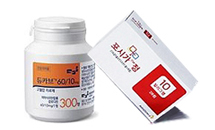
- Competition among domestic pharmaceutical companies surrounding the ultra-large market is expected to intensify from April. About 20 companies are expected to receive benefits in the late-breaking drug market for Dukarb, a high blood pressure complex drug of Boryung, which four companies first entered in March, and AstraZeneca's diabetes drug Forxiga's generics have been poured in in droves since April 7, when the patent expired. because it is highly probable. Last year's outpatient prescriptions were 46 billion won for Dukarb, 48.5 billion won for Forxiga, and 42.9 billion won for Xigduo XR, a combination of Forxiga and Metformina. According to the industry on the 1st, domestic pharmaceutical companies are warming up ahead of entering the large market in April. First, a large number of products licensed in January are expected to be listed in Dukarb's generic market. In March, four companies (Arlico, Hana, Hutecs, and Shin Poong), which were licensed in December, entered the market first. However, most companies were approved in January. Only 23 companies were licensed in January. Unlike the original amlodipine, they used S-amlodipine. Since the patent for Kanarb's active ingredient Fimasartan expired on February 1st, there are no barriers to market entry. However, there is no approved item for Kanarb's generic, which is a single agent. Regarding this, an official from a generic company explained, "I understand that they prefer Dukarb's generic, a combination drug, rather than Kanarb, considering the low price of a single drug and its status as a domestic new drug." Given that many generic companies are small and medium-sized enterprises, it is interpreted that they are establishing market strategies considering costs. Forxiga and Xigduo, which use Dapagliflozin as an active ingredient, the entry barrier has been virtually removed after the first substance patent expired on April 7 as the Supreme Court ruled that the second substance patent was invalid in early February. Regardless of the size of sales, most domestic pharmaceutical companies are expected to jump into the generic market. Only 89 companies have licensed Forxiga and Xigduo generics. However, among these, if the deadline for applying for reimbursement was missed in January, if the same ingredient as the applied combination drug is not on the reimbursement list, or if the drug is the same as generic for exclusivity, it will be difficult to enter the market on April 8. In most cases, registration is expected on May 1st, and in the case of the same drug as the generic for exclusivity item, market entry is only possible after January 7th next year when the validity of the generic for exclusivity expires. It seems that many items other than these products will be paid for at once on April 8th. It is known that a number of companies applied for reimbursement in January, and the HIRA conducted a drug price calculation last month. There is also a concern that the market will become complicated, such as illegal rebate competition, if generics are rushed at once.
- Policy
- GC Biopharma’s Livmarli approved as first ALGS Tx in KOR
- by Lee, Hye-Kyung Mar 02, 2023 05:53am
- The Ministry of Food and Drug Safety (Minister: Yu-Kyoung Oh) announced that the ministry approved GC Biopharma’s ‘Livmarli (maralixibat chloride)’ on the 28th. Livmarli is an imported rare disease drug used to treat cholestatic pruritus in patients with Alagille syndrome who are 1 year of age and older. Alagille syndrome is a rare genetic disorder in which bile builds up in the liver and does not flow out due to reduced number of bile ducts inside the liver. It can also cause cardiovascular, skeletal, ocular, and dermatological complications. According to the Health Insurance Review and Assessment Service data, there were currently 136 patients diagnosed with Alagille syndrome in Korea in 2021. The newly approved Livmarli interrupts bile acid recirculation through inhibition of the apical sodium-dependent bile acid transporter, increasing fecal excretion and reducing the amount of bile acids in the body. As the first treatment available for use to treat cholestatic pruritus in patients with Alagille syndrome, the drug is expected to be of great help to patients who have previously suffered from itchy skin due to this condition. Minister Oh said, “The MFDS will continue to promptly review the safety and efficacy of rare disease drugs and seek innovation in safety to expand and ensure treatment opportunities for people with rare or intractable diseases. This effort will also contribute to realizing the government’s national goal of ‘accompanying the people to realize a happy society.’ The MFDS said it will continue to make the best effort to expand treatment opportunities to patients by promptly supplying treatments with verified safety and efficacy based on its expertise in regulatory science.
- Policy
- Negotiations on the Brukinsa price have begun
- by Lee, Tak-Sun Feb 28, 2023 05:52am
- Crysvita and Dupixent are also negotiating drug prices. It has been found that Chinese pharmaceutical company BeiGene Korea has entered into drug price negotiations with the NHIS for Brukinsa capsules 80mg sold domestically. When the NHIS drug price negotiation is completed, the drug will be covered through a report to the Health Insurance Policy Deliberation Committee of the Ministry of Health and Welfare. According to the industry on the 27th, The NHIS recently disclosed this fact on its website. Since April 2019, The NHIS has been disclosing the drugs ordered by the Ministry of Health and Welfare to NHIS for drug price negotiations on its website for the public's right to know. According to the Ministry of Health and Welfare's negotiation order, the drug price negotiations will be carried out within 60 days between the NHIS and pharmaceutical companies. At the HIRA held on the 9th, this drug was judged to be eligible for reimbursement for WM. WM is a rare blood cancer in which the bone marrow produces many abnormal white blood cells that crowd out healthy blood cells. Previously, the US FDA approved Brukinsa as a WM treatment in September 2021. Meanwhile, the NHIS said Crysvita 10, 20, and 30mg were also included in the drug price negotiations. This drug also passed the committee on the 9th, and the negotiation period was shortened from 60 days to 30 days after prior consultation with The NHIS as a drug to improve the quality of life for children. Crysvita is used for 'FGF23-associated hypophosphatemic rickets and osteomalacia'. The NHIS also said that drug price negotiations are underway for Dupixent, which passed the committee in January. Dupixent, which is currently receiving reimbursement for adult atopic dermatitis, is undergoing reimbursement procedures for pediatric atopic dermatitis.
- Policy
- The value of pharmaceutical bio innovation is reflected
- by Lee, Jeong-Hwan Feb 24, 2023 05:53am
- Second Vice Minister Park Min-sooSecond Vice Minister of Health and Welfare Park Min-soo promised to support the biopharmaceutical sector by implementing drug pricing policies that reflect innovative values and improving the certification system for innovative pharmaceutical companies. Vice Minister Park also asked biopharmaceutical companies to make efforts to create blockbuster new drugs and jobs through bold technology development investment and open innovation. Vice Minister Park made this announcement at the '78th KPBMA regular general meeting' held at the KPBMA on the 21st. Vice Minister Park said, “The biopharmaceutical industry is at a very important juncture in leaping into the global market by having the capacity to develop innovative new drugs and to produce and export high-quality, large-scale medicines.” “We will support our biopharmaceutical industry to grow to the level of sixth in the global market through the establishment of mid- to long-term strategies such as a roadmap for regulatory innovation in the health sector and manpower training plans,” he said. Vice Minister Park said, "We will strive to improve related systems such as drug prices and innovative pharmaceutical company certification systems to appropriately compensate for the value of corporate innovation and ensure a stable supply of essential medicines." Please create blockbuster-level new drugs and create more jobs." Afterward, Vice Minister Park presented the Minister of Health and Welfare Commendation to five people of merit and expressed gratitude for their hard work in the pharmaceutical bio industry.
- Policy
- Expansion of insurance coverage for diabetes drugs
- by Lee, Tak-Sun Feb 24, 2023 05:52am
- SGLT-2 inhibitory antidiabetic drugs (from left: Forxiga, Jardiance, Xigduo XR, Jardiance Duo)While the combination benefit between SGLT-2 diabetes treatment and other treatments is expected to be applied from April, the two-drug regimen between SGLT2 and DPP4, which was omitted from the current discussion, is also expected to be reviewed. It is expected that if the SGLT2+DDP4 complex is applied for reimbursement, it will naturally be sorted out through discussion. According to the industry on the 23rd, some SGLT2+DPP4 combinations have applied for reimbursement to the HIRA. It is known that AstraZeneca's 'Qtern', Boehringer Ingelheim's Esglito, and LG Chem's SGLT-2 inhibitory antidiabetic drugs (from left: Forxiga, Jardiance, Xigduo XR, Jardiance Duo) applied for benefits. MSD's Steglujan is also expected to apply for benefits sooner or later. These items are being promoted to be registered as a benefit in time for April when the benefit is expanded. This is because they are products developed by the original developer of original ingredients, so they can be registered as products regardless of patents. However, 82 products of Dapagliflozin + Sitagliptin approved by domestic pharmaceutical companies are scheduled to be registered after September 1, when the substance patent for Sitagliptin (Januvia) expires. While pharmaceutical companies with combination drugs welcome the news of an increase in reimbursement, attention is focused on whether reimbursement for two-drug combination therapy is also applied. The concomitant benefit drugs currently being discussed for benefit expansion are triple therapy such as metformin + SGLT-2 + DPP-4, metformin + SGLT-2 + TZD, and some SGLT-2 items + sulfonylurea or insulin combination therapy. This is because the 2+DPP-4 two-drug regimen is missing. If the benefit expansion plan is applied as planned, the two-drug combination of SGLT2 + DPP4 should be used as a three-drug regimen with Metformin. As SGLT2 or DPP4 drugs are currently used alone, the pharmaceutical industry insists that these two-drug therapies should also be covered. The HIRA believes that if the SGLT2+DPP4 complex is applied, it is highly likely that the second drug will also be reviewed. An official from The HIRA said, “If a two-drug combination drug is applied for, we will not organize traffic regarding whether or not the second drug will be covered.” There is," he explained. If the review of whether or not to pay for the second system is prolonged, it cannot be ruled out that the third system will be started first, and whether or not the second system will be covered will be discussed later. Judging from the discussion so far, the three-drug combination of metformin + SGLT2 + DPP4 is advantageous in terms of ease of administration, but there are currently no domestically approved drugs.
- Policy
- Daewoong also enter the Vemlidy late-stage drug market
- by Lee, Tak-Sun Feb 23, 2023 05:46am
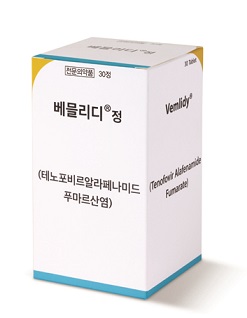
- Gilead’s hepatitis B treatment Daewoong Pharmaceutical and Chong Kun Dang will also enter the late-stage drug market for Vemlidy, a chronic hepatitis B treatment previously occupied by Dong-A ST. Daewoong and Chong Kun Dang's products received a month's delay in obtaining approvals, and their benefits were also applied a month later. According to the industry on the 20th, from March 1, Daewoong Pharmaceutical's Vemlidy and Chong Kun Dang's Tenofobell-A will be covered. The two products are salt-modifying drugs of Gilead Sciences' 'Vemlidy'. Daewoong Vemlidy has Tenofovir Alafenamide HemiFumarate as the main ingredient, and Chong Kun Dang Tenofobell-A has Tenofovir Alafenamide Succinate as the main ingredient. These products succeed in the patent challenge through salt change, obtain generics for exclusivity, and are released before generics when the patent has not expired. The drug price calculation standard for salt-changing drugs is 90% of the original. Daewoong Vemliver costs 2828 won, which is 80% of the original Vemlidy (3,535 won). Chong Kun Dang Tenofobell-A costs 2,439 won, which is 69% of the original price. This amount is cheaper than Donga ST Vemlia's 2,474 won, which was previously applied for benefits. Each generic has a different drug pricing strategy, and it is noteworthy how it will affect market sales. Meanwhile, Jeil Pharm's 'Tecavir-D', which was licensed in the same month as Daewoong's and Chong Kun Dang's, is not on the March reimbursement list. Vemlidy is an upgraded version of Gilead's existing hepatitis B treatment 'Viread'. The patent is scheduled to expire on August 15, 2032, and a generic drug with the same ingredient will have to wait another nine years. Last year, Vemlidy's outpatient prescriptions (based on UBIST) were 47.1 billion won, up 18% YoY.
- Policy
- 9 bepotastine besilate antihistamines listed for reimb
- by Lee, Tak-Sun Feb 23, 2023 05:46am
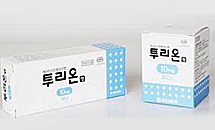
- Leading bepotastine besilate product Sustained-release antihistamine drugs that contain bepotastine besilate will be listed for reimbursement for the first time in Korea. The original bepotastine besilate product developed by Mitsubishi Tanabe Pharma Corporation is Tarion. Tarion was sold by Dong-A ST in 2004 in Korea, and the company withdrew from the Korean market in December 2017 after the drug’s patent expired. Therefore, only its generics that contain the same ingredients and salt-modified products are currently being sold in the Korean market. According to industry sources on the 21st, 9 sustained-release antihistamine products will be listed for reimbursement at a ceiling price of KRW 326 from March 1st. Companies that own related products are the CMO Dongkoo Bio&Pharma, and Mother’s Pharmaceutical, Eden Pharma, Yungjin Pharm, Kukje Pharma, Shin Poong Pharm, Hutecs Korea Pharmaceutical, Myungmoon Pharm, and Union Korea Pharm. This is the first time a sustained-release product that contains bepotastine besilate was listed, and currently ninety-two 10mg bepotastine besilate is taken twice a day, and one once-daily 5mg product is available in the market. Currently, the ceiling price for all the 10mg products is KRW 148 per tablet. By daily dose, the 10mg short-acting drugs cost KRW 296, which is cheaper than the sustained-release drugs, which cost KRW 326. In addition to bepotastine besilate, bepotastine salicylate products that contain a different salt is also available. Also, there are sustained-release products available for bepotastine salicylate. 5 short-acting products and 6 sustained-release products are available each. The ceiling price for these drugs is also KRW 148 for the short-acting product and KRW 326 for the sustained-release products. However, bepotastine besilate products have been showing better performance. Among the major items, Dong-A ST’s Twolion sold the most, recording KRW 9.5 billion in outpatient prescriptions (UBIST), followed by the KRW 4.6 billion made by Daewon Pharmaceutical’s Bepostarbi, then KRW 3.2 billion by Dong Kook’s Bepotan. Among the three products, Twolion and Bepostarbi are bepotastine besilate products and Bepotan is a bepotastine salicylate product. Although the salt-modified sustained-release tablets did not perform so well in the market until now, as sustained-release tablets that contain the same ingredient as the original were released, attention is being paid to whether they will break the existing market structure and drive the market. Antihistamines work as antagonists to excess histamine caused by antigen-antibody reactions and is used for allergic conditions and early cold treatment. In the early days of COVID-19, the market size shrank with the decline in the number of respiratory patients, but last year, it was also used for COVID-19 patients, which led to an upward trend. However, it is difficult for individual companies to develop their products into blockbusters. Competition is fierce in the market with over 100 generics and salt-modified products, and there are several second- and third-generation antihistamines including bepotastine, therefore, it is not easy to foster one product. However, even if the drugs cannot become a blockbuster, the drugs show performance continuously, therefore, industry officials expect the sustained release products can also successfully settle in the market, with sales and marketing activities.
- Policy
- SGLT-2 DM Combi Benefit Expansion Expected to be applied
- by Lee, Tak-Sun Feb 23, 2023 05:45am
- Expansion of reimbursement for the combination of SGLT-2 diabetes treatment and other treatments is expected to be applied from April. It is said that the government accepted the wage increase after receiving details of voluntary reductions from related companies earlier this month. According to the industry on the 20th, it was reported that the Ministry of Health and Welfare, which is discussing the expansion of the combined benefit of SGLT-2 diabetes treatment, has set up a plan to apply for the benefit in April. Currently, the concomitant benefit drugs being discussed are triple therapy such as metformin + SGLT-2 + DPP-4, metformin + SGLT-2 + TZD, and some SGLT-2 items + sulfonylurea or insulin combination therapy. The Ministry of Health and Welfare estimates that these combined benefits will cost tens of billions of won. The Ministry of Health and Welfare induced 11 companies with benefits expansion drugs to voluntarily lower the maximum amount in order to share finances as it requires enormous financial resources. However, in November of last year, the government received a voluntary cut rate and started an analysis of the fiscal impact, but there was no further progress as it exceeded the expected range. As a result, by the beginning of this month, the voluntary reduction rate was once again received, but this time it is interpreted that the financial range was satisfied. It is said that the companies have expanded the reduction rate and submitted it to the Ministry of Health and Welfare. For drugs that are voluntarily reduced to expand the range of use, benefits can be applied quickly because only a quality supply contract is required with the NHIS, bypassing the review by the Drug Evaluation Committee of the HIRA. In response, the government is said to be planning to apply for benefits from April through a report to the deliberation committee next month. As related combination drugs are currently waiting for approval, it is expected that the expansion of the combination benefit will become a new trend in the diabetes treatment market.
