
- LOGIN
- MemberShip
- 2026-05-07 16:06:39
- Policy
- The government will begin to establish an Asian vaccine fund
- by Lee, Jeong-Hwan Mar 15, 2022 05:58am
- The government will review the need for joint vaccine purchase funds in Asia and start working on creating grounds for establishment. The move is aimed at preventing repeated cases of global difficulties in supplying vaccines with COVID-19 Pandemic and bridging the gap in accessibility to public vaccines and biopharmaceuticals by country. On the 14th, the Ministry of Health and Welfare's Global Vaccine Hub Promotion Team announced that it will start researching a joint vaccine purchase fund to ensure access to vaccines in mid- to low-income countries in Asia. According to the MOHW, GAVI had difficulty in supplying vaccines in Asia as it implemented a vaccine supply policy that utilizes a differentiated pricing system according to income by country. Accordingly, the background of this study is that it is necessary to prepare to become a global vaccine hub by promoting vaccine cooperation in Asia. The Ministry of Health and Welfare predicted that through research, large-scale vaccine demand will be discovered, Korean vaccine production companies will pioneer markets and lay the foundation for vaccine exports by the authority to adjust the fund's contribution. It also analyzed that it will secure equity by bridging the gap in accessibility between countries to global health crisis management such as Pandemic and essential public vaccines and biopharmaceuticals. The Ministry of Health and Welfare will review the need for a joint Asian vaccine purchase fund and conduct literature surveys and interviews to lay the groundwork for its establishment. Considering the national mandatory vaccination by country and the status of infectious diseases, the status and demand of inconsistency in supply and demand of vaccines will be identified. Specifically, the current system to strengthen vaccine accessibility in middle and low-income countries is analyzed, and the necessity of introducing a vaccine accessibility enhancement program for countries excluding GAVI is reviewed. It will also come up with a plan to establish a vaccine joint purchase fund. Starting with the analysis of the impact of GAVI vaccine supply mechanisms and changes in target countries on vaccination by country, the need for Asian vaccine accessibility programs such as joint Asian vaccine purchase funds will also be reviewed. Along with basic designs such as vaccine joint purchase fund operators, joint purchase items, and operating systems, it will also investigate whether it can function as a basis for Korean vaccine exports by utilizing coordination rights based on fund establishment such as specific company priorities. The MOHW said, "It takes time to establish a vaccine joint purchase fund and it will estimate the budget and set the scope of participating countries, regions, and private foundations. The MOHW will visit the SAEAN to exchange information and ask for cooperation." The MOHW said, "We will be able to establish policies based on empirical data through accurate diagnosis and analysis related to the establishment of the Asian Vaccine Joint Fund." The Ministry of Health and Welfare added, "We will present the direction of fund establishment according to the demand and supply of vaccines for major infectious diseases by country and design effective operation plans."
- Policy
- RET mutant target anticancer drug has been approved
- by Lee, Tak-Sun Mar 15, 2022 05:57am
- For the first time in Korea, a new anticancer drug targeting a REarranged during Transfection (RET) mutation has been approved. RET is a phosphorylation enzyme that can cause cancer and is known to promote the proliferation of cancer cells when mutated or combined with other genes. The MFDS approved "Retevmo Capsule 40·80mg (Selpercatinib)" in Lilly, Korea, on the 11th. This drug is used for metastatic RET fusion non-small cell lung cancer, progressive or metastatic RET-variable thyroid cancer requiring systemic therapy, and RET fusion-positive thyroid cancer requiring systemic therapy with previous Sorafenib or Lenvatinib treatment experience. This is the first time in Korea that a drug targeting RET gene mutations has been approved. Retevmo was effective in inhibiting RET mutations that promote tumor cell proliferation. In a clinical trial (LIBRET-001) in 105 patients with metastatic RET fusion-positive non-small cell carcinoma who had previously undergone platinum chemotherapy, the overall response rate was 64%, of which 1.9% were complete and 62% were partial. The reaction period was 17.5 months, and the reaction rate over 6 months was 81% of the subjects. It is known that RET mutations are found in about 2% of non-small cell carcinoma patients. Accordingly, it is expected to be a new treatment option for non-small cell carcinoma patients with RET mutations. With the approval of Retevmo, more RET mutant target anticancer drugs are expected in the domestic market. Currently, Roche's Gavreto is also being introduced in Korea. Among domestic pharmaceutical companies, HK inno.N introduced the RET target anticancer drug "VRN061782" from Voronoi in February last year and is conducting commercialization development.
- Policy
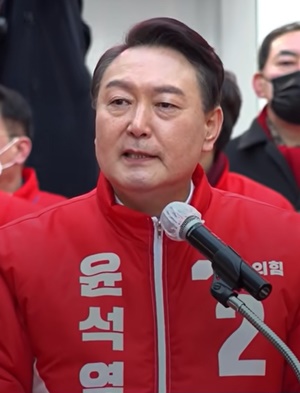
- Yoon Seok-yeol was elected president
- by Lee, Jeong-Hwan Mar 15, 2022 05:57am
- Attention is focusing on the pledge to establish a global vaccine hub and quickly register health insurance for severe treatments. In the 20th presidential election, Yoon Seok-yeol, the power of the people, was confirmed to win the election, beating Lee Jae-myung of the Democratic Party of Korea. Candidate Yoon Seok-yeol won 48.56% (16,394,815 votes) as a result of the final vote counting, beating Candidate Lee Jae-myung with 47.83% (16,147,738 votes) by 0.73%p. With candidate Yoon's election, the domestic pharmaceutical bio industry will be able to positively predict the realization of pledges such as the establishment of a "pharmaceutical bio-innovation committee" directly under the Prime Minister. In the JTBC exit survey with the three terrestrial broadcasters released shortly after the end of the 20th presidential election at 7:30 p.m. on the 9th, candidate Yoon and candidate Lee showed a close race with a 0.6% to 0.7%. The situation between the two candidates continued to be close enough to gauge Yoon's election potential only at 2 a.m. on the 10th, a day after the voting day, when the nation's vote counting rate was close to 90%. Candidate Yoon was not sure of his election until after 3:30 a.m. on the same day. The end time of the vote counting was 6:18 a.m. on the 10th, with the final vote rate of 48.56% for candidate Yoon and 47.83% for candidate Lee. Candidate Yoon, who was elected president, pledged to establish a pharmaceutical bio innovation committee directly under the Prime Minister in the pharmaceutical bio field. This is evaluated as a pledge that actively reflects the "establishment of a pharmaceutical bio control tower directly under the President" proposed by the KPBMA to the government and ruling and opposition presidential candidates. Along with the national R&D expansion policy to build a global vaccine hub, candidate Yoon's pledge is to strengthen access to new drugs for patients by introducing expensive anticancer drugs and rapid registration of new drugs for severe and rare diseases. The COVID-19 infectious disease response system is expected to be reorganized quickly. Candidate Yoon plans to completely reorganize the COVID-19 response system within 100 days of power to conduct scientific and data-based quarantine. In addition, some expect that the policy pledge of the People's Party Ahn Cheol Soo, which agreed to dramatically unify with candidate Yoon before the presidential election, will be absorbed into candidate Yoon's pledge in the future. In an interview with Dailypharm, candidate Ahn Cheol Soo expressed his vision to enter the G5 country using the pharmaceutical bio industry as a new growth engine. The intention was to secure super-difference technology in the pharmaceutical bio sector to foster world-class pharmaceutical companies such as Pfizer and Moderna and discover new global blockbuster drugs. Candidate Ahn agreed to unify and merge with Candidate Yoon, handing over his policy pledge to Candidate Yoon. Shortly after the election, candidate Yoon said, "If we prepare for a new government as elected and officially take over as president, we will respect the constitutional spirit, respect Congress, cooperate with the opposition party, and try to serve the people well." The provisional turnout for the 20th presidential election, compiled by the Central Election Commission, was 77.1%. The figure is 0.1%p short of the final turnout of the 19th presidential election of 77.2%.
- Policy
- Yoon Seok-yeol expands R&D for telemedicine & bio
- by Lee, Jeong-Hwan Mar 14, 2022 05:51am
- After the inauguration of the Yoon Seok-yeol administration, legal experts analyzed that the biohealth industry policy paradigm will shift, such as expanding digital healthcare and strengthening government R&D support in advanced medical fields of vaccines and treatments. It is predicted that the biohealth sector will be transformed compared to the Moon Jae In government, with elected Yoon Seok-yeol selecting biohealth as one of the five mega-tech and promising to establish a pharmaceutical bio-innovation committee directly under the Prime Minister. On the 13th, Shin & Kim's presidential TF team made the remarks in a special report that analyzed the results of the 20th presidential election and major pledges. Shin & Kim's presidential TF team judged that Yoon Seok-yeol's election will increase the possibility of the next government expanding digital healthcare and introducing telemedicine, and increase government R&D support in vaccines, treatments, and cutting-edge medical fields. It is expected that the biohealth industry market will also expand, including strengthening health insurance coverage. They predict that the new government will promote policies to foster the digital medical bio-industry, train digital hospitals, and digital medical professionals, and expand pilot projects for non-face-to-face treatment in islands and mountains. R&D related to healthcare ICT companies and policy support related to service development will be provided, and measures to alleviate personal information leakage and medical information concentration problems of large companies will be discussed. As the new government has pledged to double the size of R&D support from the biohealth industry government, a policy focusing on securing original technologies centered on pharmaceutical bio researchers is also expected. It is expected to expand government R&D on high-speed vaccine development and manufacturing technology, post-corona vaccine, treatment, and essential vaccines, and expand government R&D in state-of-the-art medical fields such as regenerative medicine, precision medicine, brain science, aging, gene editing, and synthetic biology. If the new government implements such a policy, it is expected that domestic pharmaceutical companies will perform government tasks, boost R&D investment expansion movements, and increase global pharmaceutical companies' interest in the domestic market. The new government has also promised specific measures to strengthen health insurance coverage. These include health insurance support for Continuous Glucose Monitoring, health insurance support for treatment using rehabilitation robots, expansion of national examinations for osteoporosis and depression, support for Gardasil 9, expansion of cochlear implant surgery, and reduction of health insurance for anticancer and severe disease treatments. As a result, consumer and business interest in biohealth is expected to increase and related markets will increase as measures such as health insurance registration and compensation expansion are expected to be taken to commercialize pharmaceuticals and medical devices and form markets. Shin & Kim's presidential TF team said that the adjustment of financial conditions and insurance premiums will be the primary focus of discussions on pension reform, which is an important pledge in the health and welfare sector, but discussions will also take place on changes in the fund management structure. In addition, their analysis is that discussions will be held on the development of ultra-high-priced new drugs, including RSA, which partially bears uncertainties in the efficacy of new drugs and insurance finances.
- Policy
- P3T for Sarepta’s DMD treatment approved in Korea
- by Lee, Hye-Kyung Mar 14, 2022 05:51am
- A Phase III trial for the Duchenne muscular dystrophy treatment 'SRP-4045(casimersen)’ and 'SRP-4053 (golodirsen)' will be conducted in Korea. The Ministry of Food and Drug Safety has recently approved Ppdd Velllovement Pte Ltd’s application for the double-blind, placebo-controlled, multicenter clinical trial to evaluate Sarepta Therapeutics’s casimersen and golodirsen. Ppdd Velllovement Pte Ltd is a contract research organization that conducts multinational clinical trials. The domestic Phase III trial will be conducted in Pusan National University Yangsan Hospital and Kyungpook National University Chilgok Hospital. DMD is a type of rare genetic disorder characterized by progressive muscle degeneration and weakness due to a defect in the p21 gene in the X chromosome that causes alteration of a protein called dystrophin that helps keep muscle cells intact. DMD arises 1 in 3,600 newborn males, and its age of onset is usually between 3 and 5 years of age. Children affected with DMD rely on a wheelchair in their early teenage years and progresses to experience loss of cardiac and respiratory muscle strength and die before reaching 20 years of age. Sarepta has been developing an exon-skipping medication that removes specific exons from dystrophin. Starting with its first DMD treatment ‘Exondys 51’ in September 2016, the company received approval for its ‘golodirsen’ in December 2019 and ‘casimersen’ in February 2021 from the US FDA. However, as golodirsen and casimersen were approved through the Accelerated Approval Program by the FDA, the company is required to additionally submit Phase III trial data to confirm the clinical efficacy of the two ingredients. According to the clinical trial protocol submitted by Sarepta, the company expects to complete the study by 2024.
- Policy
- Securing Paxlovid's inventory for 120,000 people
- by Lee, Jeong-Hwan Mar 14, 2022 05:50am
- Paxlovid's inventory in Korea is about 120,000 people, it said on the 11th. The response is to the point that there is no shortage of prescriptions for confirmed patients, which has been on the rise recently, and that there is no inventory of Paxlovid at front-line pharmacies or medical sites. More and more patients want Paxlovid due to the explosion of COVID-19 confirmed patients. Contrary to the quarantine authorities' explanation that the stock of treatments is sufficient, complaints are growing that local pharmacies and other sites do not have them in stock. First controller Lee Ki-il (CDSCHQ) of Central Disaster and Safety Counters (CDSCHQ), disclosed the inventory and introduction status of Paxlovid in response to this point. He said on the 8th that an additional 45,000 people of Paxlovid were introduced and a total of 163,000 people have been introduced so far. He explains that the amount of Paxlovid prescribed so far is about 40,000 people, and the domestic inventory is about 120,000 people. Regarding the shortage of treatments at the site, the quarantine authorities explained that they recently expanded prescription medical institutions to actively utilize oral drugs. As of the 8th, it is interpreted that oral prescriptions may increase to upper general hospitals, general hospitals, and mental hospitals, which may temporarily lead to a shortage of supplies. The quarantine authorities said they would try to provide sufficient supply of additional Paxlovid inventory in the future. When looking at the introduction and usage, about inventory for 120,000 people was prescribed on the 9th, and for 4,472 people were prescribed on the 10th. Paxlovid have been expanded to actively utilize treatments. If the introduction of additional supplies is confirmed, it will be released later, he said.
- Policy
- Yoon Seok Yeol's generation
- by Lee, Jeong-Hwan Mar 13, 2022 08:03pm
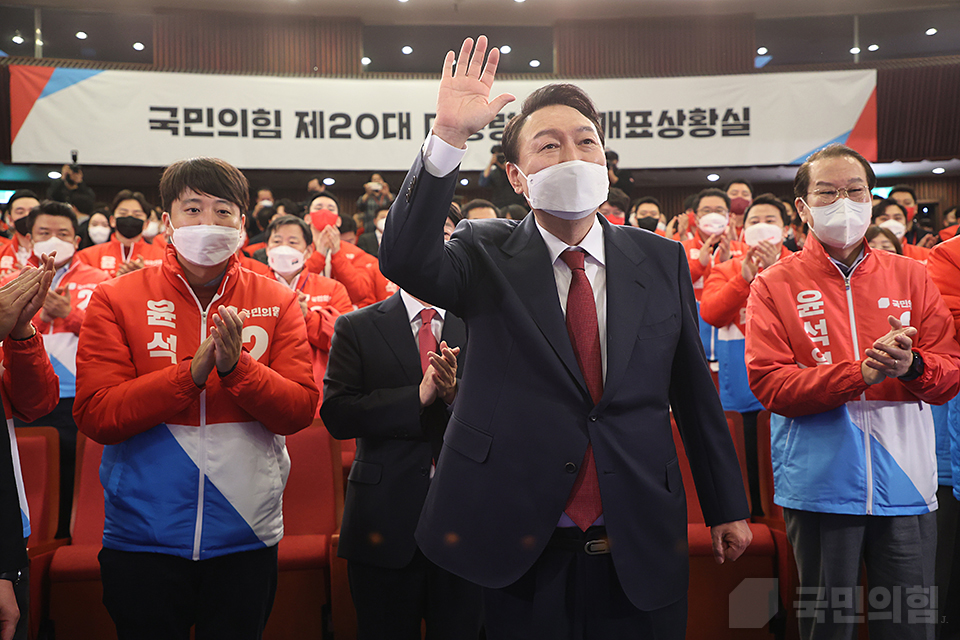
- Yoon Seok-yeol, the power of the people, was elected in the 20th presidential election, signaling significant changes in the health care and pharmaceutical bio industries as a whole. Some keywords that are drawing attention right now are "promoting remote non-face-to-face treatment" and "the establishment of a pharmaceutical bio-control tower." Yoon Seok-yeol, elected candidate, previously announced the advancement of the industry by promising to start telemedicine in earnest and establish a pharmaceutical bio-innovation committee directly under the Prime Minister during the election process. Yoon, who confirmed his election on the 10th, predicted health care and pharmaceutical bio policies to be implemented as president over the next five years. Yoon has pledged several health care policies differentiated from the Moon Jae In government. Yoon said he would improve and upgrade temporary telemedicine to the "realization of non-face-to-face treatment" stage through regulatory reform, and resolve the health insurance bomb problem through Moon Jae In Care reform. The pharmaceutical bio industry also declared securing super-gap technology. This is why attention is drawn to specific movements surrounding the pharmaceutical bio-innovation committee directly under the Prime Minister. Pledges related to pharmacist and pharmacy management were relatively dim, but just before the presidential election, the Korean Pharmaceutical Association and the people's power subrogation signed a policy agreement to form a consensus on the long-cherished desire of pharmacist society. ◆ Telemedicine in earnest= Yoon plans to expand digital healthcare through service innovation and introduction and support of a private business revitalization system. In particular, it announced the expansion of non-face-to-face treatment pilot projects for islands, mountainous areas, and the underprivileged. Yoon narrowed down telemedicine to "a reality that we should accept." The vision is to implement policies that do not conflict interests between the medical community and non-face-to-face care providers seeking new innovations so that everyone can enjoy innovative systems and high-tech benefits in the field of non-face-to-face care. Non-face-to-face treatment, which was temporarily allowed due to the prolonged COVID-19 Pandemic, had a significant impact on the pharmacy industry as well as front-line hospitals and clinics. After non-face-to-face treatment, a platform dedicated to non-face-to-face preparation and drug delivery has been industrialized, and drug delivery applications have been activated. If elected Yoon begins non-face-to-face treatment in the future, the drug delivery platform is also expected to continue to grow. In the process, attention is expected to be paid to whether elected Yoon will be able to establish and promote a reasonable non-face-to-face treatment policy to minimize conflicts with the medical community and the pharmaceutical society. ◆The establishment of the Pharmaceutical Bio Innovation Committee Yoon also issued a blueprint to create new native blockbuster drugs and build a global vaccine hub by establishing a pharmaceutical bio-innovation committee directly under the Prime Minister. It plans to significantly strengthen national R&D support so that it can protect the lives and health of the people by establishing sovereignty over pharmaceutical bio. In addition, Yoon promised to create an ecosystem that can cultivate key talents in the pharmaceutical bio industry and create jobs to grow the national economy and realize a pharmaceutical bio powerhouse. Accordingly, the pharmaceutical bio industry seems to expect a lot of administrative and financial support from elected Yoon. The KPBMA has been urging the pharmaceutical industry to strongly support the pharmaceutical industry by establishing a direct presidential organization to establish sovereignty over vaccines and drugs since 2017. Shortly after candidate Yoon was elected, the KPBMA demanded again to specify the establishment of an organization directly under the Prime Minister. The association believes that the way to establish health security and find a way to create new national wealth is to foster the pharmaceutical bio industry. Yoon also expressed sympathy for the pharmaceutical industry's opinion. Depending on when and how the Pharmaceutical Bio Innovation Committee will start its activities, national policy directions such as pharmaceutical bio R&D, policy financing, tax support, regulatory reform, and manpower training are expected to materialize.
- Policy
- Omicron's fatality rate is at the level of flu
- by Lee, Jeong-Hwan Mar 10, 2022 05:53am
- The quarantine authorities analyzed that if the COVID-19 vaccine is completed up to the third round, the fatality rate of Omicron mutation will be 0.07%, which is similar to that of the seasonal flu fatality rate (0.05 to 0.1%). In particular, the fatality rate for those under the age of 60 who completed the third vaccination was 0%, while the fatality rate for those who were not vaccinated was 0.6%, more than six times that of the seasonal flu. The quarantine authorities explained that they are considering a medical site proposal for recognizing rapid antigen testing as the final confirmation, and that the KDCA will make a separate announcement once it is concluded. Central Disaster and Safety Counters Headquaters made this announcement at a regular briefing on the 8th. The quarantine authorities analyzed and announced the fatality rate and vaccination effect of Omicron. According to an analysis of 135,000 people who completed mutation analysis from April last year to February this year, the fatality rate of Omicron among those who completed the third inoculation was 0.07%. This means that the tertiary vaccination lowers the Omicron fatality rate to a level similar to the seasonal flu fatality rate of 0.05 to 0.1%. Those under the age of 60 who completed the third vaccination had a fatality rate of 0%. However, the fatality rate for non-vaccination was analyzed to be 0.6%, and if not vaccinated, the fatality rate of Omicron was more than six times that of the seasonal flu. The explanation is that the difference in accuracy is not significant as the kit's own inspection ability is measured based on the standardized method of sampling in the approval process of the Ministry of Food and Drug Safety. The quarantine authorities added that in reality, the expert's sample collection method is more accurate than the general public, so it is reflected to some extent in the final accuracy and it is difficult to produce statistics on how significantly the accuracy of experts' sample collection increases the accuracy of rapid antigen testing. Son Young-rae, head of the social politics team, said, "The accuracy of the expert rapid antigen test and personal diagnostic kit is almost the same," adding, "However, in the actual field, the expert's collection method is more accurate than that of individual citizens, so the accuracy increases." It's hard to infer how much more statistically accurate it is," he said. The KCDA is currently reviewing the plan to recognize rapid antigen testing as a final confirmation, Son said. "We are considering all measures considering the accuracy and prevalence of the test."
- Policy
- Finding ways to utilize the Patent-approval linkage system
- by Lee, Hye-Kyung Mar 10, 2022 05:53am
- The MFDS plans to prepare a collection of data so that domestic pharmaceutical companies can pioneer the Chinese pharmaceutical market by utilizing the Patent-approval linkage system within the first half of this year. The MFDS recently announced research services for "Overseas the Patent-approval Linkage System Survey and Domestic Impact Analysis." Following the signing of the Korea-U.S. FTA in 2007, the Pharmaceutical Affairs Act has been fully implemented in Korea since March 2015 through the revision of the Pharmaceutical Affairs Act twice in 2012 and 2015. The study was designed to identify recent overseas systems and trade agreements related to the Patent-approval linkage system and to support pharmaceutical companies' development of overseas markets in the future, and will run until October 31 with 55 million won in project costs. The core of this study is a plan to utilize the Patent-approval linkage system in Korea under the recently revised Chinese patent law. Since June 1 last year, China has been fully implementing the Patent-approval linkage system. This study identifies not only the size and status of the Chinese pharmaceutical market, but also the Chinese pharmaceutical market, including Korea's exports to China, and recently investigates the organization, system, and implementation status of Chinese pharmaceuticals. Based on this, the MFDS plans to prepare a data book by July to support domestic pharmaceutical companies to explore the Chinese pharmaceutical market. Investigation and analysis of international agreements are also conducted not only in China but also in relation to the Patent-approval linkage system. Through this study, the MFDS plans to investigate the recent issues and trends of countries subscribed to the agreement by comparing the background and operation status of comprehensive and progressive CPTPP, and commonalities and differences with other trade agreements such as the Korea-U.S. FTA. Based on the results of the survey, the impact analysis on the Patent-approval Linkage System, which is expected when Korea joins the CPTPP, and countermeasures of domestic pharmaceutical companies to enter overseas markets will be presented together.
- Policy
- The fatality rate of Omicron is low
- by Lee, Jeong-Hwan Mar 08, 2022 06:08am
- The quarantine authorities announced a full-fledged easing of distancing, saying that it is becoming clearer that the COVID-19 Omicron mutation has a lower severity and fatality rate than the delta mutation. From the 5th to the 20th, the 22 o'clock operating hours limit, which will be applied to groups 1, 2, and 3, will be increased by 1 hour to 23:00, but the next adjustment of distance will be eased. In particular, the quarantine authorities urged government agencies to actively participate in blood donation and spread the voluntary participation of the people, citing the continued stage of interest in domestic blood reserves of more than 3 days and less than 5 days. On the 4th, Lee Ki-il, the first controller of the Central Disaster and Safety Countermeasure Headquarters, made the remarks at a regular COVID-19 briefing. The quarantine authorities explained that it is not enough to keep a recently relaxed distance to resolve the difficulties of self-employed and small business owners. Considering that the quarantine system is being reorganized around the management of high-risk groups, the intention is to further ease distancing. Accordingly, the quarantine authorities will adjust the distance measure, which was originally scheduled to be applied by the 13th. The quarantine authorities analyzed that unlike Delta, it is becoming increasingly clear that Omicron has a low severity and fatality rate, and that the effectiveness and efficiency of distancing are decreasing due to its high propagation power. Based on this, the 22-hour operation time limit, which is applied to some facilities of groups 1, 2, 3 and other groups, will be eased by 1 hour from the 5th to the 20th until 23:00. Private gatherings maintain standards that allow up to six people nationwide regardless of whether they are vaccinated or not. The quarantine authorities plan to lower the level of distance in earnest after this easing. Pre-recommendations are also implemented for all inpatients with quasi-severe and moderate symptoms. As of the 4th, 731 patients with COVID-19 quasi-severe and moderate hospitalization who have passed 10 days from the date of sample collection are advised in advance to move to general beds. If the medical staff determines that additional quarantine treatment is necessary and submits explanatory data on all recommendations, if the need for additional quarantine is recognized through consultation, they can continue to receive treatment in the same hospital room without all or lost. If treatment is needed for an underlying disease, pt will move to a general bed and continue to receive treatment. The quarantine authorities also requested blood donation to stabilize blood supply and demand. Recently, the stage of interest in blood retention of more than 3 days and less than 5 days continues. In order to stabilize blood supply and demand, government agencies will take the initiative for a month in March and conduct group blood donations through a "Continuing Blood Donation Event." More than 1,600 employees from 31 organizations, including the Ministry of Employment and Labor, the MOHW, the Ministry of National Defense, the Maritime Police Agency, and the Ministry of Public Administration and Security, will participate in the event. In addition, the quarantine authorities asked the public to participate in blood donation at a blood donation house or a blood donation cafe close to them.
