
- LOGIN
- MemberShip
- 2026-05-08 00:19:30
- Policy
- Varenicline recalls were based on Pfizer's standards
- by Lee, Tak-Sun Sep 23, 2021 05:43am
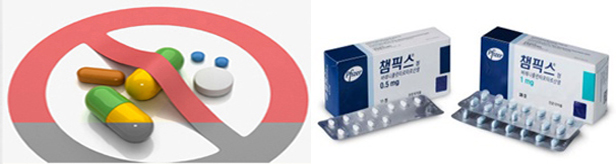
- On why the recall and lot release standards were set differently for the smoking cessation treatment ‘varenicline,’ which was found to have nitrosamine impurities, is gaining attention. This difference in standards had allowed Pfizer’s Champix from being recalled. While announcing the N-nitroso-varenicline (NNV) impurity test results on varenicline products on the 7th, the Ministry of Food and Drug Safety announced that products with less than 185ng/day of NNV may temporarily be approved for lot release. On the other hand, products with NNV of 733ng/day or more were to be voluntarily recalled by their manufacturers. Regarding the set standards, the MFDS had explained that it had referenced cases from other major countries including the U.S. The minutes from the ‘Deliberation on feasibly of the human impact assessment results on pharmaceuticals containing impurities’ at the Central Pharmaceutical Affairs Council that was disclosed on the webpage on the 17th, also showed that the decision reflects cases from the U.S. and other countries. The meeting had been held on the 31st of last month before the measures were announced on the 7th. However, controversy is expected as the minutes of the CPAC meeting indicate that the U.S case also adopted the voluntary recall standards of a specific company – Pfizer. The recall standards that were set above the lot release standards allowed Pfizer’s ‘Champix’ from being subject to recalls. In the minutes, the MFDS stated that the ‘FDA has acknowledged the voluntary recall standards set by Company A (presumed to be Pfizer, 733ng/day), which allowed the company to recall lot numbers that exceeded the set standards. The FDA announcement on its webpage also contains the phrase that 'products that exceed the company’s voluntary recall standards were recalled.' Company A reported to MFDS that there was no case in which the company recalled products that contain less NNV than its set standards (733 ng/day) worldwide." On this, committee members who attended the CPAC generally agreed that it was inevitable and reasonable to maintain the voluntary recall standards set by Company A. One member said, “The FDA also set a different level for temporary lot release and recall. The decision may have been made in consideration of the patient’s right of choice and the potential lack of supply.” The member also inquired about the potential supply status expected for Korea if the temporary lot release standard of ‘185ng/day’ is applied. The MFDS explained that “Based on the domestic market shares, 90% of the products currently on the market will be subject to recall, and a supply shortage is expected to occur.” Another member had said, “As cancer caused by smoking is also a serious concern, I believe the doctor should fully explain the situation to the patient and allow the patient to make the decision. Also, it would be more reasonable to maintain the recall standards at the level set by Company A (744ng/day) until more drugs that meet the temporary lot release standard (185ng/day) are supplied, as it is not desirable for patients to not have the right to choice due to supply shortage.” With more agreeing to the MFDS’s proposal, the chairperson said, “We submit the opinion that Company A’s voluntary recall standard (733ng/day) should be applied and products with NNV that exceeds 185ng/day but lower than 733ng/day should be temporary allowed for distribution in consideration of the supply shortage, patient treatment and other case references from overseas including the FDA,” to which most members agreed. As a result, the MFDS set the recall standards to NNV of ‘733ng/day,’ under which CTC Bio recalled 19 lot numbers of 3 products that exceeded the set standards. The recall standards indicated in the minutes are Pfizer’s standards, and the concern over supply shortage is expected to have been the biggest factor in the decision. The problem is that Pfizer’s standards have excluded Pfizer’s original product ‘Champix’ from recalls. Pfizer’s self-investigation showed that its varenicline product contained NNV between 151~632ng/day. If the recall standards were set at the same level as the lot release, as ‘185ng/day,’ Pfizer’s products would also have been subject to recall. In other words, using Pfizer’s recall standards had led to Pfizer’s products avoiding recalls. As the decision, despite being made with considerations for patient treatment and supply shortages, had led to benefit Pfizer, the criticism arose that the Ministry of Food and Drug Safety was more considerate of the company's position rather than concerns over safety of impurities.
- Policy
- Price for Kymriah needs a new management method
- by Lee, Hye-Kyung Sep 23, 2021 05:43am
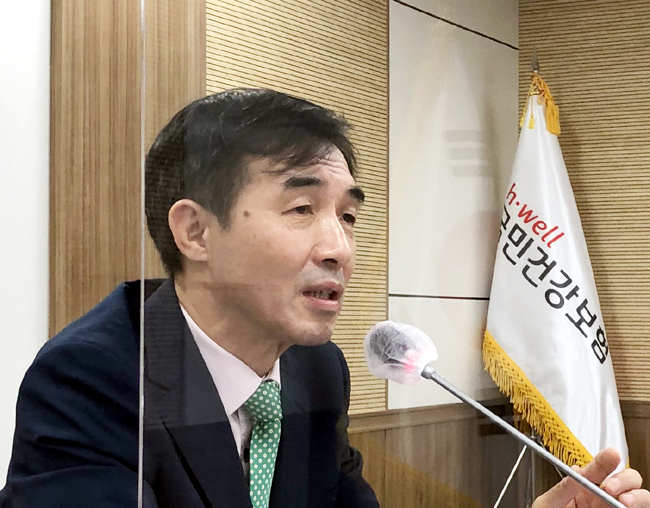
- The NHIS continues to discuss finding a new drug price management method for the rapid registration of ultra-high-priced "one-shot treatments." However, he said he would consider the introduction of "post-registration evaluation" required by patient organizations as one of several alternatives, not the correct answer. The Guidelines for Calculating Estimated Claims, which have been prepared since the beginning of this year, will be released around October, and negotiations will finally be concluded today (15th) for Choline alfoscerate. Lee Sangil, the senior director of the NHIS, held a briefing with the Korea Special Press Association on the 14th and announced issues in the second half of the year on overall issues related to benefit guarantees, projects, and drug prices. ▶It is argued that a one-shot treatment that is directly related to the life of ▶ patients should be registered first and evaluated afterwards, and what is the director's personal opinion about rapid registration? "Unlike in the past, Breakthrough Therapy such as Kymriah and Zolgensma, which patients can only administer once in their lifetime, has been released. Instead, costs range from hundreds of millions to billions of won. Accessibility should be guaranteed because the drug itself is essential to patients. However, I think a new approach is necessary because it is difficult to guarantee accessibility for patients with existing drug price management. The NHIS is discussing with the pharmaceutical companies on what method would be appropriate. Since this drug has already been registered in other countries, we will review foreign cases and find appropriate measures for Korea. I think the evaluation plan after the first registration is one of several alternatives. The introduction of this plan cannot be immediately answered." ▶ It was said that it would disclose the guidelines for calculating the estimated claim amount Since April, a consultative body has been formed with KPBMA, KRPIA, and KoBIA to prepare guidelines for calculating the expected amount of claims. Currently, The NHIS and associations are in the process of collecting opinions on guidelines created through consultative bodies. The guidelines will be completed by October." ▶Is there any countermeasure to prevent litigation similar to Choline alfoscerate? All applications for suspension of execution by pharmaceutical companies related to the Choline alfoscerate lawsuit have been dismissed, and the main lawsuit remains. We cannot guarantee the possibility of similar lawsuits, but we plan to come up with countermeasures through consultations with related agencies such as the MOHW and the HIRA in the future." ▶ What projects will you focus on as a policy task in the second half of the year? In order to improve the effectiveness of the conversion index calculation model raised in annual fee negotiations, we intend to promote system improvement centering on the institutional development council formed for communication between stakeholders. In addition, the government will continue to strengthen the medical safety net for the vulnerable by improving the disaster medical expenses support system on November 1, implementing pregnancy maternity medical expenses in January next year, and a three-stage pilot project for disabled people. In addition, we plan to come up with a reasonable payment plan for expensive drugs that take into account patients' access to treatment so that they can be introduced stably."
- Policy
- Azelnidipine was approved in Korea
- by Lee, Tak-Sun Sep 17, 2021 05:56am
- Azelnidipine, which was approved in 2003 in Japan as a calcium channel blocker (CCB), was also approved in Korea. There was no previously approved finished product. The MFDS approved Azelnidipine 8mg of Introbiopharma on the 14th. Azelnidipine is a treatment for hypertension, a drug administered oral after breakfast once a day. Previously, Dongbang FTL's and Jeil's drug substances were approved for export, but there were no domestic drug products. Azelnidipine has been used for a long time, but it has not been introduced because other CCB such as Amlodipine are widely used in Korea. The original is Calblock of Daiichi Sankyo Korea. It was approved for Japan's Ministry of Health, Labor and Wellness in 2003. It has already been approved for 18 years. As such, it is an item that has been proven to be safe and effective overseas, and the MFDS approved Introbiopharma's product in accordance with laws and regulations. Daiichi Sankyo is a family of ARB in Korea. It is focusing on supplying Olmesartan. The approval of Introbiopharma's Azelnidipine is not expected to change the market much. This is because existing CCB-based hypertension treatments have steady sales in the domestic market. However, other domestic pharmaceutical companies are expected to show interest because new options have been released for product development.
- Policy
- 58 companies agree on the redemption of α- GPC benefits
- by Lee, Hye-Kyung Sep 17, 2021 05:56am
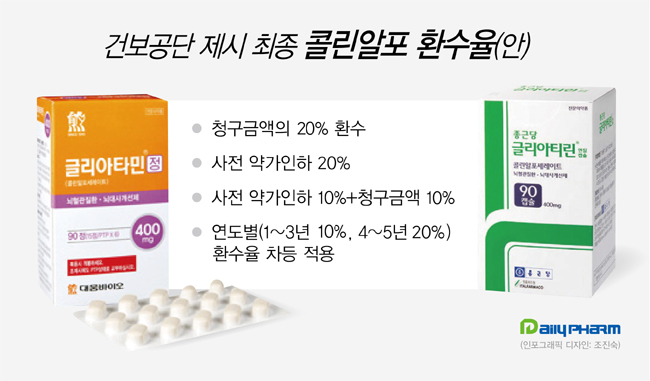
- Negotiations on the conditional return of benefits for clinical reevaluation of "Choline alfoscerate," a brain function improving agent that has been going on for about nine months, will end today (15th). The final result is that all 58 pharmaceutical companies with 123 Choline alfoscerate agreed to "return 20% of their health insurance claims from the date the MFDS approves the clinical trial to the NHIS if the clinical trial fails." The details of the agreement apply slightly differently to each pharmaceutical company. The method of redemption, such as a pre-drug price reduction or differential application of the redemption rate by year, will follow the plan chosen by each company. It is not known in detail how far it will be applied to the temporary payment or installment payment plan of the amount of redemption that has been coordinated until the end. Lee Yong-gu, head of the drug price management office at the NHIS, said at a briefing of the Professional Journalists' Council held on the 14th, "The redemption period was contracted in a lump sum five years (after clinical re-evaluation)."He said, "Some pharmaceutical companies complained of difficulties. "We are reviewing it as the clinical period is long and the cumulative amount depends on the results." There is a possibility that the contract may be changed in the final negotiations that run until today (15th). "There are several more clinical re-evaluation drugs other than Choline alfoscerate," he said, "We will discuss and decide when Choline alfoscerate negotiations are completed, but since this negotiation is completed, it is reasonable to negotiate the return of other clinical re-evaluation items."
- Policy
- Will Jeil Pharm gain a hold over the varenicline market?
- by Lee, Tak-Sun Sep 16, 2021 05:59am
- Following the government’s measures to reduce impurities in smoking cessation drugs that contain varenicline, Jeil Pharamceutcial’s products, which satisfy the set standards, is expected to gain a hold over the smoking cessation treatment market for the time being. The Ministry of Food and Drug Safety has allowed the lot release of varenicline products that only contain less than 185ng/day of N-nitroso-varenicline (NNV). On the 7th, the MFDS announced the NNV test results and that the ministry will temporarily allow varenicline products that contain less than 185ng/day of NNV. Also, drugs that exceed the 733 ng/day NNV limit were voluntarily recalled by the manufacturers. Accordingly, CTC Bio has been recalling 19 lots of 3 products (including 2 CMO products). Three companies have been distributing manufactured or imported varenicline products in the domestic market. Among the three, Jeil Pharmaceutical and CTC Bio manufacture varenicline products domestically on consignment for 24 and 7 companies, respectively. Pfizer Korea, which supplies the original Champix, is the only company that imports its products for distribution. Results of the self-inspections showed that the level of NNV was 16.70~43.28ng/day for Jeil Pharmaceuticals, 151~632ng/day for Pfizer Korea, and 812~1849ng/day for CTC Bio. Accordingly, items that were produced by CTC Bio exceeded the accepted level for lot release as well as the recall standards. On the other hand, Pfizer’s products managed to barely avoid recalls, but not all the items met the acceptable level of NNVs for lot release. Jeil Pharmaceutical's items were the only items to meet the NNV level allowed for lot release. Due to this, concerns on whether Jeil Pharamcetucial alone can meet the demand for varenicline products were raised at the Central Pharmaceutical Affairs Council on the 30th, prior to the MFDS’s announcement. Regarding the concern, the MFDS had explained that “The 0.5mg and 1.0mg dose varenicline products produced by company C (presumed to be Jeil Pharmaceutical) account for 10% and 5% of the domestic supply. Upon inquiry, the company had replied that it can produce the amount sold by Company A (presumed to be Pfizer) and Company B (presumed to be CTC Bio) by focusing on producing varenicline products, if necessary.” The minutes of the meeting also presented the case for Champix, which currently holds the dominant share of the market. The MFDS said, “Varenicline products in the US exceed the NNV level of 733 ng/day, and were unfit under the distribution standards. Therefore, the products that are imported to Korea are Apo-Varenicline distributed in Canada, and the NNV detected in the said drug exceeds 37ng/day, but is less than 185ng/day. The ministry stressed that it will take some time for companies other than Jeil Pharmaceutical to satisfy the 185ng/day or less level set for the lot release. For example, Champix, whose supply was discontinued since June, had been able to avoid recalls but is still unable to resume its supply in Korea. Therefore, according to the NNV reduction measures, the dominant opinion is that products produced by Jeil Pharmaceutical will increase its hold over the market. On how this change will affect the market structure remains to be seen.
- Policy
- Drug substances with impurities are collected voluntarily
- by Lee, Tak-Sun Sep 16, 2021 05:59am
- The recovery of antihypertensive drugs exceeding impurities is expanding. Following the Drug product, Drug substance began to recover. The MFDS announced on the 14th that it will voluntarily retrieve some of Kukjeon and Pharmacostech's Irbesartan's Drug Substance. Kukjeon and Pharmacostech start collecting four manufacturing number products each. Following the drug product, the recovery of drug substances began. Initially, the MFDS announced on the 9th that it would voluntarily recover 73 items from 36 companies that manufacture Sartan hypertension treatments (1.51 to 7.677/day) exceeding the daily intake of AZBT, which is an impurity. All of these items are Drug products, and only manufacturing number items that have been problematic in safety surveys are recovered. The withdrawal list did not include Drug substance. In response, an official from the MFDS explained, "Raw Material did not include it in the announcement list because there was no consumer recovery like Drug Product," adding, "The local government is also voluntarily collecting the drug in question." According to the MFDS' explanation, it is estimated that there will be more items to recover raw materials. The Ministry of Food and Drug Safety announced on the 9th that the pharmaceutical company voluntarily collects 183 manufacturing numbers of Sartan drugs. Accordingly, patients taking the drug should not stop taking it arbitrarily, but should decide whether to continue taking it after consulting with a pharmacist. It added that patients with health concerns can be exchanged for manufacturing numbers below the standard at pharmacies. The MFDS emphasized that it will manage only Sartan drugs that are less than the daily intake allowance so that they can be supplied and distributed to the market.

- Policy
- 299 items were voluntarily withdrawn
- by Lee, Hye-Kyung Sep 15, 2021 06:12am
- The NHIS's self-evaluation came out that the "National Health Insurance Medical Care Benefit Standards" revised on October 8 last year prevented the registration at will. At the Korea Special Press Association briefing held on the 14th, Lee Sang-soo, executive director of insurance benefit, said, "As soon as the drug benefit list was registered, as items that cannot perform supply obligations were voluntarily withdrawn, the items that have been pointed out have been blocked." The NHIS has also been negotiating drugs subject to calculation (generics, IMDs, combination drugs, and herbal medicines, etc.), which upper limit is determined according to the drug calculation criteria since October 8 last year. The contents of the negotiations are not the amount, but the obligation to supply generics, promises to quality control, and confidentiality. According to the results of the negotiations so far, a total of 1,869 items were subject to negotiations as of the end of August, and 296 negotiations are currently underway. There were 1,382 items that negotiated medical care benefits, including the recently conducted additional revaluation drug, and only 778 items were agreed upon. The remaining 604 items have been broken down or negotiations are underway. The 1,382 items also included negotiations on additional revaluation, and 468 out of 487 items have been agreed on supply and quality. Lee Yong-gu, head of the drug price management office, said, "Among the generic negotiations, supply obligations and quality control are more important," adding, "If there is a pharmaceutical company that seeks to reach an agreement due to the breakdown of negotiations, we are negotiating again with the MOHW." Director Lee added, "However, we believe that drugs that cannot voluntarily withdraw or perform supply obligations immediately have no choice but to be deleted."
- Policy
- Controversy over the price of COVID PO of ₩900,000
- by Lee, Jeong-Hwan Sep 15, 2021 06:11am
- While the government, which judged that oral treatments are needed to shift the COVID-19 phase, is negotiating pre-purchase with global pharmaceutical companies, it is pointed out that drug prices will reach ₩900,000. The government also acknowledges that the price of oral COVID-19 treatment is expensive, but if they have a therapeutic effect, they are more advantageous than hospitalization costs due to COVID-19 and loss costs due to economic activity. When the host asked about the price of oral treatments during MBC Radio's Kim Jong-bae's attention on the 10th, Bae Kyung-taek, a planning coordinator at the KDCA, replied, "It is difficult to tell you everything at the current stage of signing the contract." He said, "From the government's point of view, the price seems to be high," adding, "We need to compare and evaluate the direct cost of hospitalization or going to a life treatment center because they don't take the treatment." Regarding treatments being developed by domestic pharmaceutical companies, he said, "Celltrion treatments are injections, not PO," adding, "Oral treatments can be observed after taking them at home. If this happens, the COVID-19 situation will change a lot." "The pharmaceutical industry explains that it is not easy to produce the same effect by administering medicine to blood vessels with injections and putting it into the digestive system," he said. "This seems to delay the development of medicines compared to global companies."
- Policy
- Sama Pharm’s ‘Daxas’ generic approved
- by Lee, Tak-Sun Sep 14, 2021 05:55am
- Sama Pharm received approval for the first generic of the COPD treatment ‘Daxas (roflumilast, AstraZeneca Korea)'. As Sama was the only company that succeeded in avoiding the composition patent of Daxas, if the generic is released immediately, the company will be able to preoccupy and monopolize the market for the time being. The Ministry of Food and Drug Safety approved Sama Pharm’s ‘Samaloflu 500mg microgram tablets’ on the 13th. The drug is a generic drug of Daxas 500 micrograms tablets, and the first generic of its kind to be approved in Korea. The drug may be used as add-on therapy to bronchodilator treatment or as maintenance treatment of severe chronic obstructive pulmonary disease (COPD) is associated with chronic bronchitis in patients with a history of symptom exacerbations. Patients over the age of 18 may take a single tablet of the drug once daily with or without meals. Daxas, which was developed by Takeda pharmaceuticals in Japan, was approved in Korea in May 2011. AstraZeneca Korea, while acquiring Takeda’s respiratory treatment division, had acquired the domestic marketing authorization for Daxas in Korea as well. Daxas, which is a PDE4 inhibitor that inhibits factors related to the progression of COPD, has been received with positive reviews for its convenient single table, once-daily dosed regimen According to IQVIA the company sold around ₩1.6 billion in sales last year. Sama pharm had attempted to avoid Daxas’ composition patent since 2019. In the May of 2019, the company filed a defensive confirmation trial for the scope of rights to avoid Daxas’s patent, which was received by the Intellectual Property Trial Appeal Board in the March of the following year. The original developer did not file a suit to protect its patent, and Sama’s patent avoidance was confirmed in May of the same year. 2 years later, the company was finally approved the marketing authorization for its product. Other companies have also challenged Daxas’s patent but failed. Dong-A ST among other pharmaceutical companies had filed for patent invalidation but were all rejected. Accordingly, other pharmaceutical companies that joined in the suits also dropped their claims. As a result, Sama became the only pharmaceutical company to succeed in challenging Daxas’s patent. With Sama’s sales in action for respiratory disease treatment, the approval of Daxas’s first generic from Sama Pharm is expected to raise the market competitiveness of the company. In a clinical trial conducted on 33 healthy adults, the bioequivalence of Simaloflu in comparison to Daxas was demonstrated with a confidence interval of 90%, within the log 0.8 - 1.25 range.
- Policy
- Moon "Invest ₩2.2 trillion in 5 years for vaccines"
- by Lee, Tak-Sun Sep 14, 2021 05:55am
- President Moon Jae-in President Moon Jae-in announced that South Korea will “invest ₩2.2 trillion to increase its vaccine competency over the next 5 years.” On September 13th, President Moon expressed such plans in a recorded welcome address for the 'Global Bio Conference' that is being held at the Grand Intercontinental Parnas Hotel in Seoul. Moon said, "Korea aims to become one of the global vaccine production hubs that could lead the response to the rise of infectious diseases in the future. Moon added, “Biopharmaceuticals have provided new hope to mankind’s fight against COVID-19. The typical development period for vaccines, which used take more than 10 years, have now been reduced by 1/10, and pharma companies have successfully developed various vaccines and drugs.” Such achievement was only possible with close cooperation of global biopharma experts and businesses across borders, Moon reckoned. Moon also indicated that “The Korean government also is continuing its attempt to find different solutions to supply a steady flow of vaccines. Contract manufacturing and technology transfers have increased, and competing pharma companies have joined forces to co-produce vaccines. South Korea also has begun contract manufacturing of four vaccine products to aid the global vaccine supply." "Such collaborations between the industry, academia, and research organizations as well as emerging industries like artificial intelligence and big data, will be what brings the current biopharmaceutical industry to the next level. The minister of Food and Drug Safety Kang-rip Kim is giving a opening address The Minister of Food and Drug Safety (MFDS) Gang-Rip Kim, who gave the opening address, said that “This conference seeks to discuss new roles of the industry, the academia, and the government in the new normal, the 'With-COVID-19' era. During the pandemic, MFDS has not only served as a regulatory agency but also stepped up to become an active cooperator in the research, development, production, import and export, and international diplomacy of biopharmaceuticals." He added, “The conference will solidify MFDS’s new role in the ‘new normal,’ and be the opportunity to take the scope of regulatory science to the next level.” Meanwhile, the 7th GBC this year will be conducted for 3 days under the theme, ‘A New Normal: A Leap Towards Newly-Found Future of Biopharmaceuticals.’ Biopharmaceutical experts, pharmaceutical companies, and regulatory reviewers from companies had participated in the event.
