
- LOGIN
- MemberShip
- 2026-05-08 00:19:31
- Policy
- A review of Hemlibra's benefit without ITI is under way
- by Lee, Hye-Kyung Aug 12, 2021 06:05am
- The HIRA is reviewing the benefit criteria for JW Pharma's hemophiliac injection Hemlibra (Emicizumab). Currently, patients aged 1 and older and under 12 years of age may be re-administered if they fail the Immune Tolerance Induction (ITI) or if they meet the ITI target criteria (Trial 2020-164, 2020. 6.1.), or if they are unable to try, or if an antibody is re-implemented in ITI. Therefore, patients with severe type A hemophilia under the age of 12 must receive ITI over two to three years in order to receive Hemlibra's benefits. Some medical institutions wrote a report on pediatric patients who could not attempt ITI and asked the Heartlands for their benefits, but they did not acknowledge their benefits due to "insufficient objective data such as efforts to secure sufficient intravenous blood vessels. In the first half of this year, the MOHW and the HIRA also expressed their intention to review the standards, judging that Hemlibra's benefit standards were problematic at the National Assembly and Anti‑Corruption and Civil Rights Commission. In this regard, Lee Jin-soo, chairman of HIRA's medical review and evaluation committee, said at the Korea Special Press Association on the 10th, "The revision of Hemlibra notification is under way." "The implementation of ITI is a priority, but we are preparing for a revision notice for patients," he said. Hemlibra, meanwhile, is eligible for benefits from 5BU (Bethesda unit)/mL or higher in patients with severe hemophilia (less than 1% coagulation factor activity) with Factor VIII inhibitor since June 1 last year.
- Policy
- President called for stronger health insurance coverage
- by Kang, Shin-Kook Aug 12, 2021 06:04am
- President Moon called Yong-Ik Kim, President of NHIS and Sun-min Kim, Executive Director of the HIRA to discuss the results of measures to strengthen health insurance coverage and supplement the people's benefits at meeting with his senior secretaries on the 9th. President Moon presides over Meeting with His Senior Secrets (provided by Cheongwadae) President Moon ordered, "In case of not receiving medical benefits due to concerns over COVID infection, please carefully examine and review measures." He said, "The number of people visiting hospitals has decreased due to compliance with quarantine rules such as washing hands and wearing masks, which may have improved the financial status of health insurance, but they may not receive medical benefits." He also called for ways to revitalize the operation of dementia safety centers. In addition, he said, "Consider the current non-reimbursed items in health insurance so that they can be guaranteed treatment methods using new medical technology." "The government supports vaccination of pneumonia, but please consider ways to support vaccination of diseases such as shingles," he said. He pointed out that it is not easy to maintain children's hospitals due to insurance price issues, saying, "Consider comprehensive support for children's hospitals." Four years ago today, strengthening security policy (Moon Jae-in care) health insurance was announced.
- Policy
- # of subjects in Phase 3 of SK's COVID vaccine is 93
- by Lee, Tak-Sun Aug 11, 2021 05:58am
- SK Bioscience researcher is conducting research to develop vaccines When looking at SK Bioscience's clinical plan for "GBP510," which entered phase 3 for the first time as a vaccine developed in Korea, the number of people tested in Korea was 93. This is only 2.3% of 3,990. The MFDS recommends that domestic test subjects recruit more than 10% of the total subjects for domestic development vaccines, which is not enough. Accordingly, SK Bioscience said, "There are 93 test subjects in Korea based on the approved plan," adding, "Nothing has been decided yet." The clinical trial plan for SK Bioscience's COVID-19 vaccine "GBP510," approved by the MFDS on the 10th, contains this. GBP510 is a recombinant vaccine that injects surface antigen protein of COVID, which is made using genetic recombination technology, to induce immune responses. When surface antigen protein is administered, it stimulates immune cells in the body to induce the production of neutralized antibodies, and neutralizes and removes the virus when COVID enters the body. In particular, it increases immune effects by exposing antigens to produce a lot of antibodies. The vaccine includes GSK's immune enhancer "AS03. In January, SK Bioscience received approval for phase 1/2 and is currently completing phase 1 and proceeding with phase 2. It was planned to recruit 320 people (80 people for phase 1 and 240 for phase 2). According to the company, as a result of phase 1 administering GBP510 to 80 healthy adults, antibodies that neutralize COVID were formed in the entire dosing group, which was administered with immune enhancers, showing 100% neutral antibody formation rate. The level of inducing neutralized antibodies is five to eight times higher than that of serum panels of people cured of COVID-19. In terms of safety, no significant adverse event has occurred that is related to the administration of GBP510. It is also explained that 247 participants in phase 2, which includes elderly people, have completed the second injection in late June and are monitoring safety, and no special safety issues have occurred so far. Based on the interim results of phase 1/2, SK Bioscience applied to the MFDS for phase 3 in June. Phase 3 is conducted in multi-agency, parallel comparison, observer blindfolding, active contrast, and random allocation to evaluate the immunogenicity and stability of COVID-19 vaccine using immunosuppressive AS03 in adults over the age of 18. To confirm this, it is conducted in a comparative clinical manner with AZ vaccine. The test vaccine will be given to 3,000 people out of 3,990 test subjects, and the control vaccine will be given to 990 people twice every four weeks, 0.5ml each. The number of test subjects in Korea was 93 people. This is not more than 10% of all test subjects recommended by the MFDS. The MFDS recommended in its comparative clinical guidelines for the domestic COVID vaccine that multinational clinical trials, including more than 10% of the domestic population, are possible. However, SK Bioscience said that there are 93 subjects in the plan, but nothing has been decided yet. Clinical trials will be conducted in South Korea, Southeast Asia, and Eastern Europe. It will be held at Korea University Medicine, Ewha womans university medical center, KNUH Chilgok, Hallym University Medical Center, Severance Hospital, CNHU, KNUH, Dong-A university hospital, Inha university hospital, Ajou University Hospital , Korea University Ansan Hospital, Korea University Guro Hospital. It is expected that interim analysis results of Phase 3 will be produced as early as the first quarter of next year. Based on this, the MFDS plans to conduct a quick review.

- Policy
- South Korea recovered Sartan products with AZBT impurities
- by Lee, Tak-Sun Aug 11, 2021 05:58am
- The recovery of Sartan medicines containing 'AZBT' has also begun in Korea. Three products containing Irbesartan, manufactured in 2021, were voluntarily recovered by related pharmaceutical companies. Starting in Canada in May, recovery of Sartan containing AZBT is spreading around the world to Europe and Asia. The MFDS announced on the 6th that it would voluntarily collect three Irbesartan-containing items (Rovelito, CoAprovel, and Aprovel) manufactured before 2021. Sanofi, which supplies Irbesartan in Korea, pre-emptively delivered to distributors and vendors that it would voluntarily recover Irbesartan products produced before January 2021. Sanofi explained why the impurity (AZBT) produced since January 2021 is managed below the acceptable limit, but the previous manufactured batch of finished products was recovered because it needed time to derive test results. The recovery of Sanofi is due to the imminent submission of test results ordered by the Ministry of Food and Drug Safety. Also, the fact that recovery began in Europe affected it. Azido methyl bipheny Tetrazole (AZBT) is a genetic mutation that is believed to occur in the synthesis process of Sartans, a treatment for hypertension. It is different from the carcinogen NDMA detected in Valsartan in 2018. Valsartan has been temporarily recovered and stopped selling all items due to NDMA detection. In the following year, drugs containing Ranitidine were also banned from selling or recovered from NDMA. The AZBT issue began at the end of May when Canada's Federal Health Department voluntarily recalled three ingredients of drug products from nine pharmaceutical companies, including Teva and Sandoz, including Losartan, Valsartan, and Irvesartan. Since then, Korea's Ministry of Food and Drug Safety has also requested the AZBT impurity evaluation and test results to be submitted by the 14th of the month at medicines containing Losartan, Valsartan, and Irbesartan ingredients in early June, and the AZBT test results for all finished product lot numbers by the 31st of the month. This recovery in Korea has been confirmed in a test inspection of finished products since January 2021, but it seems that it was carried out preemptively because the test results did not secure the time of submission. It also appears that recalls of some products containing Losartan, Valsartan and Irbesartan began in some European countries, including the United Kingdom and Spain, last month. Industries are paying attention to the rest of South Korea's generic items that will be affected by the recovery of the original products. Currently, there are 55 products containing Irbesartan licensed in Korea. Also, not only Irbesartan but also Losartan and Valsartan are eligible for recall. This is because not only Canada but also Europe contained all three ingredients. The key is whether to secure the test results. In addition to Irbesartan, many prescriptions from Valsartan and Losartan are expected to cause inconvenience to pharmaceutical companies and medical institutions. However, foreign authorities that conduct recovery recommend not to stop administration of patients, saying that only some lot numbers are recovered and the impact on the human body is unknown.
- Policy
- Incentive-paid items for generic substitution fell to 12,757
- by Lee, Hye-Kyung Aug 11, 2021 05:58am
- 12,757 items were found to be eligible for incentives of 30% of the difference in drug prices if pharmacies dispense generic substitution, which is cheaper than prescription drugs. It decreased 48 items compared to the previous month. The HIRA recently guided the 'Billing Method of Drugs Subjected to Incentives for low-price generic substitution in August'. As of August, 25,745 items were listed on the drug benefits, with 49.5% of the drugs available for generic substitution. Among Metformine and Ranitidines, 203 items of drug sales and suspension are excluded from incentive payments. The generic substitution to low-cost drugs is a system that allows pharmacies to get back 30% of the difference in drug prices. If the doctor's prescription medicine was ₩1,000, and the pharmacist makes generic substitution with a low-cost ₩700 medicine, he will be offered ₩90, which is 30% of the difference in drug prices (₩300). Pharmacists can substitute medicines that are the same active ingredients, and are cheaper than those prescribed by doctors or dentists. In the case of syrup, etc. according to the maintenance of the drug benefit list from January 2016, the main ingredient code and representative code should be checked as the main ingredient code changes according to the production standard (total content). The review was postponed once at a welfare committee meeting in April after the proposed amendment to the Pharmaceutical Law, which allows doctors, dentists or the HIRA to make post-notifications at the National Assembly to revitalize the Generic infrastructure. The Health and Medical Development Council, which participates in the government and medical organizations, is preparing a plan to utilize the generic substitution post-notification DUR system.
- Policy
- Pfizer is working hard to introduce Prevenar-20 in Korea
- by Lee, Tak-Sun Aug 10, 2021 05:54am
- Prevenar-13 Pfizer, which supplies Prevenar-13, pneumococcal vaccine that ranks overwhelmingly at the top of the domestic market, is also working hard to introduce the next-generation vaccine. It started clinical trials for East Asians to introduce Prevenar-20, which was approved by the U.S. Food and Drug Administration (FDA) in June. Prevenar-20 has a preventive effect on seven additional pneumonia streptococcus aureus serotype in Prevenar-13. Pfizer Korea received approval from the MFDS on the 30th of last month for phase 3 for PF-06482077. It is a candidate for the 20-valent pneumococcal vaccine developed by Pfizer. On June 8, the U.S. FDA approved the product name Prevenar-20. The vaccine is used to prevent invasive diseases and pneumonia that occur in adults aged 18 and older with 20 types of streptococcus aureus serotype. Prevenar-13 currently on the market prevents 13 serotypes, including 1, 3, 4, 5, 6A, 6B, 7F, 9V, 14, 18C, 19A, 19F and 23F. Prevenar-20 is known to prevent seven more serotypes, including 8, 10A, 11A, 12F, 15B, 22F and 33F. The clinical trial, approved by the MFDS, is interpreted as a test to see the effectiveness of adults in the region to be released in East Asia, including Korea. Clinical trials are conducted in Japan, Korea, and Taiwan to assess the safety and immunogenicity of the 20-valent pneumococcal vaccine for adults aged 60 or older. The total number of test subjects is 1,400, with 500 participating in Korea alone. Clinical treatment will be carried out at 12 medical institutions, including AMC in Seoul. Based on this clinical trial, Pfizer is likely to apply for permission in Korea. As Prevenar-13 currently has an overwhelming market share of 90%, sales are expected to rise as soon as Prevenar-20 is released. Last year, Prevenar-13 imported $73.94 million, more than doubling from $35.3 million a year earlier. This is attributed to the increased demand for pneumonia prevention due to COVID epidemic. Pfizer's competitors are also introducing next-generation vaccines. Pneumoccal 15-valent Conjugate Vaccine Vaxneuvance by MSD was approved on the 16th of last month. Astellas is also working on the development of Pneumococcal 24-valent Conjugate Vaccine.
- Policy
- Supply of Oseltamivir has declined 55% since COVID outbreak
- by Lee, Hye-Kyung Aug 10, 2021 05:54am
- After COVID-19 epidemic, the supply of respiratory medicine has dropped by nearly half. According to the HIRA's "Medicine Distribution Newsletter No. 1" published on the 5th, the supply of respiratory drugs in spring and winter since 2020 decreased by 40.6% compared to the same period last year, and the supply of Oseltamivir used to treat flu also decreased by 55.1% compared to the same period last year. According to the period, 10,719,850 respiratory drugs (based on ATC code 'R05'cough and cold preparation OTC) were supplied from November 2019 to April 2020, while only 597,997,447 were supplied, down 40.6% from November 2020 to April 2021. During the same period, the supply of Oseltamivir (based on ATC code "J05AH02") decreased 55.1% from 155,716 to 69,870. The information center has launched a newsletter for drug distribution to share changes in the drug distribution information management system and recent trends and issues. According to the newsletter, as of 2020, the total number of drug suppliers is 3,654 and the size of the distribution market is ₩75.9 trillion per year. By business type, wholesale drug dealers account for 3,170 (86.8%), pharmaceutical manufacturers and importers account for 484 (13.3%) and companies based in Seoul and Gyeonggi account for 48.9% by region. The top 5% of drug suppliers account for 71% of the total drug distribution market. The proportion of manufacturers and importers directly supply medicines to medical institutions is 10.6% of all transactions, and in most cases, they supply them to medical institutions through wholesalers.The distribution amount of medicines supplied to medical institutions among all drug supplies in 2020 is ₩30.3 trillion, and the amount of distribution other than the supply of medical institutions such as transactions between companies is ₩45.5 trillion. The supply amount of Rx drugs was ₩27 trillion (89%), the supply amount of OTC was ₩3.3 trillion(11%), and most of the medicines supplied were Rx drugs.
- Policy
- Vaccination agencies are expected to work too hard in Oct
- by Lee, Tak-Sun Aug 10, 2021 05:54am
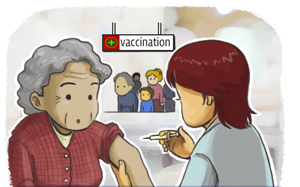
- Confusion is expected in October, when COVID vaccinations and flu vaccinations overlap, due to a significant increase in the work of inoculation institutions. In October, the largest number of people are scheduled to receive the second round of COVID vaccinations, and vaccinations to prevent seasonal flu will also begin in earnest. Front-line health centers, hospitals, and clinics expect that vaccination work will be excessive from reservation due to increased demand for vaccinations. The MFDS said Tuesday that it released 878,000 people of the seasonal flu vaccine for the first time this year. A total of 28 million flu vaccines are expected to be released this year. The MFDS said that considering 14.6 million people eligible for free vaccination (children, pregnant women, and elderly) and the target vaccination rate (80.0% for children aged 6 months to 13 years, 50.0% for pregnant women, and 85.0% for elderly people, about 11.92 million are expected to be vaccinated. Flu vaccines usually begin in September, with the largest number of people administered in October and November. Since December to March is the flu epidemic in Korea, many people are given vaccines before then. The problem is that large-scale COVID vaccinations are also scheduled in October. The KDCA announced its plan to vaccinate people in their 40s and under on the 30th. There are 17.77 million people in their 40s and They plan to complete the first round of inoculation from August 26 to September 30. Those in their 40s or younger will be vaccinated with Pfizer or Moderna, and the second vaccination is likely to be crowded in October because the interval between the first and second vaccinations is four weeks. Therefore, the flu vaccine and COVID vaccine will overlap in October, adding to the work at the front site. The MFDS plans to increase the number of people working for stable supply to help the rapid national lot release of COVID and flu vaccine. Therefore, COVID vaccine will be released in the new infectious disease vaccine test and the flu vaccine will be released in the vaccine test. However, health centers and local hospitals, which are difficult to expand personnel immediately, are unlikely to be able to fully respond to the vaccine demand. As a result, it is feared that vaccination will not take place on time or that there will be an accident of misuse. An official from the pharmaceutical industry said, "In October, the work load of front-line inoculation agencies will increase significantly due to the overlapping demand for flu vaccines and COVID vaccinations. If we fail to respond properly, there is a possibility that the number of people waiting will increase and the vaccination will be pushed back." The official said, "The government should make a thorough plan for inoculation in consideration of this."
- Policy
- It will be reviewed by the Regulatory Reform Committee
- by Lee, Jeong-Hwan Aug 09, 2021 06:02am
- Whether or not to introduce the "no change in manufacturing" policy of consignment generic, which is being opposed by the domestic pharmaceutical industry, will eventually be decided based on the results of the Regulatory Reform Committee review. The MFDS finished collecting opinions on the related industries by March this year after announcing the regulations last year, began reviewing internal regulations, and even completed reporting to the president and the National Assembly. On the 8th, the pharmaceutical industry is stressed by the MFDS' move to prevent pharmaceutical companies with consignment generics from changing manufacturing sources. The MFDS has begun discussions such as the regulatory reform legal affairs office's own review of the Regulatory Reform Committee, which is necessary to introduce administrative regulations restricting changes to manufacturers. Until just before the review of the Regulatory Reform Committee, work related to regulations on new and strengthened regulations has been carried out. Regarding the reason for the introduction of the restriction on change of manufacturers, the MFDS explained, "It is to continuously improve the quality of medicines by strengthening the management of manufacturing methods such as the manufacturing process of Rx drugs." The MFDS said that "systematic management and international harmony are needed for changes in the manufacturing method of finished drugs that can affect the quality, safety and effectiveness of impurities." The KIPCO and the KPBMA are confronting the MFDS, saying that it is excessive and double regulation to prevent changes in manufacturers now that the "1+3 Restricted Act" has been introduced and implemented. The reason why regulations against the domestic pharmaceutical industry have proceeded such as administrative notice, opinion check, and internal regulatory review by the Ministry of Food and Drug Safety was uncertain whether the pharmaceutical 1+3 restriction law could pass the National Assembly. The 1+3 Act is a strong regulation that limits the number of marketing permits for generic and improved new drugs to four. The pharmaceutical industry could not oppose the MFDS' plan to solve some problems of domestic generics by banning manufacturers from changing their manufacturers because it was uncertain whether the 1+3 law would pass the National Assembly. The 1+3 Act was implemented to limit the number of commercial permits for new drugs as well as generics. In response, the pharmaceutical industry is arguing that introducing restrictions on changes in manufacturing sources is excessive regulation and overlapping regulation. In the end, it is expected that the regulation will be introduced in Korea based on the results of the Regulatory Reform Committee review. It will review the MFDS' internal regulatory review and decide whether to implement or withdraw the objection. An official from a local pharmaceutical company said, "The pharmaceutical companies are in conflict with the MFDS' position that prohibition of changes in manufacturing is excessive regulation and that no country in the world has freely released changes in manufacturing." "In particular, it was difficult for the pharmaceutical industry to oppose because it was unclear whether the 1+3 Act was passed by the National Assembly at the time of the administrative notice banning manufacturers from changing their sources," he explained. He added, "Regulatory Reform Committee has also lifted restrictions on 1+3 by the MFDS, so it may decide to withdraw the ban on changing manufacturing sources." Meanwhile, the MFDS did not elaborate except that it was conducting an internal regulatory review in this regard.
- Policy
- Benefits for Imotun, Tagen-F and Legalon have been deleted
- by Lee, Hye-Kyung Aug 09, 2021 06:01am
- As it was classified as a health functional food in major foreign countries, it was decided to delete the benefit of four already registered medicines. However, Hanlim's Entelon, (Vitis vinifera) can be reimbursed only for lymph edema supplementary therapy due to breast cancer treatment. The remaining two indications, blood circulation, retinal and choroid circulation, are excluded from the benefit. The HIRA (Director Kim Sun-min) conducted a review on the adequacy of health care benefits for drugs already listed in the "7th Pharmaceutical Benefits Advisory Committee 2021." The Pharmaceutical Benefits Advisory Committee, which was held today, deliberated on the benefit quality review criteria approved by the Health Insurance Policy Committee on January 29. Over the past six months, the HIRA has reviewed relevant academic and pharmaceutical institutions and textbooks and clinical care guidelines, and the final ingredients reviewed are Vitis vinifera, Avocado soya unsaponifables, Bilberry fruit dried ext., and Silymarin, etc. The deliberation agenda was finalized at the Pharmaceutical Post-Evaluation Subcommittee held on the 30th of last month, and three out of four ingredients were decided to delete benefits because all of them were inadequate, and withdraw benefits for blood circulation, retina, and choroid coat circulation. If the HIRA notifies companies with Pharmaceutical Benefits Advisory Committee's results, the MOHW will file an objection for a month in August and undergo an announcement of standards after the committee's re-assigned next month. Vitis vinifera and Ginkgo biloba, which were originally subject to revaluation, were finally excluded after a conference and a pharmaceutical company's opinion check process.
