
- LOGIN
- MemberShip
- 2026-05-08 08:51:43
- Policy
- 559 doctors warned for wrongful prescription of Zolpidem
- by Lee, Tak-Sun Jun 18, 2021 05:53am
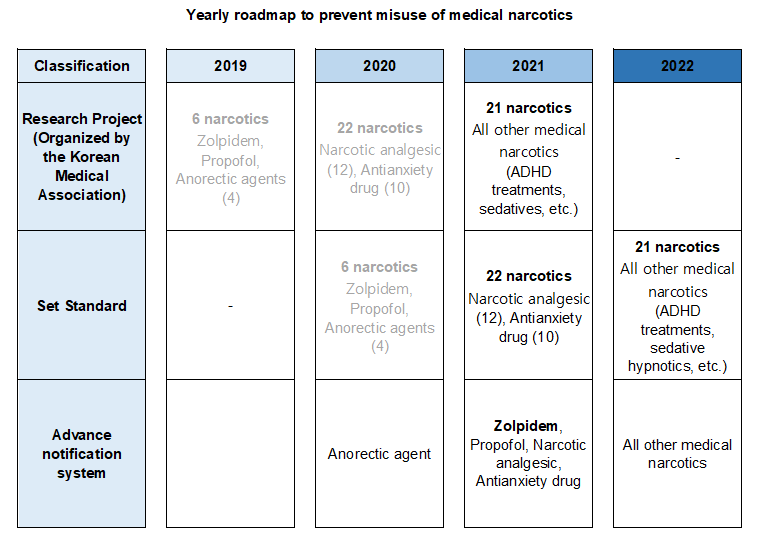
- After analyzing the prescription information on the Narcotics Information Management System (NIMS), the Ministry of Food and Drug Safety announced its decision to issue written ‘warnings’ to 559 doctors that have continuously prescribed or used Zolpidem beyond the safe use standards to prevent abuse and promote proper use of the medical narcotic, Zolpidem. This measure is the second step taken by regulators based on analysis results of the 2-month prescription and use history that was collected after notifying the 1,720 doctors who prescribed and used Zolpidem beyond the safe use standards on March 2nd, through the advance notification system as the first step. MFDS said that the doctors' compliance rate of medical narcotics safety guidelines had improved after implementing the advance notification system. The number of doctors who prescribed and used Zolpidem beyond the set safe use standards after receiving the first step warning in March decreased 68% from 1,720 to 559, and the total number of prescriptions also decreased 51% from 5,593 to 2,724. Also, the ministry added that it plans to conduct on-site inspections and take administrative actions (suspension of handling narcotics) to restrict prescriptions of doctors who do not correct their actions in prescribing medical narcotics beyond the scope set under the safe use standards even after the second written warning. An MFDS official said, “The advance notification system that has been implemented to anorectic agents in December last year will also be applied to analgesics and anti-anxiety drugs this year. By next year, we plan to expand the system to all narcotics, through which we aim to continue our efforts in preventing misuse and abuse whiling encourage safe use of medical narcotics in Korea.”
- Policy
- “The 1+3 bill” was passed by the Welfare Committee
- by Lee, Jeong-Hwan Jun 18, 2021 05:53am
- The 1+3 bill passed a plenary session of the National Assembly's Health and Welfare Committee on the morning of the 16th and will be reviewed by the legislation and judiciary committee. The resolution reflected the revision of the supplementary provision, which excludes the report from the MFDS within a month from the enforcement date of the law, a drug for data-based re-evaluation, which was approved before the enforcement of the law. The welfare committee has passed on a number of the pharmaceutical affairs law to the judiciary committee, including the bill, mandatory preparation and submission of expenditure reports on pharmaceutical CSO, designation of drug days as a legal anniversary, and mandatory safety vulnerable braille and voice codes. A total of 94 bills were handled by the welfare committee on the same day. The most interesting legislation is the 1+3 bill. The main point of the bill is to allow up to three consignees per trustee to conduct joint biological equivalence tests and clinical trials necessary for the development of drug for data-based re-evaluation with generic. Regardless of the revision of the bill, the welfare committee partially reflected the transitional measures for medicines that are already undergoing clinical trials. They say that drugs that have signed a joint development contract and received approval for a clinical trial plan from the head of the MFDS do not apply the 1+3 regulation. In this case, however, pharmaceutical companies that have been approved for clinical trials must submit data proving the joint development of drugs to the MFDS within one month from the enforcement date of the law. Like pharmaceutical companies, CSO, which is in charge of promoting drug sales, has also been designated as a drug supplier, imposing obligations to prepare and submit expenditure reports for doctors and pharmacists, and regulating those who illegally purchased Rx drugs. The welfare committee passed on amendments to the Infectious Diseases Act, the Medical Devices Act, the Infectious Disease Prevention and Control Act and the Health Insurance Act to the legislation and judiciary committee.The welfare committee introduced 114 new bills to the plenary session to continue its review at the legislation and judicial committee. They included bills that surveys and public announcements on the status of illegally licensed pharmacies, hospitals run illegally by the office manager and illegally licensed pharmacies( they will be excluded from health insurance care institutions), vaccine development status sharing, paid leave after vaccination, expanded national coverage for side effects, and prohibition of the establishment of a medical institution for child sex offenders.
- Policy
- Moderna vaccine has been approved for lot release
- by Lee, Tak-Sun Jun 18, 2021 05:53am
- The MFDS said it approved lot release of 55,000 doses of Moderna COVID-19 vaccine on the 15th. The national lot release is a system in which country evaluates the results of the verification test and the review of the manufacturer's data before the vaccine is distributed on the market and checks the quality once more. The MFDS measured efficacy based on genetic materials and the amount of lipid nanoparticles surrounding them through invitro translation of the first import of Moderna COVID-19 vaccine. The purity test and endotoxin test confirmed that the vaccine was safe because it was not contaminated. The MFDS explained that quality test data issued by the plant quality assurance director were reviewed to ensure consistency in quality. Moderna vaccine is licensed and distributed by GC Pharma. GC Pharma also applied for the national lot release. Starting this week, Moderna vaccine will be inoculated to health care workers under the age of 30, medical students, and nursing students from general hospitals. When Moderna vaccine is used on site, the total number of vaccines inoculated in Korea will be increased to four, including AstraZeneca, Pfizer and Janssen.
- Policy
- AZ vaccine's side effects are reviewed
- by Lee, Tak-Sun Jun 17, 2021 08:02pm
- The MFDS has begun a review on the addition of side effects of capillary leakage syndrome of AstraZeneca's COVID-19 vaccine recommended by the European Medicines Agency (EMA). The MFDS announced on the 14th that it will take necessary measures such as distributing Dear Healthcare Professional Letter, sharing information recommended by EMA, and adding related precautions to Insert paper. Earlier, the Pharmacovigilance Risk Assessment Committee (PRAC) of the EMA recommended that people with a history of capillary leakage syndrome should not be vaccinated against AstraZeneca's COVID-19 vaccine. The PRAC reviewed 6 cases of capillary leakage syndrome in people who received AstraZeneca's COVID-19 vaccine, with 3 having a history of capillary leakage syndrome, and one of them fatal. Capillary leakage syndrome is a very rare and serious condition that causes fluid leakage from the capillaries, resulting in edema of the arms and legs, low blood pressure, blood concentration and hypoalbuminemia. No patients have yet been reported in Korea. The MFDS shared relevant information with medical experts, saying that people who have experienced capillary leakage syndrome should not be vaccinated with the AstraZeneca's COVID-19 vaccine. It also said it will take necessary measures such as adding related precautions to the insert paper by combining the status of abnormal cases at home and abroad and safety information.
- Policy
- PBAC provides cost-effectiveness data to improve integrity
- by Lee, Hye-Kyung Jun 17, 2021 06:04am
- The Health Insurance Review and Assessment Service's Pharmaceutical Management Department was selected as 'best project' among 'self-promoted projects to improve integrity’ for its efforts in improving standard forms and expanding information disclosure systems. The department worked to improve integrity by clarifying and making transparent the application process for the decision-making of pharmaceutical benefits. Specifically, the department expanded the scope of information disclosed from the Pharmaceutical Benefit Appraisal Committee (PBAC) meeting to the cost-effectiveness data. In the past, the data shared after the meeting was focused around clinical efficacy data. The system was improved so that the PBAC evaluation results, which were provided over the phone upon the company’s request, are now provided for all pharmaceuticals that were deliberated, immediately after the meeting without requests from relevant pharmaceutical companies. In addition, the department has been commended for improving work efficiency by clarifying and standardizing the data required for submission when applying for the pharmaceutical benefit. Also, the department developed a status tracking service after applying for the extension of the benefit standard, which subdivides the review process into 7 stages - confirmation of receipt, supplementary data request, academic opinion request, practical review, committee deliberation, report to the Ministry of Health and Welfare, and process completion - to be checked by the applicant. In addition to the Pharmaceutical Management Department, the integrity promotion projects proposed by the Safety Management Department, Customer Services & Public Relations Department, Claims Review Department, and Medical Fee Schedule Department were also selected as Best Projects. HIRA has been making efforts to improve the integrity of its organization through various efforts including raising integrity awareness of its internal employees and enhancing communication with partner firms, improving employee satisfaction by achieving worker-customer balance, holding a mutual respect day, establishing and operating an anti-corruption relief program, promoting a Clean&Clear Cost (3C) system, preparing criteria for handling out-of-town business trips, etc. At the press briefing held on the 15th with the Korea Special Press Association, Shin Cho, standing auditor of HIRA said, “Analysis of the integrity score last year showed that the institution recorded high scores in illegal solicitation, bribery, and private use of budget categories, but scored relatively low in the organizational culture category. To increase the integrity of our institution, we will work to establish a healthy organizational culture and strengthen the virtuous circle for anti-corruption and integrity."
- Policy
- Ruling/opposition parties fight over supply & COVID vaccine
- by Lee, Jeong-Hwan Jun 15, 2021 05:53am
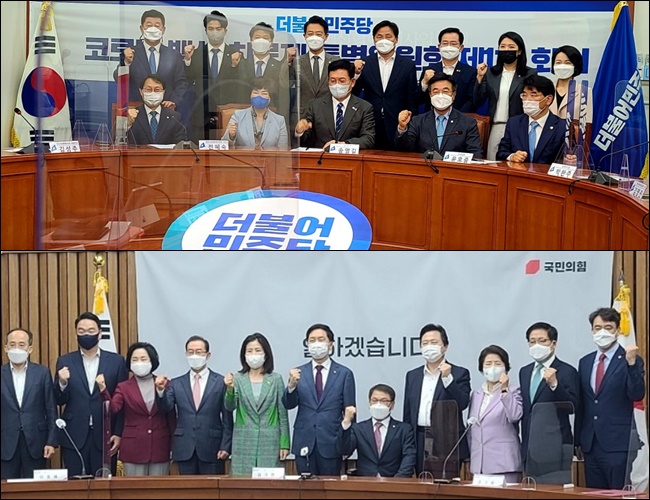
- Political circles of the ruling and opposition parties have launched a special committee on the COVID-19 vaccine and TF respectively, and are checking each other over the status of vaccine supply and vaccination performance. The ruling party has been announcing the results of COVID-19 vaccine since the Korea-U.S. summit, while the main opposition party has criticized the government for pointing out the issue of vaccine supply and demand and disruption to its goal of mass immunization in November. The ruling and opposition parties are busy with their respective activities on the COVID-19 vaccine special committee and TF, which were launched on the 14th. Currently, the Democratic Party of Korea has launched and operated the COVID-19 vaccine and treatment special committee, and the People Power Party has launched and operated the COVID-19 vaccine TF. The Democratic Party of Korea appointed Jeon Hye-sook(pharmacist), as its chairman, and Kim Sung-joo, an executive secretary of the Health and Welfare Committee, as its members, and Seo Young-seok(pharmacist). The People Power Party TF, chaired by the Health and Welfare Committee's executive secretary(Kiyoon Kang), consists of a total of 10 members, including Seo Jung-sook(pharmacist), Kim Mi-ae, Lee Jong-sung, Cho Myoung-hee, lawyer Park Joo-hyun, director Lee Sang-ho of the Korea Medical Association, and Choi Jae-wook. With the launch of the special committee, the ruling and opposition parties have begun to check the supply and demand of COVID-19 vaccine, which is the nation's biggest pending issue, and the current status and strategy of the national vaccination. Specifically, the Democratic Party of Korea held its third meeting on the 14th of this month following its first meeting on the 24th of last month to follow-up measures on COVID-19 vaccines and treatments and check major status of vaccines. In particular, the Democratic Party of Korea is determined to invite domestic pharmaceutical and bio companies and government ministries such as SK Bioscience, Huons, and Samsung Biologics to prepare effective domestic industrial support measures at the second meeting. At its first meeting on the 8th, the People Power Party TF decided to determine the exact cause of the current administration's failure to supply and demand COVID vaccines and aggressively reveal the reality that it is difficult to form a mass immunity (with a vaccination rate of more than 70%) in November. In fact, the People Power Party TF took issue with the fact that the original government budget did not reflect the purchase cost of the vaccine at all, and that the inoculation rate to the population was only 9.1% as of the 28th of last month. Furthermore, TF plans to urge the government to improve its quarantine system along with support for domestic pharmaceutical and bio industries such as securing vaccines in Korea, supporting production of consignment and self-development, and improving quarantine systems. The ruling and opposition parties are not just checking each other over COVID-19 vaccine. The ruling and opposition parties held a public hearing on the 14th to promote the formation of a special parliamentary committee to support the global vaccine hub and decided to work together to review the necessity and validity of the joint committee. It is aimed at serving as a medium for promoting cooperation between the government and businesses as South Korea's potential to leap forward as a global vaccine hub has been confirmed in the wake of the recent Korea-U.S. summit. Democratic Party of Korea Corona Vaccine Special Committee (top) & People Power Party COVID Vaccine TF The special committee aims to enhance domestic vaccine development capabilities, strengthen diplomatic capabilities to promote international vaccine cooperation, and enhance vaccine technology capabilities by establishing a global vaccine partnership between South Korea-U.S. The public hearing was co-hosted by Democratic Party of Korea Yang Ki-dae and People Power Party Choi Hyung-doo, and presented by Hanmi Pharm CEO Lim Jong-yoon and ST Pharm CEO Kim Kyung-jin. It is true that the joint public hearing has created a possibility of a joint special committee between the ruling and opposition parties for COVID-19 vaccine, but whether it will be realized depends on whether the leaders of the party will form a consensus. "Since the ruling and opposition parties have recently elected a new party leader and floor leader, it is not easy to form a consensus on the supply, vaccination and national quarantine of COVID-19 vaccines," a National Assembly official said. "The structure of forming a special committee and a TF to check will continue for the time being.However, the move to collect opinions from the pharmaceutical and bio industries through public hearings will be made together with the ruling and opposition parties and reflected in the industry promotion and vaccine hub policies," he said.
- Policy
- President Moon talks with AZ CEO at G7 Summit
- by Kim, Jung-Ju Jun 15, 2021 05:53am
- South Korean President Moon Jae-in met with Pascal Soriot, CEO of AstraZeneca, to ask for the company’s continuous support in supplying COVID-19 vaccines to Korea in the second half of this year. AstraZeneca responded positively to the request and replied that it hopes to continue a long-standing relationship with SK Bioscience as one of its top CMO partners. Also, the Korean government had announced its plan to increase contributions to the Gavi COVAX Advance Market Commitment (AMC) by 20 times to actively contribute to the inclusive recovery of the international community suffering from COVID-19. The COVID-19 Central Disaster and Safety Countermeasures Headquarters (CDSCHQ, Prime Minister Kim Boo-Kyum) today (13th) had announced the president's participation at the G7 summit that is being held in the U.K. and explained the contents of the discussions that were made with AstraZeneca regarding future cooperation plans. According to the Korea Disease Control and Prevention Agency, the G7 Summit is being held in Cornwall, U.K. on the 12th (local time). Korea was invited as a guest nation, and this is the first time in 12 years that a Korean president participated in the G7 Summit. In line with Korea's rising stature, President Moon introduced Korea’s cases in the fields of health and environment at the summit. At the summit, Korea proposed international cooperation plans to fight infectious diseases, in which Korea will act as a global vaccine production hub building on the technical capabilities of the country. Korea's plan to expand contributions to COVAX Advance Market Commitment (AMC) by 20 times, and determination to actively contribute to the inclusive recovery of the international community was also presented at the meeting. During his U.K. visit, the president had also met with Pascal Soriot, CEO of AstraZeneca, for discussions. During the talk, President Moon asked for the company’s continuous support in supplying COVID-19 vaccines to Korea in the second half of this year, and CEO Soriot replied that the company will make its best efforts in consideration of its close partnership with Korea and expressed the company's wish to maintain a long-term manufacturing partnership with SK Bioscience. The government said, “We will do our best to contribute to overcoming the global COVID-19 crisis by ensuring a stable supply of vaccines in Korea while supporting vaccine development and production.”
- Policy
- GC Pharma is working on developing DM combination drugs
- by Lee, Tak-Sun Jun 15, 2021 05:52am
- GC Pharma is busy building a lineup of ARB-based hypertension drugs called Candesartan. If Atacand, which is Candesartan's original product, has been sold for a long time, it can be seen as a measure to actively utilize its distribution network. It is currently pushing for development of other complexes in addition to single and two complexes. The MFDS approved a Phase I clinical trial plan for the test drug "GC2121" submitted by GC Pharma on the 8th. This clinical trial will be conducted to evaluate safety, pharmacokinetic and drug interactions when administered Candesartan 32 mg/Dapagliflozin 10 mg to healthy adult volunteers. It is interpreted as an early clinical trial to verify the combined effectiveness of Candesartan and Dapagliflozin, or the effectiveness of the compound. Candesartan is an ARB hypertension drug, Atacand by AZ is the original. Dapagliflozin is an SGLT-2 inhibitory diabetes treatment, Forxiga by AstraZeneca is the original. GC Pharma is related to Atacand. This is because it was co-selling with AstraZeneca Korea from 2011 to 2019. Atacand's annual performance was about ₩20 billion. Last year, Atacand also recorded ₩26 billion in outpatient prescriptions based on UBIST. GC Pharma, which had been relatively sluggish in the oral chronic disease treatment market, was evaluated to have competitive distribution while possessing the original Atacand. Since then, GC Pharma has introduced a combination of Candesartan. Rotacand (Candesartan Cilexetil-Rosuvastatin Calcium) was licensed in 2017, and Candesartan Cilexetil-Amlodipine Besylate was licensed last year. Rotacand is a hypertension drug including Candesartan Cilexetil and a hyperlipidemia drug. It is used in patients who administer Rosuvastatin at the same time. Candedipine is also used by Candesartan Cilexetil or Amlodipine Besylate monotherapy in essential hyperthesis, where blood pressure is not properly controlled. Last year, Rotacand posted a record of ₩4.4 billion by UBIST. "Neo Cande," a single product that replaces Candedipine and Atacand, has been on sale since last year, with monthly earnings steadily increasing. Currently, GC Pharma has four single and complex products containing Candesartan. High blood pressure-diabetes complexes are likely to create a new market because they are not commercialized compared to high blood pressure-hyperlipidemia complexes that have already formed a large market. However, it is pointed out that since it is not easy to research and develop a combination of the two diseases, the commercialization process should be watched for now.
- Policy
- Hepatitis C Txs are rapidly being replaced with new drugs
- by Lee, Tak-Sun Jun 14, 2021 05:56am
- Chronic hepatitis C treatments are being withdrawn from the market as new drugs are released. Roche's Pegasys, a treatment for hepatitis B and C infection, eventually withdrew from the Korean market. Pegasys PFS products were revoked on the 8th. Pegasys, which was approved in Korea in 2004, was expected to be a hepatitis C treatment injection combined with Ribavirin, especially once a week. It was later used as a treatment for hepatitis B. Sales of Pegasys which has been a blockbuster for more than ₩10 billion, dropped due to oral chronic hepatitis treatment. Last year's IQVIA sales stood at only ₩56.14 million. DAA hepatitis C drugs released since 2015 are also losing competitiveness due to better treatments. BMS' Daklinza & Sunvepra, which opened the era of DAA in Korea, were revoked in March. Gilead's Sovaldi, which once dominated the market, almost failed to meet the criteria for reexamination of new drugs due to the sharp drop in the number of patients due to the emergence of new drugs. Gilead is looking forward to a new hepatitis C treatment, Sovaldi. Recently, the MFDS' application for permission for Epclusar was completed and the review began in earnest. Epclusar is a combination of Sovaldi (Sofosbuvir) and the NS5A inhibitor family "Velpatasvir", administered once a day. Regardless of the genotype, it is expected to be a competitive drug of AbbVie's Mavyret, which currently leads the market, with a response rate of nearly 90% with 12 weeks of treatment without interferon. As new drugs for hepatitis C are being released one after another, the replacement of new drugs is rapidly progressing.
- Policy
- 1 in 5 people received COVID-19 vaccinations in Korea
- by Kim, Jung-Ju Jun 11, 2021 05:53am
- With the number of daily COVID-19 cases constantly in the 500 range, over 10 million people in Korea have received one or more shots of COVID-19 vaccines. This is nearly 20% of the total population, in other words, 1 out of 5 people in Korea have now been vaccinated. In the midst of the increasing outdoor activities and the upcoming summer holiday season, authorities have been encouraging the public to receive COVID-19 vaccinations to achieve herd immunity. According to the COVID-19 Vaccination Response Team (Eun Kyeong Jeong), as of 12:00 a.m. today (June 10th), 585,615 people received their vaccinations yesterday. Among them, 562,087 people received their first shot, and. 23,528 people received the second shot yesterday. Cumulatively, 9,794,163 people have now received their first vaccination shots, and 2,349,485 had received their second shot and completed vaccinations. By product, the rate of those first vaccinated with the AstraZeneca vaccine was 63.6%, and those who completed vaccinations with the AZ vaccine were 6.2%. For the Pfizer vaccine, first vaccination rate was 79.5%, and the vaccination completion rate was 44.7%. When adding the subtotal of those who received one or more shots of COVID-19 vaccines as of 11 a.m. today, the total number exceeded 10 million. Vaccination of the Janssen vaccine for reservists and civil defense members aged 30 or over started today. By 11 a.m., a total of 10,060,000 people tentatively received their first shot of the COVID-19 vaccines. This accounts for around 19.6% of the country’s total population, which means around one out of every five people received one or more shots of COVID-19 vaccines. The COVID-19 Vaccination Response Team explained that this achievement was made 105 days after starting vaccinations on high-risk groups on February 26th. The team added, “We would like to express our gratitude to the people who trusted our experts and the government and actively participated in vaccinations as well as the consigned medical institutions, immunization centers, public health centers, and their HCPs and staff that safely carried out the vaccinations..”
