
- LOGIN
- MemberShip
- 2026-04-30 19:05:30
- Policy
- 'Rebate points deduction system' has been stalled
- by Lee, Jeong-Hwan Nov 04, 2025 06:13am
- The revision of South Korea's Innovative Pharmaceutical Company Certification System, which the Ministry of Health and Welfare (MOHW) is pursuing to foster the Korean pharmaceutical industry, is stalling. This is likely due to arguments for and against 'conversion to a rebate scoring system.' Following agreement with the pharmaceutical industry, the MOHW had tentatively finalized a revision to switch the 'one-strike-out' rule for innovative pharmaceutical companies caught giving illegal pharmaceutical rebates to a 'points deduction system.' However, due to recent concerns about revising the scoring system, the MOHW has yet to decide. The MOHW is criticized by opponents who argue that the current one-strike-out rule is a "poison clause" and an excessive·dual regulatory burden for companies penalized for past rebate incidents. In contrast, the counter-argument is that it is illogical to grant the Innovative Pharmaceutical Company designation, along with tax and drug price benefits, to unethical and unlawful pharmaceutical companies. Some in the pharmaceutical industry even express concern that the conversion of the rebate penalty rule from a penalty to a points system, which had been discussed positively by the Yoon Suk Yeol administration until the inauguration of the Lee Jae Myung administration, might not be pursued. The MOHW is internally reviewing the final proposal and the timing for the administrative pre-announcement of the certification system on November 2. MOHW delays the administrative pre-announcement for revision from October The MOHW had planned to complete the administrative pre-announcement procedure for the certification system revision last month (October), aiming for implementation in January of next year. Specifically, this involved amending the 'Regulations on the Certification of Innovative Pharmaceutical Companies (Notice)'. However, the ministry failed to proceed with the notice revision because it could not reach an internal conclusion on provisions such as converting the penalty for revision-violating pharmaceutical companies to a points deduction system. Consequently, the administrative pre-announcement of the revision was delayed, making the planned January implementation of the revision impossible. Pharmaceutical companies caught giving rebates, dispute over certification The point of the argument is a regulatory proposal that would ease penalties for innovative pharmaceutical companies that previously provided illegal drug rebates. This involves differentiating and converting the current standard, which immediately revokes the designation, to a lesser penalty, such as a '10-point deduction'. Pharmaceutical companies have long maintained that the Innovative Pharmaceutical Companies system, intended to encourage domestic new drug R&D and increase the potential for new drug creation, is burdened by excessive regulation that allows the certification to be revoked instantly for a debate violation. The MOHW had tentatively decided to partially reflect the pharmaceutical industry's views by abolishing the one-strike-out rule and changing the disqualification criteria to a scoring system that would deduct points from companies' scores for rebates. A 10-point deduction during the certification review for a company found to have provided rebates was highly likely. This decision by the MOHW was made during the Yoon administration, and according to the original plan, the reform, which included converting the rebate penalty to a points system, should have been finalized and revised during the first quarter of this year. However, the situation surrounding the revision changed with the transition of government. The argument gained traction that the conversion to a points system could have a negative effect, softening vigilance against illegal drug rebates or hindering the deterrent effect against unlawful activities. Accordingly, Vice Minister of Health and Welfare Lee Hyung-hoon and others were reportedly instructed to review and reconsider the detailed proposal for the rebate points deduction system. Will the scoring system be abandoned? The conversion of the rebate penalty to a points deduction system is an administrative reform strongly requested by domestic and international industry stakeholders. With news emerging that the MOHW is struggling with the transition to the points system, some parts of the pharmaceutical industry are even speculating that the conversion of the rebate penalty might be abandoned entirely. The pharmaceutical industry is considering the possibility that the MOHW may set more specific, stringent criteria for the 10-point deduction proposal. For instance, some in the pharmaceutical industry anticipate that the current regulation will be further refined into a cumulative strike-out system, where the deduction points would be increased based on the number of violations and the amount of rebates: a 10-point deduction for the first violation, 15 points for the second, and certification revocation for the third. Another side of the pharmaceutical industry predicts that the transition to a points deduction system will be abandoned. This is due to prevailing social opposition, which argues that implementing the reform could grant re-certification opportunities to pharmaceutical companies whose certification was previously canceled due to rebates (despite the penalty period), which would be socially unacceptable. In fact, during this year's parliamentary inspection, Democratic Party Rep. Kim Yoon had planned to question the CEO of a domestic pharmaceutical company as a witness regarding the appropriateness of granting re-certification opportunities and associated benefits to companies involved in rebates, but the subpoena for the witness was later withdrawn. There is also an argument for implementing the rebate deduction system, but applying the one-strike-out rule (revocation of certification) only to pharmaceutical companies that provide rebates after the new system's introduction date. This logic attempts to reflect the claim that revoking certification based on old illegal rebate incidents is overly archaic and excessive regulation, while still securing a deterrent effect against future rebate activities. The certification system revision, which appeared to be progressing smoothly, has encountered an unexpected barrier, drawing the attention of both the pharmaceutical and healthcare sectors toward the MOHW's administration. An official from a mid-sized domestic pharmaceutical company said, "It's true that there were strong complaints that the rebate revocation rule contradicted the purpose of the Innovative Pharmaceutical Company Certification System, which is to expand benefits for R&D-focused pharmaceutical companies." He added, "I understand that the MOHW accepted this, decided to switch to a points system, and even went through the deliberation of the MOHW. However, the administrative delay, coupled with the change in administration and the appointment of new ministers, altered the atmosphere." The official added, "The MOHW is reconsidering because of the growing perception that the conversion to a rebate deduction system could be viewed externally as regulatory easing that partially condones illegal activities by pharmaceutical companies." He said, "We cannot rule out the possibility that the points system transition will be abandoned. Even if the conversion proceeds, we hear that the direction will likely be to clarify the disqualification criteria for companies whose certification has already been revoked or to increase the severity of the deduction penalties." Minister of Health and Welfare Jeong Eun Kyeong stated during this parliamentary inspection regarding the revision, "The MOHW is internally reviewing the comprehensive drug pricing system revision proposal as well as the Innovative Pharmaceutical Company Certification System improvement plan."
- Policy
- AI-driven drug R&D key to narrowing gap with global leaders
- by Lee, Jeong-Hwan Nov 04, 2025 06:09am
- Soon-do Cha, President of KHIDI The President of the Korea Health Industry Development Institute (KHIDI stressed that Korea must strategically nurture AI and data capabilities to dramatically improve the productivity of AI-based drug R&D and rapidly close the technology gap with advanced pharmaceutical nations. He also revealed a plan to create a KRW 1-trillion mega-fund by 2027 to support large-scale clinical trials and global expansion of domestic biopharma companies. He further stated that support would be strengthened throughout the entire lifecycle for global market entry, including expanding open innovation and exports between global pharmaceutical companies, domestic anchor companies, and startups. Soon-do Cha, President of KHIDI, responded so to a written inquiry from Representative In-soon Nam of the Democratic Party of Korea regarding the promotion of the pharmaceutical and biotech industry during the National Assembly audit on the 31st. First, Cha agreed with Nam's views on the necessity of full-cycle support for the global expansion of the pharmaceutical and biotech industry, the cultivation of core talent, and regulatory improvements. He further stated that selection and focus are crucial for achieving the government's national policy tasks, emphasizing that the core lies in convergence-based selection and concentration, namely convergence-type R&D. Accordingly, the KHIDI will actively pursue support projects in collaboration with various government ministries, including the Ministry of Health and Welfare, to successfully execute the national task of realizing Korea into a medical AI, pharmaceuticals, and biohealth powerhouse. Cha explained, “We will strengthen support for open innovation and export expansion among global pharma companies, domestic anchor companies, and startups. We will also establish a KRW 1 trillion mega-fund by 2027 to support large-scale clinical trials and global expansion, and support the implementation of a plan to cultivate 110,000 core biohealth talents.” He further emphasized, “We will operate a regulatory reform forum to continuously identify field challenges and pursue ongoing regulatory improvements. Our strategy is to steadily increase investment in basic and translational research in areas like pharmaceuticals, regenerative medicine, and medical devices—where we face technological gaps but hold national health and industrial importance—to narrow these gaps.” Cha added, “Strategically nurturing our strengths in AI and data is also part of our strategy. Ultimately, focusing on convergence R&D that combines these two fields will secure a global competitive advantage. A Applying AI to drug development to sharply raise R&D productivity is one prime example.” He further noted, “The findings from the healthcare and industrial technology level survey indicate that addressing technological gaps in core areas like drug development and advanced regenerative medicine, along with cultivating specialized personnel and securing government policy support, are extremely urgent. KHIDI will focus on enhancing the efficiency of government R&D investment and cultivating the specialized personnel needed by industry, including physician-scientists.”

- Policy
- Minister Jeong backs INN prescribing for shortage drugs
- by Lee, Jeong-Hwan Nov 03, 2025 06:08am
- Minister of Health and Welfare Eun-kyeong Jeong expressed support for introducing international nonproprietary name (INN) prescribing and expanding substitution dispensing by pharmacists for medicines facing supply instability, as they are national policy tasks. However, she stressed the need to build social consensus given strong opposition from the medical community. Minister Jeong also expressed her intent to establish a direction through research services on how to monitor out-of-stock drugs and set criteria and definitions to resolve the unstable supply of pharmaceuticals. During the National Assembly Health and Welfare Committee audit on the 30th, Minister Jeong responded so to Rep. Jong-tae Jang Democratic Party of Korea) on his inquiries. Rep. Jang had proposed a bill mandating limited INN prescribing for pharmaceuticals with unstable supply. Minister Jeong appealed to the validity of limited INN prescribing, citing factors such as the excessively low domestic substitution rate compared to advanced countries overseas. Rep Jang’s view is that legislating INN prescribing and promoting substitution can simultaneously achieve three goals: resolving the unstable supply of medicines, reducing the National Health Insurance Service's drug expenditure burden, and strengthening patients' choice of medicines. Rep. Jang explained, “In the U.S., nearly all states legally allow pharmacists to substitute with equivalent generic drugs. Some states have even introduced automatic substitution. They also adopt a system where the National Health Insurance prioritizes generic drugs for reimbursement and imposes additional coinsurance rates when original brand drugs are prescribed. As a result, generic prescriptions account for 91% of prescriptions.” He added, “In Japan, pharmacists can freely substitute drugs unless specifically prohibited by a ‘do not substitute’ label. Since last year, they've even introduced a surcharge for requesting brand-name drugs when an original prescription is specified. Pharmacies and medical institutions receive incentives based on their generic drug prescription rates, resulting in an 82% generic prescription rate.” Rep. Jang stated, “The domestic situation, with generic substitution at only 1.5%, is woefully low compared to the US at 90% and Japan and the UK at 80%. The Lee Jae-myung administration's core pledges are resolving essential drug shortages, promoting generic substitution, optimizing drug expenditure efficiency, and solving the rebate issue. The amendment to the Pharmaceutical Affairs Act mandating INN prescriptions is a proven policy to achieve this. What does the Minister think about this?“ Minister Jeong replied, “It is included in the national agenda to review INN prescribing and utilize substitution for drugs with unstable supply. We will consider introducing INN prescribing for essential medicines with unstable supply first.” She added, “Given the significant opposition and disagreement in the medical community, we will proceed through social consensus and dialogue. We also need to discuss how to monitor and define drugs with unstable supply, so we will conduct a short-term research project and discuss the results with MFDS.”
- Policy
- Reimb expanded for Opdivo, Yervoy…set for Vyloy, Padcev
- by Jung, Heung-Jun Oct 31, 2025 06:11am
- BMS Korea’s Yervoy (ipilimumab) and Ono Pharmaceutical Korea’s Opdivo (nivolumab) passed their first hurdle toward expanding reimbursement in Korea. Meanwhile, Janssen Korea’s Tecvayli (teclistamab), Pfizer Korea’s Elrexfio (elranatamab), and Astellas Korea’s Padcev (enfortumab vedotin) and Vyloy (zolbetuximab) had their reimbursement standards established, clearing the first hurdle toward reimbursement listing. The Health Insurance Review and Assessment Service (HIRA) held its 8th Cancer Disease Deliberation Committee meeting for 2025 on the 29th to deliberate on reimbursement criteria for anticancer drugs. Among these, Astellas Pharma Korea saw a double win, as reimbursement criteria were set simultaneously for two of its products. In the case of Vyloy, the National Assembly had requested expediting its reimbursement decision process. In a written inquiry during the Ministry of Health and Welfare's National Assembly audit. This time, Vyloy’s reimbursement criteria were established for ‘First-line treatment for patients with unresectable locally advanced or metastatic gastric or gastroesophageal junction adenocarcinoma who are CLDN18.2-positive and HER2-negative’ For Padcev, reimbursement criteria were set for both combination therapy and monotherapy, as ‘combination therapy with pembrolizumab as first-line treatment for adult patients with locally advanced or metastatic urothelial carcinoma’ and ‘monotherapy for adult patients with locally advanced or metastatic urothelial carcinoma who have previously received treatment with a PD-1 or PD-L1 inhibitor and platinum-based chemotherapy.’ In addition, Pfizer Korea’s Elrexfio (elranatamab) and Janssen Korea’s Tecvayli (teclistamab) also had their reimbursement criteria established, clearing their first hurdle for listing. For Opdivo, which sought to expand the scope of reimbursement, criteria were set for its use in combination therapy as first-line treatment for metastatic esophageal squamous cell carcinoma. The reimbursement criteria have also been established for the Opdivo and Yervoy combination, but only for specific patient populations. It was granted reimbursement for ‘first-line treatment of adult patients with unresectable malignant pleural mesothelioma,’ but not for hepatocellular carcinoma or non-small cell lung cancer.
- Policy
- K-API·listed essential medicine to get preferential price
- by Lee, Jeong-Hwan Oct 30, 2025 06:11am
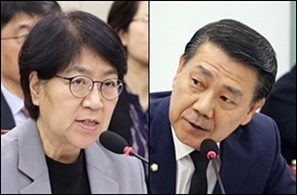
- Minister Jeong Eun Kyung promised Rep. Baek Jong-heon to implement the The Ministry of Health and Welfare (MOHW) has decided to expand eligibility for the 68% preferential drug price for National Essential Medicines that use domestic active pharmaceutical ingredients (API). The MOHW aims to foster the domestic industry by incentivizing the use of domestically sourced API. The MOHW is shifting its initial stance—which applied the 68% preferential drug price only to essential medicines that received marketing authorization after the policy's implementation in March of this year—to granting the 68% preferential price to already listed products. Notably, the MOHW will also add the measure of domestic API self-sufficiency to its ongoing research on advanced policies for drugs with unstable supply. Furthermore, it plans to review the need for a preferential drug price for combination drugs using domestic API at a later stage. This is a follow-up measure by the MOHW after Rep. Baek Jong-heon (People Power Party) criticized Minister Jeong Eun Kyung during a parliamentary inspection this year, pointing out a policy failure: not a single pharmaceutical company had applied for or benefited from the 68% preferential prices of essential medicines. This announcement is from the 'Roadmap for Fostering Domestic Active Pharmaceutical Ingredients' submitted by the MOHW to Rep. Baek Jong-heon's office on October 29. According to the documents submitted to the representative's office, the MOHW will expand the eligibility for the 68% domestic API preferential drug price, currently applied only to newly listed National Essential Medicines, to include 'already listed essential medicines.' To establish this, the MOHW stated that it initiated a survey on the status of domestic API-using drugs held by domestic pharmaceutical companies on the 20th, through organizations such as the Korea Pharmaceutical and Bio-Pharma Manufacturers Association and the Korea Biomedicine Industry Association. Rep. Baek explained that, based on the survey results, essential medicines that were already listed and had obtained National Health Insurance drug prices before the implementation of the preferential policy in March are expected to receive a retroactive application of the 68% price hike. The MOHW also decided to include strategies for API self-sufficiency in the ongoing research service to analyze trends and stabilize the supply of drugs with unstable supply (from September to November 2025). Upon completion of this research, the ministry will consider commissioning additional research to develop an API self-sufficiency roadmap. The MOHW plans to increase the Korea Health Industry Development Institute (KHIDI) budget by KRW 100 million next year for this purpose. The MOHW stated, "Next year's project to strengthen API self-sufficiency will address the excessive reliance on specific countries for imported APIs, such as China (35%) and India (15%)," and stressed, "We are also pursuing the expansion of the 68% preferential drug price for National Essential Medicines using domestic API to include already listed essential medicines. We are currently confirming the status and gathering opinions through the pharmaceutical and biotech organizations."
- Policy
- Jardiance generics listed late October…but not CKD
- by Jung, Heung-Jun Oct 30, 2025 06:09am
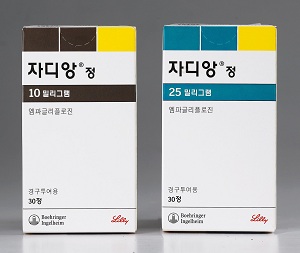
- As the substance patent for Jardiance expired on October 24, a total of 235 products—both single-agent and combination formulations—were simultaneously added to Korea’s reimbursement list. However, Chong Kun Dang chose a different approach, applying for sequential listing of its single-agent and combination products. The company first listed its single-agent Empamax Tab (10 mg, 25 mg) on the reimbursement list in line with the patent expiration date this month and plans to add 13 combination formulations in November. According to industry sources on the 29th, unlike other generic manufacturers, Chong Kun Dang owns a salt-modified single-agent formulation, which led to this stepwise, sequential reimbursement strategy. Chong Kun Dang’s Empamax Tab (10 mg, 25 mg) contains empagliflozin L-proline. It is a salt-modified version of the original compound, unlike other generics. By conjugating L-proline, an amino acid, the company successfully avoided patent infringement. After review by the Health Insurance Policy Deliberation Committee, the products have been reimbursed since October 24 at the same price as their planned sales price. Starting in November, 13 additional combination formulations—both dual and triple combinations—will be listed. A total of 11 products, that are combinations of empagliflozin and metformin-Empamax XR Tab (10/1000 mg, 12.5/1000 mg, 25/1000 mg), Empamax M Tab (12.5/500 mg, 12.5/850 mg, 12.5/1000 mg, 5/500 mg, 5/850 mg, 5/1000 mg), and Empamax S Tab (10/100 mg, 25/100 mg- will be granted reimbursement. In addition, two triple-combination formulations containing empagliflozin + sitagliptin + metformin—marketed as Emsiformin XR Tab—will also be added. A Chong Kun Dang official explained, “We modified the salt form to enhance safety. Unlike other generics, we first listed the single-agent product, and our combination products are being reimbursed subsequently based on the single-agent drug data.” Chong Kun Dang has received marketing approval for a total of 18 products, including both single-agent and combination versions, but has submitted reimbursement applications for only 15. Some triple-combination formulations and specific dosages were not included in the application. The company plans to prioritize products with higher prescription potential. The official added, “We are first launching the dosages expected to have higher prescription volume, and will apply for additional listings depending on market conditions.”
- Policy
- Non-reimbursed approvals of off-label drugs
- by Jung, Heung-Jun Oct 29, 2025 06:10am
- The number of non-reimbursed approvals of off-label drugs: while 208 applications for off-label use were rejected, 2,186 were approved between 2020-2025.The number of approvals for non-reimbursed use of drugs beyond their authorized indications (off-label) has been more than 10 times the number of rejections over the past six years. While 208 applications for off-label use were rejected, 2,186 were approved, often because the benefits outweighed the risks. On October 27, the Health Insurance Review & Assessment Service (HIRA) publicly disclosed, for the first time, the number of non-reimbursed approvals for off-label drugs, including over-the-counter (OTC) medicines. Applications for non-reimbursed off-label drug use must first be reviewed by an IRB (Institutional Review Board) established in a hospital or by an academic society. For OTC medicines, HIRA commissions the Ministry of Food and Drug Safety (MFDS) to review safety and efficacy, while anti-cancer drugs are approved by the Cancer Disease Review Committee (CDRC), which holds monthly. Unlike anti-cancer drugs, only the records of rejections for OTC medicines had been disclosed until now. This had been criticized as a problem, making it difficult for healthcare institutions to file applications for off-label non-reimbursed use. There was also a persistent request to disclose approval records for OTC medicines to ensure fairness. HIRA pre-announced a partial amendment to the 'Partial Revision to Operational Regulations for Approval of Non-Reimbursed Off-Label Drug Use' in September and proceeded with public consultation. The newly disclosed approval cases totaled 2,186 from 2020 to the present, broken down as follows: 472 cases in 2020, 572 in 2021, 266 in 2022, 485 in 2023, 276 in 2024, and 115 this year. Meanwhile, a total of 377 rejection cases were disclosed over 13 years, from 2013 to 2025. Specifically, from 2020, when approval cases began to be disclosed, 208 cases were rejected. Examining the trend of rejections by year shows: 33 rejections in 2020, 86 in 2021, 38 in 2022, 44 in 2023, 6 in 2024, and 1 this year. This data indicates a significant reduction in rejection cases over the last two years. The disclosed rejection data for this year includes one additional rejection for Mabthera (rituximab). The application was filed citing expectations that the drug would be more cost-effective, have fewer side effects, and offer higher therapeutic efficacy than alternative drugs. Yet, it was denied because the submitted evidence did not substantiate the claims.
- Policy
- MOHW ‘will support pharma amid U.S. drug tariff plans’
- by Lee, Jeong-Hwan Oct 29, 2025 06:10am
- The Ministry of Health and Welfare (MOHW) has pledged to strengthen support measures for Korean pharmaceutical and biotech companies potentially impacted by the U.S. Trump administration's drug tariff policy. However, no specific policies or systems have been announced yet. The government plans to respond once the details of the U.S. administration's proposed drug tariff measures are announced. The MOHW also stated it is implementing various budget projects to foster and localize the materials, parts, and equipment (MPE) industry, which includes active pharmaceutical ingredients for biopharmaceuticals. This information comes from reviewing the Ministry's response submitted to the National Assembly's Health and Welfare Committee on the 27th for its NA audit. In response to concerns over potential damage from the U.S. plan to impose 100% tariffs on pharmaceuticals, the ministry said, “We will expand measures to strengthen export competitiveness, including financial support and new market development for affected companies.” The ministry explained that while President Trump mentioned plans for a 100% drug tariff, no official government announcement specifying the scope or items subject to the tariff has been made yet. The ministry elaborated, “If high tariffs are imposed, it will inevitably impact exports to the U.S. by domestic pharmaceutical and biotech companies. We need to confirm the details of the U.S. administration's specific drug tariff announcement.” It further announced, “The Ministry of Health and Welfare, together with the Ministry of Trade, Industry and Energy, held an emergency meeting with export companies on September 29 regarding the announcement of pharmaceutical tariffs to gather industry opinions. We will strengthen countermeasures for companies affected by tariffs in the biohealth sector to minimize the impact on domestic companies.” Regarding plans to foster the bio-materials and equipment sector as the “second semiconductor MPE” industry, the ministry emphasized that “this holds high importance from a national health security perspective.” The ministry stated it is supporting companies with costs for performance evaluations, such as testing, analysis, and certification, as well as consulting for overseas approvals, to promote the domestic production of vaccines and raw materials, which Korea is currently heavily import-dependent. For 2024, KRW 2.1 billion was allocated to support performance testing of domestically produced vaccine APIs. The ministry also announced new initiatives for the next year, pledging to continue nurturing the bio-materials and equipment sector. “The government's plan for next year includes new projects for the domestic production of bio raw materials and components, reflecting our ongoing commitment to fostering the bio MPE industry. We will provide support through budgeted projects, including KRW 10 billion for stabilizing the supply of bio raw materials and components, KRW 1.5 billion for diversifying raw material procurement, KRW 500 million for stockpiling essential medicines, and KRW 8.1 billion for advancing the manufacturing of export-oriented pharmaceuticals.”
- Policy
- HIRA “Low-price drug incentive brings ₩2.7 savings'
- by Lee, Jeong-Hwan Oct 29, 2025 06:10am
- The Health Insurance Review and Assessment Service (HIRA) defended its position regarding the argument against the ‘low-price drug purchase incentive’ payment system, stating that the system has consistently contributed to national health insurance cost savings. However, it acknowledged that improvements are needed regarding the unresolved issue of incentives being disproportionately concentrated on medical institutions at the general hospital and tertiary hospitals. HIRA's policy is to expand the cost-saving effect on the health insurance budget by devising a plan to allow hospital-level medical institutions and primary care clinics to participate in the low-price drug purchase incentive system. On the 26th, HIRA disclosed this plan regarding the low-price purchase incentive to the office of Representative Joo-young Lee of the Reform Party, Rep Lee raised concerns about the systemic contradictions and low effectiveness of the low-price drug purchase incentive policy. The low drug price purchase incentive system provides incentives to medical institutions based on the difference between the actual purchase price of drugs and the upper limit set for drug costs. Ultimately, this policy incentivizes lowering the actual transaction price of drugs in the market relative to the NHI drug price ceiling. This directly leads to reductions in the actual transaction prices of drugs, affecting pharmaceutical companies' cash cows. Rep Lee believes this incentive system hinders the development of the domestic pharmaceutical industry and diminishes the cost-saving effects of the national health insurance program because it focuses on price rather than drug quality. The pharmaceutical industry and drug wholesalers also argue that the low-price purchase incentive system is inherently flawed because it is linked to reductions in the actual transaction price of drugs. Critics argue that the lower the actual transaction drug price becomes for low-price purchase incentives, the more directly it leads to subsequent reductions in actual transaction drug prices, discouraging all from voluntarily lowering drug prices. Medical institutions have long pointed out that for small and medium-sized hospitals, neighborhood clinics, and pharmacies—not tertiary hospitals—the actual volume of low-price purchases is small, resulting in a low perceived incentive effect. In response to Rep. Lee's criticism that the low-price purchase incentive system is ineffective and undermines drug quality, HIRA stated, “It has the effect of reducing national health insurance finances.” HIRA explained that the low-price purchase incentive program was introduced to motivate healthcare institutions to purchase low-priced drugs and manage drug costs appropriately. It further elaborated, “The financial savings effect through this system is being sustained, as evidenced by the steady influx of new institutions participating in each round.” In fact, new institutions accounted for an average of 31.5% of all institutions receiving low-price purchase incentives recently. The low-price purchase incentive program has reduced national medical expenses by KRW 2.7012 trillion over the past decade, yielding annual savings of approximately KRW 200 to 300 billion. While recognizing the financial benefits, HIRA also admitted that the incentives are concentrated on medical institutions at the general hospital level or above, noting that improvement is needed to ensure fairer participation. HIRA concluded, “Since institutions with strong purchasing power, such as general hospitals, receive most of the incentives, we will seek ways to encourage participation from smaller hospitals and clinics, thereby contributing to the appropriate management of drug costs in Korea.”
- Policy
- How did CPAC evaluate Wegovy's adolescent indication?
- by Lee, Tak-Sun Oct 28, 2025 06:13am
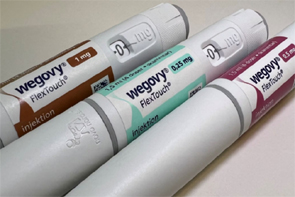
- The Ministry of Food and Drug Safety (MFDS)'s Central Pharmaceutical Affairs Council (CPAC) meeting report on the approval of Wegovy (semaglutide, Novo Nordisk) for a 12-and-above adolescent indication has been released, garnering attention. While CPAC members generally acknowledged the need for the adolescent obesity indication for Wegovy, they agreed that stringent post-marketing safety monitoring is required. The MFDS recently added Wegovy's indication for use as an adjunct to chronic weight management in adolescents aged 12 and older. Wegovy can now be used for obese adolescent patients aged 12 or older with an initial Body Mass Index (BMI) corresponding to the adult threshold of 30 kg/m2 or higher, and whose body weight exceeds 60 kg. The CPAC advisory report, held on July 24, was released on that day. Nine of the twelve members who attended the meeting unanimously agreed on the validity of the efficacy and safety for the adolescent obesity indication. One member stated, "Although there are concerns about misuse and abuse, this is a necessary drug for severely obese adolescents." Another member said, "The adverse events for the GLP agonist class will likely be similar," adding, "Obesity is a disease, and as it is expected to increase, there is a medical necessity." The consensus favored the benefits to patients outweighing concerns about misuse. Another member noted, "While the adult indication includes overweight patients with comorbidities, the adolescent indication is limited to obese patients, which suggests the risk of misuse and abuse might be lower than in adults. However, thorough management in clinical settings appears necessary." Consequently, the MFDS stated it would review the suggestion to include warnings about suicidal ideation in the drug's approval information. In fact, warnings regarding suicidal ideation have been included in the precautions for use. A clause was added to the general precautions stating: "Suicidal behavior and ideation have been reported in clinical trials of other medicines for the treatment of obesity or overweight. Patients receiving this drug for chronic weight management must be monitored for the emergence or worsening of depression, suicidal ideation or behavior, and/or any abnormal changes in mood or behavior. Use of this drug should be discontinued in patients who experience suicidal ideation or behavior. This drug should not be used in patients with a history of suicidal behavior or active suicidal ideation." Furthermore, a plan for post-marketing surveillance (PMS) in adolescents was also approved. The expansion of Wegovy's adolescent indication was primarily driven by the STEP TEENS Phase 3 clinical study. Thiswas a multi-center, randomized, double-blind study involving 201 adolescents aged 12 to less than 18 who were obese or overweight with at least one weight-related comorbidity. The clinical results met the primary endpoint. The percentage change in BMI showed a 16.1% reduction in the Wegovy 2.4mg group (134 patients), compared to a 0.6% increase in the placebo group (67 patients). The percentage of patients achieving 5% or more weight loss, a secondary confirmatory endpoint, was higher in the Wegovy 2.4 mg group (72.5%) compared to the placebo group (17.7%). Additionally, the secondary exploratory endpoint of weight change (kg) showed a 15.3 kg decrease in the Wegovy 2.4 mg group, compared to a 2.4 kg increase in the placebo group. The proportion of patients achieving 15% or more weight loss was also higher in the Wegovy 2.4 mg group (53.4%) than in the placebo group(4.8%). Novo Nordisk Korea stated, "Wegovy is the first GLP-1-based, once-weekly obesity treatment to be approved for adolescents," stressing that it "will improve treatment access for adolescents."
