
- LOGIN
- MemberShip
- 2026-04-30 19:05:30
- Policy
- NHIS actively reviews unifying drug price-reduction system
- by Jung, Heung-Jun Oct 27, 2025 06:09am
- The National Health Insurance Service (NHIS) expressed its intent to actively review improvements to unify the timing of various post-market drug price-reduction systems, which are currently applied inconsistently. However, regarding introducing the International Nonproprietary Name (INN) name prescribing, it offered a general response stating that a cautious approach is necessary, requiring social consensus and policy judgment. On the 24th, the NHIS responded so to an inquiry from Rep. Jia Han of the People Power Party regarding the rationalization of the post-market drug price management system. The criticism is that various drug price reduction systems—such as actual transaction price reductions, price-volume agreement negotiations, and reimbursement reevaluation—are applied at different times, causing confusion and unpredictability in the field. The NHIS stated, “The post-listing control system is crucial for sustainable NHIS finances and drug cost management. However, we are aware of concerns that differing application timings between systems hinder predictability in the field.” It added, “In accordance with the Second Comprehensive National Health Insurance Plan, the government is conducting policy research to explore rational improvements to the post-listing control system. The NHIS will actively review and support reasonable improvement measures.” Rep. In-soon Nam of the Democratic Party of Korea inquired about the NHIS's stance on introducing INN prescribing. The NHIS appeared to take a cautious step back, stating it is a matter requiring prudence. The NHIS stated, “While prioritizing patient safety, we need to review limited and gradual adoption centered on essential medicines prone to supply instability, based on feedback from experts, academic societies, and stakeholders. Rep. Nam also inquired about the reasons for opposition from the medical community, such as infringement on doctors' prescribing rights and distrust regarding bioequivalence testing. In response, the NHIS stated, “Given the differing opinions, sufficient discussion among stakeholders and expert review are required. The matter must be approached with social consensus and careful policy judgment.”
- Policy
- "Long-waited patent expiration"…17 Xeljanz generics
- by Jung, Heung-Jun Oct 24, 2025 06:16am
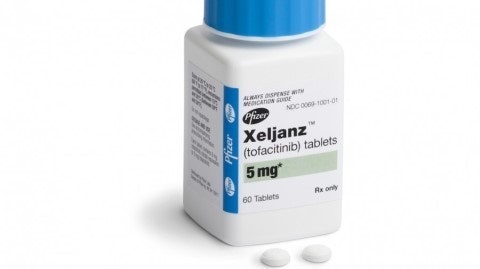
- Product photo of Xeljanz Pfizer Korea's rheumatoid arthritis treatment 'Xeljanz (tofacitinib)' is set to be included on the National Health Insurance reimbursement list next month, joining the market competition. According to the industry on October 23, 12 pharmaceutical companies and 17 items will receive reimbursement coverage as of November 23, the next day after Xeljanz's substance patent expiration. The products to be listed include Daewoong's Xeltofa Tab (5mg, 10mg), Il-Yang Pharms' Ellanz Tab 5mg, Tofacell Tab. Chong Kun Dang's Tofacell Tab (5mg, 10mg), Sam Il's Tofajakt Tab 5mg, SK Chemicals' Tocinib Tab 5mg, Hanlim Pharm's Zekpaz Tab 5mg, HLB Pharma's HLB Tofacitinib Tab (5mg, 10mg), Samjin Pharm's Tofanus Tab (5mg, 10mg), Unimed Pharm's Ziae K Tab 5mg, Alvogen Korea's Gencinib Tab (5mg, 10mg), Whan In Pharm's Tofasiz Tab 5mg, and Genu Pharma's Zakmoon Tab 5mg. Overall, the list includes five high-dosage (10mg) and twelve 5mg items. Chong Kun Dang's Tofacell Tab and HLB Pharma's HLB Tofacitinib 10mg are priced at KRW 10,859, positioning them at the highest ceiling price. Of these 5mg items, SK Chemicals' Tocinib Tab and Hanlim Pharm's Zekpaz received a high ceiling price estimation of KRW 7,697. Low-dosage items were approved for ▲rheumatoid arthritis ▲psoriatic arthritis ▲ankylosing spondylitis ▲ulcerative colitis, whereas high-dosage items were approved for ulcerative colitis only. A total of 68 items have received approvals. As several generic drugs are set launch and be included in the reimbursement list, the market for Xeljanz is expected to become more intense. According to UBIST, Xeljanz's sales last year amounted to KRW 14.4 billion, up 8.3% from the previous year's KRW 13.3 billion.

- Policy
- NA presses for reimb of Vyloy, Imjudo, Yescarta
- by Jung, Heung-Jun Oct 24, 2025 06:14am
- The National Assembly directly mentioned drugs for severe diseases like Vyloy, Imjudo, Yescarta, and pressed the Ministry of Health and Welfare to promptly grant the drug’s reimbursement expansions. The Ministry responded, “We will expedite the process,” which is expected to act as a tailwind for HIRA's reimbursement decision discussions. In written inquiries on the 22nd, lawmakers In-soon Nam, Myung-ok Seo, and Bo-yoon Choi each called for broader and faster access to high-cost treatments for severe diseases. Rep. In-soon Nam of the Democratic Party of Korea stated, “The government promised in its last presidential election pledge to reduce patient burdens through strengthened early diagnosis and treatment for severe disease patients, along with rapid coverage listing,” and inquired about plans for priority coverage of CAR-T therapy used as second-line treatment in blood cancers. The MOHW responded, “Yescarta applied for reimbursement as a second-line treatment last August, and the Health Insurance Review and Assessment Service (HIRA) is currently processing the decision on reimbursement eligibility. We will expedite the process for determining reimbursement eligibility for blood cancer treatments.” Rep Myeong-ok Seo of the People Power Party asked the Ministry about its commitment to pursuing reimbursement for targeted therapies for advanced or metastatic gastric cancer. The MOHW stated, “Vyloy applied for reimbursement this July as a first-line treatment for CLDN18.2-positive, HER2-negative advanced or metastatic gastric cancer. HIRA is currently processing the decision on reimbursement eligibility,” and expressed its intent to expedite the process. Rep. Bo-yoon Choi of the People Power Party inquired whether there are plans to expand the reimbursement evaluation method for the liver cancer treatment Imjudo. The criticism was that the current system, centered on periodic cost comparisons by treatment cycle, does not sufficiently reflect the unique characteristics of single-dose, one-shot treatments. In response, the MOHW stated, “The company applied for reimbursement in March, and HIRA is currently processing the decision on its reimbursement eligibility. In September, HIRA’s Drug Reimbursement Evaluation Committee raised the need to review the drug cost comparison criteria, and we are currently reviewing the details.”
- Policy
- "Will establish preferential pricing for drug R&D"
- by Lee, Jeong-Hwan Oct 23, 2025 06:12am
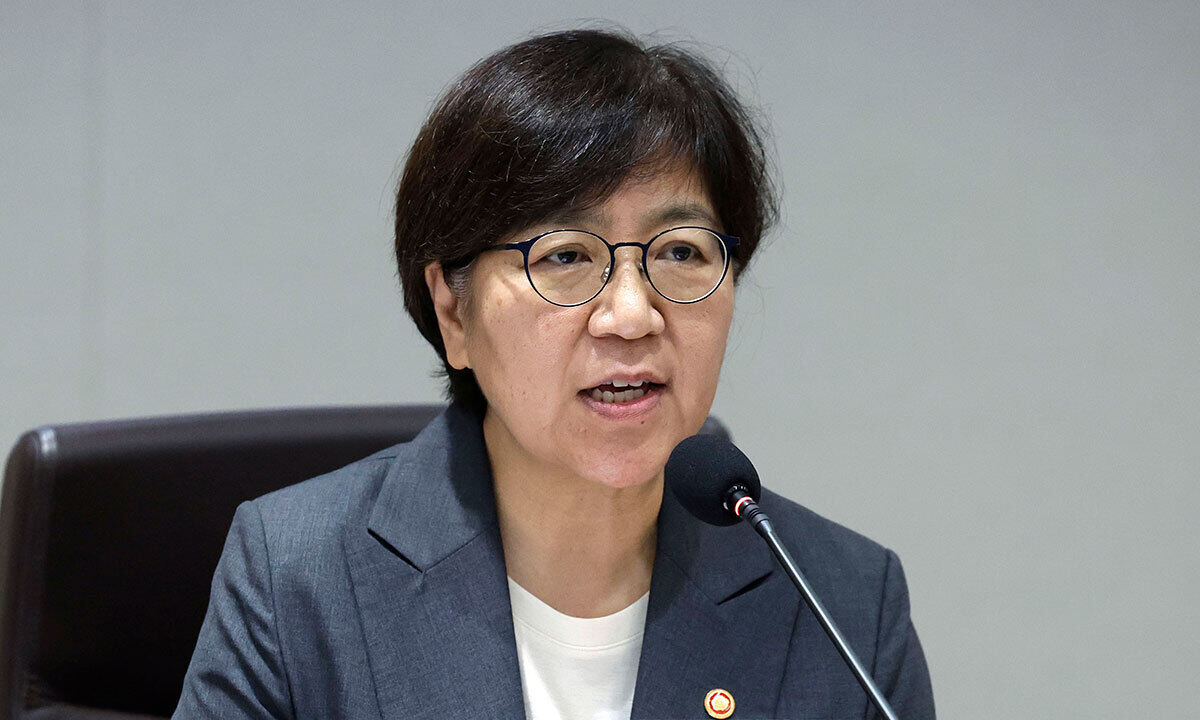
- Minister of Health and Welfare Jeong Eun Kyeong Minister of Health and Welfare Jeong Eun Kyeong is drawing attention after stating, "It is necessary to reform the pharmaceutical company compensation system through a drug pricing system linked to R&D investment. The Ministry will prepare measures to improve the drug pricing system." Minister Jeong also promised, "The Ministry will prepare multi-faceted support measures, including finance, tax, and human resources, for domestic pharmaceutical companies, including those designated as Innovative Pharmaceutical Companies." Regarding plans to reduce drug prices through the Re-evaluation of Foreign Drug Prices and the Reimbursement Appropriateness Re-evaluation, Minister Jeong acknowledged the following: the high level of domestic generic drug prices compared to major overseas countries, and the need for appropriate drug price management within limited National Health Insurance finances to ensure optimal drug coverage. She responded, "The Ministry will review drug price management after consulting with citizen groups, patient organizations, the pharmaceutical industry, and academic societies to ensure fair management and acceptance." Minister Jeong made these statements on October 22 in response to written inquiries during the parliamentary inspection from Democratic Party Representatives Nam In-soon and Lee Kai Ho, and People Power Party Representative Suh Myeong-ok. Rep. Nam and Rep. Suh pointed out the necessity of drug price incentives to encourage domestic pharmaceutical companies' New Drug R&D investment. The Ministry of Health and Welfare stated that the pharmaceutical and bio-industry is a national strategic industry and that national-level investment expansion is needed for it to become the next growth engine. In particular, the Ministry agreed on the need to reform the drug pricing system and compensation structure to strengthen the reward for the innovative value of new drugs and incentivize R&D investment, aiming to foster pharmaceutical companies with global new drug development capabilities. Minister Jeong stated, "We will prepare drug pricing system improvement measures after gathering opinions from industry experts and academic societies." She added, "We will comprehensively review the sound growth of the pharmaceutical and bio-industry and the sustainability of National Health Insurance finances by closely examining the status of domestic and foreign drug pricing systems, policy improvement areas, and global trade situations, while considering social acceptance." Regarding plans to foster domestic pharmaceutical and biotech companies, Minister Jeong explained, "The government has established three core tasks to achieve the vision of making Korea a global top 5 nation in the K-BIO and Pharmaceutical sector," and added, "We will shift to consumer-oriented regulations, accelerate innovative growth by linking technology, human resources, and capital, and support the co-growth of anchor and biotech companies to strengthen global competitiveness." Minister Jeong further stated, "We plan to establish detailed implementation plans for each task through consultation with relevant ministries and will execute follow-up measures without fail, reviewing opinions gathered from forums," and added, "We will improve the Innovative Pharmaceutical Company Designation System to reflect changes in the industry ecosystem. We will support the strengthening of domestic companies' competitiveness through field-centered workforce training and support programs for attracting overseas talent." Regarding the push for the Re-evaluation of Foreign Drug Prices and the Reimbursement Appropriateness Re-evaluation, Minister Jeong gave a principled answer, stating that the Ministry will consider industry opinions during the review process. Minister Jeong said, "Drug expenditure in Korea continues to increase due to the growing number of elderly and chronic disease patients." She added, "Domestic generic drug prices are high compared to major overseas countries. We will reasonably manage drug prices after listing by gathering feedback from the field, including the pharmaceutical industry." She concluded, "The Ministry is currently conducting the reimbursement appropriateness evaluation for eight APIs this year," and added, "We are preparing a fairer and systematic implementation plan based on the results of the five-year re-evaluation effort. We will review it after sufficient consultation to ensure social acceptance."
- Policy
- ‘Expanding dual pricing under review to mitigate risks’
- by Jung, Heung-Jun Oct 23, 2025 06:11am
- The Ministry of Health and Welfare has expressed its commitment to actively review plans to expand the dual drug pricing system to resolve risks associated with the introduction of innovative new drugs. The MOHW expressed consensus on the need for the expansion as a countermeasure to the Most-Favored-Nation (MFN) drug pricing system introduced by the Trump administration in the United States. Responding to a written inquiry from lawmakers Ye-ji Kim and Jia Han of the People Power Party during the National Assembly audit on the 21st, the MOHW stated that it is reviewing measures for improvement. The lawmakers asked what concrete measures the government plans to take to mitigate risks posed by other countries, referencing Korea’s drug prices. The Ministry stated, “As the domestic launch of new drugs could be postponed or delayed if Korea becomes a reference country, we agree on the need to expand the dual pricing system to enhance patient access to treatments. We will prepare countermeasures.” It explained that it is reviewing plans to expand the current dual drug pricing system by gathering industry opinions. The Ministry expressed its commitment to the task, stating, “We will actively review plans to expand the dual drug pricing system to resolve the risk related to introducing innovative new drugs domestically.” Regarding the proposal to expand the risk-sharing system beyond anticancer drugs to cover new drugs for chronic diseases and other conditions, it responded that it would review reasonable systemic improvements. “In August last year, we revised the system to allow new drugs for severe, irreversible chronic diseases that significantly impair quality of life to also apply for RSA. We will continue to review rational policy improvements through expert consultation and on-site feedback.”
- Policy
- MOHW to institutionalize a fast-track listing system
- by Jung, Heung-Jun Oct 23, 2025 06:10am
- The Ministry of Health and Welfare (MOHW) has announced plans to institutionalize a fast-track reimbursement system based on the outcomes of the ongoing “approval–evaluation–negotiation” pilot program, aimed at accelerating patient access to innovative new drugs. It also stated its intention to expedite the reimbursement decision process for drugs for severe diseases that have submitted applications. The ministry responded so to Rep Mi-hwa Seo’s inquiry on strengthening access to new drugs during the National Assembly audit on the 21st. “We are currently conducting a pilot program that concurrently operates the regulatory approval (MFDS), reimbursement evaluation (HIRA), and price negotiation (NHIS) processes to support faster access. We will analyze the program’s performance and collect feedback from the field to review options for institutionalizing the system.” Furthermore, to provide optimal drug coverage within limited finances, the MOHW plans to include rational improvements to cost-effectiveness evaluations and implement a periodic drug price adjustment system, and strengthen compensation for R&D investments. The Ministry of Health and Welfare stated, “We aim to enhance coverage for severe and rare diseases by making cost-effectiveness evaluations more rational. We also plan to establish a periodic drug price adjustment system to proactively prepare for future increases in drug costs and strengthen appropriate compensation for R&D investment to foster an innovation ecosystem that promotes new drug development." The ministry expressed plans to expedite reimbursement decisions for specific drugs for severe diseases, such as third-line treatments for metastatic colorectal cancer. The MOHW responded, “‘Fruzaqla Cap (Takeda Pharmaceuticals Korea)’ is being reviewed for reimbursement as a third-line treatment for metastatic colorectal cancer. We will expedite its review procedures and make a prompt decision.” The ministry acknowledged the need for improvement regarding third-generation thrombolytic agents that are reimbursed overseas but not yet introduced in Korea. The Ministry stated, “We agree on the necessity of introducing third-generation thrombolytic agents, which reduce the burden of existing thrombolytic therapy. Currently, the second-generation agent Actilyse is listed, and the third-generation agent Metalyse was approved in October, but we confirm that no reimbursement application has been submitted. Once submitted, we will ensure the review proceeds smoothly.”
- Policy
- 'Distrust in MFDS rises after Leqembi safety issue'
- by Jung, Heung-Jun Oct 22, 2025 06:09am
- The Ministry of Food and Drug Safety (MFDS) has been criticized for losing public trust due to inadequate safety verification of the dementia drug Leqembi (Lecanemab) and poor post-marketing adverse event management measures. On the 18th, during the National Assembly audit of the MFDS, Representative Jin-sook Jeon of the Democratic Party of Korea criticized, “The MFDS has caused a crisis of trust at every stage of the approval and post-marketing management of dementia drugs. It must take responsibility and apologize before the public’s life.” Although Minister Yu-Kyoung Oh explained during last year's audit that ‘Aduhelm was not being used in Korea,’ the Korea Orphan Drug Center confirmed that a total of 5,847 vials were supplied for self-treatment at patients' request from 2021 to 2024. Jeon said this could constitute false reporting or perjury before the National Assembly. Rep. Jeon criticized, “Similarly, 448 vials of Leqembi were supplied for self-treatment before its official domestic launch. Despite knowing this, the MFDS answered ‘it was not in use.. MFDS’s safety management system failed to function during the pre-approval phase for Leqembi.” He further stated that the MFDS, which promised thorough post-marketing surveillance, is relying solely on reports from the pharmaceutical company. Jeon explained that surveillance is being conducted based on how much of the ‘post-marketing surveillance’ management plan submitted by the pharmaceutical company during the approval process has been quantitatively achieved. This is criticized as a dereliction of duty, entrusting patient safety to the pharmaceutical company. Rep. Jeon stated, “The U.S. FDA identified 6 deaths (4 unique cases after deduplicating) during the initial administration phase in its 2024 routine drug surveillance process and took safety measures, increasing MRI follow-up scans from three to four times. However, no separate follow-up measures have been made by our MFDS to date.” Domestically, 135 adverse events were reported within a year of its approval, with 12 (9%) classified as serious adverse events. Major adverse events included ▲ cerebral edema ▲ microbleeds ▲ hemosiderin deposition, identified as ‘amyloid-related imaging abnormalities (ARIA)’, posing risks of long-term brain damage and atrophy. Rep. Jeon stated, “The Yoon Suk-yeol administration appointed Director Yu-Kyoung Oh under the pretense of ensuring science and trust. However, the MFDS's science has vanished, and its trust collapsed. Minister Oh must apologize to the public for undermining the public’s trust.” She further proposed alternatives, stating, “New mechanism drugs, high-risk biological products, and conditionally approved drugs must be legislated to mandate external expert consultations.. The lack of post-marketing surveillance obligations for self-administered drugs requested by patients must be addressed to strengthen safety monitoring. Guidelines for regular inspections of adverse effects from self-administered drugs must also be established.”

- Policy
- Parliamentary inspection of the MFDS to highlight
- by Lee, Jeong-Hwan Oct 21, 2025 06:19am
- President Lee Jae Myung During the upcoming parliamentary inspection of the Ministry of Food and Drug Safety (MFDS), the National Assembly is expected to highlight the need to increase the number of reviewers and support the formation of dedicated teams to provide customized approval services, all aimed at shortening the review period for domestically developed new drugs. This move follows President Lee Jae Myung's directive to increase the number of drug reviewers by 300 to foster the K-Bio industry. On October 20, both ruling and opposition members of the National Assembly's Health and Welfare Committee are focusing on the issue of increasing and expanding the new drug approval review staff, which is deemed necessary for developing the domestic pharmaceutical and bio-industry, during the MFDS parliamentary inspection scheduled for October 21. President Lee Jae Myung ordered the expansion of the new drug review workforce, including biopharmaceuticals, during the 2nd Core Regulation Rationalization Strategy Meeting held at the Presidential Office in Yongsan, Seoul, on October 16. President Lee specifically emphasized the increase in MFDS review staff, stating, "The Ministry of the Interior and Safety may object, asking why we are increasing the number of public officials, but let's disregard that and proceed." This was a response to MFDS Minister Yu-Kyoung Oh's previous announcement to significantly expand the review workforce and strengthen existing review services, including prior consultation, face-to-face consultation, and supplementary meetings, to transform the MFDS into a regulatory service agency centered on demand, focusing on the pharmaceutical companies seeking new drug approvals. Minister Oh requested an increase of 300 MFDS reviewers to accelerate the review process (targeting 240 days), a request which President Lee accepted. Members from the Democratic Party of Korea and the People Power Party on the Health and Welfare Committee agree on the need to improve the review environment for rapid domestic new drug marketing authorization. They are expected to pursue related questioning during the parliamentary inspection. Rep. Nam In-soon (Democratic Party) plans to highlight the necessity of increasing the hiring of not only pharmacists but also physicians for dedicated review roles, following President Lee and Minister Oh's push for expanded review staff. The increase of 300 MFDS reviewers requires an annual labor cost of KRW 15 billion, and the plan is to cover this cost by increasing review service fees. Members on the Health and Welfare Committee are expected to specifically question MFDS on its plan to secure the necessary funding by raising the review fees for both synthetic drugs and biopharmaceuticals. A Health and Welfare Committee official said, "The MFDS review staff, at about 300 people, is much smaller compared to the U.S. FDA's approximately 9,000 staff and the European EMA's approximately 4,000 staff," and added, "Given the future blueprint of creating domestic global new drugs and fostering global pharmaceutical companies, we plan to question the need to foster new drug approval review team and the specific policy direction."
- Policy
- Keytruda, Dupixent begin negotiations for reimb expansions
- by Jung, Heung-Jun Oct 17, 2025 06:10am
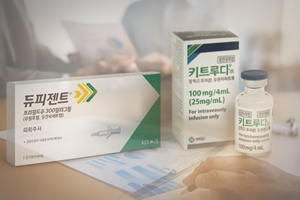
- The immuno-oncology drug Keytruda (pembrolizumab) and the atopic dermatitis treatment Dupixent Pre-filled (dupilumab) have entered price negotiations, moving one step closer to expanding reimbursement in Korea. Both MSD Korea’s Keytruda and Sanofi-Aventis Korea’s Dupixent received reviews deeming reimbursement adequate for expanded indications at the September meeting of the Drug Reimbursement Evaluation Committee. Keytruda added an impressive 11 new indications, including gastric cancer, esophageal cancer, endometrial cancer, colorectal cancer, squamous cell carcinoma, cervical cancer, breast cancer, small intestine cancer, and biliary tract cancer. Previously, it was covered for 7 indications across 4 cancer types: non-small cell lung cancer, Hodgkin lymphoma, melanoma, and urothelial carcinoma. The addition of 11 indications is expected to increase annual claims by approximately KRW 400 billion. Due to increased usage, Keytruda became subject to monitoring for fourth-quarter price-volume agreement negotiations this year. Dupixent, a treatment for severe atopic dermatitis, received approval for expanded reimbursement for ‘severe type 2 inflammatory asthma in adults and adolescents’. Dupixent, the only targeted biologic for atopic dermatitis in Korea, had its indications expanded in March this year to include ‘additional maintenance therapy for adult COPD patients with elevated blood eosinophil counts inadequately controlled by standard inhaled therapy’. According to Sanofi's performance data, Dupixent's global sales for the second quarter of this year reached approximately KRW 6.617 trillion. This represents a 15.6% increase compared to the same period last year. Sanofi is continuing to expand its indications for Dupixent through additional clinical studies. According to the market research institution IQVIA, sales in 2023 reached KRW 143.2 billion . This represents an increase of over 36% compared to the previous year, showing an upward trend. Due to its increased use in Korea, it is also included as a subject for monitoring for fourth-quarter PVA negotiations alongside Keytruda. If negotiations with the National Health Insurance Service proceed without breakdown and lead to expanded coverage, this is expected to further bolster the upward sales trend.
- Policy
- "Korea Passing concerns…'dual pricing system' under review"
- by Lee, Jeong-Hwan Oct 17, 2025 06:10am
- Minister of Health and Welfare Jeong Eun Kyeong Minister of Health and Welfare Jeong Eun Kyeong announced that the Ministry would strengthen administrative efforts for 'fast track National Health Insurance (NHI) listing of new drugs' and review the introduction of a 'dual pricing system' to prevent global pharmaceutical companies from "Korea Passing" of their new drugs. On October 14, Minister Jeong stated this during a Parliamentary Inspection, responding to an inquiry from People Power Party Rep. Jia Han regarding the U.S. Trump administration's 'Most-Favored-Nation Prescription Drug Pricing.' Rep. Han stated concern, "If the Trump administration's new drug pricing system is fully implemented, patient access to new drugs in Korea could be significantly constrained," and added, "Global pharmaceutical companies like Pfizer and AstraZeneca have also stated participation in the most-favored-nation price system." Rep. Han further pointed out, "Recently, a key breast cancer treatment, Faslodex, was considered for withdrawal due to drug price issues, and some rare and intractable disease treatments cannot be introduced into Korea at all," and added, "If the most-favored-nation price system is implemented, Korea could devolve into a 'country with cheap drugs but no new drugs.' If major pharmaceutical companies delay launching or withdraw from Korea due to drug price transparency and low market potential, patients will lose access to life-saving new treatments." Rep. Han said, "South Korea's drug prices are about one-fifth of the OECD average, and its share of the global pharmaceutical market is only 1.7%, compared to the U.S. at 58.4%," and added, "If global pharmaceutical companies bypass Korea due to low drug prices and small market size, we would see withdrawal before launch, as already seen with some original drugs." Minister Jeong acknowledged the issue of delayed introduction or withdrawal of new drugs caused by the most-favored-nation price system and responded that the Ministry would strengthen Fast Track NHI listing and review the introduction of a dual pricing system. Minister Jeong said, "We are informed that the risk of delayed introduction or withdrawal from the domestic market for new drugs could increase due to the most-favored-nation price system. " She added, "We will strive to establish a reinforced compensation system for new drugs so that they can be swiftly listed on the NHI." Minister Jeong also said, "South Korea's drug pricing system is excessively transparent and is used as a reference price by other countries, which leads to disadvantages," and concluded, "To compensate for this, we are reviewing a dual pricing system and will work to improve our drug price disclosure methods and system."
