
- LOGIN
- MemberShip
- 2026-04-30 19:05:28

- Policy
- Bylvay granted orphan drug designation for Alagille syndrome
- by Lee, Tak-Sun Oct 16, 2025 06:21am
- From this month, Bylvay Cap (odevixibat, Ipsen Korea)—which was recently listed for reimbursement as a treatment for progressive familial intrahepatic cholestasis (PFIC)—has been designated as an orphan drug for treating cholestasis-associated symptoms in patients with Alagille syndrome. The orphan designation is expected to accelerate the indication expansion, as it provides benefits such as expedited review and exemption from application fees. As a result, Bylvay is now poised to compete with GC Biopharma’s Livmarli oral solution (maralixibat chloride), which is currently in the final stage of pricing negotiations for reimbursement for Alagille syndrome in Korea. According to industry sources on the 15th, the Ministry of Food and Drug Safety announced the designation of Bylvay Cap as an orphan drug for treating Alagille syndrome, effective as of the 1st of this month. Bylvay Cap obtained domestic marketing authorization last August as a treatment for pruritus in patients with progressive familial intrahepatic cholestasis (PFIC) aged three months or older. This month, it also succeeded in securing reimbursement listing for the same indication. This drug was selected for the parallel approval-evaluation-negotiation pilot program, enabling it to shorten the time to approval and reimbursement listing compared to other drugs. Its recent designation as an orphan drug for Alagille syndrome is expected to further expedite the process for adding this new indication. Orphan drug designation grants access to expedited review and waives application fees. Additionally, even before final approval, the drug can be supplied to patients through the Korea Orphan & Essential Drug Center. Currently, the only approved treatment for Alagille syndrome in Korea is GC Biopharma’s Livmarli oral solution, which was approved in February 2023 for the treatment of cholestatic pruritus in patients aged three months and older with Alagille syndrome (ALGS). Livmarli is also designated as an orphan drug in Korea. In August, Livmarli passed review by the Health Insurance Review and Assessment Service’s (HIRA) Drug Reimbursement Evaluation Committee and is now in final pricing negotiations with the National Health Insurance Service (NHIS). Once listed for reimbursement, Alagille syndrome patients will be able to use Livmarli with insurance benefits in Korea. Alagille syndrome is a condition where the number of bile ducts within the liver is significantly reduced, preventing bile from being excreted from the liver and causing it to accumulate and cause complications in the cardiovascular, skeletal, ocular, and dermatologic systems. The disease primarily affects children, and due to the lack of effective treatments, it causes significant suffering for patients and their families. There are currently an estimated 136 patients with the condition in Korea. During its review, the Central Pharmaceutical Affairs Council deemed the orphan drug designation for Bylvay to be appropriate, considering the drug’s safety, efficacy, and supply feasibility. The fact that Bylvay has also been designated as an orphan drug for Alagille syndrome in the United States and Europe was also taken into account. As such, once Bylvay obtains formal approval for the Alagille syndrome indication, it is expected to directly compete with GC Biopharma’s Livmarli, which is nearing reimbursement approval. Furthermore, the orphan drug designation is anticipated to somewhat improve patient access.
- Policy
- Will regulations emerge for Wegovy prescriptions?
- by Lee, Jeong-Hwan Oct 16, 2025 06:20am
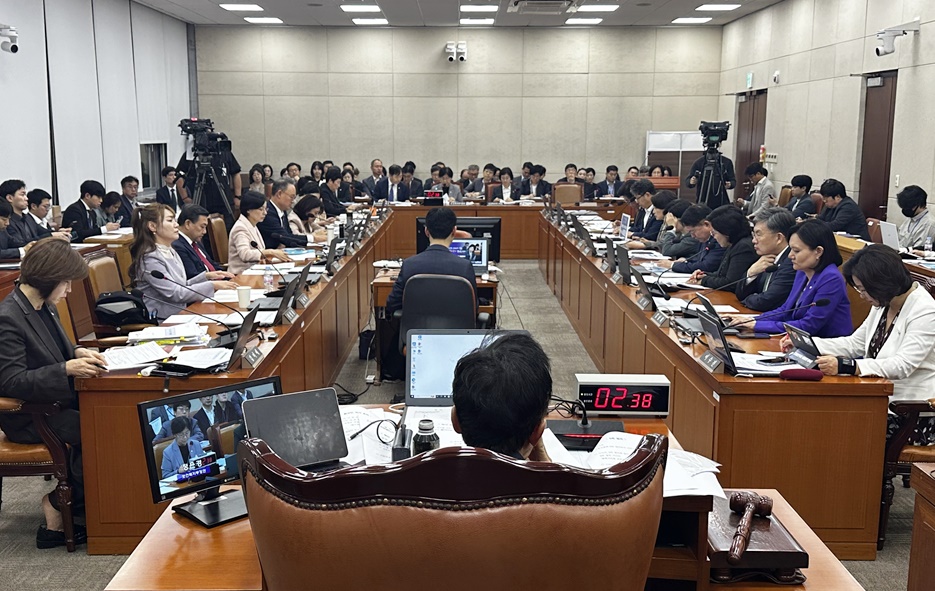
- Health and Welfare Minister Eun-kyeong Jeong acknowledged the excessive prescription of the popular obesity drug Wegovy in some frontline medical institutions and pledged to devise measures to improve prescribing practices through consultation with the medical community. The minister also said that MOHW will cooperate with the Ministry of Food and Drug Safety (MFDS) to designate Wegovy and other obesity injections as drugs of concern for misuse and abuse, raising the level of regulatory control and strengthening post-marketing adverse event monitoring systems. Minister Jeong made the remarks on October 15 in response to on-site inquiries from Rep. Nam-hee Kim of the Democratic Party of Korea during a National Assembly audit session. Rep Kim pointed out the problem that Wegovy, launched domestically last year and enjoying explosive popularity, is being prescribed without restriction beyond the approved indications. She further pointed out that prescriptions have been issued even to pregnant women and children under 12, both of whom are contraindicated for Wegovy. Rep. Kim asked Minister Jeong, “Do you believe the prescribing standards for Wegovy are being properly followed in clinical practice? There are numerous cases where it has been prescribed to children and pregnant women, despite clear restrictions.” Rep. Kim questioned, “This cannot be left unchecked. The lack of adequate legal grounds to regulate doctors and pharmacists is a problem, and some doctors sacrificing patient safety for profit is also a problem. The public's health must not be compromised, and national health insurance funds must not be wasted due to side effects from unprincipled prescribing and indiscriminate abuse of drugs.” Minister Jeong responded, “I believe Wegovy is being quite excessively and inappropriately prescribed in clinical settings. It is important to adhere to the dosing guidelines, but under the current Medical Service Act, physicians are granted discretionary authority in their prescriptions. Prescribing to children and pregnant women is certainly problematic,” she acknowledged. She also pointed out that there are limits to oversight because Wegovy is a non-reimbursed medication. “We will actively consult with the medical community to explore ways to adjust these excessive prescribing behaviors.” She added, “The Ministry of Food and Drug Safety has a system to designate and manage drugs of concern for misuse and abuse. We will utilize this system to collaborate on developing measures for drug management and post-marketing adverse reaction surveillance systems.”
- Policy
- MOHW Minister Jeong 'Will expedite orphan drug listings'
- by Jung, Heung-Jun Oct 16, 2025 06:20am
- The Ministry of Health and Welfare announced it will support the expedited listing of new drugs to enhance access to rare disease treatments and develop tailored measures for each rare disease. It also plans to collaborate with the Korea Disease Control and Prevention Agency to expand the legal designation of rare diseases. During the National Assembly Health and Welfare Committee audit held on October 14, Rep. Gae-ho Lee of the Democratic Party of Korea urged the ministry to take measures to strengthen support for rare diseases. Rep. Lee said, “Around 7,000 rare diseases have been identified worldwide, but only 1,314 are legally recognized as rare diseases in Korea. Patients also face significant challenges in accessing new therapies, and coverage under the national insurance system remains limited,” he added, calling for a comprehensive review by the ministry. In response, Minister Jeong stated, “We are well aware that rare diseases are marginalized, leading to insufficient access to new drugs and inadequate welfare support. We conduct annual demand surveys to expand the list of rare diseases and will consult with the Korea Disease Control and Prevention Agency to ensure this process is conducted meticulously.” She added, “We will also ensure new drugs can be listed promptly. Since medical and welfare needs vary by rare disease, we believe strengthening tailored countermeasures is necessary and will actively pursue this.”
- Policy
- "Overseas transfer of KOR genomic data by China's Novogene"
- by Lee, Jeong-Hwan Oct 16, 2025 06:20am
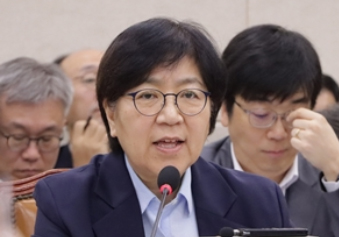
- During the Parliamentary Inspection, Rep. Lee Ju-young questioned the possibility of Novogene Korea transferring Korean citizens Rep. Lee Ju-young of the Reform Party pointed out an issue regarding Novogene, a Chinese genomics analysis company that established a branch in Korea, that the company has no genetic analysis equipment in Korea. Rep. Lee's concern is that Novogene's holding company, BGI, was globally reported in 2021 for allegedly collecting and sharing genomic data from over 8 million pregnant women across 52 countries with the People's Liberation Army. This raises serious concerns regarding the export of domestic genomic information and poses a threat to national security. Furthermore, Novogene Korea is located in a building owned by the Korea Association of Health Promotion, where the tenancy rights reportedly include the authority to use the Association's big data. This suggests an increased risk that Novogene could directly pose a national security threat by exporting Korean citizens' genomic data. Rep. Lee suggests that the current 'Bioethics and Safety Act' does not regulate Novogene Korea's reporting, which has triggered these concerns. She urged the Ministry of Health and Welfare (MOHW) to prepare responses. Minister of Health and Welfare Jeong Eun Kyeong stated that she would examine the facts regarding the sharing of domestic genomic big data between Novogene Korea and the Association. On October 14, during the parliamentary inspection of MOHW, Rep. Lee questioned Minister Jeong regarding the overseas export of domestic patient genomic data by Novogene Korea and the related threat to national security. According to Rep. Lee, Novogene Korea has not been registered as a genetic testing institution because the current law does not require such registration. As a result, the company operates as a sales organization with only six employees without the necessary equipment for genomic analysis. Rep. Lee criticized this, arguing that it makes it inevitable that genomic samples collected domestically by Novogene Korea will be sent to the company's centers in Mainland China, Hong Kong, and Singapore for analysis. It may be concluded that domestic biological genomic information is being exported. Rep. Lee said, "Institutions like Novogene Korea, which perform research and not testing for purposes defined by the Bioethics and Safety Act, are not subject to reporting as a genetic testing institution," and added, "The legislative gap or regulatory blind spot was created when the regulation mandating reporting for research-purpose testing companies was deleted in 2013." Rep. Lee also pointed out, "Current law does not restrict the export of biospecimens for genetic analysis or limit the performance of genetic testing overseas," and added, "Even if there is a concern that genetic testing prohibited domestically might be carried out overseas or that domestic genomic information might be exported, there is no legal basis to sanction it." She further pointed out, "Novogene Korea is located in the Korea Association of Health Promotion building. The arrangement appears to be a co-sharing lab model with the tenant. The company has no equipment or personnel for genetic analysis or experimentation. It has six employees, all of whom are administrative or sales staff, and the CEO does not even reside in Korea." Minister Jeong Eun Kyeong promised to verify the allegation.Rep. Lee asked, "I requested the attendance of Novogene Korea's witness, but they submitted a statement of non-attendance. The Association's national genomic big data is clean data of the Korean people. It is highly valuable and risky if leaked, directly affecting the national security of the Republic of Korea. When were you briefed on this?" Minister Jeong replied, "I received a report confirming that Novogene Korea and the Association have a simple lease agreement and no history of information sharing or joint research," and added, "We need to verify how the Association's big data is being shared." Minister Jeong further said, "I will verify the details of whether Novogene Korea receives requests for genomic information analysis from other Korean hospitals or institutions and then sends those samples overseas for testing."
- Policy
- New Divisions for Essential & Public Healthcare proposed
- by Lee, Jeong-Hwan Oct 15, 2025 06:11am
- Ministry of Health and Welfare Minister Eun-kyeong Jeong The Ministry of Health and Welfare has decided to establish a new director-level organization, the ‘Regional, Essential, and Public Healthcare Policy Office,’ to ensure the success of the Lee Jae-myung administration's national policy task of people-focused healthcare reform. It has been confirmed that this request has been submitted to the Ministry of Interior and Safety as a top priority. This effectively kicks off the organizational restructuring process, where the existing ‘Healthcare Policy Office’ under the Second Vice Minister will handle legislative and policy-based tasks, while the new ‘Regional, Essential, and Public Healthcare Policy Office’ will focus on practical healthcare reform initiatives such as the regional doctor system, public medical schools, and telemedicine projects. Alongside the separate establishment of the Regional, Essential, and Public Healthcare Policy Office, the Ministry also conveyed to the Ministry of the Interior and Safety its request for the creation of a director-general level organization (second priority) dedicated to the ‘Integrated Support Act for Regional Care, including Medical and Nursing Care,’ set to take effect next March, and the establishment of a director-level ‘Pharmaceutical and Bio Industry Policy Office’ (third priority). According to National Assembly and Ministry of Health and Welfare officials on the 14th, the Ministry is considering an organizational restructuring plan targeting successful healthcare reform, the smooth implementation of systems related to the Integrated Care Act, and the promotion of the domestic pharmaceutical and bio industry. The Ministry has conveyed its request to the Ministry of the Interior and Safety for the creation of a director-level organization and a bureau-level organization. It plans to accelerate the administrative process for organizational restructuring and expansion based on the Ministry of the Interior and Safety's decision. Currently, under the Second Vice Minister of Health and Welfare, there is one Office — the Healthcare Policy Office — and three Bureaus: the Health Insurance Policy Bureau, the Health Policy Bureau, and the Health Industry Policy Bureau. Additionally, three temporary organizations—the National Pension Reform Support Team, the Biohealth Innovation Promotion Team, and the Medical Reform Promotion Team—are operating separately. The Healthcare Policy Office is responsible for government legislative and administrative tasks concerning health and medical policy and health and healthcare finance overall. Ministry of Health and Welfare Minister Eun-kyeong Jeong has emphasized the need for a dedicated unit focused on regional, essential, and public healthcare operations while maintaining the existing policy-based Healthcare Policy Office structure. The rationale is that for the Lee administration to properly succeed with essential healthcare strengthening policies—which the previous Yoon administration failed to unilaterally implement, including plans to increase medical school enrollment by 2,000—a dedicated director-level organization for regional, essential, and public healthcare operations would be essential. Currently, the Ministry has the ‘Medical Reform Promotion Team,’ a temporary director-level organization established during the Yoon administration. Led by Director Gyeong-sil Jeong, this team is handling the transfer of related duties to the Public-Focused Medical Reform Committee following the launch of the Lee administration. Minister Jeong is expected to abolish this temporary team and establish the new director-level Regional, Essential, and Public Healthcare Policy Office. Furthermore, Minister Jeong reportedly holds the view that the Healthcare Industry Policy Bureau should be elevated to a director-level Pharmaceutical and Bio-Industry Policy Office to properly foster the domestic pharmaceutical-bio industry and biohealth industry. She has also asked MOIS to elevate the temporary unit under the Senior Policy Office for Population and Social Services, which currently handles elderly policy, into a full-fledged “Integrated Care Bureau for Medical, Nursing, and Community Services.” As strengthening regional, essential, and public healthcare, fostering a globally competitive pharmaceutical and biotech industry, and ensuring a smooth landing for a regionally integrated care system are all presidential campaign pledges and national policy tasks, attention is focused on how much the Ministry of the Interior and Safety will accommodate the Ministry of Health and Welfare's requests. Multiple officials from the National Assembly and the Ministry of Health and Welfare agree on the necessity of establishing a separate Regional-Essential-Public Policy Office alongside the Healthcare Policy Office. The prevailing view is that the Ministry of the Interior and Safety must also accept the establishment of a Pharmaceutical and Bio Industry Policy Office and the elevation of the Integrated Care Bureau to successfully advance these national policy tasks. An MOHW official stated, "The Healthcare Policy Office will operate as a policy and legislative foundation organization, while the Regional-Essential-Public Policy Office handles comprehensive administrative tasks by sector. We see no overlap or conflict in their duties. If the Regional-Essential-Public Policy Office takes charge of practical tasks related to regional healthcare, public medical schools, and advancing the healthcare delivery system, the work will be clearly separated. Other ministries, such as the Ministry of Trade, Industry, and Energy, also have director-level organizations structured as Policy Division, Infrastructure Division, and Business Division."
- Policy
- Gov't to unveil New drugs·Generic Drug Pricing System Rev.
- by Lee, Jeong-Hwan Oct 14, 2025 06:40am
- Director General Lee Jung-kyu The Ministry of Health and Welfare (MOHW) has announced plans to release the drug pricing system revision next month (November), including both new drugs and generics. It is drawing the attention of Korean and international pharmaceutical companies. The MOHW plans to disclose the timing of the re-evaluation of reimbursement appropriateness for listed drugs, along with the new drug pricing improvement plan. The reform is expected to include significant measures that will impact the Korean pharmaceutical industry, including enhancing patient access to new drugs, strengthening the stability of essential medicine supply, standardizing the post-market drug price reduction system, and improving the conventional generic drug pricing structure. On October 12, Lee Jung-kyu, Director General of Health Policy of the MOHW, shared some of the direction for the new drug pricing improvement plan, including reimbursement re-evaluation, during a meeting with the Korea Special Press Association. Lee stated that the re-evaluation of reimbursement appropriateness is currently under review as part of the overall drug pricing system revision plan. Lee explained that the delay is due to efforts to align the re-evaluation's direction with the new improvement plan, following earlier subcommittee discussions. The 'actual transaction price-based drug price reduction system' will proceed as scheduled, as its implementation timeline was recently announced. However, the MOHW plans to discuss it with revisions under review, including post-market drug price management. Furthermore, the MOHW's drug pricing revision plan for next month is expected to include items discussed at the World Bio Innovation Forum, which President Lee Jae Myung attended on the 5th of last month. At the forum, a plan to expand the application of a dual pricing system was stated. The dual pricing system is one in which the actual price of a medicine differs from its officially listed price. The goal is to provide Korean pharmaceuticals with a competitive advantage when exported overseas, thereby facilitating drug price negotiations. The MOHW has already implemented a form of dual pricing through a drug pricing system revision in March. This revision allows the National Health Insurance Service (NHIS) to enter into a separate contract with a manufacturer, contract manufacturer/seller, or importer if the drug is deemed necessary after assessing its impact on public health and if the company wishes to pursue strengthening global competitiveness. The MOHW is now considering expanding the application of this provision to other medicines. The system for concurrently processing approval, evaluation, and negotiation (Concurrent Approval-Evaluation-Negotiation) is currently in a pilot phase and is expected to transition to a formal system. The integration of post-market drug price management, such as price reductions, is being discussed to align the currently separate price adjustment systems (the drug price cap adjustment system) so they are implemented on a single date and time. This would unify the timing and application of systems like the NHIS's price-volume agreement (PVA)-linked reduction and HIRA's reimbursement re-evaluation and actual transaction price reductions. While the MOHW emphasizes that post-market management and re-evaluation have distinct goals and objectives for each system, it has commissioned policy research in response to demands from pharmaceutical companies and local pharmacies to enhance the predictability of drug price reductions. The MOHW also conducted policy research on the integration of drug price cap adjustment mechanisms in March of this year, to finalize specific plans and financial impact analyses based on the results of the preceding research. Regarding preferential drug price regulations, new provisions are expected to be established, such as preferential pricing for drugs that contribute to the supply of essential medicines, executing the government's national goal of stable supply for drugs with unstable supply. Lee said, "Last year's research service analyzed the current situation," and added, "Based on that data, it has been analyzed that further research is needed on how to improve the system, and that additional research will be commissioned soon."

- Policy
- No companies apply for domestic API pricing premium
- by Lee, Jeong-Hwan Oct 13, 2025 06:07am
- Although the Ministry of Health and Welfare has implemented a policy since March this year offering a 68% pricing premium on essential medicines made with domestic APIs, it has been confirmed that as of October—7 months after implementation—not a single pharmaceutical company has benefited. Criticism is mounting that the Ministry's overly stringent criteria for applying the pricing premium to domestically produced raw materials severely undermine the policy's effectiveness and hinder the development of the domestic API industry, which is directly linked to public health and national security. According to the ‘Status of Domestic API Drug Price Preferential Treatment’ submitted to People Power Party lawmaker Jong-heon Baek by the Ministry of Health and Welfare on the 10th, despite several months since the policy's implementation, not a single pharmaceutical company has applied for the preferential treatment. The MOHW stated that since the relevant regulations were revised last December and the policy took effect this March, the number of applications for the ‘68% pricing premium for domestically produced active pharmaceutical ingredients used in national essential drugs’ and the number of drugs receiving the benefit are both zero. Although the system aims to promote the use of domestically produced APIs, reduce dependence on foreign APIs, and foster the development of the pharmaceutical industry, it has effectively failed 7 months after its implementation. The domestic pharmaceutical industry is voicing concerns that unless the Ministry revises the relevant price discount regulations, the policy will become a dead letter, effectively meaningless. Reasons behind the domestic API price preferential policy fail National Essential Medicines are defined under the Pharmaceutical Affairs Act as ‘medicines essential for public health, such as disease management and radiation disaster prevention, but for which stable supply is difficult through market mechanisms alone, which are designated by the Minister of Health and Welfare and the Minister of Food and Drug Safety in consultation with the heads of relevant central administrative agencies.’ As of August this year, 473 drugs are designated as National Essential Drugs in Korea. Despite how a policy is in place that adds 68% to the drug price when domestic APIs are used to manufacture these National Essential Drugs, with the benefit lasting up to 10 years, domestic pharmaceutical companies claim the reason there are no applicants or items is because the Ministry of Health and Welfare's standards are excessively stringent. The domestic pharmaceutical industry has long demanded that the 68% drug price advantage be applied even to pharmaceutical companies already producing essential medicines using domestic APIs. They are also calling for regulations to be established that would allow the benefits to be applied retroactively to drugs manufactured before the pricing premium policy was implemented this March. Notably, compound drugs that use both domestic and imported APIs from multiple sources, not just one, are excluded from the 68% price discount. The MOHW currently requires that all major active ingredients contributing to pharmacological efficacy must be individually recognized as domestic APIs to qualify for the price advantage. Pharmaceutical companies criticized that such conditions are unrealistic, warning that very few medicines could ever meet the 68% incentive criteria under the current framework. Politicians agree on the need to improve drug pricing system regulations Some political circles also agree with the domestic pharmaceutical industry's arguments and are urging the Ministry of Health and Welfare to improve the system. Rep. Jong-heon Baek plans to summon Ssang-Soo Han, CEO of Inist ST, as a witness during the upcoming National Assembly audit of the Ministry of Health and Welfare on the 15th. He intends to question him about the inadequacies of the domestic API drug price premium policy and measures to foster the domestic API drug industry. Baek emphasized that in the wake of the COVID-19 pandemic, global protectionism in pharmaceutical supply chains has intensified, and the Korean government must treat the domestic API sector as a matter of public health and national security, not merely industrial policy. Accordingly, Rep. Baek urged the Ministry to prepare countermeasures against the risk of the domestic API preferential pricing policy becoming obsolete. The Ministry has only stated a general position, indicating it will seek solutions by thoroughly gathering opinions from the industry, experts, and the field regarding the demands of the pharmaceutical sector and Rep. Baek. This includes exploring new measures such as retroactive application rules or preferential regulations for compound drugs. Rep Baek pointed out, “The fact that not a single pharmaceutical company has applied for the preferential pricing as essential medicines with domestically produced APIs for 7 months is proof that this is a nominal system. Despite ongoing complaints from the pharmaceutical industry that the application criteria are excessively stringent, if the Ministry of Health and Welfare does not move to make the regulations more realistic, the policy to foster the domestic API drug industry will fail.” He added, “During the NA audit, I plan to question the Minister of Health and Welfare's perception of the API industry and demand that the system be revised, viewing it as an issue concerning public health and national security.”
- Policy
- Demands for expanded reimbursement for NMOSD
- by Jung, Heung-Jun Oct 13, 2025 06:02am
- The demand to improve reimbursement to enhance treatment accessibility for Neuromyelitis Optica Spectrum Disorder (NMOSD) is anticipated to heat up again in this year's parliamentary inspection. During the parliamentary inspection of the Health Insurance Review & Assessment Service (HIRA), on October 17, a NMOSD will attend as a testifier, urging improvements to reimbursement for new drug insurance. NMOSD treatments are gradually receiving reimbursement and expanded criteria. The scope of reimbursement for Roche Korea's Enspryngg (satralizumab), listed for reimbursement in 2023, was expanded in August this year after the symptom relapse criteria had been eased. Uplizna (inebilizumab) recently received conditional reimbursement decision from the Drug Reimbursement Evaluation Committee (DREC) on the 2nd and is awaiting drug price negotiation. AstraZeneca Korea's Soliris (eculizumab) has been covered by reimbursement since April of last year, and Ultomiris (ravulizumab) added the NMOSD indication in July last year but is not yet covered by reimbursement. While access to pharmaceuticals is gradually improving with expanded reimbursement coverage, there are ongoing demands to relax the stringent criteria associated with expensive orphan drugs. In August, a caregiver of an NMOSD patient had requested a lowering of reimbursement hurdles, such as the relapse criteria, through a National Assembly petition. Rep. Seo Mi-hwa of the Democratic Party last month also pointed out the unreasonableness of the new drug reimbursement criteria being conditional on relapse and being preconditioned. Furthermore, there were several arguments that accessibility must be increased for drugs that could prevent relapse. The reimbursement criteria are based on symptom relapse for Enspryngg and Soliris and they also include a conditional clause requiring the administration of MabThera (rituximab) with reimbursement. Since Rep. Seo has requested a NMOSD patient as a testifier for the upcoming parliamentary inspection, more attention is likely to be paid to requests for expanded reimbursement and criteria improvement. Strengthening access to orphan drugs is a key issue that has frequently been raised during the Health and Welfare Committee's parliamentary inspection. Following last year's criticism of the low prio-approval rate for Soliris, the prior-review criteria for its use in Atypical Hemolytic Uremic Syndrome (AHUS) were improved this month.
- Policy
- Ozempic nears reimb approval…next is Mounjaro
- by Jung, Heung-Jun Oct 13, 2025 06:02am
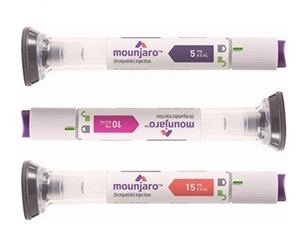
- With Novo Nordisk’s GLP-1 injectable Ozempic (semaglutide) deemed adequate for reimbursement for diabetes, attention is now turning to whether Eli Lilly’s Mounjaro (tirzepatide) will be reviewed next by the Health Insurance Review and Assessment Service (HIRA). At the same time, voices are growing in favor of extending insurance coverage—at least partially—to high-risk obesity treatment, based on body mass index (BMI) criteria. On the 2nd, the Health Insurance Review and Assessment Service's Drug Reimbursement Evaluation Committee recognized the appropriateness of coverage for Ozempic 2mg/1.5mL and 4mg/3mL, used for diabetes patients. Following price negotiations, the final listing procedure will be complete.. Lilly Korea’s Mounjaro, which was being prepared for reimbursement evaluation simultaneously with Ozempic, was not included in the list of drugs submitted to DREC this time. However, Lilly has reportedly been actively pursuing reimbursement for Mounjaro as a diabetes treatment since before its launch, submitting supplementary data. The key question is whether Mounjaro will be submitted to the next DREC meeting while Ozempic undergoes the price negotiation process. Apart from the push for the drugs’ reimbursement as a diabetes treatment, calls for the drugs’ reimbursement as an obesity treatment continue. A reimbursement plan limited to high-risk obesity treatment was mentioned in review materials on GLP-1 reimbursement that Representative Mi-hwa Seo of the Democratic Party of Korea received from the National Assembly Research Service. The review contained an opinion suggesting restricting the target population to patients with severe obesity and those at risk of complications. Furthermore, Representative Seo emphasized the need for public support, citing the higher obesity incidence rate among low-income groups compared to higher-income groups. The Korean Society for the Study of Obesity is also pushing for coverage. At a symposium on health insurance policies for obesity management last September, the society proposed a tiered coverage system based on BMI. Their stance is to prioritize improving treatment access for severe obesity, not cosmetic concerns. However, opinions on introducing coverage remain divided, citing concerns about misuse of obesity drugs and the current state of Korea’s health insurance finances. Furthermore, even if a phased coverage approach based on severity is implemented, challenges remain, including establishing appropriate criteria.
- Policy
- 'Low-price purchase incentive ineffective and detrimental'
- by Lee, Jeong-Hwan Oct 10, 2025 06:05am
- Rep. Joo-young Lee There is growing criticism that the government’s low-price drug purchase incentive policy should be overhauled due to its structural contradictions and low effectiveness. The low-price purchase incentive, which is linked to the market-based actual transaction price reduction system, focuses on price rather than quality. From the pharmaceutical companies’ perspective, the lower the actual transaction price (purchase price), the higher the likelihood of a price cut, rendering it difficult for them to actively participate in the policy. Some critics have also raised concerns that the system could be exploited for illegal drug rebate practices, calling for a review of whether it should be fundamentally reformed or even abolished. On the 3rd, Rep. Joo-young Lee of the Reform Party, who is also a member of the National Assembly’s Health and Welfare Committee, said, “The low-price purchase incentive system was designed to enhance the financial soundness of the national health insurance and reduce patient drug costs, but it has become an outdated policy that no one welcomes anymore.” Rep. Lee emphasized that if the government wants to establish a reasonable drug pricing system that both strengthens the pharmaceutical industry and ensures the stability of health insurance finances, it must first abolish policies that do not function in the actual healthcare field, such as low-price purchasing incentives. Under Article 22 of the Enforcement Decree of the National Health Insurance Act, the Health Insurance Review and Assessment Service (HIRA) currently operates the incentive system that pays medical institutions (hospitals, clinics, and pharmacies) 70% of the difference between the reimbursement ceiling price and the actual purchase price when they buy drugs of the same ingredient, dosage, and formulation at a lower price than the insurance ceiling. The program aims to reduce national health insurance expenditures, expand the use of generic drugs, curb excessive use of high-priced medications, and lower patient out-of-pocket costs. It has been in effect since 2010. However, Korean pharmaceutical companies and wholesalers argue that the system has failed to achieve these goals and contains inherent contradictions. They have consistently demanded major reforms or the abolition of the policy. Rep. Lee saw eye to eye on these concerns, urging the government to make substantive policy changes. At the industry level, critics argue that low-price purchasing incentives risk promoting an industry structure that prioritizes price over quality. This is because such incentives reward companies based on how cheaply they can procure drugs, rather than rewarding them for the quality of the drugs themselves. As long as the government maintains a policy that rewards cheaper supply, manufacturers will be incentivized to cut production costs and quality to produce low-cost drugs, sustaining a downward spiral in the market. The pharmaceutical industry and drug wholesalers argue that the low-price purchase incentive system inherently contains a contradiction, as it links incentives to reductions in actual transaction drug prices. They point out that the lower the actual transaction drug price becomes to qualify for the low-price purchase incentive, the greater the likelihood it will later be targeted for price reduction. Consequently, no one is willing to trade at lower drug prices. Healthcare institutions have long pointed out that for small and medium-sized hospitals, neighborhood clinics, and pharmacies—not large tertiary hospitals—the actual volume of low-price purchases is too small, resulting in a low perceived incentive effect. Critics note that over 80% of incentives are concentrated in large tertiary hospitals and mid-sized facilities, often benefiting institutions engaging in “one-won bidding” practices. Rep. Lee stated, “Both the low-price purchase incentive and the actual transaction price reduction systems are built on a price-based structure, not on generic drug quality. They contradict the government’s stated goal of fostering the pharmaceutical industry as a national growth engine and supporting global expansion.” Lee also warned of potential abuse of the system through illegal rebates or manipulation of prescription volumes to maintain sales of specific drugs. Rep. Lee concluded, “If the system has neither achieved its original goal of reducing health insurance expenditures nor contributed to the development of the pharmaceutical industry, the government should not leave it as is. Rather, the government should actively consider abolishing it. There is no reason to maintain a policy that no one supports and that only invites calls for reform or repeal.”
