
- LOGIN
- MemberShip
- 2026-04-30 19:05:31
- Policy
- GLP-1 drug Ozempic passes reimbursement review
- by Jung, Heung-Jun Oct 10, 2025 06:05am
- Novo Nordisk’s GLP-1 receptor agonist Ozempic (semaglutide) has passed review by the Health Insurance Review and Assessment Service (HIRA)’s Drug Reimbursement Evaluation Committee, which acknowledged the drug as adequate for reimbursement. Ozempic contains the same active ingredient as the obesity drug Wegovy, but is indicated for diabetes. Meanwhile, the reimbursement scope for Janssen Korea’s prostate cancer drug Erleada (apalutamide) will be expanded. In addition to the existing indication of “metastatic hormone-sensitive prostate cancer (mHSPC),” the new coverage will include treatment for “high-risk non-metastatic castration-resistant prostate cancer (nmCRPC).” On October 2, HIRA held its 10th Drug Reimbursement Evaluation Committee meeting of 2025 to review applications for new drug reimbursement and expanded indications for drugs under risk-sharing agreements. Three drugs - Novo Nordisk’s Ozempic pre-filled pen (semaglutide 2 mg/1.5 mL, 4 mg/3 mL); Shinpoong Pharm’s Hyalflex Inj (hexamethylenediamine dihydrochloride bridged sodium hyaluronic acid gel) for knee osteoarthritis; and Mitsubishi Tanabe Pharma Korea’s Uplizna Inj (inebilizumab) for neuromyelitis optica spectrum disorder (NMOSD) – were reviewed. Ozempic was recognized as adequate for reimbursement “as an adjunct to diet and exercise for adults with type 2 diabetes inadequately controlled by existing therapies (in combination with other antidiabetic agents).” This marks the second time the drug has cleared reimbursement evaluation since 2023. While the first approval included a condition to accept a price below the assessed value, this latest decision carries no such condition. Novo Nordisk reportedly made substantial efforts by submitting supplementary data to HIRA for reimbursement and will now proceed to price negotiations with the National Health Insurance Service (NHIS). Uplizna was recognized as adequate for conditional reimbursement – allowed reimbursement when the company accepts a price below the assessed value—for treating “adult patients positive for anti-aquaporin-4 (AQP4) antibodies with neuromyelitis optica spectrum disorder.” The final listing will follow after the company completes price negotiations with the NHIS. Erleada’s reimbursement will expand to include “high-risk non-metastatic castration-resistant prostate cancer (nmCRPC).” The drug has been reimbursed since April 2023 for “metastatic hormone-sensitive prostate cancer (mHSPC).”

- Policy
- "Why are pharma developing salt changes called innovative?"
- by Lee, Jeong-Hwan Oct 01, 2025 06:10am
- Professor Yong Jin Kwon "There are no developed countries that provide public funds and National Health Insurance resources to pharmaceutical companies for simply changing salt formation. South Korea is the only country in the world that recognizes incrementally modified drugs as having the value of innovative new drugs. (If we want to call incrementally modified drugs innovative new drugs), The government should establish the concept of a super-innovative new drug and allocate funds to companies that develop truly innovative treatments. The National Health Insurance authorities shouldn't be worrying about Korean pharmaceutical companies; they should be preparing to spend hundreds of millions, or billions, of KRW from the NHI budget when a genuine domestic innovative treatment is developed." Criticism calls for a major shift in perspective among domestic pharmaceutical companies in Korea, the Ministry of Health and Welfare (MOHW), and the National Health Insurance Service (NHIS) to foster the Korean pharmaceutical industry and develop new domestic drugs into global blockbusters. The argument is that to produce domestic new drugs that meet the standards of the global market, the NHI authorities must establish an environment that invests limited national budgets and NHI funds into genuine new drugs, rather than salt-changed, incrementally modified drugs. Pharmaceutical companies must step up their investments in New Drug Research and Development (R&D). Immediately after the parliamentary forum, held on September 26, on improving NHI financial management, Professor Yong Jin Kwon of the Public Healthcare Center at Seoul National University Hospital met with DailyPharm and sharply criticized the government's new drug administration and the R&D direction of domestic pharmaceutical companies. Professor Kwon asserted that the current innovative new drug support policy of the Korean government is fundamentally flawed. He pointed out that Korea is the only country in the world to support these efforts with national budgets and NHI funds, recognizing the value of incrementally modified drugs based on salt changes. Professor Kwon emphasized that the Korean pharmaceutical industry must deeply reflect on the fact that it has grown significantly over the past 25 years, driven mainly by public health insurance premiums, yet failed to produce innovative new drugs during that period. "I believe that the presidential pledge for a drug price premium based on innovative new drug value is someone's lobbying work," Professor Kwon stated. "We need to have a conversation with the public about whether there is any developed country that gives NHI funds to companies that just change salt formation. I don't think (the domestic pharmaceutical industry) should be operating this way." He further pointed out, "Twenty-five years ago, when the National Health Insurance Act was introduced and the separation of prescribing and dispensing was implemented, domestic pharmaceutical companies made enormous net profits, eliminating all their debt until generic prices were cut in 2013." He criticized, "That's why structural reform of the pharmaceutical industry failed. There are no studies on how much of the R&D funding provided to pharmaceutical companies, which includes high generic drug prices paid by the public and government support from the MFDS, actually led to tangible results, and no one is looking into it." Professor Kwon said, "The R&D support budget for pharmaceutical companies is public tax money and insurance premiums. So, how much has the domestic pharmaceutical industry truly developed over the past 25 years?" He added, "We need to evaluate this before talking about developing the pharmaceutical industry. The NHIS shouldn't be worrying about domestic pharmaceutical companies. The NHIS should be pushing them to create proper rare disease drugs (new drugs)." Professor Kwon also proposed improving the financial soundness of the NHI by rationalizing the prices of generic drugs. It is to lower generic drug prices to an appropriate level relative to the original price and use the saved resources to support and expand investment in innovative drug development. Specifically, Professor Kwon suggested unilaterally reducing generic drug prices, which currently account for 53.55% of the original drug price, to a level of 30% to 40%, and mitigating the market shock through phased adjustments. It is believed that this redistribution of NHI finances could expand investment in innovative new drugs by two to three times without increasing the total medical expenditure. Professor Kwon said, "I strongly disagree with the NHIS's remark that we should reconsider the structural reform (reduction) of generic drug prices. The NHIS is the public's agent. If they look into where the public's NHI money has been wasted, I absolutely want to tell them that this is not the time to worry about domestic pharmaceutical companies," he asserted. "The Korean government and pharmaceutical companies must raise the competitiveness of the domestic pharmaceutical industry and be prepared to spend hundreds of millions, or billions, of KRW from the NHI budget when an innovative new drug is developed." Finally, Professor Kwon said, "How long will we continue to out-license all our new drug candidates and then have to slash prices when we bring them back from overseas markets? We are a developed country now." He added, "(The government) should improve the system by modifying the current actual transaction price reimbursement system and introducing a dual pricing system so that our new drugs can command high prices when exported to foreign markets."
- Policy
- First lot of returning nasal spray flu vaccine approved
- by Lee, Tak-Sun Sep 30, 2025 06:12am
- FluMist labelThe nasal spray flu vaccine ‘FluMist Intranasal Spray (AstraZeneca Korea)’ has received shipment approval from the Ministry of Food and Drug Safety (MFDS) and is preparing for sales. This product was previously sold by GC Biopharma, but it did not gain significant popularity at the time. With expected demand from children who dislike injections, attention is on whether it will avoid repeating its past failure. On the 26th, the Ministry of Food and Drug Safety granted shipment approval for FluMist Intranasal Spray (live attenuated influenza vaccine), lot number YK2763C (expiration date January 8, 2026). This is the first shipment approval since it was licensed in April this year, signaling the start of full-scale supply ahead of the flu season. FluMist Intranasal Spray is a trivalent vaccine preventing three viruses (influenza A H1N1, H3N2, and influenza B Victoria). It can be administered to children and adults aged 24 months to 49 years. Safety has not been established for children under 24 months. For those aged 50 and older, administration is prohibited in high-risk groups with underlying conditions, as the incidence of pharyngitis was higher compared to placebo. Nevertheless, this vaccine is gaining attention because it offers convenience in administration, particularly for children who dislike injections. This vaccine is a spray product that delivers the solution into the nose, which is expected to improve acceptability among children and make administration easier for providers. At a press conference celebrating the vaccine’s approval in June, Professor Yoon-Kyung Kim (Pediatrics, Korea University Ansan Hospital) said, “FluMist is a painless vaccine delivered by nasal spray that can contribute to increasing flu inoculation rate among children.” However, as it is not included in the National Immunization Program (NIP), demand is expected to fluctuate depending on pricing. When GC Biopharma launched the product in 2009, demand was low because it cost KRW 5,000–10,000 more than injectable vaccines. As a result, its license was revoked in July 2020 after the validity period expired. Another barrier is that intranasal vaccines are not yet familiar to the public, which could also affect uptake. Still, expectations remain that it could raise pediatric flu vaccination rates and contribute to herd immunity, thereby protecting the elderly from infection. A pharmaceutical industry official said, “Ultimately, pricing will impact sales volume. But unlike in the past, there is now demand for non-reimbursed vaccines that emphasize quality, so if the price gap is small, FluMist could gain a foothold in the market.”
- Policy
- MFDS, GLP-1 obesity drug + diabetes med combo hypoglycemia↑
- by Lee, Tak-Sun Sep 30, 2025 06:11am
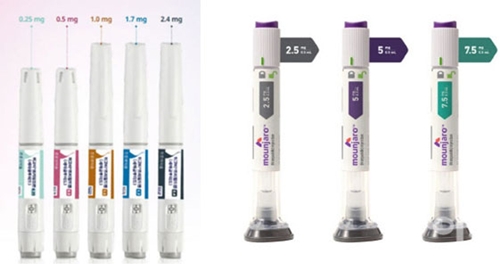
- GLP-1 obesity drugs Wegovy(left) and Mounjaro.The Ministry of Food and Drug Safety (MFDS) announced that patients with diabetes using GLP-1 obesity treatments, which have recently become popular, must consult with their healthcare provider, as the co-administration of these drugs with diabetes medication significantly increases the risk of hypoglycemia. The MFDS also stressed that the use of obesity treatments must be avoided during pregnancy and lactation. Popular GLP-1 obesity drug brands include 'Wegovy' and 'Mounjaro.' The MFDS (Minister Yu-Kyoung Oh) and the Korea Institute of Drug Safety and Risk Management (KIDS)(President Soojung Sohn) announced on September 29 that they have distributed a 'Guidelines to Safe Use of GLP-1 Obesity Treatments' to regional medical associations and drug safety centers nationwide. This guide contains information on ▲the diseases for which the obesity treatments are used ▲correct administration methods, storage and disposal ▲precautions for use ▲reporting of adverse reactions (side effects). GLP-1 obesity treatments are prescription drugs prescribed to: obese patients with an initial Body Mass Index (BMI) of 30kg/m2 or higher, or overweight patients with a BMI of 27kg/m2 to less than 30kg/m2 who have one or more weight-related comorbidities. The MFDS emphasized that patients taking diabetes medication who are also taking GLP-1 obesity treatments are at a higher risk of hypoglycemia and should consult with their healthcare provider about whether to adjust drug dosages. They also added that the use of obesity treatments is prohibited during pregnancy and lactation, and it is advisable to plan pregnancy considering the drug's residual period in the body. Depending on the specific obesity treatment, contraception may be necessary for at least 1-2 months after discontinuing the medication. Obesity treatments should not be started at a high dose immediately. Instead, patients should initiate treatment with the dose specified by their physician, according to the approved regimen, and gradually increase it, strictly adhering to the dosage and administration instructions provided by both the physician and pharmacist. When administering the obesity treatment, patients should inject into the abdomen, thigh, or upper arm, whichever site is most convenient, and rotate the injection site with each dose. Patients must inform their healthcare professional before administration about ▲any known drug hypersensitivity ▲all currently administered medications, medical history ▲whether they are pregnant or breastfeeding. Additionally, obesity treatments should be stored in the refrigerator away from light. If the medication is frozen, contains particles, or has changed color, it should not be used and must be disposed of. The MFDS stressed that even when GLP-1 obesity treatments are used within the approved scope, adverse events such as gastrointestinal disorders, injection site reactions, fatigue, and dizziness can commonly occur. More clinically significant adverse events, such as hypersensitivity reactions, acute pancreatitis, cholelithiasis, and cholecystitis, may also occur. In such cases, patients should notify their healthcare team or visit the hospital. The MFDS stated that GLP-1 obesity treatments, as prescription drugs, must be used strictly following a physician's prescription and a pharmacist's dispensing and guidance, ensuring safe use within the authorized indications for obesity treatment. It was also stressed that purchasing or distributing these drugs through overseas direct purchases or person-to-person sales online should be avoided, as the product's safety cannot be guaranteed. An MFDS official said, "We hope this guide helps patients using GLP-1 obesity treatments to administer their medication safely." The educational material is available on the MFDS website (www.mfds.go.kr) → Law/Data → Promotional Materials → General Promotional Materials section, on the KIDS website (www.drugsafe.or.kr) → Education/Promotion → Resources section.
- Policy
- MoHW and NHIS agree on need to expand expedited listing
- by Jung, Heung-Jun Sep 29, 2025 06:08am
- The Ministry of Health and Welfare (MoHW) expressed consensus on the need to expand fast-track reimbursement to improve access to treatments for rare and severe diseases. As the government agenda already includes system improvements to reflect the innovative value of new drugs, the ministry stated its intent to support these reforms. On the 26th, at a forum on improving the operation of the National Health Insurance finance hosted by Representatives Mi-hwa Seo and Jong-tae Jang, the government, industry, and academia all voiced the need to expand fast-track reimbursement for rare disease treatments. Yeon-sook Kim, Director-General of the Pharmaceutical Management Division at MOHWYeon-sook Kim, Director-General of the Pharmaceutical Management Division at MOHW, said, “Rare and severe diseases are difficult to diagnose, and the small patient population leads to insufficient data. We do regret how the listing process takes a long time, and communication regarding system improvements has been slow. We will gather opinions to develop the system rationally.” Kim added, “This is also included in the government's national agenda. We have decided that the drug pricing system will support the creation of an ecosystem for innovative new drug development by reflecting the innovative value of new drugs. This also includes alleviating the burden of rare and intractable diseases.” "Our goal is to ensure that more necessary drugs are covered quickly through expedited listing and to broaden coverage. Currently, we are also attempting to accelerate the process by concurrently handling approval and listing. The national agenda also comprehensively includes improvements to the drug pricing system. However, as it requires significant social consensus and careful consideration, we will need time to discuss improvement measures." The National Health Insurance Service (NHIS) emphasized the need for a roadmap to prioritize reimbursement and use resources more efficiently. Yoo-kyung Yoon, Director of Pharmaceutical Management at NHISYoo-kyung Yoon, Director of Pharmaceutical Management at NHIS, said, “There are limitations in terms of budget and review manpower, but I agree expansion is necessary. We recognize the importance of prioritization. We need to review reimbursed drugs, set reimbursement priorities, and establish a roadmap for efficient fiscal use.” “We must determine how to select drugs eligible for fast-track, identify issues as the system is implemented, and continuously improve it to ensure prompt reimbursement can be achieved. Adjusting the reimbursement scope requires social consensus, so we will thoroughly gather opinions from stakeholders.” Yoon also emphasized, “Improvements to the generic drug pricing system must also be considered alongside measures to foster a virtuous cycle in the industry. Rapid listing of rare and intractable disease drugs is included in national policy tasks, and we will strive to develop solutions.” The industry expressed that establishing a virtuous cycle structure is urgently needed to enable the development of innovative new drugs for rare and severe diseases. Jae-won Heo, Executive Director at Gilead Sciences Korea Jae-won Heo, Executive Director at Gilead Sciences Korea, noted, “Hepatitis C, which can progress to liver cancer, already has curative treatments. If patients are treated early, it can actually reduce the financial burden on the NHIS. Data also shows that 20% of cancer patients give up economic activity, devoting much of their time to caregiving. Supporting their return to society carries significant value.” Heo explained, “The number of patients is small, but development is extremely difficult, and companies inevitably face heavy burdens. Even after more than 10 years of research, it is not uncommon to see results showing no clinical effect. Despite failures, companies continue to develop treatments because patients exist. A virtuous cycle must be established so development is feasible,” urging expansion of new drug access. Professor Yong-jin Kwon of Seoul National University Hospital Criticism also emerged that the government should not show a passive attitude toward coverage for rare and severe diseases, and that Aative review of the generic drug pricing system is also necessary. Professor Yong-jin Kwon of Seoul National University Hospital's Public Healthcare Center pointed out, "New drugs are approved, but they aren't even used as non-reimbursed treatments, so they don't show up in the statistics. The coverage rate appears high, but that's because no treatment exists. In reality, the coverage rate for rare diseases isn't high. Furthermore, care costs are not factored in.“ Kwon further criticized, “NHIS does not examine how much value has been generated (so far) from the high prices paid for generics and the development of innovative R&D treatments. How much have domestic pharmaceutical companies advanced over the past 25 years? We need to evaluate the outcomes and discuss the development of the pharmaceutical industry.” stressing the need to reform the generic pricing system.
- Policy
- “Cut prices of generic drugs across the board”
- by Jung, Heung-Jun Sep 29, 2025 06:07am
- A proposal has been made to establish reimbursement priority for treatments targeting rare/serious diseases versus mild conditions, thereby expanding access to new drugs. There were also calls to reform the distorted pharmaceutical budget structure by cutting generic prices across the board and canceling approvals for products lacking bioequivalence data. At a National Assembly forum on improving the operation of health insurance finances for rare and severe diseases, hosted on the 26th by lawmakers Mi-hwa Seo and Jong-tae Jang, participants stressed the need to allocate limited insurance resources more effectively to improve access to new drugs. Prof. Yong-jin Kwon of Seoul National University Hospital’s Public Healthcare Center Professor Yong-jin Kwon of Seoul National University Hospital’s Public Healthcare Center said, “The National Health Insurance system has reached a structural contradiction. While pharmaceutical spending exceeds the OECD average, access to innovative drugs remains restricted, depriving patients of treatment opportunities. Coverage for rare and severe diseases should have expanded, but instead, it has regressed.” Professor Kwon called for ▲Reestablishing reimbursement priorities, ▲reforming the drug management system , and ▲expanding access to new drugs. He explained that a survey conducted last July of 1,000 citizens showed significant public agreement on prioritizing coverage for patients with rare and severe diseases. According to the results, 46.7% agreed with prioritizing severe disease patients, and 52.7% supported prioritizing rare disease patients. However, 76.9% responded that while premiums should be maintained at the current level, coverage should be differentiated. Prof. Kwon said, “This suggests there is sufficient basis to regard reprioritization as being highly feasible.” Professor Kwon proposed the following improvement measures ▲establishing a National Health Insurance Priority Committee with public participation ▲implementing blanket price reductions for generic drugs and fostering competition, and ▲introducing a fast-track system for rapid listing and flexible benefit determination. Prof. Kwon said, “The share of pharmaceutical expenditures is already high, but the portion spent on new drugs is low. The generic market is driving distortion. We should consider whether this is due to high prescription volumes or high generic prices,” stressing the need to shift reimbursement priorities from mild to severe conditions. He added, “Prioritization should consider disease severity and social costs, as well as risks of treatment delays and potential market failures.” He also argued that generic drug prices should be cut across the board, and generics lacking bioequivalence testing should have their approvals revoked. He stated, “It is unworthy of our national standing that drugs without bioequivalence certification are still circulating. Bioequivalence test results should be made public. Citizens must be convinced that the efficacy and composition are identical.” Furthermore, he called for expanding fast-track reimbursement and flexible decision-making for rare disease drugs. Suggestions included accelerating reviews, granting conditional approvals, and enhancing post-marketing management through fast-track pathways. He concluded, “We must streamline the health technology assessment process and implement conditional approvals. If MFDS approval represents the product, insurance reimbursement represents the technology. Even if not yet officially authorized, reimbursement should be possible based on technological appropriateness. For rare diseases, conditional approval and reimbursement must be adopted, and real-world evidence (RWE) should be leveraged for more sophisticated post-market management.” He added, “Flexible reimbursement frameworks must be expanded. Risk-sharing agreements (RSA) should be applied diversely, such as on a performance-based basis. Patients should also understand that the limited coverage can be gradually expanded over time.”
- Policy
- HIRA, "Will enhance the monitoring of rare disease drugs"
- by Jung, Heung-Jun Sep 26, 2025 06:12am
- With the rapid increase in newly emerging treatments for rare and severe diseases, there have been suggestions for establishing sustainable systems, such as strengthening post-market management and creating a separate dedicated fund. It was explained that monitoring uncertain evidence resulting from expedited approvals and improving patient access through a separate fund, similar to overseas models, are necessary steps. On September 25, the Health Insurance Review & Assessment Service (HIRA) hosted a symposium at the St. Mary's Hospital Seong-ui Hall in Seoul on the future direction and social ethics of rare and severe disease treatment. Lee So-young, Director of HIRADuring the symposium Lee So-young, Director of HIRA's Pharmaceutical Performance Assessment Division, said that as rare disease treatments rapidly increase, not only Korea but also other countries are deliberating on management strategies. In the United States, 52% of new drug approvals are for rare disease treatments, and the FDA operates four expedited tracks to address unmet medical needs. However, Lee pointed out that problems are arising where expedited approval, often based on surrogate endpoints, does not ultimately improve patient access or where research finds the drug provides no actual benefit. Lee explained, "The FDA is also aware of the problem. Since the year before last, they have required that when approval is based on surrogate index, a confirmatory clinical trial must be initiated or clearly planned," and added, "They have also reinforced measures to allow for rapid withdrawal of approval if the requirements are not met or if the anticipated clinical benefit is not realized." Lee emphasized that it is time for Korea to move beyond viewing rare disease treatment as an exceptional case and start considering a sustainable system. Lee proposed three strategies: ▲Conditional reimbursement based on evidence generation ▲Establishing a separate dedicated fund ▲Improving reimbursement criteria and pre-and post-market management. Regarding conditional reimbursement, Lee said, "The legal basis is established, and the guidelines will be released in November this year. This is a structure where a drug is listed and covered on the condition that post-market evaluation is conducted, and the post-market management tracks the extent of evidence uncertainty and whether that uncertainty can be eliminated." Lee added, "The UK classifies drugs into those that should or should not be listed through the Cancer Drug Fund. They have also established an Innovative Medicines Fund. Taiwan and Australia operate similar funds," proposing the establishment of a separate fund in Korea. Lee concluded, "Currently, reimbursement management is conducted at the patient level. There is a need for monitoring at the drug and disease level, with performance management based on those results,"and added, "It's difficult for pharmaceutical companies alone to gather and compile all the data. The EU also operates its system through transnational cooperation," and stressed the importance of a cooperative framework for strengthening post-market management.

- Policy
- Legislation of restricted INN Prescriptions gain momentum
- by Lee, Jeong-Hwan Sep 26, 2025 06:11am
- With the ruling party accelerating legislation of “restricted international nonproprietary name (INN) prescriptions,” which was one of President Jae-myung Lee’s campaign pledges, the medical community is showing visible unease. Democratic Party of Korea lawmakers In-soon Nam, Young-seok Seo, Yoon Kim, and Jong-tae Jang, along with Rebuilding Korea Party lawmaker Sun-min Kim, announced that they will host a policy forum on September 30 at the National Assembly under the theme “Introducing a Korean Model for INN Prescriptions.” In response, doctors’ associations have directly talked with Rep. Joo-min Park, chair of the NA Health and Welfare Committee, and are planning a protest rally. On the 24th, the Seoul Medical Association said it would hold a “Seoul Medical Association Representatives’ Rally Against INN Prescriptions” on September 26 at 7:30 a.m. at its headquarters. Participants will include the members of its executive board, auditors, the council’s steering committee, and presidents and executives of local medical associations. The day before, the Seoul Medical Association President Kyu-Seok Hwang visited NA Health and Welfare Committee Chair Joo-min Park's office on the 23rd for a meeting and conveyed their position on how the INN-based prescription policy threatens the sustainability of primary care. Doctors argue that since generic substitution is already legally guaranteed, further mandating INN prescriptions would jeopardize patient safety and undermine the foundation of Korea’s doctor-pharmacist separation system. They also contended that trying to address drug supply shortages through INN prescriptions is not a fundamental solution, and that the clause stipulating penalties of up to 1 year imprisonment or fines up to KRW 10 million is excessive. Nonetheless, the ruling party maintains the position that legislation is inevitable to resolve the harm to patients caused by shortages of essential and unstable supply of medicines. The lawmakers co-hosting the INN prescription forum with the Korean Pharmaceutical Association and the Korea Institute for Pharmaceutical Policy Affairs include not only pharmacist-turned-lawmaker Young-Seok Seo but also physician-turned-lawmakers Yoon Kim and Sun-min Kim, indicating broad support on the need for its institutionalization. The ruling party lawmakers recognize that the bill on restricted INN prescribing (led by Representative Jong-tae Jang), which is currently pending in the National Assembly, is far removed from undermining the intent of the separation of medical and pharmaceutical practices or threatening patient safety. This is because the bill proposes establishing a ‘Supply Management Committee for Medicines with Unstable Supply’ under the Ministry of Health and Welfare, involving both pharmacists and doctors, to designate out-of-stock drugs and permit generic prescribing only for those designated drugs. Lawmakers argue that legislation on restricted INN prescriptions must focus on easing patient inconvenience and improving access to medicines, rather than fueling conflicts over professional boundaries between doctors and pharmacists. A ruling party official said, “The restricted INN prescription bill should prioritize the public over doctors and pharmacists. The bill establishes a new committee to designate medicines with supply shortages subject to INN prescribing, and institutionalizes a management system requiring pharmaceutical companies, wholesalers, pharmacies, and physicians to submit information on such shortages. The goal is to resolve the long-standing inconvenience faced by the public.”

- Policy
- PVA monitoring for high-priced drugs conducted in Q4
- by Jung, Heung-Jun Sep 25, 2025 06:12am
- High-priced anticancer drugs, including Keytruda and Opdivo, have been placed under monitoring for price-volume agreements (PVA, Type A·B) in the 4th quarter. On the 23rd, the National Health Insurance Service (NHIS) released ‘prior information on the Q4 monitoring list for drugs subject to PVA (Type A·B).’ A total of 111 items were listed, including many blockbuster products from multinational pharma companies such as ▲ Novartis Korea’s Zolgensma (onasemnogene abeparvovec), ▲ MSD Korea’s Keytruda (pembrolizumab), ▲ Ono Pharmaceutical Korea’s Opdivo (nivolumab) 20mg, 100mg, 240mg, ▲ Roche Korea’s Alecensa (alectinib HCl) 150mg, ▲ Sanofi-Aventis Korea’s Dupixent (dupilumab) 200mg, 300mg. Also, products from Korean pharmaceutical companies on the list include: ▲ Celltrion’s Donerion Patch (donepezil) 87.5mg, 175mg, ▲ GC Biopharma’s Denol (bismuth subcitrate potassium), ▲ Bukwang Pharma’s Agio Granule, ▲ Dongindang Pharma’s LecClean Solution (sodium phosphate) 133ml, 1000ml, ▲ Ildong Pharmaceutical’s Pirespa Tab (pirfenidone) 200mg, and ▲ Boryung Corp’s Kanarb (fimasartan potassium trihydrate) 30mg, 60mg, 120mg. The NHIS said, “Claims filed for the monitored drugs will be analyzed, and if they meet the negotiation criteria, they will be designated as subjects for price-volume agreement negotiations.”

- Policy
- Parties disagree with non-face-to-face medical service bill
- by Lee, Jeong-Hwan Sep 24, 2025 06:25am
- Lee Su-jin, the chief secretary of the Democratic Party of Korea (left), requested that Kim Mi-ae, the Chief Secretary of the People Power Party, hold a review committee for the "one-point" bill on non-face-to-face medical services.The government's effort to pass a "one-point" bill on non-face-to-face medical services through the National Assembly's Health and Welfare Committee, Judiciary Committee, and plenary session this month has failed. The chief secretary of the Democratic Party of Korea, Lee Su-jin, on behalf of Vice Minister of Health and Welfare Lee Hyung-hoon, requested that Kim Mi-ae, the Chief Secretary of the People Power Party and chair of the First Legislative Subcommittee, hold an additional subcommittee meeting today (September 24). However, they failed to reach an agreement. An official from the Democratic Party of Korea's office on the Health and Welfare Committee explained, "We continued to negotiate with Chief Secretary Kim Mi-ae's office to hold an additional one-point subcommittee on the non-face-to-face medical service bill, but they ultimately did not agree so that it won't be held." Consequently, this means that the amendment to the Medical Services Act, which includes: ▲The formal institutionalization of the non-face-to-face medical service pilot program ▲The legalization of a public electronic prescription delivery system for medical services ▲Allowing first-time medical consultations within a broader metropolitan area ▲Limiting drugs and prescription days for first-time non-face-to-face medical consultations ▲Allowing drug delivery for a limited group of patients within their residential area ▲Mandating doctors to confirm the DUR (Drug Utilization Review) during non-face-to-face medical services. It is now expected to get another chance for review in November, after the National Assembly's annual audit concludes next month. During the legislative subcommittee meeting on the afternoon of September 22, the non-face-to-face medical service bill was reportedly nearing passage, as most contentious points had been resolved. Kim Mi-ae, the chair of the legislative subcommittee, even hinted at bill passage, saying immediately after the meeting, "We've reached over 80% agreement. It will be possible to pass it within the regular session." The Ministry of Health and Welfare's request for an additional subcommittee meeting to expedite the bill's passage was not realized due to the legislative subcommittee chair's disagreement. An official from the Democratic Party's office said, "We tried to negotiate with the People Power Party's office, but we ultimately received a no," and added, "We were told that there was an internal party directive to halt all bill discussions due to the planned filibuster at the plenary session this month." Meanwhile, the People Power Party has announced its plan to filibuster all bills scheduled to be introduced at the plenary session on September 25, which is a legal method of obstructing legislative proceedings under the National Assembly Act. This is the People Power Party's response to the Democratic Party proposed amendments to the Government Organization Act along with key bills.
