
- LOGIN
- MemberShip
- 2026-05-01 13:10:23
- Policy
- Ruling party introduces another bill to reimburse abortion
- by Lee, Jeong-Hwan Jul 24, 2025 06:07am
- Following Representative In-soon Nam of the Democratic Party of Korea, Representative Sujin Lee of the same party submitted a bill on the 23rd to legally allow artificial termination of pregnancy through drugs such as Mifegyne and to apply health insurance reimbursement to surgical and pharmaceutical abortion procedures. The partial amendment to the Mother and Child Health Act proposed by Rep Sujin Lee allows artificial termination of pregnancy with the consent of the pregnant woman and provides insurance reimbursement for relevant procedures. Also, the bill will revise the term "artificial abortion surgery" to "artificial pregnancy termination," and the Minister of Health and Welfare will be granted legal authority to establish and operate pregnancy and childbirth support centers. These centers will handle services such as emergency hotlines and online counseling for pregnancy and childbirth-related support. Local government heads will be required to establish comprehensive counseling centers within public health centers, or the Minister of Health and Welfare may designate such institutions to provide information on pregnancy and childbirth, and to conduct counseling related to both maintenance and termination of pregnancy. Under the proposed legislation, the head of the comprehensive counseling center will be required to promptly issue a certificate confirming the counseling session when requested by a woman who has received counseling on maintaining or terminating a pregnancy. Rep Lee explained, “Although the Constitutional Court has ruled that the crimes of self-induced abortion and physician-assisted abortion are unconstitutional, relevant laws have not yet been revised, resulting in a legislative gap. This legislation aims to allow the use of medication for pregnancy termination, permit artificial pregnancy termination without restrictions, and ensure that women can make their own decisions through adequate information and support.” Abortion pills are available overseas under the name “Mifegyne.” In South Korea, Hyundai Pharm has reportedly signed a licensing agreement and exclusive supply contract with British pharmaceutical company LinePharma International for the domestic distribution of the drug under the brand name “Mifegymiso.”
- Policy
- Supply shortage of Parkinson’s drug Equfina is expected
- by Lee, Hye-Kyung Jul 23, 2025 06:08am
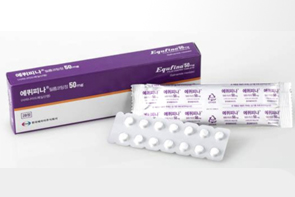
- Eisai Korea's Parkinson's disease treatment ‘Equfina Film-Coated Tab 50mg (safinamide mesilate)’ is expected to be in short supply for the next month, causing inconvenience to patients. In particular, although there are drugs with similar efficacy to Equfina, there are no direct therapeutic substitutes available with the same ingredients. The company reported the supply shortage to the Ministry of Food and Drug Safety on the 21st and announced today (from the 22nd) that a temporary supply shortage of Equfina is expected until August 31. The reason for the shortage is an issue with the release testing. Eisai stated, “Due to issues with the external testing agency, release testing has not been conducted, and a temporary supply disruption is expected once existing inventory is depleted.” Eisai explained, “While there are alternative medications with similar efficacy used for Parkinson's disease treatment, Equfina is a new drug, so there are currently no direct therapeutic substitutes. We will work closely with the testing agency to resolve the supply shortage as soon as possible.” Currently, there are no generic versions of Equfina available in the domestic market. However, companies such as Myung In Pharm, Bukwang Pharmaceutical, and Samil Pharmaceutical filed patent challenges. Myung In Pharm received approval on the 17th to initiate a bioequivalence test for its Equfina generic and is now proceeding with product development. Equfina was approved by the Ministry of Food and Drug Safety on June 24, 2020, as a once-daily levodopa adjunctive therapy for Parkinson's disease patients. Equfina is a new third-generation MAO-B (monoamine oxidase-B) inhibitor that acts on both dopaminergic and non-dopaminergic signaling pathways. In a Phase III clinical trial, it demonstrated significant improvements in both motor and non-motor symptoms in Parkinson's disease patients experiencing motor fluctuations. The current standard of care for Parkinson’s disease is levodopa, but it has been reported that approximately 75% of patients may develop complications after long-term (5 years or longer) use of levodopa. Equfina is used as an adjunctive therapy to levodopa, increasing the duration of action of levodopa, which may decrease with long-term use. Equipina is initiated at a dose of 50 mg once daily, with the option to increase the dose to 100 mg once daily (two 50 mg tablets) based on individual patient response and tolerability. The incidence of adverse reactions following Equipina administration was similar to that of placebo, with most (over 90%) being mild to moderate in severity. Even after two years of long-term administration, it demonstrated a safety profile similar to those observed in previous studies.
- Policy
- Jardiance 10mg price reduced from ₩618 to ₩582
- by Lee, Tak-Sun Jul 21, 2025 06:06am
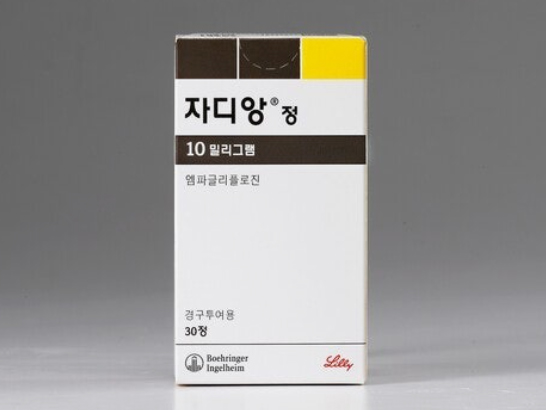
- The maximum insurance price ceiling for the 10 mg flagship dosage form of the SGLT-2 inhibitor diabetes treatment Jardiance Tab (empagliflozin, Boehringer Ingelheim), will be adjusted as reimbursement will also apply to chronic kidney disease. Jardiance recorded KRW 66.3 billion in outpatient prescriptions (based on UBIST) last year. According to industry sources on the 18th, the insurance price ceiling for Jardiance 10mg will be reduced from KRW 618 to KRW 582 as of August. This is a 5.8% reduction. Along with the price cut, Jardiance 10 mg will also be reimbursed for non-diabetic chronic kidney disease from August. A patient needs to meet all of the following conditions to receive reimbursement for Jardiance 10mg: ▲is on a stable dose of an ACE inhibitor or angiotensin II receptor blocker at the maximum tolerated dose for at least 4 weeks ▲has an eGFR between 20 and 75 ml/min/1.73 m², and ▲urine dipstick test is positive (1+ or higher) or uACR is 200 mg/g or higher. Jardiance is also administered in combination with other standard treatments for kidney disease. Another SGLT-2 inhibitor, dapagliflozin, has also been granted reimbursement for the treatment of chronic kidney disease starting this month. As a result, dapagliflozin-containing drugs and Jardiance, for which no generic versions have been released yet, are now reimbursed not only for diabetes but also for chronic heart failure and chronic kidney disease, greatly expanding their scope of use. In Jardiance’s case, Jardiance Tab 10 tablets will undergo a preemptive price reduction due to its expanded scope of use, resulting in an adjustment of its insurance ceiling price. Originally, the price of Jardiance 10 mg Tab was scheduled to be reduced from KRW 618 to KRW 591 starting in July under the price-volume agreement (Type B, PVA) scheme. However, considering the potential confusion and administrative burden caused by consecutive price reductions, the government decided to adjust the prices unilaterally starting in August. On the other hand, the price of Jardiance 25mg was reduced from KRW 798 to KRW 762 in July under the PVA. Type B of the PVA scheme refers to cases where the insurance price ceiling has been adjusted under Type A, or where the maximum price has not been negotiated under Type A, and the claims amount for the same product group has increased by more than 60% compared to the previous year's claims amount, or has increased by more than 10% with an increase of KRW 50 billion or more, from the date of initial listing or the date the insurance price ceiling was adjusted through negotiation. The insurance price ceiling is adjusted through the company’s price negotiations with the National Health Insurance Service. As Jardiance is a blockbuster drug with annual prescriptions exceeding KRW 60 billion, healthcare institutions are advised to exercise caution with regard to the price reduction. Jardiance is co-marketed in Korea by Boehringer Ingelheim and Yuhan Corp.
- Policy
- [Reporter's View] A separate fund for new orphan drugs
- by Lee, Jeong-Hwan Jul 18, 2025 06:36am
- Will the 'establishment of a separate fund,' considered one of the ways to improve patient access to expensive, rare, and intractable disease drugs, become even more difficult with the inauguration of the Lee Jae Myung administration? Jung Eun-kyung, the candidate for Minister of Health and Welfare (MOHW), who is facing a parliamentary confirmation hearing on July 18, stated that "expanding reimbursement coverage should take precedence over establishing a fund" for drugs exclusively for rare and intractable diseases, separate from the National Health Insurance finances. Jung's statement is interpreted as an intention to maintain the traditional method of determining reimbursement for rare disease patients through national support systems, such as 'special calculation and improvement of standards'and catastrophic medical expense support, within the currently available National Health Insurance finances, rather than creating an additional financial "pocket." This is different from the MOHW's previous stance, where it had agreed with parliamentary legislation aimed at accelerating National Health Insurance reimbursement for high-priced, orphan disease treatments through the establishment of a separate fund. Conversely, candidate Jung showed a completely different attitude regarding the creation of a regional essential medical care fund. Jung presented a clear vision, stating, "If appointed as minister, I will push for the enactment and amendment of relevant laws through consultation with ministries, including the Ministry of Economy and Finance, to ensure the establishment of a regional essential medical care fund." Considering that the frequency of approvals for ultra-high-priced new drugs, such as immunotherapy for cancer and rare disease biologics, has increased incomparably compared to the past, Jung's skeptical expression regarding the establishment of a dedicated fund for rare diseases is disappointing. Suppose expensive new drugs are to be reimbursed within the limited National Health Insurance finances and restricted drug expenditure boundaries. In that case, the responsible authorities will ultimately have no choice but to make innovative efforts to diversify drug reimbursement criteria or to cut drug prices for already approved medicines. Reducing reimbursement for already approved drugs would ultimately increase the likelihood of further drug price reductions, which could lead to protests from domestic pharmaceutical companies and a contraction of funds needed for innovative new drug development. This means that a zero-sum game between multinational pharmaceutical companies, which focus on developing new drugs, and Korean pharmaceutical companies, which have a large proportion of generic products, could intensify over National Health Insurance finances. Therefore, establishing a separate fund for rare diseases is a legislative and administrative task that the new government should proactively consider. The MOHW should not exclude the establishment of a separate fund from its policy priorities. Instead, it should actively engage in administrative efforts, gathering wisdom with the National Health Insurance Service, the Health Insurance Review & Assessment Service (HIRA), and the medical community, to persuade the Ministry of Economy and Finance, which opposes the fund for reasons such as uncertainty of efficacy and fairness with other diseases. The National Health Insurance authorities are the only party that should analyze cases from advanced countries, such as the UK's operation of the Cancer Drug Fund (CDF), to ensure patient access to treatments for rare diseases and strive to open the minds of financial authorities. If rare·intractable diseases and rare disease drugs are translated into English, they become 'orphan diseases' and 'orphan drug.' They are pitiful diseases and treatments, like a child who has lost both parents or been abandoned, with no comfortable place to lean on. Currently, bills establishing separate funds to strengthen national responsibility for orphan diseases and treatments are pending in the 22nd National Assembly. These include the package of bills proposed by Representative Seo Myeong-ok of the People Power Party for the establishment of a Cancer Management Fund·Rare Disease Fund (amendments to the Cancer Management Act·Rare Disease Management Act·National Finance Act·Lottery Tickets and Lottery Fund Act), and the package of bills proposed by Representative Jeon Jin-sook of the Democratic Party of Korea for the expansion of National Health Insurance reimbursement for rare and severe disease treatments (amendments to the National Health Insurance Act·Lottery Tickets and Lottery Fund Act). We look forward to a future where Jung, having passed the confirmation hearing and been appointed MOHW, actively engages in persuasion and consultation with the Ministry of Economy and Finance to ensure the passage of the orphan disease fund establishment bills in the National Assembly. In this case, it would be favorable news for patients and caregivers who suffer from the burden of expensive hospital bills and high-priced treatments, as well as for the National Health Insurance finances, which currently bear a heavy burden.
- Policy
- Will the external reference pricing reevals gain momentum?
- by Lee, Jeong-Hwan Jul 18, 2025 06:35am
- Eun-Kyung Jeong, nominee for Minister of Health and Welfare, said that “it is important to manage drug prices at an appropriate level given the limited health insurance resources” regarding the post-marketing price review system to lower generic drug prices through “external reference pricing evaluations,” suggesting the possibility of its introduction upon her final appointment. Jeong also revealed plans to review policies such as improving the certification system for innovative pharmaceutical companies and expanding incentives to encourage pharmaceutical companies to invest in R&D for innovative new drugs. On the 17th, nominee Eun-Kyung Jeong revealed her position on the external reference pricing reevaluation system in written questions during her confirmation hearing with Representative Yoon Kim of the Democratic Party of Korea and Representative Jong-heon Baek of the People Power Party. Representative Yoon Kim pointed out that the external reference pricing reevaluation of generic drug prices, which the MOHW announced last year, has been postponed indefinitely, and raised the need for its prompt implementation. On the other hand, Representative Jong-heon Baek questioned the need to introduce a system to lower drug prices by comparing them with overseas prices, arguing that it is unreasonable to lower domestic generic drug prices solely based on drug prices overseas, given that each country's insurance system, drug price determination process, and level of social consensus differ. On this, Jeong replied, “The demand for drugs is constantly increasing due to the growing number of elderly people and patients with chronic disease. In order to provide optimal drug reimbursement with limited national health insurance finances, it is important to manage drug prices at an appropriate level.” Jeong explained, “We will carefully review the current status of domestic and international drug pricing systems and policy improvements, and consider acceptability by gathering opinions from the field to manage drug prices reasonably after listing. We will also actively gather opinions through regular communication with the pharmaceutical industry, relevant agencies, and experts on the direction of drug pricing system improvements.” Regarding measures to encourage R&D for innovative new drugs, Jeong said, “The pharmaceutical and biotechnology industry is a national strategic industry that can serve as Korea’s next growth engine, so it is time to scale it on a national level. To this end, we will strengthen compensation for the innovative value of new drugs and reform the compensation system to encourage R&D investment, thereby supporting the cultivation of pharmaceutical companies with global new drug development capabilities.” Jeong added, “We plan to improve the certification system for Korea Innovative Pharmaceutical Companies to encourage their R&D investment in innovative new drugs. We will also consider expanding incentives for companies that strengthen their R&D efforts.”

- Policy
- When will Keytruda’s reimb be reviewed by DREC?
- by Lee, Tak-Sun Jul 17, 2025 06:13am
- Attention is focused on when Keytruda, for which reimbursement standards were set for 11 indications in February, will be submitted to the Drug Reimbursement Evaluation Committee (DREC) for review. This is because, although the reimbursement standards were established by the Health Insurance Review and Assessment Service's Cancer Review Committee, the barrier of DREC remains. According to industry sources on the 15th, HIRA is currently evaluating the estimated additional claims for Keytruda. This process is conducted to decide whether to apply the preliminary drug price reduction system for drugs with an expanded scope of use. The preliminary drug price reduction system for drugs with expanded scope of use is a system designed to quickly increase patient access to treatment by omitting cost-effectiveness evaluations. It applies a pre-determined reduction rate to reduce the insurance price ceiling for drugs by up to 5% in consideration of the estimated additional claims resulting from the expansion of reimbursement criteria. However, this system is applied only when the expected claims amount is between KRW 1.5 billion and KRW 10 billion. If the expected claim amount exceeds KRW 10 billion, the drug price is adjusted through negotiations between the National Health Insurance Service regarding the expansion of the drug's approved indications. In February, the National Health Insurance Service set reimbursement criteria for 11 additional indications for Keytruda. MSD requested reimbursement expansion in 2023, and after 5 attempts, the expansion was finally approved by the National Health Insurance Service on the company’s 6th attempt. At that time, the reimbursement criteria were set for stomach cancer, esophageal cancer, endometrial cancer, colorectal cancer, squamous cell carcinoma, cervical cancer, breast cancer, small intestine cancer, and bile duct cancer. After setting the reimbursement criteria, HIRA reported it to the MOHW. After review, MOHW requested HIRA to review the preliminary drug price reduction for drugs with an expanded scope of use. It is expected to take some time before the application can be submitted for DREC review, as the relevant work must be completed first. Some predict that it will be difficult for the matter to be submitted to the DREC even in August. This is because the analysis of the expected claims amount will take a long time due to the large number of indications, and the pharmaceutical companies must also go through the process of accepting the preliminary drug price reduction. Even if it passes DREC review, negotiations with the National Health Insurance Service remain, and it is uncertain whether its reimbursement will be granted and listed within the year. Due to the complicated reimbursement process, some in the industry believe that the introduction of indication-specific pricing should be considered. However, health authorities remain cautious about introducing such a system. Whichever the cause, the patients are likely to face a long wait. However, it is a positive sign that HIRA recently added 12 indications for Keytruda to the partial reimbursement list as part of anticancer combination therapies, reducing the financial burden on patients. With the partial reimbursement, the other therapies included in the combination, excluding Keytruda, are covered by health insurance.

- Policy
- Will the general diabetes criteria be revised after 14 yrs?
- by Lee, Tak-Sun Jul 16, 2025 06:09am
- The National Health Insurance Service (NHIS) is currently reviewing a comprehensive revision of the general principles for diabetes drug reimbursement criteria, which have been in place for 14 years. It is garnering significant attention from the industry. Following recent trends, significant changes are anticipated, including the removal of metformin and sulfonylurea (SU) as first-line agents and a reorganization of approved dual therapies. However, concerns about increased national health insurance expenditure make the government's ultimate decision an attention. According to industry sources, on July 14, the Health Insurance Review & Assessment Service (HIRA) is reviewing a comprehensive revision of the general principles for diabetes drug reimbursement criteria, as requested by organizations such as the Korean Association of Internal Medicine. The current general principles for diabetes drugs, which designate metformin and SU as first-line agents, were first established in 2011. At the time, the Ministry of Health and Welfare (MOHW) formulated these principles to align with prescription patterns, encourage cost-effective drug use, and reduce the financial burden on the national health insurance. However, after 14 years, the general principles for diabetes drugs are now considered outdated. Indeed, this year, the Korean Diabetes Association revised its "9th Edition Diabetes Treatment Guidelines," removing the detail that metformin is the first-line treatment for type 2 diabetes. Instead, the guidelines recommended prioritizing the use of the latest drugs based on the patient's pathophysiology and clinical characteristics. The Korean Diabetes Association explained that this revision is an evidence-based guideline with clear levels of evidence and benefits. Not only in Korea but also in developed countries like the United States, metformin is no longer recommended as a first-line agent. The Korean Diabetes Association is said to have gathered these opinions and requested a comprehensive revision from HIRA earlier this year. HIRA is reportedly reviewing the comprehensive revision proposal. The pharmaceutical industry is also requesting a comprehensive revision, arguing that the current general principles are contrary to the latest medical practices and trends. Analysis suggests that the revised principles are highly likely to include comprehensive changes to the general principles, from the status of metformin and SU as first-line treatments to the approved dual therapies. However, if SGLT-2 inhibitors, DPP-4 inhibitors, or GLP-1 analogues are recommended as first-line treatments instead of metformin or SU, there is a high possibility of a significant increase in national health insurance expenditure.Therefore, health insurance authorities are expected to review the cost-effectiveness of these measures closely. An official from the pharmaceutical industry said, "If the current general principles for diabetes drug reimbursement criteria are comprehensively revised, it will have a significant impact on the market, and pharmaceutical companies will inevitably have to consider their profit and loss," and added, "I believe the NHIS will also establish measures to minimize financial expenditure."

- Policy
- Gov't pursues 'project to produce unstable supply drugs'
- by Lee, Jeong-Hwan Jul 15, 2025 06:08am
- The Ministry of Health and Welfare (MOHW) plans to continue its project of providing government funding for the production of drugs with unstable supply. The MOHW plans to proceed with the currently budgeted project to support one item, while also working to secure additional budget to support more items. A MOHW official recently met with the Korea Special Press Association to explain the direction of the project to support the production of drugs with unstable supply. The MOHW has selected 'Questran Powder for Suspension Boryung,' a bile acid sequestrant class hyperlipidemia treatment from Boryung, as an unstable supply drug to be stabilized and has decided to provide KRW 900 million in funding. This drug is the only hyperlipidemia treatment in South Korea that pregnant women and children can safely use, but its supply was halted in 2023 due to declining profitability. In response, Boryung will resume production with KRW 900 million in government support and KRW 900 million in-house investment, totaling KRW 1.8 billion. The National Assembly is also calling for budget increases in the project to support the production of drugs with unstable supply. Last year, the National Assembly's Health and Welfare Committee advocated for an additional budget increase of KRW 900 million to expand the supported items from one to two, as part of a national health security strategy to support domestic drug production and supply chains. However, the budget increase review did not happen, and the proposal was rejected. The MOHW plans to use 'Questran Powder for Suspension Boryung' as a starting point to secure the basis for the unstable drug supply support project and will maintain the project while increasing the number of supported items in the future. For 'Questran Powder for Suspension Boryung,' the company must meet a mandatory condition that it must complete the production of the requested quantity within three months if a production request from the MOHW follows within five years after the government budget support project ends. A MOHW official stated, "Only two pharmaceutical companies applied for this year's support project. It seems the promotion was insufficient." They added, "Although this is the first year of implementation, it will not be a one-off project." The official explained, "While the government provides KRW 900 million in funding and the private pharmaceutical company matches the same amount, it's not easy to fully equip production facilities with this budget. I do feel it's not a large sum," and added, "Nevertheless, I believe starting the drug supply shortage project with this item has significance." The MOHW also added, "The evaluation·verification of budget project investment returns will be based on whether the government's required production volume is met, which will be considered as having contributed to alleviating supply shortage to some extent." They concluded, "Research on resolving unstable supply chains has also been allocated a budget of KRW 50 million, and this will also begin in the second half of the year."
- Policy
- How Trodelvy was applied flexible ICER for innovativeness
- by Lee, Tak-Sun Jul 14, 2025 06:04am
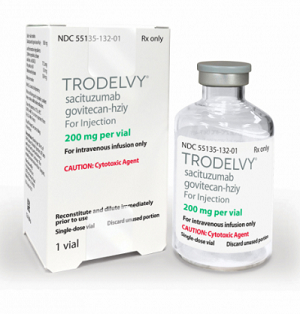
- The ADC breast cancer drug Trodelvy (sacituzumab govitecan, Gilead), which was reimbursed in June for triple-negative breast cancer, was the first case in which the ICER (incremental cost-effectiveness ratio) threshold was flexibly applied in recognition of its innovation. So how did the Drug Reimbursement Evaluation Committee (DREC) of the Health Insurance Review and Assessment Service at the time evaluate the innovativeness of this drug? According to the recently released evaluation results, Trodelvy was found to satisfy all criteria for innovative treatment, including the absence of alternative treatments, clinical improvement, and the criteria for expedited review. According to industry sources on the 11th, in the recently released DREC evaluation results for Trodelvy, the committee members recognized its reimbursement as appropriate despite the high cost-effectiveness ratio, taking into account the drug’s innovativeness." In August last year, the Health Insurance Review and Assessment Service established new requirements for the innovation of drugs subject to flexible ICER threshold assessment. According to the newly established criteria, the innovation of a new drug is recognized when ▲there are no substitute products or treatments with equivalent therapeutic positions, ▲significant clinical improvement can be recognized in the final outcome indicators, such as prolonged survival, ▲the new drug is a new drug approved by the Ministry of Food and Drug Safety through an expedited review process in accordance with Article 35-4, Paragraph 2 of the Pharmaceutical Affairs Act, or a drug recognized by the committee as equivalent to such a drug. All three requirements must be met for a new drug to be recognized as innovative. Trodelvy became the first drug to be recognized as innovative under these criteria. At the time, the DREC members evaluated that Trodelvy satisfied all three requirements. First, they determined that it satisfied the first requirement as the first antibody-drug conjugate (ADC) approved for triple-negative breast cancer, with no products or treatments with equivalent therapeutic positions. In addition, they evaluated that the second requirement was also satisfied, as clinical improvement (mOS HR=0.51) was recognized in the final outcome indicators, such as prolonged survival. Finally, considering that it was approved by the FDA as a breakthrough therapy and designated as a Global Innovative product for Fast Track item by the MFDS, the committee deemed that the third requirement was also satisfied. In terms of cost-effectiveness, the committee concluded that Trodelvy is significantly more cost-effective than existing anticancer drugs and breast cancer drugs that have been reviewed in the past. However, considering that it is a drug used for diseases that threaten survival in the third or further line of administration, that it has been recognized for improving the social burden of disease and quality of life, and that it is the first antibody-drug conjugate (ADC) approved for triple-negative breast cancer, the committee accepted its reimbursement as adequate. In other words, the high price was accepted in recognition of its innovation. Another factor was that the number of patients eligible for treatment was small, so the drug’s financial impact was not significant. According to the DREC evaluation results, Trodelvy is a drug used by approximately 200 patients, and the decision was made after comprehensive consideration of factors such as the number of patients eligible for treatment and the financial impact. In the end, Trodelvy was listed for reimbursement under two types of risk-sharing agreements (RSA) with the National Health Insurance Service. Among the types of RSA contracts that were applied, one was a Refund-Type agreement, where the pharmaceutical company reimburses a certain percentage of the claimed amount to the NHIS, and the other was the Utilization Cap/Fixed Cost per Patient Refund Type agreement, where the usage limit per patient is set in advance, and a certain percentage of the excess amount is reimbursed to the NHIS if the limit is exceeded. The listed price (maximum amount) is KRW 1,052,300 per vial, but due to the dual pricing system applied under the reimbursement-type contract, the actual price is higher. The estimated number of patients receiving Trodelvy annually is approximately 282, with an estimated fiscal expenditure of approximately KRW 12.5 billion. However, the actual fiscal expenditure is expected to be lower if the risk-sharing agreement is applied. At a 5% coinsurance rate, patients will only need to pay approximately KRW 2.21 million per year for its administration.
- Policy
- Orphan drug 'Bylvay Cap' wins reimb approval after reeval
- by Lee, Tak-Sun Jul 14, 2025 06:03am
- 'Bylvay Cap,' which is being considered for the expedited reimbursement listing process as a designated drug for 'Pilot Project for Integration of Product Approvals, Reimbursement Coverage Reviews, and Drug Price Negotiations,' received reimbursement appropriateness decision after reevaluation. Consequently, Bylvay Cap will be subjected to negotiation with the National Health Insurance Service (NHIS) before its inclusion in the reimbursement list. Health Insurance Review and Assessment Service (HIRA) stated that it has held the 7th Drug Reimbursement Evaluation Committee (DREC) meeting on July 10 and decided as such. During the meeting, the DREC decided on the reimbursement appropriateness for Bylvay Cap 200, 400, 600, and 1200 μg (odevixibat sesquihydrate). Drug Reimbursement Evaluation Committee (DREC) Bylvay Cap is used to treat progressive familial intrahepatic cholestasis (PFIC). This drug was designated as the first concurrent approval-evaluation-negotiation pilot project in 2023. The criteria for the concurrent approval-evaluation-negotiation pilot project were drugs with sufficient efficacy intended for treating cancer or rare diseases with a life expectancy of less than one year, as well as those proving superior survival·treatment effectiveness for over two years when alternative treatments are not available. Bylvay Cap obtained marketing authorization from the Ministry of Food and Drug Safety (MFDS) in August 2024 and entered into the reimbursement evaluation process. Yet, the reimbursement evaluation process has been uneasy. A complaint was heard from an expert who attended the reimbursement review meeting from the evaluation stage. In the DREC meeting held last April, a conclusion was not reached, and it was decided to re-evaluate. It was only today, three months later, that it passed the DREC review. As drugs under the concurrent approval-evaluation-negotiation pilot project undergo a one-stop process without following separate stages, Bylvay is likely to have already entered negotiations with the NHIS. If the NHIS negotiations are completed, patients will be able to receive National Health Insurance coverage for this drug immediately after review by the Health Insurance Policy Review Committee. Meanwhile, the DREC decided on HLB Pharma's Citrelin ODT to receive a conditional approval, stating that reimbursement appropriateness if the company accepts a price below the evaluated amount. This drug is used for 'improving ataxia caused by spinocerebellar degeneration.'
