
- LOGIN
- MemberShip
- 2026-05-01 13:10:20

- Policy
- Industry expects improved pricing measures by new gov't
- by Lee, Jeong-Hwan Jun 23, 2025 06:01am
- The domestic pharmaceutical industry is closely monitoring the direction of the Lee Jae-Myung administration's preferential drug pricing policy. The industry is most interested in when and how the presidential election pledges, including specific implementation plans for the new drug R&D-linked preferential drug pricing policy and the integration and advancement of the post-marketing drug price management system, will be realized. Multiple pharmaceutical companies believe that the public-private consultation body for the advancement of the drug price system, whose operation has been suspended around the presidential election, must be restarted as soon as possible in order to prompt practical discussions on the presidential campaign pledges. On the 22nd, the pharmaceutical industry expressed expectations that the Lee Jae-Myung administration's inauguration would bring significant changes to the drug price system, which will directly impact the promotion of the pharmaceutical and bio industry. The Ministry of Health and Welfare announced a health insurance operation plan during the previous administration on how it would establish various preferential pricing measures for drugs by domestic pharmaceutical companies. The previous Yoon Suk-Yeol administration's blueprint for drug price regulations was to favor drug prices or to partially defer or exempt drug price reductions of pharmaceutical companies that contributed to improving public health, enhancing the sustainability of health insurance, and developing the national economy. Additionally, the previous government promised to integrate the fragmented post-approval drug price management system into a single framework to address issues such as redundant price reductions that deter new drug development, thereby enhancing predictability for pharmaceutical companies and supporting their business operations. However, multiple pharmaceutical companies have pointed out that there are few actual cases where the previous government's plans have been implemented in practice. In other words, efforts to establish the criteria for preferential drug pricing that can promote new drug development, create jobs, and save national health insurance finances, have been stagnant for over a year. According to industry sources, the only drug price policies that have actually been implemented are regulations that favor the prices of essential medicines manufactured with domestic ingredients and the temporary suspension of the price reduction system based on external reference pricing reevaluations that were about to be implemented. Accordingly, the pharmaceutical industry is closely watching whether the new government will expedite the establishment of national economic development criteria that would allow pharmaceutical companies to receive preferential drug pricing. Given that President Lee Jae-Myung has pledged to implement a preferential policy linking new drug R&D ratios to drug prices, expand measures that take into account the pharmaceutical industry’s social contribution, and modernize the post-management of drug prices in an integrated manner, industry attention is now focused on when and how the Ministry of Health and Welfare and other relevant authorities will initiate specific reforms in the drug pricing system. A representative from a mid-sized domestic pharmaceutical company explained, “The previous administration had repeatedly announced plans to introduce new preferential drug pricing clauses and the reform of the drug pricing system, but in reality, the progress felt slow. Preferential treatment was mainly limited to essential medicines using domestic raw materials, and even then, the number of items actually benefiting from the policy was quite small.” The representative added, “While the implementation of the external reference pricing reevaluation results has been temporarily suspended due to ongoing concerns from pharmaceutical companies, significant concern remains on how it could be reinstated at any time. The key issue is how much and in what direction the new government will diverge from the previous administration's drug price system policies.” Another domestic pharmaceutical company official noted, “The adoption of a drug pricing system that provides greater compensation to pharmaceutical companies that invest heavily in new drug R&D as a presidential election pledge holds significance.” “While policies that provide price advantages to pharmaceutical companies that increase investment in new drugs and make efforts to reduce national health insurance expenditures are important, reducing or eliminating unreasonable drug price reduction mechanisms could have a more substantial impact on pharmaceutical companies.” The official added, “A drug pricing system that adequately reflects the characteristics of the domestic pharmaceutical industry and advanced post-approval drug pricing management policies must be implemented by the new government to enhance pharmaceutical companies' capacity to invest in new drugs. To establish systems that enhance the predictability of the pharmaceutical companies’ business operations, we hope that the new government will first establish a public-private consultation body.”
- Policy
- Generic 'Lixiana' is now in 'active' development in KOR
- by Lee, Hye-Kyung Jun 23, 2025 06:01am
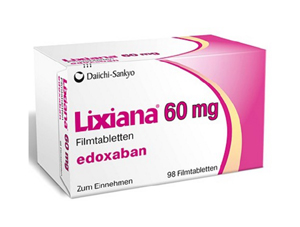
- Korean pharmaceutical companies are actively working on plans to launch their generic version of 'Lixiana Tab 60 mg (edoxaban tosylate hydrate),' a Direct Oral Anti-Coagulant (DOAC) with patent expiry set to November of next year. The Ministry of Food and Drug Safety (MFDS) recently approved Korean Drug Co's application for a bioequivalence trial. This trial is an open-label, randomized, single-dose oral, two-group, two-period, crossover study in healthy adults, comparing "Korea-edoxaban 60mg Tab" with Daiichi Sankyo's 'Lixiana Tab 60mg (edoxaban tosylate hydrate)'. This month, two bioequivalence test approvals have been granted for the development of generic Lixiana. Korea Arlico Pharm received approval for "Arlixaban Tab 60mg" on June 9, before the Korean Drug Co. According to the approval history of bioequivalence tests for generic Lixiana, the MFDS has approved 10 cases. Over ten pharmaceutical companies, including Boryung, Dong-A ST, HK inno.N, Samjin Pharmaceutical, Shinil Pharma, Chong Kun Dang, Kolmar Pharma, Korea Kolmar, Hutecs, and Hanmi Pharmaceutical, have already successfully avoided the patent and secured generic approvals. Seventeen Lixiana generic products are currently listed in the approval registry. Theragen Etex and Dongkwang Pharmaceutical, which filed patent invalidation suits last year, also recently received 'claim upheld' rulings. Korean companies that have successfully avoided the patent will be able to launch their generics when the substance patent expires in November 2026. Late entrants to generic development are actively working to accelerate their generic launches by filing a passive rights scope confirmation trial related to Daiichi Sankyo's pharmaceutical composition patent. Currently, HLB Pharma and Samjin Pharm have filed passive rights scope confirmation trials related to Lixiana's formulation patent in January and March, respectively. The Lixiana patents listed in the MFDS patent registry include a substance patent expiring in November 2026 and a formulation patent expiring in August 2028. Challenges to the Lixiana formulation patent began in 2020. At that time, about 10 companies, including Boryung, filed an invalidation trial aimed at the Lixiana formulation patent in July 2018. Within approximately two years, the challenging companies won the first instance. The victory was confirmed without an appeal from Daiichi Sankyo. Since December 2021, companies including Nexpharm Korea, Dong-A ST, Samsung Pharmaceutical, Shinil Pharma, Shin Poong Pharm, Ahngook Pharm, Ildong Pharmaceutical, Genuone Sciences, Union Korea Pharm, Korea Prime Pharm, Hutecs, and Handok have each obtained generic marketing authorizations. Lixiana has consistently maintained its lead in the DOAC market for a long time, with annual prescription sales exceeding KRW 100 billion. According to pharmaceutical market research firm UBIST, Lixiana's prescription sales in 2023 were KRW 105.3 billion, a 9% increase from KRW 96.7 billion in 2022. In the first half of last year alone, it recorded KRW 55.7 billion in prescription sales. Lixiana first took the market lead in 2019 and has consistently held that position. Analysis suggests that the joint selling synergy with Daewoong Pharmaceutical has positively contributed to the increase in prescription sales.
- Policy
- Handok and JW’s new imported drugs reimbursed from July
- by Lee, Tak-Sun Jun 23, 2025 06:00am
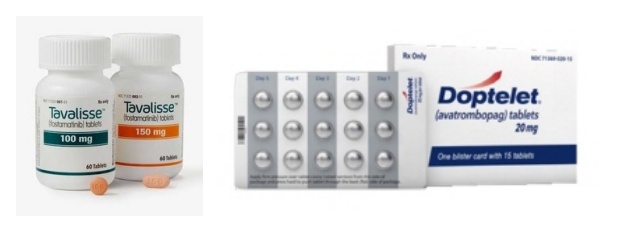
- Tavalisse (JW Pharmaceutical) and Doptelet (Handok) will both be reimbursed for ITP from next month In July, four new drugs, including an oral drug for paroxysmal nocturnal hemoglobinuria (PNH), a new biological agent for severe atopic dermatitis, and a new drug for immune thrombocytopenia (ITP), will be reimbursed by health insurance and be available with coverage for patients. On the 19th, the MOHW announced the establishment of reimbursement standards for four new drugs, including Fabhalta Cap 200 mg (Iptacopan hydrochloride monohydrate, Novartis Korea), a new drug for the treatment of PNH. The reimbursement will take effect on the 1st of next month. In addition to Fabhalta Cap 200 mg, a treatment for severe atopic dermatitis, Ebglyss Autoinjector 250 mg (lebrikizumab-lbkz, Lilly Korea), ‘Doptelet Tab 20mg (avatrombopag maleate, Handok),’ and ‘Tavalisse Tab 100·150mg (fostamatinib sodium hydrate, JW Pharmaceutical).’ Fabhalta Cap 200 mg is an oral treatment for paroxysmal nocturnal hemoglobinuria and is expected to be more convenient than the injectable drugs that have been used until now. In addition, its hemolysis control effect is expected to be better than existing C5 inhibitors (Soliris and Ultomiris). PNH is a rare condition that affects about 1.5 people per 1 million worldwide. Until now, Soliris (eculizumab) and Ultomiris (ravulizumab) have been the main C5 inhibitors used for PNH. In November last year, Empaveli (pegcetacoplan, Handok), a subcutaneous injection that binds to C3 and C3b to inhibit the complement cascade, was also approved for reimbursement. The reimbursement of the new oral drug Fabhalta is expected to improve access to treatment and offer better therapeutic effects. Ebglyss Autoinjector 250 mg is reimbursed for adult (18 years of age or older) and adolescent (12 to 17 years of age, weighing 40 kg or more) patients with chronic severe atopic dermatitis whose symptoms have persisted for three years or more. This drug is the third biological agent for atopic dermatitis, following Dupixent (dupilumab) and Adtralza (tralokinumab). Ebglyss has demonstrated clinical efficacy and safety profiles through a Phase III clinical trial and is expected to become a first-line treatment option for atopic dermatitis patients in Korea. Doptelet Tab and Tavalisse Tab will be reimbursed for the treatment of adult chronic immune thrombocytopenia (ITP) that is unresponsive to corticosteroids and immunoglobulin. ITP is an autoimmune disease in which the immune system mistakes platelets for viruses and attacks them, causing platelet counts to fall below normal levels and increasing the risk of bleeding. As a result, patients may experience easy bruising and frequent bleeding, which in severe cases can lead to cerebral hemorrhage or gastrointestinal bleeding. According to the ITP Clinical Practice Guidelines issued by the Korean Society of Hematology, steroids and immunoglobulins are recommended as first-line treatments, while splenectomy or thrombopoietin-receptor agonists (TPO-RA) are recommended as second-line treatments for chronic ITP patients. With rare disease drugs imported by domestic pharmaceutical companies such as Handok and JW Pharmaceutical now reimbursed, industry eyes are on how the drugs will be received in the market.
- Policy
- Rapid adjustment of insurance prices for rare drugs granted
- by Lee, Hye-Kyung Jun 20, 2025 06:08am
- Verorab (pictured above), for which a price adjustment has been completed in response to exchange rate fluctuations, and Ivexproglycem (pictured below) for which a price adjustment application is currently under negotiations. The insurance price ceiling adjustment term for insured drugs supplied by the Korea Orphan Drug Center (KOEDC) is expected to be significantly reduced from the initial 8-9 months to around 4 months. Previously, it took at least 8-9 months to adjust the price cap, raising concerns about supply disruptions and financial losses for the center, so the government decided to take proactive measures to resolve the issue by significantly simplifying the price adjustment process for urgently needed drugs. During a meeting with journalists from the Ministry of Food and Drug Safety’s press corps on the 17th, the KOEDC said that it is operating a consultation system to promptly adjust reimbursement price ceilings for publicly procured orphan drugs in order to ease the supply burden caused by sharp exchange rate fluctuations. The KOEDC added that it adjusted the insurance price ceiling for Verorab through the system in January. The insurance price of Verorab was KRW 63,000 before the adjustment, but after the adjustment, it was raised by 65.9% to 104,887 won. According to the center, most orphan drugs are highly dependent on overseas imports, and import prices are sensitive to exchange rate fluctuations. However, the reimbursement ceiling was fixed, so there was a structural problem where the center had to continue supplying the drugs at a loss when the exchange rate rose sharply. According to the center, the exchange rate has risen by about 20% in the last three years, and in the case of some items, the KOEDC incurred losses of more than KRW 100 million per case. This has directly impacted patients' access to treatment. When the center delays or suspends supply due to budget constraints, patients experience treatment gaps because there are no domestic alternatives for orphan drugs. As a result, patient groups and relevant experts have consistently raised the need for system improvements. Kim Ki-young, Director of KOEDC, explained, “There has been around a 20% fluctuation in exchange rates over the past 3 years. For orphan drugs distributed in the market based on the reimbursement price ceiling, the increased costs have led to losses exceeding KRW 100 million per drug. In practice, the total budget for drug purchases has decreased, which has also caused disruptions in the supply of subsequent orphan drugs.” In response, the center established an exceptional price adjustment procedure in collaboration with the Ministry of Health and Welfare, the Ministry of Food and Drug Safety, the Health Insurance Review and Assessment Service (HIRA), and the National Health Insurance Service (NHIS). This streamlined process applies exclusively to publicly procured items that meet specific criteria. It significantly shortens the price ceiling adjustment period from several months to within 10 days, thereby minimizing supply disruptions and ensuring continuity of patient care. Notable examples of the expedited adjustment procedure include Verorab, which was adjusted in January this year, and Ivexproglycem, which is currently undergoing price adjustment. Kim said, “Previously, adjustments to the reimbursement price ceiling took eight to nine months due to various procedures, which inevitably resulted in losses for the center. The MFDS requested cooperation from the MOHW to establish a procedure to correct supply instability so that adjustments can be made quickly in response to exchange rate fluctuations.” Just like with exchange rate increases, price adjustments are also promptly made in the event of a decrease. Director Kim said, “If an exchange rate drop results in a surplus, the revised amount can be reflected starting on the first day of the following month. This new cooperative framework enables more reasonable adjustments and contributes to the stability and sustainability of public procurement by government agencies.” In addition, KOEDC is pursuing various policies to improve access to orphan drugs. Key initiatives include operating patient assistance programs in partnership with pharmaceutical companies and providing free or cost-based supply of drugs for which price negotiations are delayed. Also, the center is working to establish overseas supply chains to introduce medications for self-treatment and is running an early distribution program for pediatric orphan disease treatments.
- Policy
- SGLT2 Jardiance likely to receive expanded reimb for CKD
- by Lee, Tak-Sun Jun 20, 2025 06:06am
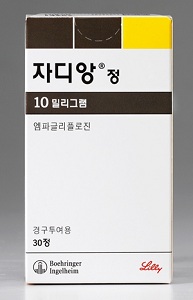
- Product photo of JardianceThe SGLT-2 inhibitor Jardiance (empagliflozin, Boehringer Ingelheim) is expected to be reimbursed for the treatment of chronic kidney disease (CKD). This drug is currently reimbursed for the treatment of diabetes and chronic heart failure. If expanded reimbursement is approved for CKD, the volume of usage is likely to be increased. Furthermore, its market presence is expected to be strengthened in the SGLT-2 inhibitors market. According to industry sources on June 19, the agenda related to Jardiance's expanded reimbursement to include CKD passed the Drug Reimbursement Evaluation Committee (DREC) held on the 12th. Once it undergoes the National Health Insurance Service's simplified negotiation process and reports to the Health Insurance Policy Deliberation Committee, Jardiance is anticipated to be reimbursed for treating CKD. Since the company already completed drug price estimation process, reimbursement may be approved as early as July 1. It has been reported that Jardiance's expanded reimbursement for CKD was approved for the pre-drug price reduction program for expanded usage scope drugs. This program is designed to quickly enhance patient access to treatments by omitting the cost-effectiveness evaluation and applying a pre-reduction rate table, with a maximum 5% reduction in the ceiling cap, considering the estimated additional claim amounts due to the expanded reimbursement criteria. If a drug's ceiling price is adjusted via this program, its company will only have to undergo negotiations related to supply requirements, such as those required for other reimbursed medicines. Jardiance's company applied to the Health Insurance Review & Assessment Service (HIRA) for expanded reimbursement for Jardiance's CKD indication in the first half of last year. Jardiance was the first SGLT-2 inhibitor to file. Jardiance Tab 10mg is currently indicated for the treatment of 1. Type 2 diabetes mellitus, 2. chronic heart failure, and 3. chronic kidney disease. Jardiance Tab, which was listed for reimbursement as a diabetes treatment in 2017, has also been reimbursed for chronic heart failure since February 2024. Since January this year, the reimbursement criteria have been expanded, allowing patients with heart failure with preserved ejection fraction (HFpEF) who have symptoms and signs of heart failure and a left ventricular ejection fraction exceeding 40% to receive national health insurance benefits. Currently, the only SGLT-2 drugs covered for diabetes and chronic heart failure patients, besides Jardiance, are Forxiga (dapagliflozin) and HK inno.N's DapaN Tab, which transferred Forxiga's indications. However, there is currently no drug reimbursable for CKD. If the reimbursement expansion procedure for Jardiance is completed, it is expected to be the only SGLT-2 inhibitor with coverage for CKD reimbursement. The efficacy of Jardiance has been demonstrated through clinical trials, showing a statistically significant 28% relative risk reduction in the progression of kidney disease or cardiovascular death compared to placebo. The clinical trials that Jardiance significantly reduced a relative risk in the progression of kidney disease or cardiovascular death compared to placebo by 28%. The expanded scope of use will provide advantage in competition with generic drugs. Jardiance's substance patent expires in October this year. Therefore, tens of domestic generic drugs are likely to enter the market. Jardiance, jointly sold by Boehringer Ingelheim and Yuhan, recorded outpatient prescription sales of KRW 66.3 billion last year, according to UBIST.
- Policy
- Growing role of the Korea Orphan & Essential Drug Center
- by Lee, Hye-Kyung Jun 19, 2025 06:03am
- "The emergency import of essential medicines through the Korea Orphan & Essential Drug Center (KOEDC) will be expanded, and support for pharmaceutical companies producing domestic products will be planned." President Lee Jae-myung made this pledge on his Facebook page on May 28, during his campaign for the presidency. President Lee emphasized the importance of the KOEDC, stating that he would strengthen national guarantees for the treatment of rare and intractable diseases. However, the KOEDC is a Ministry of Food and Drug Safety (MFDS)-affiliated organization with a fixed quota of only 30 personnel. KOEDC is responsible for the supply of rare and national essential medicines, establishing a stable supply base for national essential medicines, and supporting R&D. The center is currently understaffed. Kim Young-rim, CEO of Korea Orphan & Essential Drug Center (KOEDC)Kim Young-rim, CEO of KOEDC, stated at a briefing for journalists covering the MFDS on June 17, "The global supply chain has become increasingly important after COVID-19, and the role of the center is also growing." Kim added, "As a small organization with only 30 personnel, where individual roles and responsibilities are significant, it is necessary to devise ways to perform duties efficiently." In particular, the emergency import of essential medicines mentioned by President Lee is part of the national essential drug supply management plans implemented by the KOEDC. The KOEDC plays a crucial role in managing emergency imports of medicines that could be subject to potential supply shortages from overseas, domestically produced products under contract manufacturing, and emergency use authorizations for items deemed necessary to address public health crises. Kim stated, "The KOEDC is a specialized organization responsible for the stable supply of rare and essential medicines in Korea. This year, we plan to actively identify and promote tasks in line with the new government's initiatives to strengthen our role in ensuring a stable supply of rare and essential medicines." Regarding national essential medicines, strengthening on-site supply and demand monitoring, as well as emergency importation of drugs, is one of the main tasks for this year. The goal is to enhance management analysis of discontinued drugs, thereby shortening the designation period for emergency imported drugs and their subsequent domestic entry. Additionally, it aims to prioritize the classification of emergency imported drugs to facilitate appropriate inventory management. The KOEDC's role also includes planning the details for stable supply, such as identifying annual supply and demand plans for drugs requested by government ministries and expanding procurement sources. In addition to national essential medicines, the KOEDC also announced plans for rare diseases this year. Kim said, "For items that have been labeled as essential in areas where no existing treatments were available and have been designated as MFDS GIFT (Global Innovative products Fast Track) and approved, we will temporarily supply them during the domestic supply gap period before drug price negotiations, contributing to increased patient access." They are also planning expedited reimbursement applications for pediatric drugs such as 'Glucagen hypo kit,' 'Baqsimi Nasal Spray,' and 'Rapamune Syrup.' KOEDC is exploring ways to reduce patient burden by converting candidates to tax-exempt status after reviewing relevant provisions. The KOEDC has been conducting the "Research on Establishing a Domestic Stable Supply Base for National Essential Medicines" since 2022 to establish a domestic self-sufficiency base for national essential medicines in response to supply chain crises. Through Phase 1 of the project, conducted from 2022 to 2023, a domestic production base for two finished pharmaceutical products and three active pharmaceutical ingredients (APIs) has been established. Ahn Myung-soo, a division head at the KOEDC, stated, "Myung In Pharm used to import benserazide raw material from China, but we have developed it domestically and completed its DMF registration with MFDS." Ahn added, "While commercialization is a decision for the pharmaceutical company due to drug pricing issues, its significance lies in being registered in the DMF so that it can be used at any time." Furthermore, Korus Pharm's amiodarone injection received approval for export. With additional processing, a push for technology transfer, and further R&D investment, it could become commercialization-ready. Since last year, Phase 2 of the project has been underway, which includes the domestic development of both the API and finished drug for acetaminophen. Ahn added, "We have succeeded in achieving self-sufficiency through the domestic development of the API and finished pharmaceutical product for acetaminophen. A product approval application will soon be submitted to MFDS," and added, "This means that domestic self-sufficiency is possible if there are shortages, regardless of the global supply chain." In this regard, Kim stated, "There are limitations to securing a stable supply network through projects funded by the KOEDC." Kim added, "Budget and personnel support are necessary for these projects to be sustainable within the KOEDC's scope. To achieve this, we plan to work towards this continuously."

- Policy
- Petition filed urging expedited reimbursement of Livmarli
- by Lee, Jeong-Hwan Jun 17, 2025 06:00am
- A national petition has been filed to urge for the health insurance reimbursement of Livmarli (maralixibat), which is used to treat pruritus (itching) in patients with Alagille syndrome. The petition period runs until the 12th of next month, with over 1,600 signatures signed as of the 16th. Alagille syndrome is a condition in which the intrahepatic bile duct becomes significantly reduced in number (bile duct paucity), preventing bile from being excreted from the liver. This leads to its accumulation in the liver and is often accompanied by complications affecting the cardiovascular system, skeletal system, eyes, and skin. The drug is indicated for “biliary pruritus in patients with Alagille syndrome aged 1 year or older,” in Korea, and is imported by GC Biopharma. Livmarli is the first treatment in Korea for pruritus in patients with Alagille syndrome and is expected to be of great help to patients suffering from itching skin and other symptoms. According to data from the Health Insurance Review and Assessment Service, as of 2021, there are 136 patients with Alagille syndrome in South Korea. Livmarli obtained domestic marketing approval in February 2023, but it is not yet covered by health insurance. A petitioner who identified herself as Kim, a mother of a child with Alagille syndrome, wrote that her child is receiving treatment at Severance Hospital but is facing difficulties in treatment due to the lack of health insurance coverage for Livmarli. Kim explained that medical staff suggested participating in a clinical trial for another treatment, Bylvay Cap (odevixibat), but that this was not possible due to the child's young age. She added that there is a medical necessity to prioritize the use of novel drugs over liver transplantation for infants who have passed their first birthday and that the medical staff recommended Livmarli as an effective treatment option for such. This is why Kim launched a petition calling for the immediate reimbursement of Livmarli. Kim said, “The itching and skin damage (caused by Alagille syndrome) are destroying my child's daily life,” adding, “Xanthomas are not merely a cosmetic issue, but a serious indicator of how much bile and fat are accumulating in the body.” “For such a young child like mine, the opportunity and choice to alleviate symptoms with medication rather than undergoing a major surgery like a liver transplant is desperately needed. Rare diseases are not something families can face alone. It's heartbreaking that treatments exist but must be given up simply because they are not covered by insurance.”
- Policy
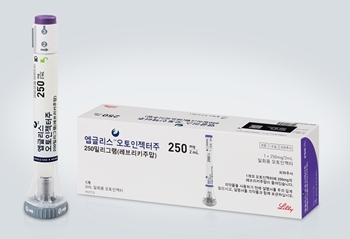
- Atopic dermatitis drug Ebglyss reimbursed from next month
- by Lee, Tak-Sun Jun 16, 2025 06:03am
- With pricing negotiations between the National Health Insurance Service and the manufacturer of the new atopic dermatitis drug ‘Ebglyss Autoinjector (Lebrikizumab, Lilly Korea)’ complete, the drug is expected to be listed for reimbursement next month in Korea. Once listed, the number of biological agents available for atopic dermatitis will increase from two—Dupixent (dupilumab) and Adtralza (tralokinumab)—to three. According to industry sources on the 13th, the NHIS recently updated its website with news of the agreement made on Ebglyss Autoinjector. In August 2024, the Ministry of Food and Drug Safety approved this drug as a treatment for the treatment of moderate-to-severe atopic dermatitis in adults and adolescents 12 years of age and older (weighing at least 40 kilograms) who are inadequately controlled by topical therapies or for whom such treatments are not recommended. In February, the drug’s reimbursement application was approved by the Drug Reimbursement Evaluation Committee of the Health Insurance Review and Assessment Service. At the time, the condition was attached that the adequacy of its reimbursement would be recognized if the company accepted the price below the initially assessed value. Lilly Korea accepted such a price and began negotiations with the National Health Insurance Service in March." It is highly likely that Ebglyss waived drug price negotiations as it accepted a price below the weighted average price of existing atopic dermatitis drugs covered by the national health insurance, and would only have negotiated the estimated claims amount with the NHIS. Ebglyss demonstrated its clinical efficacy and safety profile in a pivotal Phase III clinical trial and is expected to become a first-line treatment option for patients with atopic dermatitis in Korea. The clinical studies on which the approval was based on are the Phase III ADvocate-1, ADvocate-2 and ADhere trials. The trials evaluated the clinical efficacy and safety of Ebglyss in 1062 adults and adolescents with moderate-to-severe atopic dermatitis. In ADvocate-1 and ADvocate-2, which evaluated Ebglyss as a monotherapy, Ebglyss improved outcomes, with 58.8% and 52.1% (16.2% and 18.1%, respectively in the placebo arm) achieving Eczema Area and Severity Index (EASI) 75; and 38.3% and 30.7% (9% and 9.5%, respectively in the placebo arm) achieving EASI 90 during the induction period (weeks 0-16) compared to placebo. Also, after one year of maintenance therapy (Week 52), 81.7% of the Ebglyss arm achieved EASI 75 (vs. 66.4% in the placebo arm) and 66.4% achieved EASI 90 (vs. 41.9% in the placebo arm), demonstrating significant symptom improvement in the long term. The most commonly reported adverse events following treatment with Ebglyss were conjunctivitis (6.9%), injection site reactions (2.6%), allergic conjunctivitis (1.8%), and dry eye (1.4%), with the majority of adverse events being mild or moderate and not leading to treatment discontinuation. Recently, the government has applied reimbursement for cross-administration of biological agents and JAK inhibitors used to treat severe atopic dermatitis, and Ebglyss is expected to benefit from this as well. Patients are also expected to benefit from the increased biological agent options and lower drug prices.
- Policy
- Roche’s SMA drug Evrysdi Tab approved in Korea
- by Lee, Hye-Kyung Jun 16, 2025 06:03am
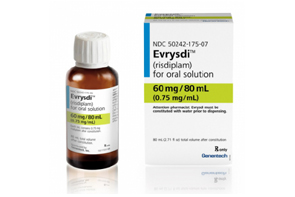
- The table formulation of Roche's blockbuster drug for spinal muscular atrophy (SMA), Evrysdi (risdiplam), has received marketing authorization in Korea. On the 13th, the Ministry of Food and Drug Safety approved Roche Korea's ‘Evrysdi 5 mg (risdiplam).’ With the approval, SMA patients in Korea may now be prescribed the 5 mg tablet formulation in addition to the existing liquid oral solution, enabling easier intake. Evrysdi is the first oral treatment for SMA and has the advantage of self-administering without location restrictions. In addition, the newly approved Evrysdi Tab is the first tablet formulation for SMA treatment. The 5mg tablets can be swallowed whole or dispersed in water and may be stored at room temperature. The existing liquid solution will continue to be available, and patients weighing 20 kg or more and aged 2 years or older are eligible to take the tablet formulation. Spinal Muscular Atrophy (SMA) is a systemic disorder caused by a deficiency of the Survival Motor Neuron (SMN) protein, which is essential for motor function. The disease affects not only neuromuscular systems but also respiratory muscles, cardiac rhythm, skeletal muscles, joints, and the autonomic nervous system. Evrysdi is a splicing modifier that binds to the immature pre-mRNA of the SMN2 gene, increasing and maintaining the levels of Survival Motor Neuron (SMN) protein throughout the patient's body. It can cross the blood-brain barrier, allowing for even distribution across the entire body, including the central nervous system. In February, the U.S. FDA approved Evrysdi based on the results of a bioequivalence study. In the trial, Evrysdi 5 mg Tab and the existing liquid formulation demonstrated equivalent absorption of the active ingredient risdiplam. Meanwhile, in Korea, Evrysdi Dry Syrup 0.75 mg/mL (risdiplam) was approved in 2020 and has been reimbursed since October 2023, three years later. Evrysdi is currently reimbursed for the treatment of 5q Spinal Muscular Atrophy in patients who received a genetic diagnosis of 5q SMN-1 deficiency or mutation that ▲ have 3 or fewer copies of SMN2 even before the onset of symptoms, and are less than 6 months old at the time of treatment initiation; or ▲ have SMA types 1-3 with clinical symptoms and signs related to SMA and are not on permanent ventilation.
- Policy
- Ruling party proposes bill for free HPV vaccination
- by Lee, Jeong-Hwan Jun 13, 2025 06:02am
- Rep Lee Su-Jin (Democratic Party of Korea) The Democratic Party of Korea has submitted a bill to the National Assembly to significantly expand the scope of Korea’s National Immunization Program for human papillomavirus (HPV) vaccines. The bill proposes to provide free HPV vaccinations to all males and females aged 12 to 26, regardless of gender or income level. This legislation is in line with President Lee Jae-myung's campaign pledge to expand the National Immunization Program (NIP) for HPV vaccines. On the 12th, Rep. Lee Su-Jin (Seongnam City) of the Democratic Party of Korea submitted a bill titled “Partial Amendment to the Infectious Disease Control and Prevention Act” as representative. The bill aims to expand HPV vaccination coverage to all men and women aged 12 to 26, regardless of income or gender, for the prevention of HPV infection. The current law stipulates that the government shall provide NIP for HPV prevention to “female adolescents aged 12 to 17” and “low-income women aged 18 to 26.” However, Rep. Lee pointed out that individuals who are not eligible for government support are equally exposed to the risk of HPV infection, yet receive no assistance at all. Depending on age, two to three doses may be required, and each dose costs over KRW 150,000, placing a financial burden on individuals who must cover the expense themselves. President Lee included the expansion of the HPV NIP support program in his campaign pledge for the 21st presidential election, and Rep. Lee has proposed a corresponding legislative bill. Rep. Lee stated, “By providing HPV vaccination to all individuals aged 12 to 26, regardless of income or gender, we can prevent HPV infection and cervical cancer. I pledge to spare no legislative support to ensure women's right to health through proactive prevention.”
