
- LOGIN
- MemberShip
- 2026-05-01 15:53:29
- Policy
- "Will consider proposal for Indication-based pricing system"
- by Lee, Jeong-Hwan Apr 25, 2025 05:58am
- Lee Joongkyu, Director of the National Health Policy at the Ministry of Health and Welfare (MOHW), at the National Assembly policy forum Regarding introducing an 'indication-based pricing system' aimed at improving patient access to medications, Lee Joongkyu, Director of the National Health Policy at the Ministry of Health and Welfare (MOHW), stated, "While it is still too early to announce when to implement the system, it is an opportune time to consider reviewing the proposal." During the 'Discussion Forum on Resolving Inequalities in Innovative New Drugs and Regulatory Reforms' at the National Assembly on April 24, Director Lee explained, "Recently, multiple indications are frequently approved for new drugs, thus presenting issues that cannot be solved in previous methods." Director Lee highlighted that the National Health Insurance's operational direction is to provide medications that citizens need in a timely manner. In other words, introducing an indication-based pricing system aimed at improving patient access to medications still requires further discussion within the Ministry of Health and Welfare (MOHW). Directior Lee said that since the Korean health insurance system operates as a sole supplier than a multiple insurance system, there will be challenges related to purchasing medications and receiving reimbursement. Despite such challenges, Director Lee agreed that solving the patient access issue by improving policy is necessary rather than simply regarding it as a financial issue. Dr Lee remarked, "We must consider whether issues related to reimbursement method of pharmaceutical have been resulted due to insufficient measures from the perspective of the system rather than a National Health Insurance expenditure issue," and added, "In my opinion, it is about time to review the indication-based pricing system." "We cannot provide an exact implemenation timeline, but the MOHW will review the measure. The MOHW is aware that if coverage under the National Health Insurance is not provided, individuals will need to purchase medications at non-reimbursed price," and Dr. Lee added, "If there are issues with the supply of quality drugs, we will certainly consider proposals."
- Policy
- MFDS to improve essential drug designation standard
- by Lee, Hye-Kyung Apr 25, 2025 05:58am
- The Ministry of Food and Drug Safety will conduct a study to improve the standards for designating essential medicines. When the national essential medicine system was first implemented in 2017, the designation focused on government stockpiles, but there have been continuous calls to expand the list to include items that require stable supply in the private medical setting. This was announced in the “Proposal Request for Research on Classification of National Essential Drugs and Measures for Stable Supply” announced by the Ministry of Food and Drug Safety on the 23rd. The MFDS designates and manages essential medicines that need a stable supply because they are necessary for medical use, such as disease control and radiation disaster prevention, Efforts have been made to ensure a stable supply of essential medicines, including improving the designation criteria, introducing a reevaluation system, providing administrative support for expedited approval, and revising laws. The study plans to review cases from other countries to develop measures to improve the current system. Following the recruitment of researchers, KRW 50 million will be invested over a period of 6 months to conduct the following: ▲survey and compare the operation and utilization of essential medicine systems in major countries; ▲analyze the current status of national essential medicine operations and explore directions for improvement; and ▲analyze the current status of utilization and explore directions for improvement to ensure the stable supply of national essential medicines. First, the study will examine the purpose of essential medicine management in other countries, classification methods (product characteristics, uses, etc.), selection criteria and procedures, and consultation processes. It will also investigate the current status of policy support and preferential measures for stable supply. In addition, the study will derive key considerations for designating national essential medicines based on the characteristics of each item and prepare proposals for improving the standards for designating national essential medicines. The study will also review the classification methods for national essential medicines by use, referencing the WHO Model List of Essential Medicines, to revise the list. The list will be revised based on a comprehensive review of the necessity of each item within the category when designating or reevaluating national essential medicines. In addition, the purpose of the national essential medicines system and the need to distinguish it from similar systems will be considered, and the scope of designation and exclusion of national essential medicines be reviewed. This study will also establish a reorganization and operational plan for the Stable Supply Council and Subcouncil to facilitate discussions on the designation and stable supply of national essential medicines. The study will identify government policy tools and collaboration requirements with relevant ministries and agencies to ensure that stable supply policies decided through the council are implemented, and will review measures to strengthen human and material infrastructure for the stable supply of essential medicines. The MFDS stated, “The supply of essential medicines continues to be an ongoing issue, and we expect the government to play a stronger role in improving the national essential medicines system and ensuring a stable supply in response to environmental changes in various fields.”
- Policy
- Psychotropic drug etomidate will be discontinued in KOR
- by Lee, Hye-Kyung Apr 24, 2025 06:01am
- The domestic supply of etomidate, a psychotropic drug scheduled to be newly designated this year, is expected to be discontinued. According to the Ministry of Food and Drug Safety's list of discontinued and shortage drugs, B. Braun Korea reported on the 21st that it would discontinue the supply of ‘Etomidate-lipuro Injection.’ B. Braun Korea explained, “The drug is scheduled to be designated as a psychotropic substance, which will result in the termination of the current sales contract with the domestic distributor by the end of this year. At this time, the possibility of renewing the contract or entering into a new contract for the drug is unclear, with the future import and supply of the drug plan also undecided.” The MFDS conducted a public consultation until the 10th regarding the “Revision of the Enforcement Decree of the Act on the Control of Narcotics” on whether to newly designate etomidate as a psychotropic drug. Etomidate has been illegally administered or misused in some medical institutions, and the MFDS announced that it will proactively designate it as a narcotic and actively manage it to ensure its safe use in Korea. B. Braun Korea explained, “The medication in question is an injection containing etomidate, and there are no other products with the same ingredient. However, medications with similar efficacy and effects, such as propofol, ketamine, and midazolam, are currently in circulation in the country.”

- Policy
- MFDS 'Review time shortened after the GIFT introduction'
- by Lee, Hye-Kyung Apr 23, 2025 06:11am
- Following the introduction of the Global Innovative products on Fast Track (GIFT) for global innovative products by the Ministry of Food and Drug Safety (MFDS) last year, the time it takes to review pharmaceuticals for severe disease has shortened significantly from the average of 115 days to 62.9 days. Furthermore, the number of approved cases for innovative new drugs increased by 3.1-fold, from 8 to 25, compared to 2022. According to the 'GIFT Monitoring and Plans' unveiled by the MFDS on April 22, the number of cases designated as GIFT increased from 6 cases in 2022 to 16 cases in 2024. The number of approved innovative new drugs also surged. (left) Number of cases designated as expedited review (right) Number of approved innovative news drugs Notably, proactively running the system has enabled short review time, which falls within 75% of the regulatory review period (within 120 days). The review period reportedly takes 62.9 days. During the regulatory review period, the time it takes to submit document supplementation is not included. An expedited review also excludes the document supplementation period. The MFDS has been operating the expedited review system since August 2020. It has introduced the GIFT for severe disease in 2022. To date, 65 cases have been designated for expedited review system, with 29 cancer drugs and 21 COVID-19 vaccines ranked by highest. In addition, the MFDS has expanded GIFT program criteria to include advanced biopharmaceuticals. For new drugs developed by innovative pharmaceutical companies, the MFDS supports early entries to the GIFT program. Notably, as the Health Insurance Review and Assessment Service (HIRA) revised the 'Specific evaluation criteria of new drugs and medicines in consideration for negotiation,' GIFT-designated new drugs are now acknowledged for 'innovativeness of new drugs' during the ICER value evaluation during the reimbursement evaluation. Furthermore, the 'Pilot Project for Integration of Product Approvals, Reimbursement Coverage Reviews, and Drug Price Negotiations,' aimed at the swift supply of severe rare diseases treatments, also considers GIFT-designated products for their program. Recordati Korea's Qarziba, the 13th GIFT-designated drug for rare cancer in children, took 89 days until marketing authorization review, and it was approved for reimbursement listing six months after approval. This year's '2nd Pilot Project for Integration of Product Approvals, Reimbursement Coverage Reviews, and Drug Price Negotiations' includes the 24th GIFT drug 'Winrevair,' the 30th GIFT drug 'Fintepla,' and the 33rd GIFT drug 'Rimqarto.' The MFDS stated, "In March, the MOHW revised the pharmaceutical evaluation criteria and newly established drug pricing evaluation for GIFT-designated new drugs developed by innovative pharmaceutical companies," and added, "Criteria for evaluating cost-effectiveness are newly established, such as providing benefits for new drugs when their clinical effectiveness is comparably improved than a substitute drug."

- Policy
- ‘Govt will resolve the supply issue of rare disease drugs’
- by Lee, Jeong-Hwan Apr 23, 2025 06:10am
- A private-public policy consultative body will be established to discuss support measures for manufacturers and sellers of rare disease drugs, medical devices, and special foods. The Korea Disease Control and Prevention Agency announced that a partial amendment to the Enforcement Decree of the Rare Disease Management Act, which provides the basis for the formation and operation of the “Consultation Body for Rare Disease Support Policies,” was approved at the Cabinet Meeting on the 22nd. The amendment was prepared to provide administrative and financial support to manufacturers and distributors to ensure a stable supply of drugs, medical devices, and special foods related to the diagnosis and treatment of rare diseases. Key provisions include the establishment and operation of a “Consultative Body for Rare Disease Support Policies” comprised of relevant central administrative agencies and related institutions to determine necessary matters such as the scope, procedures, and criteria for administrative and financial support for manufacturers and sellers of rare disease medications, medical devices, and special foods. The consultative body will be chaired by the Director-General of the Chronic Disease Control Bureau of the KDCA and consist of no more than 10 members, including officials from relevant central government agencies such as the Ministry of Economy and Finance, the Ministry of Agriculture, Food and Rural Affairs, the Ministry of Health and Welfare, and the Ministry of Food and Drug Safety, as well as other officials from relevant organizations and groups. The task force will discuss and coordinate matters such as: ▲preparing and reviewing detailed support measures for administrative and financial support; ▲sharing and utilizing information on the current status of support for rare diseases among relevant agencies; and ▲determining the scope, procedures, and other necessary matters related to administrative and financial support for the diagnosis and treatment of rare diseases. KDCA Commissioner Young-mi Jee said, “We hope that practical support for those who produce and sell medicines, medical devices, and special foods for the diagnosis and treatment of rare diseases will be strengthened. We will continue to expand cooperation with relevant ministries and private organizations to establish a management system for the entire process that includes the diagnosis, treatment, and support for patients with rare diseases.”

- Policy
- MFDS turns down Jeffty’s integrated Phase II/III trial
- by Lee, Hye-Kyung Apr 22, 2025 05:59am
- The Ministry of Food and Drug Safety has rejected the clinical trial protocol for Hyundai Bioscience's COVID-19 drug Jeffty that the company submitted last year. According to the minutes of the MFDS's Central Pharmaceutical Affairs Council meeting that was released on the 17th, the council agreed that the integrated Phase II/III clinical trial protocol submitted by Hyundai Bioscience was not valid and that a separate Phase II clinical trial was necessary. Hyundai Bioscience plans to respect the regulating authority's judgment and comprehensively review the regulatory standards, scientific evidence, and global strategy within 60 days of the appeal period and prepare a response. During the COVID-19 pandemic, Hyundai Bio conducted a Phase II dose-finding clinical trial for emergency approval of Jeffty. At the time, the company submitted a clinical trial plan for 300 patients for two dose groups of Jeffty 0 300mg and 450mg - and completed the clinical trial with the participation of 11 institutions and the consensus approval of the Data & Safety Monitoring Committee. Based on the results, Hyundai Bioscience submitted an integrated Phase II/III clinical trial protocol for the 300 mg monotherapy dose last year. In this regard, a CPAC member pointed out that “the design proposed by the applicant is Phase II/III trial, but the trials are not connected. The Phase II and III trials are separate. Even if the applicant tries to quickly approach approval with a Phase II/III design, it is not a COVID-19 emergency situation anymore, and the drug itself does not seem to have a basis for urgent use.” Most CPAC members felt that it would be appropriate to conduct a separate Phase II trial, rather than a Phase II/III trial and reapply for a Phase III trial after confirming its effect. “Phase II/III designs have the advantage of saving time and money over traditional designs, but they also have disadvantages,” said one committee member. Phase II/III trials are not used for vaccines or therapeutics, but it has been used for anticancer drugs. The MFDS explained that “Phase II/III trial is limited to cases where anticancer drugs are rare and difficult to recruit patients or require a long period of time to evaluate. The Phase II/III design used in such cases is different from the plan set for Jeffty, which is a Phase II/III design that validates the drug’s efficacy mid-trial and discontinues the trial if it is not effective.” In the case of Jeffty, it was suggested that a Phase IIa dose-finding trial should be conducted first, as the existing Phase II trial did not confirm efficacy or adequately explore the dose. “A Phase IIa trial should at least explore the dose in order to determine the feasibility of advancing to the next stage, but the current application design is not appropriate in the absence of dose exploration,” said one member. Therefore, the CPAC unanimously concluded that a Phase II trial should be conducted independently for Jeffty first, and a justification for the dose setting should be provided. “This administrative procedure is not an evaluation of the efficacy or safety of the treatment, but a request for adjustments to the clinical approach,” said Hyundai Bioscience. “We will prepare a strategy that is in line with global standards.”
- Policy
- Boryung's follow-on drug referencing 'Lenvima' to be reimb
- by Lee, Tak-Sun Apr 22, 2025 05:59am
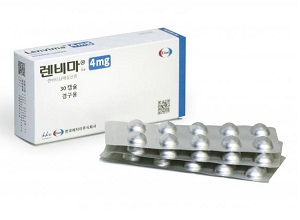
- Product photo of LenvimaThe first follow-on medicines developed by Boryung similar to Lenvima (lenvatinib mesylate) is expected to be added to the reimbursement listing in May. This drug is made by addition of the new dimethyl sulfoxide (DMSO) solvate to the original Lenvima. The drug's supporting document has been submitted and it was approved by the Ministry of Food and Drug Safety (MFDS) in February. The original Lenvima's patent has been expired, but the follow-on patents, including usage patent, are still effective. Lenvima's company is still fighting Boryung regarding this, so future responses from two companies are gaining attention. According to industry sources on April 21, Lenvanib Cap 4 mg (lenvatinib mesylate dimethyl sulfoxide) This drug references Eisai's Lenvima Cap 4 mg (lenvatinib mesylate). Lenvima Cap 4 mg is reimbursed for KRW 29,739. Lenvanib Cap 4 mg was priced at 90% of the original drug because pharmaceuticals that submit supporting documents and are developed by changing salt or as isomer are priced at 90% of the ceiling cap of the targeted product. The MFDS concluded that adding new solvate (dimethyl sulfoxide) can be categorized into new salt, so it approved Lenvanib Cap 4 mg as a pharmaceutical with an active ingredient containing new salt. At the time of obtaining MFDS approval in February, Boryung was approved for Lenvanib Cap 4 mg, Lenvanib Cap 10 mg, and Lenvanib Cap 12 mg. Among these, 12 mg is not available for the original drug. However, only the 4 mg product will likely be added to the reimbursement list in May. The rest of the products will be considered for the reimbursement process later. Lenvanib Cap 4 mg's addition to the reimbursement list was possible because the original product's substance patent expired on the 4th of last month. Boryung continues to challenge other follow-on patents, including usage patent, through patent trials. The final patent dispute outcome is expected to impact Lenvanib sales. The approval indication for Lenvanib Cap 4mg is the same as that of the original Lenvima Cap 4 mg. Both drugs are approved for multiple indications, including 1. the treatment of radioiodine‑refractory, locally recurrent or metastatic progressive differentiated thyroid cancer; 2. first‑line therapy for unresectable hepatocellular carcinoma; 3. in combination with pembrolizumab in patients with advanced endometrial cancer, without the conditions of MSI-H (microsatellite instability-high) or dMMR (mismatch repair deficient) mismatch repair–proficient, who have progressed on prior systemic therapy and are ineligible for surgery or radiotherapy; 4. first‑line treatment of advanced renal cell carcinoma. A legal dispute between the companies is anticipated because number 3 and 4 indications are related to usage patents. Lenvatinib mesylate is a tyrosine kinase inhibitor that blocks vascular endothelial growth factor (VEGF) and fibroblast growth factor (FGF) receptors to suppress angiogenesis and tumor proliferation. It is currently reimbursed for the treatment of hepatocellular carcinoma and differentiated thyroid cancer. The original Lenvima's sales in 2023 amount to KRW 10.3 billion, based on IQVIA.

- Policy
- Comb cancer therapy issue has been resolved
- by Whang, byung-woo Apr 21, 2025 05:53am
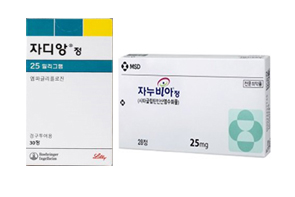
- Changes will be brought to the health system as a patient's existing co-payment amount will remain the same for ongoing chemotherapy when a reimbursed cancer drug combined with a newly developed, non-reimbursed new drug. Previously, insurance coverage for combination therapy comprising two drugs was unavailable, placing a financial burden on patients. The recent changes to this policy are viewed positively. However, as more combination therapies with new drug-new drug combinations are being approved, there are discussions about the need to establish procedures. The Ministry of Health and Welfare (MOHW) has recently issued an administrative notice proposing partial revision to the 'Detailed Criteria and Methods for Applying Reimbursement (Drugs),' which included details on combination cancer therapy. Previously, if a non‑reimbursed drug was added to a regimen already covered by reimbursement, even the previously reimbursed drugs would lose their coverage, increasing patients' out‑of‑pocket costs. After the announcement, patient organizations and academics have proposed suggestions. In response, the Health Insurance Review and Assessment Service (HIRA) convened a Cancer Drug Review Committee (CDRC) meeting in October 2024 to establish a review policy for determining the reimbursement status of major combination therapies. Under the revisions, adding a non‑reimbursed anticancer drug to an existing reimbursed regimen will not affect the co-payment rate for the reimbursed drugs. In detail, a new clause states, 'When combining a reimbursed chemotherapy regimen with another anticancer drug, the existing co-payment for the previously initiated chemotherapy shall continue to apply to that regimen.' A pharmaceutical industry employee remarked, "The combination anticancer therapy included in this notice are first-line treatments that account for a relatively small share of the National Health Insurance expenditure, so there have been calls for improvement," and added, "We were expecting changes after the April 30 CDRC meeting, but it's good news to see the draft notification issued so quickly. From a pharmaceutical company perspective, this change is truly significant." The partial revision notice announced by the MOHW exemplifies the case of AstraZeneca’s immuno‑oncology drug Imfinzi (durvalumab), which was under discussion for biliary tract cancer reimbursement last year. At that time, the CDRC maintained Imfinzi as non‑reimbursed for first‑line treatment of biliary tract cancer while recognizing reimbursement only for the other combination therapy drugs, gemcitabine and cisplatin chemotherapy (GemCis). New drug+new drug combination therapy gains attention, demands for improving the reimbursement process↑ As issues for combination therapy comprising an existing first‑line chemotherapy agent with a new drug are likely to be resolved, interest is growing in whether a reimbursement process for "new drug + new drug" combinations can be established. In fact, with more multinational companies having applied for reimbursement of combination therapies that include innovative anticancer agents, requests for a formalized process have continued. According to discussions at the March 'Policy forum on improving cancer patient access to combination therapies,' 54 anticancer combination therapies have been approved in South Korea over the past five years. Of these, 28 cases add a new drug to an existing therapy, and 26 are combinations of two new drugs. In other words, roughly half of the recently approved combination therapies involve two novel agents. There are suggestions for institutional policies to ensure that reimbursement can be reviewed quickly and rationally when a combination therapy includes drugs from different companies. The Korea Research-based Pharmaceutical Industry Association (KRPIA) has formed a working group to devise solutions. (From left) Product photos of MSD Korea The government acknowledges the need to improve the system…limitations exist to mandating private companies A closer look reveals the challenges. When two new drugs from different companies are used for combination therapy, each company's circumstances, such as volume‑based pricing or price-volume agreement, make simultaneous reimbursement applications difficult. Currently, there is no basis for the two companies to coordinate their reimbursement status. If only one company applies, proving cost‑effectiveness can be problematic, and the therapy may remain split between reimbursed and non‑reimbursed drugs, contrary to the system's intent to reduce patient burden. While the government acknowledges the need for reforms, it also recognizes that it cannot mandate private pharmaceutical companies to comply. At the forum, Hee‑Yeon Park of the MOHW explained, "When combining new drugs+new drugs, we need additional measures. We are reviewing various approaches for reimbursement mediation, but there are aspects we cannot mandate due to each company's circumstances." Several ideas have been proposed similar to official notifications regarding generic drug pricing application cases. According to pharmaceutical industry sources, generics that enter the market after a delay instead of immediately after the patent expiry file for drug pricing review, HIRA will notify the original manufacturer, allowing the company to decide its response strategy. There is also a proposal to have HIRA notify other manufacturers when one company applies for an anticancer combination therapy reimbursement. Because companies do not publicly disclose their reimbursement applications, having HIRA coordinate and guide the review could aid in setting the directions. Additionally, experts have suggested applying a more flexible ICER threshold for combination therapies, recognizing that such regimens typically involve longer treatment durations than monotherapies. Therefore, proven innovative combinations should warrant a relaxed ICER criterion. A KRPIA official commented, "Several companies have agreed on the need to establish a clear process for combination therapy. We are gathering exemplary cases from abroad and will propose recommendations once we agree on the necessary steps."
- Policy
- CKD approved for Januvia+Jardiance+metformin combo
- by Lee, Hye-Kyung Apr 18, 2025 05:59am
- Chong Kun Dang, which launched a combination drug that combines the DPP-4 inhibitor 'Januvia (sitagliptin)' and the SGLT-2 inhibitor 'Jardiance (empagliflozin),' has received approval for a triple combination drug that adds metformin to the same combination just one week later. On the 16th, the Ministry of Food and Drug Safety approved three dosage forms of Emsiformin XR (empagliflozin, sitagliptin, metformin): 5/50/750 mg, 12.5/50/750 mg, and 25/100/1000 mg. Earlier, on the 7th, the first combination of Januvia and Jardiance in Korea, Empamax S Tab (empagliflozin, sitagliptin), in two dosages forms—10/100 mg and 25/100 mg—was approved. Previously, the industry was focused on developing two-drug combination products combining sitagliptin with the SGLT-2 inhibitor ‘Forxiga (dapagliflozin),’ with 116 products currently listed in the approved product list. However, with the expiration of the empagliflozin substance patent approaching on October 23, domestic companies are developing various two- and three-ingredient combination drugs using sitagliptin and empagliflozin. In addition to empagliflozin monotherapy, “Jardiance Duo” (empagliflozin+metformin) and “Esgliteo” (empagliflozin+linagliptin) are also subject to much interest by domestic companies. In particular, in the case of Jardiance Duo, Korean companies have been featuring a sustained-release formulation not available in the original product, leading to the emergence of various new diabetes treatments that offer new combinations and formulations. In the case of Chong Kun Dang, after securing all rights including domestic distribution and manufacturing rights for Januvia from MSD in 2023, the company has developed and obtained approval for a three-drug combination that adds metformin to the sitagliptin+empagliflozin combination. For empagliflozin, Chong Kun Dang successfully avoided patent infringement by modifying the salt crystalline form of empagliflozin to L-proline, an amino acid, creating “empagliflozin L-proline.” The newly approved three-drug diabetes combination, Emsiformin XR Tab, stands out for being approved as a sustained-release formulation, allowing once-daily administration instead of the twice-daily regimen required by the immediate-release formulations. Meanwhile, according to the MFDS's list of notified drugs, more than 12 items are currently in the application process for approval as a triple combination drug (sitagliptin+empagliflozin+metformin) in addition to Chong Kun Dang.

- Policy
- Original-generic collusion prevention law introduced
- by Lee, Jeong-Hwan Apr 18, 2025 05:59am
- A bill has been proposed in the National Assembly to prevent collusion between original drug manufacturers and generic drug manufacturers from maintaining the domestic sales status of original drugs through illegal means. On the 17th, Representative Young-Seok Seo (Gyeonggi Province, Bucheon City, National Assembly Health and Welfare Committee) proposed a partial amendment to the National Health Insurance Act to reduce the price ceiling set for medical expenses reimbursed for drugs related to collusion and unfair trade practices. The current law stipulates that when a generic drug with the same ingredients is released, the price of the original drug that was first registered must be reduced. As more generic drugs are released, the price of the original drug will fall further, which will reduce corporate sales but improve the financial health of the health insurance system and consumer welfare. However, if the original drug manufacturer and generic drug manufacturers engage in unfair collusion or unfair trade practices to refrain from manufacturing or supplying generic drugs, the original drug can retain its status. While the companies may continue to maintain sales based on the existing drug price, the health insurance budget deteriorates, and consumers lose the opportunity to benefit from lower drug prices. In particular, even if unfair collusion activities or unfair trade practices that disrupt market order are detected and subject to government sanctions, the original drug's status is not revoked, allowing the continued acquisition of unfair sales and profits, which has also been pointed out as an issue. Rep. Young-Seok Seo has introduced a bill to address these issues by allowing the reduction or suspension of the drug price reimbursement granted for drugs related to unfair collusion actions or unfair trade practices. The bill also includes provisions to prevent pharmaceutical companies not involved in problematic actions from suffering losses due to reductions in the original drug's insurance price ceiling when launching generic drugs. Rep Seo emphasized, “The revised bill aims to prevent companies that violate market order in the pharmaceutical market, which is critical to public health and safety, from reaping unfair profits through distorted market structures. We hope that the revised bill will reduce the practice of pharmaceutical companies disrupting market order, thereby worsening the health insurance budget and increasing the consumers’ burden of medication costs.”
