
- LOGIN
- MemberShip
- 2026-05-01 23:44:47
- Policy
- 734 SGLT2is add precautions for ketoacidosis
- by Lee, Hye-Kyung Mar 10, 2025 05:50am
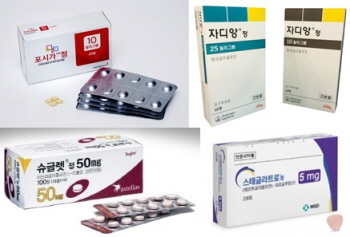
- SGLT-2 inhibitors approved in Korea Precautions for antidiabetic SGLT2 inhibitors will be strengthened in the near future. 734 ertugliflozin, empagliflozin, and dapagliflozin drugs that have been approved in Korea are expected to be subject to the changed regulations. The Ministry of Food and Drug Safety will prepare an ‘Order for labeling changes (draft)’ based on the safety information of SGLT2 inhibitors by the 20th of this month and conduct an opinion inquiry thereafter. This draft order for changes was made based on the 'Results of the review of safety information on SGLT2 inhibitor-related drugs' by Health Canada (HC) and the US Food and Drug Administration (FDA). Representative products include AstraZeneca Korea's ‘Sidapvia Tab (dapagliflozin, sitagliptin)', HK Inno. N’s ‘DapaN Tab (dapagliflozin propanediol hydrate)', Boehringer Ingelheim Korea’s ‘Jardiance Tab (empagliflozin)', and MSD Korea’s ' Steglatro Tab (ertugliflozin L-pyroglutamic acid).’ The labeling changes for the SGLT2 inhibitor class will be made in the 'General Precautions' section. In all products that have been announced, the 'ketogenic diet' will be added as a factor that is likely to cause ketoacidosis. In addition, pancreatic disorders that cause insulin deficiency will include not only type 1 but also type 2 diabetes. Previously, risk factors for ketoacidosis included reduced insulin doses, acute febrile illness, calorie intake restriction due to illness or surgery, and alcohol abuse. The precautions for combination drugs such as dapagliflozin-sitagliptin, dapagliflozin-metformin, dapagliflozin-metformin-sitagliptin, dapagliflozin-glimepiride, dapagliflozin-pioglitazone, dapagliflozin-linagliptin, dapagliflozin-saxagliptin, dapagliflozin-evogliptin, dapagliflozin-evogliptin-metformin, and dapagliflozin-gemigliptin will become slightly stricter. The changes include the addition of a precaution about ketoacidosis: “Diabetes and ketoacidosis may persist longer than the expected duration and urine glucose excretion may persist for 3 days after discontinuation of administration. However, there have been post-marketing reports of diabetes and ketoacidosis persisting beyond 6 days and up to 2 weeks after discontinuation of SGLT2 inhibitor administration.” The Ministry of Food and Drug Safety has asked associations to notify their members of the changes so that review opinions can be submitted.
- Policy
- Handok expands its Tenelia combo lineup
- by Lee, Hye-Kyung Mar 07, 2025 05:56am
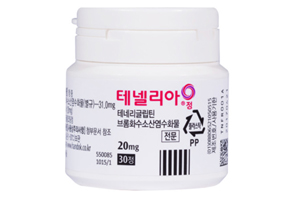
- Handok is speeding up the development of a combination drug that combines DPP-4 inhibitor diabetes treatment Tenelia (teneligliptin hydrobromide hydrate)' with SGLT-2 inhibitor 'Jadiance (Empagliflozin). On the 4th, the Ministry of Food and Drug Safety approved an open-label, randomized, empty stomach, single orally administered, two-arm, crossover, Phase I clinical trial to compare and evaluate the safety and pharmacokinetic characteristics of HD-P023 and Tenelia 20 mg and Jardiance 25 mg combination in healthy adults. In 2020, Handok conducted a clinical trial on a triple combination therapy of metformin and empagliflozin and Tenelia, and since last year, it has expanded its development scope to investigate a two-drug combination drug that contains Tenelia and empagliflozin. This is the third time that HD-P023 was approved for a Phase I trial, following approvals in January and June last year. Handok is working on the development of a combination drug for Tenelia, using different doses in each clinical trial. Handok is believed to be making such efforts due to the fact that a large number of generics have been approved upon Tenelia’s patent expiry in October 2022. Domestic companies successfully avoided patent infringement through salt modifications before the expiration of Tenelia’s patent, and forewarned of their entry into the generic market. Currently, 44 items have been approved as generic versions of Tenelia. The patent for the combination drug ‘Tenelia M,' which is a combination of Tenelia and metformin, expired at the same time as that of Tenelia, and the number of approved generic drugs for Tenelia M exceeds 74. As market competition became inevitable with the approval of generics for both the single drug Tenelia and the combination drug Tenelia M, it appears that the company has embarked on the development of a combination drug that can be used with reimbursement with SGLT-2 inhibitors. In particular, since the reimbursement standards for SGLT-2 inhibitor class drugs improved in April 2023, allowing reimbursement of triple-drug therapies such as 'metformin + SGLT-2 + DPP-4' and 'metformin + SGLT-2 + TZD,’ there has been a continuous push for the reimbursement of for two-drug combination therapies as well. According to data Rep Mi-hwa Seo, a member of the Democratic Party of Korea, received from the Ministry of Health and Welfare in January this year, the Ministry of Health and Welfare said it would prepare a plan to improve the reimbursement standards for the two-drug therapy that combine SGLT-2 inhibitor diabetes drugs and DPP-4 inhibitor diabetes drugs. The Ministry of Health and Welfare has finished the Ministry of Food and Drug Safety’s inquiry regarding the request from the Korean Diabetes Association, collected expert opinions from related societies and others, and has stated that it is in discussions with the KDA to prepare additional supplementary data to improve the reimbursement standard. The Ministry of Health and Welfare =, “We will also review whether it is possible to reimburse the combination of SGLT-2 inhibitors and diabetes drugs as one of the two-drug therapies, taking into account the Ministry of Food and Drug Safety’s approval status and the opinions of experts. However, as reimbursement expansion of the diabetes drugs has a significant impact on the finances of the National Health Insurance, it will have to be implemented step by step after ample discussion.” Meanwhile, according to the pharmaceutical market research institution UBIST, the amount of outpatient prescriptions for Tenelia last year was KRW 24.46541 billion and KRW 27.21524 billion for Tenelia M.

- Policy
- CKD and Daewoong Bio enter donepezil-memantine combo market
- by Lee, Tak-Sun Mar 06, 2025 05:55am
- Chong Kun Dang Pharmaceutical and Daewoong Bio will enter the donepezil-memantine combination drug market that was launched this month. Although Chong Kun Dang and Daewoong Bio’s products were not included in the initial list of approved products, the companies will join the market in the form of a license transfer and co-promotion agreement. As both companies own the No. 1 and No. 2 products choline alfoscerate products in Korea -Chong Kun Dang Gliatirin and Gliatamin – which are brain function enhancers, their entry into the donepezil-memantine combination market is expected to increase the scale of product performance more than expected. According to industry sources on the 5th, Chong Kun Dang received permission from Korea Arlico Pharm to transfer the license for its donepezil-memantine combination drug and registered it with the Ministry of Food and Drug Safety in January. Chong Kun Dang Neuropezil M 10/20mg is the main product. The transfer of the license delayed the reimbursement listing process for the drug, which resulted in a later launch date than other pharmaceutical companies. This month, 7 donepezil-memantine combination drugs - Hyundai Pharm’s DM Duo Tab, Yungjin Pharm’s Demenduo Tab, Bukwang Pharm’s Ariplus Tab, Ildong Pharm’s Memansept Tab, Whanin Pharm’s Domentia Tab, Hutecs Korea Pharmaceutical’s Altsucomp Tab, Korean Drug’s Neurocept Duo Tab – were released to the market. Chong Kun Dang plans to release its product in April. Daewoong Bio will start selling Demenduo through a copromotion agreement with Yungjin Pharm starting this month. The donepezil-memantine combination was initially approved in the United States in 2014 and was then approved in Spain, Greece, and Croatia since, but this is the first time the combination was approved in Korea. The domestic patent holder is Hyundai Pharm, which has demonstrated equivalence and toxicity safety through comparative tests of donepezil and memantine administered alone and in combination. In Korea, it is used as an alternative to donepezil and memantine combination therapy for the treatment of moderate-to-severe Alzheimer's disease. The entry of Chong Kun Dang and Daewoong Bio in this dementia combination drug market is expected to heat sales promotion activities. The two companies have an established nationwide distribution network for geriatric drugs through their choline alfoscerate-based drugs. Last year, according to UBIST, Chong Kun Dang’s Gliatirin recorded KRW 121.3 billion in outpatient prescription sales, while Daewoong Bio’s Gliatamin recorded KRW 159.7 billion, continuing their popularity. However, choline alfoscerate’s reimbursement standard was reduced through a re-evaluation, and the Ministry of Food and Drug Safety is also conducting a clinical re-evaluation on its efficacy, so both companies had to look for products that can replace choline alfoscerate. Although the use of this dementia combination drug and the brain function enhancer choline alfoscerate are different, they are mostly used by the elderly, so it is analyzed that if the companies utilize their established distributor base, this may increase the companies’ short-term performance. Donepezil and memantine are the most widely used ingredients in the dementia drug market. Donepezil's original drug Aricept recorded KRW 95.8 billion in outpatient prescriptions last year, while memantine's original drug Ebixa recorded KRW 19 billion, with the combined prescription value of the two drugs exceeding KRW 100 billion. However, some analysts say that their expected market size is limited because the prescription rate of the combination of the two ingredients is smaller than that of each single ingredient. Interest is gathering as to whether the new dementia combination drug market, which has been joined by Chong Kun Dang and Daewoong Bio, which are strong players in the geriatric drug market, will see success in Korea.
- Policy
- Bill for vaccinating 'shingles for elderly·HPV for males'
- by Lee, Jeong-Hwan Mar 05, 2025 06:00am
- The Democratic Party of Korea Rep. issues a bill The Democratic Party of Korea is pursuing changes to the law to expand the free-of-charge vaccination program, requiring the government to cover the costs of shingles vaccines for adults 65 and above and human papillomavirus (HPV) vaccination for males below 17 years. Given that the Yoon Suk Yeol government's pledges during the candidacy to expand the National Immunization Program (NIP) to include shingles and HPV vaccines fell through, the National Assembly aims to implement this with the legislation to protect national health. On March 4, the Democratic Party of Korea Rep. Park Heeseong announced the bill to make partial revision to the 'Infectious Disease Control and Prevention Act.' Rep. Park Heeseong pointed out that the government made a candidacy pledge to provide shingles vaccinations for adults aged 65 and above and HPV vaccines for boys aged 12 and above. However, it was not included in the government budget, suggesting that the pledge has fallen through. Rep. Park Heeseong said that shingles vaccinations have high preventative effects, but since they are still non-reimbursed, this poses a substantial financial burden for individuals facing cost differences. Rep. Park Heeseong highlighted that HIP infection is part of the NIP, but the law limits the range of free-of-cost vaccination to females aged 12 or between 12 and 26. Rep. Park Heeseong believes that the government is not implementing vaccination despite proven evidence, including cost-effectiveness and disease burden, for introducing single vaccinations for older people free-of-cost and HPV vaccinations for males at no cost. Therefore, Rep. Park Heeseong drafted a bill to add shingles vaccination to the NIP and expand the HPV vaccination NIP to include males. The bill newly added·established Clause 18 to Article 24 of the NIP to include 'shingles.' The bill amended the current law to include a new 'Article 24-2 on human papillomavirus (HPV) infection vaccination.' The bill's amendment details that the mayor of a special self-governing city, governor of a special self-governing province, or the mayor·governor·head of Gu is now required to administer HPV vaccinations through local public health centers for females aged 26 or younger and males aged 17 or younger, as a measure to prevent HPV infection. Additionally, the bill's amendment to Article 64 (expenses paid by special self-governing provincess, cities, Gun, and Gu) now includes HPV vaccination. This change establishes the basis for local governments to cover vaccination costs, ensuring that patients can receive the vaccine free of charge.
- Policy
- MFDS designates etomidate a psychoactive drug
- by Lee, Hye-Kyung Mar 04, 2025 05:57am
- The Ministry of Food and Drug Safety (Minister Yu-Kyoung Oh) announced on February 28 that it will preannounce an amendment to the Enforcement Decree of the Narcotics Control Act that will designate 7 substances, including hexahydrocannabinol, which is scheduled to be designated as a controlled substance by the United Nations, as narcotics or psychotropic substances. The amendment is open for opinion collection until April 10. Five substances (4 narcotics and 1 psychotropic drug) that will be newly designated as narcotics this time are those designated as narcotics or psychotropic drugs at the 68th United Nations Commission on Narcotic Drugs (CND) and two psychotropic drugs including etomidate that have been designated as narcotics by the Narcotics Safety and Risk Management Deliberative Committee. Substances newly designated as narcotics by the United Nations Commission on Narcotic Drugs are new narcotics synthesized by changing the structure of existing narcotics. The Ministry of Food and Drug Safety is quickly identifying international narcotics trends and has already designated and managed some drugs as temporary narcotics. The proposed revision also includes etomidate, a general anesthetic induction agent. Since there were cases of illegal administration or abuse of etomidate in some medical institutions, it will be designated as a narcotic drug in advance and actively managed for their safe use in Korea. The Ministry of Food and Drug Safety said, “We expect that this designation of narcotics will be in harmony with international drug regulations and will actively respond to the problem of domestic drug abuse. We will continue to do our best to safely manage narcotics for the health and safety of the people.”

- Policy
- NA starts Special Act to support the pharma and bio industry
- by Lee, Jeong-Hwan Feb 27, 2025 05:56am
- The National Assembly is pushing for the enactment of a special law to bring together the capabilities at the national level to promote and foster the biopharmaceutical industry. The policy agenda includes the establishment of a basic plan every 5 years, the establishment of a Pharmaceutical Biohealth Innovation Committee, and the provision of policy support such as research and development facilities, tax incentives for bio special zones, and practical support such as substantial budget support and tax cuts. On the 24th, Rep. Il-Young Jung, a member of the National Assembly's Strategy and Finance Committee, and the Democratic Party of Korea, proposed the ‘Special Act on the Promotion of the Pharmaceutical Biohealth Industry and Strengthening of Competence (Bio Special Act).’ As the bio industry is a core industry with strategic value in health, medicine, society, economy, and security, the need for support for biotechnology development and the industry as a whole has been raised. In particular, after the COVID-19 pandemic has passed, the bio industry has established itself as a national strategic industry that has a significant impact not only on the health of the people but also on the national economy and security, and there has been a growing demand to foster the industry at the national level. In response, Rep Il-Young Jung proposed the Bio Special Act to enable the government to provide comprehensive support and foster the bio industry in a timely manner, and establish a legal basis for supporting the bio industry. The bill includes ▲the establishment and implementation of a five-year basic plan, ▲the establishment and operation of the Pharmaceutical Bio-Health Innovation Committee, ▲budget support for R&D and infrastructure construction, ▲designation of bio-special zones, and the ▲provision of special exemptions such as tax support for special zones and exemption from preliminary feasibility studies and regulatory improvements. In addition, the plan includes ▲tax and financial support for foreign-invested companies and companies returning to Korea, ▲the creation of a bio-industry fund, and ▲support for the training of professionals and vocational training. Among these, the tax support is intended to reduce taxes on pharmaceutical and bio-health companies in accordance with the relevant tax laws, such as the Act On Restriction On Special Cases Concerning Taxation and Act On Restriction On Special Cases Concerning Local Taxation, to promote investment in the pharmaceutical and bio-health industry and revitalize special zones. “The current Korean economy is facing a difficult situation with a growth rate of just over 1%, and this economic difficulty is largely due to structural problems in the Korean industrial structure, rather than a temporary phenomenon,” said Rep. Il-Young Jung. He also pointed out that ”The trade environment is deteriorating further due to domestic political instability and the tariff war that began under the Trump administration in the United States, which will significantly hurt the semiconductor and automobile industries, which have driven the Korean economy.” “The need for new growth industries has been continuously raised to overcome the difficulties of the Korean economy, and the bio industry is the most in the spotlight,” said Jung, ”It is necessary to intensively foster the bio industry and quickly develop it into a major industry that will lead the Korean economy.” “The global bio industry market will grow to about USD 3.3 trillion by 2027. We will establish a legal and institutional foundation for the promotion of the bio industry through the Bio Special Act so that the Korean bio industry can become globally competitive and serve as a new economic engine for Korea, to succeed the semiconductors and automobile industry.”
- Policy
- Priority mkt authorization for Trajenta generics ends
- by Lee, Tak-Sun Feb 25, 2025 05:57am
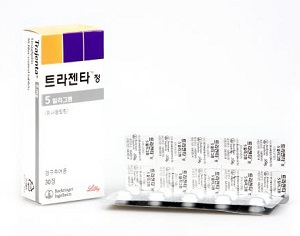
- Product photo of TrajentaAs the priority marketing authorization for the generic version of Trajenta (linagliptin), a DPP-4 inhibitor used to treat diabetes, launched last year will end on March 8, generics that have been waiting for 10 months will be launched. The list of generics to be launched includes Hanmi Pharmaceutical and Genuone Sciences. According to the industry sources on February 23, 12 generics containing linagliptin such as Hanmi Pharmaceutical's 'Linaglo Tab' will be added to the reimbursement list, starting March 9. The market for a generic version of Trajenta became available after the patent of the original drug expired in June 2024. At that time, 16 monotherapy products were launched into the market. Only a portion of the 60 approved items have been launched because of the priority marketing authorization. Sixteen pharmaceutical companies have avoided two Trajenta patents, and they challenged the market when the composition patent expired on June 8, 2024, following the substance patent expiration. These companies also obtained priority marketing authorization, a policy established in February 2019 granting items meeting the first approval·patent avoidance criteria. The priority sales were approved for 10 months, between June 9, 2024, and March 8, 2025. During this period, generics with the same ingredient cannot be launched. Pharmaceutical companies with priority marketing authorization include Dongkoo Bio, Daewon Pharmaceutical, Jeil, Huons, Shinil Pharma, KyungDong Pharm, Kukje Pharm, Hana Pharm, Ildong Pharmaceutical, Dong Wha Pharm, Hanlim Pharmaceutical, Boryung, Aju Pharm, Albogen Korea, Hutecs Korea Pharmaceutical, and Arlico. These companies took the market for the first 10 months and gained a favorable spot. As priority marketing authorization ends on March 8, these companies will face new competitors. Changes to the competition landscape are expected since the late-launching group includes big pharmaceutical companies with established sales, such as Hanmi Pharmaceutical. Among the later-launch products, Hanmi Pharmaceutical's 'Linaglo Tab' is priced the same as the highest price (KRW 510) of the previous generics for meeting all criteria requirements and receiving credit (68%) for innovative-type pharmaceutical companies. Genuone Sciences' 'Tra-K Tab' and Aprogen Biologics 'Linahana Tab' will be reimbursed at KRW 447 for meeting all criteria requirements and receiving credits for first generics (the number of drugs with the same ingredient below 19, 59.5%). Products from Jinyang Pharm, Nexpharm Korea, DaehanNupharm, PharmGen Science, Genupharma, Withus Pharmaceutical, and Unimed Pharm meeting only one of the criteria requirements will be listed for reimbursement at KRW 341. Il Wha's 'Trina Tab 5mg' will be listed at KRW 402, which has been priced lower than the estimated price. However, credited prices for newly reimbursed drugs will end in June, at the same time as the products launched last year, because they were added to the reimbursement list late. After three months, the ceiling prices for all items will be adjusted to 53.55% of the highest price. Meanwhile, according to the market research firm UBIST, generics with linagliptin recorded KRW 4.7 billion in prescription sales between the launching date of June 2024 and December. The market share is about 4%. As they are in the early phases of the market launch, robust growth has not been achieved. It will likely present an opportunity for generic companies to launch late. An employee of the pharmaceutical industry said, "The group with priority marketing authorization launched 10 months earlier, but it has been reported that they did not achieve noticeable growth due to the original drug." Adding, "This will present an opportunity for the second group to launch." The sales for the original drugs Trajenta·Trajenta Duo decreased by 16%, from KRW 123.5 billion to KRW 103.9 billion. Despite a 30% reduction in mandatory drug pricing, they defended well.

- Policy
- Only Rinvoq to undergo drug pricing reduction
- by Lee, Tak-Sun Feb 25, 2025 05:57am
- Rinvoq ER Tab has been subjected to the preliminary drug pricing reduction after approval of drug switching between biological agents and JAK inhibitors for severe atopic dermatitis. The ceiling price will remain unchanged for Dupixent, Adtralza, Cibinqo, and Olumiant. As the reimbursement of drug switching between biological agents and JAK inhibitors for the treatment of severe atopic dermatitis will be implemented next month, additional claim amounts are reported to be insignificant. Rinvoq ER Tab (AbbVie, upadacitinib) is the only product to see drug pricing reduction due to the expected additional claim amount following approval of drug switching. According to the industry sources on February 21, the ceiling price of Rinvoq ER Tab 15 mg will reduced from KRW 18,740 to KRW 18,328, and that of Rinvoq ER Tab 30 mg will be reduced from KRW 29,850 to KRW 29,193 due to expanded scope of use. The reduction rate is 2.2%. The rate has been calculated according to the preliminary drug pricing index table. The preliminary drug pricing reduction following expanded scope of use is a system where drug pricing reduction is determined based on a calculation during the Health Insurance Review and Assessment Service (HIRA)'s evaluation process for pharmaceuticals with the expected additional claim amount below KRW 10 million following expanded scope of use. When the calculation is applied, companies do not undergo negotiations with the health insurance authority. The preliminary drug pricing reduction has been applied because the expected claim amount is below KRW 10 billion following approval of drug switching between biological agents and JAK inhibitors for severe atopic dermatitis. Only Rinvoq ER Tab has been subjected to the reduction. Pharmaceuticals with expanded reimbursement following drug switching approval include biological agents such as Dupixent and Adtralza and JAK inhibitors like Cibinqo, Olumiant, and Rinvoq ER Tab. However, besides Rinvoq, the other agents have not been subjected to drug price reduction because their additional claim amounts are below KRW 1.5 billion following expanded reimbursement. It is reported that Dupixent, which holds 80% of the severe atopic dermatitis treatment market in South Korea, is priced higher than other agents. Patients who used Dupixent and then switched to JAK inhibitors will likely benefit from the drug-switching approval. According to the study published in the Journal of the American Academy of Dermatology (JAAD) in 2023, the patient group switching from Dupixent 30 mg to Rinvoq 30 mg experienced an improvement in dermatological symptoms and itching regardless of previous responses to Dupixent. Furthermore, Rinvoq is the first JAK inhibitor used in atopic dermatitis and is cheap. Rinvoq costs about KRW 600,000 per month, which is less than half of the monthly drug cost of Dupixent. Consequently, patients will likely choose less expensive pharmaceutical after drug-switching approval. Considering the National Health Insurance finance, the additional claim amount burden will not be significant. The drug pricing reduction rate for Rinvoq is 2.2%, and the expected additional claim amount falls between over KRW 2.5 billion and below KRW 5 billion. Rinvoq's additional claim amount is likely below KRW 5 billion. An employee of the industry said, "Approval of drug switching between biological agents and JAK inhibitors is essentially patient moving from expensive Dupixent to cheap Rinvoq, so the loss of finance is expected to be none." Adding, "Yet, if the authority had allowed drug-switching to include pharmaceuticals of the same class, expansion of reimbursement would not have been easy due to financial burden."
- Policy
- Generic drugs enter KRW 150 billion Prolia market
- by Lee, Tak-Sun Feb 25, 2025 05:57am
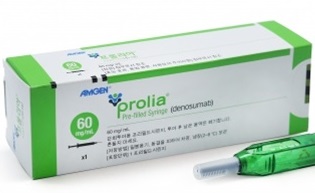
- A competitor to Prolia (Amgen, co-marketed by Chong Kun Dang), which has dominated the market for osteoporosis treatment with its convenience and efficacy, will be released next month. Celltrion will make the launch. Celltrion plans to launch its biosimilar after the expiration of the Prolia product patent on the 17th of next month. According to industry sources on the 24th, Celltrion's Prolia biosimilar ‘Stoboclo Prefilled Syringe (denosumab)' will be listed as a reimbursed drug on March 18. The insurance ceiling price of the drug is KRW 111,384, which is cheaper than Prolia (KRW 154,700). Celltrion could have charged a higher price, but it lowered the price. This is interpreted as a measure that takes into account the drug’s price competitiveness in the market. As a result, patients can now receive the same drug at a lower price. Initially, Celltrion could have listed the drug at KRW 123,760 by receiving an additional 80% premium as a bio-equivalent drug by an innovative pharmaceutical company. Prolia, which was launched in Korea in November 2016, dominates the domestic osteoporosis treatment market. Conventional treatments are affected by meal intake, and if the dose is increased, Prolia maintains its effectiveness with a single injection every 6 months, greatly improving convenience. This drug is a biopharmaceutical that targets the RANKL protein, which forms osteoclasts that destroy bones. In particular, there is clinical evidence that the drug remains effective even after 10 years of administration. Its sales in 2023, based on IQVIA sales, had been a whopping KRW 151.1 billion. It has been dominating the market without any competitors, but with the entry of Celltrion's biosimilar, it will face competition. Meanwhile, Celltrion will also launch the biosimilar Xgeva, a treatment for multiple myeloma based on denosumab, on the same day. The 2 drugs have the same ingredients but different uses. Since the ingredients are the same, the expiration date of the product patent is also the same. Xgeva recorded sales of KRW 10.5 billion in 2023 based on IQVIA's data.
- Policy
- PMS of Rekovelle shows ovarian hyperstimulation
- by Lee, Hye-Kyung Feb 21, 2025 05:56am
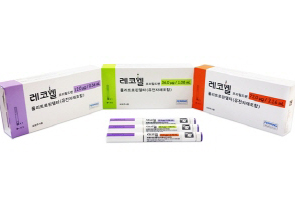
- The reevaluation of Ferring Korea’s fertility drug ‘Rekovelle Prefilled Pen (follitropin delta)’ revealed that 0.65% of patients experienced ovarian hyperstimulation syndrome, which is expected to be added as an adverse event. The Ministry of Food and Drug Safety announced on the 20th the proposed changes to the licensed conditions following the re-examination of new drugs. A post-marketing surveillance was conducted on 611 patients over 4 years for the re-examination of Rekovelle in Korea. As a result, the incidence of adverse events reported was 17.84% (109/611, 137 cases in total), regardless of causality. Among them, ovarian hyperstimulation syndrome occurred in 4 (0.65%) of 611 patients with serious adverse drug reactions whose casualties cannot be ruled out. Unexpected adverse drug reactions were reported in 9 out of 611 patients (1.47%), including ovarian cysts, pelvic fluid accumulation, vulvar itching, acne, hair loss, cold sweats, pain at the injection site, erythema at the injection site, and palpitations. The Ministry of Food and Drug Safety will give advance notice by the 27th to add more cases of adverse reactions to the post-marketing surveillance and plans to change the label on the 28th. If there are disagreements during the opinion survey, the scheduled date for the label change order may be postponed. Since its domestic approval on December 27, 2019, Rekovelle has been prescribed at domestic infertility hospitals. Rekovelle increases the possibility of collecting the optimal number of eggs, 8 to 14, regardless of AMH levels, with a dosage that is delicately adjusted according to the patient's condition. At the time of its initial approval, the drug was only eligible for reimbursement as monotherapy, but From May 2022, controlled ovarian stimulation to mature multiple oocytes in women undergoing assisted reproductive technology such as IVF (in vitro fertilization) or ICSI (intracytoplasmic sperm injection) in combination with human menopausal gonadotropin (hMG) therapy was also covered by the National Health Insurance. The expansion of the health insurance reimbursement to the combination of Rekovelle and hMG has provided even patients with low pregnancy success rates due to age or ovarian dysfunction with an option that meets the goal of being the optimal treatment. Rekovelle’s reimbursement standard was extended based on the MARCS study, a multicenter, open-label, single-cohort clinical trial that evaluated the efficacy and safety profile of Rekovelle and hMG combination in 110 infertile patients who underwent in vitro fertilization (IVF)/intracytoplasmic sperm injection (ICSI).
