
- LOGIN
- MemberShip
- 2026-05-01 23:44:45
- Policy
- MFDS' pharma policy keyword, 'shorten time'
- by Lee, Hye-Kyung Jan 21, 2025 05:54am
- According to the business plan announced by the Ministry of Food and Drug Safety (MFDS) this year, support policy to facilitate quick market entry for new drugs and innovative products stands out. The 'Ministry of Food and Drug Safety's Major Policy Implementation Plan for 2025' announced on January 21 by the MFDS contains its aim to shorten the duration of development to commercialization using various systems. First, the MFDS will newly establish a dedicated review team this year to provide expert consultation services at each approval stage. Improvement of panel·process for approval·review. The new drug approval fee increased to KRW 410 million. The MFDS will prioritize document review and GMP site monitoring and plan to shorten the approval duration from 420 to 295 days. The MFDS will implement a priority review policy to expand the number of interview consultations (3→10) and prioritize the review of a document that requires supplementation as soon as it is completed. Additionally, the MFDS will improve the expetise of the review panel and regulatory capacity by continuosly expanding the percentage of experts within the review panel, including doctors and pharmacists, developing educational programs for the latest technologies, and conducting training programs customized to the panel's work experience (basic·core·intensive). Notably, companies can apply for a single pre-registration consultation session before applying for a new drug marketing authorization. It has been reported that two consultation sessions have been held to date. Kim Sang Bong, Director of the Pharmaceutical Safety Bureau, stated during the briefing held on January 20, "We have held two pre-registration consultation sessions until today." Kim added, "Yet, we do not have a record of the new drug application that was submitted." "The MFDS announced a documented plan for a procedure that is equivalent to the level of new drug assessment in advanced pharmaceuticals countries such as the U.S. and Europe," Kim said. "To efficiently run the annouced process, we will assign review panels and expand expert personnel with a strong background." Starting in April, the MFDS will implement a regulatory suitability review system where innovative product R&D research as part of government R&D projects will be selected and provide regulatory requirements, process, and commercialization strategy. The The MFDS will run a 'Path Program,' providing approval guidelines to support new technology-based product development, including gene diagnosis and antibody-drug conjugate technologies, and facilitating prior-registration consultation for each stage, such as clinical trials·approval, and expedited review. "The MFDS will implement a 'Path Program' linking the With-U prior-registration consultation, clinical trial review, and GIFT expedited review," Kim said. "Previously, we received a review that each program runs without smooth transition, so we designed a program to overlook the transition." The 'Path Program' is projected to shorten the time for innovative product development to commercialization. Kim stated, "We cannot guarantee that the time will greatly reduce, but the program has the advantage in terms of predictability and transparency." Kim Sang Bong, Director of the Pharmaceutical Safety BureauThe MFDS also plans to establish a stable pharmaceutical supply network this year. Starting in April, to prepare for the pharmaceutical supply shortage, the MFDS will set a preliminary report date of 180 days before the supply discontinuation of production and imports by pharmaceutical production·import companies and mandate reporting of supply shortage. "The government is in the process of establishing a safety network for efficient transaction between various policies, including national essential drugs, private-public committee for supply shortage, and consignment production·production by orders," Kim said. "Reporting of supply shortage is one of the advanced measures." "The pharmaceutical industry may take these updates as another regulatory measure, but the intent of these policies is to predict supply shortage in advance and to secure time for each policy measure to run smoothly," Kim said. "The MFDS aims to prevent supply shortage in advance and allow companies to receive administrative support."
- Policy
- Boryung’s Pomalyst generic first to be reimbursed in Korea
- by Lee, Tak-Sun Jan 20, 2025 05:54am
- Boryung will be the first in Korea to receive reimbursement for its generic version of Pomalyst (pomalidomide, BMS), a multiple myeloma treatment. As a product from an innovative pharmaceutical company, the drug also receives premium pricing. According to industry sources on the 17th, four dosage forms (1, 2, 3, and 4 mg) of Boryung's ‘Pomalikin Cap’ that contains pomalidomide will be listed for reimbursement on February 1. The insurance price ceiling was set at KRW 132,184 for the 1mg, KRW 132,493 for the 2mg, KRW 134,140 for the 3mg, and KRW 135,271 for the 4mg formulation. This is 53.55% of the highest list price, plus a 68% premium granted as a product by an innovative pharmaceutical company. Pomalikin Cap is the first generic version of the original Pomalyst Cap. This month, the cap was adjusted due to the termination of the reimbursement risk-sharing agreement for Pomalikin Cap. Before the adjustment, the ceiling price of the 1mg product was KRW 356,691, while the adjusted price was KRW 194,389, a 44.6% price adjustment. Compared to Pomalikin Cap 1mg, the adjusted price of the original product is around KRW 60,000 higher. So Boryung’s first generic can be seen as competitive in terms of price. The premium pricing markup for Pomalikin Cap will end in February 2026, and the price will fall to 53.55% of the highest price thereafter. Meanwhile, Pomalyst is a blockbuster product that posted sales of KRW 22.8 billion as of 2023 according to IQVIA data. It is indicated ▲for the treatment of multiple myeloma patients who have received at least one prior therapy, including lenalidomide, in combination with bortezomib and dexamethasone; and ▲for the treatment of relapsed or refractory multiple myeloma patients who have received at least two prior therapies, including lenalidomide and bortezomib, in combination with dexamethasone. By securing a pomalidomide-based treatment in addition to lenalidomide, Boryung is expected to strengthen its position in the multiple myeloma treatment market,
- Policy
- Drug expenditures surge due to the use of high-priced drugs
- by Lee, Tak-Sun Jan 17, 2025 05:53am
- Drug expenditures have risen significantly in 2023 due to the rising cost of high-priced anticancer drugs and rare disease treatments. Due to the aging population increasing the expenditures spent on treating chronic diseases, an urgent need has arisen to come up with a measure to reduce drug expenditures. According to the National Health Insurance Service (NHIS, President: Ki-suk Jung), the total drug expenditure in 2023 was KRW 26.196 trillion, an 8.5% increase from the previous year (KRW 24.1542 trillion). This is twice as high as the 4.7% year-on-year increase in total medical expenses (KRW 110.8029 trillion) in 2023. The proportion of drug expenses in medical expenses also increased by 0.8 percentage points year-on-year to 23.6%, which indicates that the increase in drug expenditures has exceeded the critical level. As of 2022, the proportion of drug expenditures in Korea's current health expenditures was 18.0%, 3.8 percentage points higher than the OECD average of 14.2%, and ranked 7th among OECD countries. One factor contributing to the rapid increase in drug expenditures is the recent increase in reimbursement expenditures for high-priced anticancer drugs and rare disease treatments. Under the Comprehensive National Health Insurance Plan, the government has been expanding health insurance reimbursement coverage for cancer and rare diseases with high drug costs and promoting drug reimbursement for essential drugs needed for treatment in comprehensive consideration of the social and clinical needs, cost-effectiveness, public acceptance, and financial condition. In 2022, 22 drugs, including the acute lymphocytic leukemia drug Kymriah, were covered, and the scope of use was expanded for 7 drugs, including immuno-oncology drugs such as Keytruda. In 2023, 24 drugs, including the spinal muscular atrophy drug Evrysdi, were covered, and the scope of use was expanded for 8 drugs, including those for severe atopic dermatitis. As a result, as of 2023, the cost of reimbursed drugs used to treat cancer and rare and difficult diseases increased by 10.8% and 9.7% year-on-year to KRW 3.8402 trillion and KRW 2.5492 trillion, respectively, outpacing the growth rate of overall drug expenditures (8.5%). By age group, patients in their 60s accounted for the highest proportion (25.2%) of drug expenses at KRW 6.6 trillion, followed by those in their 70s (KRW 5.2 trillion), 50s (KRW 4.4 trillion), then 80s (KRW 3.1 trillion). Those aged 60 and over accounted for 58.1% of all drug expenses. By type of medical institution, pharmacies accounted for the highest amount of KRW 18 trillion (68.9%), followed by tertiary hospitals (KRW 3.8 trillion), general hospitals (KRW 2.2 trillion), and general clinics (KRW 1.1 trillion). By efficacy group, arteriosclerosis drugs (hyperlipidemia drugs) accounted for the largest expenditure of KRW 2.849 trillion, followed by anticancer drugs (KRW 2.7336 trillion), blood pressure lowering drugs (KRW 2 trillion), peptic ulcer drugs (KRW 1.3904 trillion), then diabetes combination drugs (KRW 1.3667 trillion). Due to the aging population and westernized dietary habits, hyperlipidemia drugs have taken the top spot in recent years, followed by drugs for chronic diseases (hypertension, diabetes, and hyperlipidemia). By ingredient group, the top-ranked drug was the combination of ezetimibe + rosuvastatin for hyperlipidemia, an atherosclerosis drug, posting KRW 605.8 billion. This was followed by choline alfoscerate (brain function enhancer, KRW 563 billion) > atorvastatin (hyperlipidemia drug, KRW 558.7 billion) > clopidogrel (antithrombotic drug, KRW 417.9 billion) > rosuvastatin (hyperlipidemia drug, KRW 337.7 billion). The second-ranked drug, choline alfoscerate, has seen a 104.3% increase in spending over the past 5 years (KRW 275.6 billion in 2018 → KRW 563 billion in 2023). The drug is undergoing clinical reevaluation by the Ministry of Food and Drug Safety to prove its therapeutic effectiveness through clinical trials, and for proper prescription management of the drug, HIRA has recommended institutions refrain from prescribing it for diseases other than dementia as a screened item from 2022, but expenditures on the ingredient have not decreased. “Drug expenditures are steadily increasing due to the inclusion of new drugs such as high-priced anti-cancer drugs and gene therapies in the reimbursement list and expansion of reimbursement standards, as well as the increase in chronic diseases caused by the aging population,” said an NHIS official. ”We will continue to increase coverage so that people can use the drugs they need for medical treatment on time, but will expand the analysis of drugs that are misused or unnecessarily prescribed to prepare management measures to protect health insurance finances while promoting public health.”
- Policy
- Pulmonary fibrosis drug 'Ofev' under consideration for reimb
- by Lee, Tak-Sun Jan 17, 2025 05:53am
- As 'Ofev Soft cap (nintedanib),' a treatment for pulmonary fibrosis, has been approved for reimbursement appropriateness, latecomer drugs are projected to enter the market quickly. Following the expiration of Ofev's usage patent, latecomer companies are anticipated to prepare for launching their drugs. According to industry sources on January 16, Daewoong's "Ofevvia tab 150 mg,' containing the same active ingredient as Ofev Soft Cap, was approved by the Ministry of Food and Drug Safety (MFDS). Last month, Yungjin Pharm's 'Nintebro Tab 150mg,' containing the same active ingredient, was approved. These companies aim to join the market early by changing the capsule formation of the original drug to tablets. They have successfully avoided the usage patent not registered as a patent in the MFDS. Therefore, latecomer drugs are projected to launch following the patent expiration of the substance patent, which is set to expire on January 25. However, latecomer companies are concerned that 'Ofev' has not been introduced the reimbursement list after it was approved in South Korea in October 2016. If Ofeb becomes introduced to the list, latecomer drugs that are considered products of development can be introduced to the list in three months after applying for reimbursement through the estimated course. Fortunately, Ofev received the green light from the Drug Reimbursement Evaluation Committee (DREC) of the Health Insurance Review and Assessment Service (HIRA). Both the original company and the generic company desire this outcome. The DREC committee determined Ofev's reimbursement appropriateness for the following indications: ▲ Systemic sclerosis-associated interstitial lung disease (SSc-ILD) ▲Treatment of chronic fibrosing interstitial lung diseases with a progressive phenotype. When the pharmaceutical company accepts the result, Ofev will be considered for the reimbursement list after undergoing drug price negotiations with the National Health Insurance Service (NHIS). Yet, the DREC excluded Ofev's first indication, idiopathic pulmonary fibrosis (IPF), for the reimbursement appropriates decision. IPF is a condition characterized by persistent and irreversible deterioration of lung function, leading to progressive scarring of the lungs and symptoms such as shortness of breath. As the disease progresses, lung function gradually and irreversibly declines. 18-32% of patients with IPF are known to progress to 'advanced pulmonary fibrosis,' where the lungs become stiffened, and fibrosis continues. The industry draws attention to whether Ofev's Boehringer Ingelheim will accept the reimbursement appropriateness decision for the rest of the indications, excluding the first indication for IPF. Even if Ofev gets introduced to the reimbursement list without the first indication, it will not pose a problem for latecomer companies. This is because the drug's use for IPF is patented, and IPF usage is not included in the currently approved efficacy and effectiveness. The efficacy and effectiveness of drugs from Yungjin Pharm and Daewoong are ▲Delay of pulmonary function decline in patients with SSc-ILD ▲Treatment of chronic fibrosing interstitial lung diseases with a progressive phenotype, excluding IPF. Analysis suggests that these companies could have avoided the usage patent if IPF is excluded from the efficacy·effectiveness section. Consequently, latecomer companies will likely determine the date to apply for reimbursement following Boehringer Ingelheim's next step. If Boehringer Ingelheim undergoes a negotiation process, companies are projected to aim for reimbursement listing as estimated drugs once the origunal drug is introduced to the list. Analysis indicates that companies must apply for reimbursement after negotiations if the original drug's reimbursement listing fails. Despite the non-reimbursement status in the domestic market, Ofev's sales have steadily increased. Based on IQVIA, Ofev generated KRW 1.8 billion in 2020, KRW 3.3 billion in 2021, KRW 5.6 billion in 2022, and KRW 5.7 billion in 2023. Ofev is projected to generate even higher sales when covered by national health insurance reimbursement.
- Policy
- Innovative Pharmaceutical Company certification to change
- by Lee, Jeong-Hwan Jan 17, 2025 05:53am
- The Ministry of Health and Welfare will improve the certification system for innovative pharmaceutical companies to a 'certification evaluation score system' that will increase the proportion of new drug research and development (R&D) and change the disqualification criteria to a point-based score system. The MOHW plans to issue an administrative notice next month after deliberations by the Pharmaceutical Industry Fostering and Support Committee. It will be interesting to see if the final notice will reflect the pharmaceutical industry's opinion that it is too harsh or unreasonable to cancel the certification of innovative pharmaceutical companies that encourage the creation of homegrown drugs and the development of the pharmaceutical industry based on illegal rebates in the past, etc. An MOHW official who requested anonymity made such remarks on the 15th, during a meeting with reporters from the Korea Special Press Association on Friday. While announcing its major work plan for 2025, the MOHW announced it would improve the core regulations for each industry to make the global leap. The improvement measures include overhauling the certification criteria for innovative pharmaceutical companies. The key is to add criteria for granting extra points for items such as a pharmaceutical company's R&D investment efforts and to allocate points for the disqualifying criteria, such as revoking the certification of innovative pharmaceutical companies based on the number of administrative penalties or the amount of illegal rebates. The industry has claimed that despite investing in R&D to create new drugs and its ethical management efforts, the revocation or decertification as an innovative pharmaceutical company due to rebate cases detected in the past dampens the companies’ will to develop new drugs. The current innovative pharmaceutical company certification system excludes innovative pharmaceutical companies based on the illegal rebate disqualification clause if they have received two or more administrative penalties for violating the Pharmaceutical Affairs Act in the past three years, or if the total amount of rebates exceeds KRW 5 million. A MOHW official said, “Under the current system if a company violates the standards, its innovative pharmaceutical company certification is revoked. We plan to introduce quantitative indicators to the disqualification criteria and add a premium for R&D efforts to allow companies to make up for the lost score” The MOHW is also considering the typification of the certification criteria for multinational pharmaceutical companies. The Korean Research-based Pharmaceutical Industry Association (KRPIA) has previously argued that open innovation collaboration with domestic research centers and companies, in addition to conventional clinical research, plays an important role in building global-level R&D capabilities. Therefore, the KRPIA has been requesting standards that can recognize and promote such activities. The MOHW has been preparing measures to reflect this. One of the improvements under consideration is to specify the reasons for rejection when notifying pharmaceutical companies of their innovative pharmaceutical company certification results. On the 10th, the 2nd Vice Minister of MOHW, Minsoo Park, said in a Q&A session on the 2025 Major Work Plan, “The most important criterion for selecting innovative pharmacuetical companies will be the R&D criteria, but we are looking at the specific condition and status of the current industry and trying to adjust the criteria accordingly.” He added, “We are considering expanding various quantitative evaluation criteria, creating customized criteria for each type of pharmaceutical company, and rationally improving the disqualification criteria,” he said. Such improvements must be reviewed by the Pharmaceutical Industry Fostering and Support Committee under the ‘Special Act on Fostering and Support of the Pharmaceutical Industry.’ The MOHW is currently preparing committee deliberations and plans to issue an administrative notice in February. Meanwhile, the benefits of being certified as an innovative pharmaceutical company include: (1) points for participating in government R&D; (2) corporate tax deduction for R&D expenses and tax deduction for investment in facilities to improve drug quality control; (3) When building research facilities, they are exempted from local regulations and levies on location; (4) companies that enter the KOSDAQ under the technology special exception or growth special exception are exempted from KOSDAQ listing requirements; and (5) drug prices are preferentially reduced for generic drugs, incrementally modified new drugs, and biosimilars, and reduce the actual transaction price reduction rate.
- Policy
- Boryung’s Pomalyst generic soon to be released
- by Lee, Tak-Sun Jan 14, 2025 05:57am
- Boryung's multiple myeloma drug Pomalikin Cap may soon be released in Korea’s market. The drug is the first generic version of Pomalyst Cap (pomalidomide, BMS). The risk-sharing agreement (RSA) applied to the original drug, Pomalyst Cap, ended this month, and the insurance price cap of the drug had been adjusted following the reimbursement application of its generic drug, Pomalikin Cap. According to industry sources, four dosage forms (1mg, 2mg, 3mg, and 4mg) of Pomalikin Cap, which were approved in August last year, are expected to be listed for reimbursement and be released to the market soon. The insurance price ceiling of the original drug has already been adjusted upon the generic drug’s reimbursement application. According to Article 13, Paragraph 4, Item 5 of the Standard for Medical Care of National Health Insurance, if a drug with the same route of administration, ingredients, and formulation applies for reimbursement approval, the risk-sharing agreement signed by the NHIS for the original drug will be terminated after NHIS evaluations. After Health Insurance Review and Assessment evaluations, BMS underwent negotiations with NHIS for Pomalyst Cap and decided to terminate the RSA and adjust the drug’s upper price limit. The drug was applied the refund type RSA, so there was a difference between the list price and the actual price due to the dual drug pricing system. Upon the termination of the RSA, the actual price was revealed. Before the price adjustment, the upper limit of the 1mg product was KRW 356,691, and the adjusted price was KRW 194,389, a 44.6% price cut. The fact that Boryung’s Pomalikin Cap is the only drug approved with the same route of administration, ingredients, and formulation as Pomalyst Cap indirectly implies that Boryung had applied for the reimbursement of Pomalikin Cap. Boryung succeeded in circumventing the original’s patent last year by filing a trial to confirm the passive scope of the original drug's patent to enter the generic market. Pomalyst Cap is a multiple myeloma treatment that posted sales of KRW 22.8 billion as of 2023, according to IQVIA. It is indicated ▲ in combination with bortezomib and dexamethasone in patients with multiple myeloma who have received at least one prior therapy, including lenalidomide; and ▲in combination with dexamethasone in patients with relapsed or refractory multiple myeloma who have received at least two prior therapies, including lenalidomide and bortezomib. Boryung has been focusing on the multiple myeloma market, recently introducing the lowest-priced lenalidomide to the market. As the only company that has released a pomalidomide generic, it will be interesting to see how Boryung will fare in the market established by the original.
- Policy
- Will 'Lorviqua' secure a deal on drug price negotiations?
- by Lee, Tak-Sun Jan 13, 2025 05:53am
- Product photo of LorviquaThe reimbursement expansion case for Lorviqua (lorlatinib, Pfizer), which was stalled during the drug price negotiation last year, has passed the Drug Reimbursement Evaluation Committee (DREC) of the Health Insurance Review and Assessment Service (HIRA) under a conditional term. It draws attention to whether it will succeed this round. Pfizer wants the termination of the Risk Sharing Agreement (RSA) and the reimbursement expansion for this drug, so the focus is on whether the company will reach an agreement with the insurance authority. The DREC meeting on January 9 ruled that Lorviqua would be appropriate for expanded reimbursement scope if the company accepted the drug price below the evaluated amount. Consequently, if Pfizer agrees with the drug price below the evaluated amount, it will proceed with the negotiation phase with the NHIS. Lorviqua is under consideration for reimbursement expansion as a first-line treatment for patients with anaplastic Lymphoma Kinase (ALK)-positive and metastatic non-small cell lung cancer. The drug passed the DREC last year, but it failed after negotiating with the National Health Insurance Service (NHIS). It has been reported that the company differed in opinion regarding adjusting the cap for reimbursement ceiling type during the negotiation process. Pfizer wanted to terminate the RSA and switch to general medicine reimbursement. When it was initially approved for reimbursement, Lorviqua was categorized as a reimbursement ceiling type under the cost-effectiveness evaluation waiver system. However, it was approved for being cost-effective after receiving the economic evaluation by the HIRA. However, the company failed to reach an agreement at the drug pricing negotiation because RSA was not terminated. Following the announcement of failed negotiations, doctors and patients called for immediate reimbursement listings. During the parliamentary audit held in October, Rep. Han Ji-ah, a member of the People Power Party, stressed the importance of reimbursement expansion while introducing a male patient's case. Regarding this, Lee Joongkyu, Director of the National Health Policy at the Ministry of Health and Welfare (MOHW), said, "We will help patients receive benefits by quickly reaching an agreement as soon as possible." The NHIS recently revised the RSA guidelines regarding the termination clause. Cost-effectiveness-evaluated drugs like Lorviqua that have demonstrated cost-effectiveness through the DREC review, companies and NHIS can renegotiate to adjust reimbursement ceilings, reset expected claim amounts, or modify·terminate total expenditure-capped RSAs. This opens the possibility of terminating total expenditure-capped RSAs through the renewal of the agreement. Drugs categorized as a basic refund type RSA can be terminated early when a pharmaceutical company wishes to terminate. In the case of Lorviqua, the company applied for RSA termination before the revision, early termination may be possible, even if it is not for renewing contract negotiations. Prior to the revision, drugs were not categorized into specific types that could be terminated early. Consequently, when the company begins negotiation with the NHIS, there will be a discussion about RSA termination and reimbursement expansion. The remaining issue is whether both parties could agree on the drug price without financial burden while allowing RSA termination. In the CROWN trial, Lorviqua reduced the disease progression and death risk by 81% compared to crizotinib, and 60% of treated patients were alive without disease progression after five years. The results indicate that reimbursement of the drug is necessary. The industry draws attention to whether the discussion for expanding Lorviqua's reimbursement, which previously failed in drug pricing negotiations, will lead to an agreement this year.
- Policy
- New criteria set for unstable supply and demand drugs
- by Lee, Tak-Sun Jan 13, 2025 05:53am
- The Health Insurance Review and Assessment Service has decided to clarify the criteria for evaluating adjustment applications for drugs with unstable supply and demand and strengthen preliminary management of high-priced anticancer drugs. HIRA announced so on the 9th while issuing a prenotification of the “Partial Amendments to the Evaluation Criteria and Procedures for Whether a Drug is Eligible for Medical Benefits” and the “Partial Amendments to the Operating Regulations of the Severe Disease Deliberation Committee.” The deadline for submitting opinions on the criteria is the 15th. First, in the prenotification of the “Partial Amendments to the Evaluation Criteria and Procedures for Whether a Drug is Eligible for Medical Benefits,” drugs with unstable supply and demand were newly added as evaluation criteria for adjustment applications. “In order to support the stabilization of drug supply in the context of health security, HIRA has established criteria for the evaluation of adjustment applications to be eligible for negotiations in cases where there is a request for cooperation from central administrative agencies regarding the supply of drugs due to an infectious disease crisis or an urgent shortage of supply, and in cases where an increase in drug price is necessary due to diversification of raw material supply as a national essential medicine.” Accordingly, the following items will be added to the evaluation criteria for adjustment applications: ▲ if there is a request for cooperation from central administrative agencies related to the supply of drugs due to an infectious disease crisis or urgent shortage of supply ▲ if a national essential medicine has diversified its supply of raw materials. The amendment to the regulation is a follow-up to the government's “Plan to Reflect the Innovative Value of New Drugs and Improve the Drug Price System for Health Security.” In particular, the evaluation criteria for adjustment applications to grant drug pricing premiums for national essential medicines that use domestically produced raw materials seems to have been established. The price of drugs with unstable supply and demand is already being raised through adjustment applications upon the council's recommendation. The amendment to the Operating Regulations of the Serious (Cancer) Disease Deliberation Committee also added a provision for the Head of the department in charge of drug post-management to attend the CDDC meeting. On this, HIRA explained, “The recent increase in the number of new drugs that are expensive and have great uncertainty in terms of efficacy has increased the importance of performance management after reimbursement and expansion. Therefore, the amendment was made to strengthen the practicality of drug management by allowing the head of the department that collects and evaluates the actual effectiveness of drugs to participate in the deliberation stage.” HIRA has recently been promoting the introduction of post-management of high-priced drugs through RWD. It has also established a drug performance evaluation division under the Health Insurance Review and Assessment Policy Research Institute. Prior to the full-scale implementation of the system, it is understood that the amendment was made to preemptively prepare a post-management plan by having the heads of relevant departments participate in the cancer review, the first gateway to the review of anticancer drugs.
- Policy
- Chinese pharma targeting KOR, BeiGene gets greenlight
- by Lee, Hye-Kyung Jan 10, 2025 05:52am
- Product photo of BrukinsaBeiGene Korea expands market dominance by conducting clinical trials to achieve competitiveness in the Korean market. Based on this year's Ministry of Food and Drug Safety (MFDS)'s clinical trial approval report, two out of ten approved clinical trial applications were BeiGene Korea's Phase 1 clinical trials. BeiGene has been strengthening its pipeline of solid cancers, focusing on the PD-1 inhibitor, 'Tevimbra (tislelizumab).' The company was approved to conduct Phase 1 clinical trials for its new drug candidates, 'BGB-58067' and 'BG-C137.' BGB-58067 is a new drug candidate designed to avoid the hematological toxicity typically associated with PRMT5 inhibitors. It is recognized for its high efficacy and brain-penetrating capability. Domestic clinical trials are conducted in 'Big 4' hospitals, Samsung Medical Center, Seoul National University Hospital, Seoul Asan Medical Center, and Severance Hospital, enrolling patients with advanced solid tumors patients. BG-C137 is an antibody-drug conjugate (ADC) targeting FGFR2b in patients with advanced solid tumors. A Phase 2 trial is conducted in Severance Hospital, Seoul National University Hospital, Seoul National University Bundang Hospital, and Seoul Asan Medical Center. Meanwhile, BeiGene had prepared to enter the Korean market early, establishing a Korean subsidiary in October 2019. The company began conducting clinical trials in 2022. A total of 17 clinical trials were approved in South Korea. The company has new anticancer drugs, such as 'Tevimbra' and 'Brukinsa,' that received approvals from global regulatory institutes, including the US FDA. The second-generation BTK inhibitor 'Brukinsa (zanubrutinib)' and an immunotherapy 'Tevimbra' are new drugs designated as Korea's No.1 and No.2 new drugs, respectively. Brukinsa was approved by the MFDS in 2022 for demonstrated efficacy·effectiveness in ▲Monotherapy in adult patients with mantle cell lymphoma (MCL) who had one or more prior therapy ▲Monotherapy in adult patients with Waldenstrom macroglobulinemia (WM) who have had one or more prior therapy. Tevimbra, a PD-1 inhibitor immunotherapy cancer, received domestic approval in 2023 as a monotherapy for the treatment of adult patients with unresectable, recurrent, locally advanced, or metastatic esophageal squamous cell carcinoma who are unable to continue platinum-based chemotherapy or have experienced recurrence or progression following such treatment.
- Policy
- AML treatment Mylotarg stalled at the DREC review
- by Lee, Tak-Sun Jan 09, 2025 05:56am
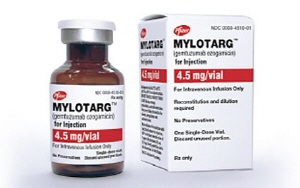
- Product photo of MylotargThe high price was found to be the reason Pfizer Korea's new drug Mylotarg (gemtuzumab ozogamicin), a treatment for acute myeloid leukemia (AML), did not pass the Health Insurance Review and Assessment Service (HIRA) stage. HIRA acknowledged the drug's improvement in clinical utility but did not approve its cost-effectiveness. According to industry sources on January 7, HIRA recently disclosed a report from the Drug Reimbursement Evaluation Committee (DREC) held in November 2024 on the non-reimbursement assessment review for Mylotarg inj 4.5mg. Mylotarg is an antibody-drug conjugate (ADC) that can be used for the first-line treatment of newly diagnosed adult patients with CD33-positive AML. It binds to cells involved in leukemia and releases calicheamicin upon internalization, causing DNA double helix breaks and inducing cell death. It was approved on November 18, 2021, in South Korea and has been considered for national health insurance reimbursement listing. In May 2022, it was considered for the Cancer Disease Review Committee (CDRC) of the HIRA review but failed to establish reimbursement criteria. In October 2023, its reimbursement criteria were successfully established at the CDRC. Then, it was considered for the DREC review, the final stage for determining reimbursement appropriateness; however, it was acknowledged for reimbursement appropriateness. According to the DREC assessment report, Mylotarg is an anticancer drug approved for the 'treatment of patients with newly diagnosed CD33-positive AML.' It was acknowledged for improving clinical utility, including event-free survival (EFS), compared to an alternative drug. However, the DREC determined to maintain non-reimbursement status due to not having cost-effectiveness based on the economic assessment. In the cost-effectiveness assessment, Mylotarg's price was found to be higher than that of alternative drugs, 'cytarabine + daunorubicin, cytarabine + idarubicin combination therapies.' Additionally, the economic assessment result did not sufficiently persuade DREC committee members. Meanwhile, its clinical utility was acknowledged. The Korean Society of Hematology showed that Mylotarg improved the EFS than the standard therapy (7+3). Regarding the safety profile, bleeding and veno-occlusive disease (VOD) occurrence slightly increased, but it was determined safe because it was not significantly different from the side effect frequencies. Since Mylotarg is a standard therapy for cytogenetically favorable-intermediate patient groups based on treatment guidelines of the United States and Europe, the assessment suggested it should be provided to patients in South Korea. In the ALFA-0701 Phase 3 trial, the drug significantly improved the primary endpoint, demonstrating a median EFS of 17.3 months compared to 9.5 months in the control group. Currently, this drug is listed in the prescription price list of the US, UK, Germany, Italy, and Japan. Meanwhile, the prevalence of domestic AML is 2.5 cases per 100,000 population annually. The prevalence of the disease increases with age, and the median age of AML patients is between 65 and 69. As life expectancy increases, more AML patients are older. Patients with AML experience fatigue, weakness, loss of appetite, anemia, and thrombocytopenia due to bone marrow failure and extended infiltration of leukemia cells. It has been reported that young patient survival rate is below 20% with poor prognosis.
