
- LOGIN
- MemberShip
- 2026-05-02 11:39:31
- Policy
- Hyundai withdraws application for Mifegymiso approval again
- by Lee, Hye-Kyung Nov 01, 2024 05:50am
- Hyundai Pharm has reportedly voluntarily withdrawn the application it had filed for the marketing authorization of Mifegymiso (mifepristone and misoprostol), which the company had applied for approval as the first abortion pill in Korea. Hyundai Pharm has requested approval for the abortion drug twice in the past, first in 2021 and then in 2023, but the Ministry of Food and Drug Safety has repeatedly asked for supplemental data, due to which the company has not been able to receive proper review. According to the MFDS’s written response to a written inquiry made during the NA Audit by the Health and Welfare Committee on the 31st, the approval and review process for Mifegymiso was recently temporarily suspended due to the company’s withdrawal. “Currently, there are some conditions that only be reviewed and approved after the Criminal Act and the Mother and Child Health Act is amended to allow drug-induced pregnancy termination and the permissible period of pregnancy termination are established by law,” said MFDS. In other words, if the Criminal Act and the Mother and Child Health Act are not amended, it would be difficult to review Mifegymiso’s effect/efficacy, and risk management plan, among others. The MFDS said, “Currently, the approval review process has been temporarily suspended (withdrawn) by mutual recognition of the applicant and the MFDS,” adding, “If the relevant laws are amended in the future and the applicant submits data accordingly, we plan to speed up the review and promptly make a decision.” Hyundai Pharm signed an exclusive marketing and distribution agreement for Mifegymiso’s supply in Korea with the UK-based Linepharma International in 2020, but the company has not been able to launch the drug in Korea due to disruptions in the approval process. Mifegymiso comes in a combination pack that contains 1 200mg mifepristone tablet and 4 misoprostol 200ug tablets. The drug inhibits the action of progesterone, the progestational hormone that sustains pregnancy, while misoprostol works to contract the uterus. It is only indicated for use in the first trimester of pregnancy, up to 9 weeks, and is typically prescribed as one tablet of mifepristone followed by 4 tablets of misoprostol 36-48 hours later. In April 2019, the Constitutional Court ruled the criminal offense of abortion (termination of pregnancy) unconstitutional, citing respect for women's right to bodily self-determination. As of January 1, 2021, abortion was effectively legalized. Upon the ruling, the Constitutional Court ordered the National Assembly to come up with an alternative legislation to reflect the decision, but 4 years have passed without such legislation being enacted. In the 21st National Assembly, 7 bills to abolish the abortion law were introduced, including amendments to the Criminal Code and the Mother and Child Health Act, but were discarded with the closure of the 21st National Assembly.

- Policy
- Seretide withdraws from Korea due to poor performance
- by Lee, Tak-Sun Oct 31, 2024 05:55am
- GSK's asthma inhaler 'Seretide' is withdrawing from the domestic market. Once the market leader in the market, it seems that the company is reorganizing the product line as its performance has recently declined due to the entry of new products. According to industry sources on the 30th, GSK recently sent letters to long-term care organizations and distributors to notify them of the withdrawal of 6 seretide items and the removal of their reimbursement listing. The 6 currently licensed Seretide products are Seretide 100 Diskus, Seretide 250 Diskus, Seretide 500 Diskus, Seretide 50 Evohaler, Seretide 125 Evohaler, and Seretide 250 Evohaler. Among those, 3 of the Seretide Evohaler formulations have already withdrawn from the market as of April 29th. The remaining 3 Discus formulations have also applied for withdrawal and are expected to be removed in the near future. “We have carefully considered the fact that sufficient alternatives to the Seretide product line already exist in the Korean market and have decided to withdraw the Seretide product line in Korea to simplify and concentrate our respiratory portfolio,” said GSK. The company said the expected date of the items’ reimbursement withdrawal is Dec. 1, with prescribing and reimbursement available for approximately 6 months until the end of May 2025. Seretide was once the leading asthma inhaler in South Korea, but it has been on a downward spiral in recent years due to the entry of its generics and new drugs. Sales of Seretide Diskus have fallen to KRW 12.2 billion in 2019, KRW 11.7 billion in 2020, KRW 9.1 billion in 2021, KRW 7.6 billion in 2022, then to KRW 1.7 billion last year, according to IQVIA. Seretide Evohaler also generated only KRW 800 million in sales last year. In addition to Seretide, GSK has other asthma-COPD inhaler products such as Arnuity, Anoro, Flixotide, Relvar, and Trelegy. In particular, sales of Relvar Elipta was KRW 36.2 billion and Trelegy Elipta was KRW 8.1 billion last year.

- Policy
- Gvnt agrees on the need for dispensing substitute drugs
- by Lee, Jeong-Hwan Oct 30, 2024 05:54am
- In this year's NA Audit, the Minister of Health and Welfare Kyoo-Hong Cho said that he would prioritize the ‘dispensing of substitute drugs’ as a solution to the problem of unstable supply of medicines such as cold medicines that are often out of stock. Two bills related to alternative dispensing were submitted to the National Assembly on the 28th, including a bill to amend the Pharmaceutical Affairs Act, which was introduced as representative by Rep. Byung-Duk Kim and Rep. Soo-Jin Lee of the Democratic Party of Korea. The bills aim to enable pharmacy pharmacists to substitute prescribed drugs with other generic versions that have undergone bioequivalence tests certified by the head of the Ministry of Food and Drug Safety as having the same ingredients, formulation, and dosage as the drug listed in the doctor's prescription. By clarifying whether or not a pharmacist should notify the doctor of the substitution, the bill is intended to promote information sharing among pharmacists and improve convenience in prescribing and dispensing medicines. Specifically, Rep. Byung-Duk Kim's bill expands the post-notification subject for the pharmacists’ dispensing of substitute drugs to the Health Insurance Review and Assessment Service, while Rep. Soo-Jin’s bill expands the notification to HIRA and changes to the term from “dispensing of substitute drugs” to “international nonproprietary name prescriptions.” The 22nd National Assembly is regarded as being more proactive in addressing the issue of the unstable supply of drugs by changing the substitute dispensing method, as it has introduced 2 bills to activate the practice early in its term, compared to the 1 bill submitted during the 21st National Assembly. In addition, Rep. Young-Seok Seo and Rep. Yoon Kim of the Democratic Party of Korea are also considering legislation to streamline the dispensing of substitute drugs and international nonproprietary name prescriptions, so there is a possibility that more related legislation will be introduced in the future. In addition, Minister Cho is expected to actively participate in the parliamentary review of relevant legislation, as he had cited the promotion of dispensing substitute drugs as a solution to the unstable supply and demand of drugs after the COVID-19 pandemic. However, opposition from the medical community is one barrier that must be overcome. Doctors argue that increasing substitute dispensing could adversely affect patient health, as different products with the same ingredients, whether original or generic, can have different clinical effects when taken by patients. Nevertheless, lawmakers who agree with the need to promote dispensing substitute drugs say that the legislation is essential to overcome the 5-year-long problem of unstable drug supply. Some doctors find it difficult to understand why the government would consider promoting dispensing substitute drugs, which can hinder public health when it is already operating an incentive system that provides incentives to pharmacies for dispensing low-cost substitute drugs. “We shouldn't have another case of stalled legislation due to inter-functional differences among professionals about dispensing substitute drugs,’ said an official from the Health and Welfare Committee, adding, “The problem of unstable drug supply and demand has been infringing on the public's access to medicines for several years now, deteriorating public health.” “Many Health and Welfare committee members are in agreement with the need for legislation, and some are considering expanding the scope of INN prescriptions,” said the official, “As Minister Cho answered in the NA Audit that he will prioritize INN prescriptions, we plan to focus on passing the legislation together with the MOHW.”

- Policy
- Low reimb approval rate hinders Soliris’s use for aHUS
- by Lee, Tak-Sun Oct 29, 2024 05:49am
- The industry’s eyes are on whether the preliminary reimbursement review process for Soliris, a treatment for the rare disease aHUS (atypical hemolytic uremic syndrome), will be eased in Korea. Until now, patients wishing to use Soliris for aHUS with reimbursement had to pass a preliminary review process. However, the problem is its low approval rate. With an approval rate in the 30-40% range every year, it has been a regular topic of discussion in the medical field and at the NA audit. This year, the issue was again raised during the NA audit, and attention has been drawn to the fact that HIRA expressed its intention to conduct a prospective review of the process. According to industry reports on the 27th, Rep Yoon Kim, a member of the Democratic Party of Korea, said to HIRA, “Soliri Inj, a treatment for atypical hemolytic uremic syndrome, has a very low approval rate at the preliminary reimbursement review committee process. If it cannot be used because of too strict standards, the standards need to be improved.” “As it is an acute disease, its use should not be bound by the preliminary review system, but should be started first, and the decision on whether to continue the treatment should be made afterwards.” aHUS is a severe, rare, hereditary disease where 79% of patients die within 3 years of onset, require dialysis, and suffer permanent renal failure. Without Soliris, it can be fatal. However, there are many cases of pre-approval rejections, rendering it difficult to treat patients in the field. However, HIRA has been citing the lack of required application data from long-term care institutions as the reason for the low approval rate, and that there was no problem with the reimbursement standards and review process. However, whether Rep. Yoon Kim’s criticism will improve the system is gaining attention. In its response to the NA’s written inquiry, HIRA said, ‘We will collect opinions from relevant societies on whether first allow the initial treatment with “Soliris Inj,” a drug for atypical hemolytic uremic syndrome, and then conduct preliminary review for further administration of the drug.” However, it seems that the authorities will keep the preliminary review system will be maintained. NA Rep. Jong-Heon Baek pointed out, “It seems inappropriate to operate the pre-review system for aHUS, as it is an acute rare disease. In other countries, considering the characteristics of acute rare diseases, they do not place them in the pre-review system or process the review very quickly. Korea is the only country that does not consider such characteristics of the disease.” To this, HIRA only responded, ‘Considering the nature of the disease, the drug can be administered immediately after submission of the pre-review application if it is an emergency case, and if approval follows, It is retroactively applied.” This suggests that the authorities are not considering plans to convert the preliminary review process to regular review. The implication is that they will consider exempting the initial dose only. In November, the government decided to switch the preliminary review process for the reimbursement of Soliris and Ultomiris for PNH (Paroxysmal nocturnal hemoglobinuria) to regular review. This is because the existing approval rate has remained stable at over 90%. Upon the change in their reimbursement process, there have been growing calls in the medical community for the removal of prior authorization aHUS in addition to PNH.
- Policy
- COVID-19 treatments 'Paxlovid·Veklury' reimb begins today
- by Lee, Jeong-Hwan Oct 28, 2024 05:54am
- Beginning today (October 25th), the National Health Insurance is applied to COVID-19 treatments, Paxlovid Tab (Pfizer Korea) and Veklury Inj (Gilead Sciences Korea). The patient copay will be maintained at the current cost of about KRW 50,000: KRW 47,090 for a single package of Paxlovid Tab (30 tablets) and KRW 49,920 (6 bottles) for Veklury Inj. The government expects that the National Health Insurance reimbursement will enable a stable supply of the COVID-19 treatments on a needs basis. Previously, the Korea Disease Control and Prevention Agency (KDCA) had purchased the drugs from pharmaceutical companies and distributed them to pharmacies at no cost. It will transition to commercial distribution system where pharmacies and medical centers purchase medications from pharmaceutical companies. However, the KDCA will temporarily maintain the government supply with commercial distribution to minimize disruption in the medical field during the transition and to efficiently utilize the purchased stock. Most of the criteria for the government-funded drugs, including prescription criteria and copays, will change to criteria for the National Health Insurance. For Veklury, individuals eligible for government-funded medications will be limited to high-risk individuals with mild·moderate symptoms and have not received reimbursement previously. The patient copay will be maintained at the current cost of about KRW 50,000: KRW 47,090 for a single package of Paxlovid Tab (30 tablets) and KRW 49,920 (6 bottles) for Veklury Inj. The previous policy required prescribing and dispensing COVID-19 medications from 'designated centers for COVID-19 medications.' Starting October 25th, pharmacies and medical centers nationwide can prescribe and dispense COVID-19 medications for National Health Insurance recipients. The exception is that prescriptions for high-risk individuals with mild‧moderate symptoms require a prescription and must be dispensed from 'designated centers for COVID-19 medications.' "With the National Health Insurance reimbursement of COVID-19 treatments, patients are expected to stably use the treatments in response to changes to COVID-19 spread," Lee Joongkyu, Director of the National Health Policy at the Ministry of Health and Welfare (MOHW), said. "We will continue to strive to expand the health insurance reimbursement for medications needed in the medical field."
- Policy
- Switching between JAKis approved for atopic dermatitis
- by Lee, Tak-Sun Oct 28, 2024 05:53am
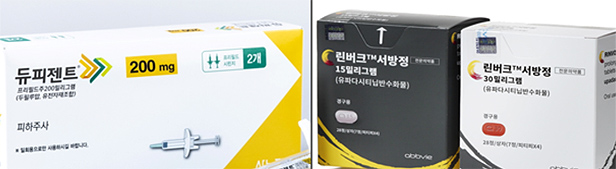
- Reimbursement for switching between severe atopic dermatitis drugs may be approved soon in Korea. However, further efforts by pharmaceutical companies would be needed to share the additional finances required. Therefore, it is analyzed that pharmaceutical companies will overcome the Health Insurance Review and Assessment Service’s review process by voluntarily reducing their drug price. According to industry sources on the 25th, voluntary price reductions are being discussed to receive reimbursement for switching between severe atopic dermatitis drugs. The reimbursement standards for switching between biologics and JAK inhibitors have already been established through expert discussions. The remaining step is for pharmaceutical companies to voluntarily reduce their insurance price ceiling to minimize the financial impact. If the proposal passes HIRA’s Financial Impact Assessment Subcommittee, it will be reviewed by the Drug Reimbursement Evaluation Committee (DREC). If it passes, final negotiations will be held with the National Health Insurance Service to expand their reimbursement standards. Currently, if a patient starts treatment with one of the biologics or JAK inhibitors and then switches to the other, they are not eligible for reimbursement or special calculations, which increases the burden on patients. However, academics argue that switching is necessary for personalized treatment. The Korean Atopic Dermatitis Association has also included cross-dosing between drugs in its recently revised guidelines and has been asking the government to allow switching. In response, the MFDS has been discussing switching between biologics and JAK inhibitors with experts since September. It became an issue in the NA Audit as well, with Rep Mi-hwa Seo, Jin-suk Jeon (Democratic Party of Korea) and Ye-ji Kim (People Power Party) demanding measures. In response, HIRA explained it has completed its review with experts and will cooperate to ensure that the follow-up process progresses as soon as possible. “We have already established the reimbursement standards that take into account the latest evidence and clinical situation, and only the issue of financial sharing remains,” said a HIRA official. In the case of reimbursement extensions, the pharmaceutical companies achieved a breakthrough by offering to share the financial burden by voluntarily reducing the price of their respective drugs. Last year, the SGLT-2+DPP-4+metformin diabetes drug combination was also reimbursed through voluntary price reductions by pharmaceutical companies. Treatments approved for severe atopic dermatitis in Korea include the biologics Dupixent (Sanofi) and Adtralza (Leupharma), and JAK inhibitors Ilumiant (Lilly), Rinvoq (AbbVie), and Civinqo (Pfizer). Of these, the voluntary price reduction rate will likely be determined based on drugs with the highest expected additional claims if switching is allowed.
- Policy
- Directly injected gene scissor therapy receives PT3 approval
- by Lee, Hye-Kyung Oct 25, 2024 05:49am
- An in vivo gene scissor therapy that is injected directly into the body will enter Phase III clinical trials in Korea. On the 23rd, the Ministry of Food and Drug Safety (MFDS) approved a Phase III clinical trial to evaluate the efficacy and safety of ‘NTLA-2001’ in participants suffering from Transthyretin Amyloidosis with Cardiomyopathy (ATTR-CM). 'NTLA-2001,’ which is an investigational new drug by U.S. Intellia Therapeutics, works by delivering the ‘guide RNA’ that guides the gene editing ‘Cas9 mRNA’ to the target gene in a Lipid Nano Particle (LNP) to liver cells through intravenous injection to eliminate the target gene in the liver. LNPs basically bind to ApoE in the blood and enter the liver mainly through ApoE receptors on the surface of liver cells, but there have been problems with toxicity due to excessive accumulation. However, NTLA-2001 offers enhanced biodegradability by incorporating ester links into its lipid structure and achieved a half-life of one-quarter that of conventional LNPs in animal studies. NTLA-2001 has achieved positive results in a global Phase I study as a treatment for hereditary transthyretin amyloidosis (hATTR) and is on track to become the first-in-class Crispr-based therapy. ATTR is a disease in which mutations in the transthyretin gene cause the liver to produce misfolded transthyretin protein, leading to neurological damage and heart muscle abnormalities. There are reportedly around 50,000 patients worldwide, and with an average life expectancy of 2-15 years after symptom onset, there is much interest in its cure. Meanwhile, in April 2016, the US-based Regeneron signed a collaboration agreement with Intellia Therapeutics to jointly develop next-generation gene therapies using CRISPR gene editing technology. Under the agreement, Intellia received an upfront payment of USD 75 million (KRW 104.6 billion) and is eligible to receive additional payments based on future performance. In 2020, Regeneron secured the rights to commercialize NTLA-2001 through an additional USD 100 million (KRW 139.5 billion) license agreement. Current U.S. FDA-approved treatments for ATTR include Pfizer's Vyndaqel (tafamidis meglumine) and Vyndamax (tafamidis), Alnylam’s Onpattro (patisiran) and Amvuttra (vutrisiran), and Ionis' Tegsedi (inotersen).
- Policy
- Reimb discussions restart for BMS’s Camzyos in KOR
- by Lee, Tak-Sun Oct 25, 2024 05:48am
- The National Health Insurance Service was found to have restarted reimbursement discussions for the obstructive hypertrophic cardiomyopathy treatment Camzyos (mavacamten, BMS). BMS and the NHIS entered into drug price negotiations for Camzyos in August but failed to reach an agreement within the 60-day deadline. However, the deadline has been extended, and it is expected that the company may be able to list the drug for reimbursement as early as next month. In particular, there are opinions that the criticisms made during the NA audit may have accelerated the drug’s reimbursement discussions. Lorviqua, whose reimbursement progress was also criticized during the NA Audit, may likely skip the Drug Reimbursement Evaluation Committee review and re-enter into negotiations with the NHIS. According to industry sources on the 24th, during the NA Health and Welfare Committee’s Audit that ended on the 23rd, Democratic Party of Korea Rep. Hee-Seung Park inquired about the Camzyos’s reimbursement progress and requested its prompt reimbursement. Camzyos’s reimbursement has been in the drug price negotiation stage since early August. The deadline for negotiations was 60 days, so an agreement was supposed to be reached in early October. In response to Park's inquiry, the NHISon explained, “Based on DREC’s review results, we are in the process of negotiating with the company to set an appropriate drug price and expected claims amounts, and signing the risk-sharing agreement. However, during the current negotiation process, the pharmaceutical company requested a pause in the negotiation as it needed time to submit additional data, upon which the NHIS accepted the request and extended the negotiation deadline.” In other words, the period needed to submit the additional data was excluded from the negotiation period, which was why the deadline was extended. “In order to ensure access to new drugs for the active treatment of cardiomyopathy patients while minimizing the financial burden, we plan to closely review the financial impact data such as patient size and market share submitted by pharmaceutical companies and clinical literature to reflect the financial impact and clinical value of the drug under negotiation,” said the NHIS. Camzyos had been the focus of recent media coverage, as well as the NA audit, to ensure expedited access for the patients. As a result, payers are also reportedly considering expediting its reimbursement. As such, negotiations have resumed, raising the possibility of the drug being listed as early as next month. However, time is running out to finalize and report the negotiation results to the Health Insurance Policy Review Committee meeting that will be held next week. If not next month, there is still a good chance of reimbursement by December. Also, industry eyes are on whether Lorviqua (lorlatinib, Pfizer), which had failed negotiations with them in June, will enter into negotiations again. Lorviqua is a treatment for ALK (anaplastic lymphoma kinase)-positive NSCLC that was in the process of extending its reimbursement to first-line treatment. Initially, the company submitted an application to extend the drug’s reimbursement standards as an Expenditure Cap type RSA, but after negotiations broke down, the company reapplied for the drug’s reimbursement through the general listing pathway. According to the regular procedure, the drug must be first reviewed by HIRA’s Drug Reimbursement Evaluation Committee to start negotiations with the NHIS, but as it is a special case where the drug is switching its status from RSA to general listing, there is a high possibility that the government will simplify the procedure. during the NA Audit on the 16th of this month, Dong-Kyu Lee, Director General of MOHW’s Bureau of Health Insurance Policy, said, “We are currently in negotiations with the pharmaceutical company,’ and showed a proactive stance, saying, “We will complete negotiation as soon as possible for the benefit of the patients.’ As a result, the industry expects Lorviqua’s reimbursement agenda may skip the DREC stage and restart negotiations with the NHIS.
- Policy
- MFDS says 'no procedural issues' regarding 'Leqembi'
- by Lee, Hye-Kyung Oct 24, 2024 05:52am
- Product photo of Leqembi. The Ministry of Food and Drug Safety (MFDS) stated that there was no procedural issue during the approval of 'Leqembi (lecanemab),' a dementia treatment, that omitted the review by the Central Pharmaceutical Affairs Advisory Committee (hereafter referred to as the "Advisory Committee"). Out of 33 active ingredients of new drugs that received domestic approval since 2023, only 6 active ingredients were reviewed by the Advisory Committee. The final approval of Leqembi was based on its effects, treatment options, and monitoring plans. In answering the questions from media reporters on October 22nd, the MFDS stated that regarding the procedural issue of Leqembi approval, "The specialists in the MFDS had reviewed thoroughly based on science-based expert analysis." The MFDS explained that they had made a comprehensive assessment. In particular, the drug demonstrated a reduction in cognitive impairment (27%) in patients with mild Alzheimer's disease and the potential to provide new treatment option by targeting the removal of the significant cause of the disease (amyloid beta), unlike conventional drugs. Additionally, the drug's company established a stringent monitoring method (such as MRI monitoring) to follow ARIA, a potential side effect of treatment. Leqembi's ARIA has been identified as cerebral edema and microhemorrhage confirmed by MRI imaging test. Also, the MFDS emphasized that they could seek consultation from the Advisory Committee when they decide outside consultation is needed, but it is not a mandatory procedure during the approval process. During the National Assembly's parliamentary audit of the Health and Welfare Committee, held on October 10th, Rep. Jeon Jin-sook, a member of the Democratic Party of Korea, questioned the approval process of a new dementia drug that received a recommendation for non-approval from the European Medicines Agency's (EMA) Committee for Medicinal Products for Human Use (CHMP) due to side effects. "Although it is a new drug, approval has been granted without seeking expert opinion," Rep. Jeon said. "In the United States, this drug was approved with the required warning label statement in the prescribing information after the FDA's advisory committee meeting. Europe postponed approval," Rep. Jeon explained. In answering this question, the MFDS said, "The Pharmaceutical Affairs Act guides that the Advisory Committee shall be established to respond to inquiries from the Minister of the MFDS, but it does not mandate the Advisory Committee's review." They explained, "We request consultation from the Advisory Committee when we decide outside consultation is necessary, such as making conditional approval (requiring submission of Phase 3 clinical trial data) or marketing authorization·review." The MFDS further added that as part of Leqembi's risk-assessment plan, they will conduct a post-marketing survey (patient registration research, 6 years) and thoroughly monitor the occurrence of ARIA in Korean patients. "In the approval detail, we required management of ARIA by checking ARIA occurrences by MRI testing before and during the drug administration and suspending administration based on disease severity," the MFDS said. "Since ARIA tends to occur in the early course of treatment, we required testing before 1st, 5th, 7th, and 14th drug administration, and the administration will be suspended when the disease severity is found as moderate to severe during the testing." Meanwhile, Leqembi is intravenously administered in a sing-dose every two weeks. It is a new drug known to delay the cognitive impairment due to Alzheimer's disease by 27%. The drug eliminates 'amyloid beta' aggregates, abnormal protein in neurons, and amyloid fibrils.
- Policy
- 'Preferential drug pricing for K-made new drugs' revision
- by Lee, Jeong-Hwan Oct 24, 2024 05:52am
- Rep. Baek Jong-heon It was pointed out that upon receiving criticism that the recently announced amendment plan for drug pricing system lacked provision to provide preferential drug pricing for new drugs made by Korean pharmaceutical companies, the Ministry of Health and Welfare (MOHW) posted an administrative notice detailing amendment to be made for 'Pharmaceutical Approval and Adjustment Criteria.' Previously, the amendment plan had been criticized for making a reverse discrimination against Korean pharmaceutical companies. According to the MOHW's notice, the amendment plan included implementing a 68% drug pricing increase applied to national essential medicines for up to 10 years (5+5 years), preferential drug pricing of new drugs manufactured by pharmaceutical companies with significant R&D contribution, and a double pricing system to support exports. On October 23rd, Rep. Baek Jong-heon, a member of the People Power Party, stated that during the parliamentary audit held on October 8th, he raised an issue with the Health Insurance Review and Assessment Service (HIRA)'s amendment plan for the pharmaceutical pricing system. The criticism concerned that the amendment plan excluded the core clause to benefit Korean pharmaceutical companies. Baek emphasized that the amendment plan could reverse discrimination against Korean pharmaceutical companies because most of the revision details for the drug pricing system favored multinational companies. In response to this criticism, the MOHW's Pharmaceutical Benefits division proceeded with revising the drug pricing system, aiming to reflect the new drug's innovative value and public health security. They have notified an administrative action for 'Pharmaceutical Approval and Adjustment Criteria.' MOHW's plan will be officially announced in 2025 after being reviewed by the Ministry of Government Legislation and evaluated by the Regulatory Reform Committee. Earilier, Baek questioned Cho Kyoo-hong, Minister of Health and Welfare, about the rationale for excluding a measure that provides practical benefits to Korean pharmaceutical companies from the revised plan, despite Korean pharmaceutical companies requesting improvements to the current policy related to new drug development and exports. "As part of the 120th national agenda, the Yoon Suk Yeol government has decided to foster bio-health business as the core export business, aiming to leap as a leading global country in the bio·digital health field," Baek said. "However, the MOHW announced the revised plan without considering practical supporting measures." "MOHW's role is to lead the growth and development of the Korean biopharmaceutical industry and enhance international competitiveness, thereby contributing to the nation's health and welfare improvement," Beak emphasized.
