
- LOGIN
- MemberShip
- 2026-05-02 11:39:35
- Policy
- Drug pricing negotiations for Qarziba gather pace
- by Lee, Tak-Sun Oct 14, 2024 05:49am
- With Qarziba Inj (dinutuximab beta, Recordati Korea), the first drug that has been applied the approval-evaluation-negotiation pilot project, passing the Health Insurance Review and Assessment Service's Drug Reimbursement Evaluation Committee, the drug price negotiation for the drug is also expected to progress quickly. However, the drug’s post-listing management is expected to be key rather than the speed of approval. Qarziba was recognized as adequate for reimbursement at the 10th Drug Reimbursement Evaluation Committee (DREC) meeting in 2024 that was held on the 10th of this month. The committee had made a non-reimbursement decision in August, but after reconsideration, the drug passed HIRA’s reimbursement review stage. Qarziba is the first drug in the approval-evaluation-negotiation pilot project, which received MFDS approval, drug price evaluation, and drug price negotiation in parallel to support its prompt reimbursement listing. It also succeeded in setting reimbursement standards before approval. On May 29, the 4th Cancer Disease Deliberation Committee set the reimbursement standard for Qarziba as children aged 12 months or older with ▲high-risk neuroblastoma who have previously received myeloablative therapy and stem cell transplantation and shown partial response or after induction chemotherapy, and ▲recurrent or refractory neuroblastoma. On June 19th, the company also received formal marketing authorization from the MFDS. The approval period was also shortened from 115 days to 90 days as it was designated a drug for the Global Innovative Product Fast Track (GIFT) support system. Its drug price negotiation period is also expected to be shortened. This is because the negotiation period for drugs in the approval-evaluation-negotiation pilot project is shortened from 60 days to 30 days through preliminary discussions before passing the Drug Reimbursement Evaluation Committee. Therefore, its reimbursement is expected within the year. However, it was pointed out that there are limitations to sufficient pre-validation of the drug due to its fast-track status. Therefore, it is likely that its financial sharing plan will be considered through a post-listing evaluation process. In fact, HIRA is reportedly reviewing applying patient-level performance evaluations. The patient-level performance evaluation measure was applied to the one-shot high-priced drugs Kymriah and Zolgensma. It mainly involves a contract that monitors the performance of each patient, after which the pharmaceutical company reimburses a percentage of the drug cost if the treatment fails. This type of post-listing management measure is likely to be set as a prerequisite during the NHIS pricing negotiations. If Qarziba is listed within the year, it will have taken just one and a half years from approval to reimbursement. Normally, the process takes 3 years. With more approval-evaluation-negotiation pilot projects being processed, Qarziba’s reimbursement listing will help solidify the review and negotiation processes of the project. An industry official said, ‘The key to Qarziba’s drug price negotiation will be in the financial sharing plan after registration,’ adding, ‘As it is a fast-track drug, the NHIS would also have much to consider.”
- Policy
- MFDS Minister ‘will work with MOHW on INN prescriptions’
- by Lee, Hye-Kyung Oct 11, 2024 05:54am
- International non-proprietary names (INNs) and ingredient-based prescriptions should be introduced to prevent patients from circling pharmacies due to drug shortages, said a lawmaker. ‘Institutional inducements such as the introduction of INNs and ingredient-name prescriptions are needed to prevent drug supply disruptions and pharmacy bouncing issues from occurring again,’ said Representative Young-Seok Seo (Democratic Party of Korea) during the National Assembly Health and Welfare Committee's NA audit of the Ministry of Food and Drug Safety “According to a recent survey, the public's trust in generic quality is about 50%, but 80% responded that they will take generic versions if doctors prescribe them,” said Rep. Seo, adding, “There seems to be low awareness of the bioequivalence of generics drugs and original drugs, but hasn't the MFDS recommended making International Nonproprietary Names (INN) prescriptions?” Regarding the inquiry, Yu-Kyoung Oh, Minister of Food and Drug Safety responded, “The Ministry of Health and Welfare is the main ministry in charge of INN prescriptions, and the MFDS once said that we would cooperate if the Ministry of Health and Welfare takes initiative.” Oh added, “We can say that an effect of a drug is equivalent if we conduct bioequivalence tests. In the case of INN prescriptions, the MFDS will be able to cooperate if the MOHW initiates the discussion.” It was also pointed out that the public-private consultative body for the unstable supply and demand of drugs, which involves both the MOHW and the MFDS, is not working organically due to the disconnect between ministries. “I wonder if the disconnect between the ministries is aggravating the supply and demand instability. Why should there be a shortage of medicines when there is a consultative body ready?’ Seo asked, stressing that ’inter-ministerial discussions are needed to minimize the disconnect.’ In response, Oh said, “The MFDS receives reports of supply shortages from pharmaceutical companies, and the MOHW receives reports from pharmacies and hospitals, so the report process is different. So we create a system when we meet as part of the public-private consultative body, but as there are various causes of supply and demand disruptions, we plan to discuss them in depth at the consultative body’s meeting.”
- Policy
- "Preferential drug pricing excludes K-made new drug benefits
- by Lee, Jeong-Hwan Oct 10, 2024 05:50am
- The government's revised plan for the drug pricing system has been criticized for reverse discrimination against Korean pharmaceutical companies because it was primarily designed to favor multinational pharmaceutical companies. The criticism concerns the revised drug pricing system plan, announced by the Health Insurance Review and Assessment Service (HIRA) in August, that the plan excludes the core measure in favor of Korean pharmaceutical companies. Baek Jong-heon, a member of the People Power Party, questioned this during the National Assembly's audit of the Ministry of Health and Welfare (MOHW) on October 8th. In December 2023, the MOHW reported to the Health Insurance Policy Review Committee regarding potential improvements to the drug pricing system to reflect the new drug's innovative value and the nation's healthcare security. In February 2024, the MOHW announced the expansion of preferential drug pricing criteria for pharmaceutical companies as part of the 2nd comprehensive National Health Insurance Plan 2024. The MOHW's plan was reviewed by the Drug Reimbursement Evaluation Committee (DREC), and the MHOW announced in August a revision to the specific evaluation criteria for pharmaceuticals during the negotiations process. However, Baek pointed out that the plan excludes 'Preferential drug pricing for new drugs developed by pharmaceutical companies with high R&D contributions' and 'Improved measures to calculate drug pricing to support domestically produced new drug exports.' Because of the announcement of a revised plan for preferential drug pricing, excluding measures to provide benefits to Korea-made new drugs, Jeil Pharm's new drug developed by Onconic Therapeutics, listed in September, suffered reduced export pricing. Document prepared by Baek Jong-heon, a member of the People Power Party. If the plan had been revised according to the Health Insurance Policy Review Committee report, the drug could have been listed under 'essential reimbursement pricing.' However, due to delays in drug pricing system improvement, the company did not receive the benefit. Baek questioned Cho Kyoo-hong, Minister of Health and Welfare, about the rationale for excluding a measure that provides practical benefits to Korean pharmaceutical companies from the revised plan, despite Korean pharmaceutical companies requesting improvements to the current policy related to new drug development and exports. "As part of the 120th national agenda, the Yoon Suk Yeol government has decided to foster bio-health business as the core export business, aiming to leap as a leading global country in the bio·digital health field," Baek said. "The MOHW announced the revised plan without taking into account practical supporting measures." "MOHW's role is to lead the growth and development of the Korean biopharmaceutical industry and enhance international competitiveness, thereby contributing to the nation's health and welfare improvement," Beak emphasized.

- Policy
- Yoon Kim ‘40% of the generic drug price is a bubble’
- by Lee, Jeong-Hwan Oct 10, 2024 05:50am
- Kyoo-hong Cho, the Minister of Health and Welfare, positively responded to Democratic Party of Korea Representative Yoon Kim's request to lower the price of generic versions of patent-expired drugs within the year. This refers to a separate generic drug price cut rather than the foreign drug price referencing reevaluations, which the pharmaceutical industry and the MOHW are currently discussing the timing and method of implementation, and has increased the tension amongst domestic pharmaceutical companies on another imminent generic drug price cut. At the National Assembly's MOHW audit on the 8th, Representative Yoon Kim pointed out that there is too much bubble in Korea’s generic price. “There is a significant bubble in the price of generic drugs in Korea,” said Kim, adding, “In a study commissioned by the Welfare Ministry, if you look at how high the price of generic drugs are in Korea is compared to developed countries such as the United States, the United Kingdom, Germany, and France, about 40% is a bubble.” “In monetary terms, about KRW 4 trillion more is being spent by Korea every year on generic drugs compared to developed countries,” he said, asking, “Does the ministry have any plans to adjust generic drug prices?” “A few months ago, I received a report from the Ministry of Health and Welfare’s Division of Health Insurance Benefits that they were planning to implement price cuts this year. When I asked them again recently, I was told that nothing was in progress,” said Kim. “Please reduce the price of generic drugs.” Minister Kyoo-hong Cho responded to Kim's request that the ministry has the intention to reduce the price of generic drugs. ‘We are considering adjusting generic drug prices. The agenda is being reviewed together in linkage with the sustainability of Korea’s national health insurance finances" When asked by Kim to push for a reduction in generic drug prices, Cho briefly replied, “Yes.”
- Policy
- Daewoong wins nod for first generic version of Ibrance tab
- by Lee, Tak-Sun Oct 08, 2024 05:49am
- Daewoong's first generic for Pfizer's breast cancer treatment, 'Ibrance Tab,' has been approved. Due to the successful patent nullification, the company received priority marketing authorization. The first generic can be launched in March 23rd, 2027, when the product patent expires. The Ministry of Food and Drug Safety (MFDS) has granted approval of Daewoong's "Ranclib tab" 75 mg, 100 mg, and 125 mg. This drug can be used to treat hormone receptor (HR)-positive or HER2-negative metastatic or advanced breast cancer. It is used in combination with aromatase inhibitor as first-line endocrine therapy in women or in combination with fulvestrant after endocrine therapy in women with advanced diseases. PfizerPfizer's Ibrance containing palbociclib is the original medicine. Ibrance was the first CDK4/6 inhibitor to be developed. It was launched with reimbursement coverage in November 2017 through the risk-sharing agreement (RSA). Unlike capsules, tablets can be taken regardless of food. The film-coating of the tablet allows for co-administration with proton pump inhibitors (PPI) or antacids, which are used to manage gastrointestinal disorders or diarrhea that commonly occur in breast cancer patients. Overall, tablets provide easier administration convenience than capsules. Ibrance's 2023 sales were KRW 50.5 billion, according to IQVIA. Due to the drug's high marketability, Korean pharmaceutical companies are attempting at early market entries through patent challenges. In addition to Daewoong, Kwang Dong Pharmaceutical, Boryung, and Samyang have entered patent challenges. After winning the nullification trial for the ingredient patent in March, Daewoong has established a ground to launch generic once the substance patent expires. In addition to successfully winning the patent challenge, Daewoong also acquired priority marketing authorization with approval as it met the requirement for the first generic. The prior marketing authorization period is from March 23rd, 2027, the day after Ibrance Tab's substance patent expires, to December 22nd, 2027. Last year, Kwang Dong Pharmaceutical acquired the priority marketing authorization of 'Alency Cap' for the same period as Daewoong's product. However, Kwang Dong Pharmaceutical won the priority marketing authorization against Ibrance Cap rather than Ibrance Tab. Additional approvals are expected soon as other companies that have challenged the patent have won. At the launch, Ibrance had no competitors in the market for breast cancer. However, the sales are slightly decreasing as similar CDK4/6 inhibitors Kisqali (Novartis, ribociclib) and Verzenio (Lily, abemaciclib) have launched. The analysis suggests that the market size may be downsized upon generic launch. "Although Ibrance generates the highest sales in the CDK4/6 inhibitors market, the sales have been gradually decreasing," pharmaceutical industry personnel said. "Sales could drop even more when generics launch following the substance patent expiration. Korean pharmaceutical companies could have launched generics earlier."
- Policy
- Drugs for NSCLC harboring MET alterations pass CDRC review
- by Lee, Tak-Sun Oct 07, 2024 05:48am
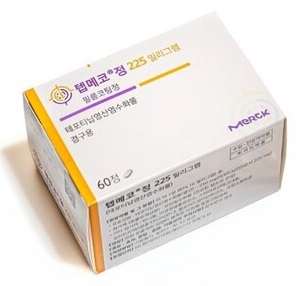
- Product photo of TepmetkoA treatment for non-small cell lung cancer (NSCLC) harboring MET alterations has passed the first stage for reimbursement coverage by national health insurance. Merk's Tepmetko is the drug that passed. On October 2nd, the Cancer Disease Review Committee (CDRC) of the Health Insurance Review and Assessment Service (HIRA) commenced the 7th meeting and set reimbursement standards for anticancer agents, including 'Tepmetko (tepotinib),' a treatment for patients with NSCLC harboring MET alterations. After receiving approval in November 2021, Tepmetko passed the CDRC review on the third attempt. It is the first treatment for NSCLC harboring MET alterations to pass the review in South Korea. The rate of patients with MET alterations in metastatic NSCLC is low, approximately 3-4%. However, due to poor prognosis, anticancer agents targeting such alterations are of paramount importance. In a clinical study, data showed that Tepmetko-treated stage IV patients with MET alterations had a median overall survival of 19.6 months, which was higher than the 13.4 months of immune checkpoint inhibitors. It became the new hope for patients. However, it repeatedly failed to set the reimbursement standards due to insufficiency in data utility. Other anticancer agents targeting MET alterations, such as Tabrecta, had similar results. Tepmetko successfully set the reimbursement standards in its fourth attempt, passing the first stages for receiving reimbursement. When it passes the Drug Reimbursement Evaluation Committee (DREC) of the HIRA, drug pricing negotiations with the National Health Insurance Service (NHIS), Tepmetko would be on the national health insurance reimbursement list. Review results for new drugs (applied for reimbursement decisions) and expanded reimbursement standards. Tepmetko (tepotinib, Merk) and Tibsovo Tab (ivosidenib, Servier Korea) successfully set reimbursement standards. Drugs that successfully expanded reimbursement standards include Jemperli (dostarlimab, GSK) and Neulasta Pre-filled Syringe (pegfilgrastim, Kyowa Kirin Korea). Along with Tepmetko, Tibsovo Tab (ivosidenib, Servier) successfully set reimbursement standards. The reimbursement standards for Tibsovo are set for use in combination with azacytidine in adult patients over 75 years with newly diagnosed locally advanced or metastatic acute myeloid leukemia (AML) who test positive for isocitrate dehydrogenase-1 (IDH1) mutation or those with accompanying disease who cannot receive chemotherapy. Additionally, Jemperli (dostarlimab, GSK) and Neulasta Pre-filled Syringe (pegfilgrastim), which have applied for expanded reimbursement, were successful in expanding the standards. Jemperli now has established reimbursement standards for use in combination with platinum-based chemotherapy in adult patients with newly diagnosed advanced or relapsed mismatch repair deficient (dMMR)/microsatellite instability-high (MSI-H) endometrial cancer. Neulasta successfully set reimbursement standard for patients receiving cytotoxic chemotherapy for malignant tumors to reduce the occurrence and duration of neutropenia. In contrast, Verzenio failed to establish expanded reimbursement for adjuvant therapy in combination with endocrine therapy for adult patients with early-stage breast cancer who are hormone receptor (HR)-positive or human epidermal growth factor receptor 2 (HER2)-negative or who are likely to have relapses of lymph nodes. The CDRC has established a policy for reviewing the reimbursement coverage of an existing drug when newly added high-price drugs are to be used in combination with a drug that is already covered by reimbursement. Medical organizations, including doctors' associations and hospital associations, requested such improvement last year.
- Policy
- 'Qarziba' to be reconsidered for the DREC review in KOR
- by Lee, Tak-Sun Oct 07, 2024 05:48am
- Product photo of Qarziba (dinutuximab, Recordati Korea).Qarziba (dinutuximab, Recordati Korea), which was designated as the 1st drug for a "Pilot Project for Integration of Product Approvals, Reimbursement Coverage Reviews, and Drug Price Negotiations" will be reconsidered for the Drug Reimbursement Evaluation Committee (DREC) review. Qarziba was considered for the DREC review in August but received a non-reimbursement decision. Then, the company applied for re-evaluation. According to industry sources on October 4th, Qarziba has been selected as the agenda item for the 10th DREC meeting, which will be held on October 10th. Qarziba has drawn industry attention as the 1st drug for a "Pilot Project for Integration of Product Approvals, Reimbursement Coverage Reviews, and Drug Price Negotiations." The project conducts the Ministry of Food and Drug Safety (MFDS) approval, drug evaluation, and drug pricing simultaneously, expediting the insurance listing process, including approval, drug evaluation, and the Ministry of Health and Welfare (MOHW) reporting. The drug successfully set reimbursement standards before receiving marketing authorization through this designation. On May 29th, the 4th CDRC meeting set the reimbursement standard for this drug for young children over 12 months with ▲A high-risk neuroblastoma who had received bone marrow removal therapy and a stem cell transplantation therapy after showing partial adverse reactions following chemotherapy ▲Recurrent and refractory neuroblastoma. Then, on June 19th, it received the official marketing authorization from the MFDS. The approval review period was shortened from 115 days to 90 days after it was granted a designation as the Global Innovative products on Fast Track (GIFT). Despite the expectation for a speedy reimbursement approval, Qarziba was halted at the DREC review, which decides reimbursement appropriateness. On the 8th DREC review, held on August 8th, Qarziba received a non-reimbursement decision for treating neuroblastoma in children. After receiving the DREC's non-reimbursement decision, the company applied for re-evaluation from the Health Insurance Review and Assessment Service (HIRA). The policy states that a company can apply for re-evaluation within 30 days of receiving a DREC review report. The HIRA re-evaluated based on the application, and Qarziba is set to receive a DREC review again. If Qarziba were to receive a non-reimbursement decision, the purpose of the "Pilot Project for Integration of Product Approvals, Reimbursement Coverage Reviews, and Drug Price Negotiations" to support expediting reimbursement listing would not be met. If Qarziba receives a reimbursement appropriateness decision this time, it would have taken a year and a half since the approval application. Typically, the process from approval application to reimbursement coverage takes at least three years, but Qarziba would have cut that time in half. Qarziba was designated as the 1st drug for a "Pilot Project for Integration of Product Approvals, Reimbursement Coverage Reviews, and Drug Price Negotiations" in June, and it has been on a track for registration in South Korea. "Qarziba will likely be re-evaluated for this DREC review," sources said, adding, "If it receives reimbursement appropriateness decision, it will also be on an expedited track for the negotiation with the National Health Insurance Service (NHIS) due to the pilot project. It may be considered for the Health Insurance Policy Review Committee within this year."
- Policy
- EUA for Novavax's COIVD-19 vaccine targeting the variant
- by Lee, Hye-Kyung Oct 02, 2024 05:49am
- The Ministry of Food and Drug Safety (Minister Oh Yu-kyoung, MFDS) announced emergency use authorization of Novavax's 'COVID-19 Vaccine corresponding to JN.1 strain of SARS-CoV-2 (2024-2025 Formula).' The emergency use authorization is a system designed to respond appropriately to a public health crisis, including infectious disease pandemics. In this system, the MFDS minister enables the supply of medical products that do not have domestic approval by ordering manufacturers and importers to manufacture or import upon requests from the central administrative agency. MFDS gathers expert opinions by reviewing companies' submitted clinical and quality documents through the official posting of the emergency use authorization upon request from the central administrative agency. Then, after review and voting from the committee for the 'Public Health Emergency Preparedness and Responses for a Medicinal Product,' the MFDS makes a final decision. The Korea Disease Control and Prevention Agency (KDCA) requested the emergency use authorization based on the vaccination plan to prevent COVID-19 for this winter. The MFDS quickly reviewed the item and approved of it. SK Chemicals will be responsible for importing and distributing the Novavax vaccine. Novavax vaccine is a direct injection of antigen protein using a recombinant protein vaccine technology to induce the synthesis of vaccine-eliminating antigens. With the Novavax COVID-19 vaccine entering South Korea, clinical fields will have wider array of choices for vaccine types. Recently approved Pfizer vaccine and Moderna vaccine are made of mRNA, which is designed to express antigen protein that induces immune responses in the body. The MFDS stated it would provide safe vaccination for people by strengthening the safety management system for COVID-19 vaccines, including managing quality and collecting reporting of adverse reaction cases.
- Policy
- "Hundreds of doctors have received pharmaceutical rebates"
- by Kang, Shin-Kook Sep 30, 2024 05:47am
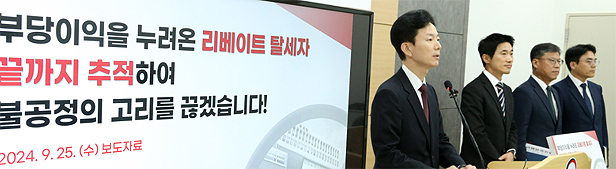
- Min Juwon, Director of Audit at the National Tax Service (NTS).After conducting a tax audit of 16 pharmaceutical companies, Korea's National Tax Service (NTS) announced that it would impose an income tax for doctors who received rebates. The NTS mentioned that over hundreds of doctors received rebates, and rebate-associated medical-pharmaceutical cartels became a significant issue. As a result, the NTS will continue to conduct intense tax audits. The following article reconstructs the briefing by Min Juwon, Director of NTS Audit, held on Septebmer 2nd in a question-and-answer format. - Min said the current audit focuses on imposing income tax on medical professionals who had received rebates. We impose income taxes on doctors who received rebates in any form. Because the customary way of rebates between the medical and pharmaceutical industries has continued for an extended period, the NTS has been paying attention and continuously conducting tax audits. During previous tax audits, we tried identifying the final recipients of rebates through pharmaceutical companies, but we could not confirm the allegations by solely relying on hearsay. However, this round of tax audits focused on eradicating rebates by imposing taxes on individuals who received rebates. - How were the companies selected for audits? We have not focused on whether the audited pharmaceutical company has been prosecuted by the Fair Trade Commission (FTC). The NTS selected companies that have internal issues. Once audits are completed, we plan to decide whether we will share audit outcomes with other agencies, according to regulations. Regarding the rebates being investigated by the prosecution and the Korean National Police Agency, we expect them to cooperate with the NTS regarding tax issues. When we receive documentation, we plan to investigate tax issues and impose on it thoroughly. -Some argue that the tax audit has a political agenda amid the conflict between the medical community and the government. Before today's announcement, we were aware of the concern. According to the law, the NTS conducts audits within the National Tax Imposition Exclusion Period, defined as the past five years. The NTS conducts audits of allegations within the designated period. Moreover, individuals who are involved in medical conflicts are not being audited. Audits are being conducted in individuals across the nation, including primary, secondary, and tertiary medical centers. We want people to know that the NTS focuses on rebates rather than the current issues related to the medical community. The conflict between the medical community and the government is recent. Auditing takes time because companies have to report, the NFS analyzes them, and commences on audits. Consequently, we are focusing on records dating 3-4 years back. For this audit, we have not collaborated with the Ministry of Health and Welfare (MOHW) in any form. We have conducted the audit based on NTS criteria for selecting auditing subjects and identified the degree of tax invasion. - How many medical professionals have received rebate? Subjecting companies that are being audited, hundreds of medical professionals have received rebates. If we continue, the number is expected to increase. - Min stated the medical-pharmaceutical cartel is a grave problem. Medical professionals are of superior status to pharmaceutical companies. When a certain pharmaceutical company names rebate recipients, it will no longer be able to operate in South Korea. As a result, we used the word, "medical cartel." It is a grave problem.
- Policy
- Stelara biosimilar Steqeyma IV approved for use in Korea
- by Lee, Hye-Kyung Sep 30, 2024 05:46am
- Upon receiving approval for ‘Steqeyma IV,’ a biosimilar version of the autoimmune disease treatment Stelara (ustekinumab), Celltion has now received approval for all its Steqeyma formulations. By adding the interleukin (IL) inhibitor option to the existing family of tumor necrosis factor (TNF)-α inhibitors, which includes Remsima, Remsima SC, and Yuflyma, the company has strengthened its autoimmune disease portfolio. On the 27th, the Ministry of Food and Drug Safety (MFDS) approved Celltrion's Steqeyma IV. Celltrion received approval for the prefilled syringe-type subcutaneous (SC) formulation of the same drug in June for the treatment of autoimmune diseases such as plaque psoriasis, psoriatic arthritis, Crohn's disease (CD), and ulcerative colitis (UC) With the approval of the IV formulation, the company can now compete with the original with the same formulation. Earlier, in April, Samsung Bioepis first received approval for 2 Stellara biosimilars – Epyztek IV and Epyztek SC. The insurance drug prices of Steqeyma and Epyztek were set at the same level - about 26% lower than the original - being priced at KRW 1,298,290 for the 45 mg formulation and KRW 1,342,320 for the 90mg formulation, respectively. The original, Stelara, is a global blockbuster drug developed by Janssen, whose product patent expired in July this year in Europe and last year in the United States. According to the drug market research institution IQVIA, the global ustekinumab market was valued at around KRW 26.42 trillion last year. Starting with the domestic marketing authorization of Steqeyma, the company plans to acquire approvals in major global countries such as the U.S. and Europe and target the global ustekinumab market in earnest. Meanwhile, Samsung Bioepis was the first to obtain marketing authorization for a Stelara biosimilar in Korea, and in addition to Celltrion, Dong-A ST (DMB-3115) is also developing a biosimilar of Stelara.
