
- LOGIN
- MemberShip
- 2026-05-02 22:47:26
- Policy
- Nicergoline for dementia listed at 50% of the highest-priced
- by Lee, Tak-Sun Sep 02, 2024 05:48am
- Sermion, the original drug containing the ingredient nicergoline.Before March this year, there were only two products containing the active ingredient nicergoline available. However, the number quickly increased, resulting in nearly a 50% difference between the highest and lowest prices. The prices of the listed products are getting cheaper with a stepwise pricing system applied. This reflects that more products are being listed for reimbursement listing. According to industry sources on September 1st, Korea Pharma's Pharma Nicergoline Tab 30mg was listed for reimbursement with a ceiling price of KRW 221 per tablet. Because there are already over 20 existing drugs in the same class, it was priced at around 85% of the prices of those, which is the lowest price. The price KRW 221 is nearly 50% of the highest price, KRW 424. Just last year, no one predicted that such many products containing nicergoline would be listed for reimbursement. In February, the products containing nicergoline 30mg were the original Il Dong's Sermion Tab 30 mg and Hanmi Pharm's Nicegoline Tab 30mg. After three pharmaceutical companies released their products in March, 20 products became available by March. The products listed since June have applied a stepwise pricing system, and the price is set at 85% of the lower price between the lowest price for the same medicine and the price calculated at 38.69% of the original drug price. Consequently, Hutecs Korea Pharmaceutical's Sarminon Tab 30mg, initially priced at 38.69% of the original price, was calculated at around 85%, now KRW 260 per tablet. Therefore, Pharma Nicergoline Tab 30mg's price was set at KRW 221, 85% of the lowest priced Sarminon Tab 30mg. The ceiling price will become even lower for products that will be listed and priced at 85% of the lowest price. Since 20 products became available in just under three months, latecomer products will, in turn, experience a price burden. Nearly 37 Nicergoline Tab 30mg are listed for reimbursement until now. The number of products containing the active ingredient nicergoline approvals by year (unit:#, source: the Ministry of Food and Drug Safety (MFDS), excluding products set for import or API). The products containing nicergoline is used for the first-line treatment of dementia symptoms, including memory impairment, concentration difficulties, judgment issues, and lack of initiative, related to primary degenerative vascular dementia and complex dementia. Korean pharmaceutical companies have jumped into this market this year because previously listed preventative drugs for dementia have failed to show efficacy and are being withdrawn. First, products containing acetyl-L-carnitine and oxiracetam were removed from the market after clinical trial reassessment failed. Clinical trial reassessment for the active ingredient choline alfoscerate is also underway, but the results are not promising. During the reimbursement reassessment review, it was decided that choline alfoscerate cannot be covered by reimbursement when used for mild cognitive disorder, an earlier stage of dementia. However, pharmaceutical companies have filed a lawsuit to seek nullification of reimbursement reduction for choline alfoscerate and received cancellation of the administration order, thus maintaining the reimbursement criteria. However, after losing the appeal court, pharmaceutical companies will likely face sales reductions. The annual prescription sales of choline alfoscerate amount to KRW 622.6 billion (based on UBIST). The market impact is expected to be substantial when reimbursement coverage for the mild cognitive impairment indication is no longer available because such use amounts to 80% of the sales. In countermeasures, pharmaceutical companies quickly released products containing nicergoline. The first product to be launched in South Korea was in 1978. The safety of the drug has been confirmed since it was launched 46 years ago. However, the National Health Insurance Service (NHIS) may attempt to reassess reimbursements. Even if that is the case, pharmaceutical companies can use products containing nicergoline as quick cards to fill the sales gap for drugs that provide cognitive benefits. An employee of a Korean pharmaceutical company said, "Nicergoline is categorized as an alpha-blocker and is effective in increasing blood flow in the brain and peripheral nervous system through vasodilation,' and added, "Because it is commonly used as a preventative measure for senile dementia or cognitive dementia, it is the most suitable drug to replace cognitive enhancers."
- Policy
- Lily's orphan drug 'Jaypirca' receives conditional approval
- by Lee, Hye-Kyung Aug 30, 2024 05:50am
- Product photo of Lily 'Jaypirca,' a designated orphan drug for the treatment of Mantle Cell Lymphoma that recently received marketing authorization in South Korea, is expected to submit the Phase 3 trial results showing therapeutic confirmation by March 2027. As it received conditional approval based on Phase ½ clinical trial results, the company must compare Jaypirca to existing Bruton tyrosine kinase (BTK) inhibitors and confirm clinical benefits. According to the meeting notes of the Central Pharmacist Review Committee, disclosed by the Ministry of Food and Drug Safety (MFDS) on August 27th, the committee members exchanged opinions on conditional approval of Jaypirca, an orphan drug for treating Mantle Cell Lymphoma (MCL). Jaypirca has received domestic approval for its efficacy and effects as a 'monotherapy for adult patients with relapsed or refractory MCL previously received at least two treatments.' Because this drug works differently in BTK-binding compared to existing treatments, Jaypirca has the advantage of treating MCL patients who are difficult to treat with existing treatments, such as 'Imbruvica (ibrutinib)' and 'Brukinsa (zanubrutinib).' However, similar to drugs of the same type, Jaypirca's Phase 2 clinical trial outcomes did not lead to improved survival in the Phase 3 trial. The expert opinion suggested that the decision on the clinical effectiveness of Jaypirca cannot be made based on the current outcomes. Jaypirca received marketing authorization based on Phase ½ clinical trial outcome as an orphan drug. It has been suggested that additional clinical trials are needed to confirm clinical effectiveness for the consideration of approval. A Central Pharmacist Review Committee member commented, "Although the global Phase 3 trial is being conducted to secure therapeutic confirmation, the trial's patient group differs from the target indication for approval. Thus, it is difficult to use the outcomes as the basis of approval," and added, "Objective response rate is not sufficient to decide on the final clinical effectiveness. Therefore, we need to grant conditional approval requesting the Phase 3 clinical trial showing therapeutic confirmation." Another member stated, "The drug meets the requirement for orphan drug designation. However, additional documents are needed to evaluate the final clinical effectiveness and benefits," and added, "As a condition of approval, we must require Phase 3 clinical trial showing the final clinical effectiveness and clinical benefits over existing BTK treatments." However, some argue that the drug's marketing authorization is necessary because existing BTK inhibitors target MCL patients who do not have alternative treatment options. A committed member said, "There are no existing treatment methods using BTK inhibitors in South Korea. The submitted Phase 1/2 clinical trial results show an overall response rate (ORR) of 57.8% and a duration of response (DOR) close to one year, meeting the efficacy targets and showing no significant issues in safety evaluations." Some argue that Jaypirca's approval is necessary because CAR-T for blood cancer treatments is expensive and has not been approved as an MCL treatment. A committee member said, "Previously, there were no treatment methods using BTK inhibitors in South Korea," and emphasized, "While there are no significant issues with safety evaluations, it is advisable to grant conditional approval based on the submission of Phase 3 data, as Phase 2 clinical trials alone cannot definitively establish the stability and efficacy of the treatment." Consequently, Jaypirca received conditional approval despite not having the Phase 3 document. The approval has been made due to the patient's need for treatments, with the expectations that the company will submit the clinical outcomes showing therapeutic confirmation by March 2027."
- Policy
- Reimb standards set for biliary tract cancer drug Pemazyre
- by Lee, Tak-Sun Aug 30, 2024 05:50am
- Pemazyre (pemigatinib), a targeted therapy for biliary tract cancer supplied to Korea by Handok, has successfully received reimbursement standards from the Health Insurance Review and Assessment Service's Cancer Disease Review Committee (CDDC). The reimbursement standards for the immuno-oncology drug Tevimbra were also set at the meeting. Merck's Erbitux has been granted an extended reimbursement. The CDDC held a meeting on the 28th to review reimbursement for new anti-cancer drugs and extend reimbursement for listed drugs. As a result, Handok’s Pemazyre may be reimbursed for the treatment of adults with previously treated, unresectable locally advanced or metastatic cholangiocarcinoma with a fibroblast growth factor receptor 2 (FGFR2) fusion or other rearrangement. Also, Tevimbra may be reimbursed as monotherapy in adult patients with unresectable, recurrent, locally advanced, or metastatic esophageal squamous cell carcinoma who are unable to continue prior platinum-based chemotherapy or who have relapsed or progressed after receiving prior therapy. In the case of Erbitux, which is primarily used to treat colorectal cancer, the application to extend its reimbursement as combination therapy with encorafenib (with bi-weekly Erbitux) as a treatment for adult patients with previously treated metastatic colorectal cancer with a confirmed BRAF V600E mutation was approved by CDDC. On the other hand, MSD Korea's rare disease drug ‘Welireg Tab’ failed to set reimbursement standards. In addition, Ipsen Korea's ‘Cabometyx Tab,’ Ono Pharmaceutical Korea’s ‘Opdivo Inj,’ and drugs containing anastrozole and letrozole also failed to establish reimbursement standards. In addition, the CDDC reviewed the use of prophylactic G-CSF for dose-dense MVAC/CMV therapy for urothelial cancer, TIP therapy for testicular cancer, and cabazitaxel therapy for prostate cancer with drugs such as Neulasta, reflecting the opinions of the medical community, but decided to maintain the current state.
- Policy
- Prices of Dukarb, Rosuzet cut 3 yrs through PVA
- by Lee, Tak-Sun Aug 30, 2024 05:49am
- The insurance ceiling price of 6 drugs has been cut for 3 consecutive years through the price-volume agreement ‘Type C’ negotiations. According to the industry on the 28th, 6 drugs, including Boryung Pharmaceutical’s 'Dukarb', Dong-A ST 'Growtropin II Inj’, Hanmi Pharmaceutical’s 'Rosuzet Tab', Janssen Korea’s 'Concerta Oros ER Tab’, Boehringer Ingelheim ‘Jardiance Duo Tab', and Daewoong Bio’s ‘Gliatamin’, have had their insurance price ceiling lowered for 3 consecutive years from 2022 to 2024 through the price-volume agreement Type C negotiations. In this year's Type C negotiations, the prices of Boryung’s four Dukarb Tab items, which are combination antihypertensive drugs, were cut by -1.0% to -0.6%. In the case of Dukarb Tab 30/10mg, the ceiling price had been KRW 715 in June 2022 but will become KRW 686 from the first of next month. The company’s revenue from Dukarb has also increased significantly. Based on UBIST, outpatient prescriptions of Dukarb Tab rose from KRW 40.5 billion in 2021 to KRW 54.3 billion last year. Growth hormone drug Growtropin II Inj is another case where sales have increased significantly in recent years. Based on IQVIA, its sales increased from KRW 36.7 billion in 2021 to KRW 69.8 billion in 2023. five Growtropin II Inj items received a -5.0% to 0% reduction in their insurance ceiling price. (Source: IQVIA (Growtropin II Inj only), UBIST for the rest) Hanmi Pharmaceutical's four Rosuzet Tab items, a combination drug for hyperlipidemia, received a -1.5% to -1.3% reduction in their insurance ceiling price. The outpatient prescription of Rosuzet Tab (UBIST) also surged from KRW127.8 billion in 2021 to KRW178.8 billion in 2023. (Source: IQVIA (Growtropin II Inj only), UBIST for the rest) Janssen Korea's ADHD drug Concerta Oros ER Tab also received a reduction in their insurance ceiling price for the third consecutive year through PVA negotiations. This time, four of its items received a high rate of price reduction from -5.3% to -5.0%. The drug also showed strong growth in outpatient prescriptions from KRW 15.1 billion in 2021 to KRW 22.8 billion last year (UBIST). The insurance price ceiling of six Jardiance Duo Tab items, which is a combination used for diabetes, was reduced by -4.1% to -3.9%. The drug recorded a high growth rate, from KRW 24.1 billion in 2021 to KRW 39.4 billion in 2023 in outpatient prescriptions (UBIST). Sales of Gliatamin, a brain function enhancer, have continued to soar despite the reimbursement cut and clinical re-evaluations. Outpatient prescriptions increased from KRW 114.3 billion in 2021 to KRW 154.5 billion last year (UBIST). The price ceiling of Gliatamin Soft Cap and GliataminTab received a reduction of -3.3% this time (UBIST). In the case of Gliatamin Soft Cap, the price was KRW 504 per tablet on January 1, 2022, but will drop to KRW 476 next month. Over a three-year period, the reductions made in the insurance price ceiling amounted to -5.6%. On the other hand, starting this year, the National Health Insurance Service will reduce the reduction rate in the reference formula by 30% for innovative pharmaceutical companies or companies with an R&D ratio of more than 10% for drugs that have been subject to PVA negotiations 3 times in 5 years. This year, 17 items received a 30% reduction.
- Policy
- Will RWD-based reimb agreements be more beneficial?
- by Lee, Tak-Sun Aug 29, 2024 04:31am
- On the 28th, HIRA held an international symposium on Drug reimbursement contracts satisfy all parties involved when they achieve three goals: The first is patient access, the second is sustained revenue for the pharmaceutical company, and the third is budget management for the payer. “A fair price is one that can satisfy both the seller and the buyer,” said So-young Lee, Director of Health Insurance and Assessment Service’s Pharmaceutical Performance Assessment Division. ”A fair price should guarantee transparency, R&D, production costs, and innovation.” So, what kind of reimbursement agreement can satisfy all three conditions? Experts say that a reimbursement agreement based on RWD (real-world data) can be a good alternative. On the 28th, HIRA held an international symposium on 'RWD-based performance assessment of high-priced drugs' at the Ambassador Seoul Pullman Hotel in Jangchung-dong, Seoul. At the symposium, Lee delivered a keynote address on the topic of 'Sustainable access to high-cost drugs through RWD-based cooperation'. The use of the performance-based assessment system using RWD is in its infancy in Korea and other countries. In Korea, the system was first introduced in 2022 for the rare disease drug Kymriah. In order to reduce the uncertainty of drugs that received an exemption from pharmacoeconomic evaluations, the system applies post-reimbursement patient evaluation to determine whether or not to reimburse the drug. Until now, the cost-effectiveness evaluations of new drugs were determined based on clinical trial data rather than real-world patient data, but there is a global movement to use RWD data of high-priced drugs as clinical trial results do not resolve uncertainties. The UK established a real-world evidence (RWE using RWD) framework in February 2022 and has been continuing to update its guidance on valuation using RWE. “Ultra-high-priced drugs present uncertainties due to disease characteristics and ethical issues,” said Lee, adding, “ It is difficult to standardize clinical trials, and there may not be a comparator drug or enough follow-up data.” In such cases, it is difficult to analyze the cost-effectiveness, and even then, it is difficult to ensure reliability. Among the high-priced drugs listed for reimbursement in Korea, there are already 11 drugs that cost more than KRW 100 million per year. For these drugs, performance-based managed reimbursement contracts are being implemented as their pharmacoeconomic evaluation are difficult and clinical uncertainty high. To date, 5 drugs are receiving patient-level performance-based evaluations and 1 drug-level evaluation. “The industry is negative about the outcome-based drug evaluation,” Director Lee said, ”The industry believes that the system is not objectively valid or reliable.” However, Lee emphasized that RWD, if utilized well, can be used to ensure reliability and fair pricing that satisfies patients, pharmaceutical companies, and the payer. “The advantage of RWD is that evidence can be gathered from the R&D stage to benefit patients, and the incompleteness of the system can be reduced if pharmaceutical companies and the insurer can work together to link a lot of data. If we can ensure full-cycle collaboration based on transparency, the system will not shrink the pharmaceutical industry while ensuring access to good drugs for patients.” Of course, there are limitations. Data analysis needs to be done while protecting patient privacy, and transparency and uniformity of data still remain a challenge. However, standardization efforts are underway in each country. “There is still a lack of confidence in the system using RWD to evaluate cost-effectiveness, as well as limited transparency, data quality issues, and bias,” said Dr. Vandana Ayyar Gupta, Scientific Advisor of NICE in the UK, another keynote speaker at the event, ”This is why NICE is working to update its guidance and create an RWE framework for its support.” “Real-world data and real-world evidence are being used by NICE in a variety of ways, and the number of use cases is expanding,” said Dr. Gupta. ”The RWE framework will continue to be updated through communication between developers and NICE based on rapidly evolving methodologies and technological advances.”

- Policy
- Price of 17 items cut 30% during Type C PVA negotiations
- by Lee, Tak-Sun Aug 28, 2024 05:52am
- The National Health Insurance Service (NHIS) has announced that it has achieved health insurance financial savings of KRW 52.1 billion (USD 52.1 million) through ‘Type C’ Price-Volume Agreement (PVA) negotiations this year. This is an 85.5% increase from the KRW 28.1 billion in the previous year. In particular, the revision of the detailed operating guidelines contributed to a 36% increase in the price reduction rate of high-cost drugs that billed more than KRW 30 billion per year compared to before the guidelines were revised. The National Health Insurance Service (President: Ki-suck Jung, NHIS) announced that it has completed negotiations for 63 product groups (207 items) subject to the 2024 PVA 'type Type c negotiations, of which the price of 162 items will be reduced unilaterally as of September 1, and the remaining 45 items have signed a one-time refund agreement. ‘Type C’ negotiation is held once a year, and this year's negotiation was conducted for drugs whose claims amount in 2023 increased by '60% or more' compared to 2022, or '10% or more and the increased amount exceeds KRW 5 billion', and the pharmaceutical companies and the NHIS negotiated to reduce the drug price or make a one-time reimbursement of the claimed amount based on the reduction rate. This year's negotiations were the first to apply the 'Detailed Operating Guidelines for PVA Linkage Negotiations,' which was revised in May after collecting opinions from the 2023 System Improvement Council, which included the Ministry of Health and Welfare, NHIs, and the pharmaceutical industry. The main improvements included ▲differentiation of the reference formula used to link the claims amount ▲raising the exclusion criteria to improve the acceptability of pharmaceutical companies and encouraging R&D ▲one-time reimbursement contract ▲introduction of a reduction rate reduction system, to practically improve the financial savings. As a result, the price reduction rate of high-costing drugs that billed more than KRW 30 billion per year increased by 36%, compared to how guideline revision due to the improvement of the reference formula linked to the amount of charges. The NHIS also reported that the efficiency of system operation was improved by raising the criteria for claims that are eligible for exclusion of pricing negotiation, which excluded 64 items, helping to resolve difficulties faced by small and medium-sized pharmaceutical companies. In addition, the NHIS claimed that it applied a one-time reimbursement contract for 45 items whose usage temporarily increased due to unavoidable reasons, such as the COVID-19 pandemic crisis, instead of reducing drug prices to ensure a stable supply of medicines. In addition, the NHIS explained that it enhanced the sustainability of the pharmaceutical industry ecosystem by setting a price reduction rate of 30% for 17 items that had undergone negotiations 3 times within 5 years among innovative pharmaceutical companies. As a result, this year's 'type c’ negotiations resulted in health insurance financial savings of KRW 52.1 billion, up 85.5% from the 28.1 billion won in the previous year. id. “Considering the increasing trend of health insurance drug costs due to the aging population and chronic diseases, the importance of PVA negotiations in the post-management of drug prices is becoming increasingly important,” said Yoo-kyung Yoon, Director of the pharmaceutical management division at NHIS. ”We will continue to strive to improve the sustainability of health insurance and reduce the actual burden of drug costs on the public through effective PVA negotiations.”
- Policy
- MFDS to review side effects relief imposed on companies
- by Lee, Jeong-Hwan Aug 28, 2024 05:52am
- The Ministry of Food and Drug Safety (MFDS) comments on the The Ministry of Food and Drug Safety (MFDS) announced that it would try to set the reasonably sized 'Payment for Benefits for relief of Injury from Side Effects of Drugs, (hereafter referred to as payment for benefits for relief) ' which is currently charged to pharmaceutical companies. MFDS' audit of the Korea Institute of Drug Safety and Risk Management (KIDS) indicated excessive charging of pharmaceutical companies. As the committee members of the Health and Welfare Committee of the National Assembly pointed out, MFDS seems to be promising to evaluate the appropriateness. On August 27th, the MFDS announced such in a statement submitted after last week's plenary session. The committee members of the Health and Welfare Committee commented that the appropriateness of the rate of payment for benefits for relief must be continuously examined. Additionally, the committee members questioned the MFDS about devising a solution to improve the payment awareness, such as strengthening promotions, expanding the percentage of relief, and recognizing the side effects. Such comments seem to stem from the recent discovery by MFDS during the KDIS audit. The MFDS discovered that KIDS overcharged pharmaceutical companies the payment for benefits for relief. The MFDS promised to devise an appropriate size of the payment for benefits for relief charged to pharmaceutical companies. It also explained that the MFDS has been reducing the percentage of charges covering the payment for benefits for relief since 2018. In fact, MFDS' rate of charge is decreasing, with 0.027% for 2018-2020, 0.022% for 2021-2023, and 0.018% for 2024-2026. The MFDS also mentioned that in the early stages of the system implementation, relief for adverse effects initially covered only death benefits but has since been expanded to include funeral expenses, disability relief, and medical costs. The MFDS stressed, "While death relief was only provided in the early stages of the system implementation, we have expanded the relief size to funeral expenses, disability relief, and medical costs," and added, "Since 2018, we have been reducing the rate of payment by setting the rate of payment yearly in the early stages of the system implementation and every three years since from 2018." The MFDS announced that it will enhance the promotion of the relief providing system. The MFDS added, "MFDS will continue to improve awareness of the system so that citizens can benefit from the relief," and, "We will post promotions on public transportation, buildings, and online platforms. We will also create and distribute informational posters and medicine bags to provide information on the relief."
- Policy
- SK Chemicals strengthens migraine drug lineup with Suvexx
- by Lee, Tak-Sun Aug 27, 2024 05:50am
- Suvexx, a combination migraine treatment imported and supplied by SK Chemicals, will be reimbursed in Korea next month. Suvexx is a combination of sumatriptan, a triptan-class drug most commonly used for migraine, and naproxen, a non-steroidal anti-inflammatory drug (NSAID). According to industry sources on the 26th, Suvexx will be listed for reimbursement at KRW 5,042 per tablet starting on the first of next month. There has never been a combination drug combining sumatriptan naproxen in Korea. Furthermore, the individual ingredients, sumatriptan succinate 85mg and naproxen sodium 500mg, are not registered on the reimbursement list. Therefore, HIRA applied a formula based on the upper insurance price limit of products that contain similar dosages of the ingredients to calculate the upper limits of each component and then added them up. The resulting price was KRW 5,042 per tablet. The total price is higher than the maximum price of KRW 3,615 set for sumatriptan succinate 50 mg and KRW 420 for naproxen 1 g, which are currently registered on the reimbursement list. Suvexx is indicated for the treatment of acute migraine attacks with or without prodromal symptoms in adult patients 18 years of age and older. In clinical trials, a significantly higher proportion of subjects achieved headache relief 2 hours after dosing compared to placebo, and the proportion of patients who remained pain-free for 24 hours after dosing without taking any other medication was significantly higher in the treatment group compared to placebo, sumatriptan monotherapy, and naproxen monotherapy, demonstrating the drug’s efficacy. The product was co-developed by global pharmaceutical giant GSK and Pozen, a subsidiary of Canada's Aralez Pharmaceuticals, and SK Chemicals signed a contract with the original developer to introduce the drug in Korea in 2021. SK Chemicals received domestic approval for the drug on August 1 last year. SK Chemicals has been supplying various products in the domestic migraine market. Recently, it co-marketed Emgality, a migraine prevention injection that targets calcitonin-gene-related peptide (CGRP), with Lilly. The company also owns the triptan-based Migard Tab (frovatriptan), so the launch of Suvexx is expected to create synergy, strengthening the company’s product lineup. The annual prescription volume of triptan-based migraine drugs is approximately KRW 20 billion.
- Policy
- Eliquis generics re-enter the market, 35 reimbursed drugs
- by Lee, Tak-Sun Aug 26, 2024 05:46am
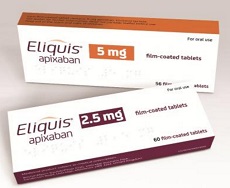
- Product photo of the original drug Eliquis. Drugs that are generic versions of the coagulant agent Eliquis (apixaban) will re-enter the market three and five months after discontinuing sales due to a failing patent nullification challenge. It is because the original drug's substance patent is set to expire on September 9th. According to sources on August 23rd, generics containing apixaban will be listed for reimbursement on September 10th. 18 drugs from 35 pharmaceutical companies will be reimbursed. The following companies will be launching their products in the market: Kyongbo Pharmaceutical, Medica Korea, Boryung, Vivozon Pharmaceutical, Ilhwa, Chong Kun Dang Pharmaceutical, Huvist Pharmaceutical, Huons, Daewoong Bio, Dong Kwang Pharmaceutical, Dongkook Pharmaceutical, Samjin Pharmaceutical, Shinil Pharma, Alicon Pharmaceutical, Genuone Sciences, Hana Pharm, Hutecs Korea Pharmaceutical, and Hanlim Pharmaceutical. Eliquis generics have been on the market since June 2019 after the Supreme Court decision. Generics won the substance patent nullification trial and the Supreme Court trial. However, the situation reversed. In April 2021, the Supreme Court ruled against the previous decision and destroyed the case in favor of the original company. Consequently, products that could potentially infringe on the patent were withdrawn from the market in two years. The original Eliquis' price was restored. Chong Kun Dang Pharmaceutical's Liquisia recorded KRW 4.1 billion (based on UBIST) in outpatient sales during the sales. Chong Kun Dang Pharmaceutical's Liquisia aims to regain the market presence. The price of drugs meeting the requirement criteria and receiving 59.5% credit as first generics are set as KRW 633 per tablet. Drugs meeting only one requirement criteria are set as KRW 484, which is 45.52% of the highest price. Boryung's Viala Fix will be listed as KRW 724, a 68%, credited as the innovative drug. Products that are set for listing have been previously launched. Some are new products. A pharmaceutical industry official said, "Eliquis was worth KRW 50 billion when listed in 2020. After generics withdrew from the market due to the Supreme Court ruling in 2021, Eliquis' price was restored. Therefore, it became the blockbuster drug with KRW 77.3 billion in prescription sales last year, based on UBIST," and added, "The market is expected to grow when new anticoagulants become prescribed in private practices. As a result, Korean pharmaceutical companies will actively pursue sales and marketing."
- Policy
- Hanmi faces competition from cheaper Zytiga generic drug
- by Lee, Tak-Sun Aug 26, 2024 05:45am
- Product photos of Janssen A new competing drug has entered the 'Zytiga' generic market, where Hanmi Pharmaceutical was the only company to launch a product last year. Ace Pharmaceutical has introduced a drug imported from India to the South Korean market. While Hanmi Pharmaceutical is strengthening its market presence by recently launching a combination drug, the new generic entry garners attention due to its impact on market competition. According to industry sources on August 25th, Ace Pharmaceutical listed 'Aviron Tab 500 mg (abiraterone acetate)' for reimbursement. The drug has the same active ingredient as Janssen Korea's Zytiga. Zytiga is an anticancer used in treating three types of prostate cancer: ▲patients with asymptomatic or mildly symptomatic metastatic castration-resistant prostate cancer (mCRPC), ▲patients with mCRPC previously treated with docetaxel, ▲patients newly diagnosed with hormone-sensitive metastatic prostate cancer (mHSPC) in combination with androgen deprivation therapy (ADT) plus prednisolone. The drug is expected to be used more as the patient burden decreases with the transition from selective reimbursement coverage (30% co-payment rate) to essential reimbursement coverage (5% co-payment rate). It generated KRW 19 billion last year, down -13%p year over year (YoY), based on IQVIA. Such a decrease in Zytiga's sales may be due to the generic entry. Hanmi Pharmaceutical launched 'Abiteron Tab 500 mg,' the first Zytiga generic in South Korea, last October. Last month, Hanmi Pharmaceutical launched a combination drug, 'Abiterone Duo Tab,' a combination of Zytiga and prednisolone. The company developed the product after noting that reimbursable Zytiga therapy can be combined with prednisolone. The industry draws attention to whether Hanmi Pharmaceutical can establish a presence in the market for anticancer agents with its proprietary combination drug. However, the company encountered a surprise. Ace Pharmaceutical, which imports foreign anticancer agents to South Korea, has recently introduced Zytiga generic. Ace Pharmaceutical has recently distributed 'Actepa Inj (thiotepa),' used as a conditioning regimen for allogeneic or autologous stem cell transplantation before the treatment of adult lymphoma and pediatric neuroblastoma or retinoblastoma, to Asan Medical Center. Therefore, the company demonstrated competitiveness in the market for anticancer agents. Aviron Tab's drug price is less expensive than 'Abiteron.' It was listed for reimbursement as KRW 8,498 per tab, which is lower than the calculated drug price. Aviron Tab's drug price is lower than KRW 8,537 for Abiteron tab and substantially differs from the original Zytiga tab (KRW 11,746). While original drugs show a strong presence in the market for anticancer agents, the competition in the market sized KRW 20 billion is expected to heat up after the entries of the first generic, Hanmi Pharmaceutical's combination drug, and a new generic.
