
- LOGIN
- MemberShip
- 2026-05-03 09:21:23
- Policy
- Qarziba’s reimb standard has been set before approval
- by Lee, Tak-Sun May 31, 2024 05:51am
- The reimbursement standard has been set for Qarziba (dinutuximab, Recordati Korea), which was designated as the 1st drug for a “Pilot Project for Integration of Product Approvals, Reimbursement Coverage Reviews, and Drug Price Negotiations,” even though it has not yet received approval from the Ministry of Food and Drug Safety (MFDS). Qarziba is used for treating neuroblastoma in young children over 12 months. The Health Insurance Review and Assessment Service (HIRA) held the 4th Cancer Disease Review Committee (CDRC) meeting 2024 on May 29 and announced this review result. Qarziba was considered for a review as a novel drug. It has been assigned to a “Pilot Project for Integration of Product Approvals, Reimbursement Coverage Reviews, and Drug Price Negotiations.” The process for product approvals, reimbursement coverage reviews, and drug price negotiations are being conducted concurrently. The MFDS has completed the safety and efficacy review and is currently processing the product approval. Even though the drug has not yet received product approval, a reimbursement standard has been set because it was designated as part of a pilot project. The CDRC set the reimbursement standard for this drug for young children over 12 months with ▲ A high-risk neuroblastoma who had received bone marrrow removal therapy and a stem cell transplantation therapy after showing partial adverse reactions following chemostheray ▲Recurrent and refractory neuroblastma. The CDRC review results for Qarziba, nexatin inj plus Loicosodium inj plus FU inj Choongwae, nexatin inj plus Xeloda tab, and Trisenox Inj plus Vesanoid Soft Cap. At the meeting, CDRC also approved a reimbursement expansion proposal for nexatin inj plus Loicosodium inj plus FU inj Choongwae or nexatin inj plus Xeloda tab. Additionally, the CDRC passed a reimbursement expansion proposal for Trisenox Inj plus Vesanoid Soft Cap. The committee also considered opinions by the Korean Academy of Medical Sciences and drafted a reimbursement standard improvement proposal reflecting current clinical settings. The reimbursement standards have been set for anticancer therapies for treating gynecologic cancer (2 items), breast cancer (1 item), esophageal cancer (1 item), and urological cancer (2 items). The HIRA stated that it has considered the opinions of the Korean Medical Association and the Korean Academy of Medical Sciences regarding reimbursement standards and is proactively pursuing a review to improve pharmaceuticals, activities, and treatment materials through communication with the medical industry and academics. For anticancer therapy, the CDRC’s task force team reviewed 6 items. As a result, reimbursement standards have been set for anticancer therapies for treating gynecologic cancer (2 items), breast cancer (1 item), esophageal cancer (1 item), and urological cancer (2 items). The CDRC delivered partial approval of Lutathera inj use coverage, limiting to application by clinics. Additionally, the CDRC approved reimbursement for the use of Lutathera inj use, limited to application by clinics, exceeding the standard approval.
- Policy
- MFDS approves the orphan drug 'Pluvicto' for prostate cancer
- by Lee, Hye-Kyung May 31, 2024 05:51am
- The Ministry of Food and Drug Safety (MFDS) approved The Ministry of Food and Drug Safety (MFDS) stated that on May 29th, it has granted approval of the orphan drug 'Pluvicto inj (Lutetium(177Lu) Vipivotide Tetraxetan)' for the treatment of prostate cancer. Pluvicto is imported by Novartis Korea. It is a radioligand therapy comprised of radioisotope Lutetium(177Lu), which binds to prostate-specific membrane antigen (PSMA), commonly expressed in prostate cancer, delivering therapeutic radiation to prostate cancer, leading to cell death of cancer cells. Pluvicto inj has been approved for the treatment of adult patients with metastatic castration-resistant prostate cancer (mCRPC) who have been treated with androgen receptor (AR) pathway inhibition and ‘taxane‘-based chemotherapy. The MFDS stated that in June last year, it has designated Pluvicto inj as the '6th Global Innovative products on Fast Track (GIFT)' and expects to provide a new treatment opportunity for prostate cancer patients who cannot receive conventional therapies. The MFDS said, "We will continue to make efforts to expand treatment opportunities for rare and refractory diseases by ensuring the expedited distribution of medications with proven safety and effectiveness based on our expertise in regulatory science.”
- Policy
- Korea-US gov't pledge to strengthen biohealth cooperation
- by Lee, Jeong-Hwan May 31, 2024 05:51am
- The Korean government has decided to strengthen cooperation with the U.S. Department of Commerce in the field of telemedicine and digital health, including non-face-to-face medical treatment. CareLabs and Lulu Medic, Korea’s leading healthcare platforms including domestic non-face-to-face treatment applications, Teladoc, the No. 1 telemedicine provider in the U.S., and Baxter, a global healthcare company, had the opportunity to present their major business achievements to the two governments. At 8 a.m. (KST) on the 30th, the Ministry of Trade, Industry and Energy (MOTIE) announced that it held the 'Korea-US Telemedicine Showcase' with the U.S. Department of Commerce via video. The showcase was held to enhance mutual understanding of the digital health and telemedicine industries in the two countries and explore ways for cooperation. The MOTIE assessed that the digital health industry is expected to continue to grow due to the rapidly aging population and improved quality of life. In particular, the ministry said that mobile app-based non-face-to-face medical treatment is gaining commercial results. The showcase was jointly organized by MOTIE, the U.S. Department of Commerce, digital health associations from both countries and 30 promising digital health companies from both countries. Among associations, the Korea Digital Health Industry Association (KoDHIA) from Korea and the American Telemedicine Association (ATA) from the U.S. attended the event. By company, CareLabs and Lulu Medic, Korea’s leading healthcare platforms including domestic non-face-to-face treatment applications, and Teladoc, the No. 1 telemedicine provider in the U.S., and Baxter, a global healthcare company, presented their major business results and future plans. The MOTIE plans to strengthen all-around cooperation in the bio industry, including pharmaceuticals, medical devices, and materials, parts, and equipment industries, through 'Bio USA 2024,' which will be held from the 3rd to the 4th of next month. A MOTIE official said, "We are promoting policies such as supporting the commercialization of products and services and fostering human resources to create a digital health industry ecosystem. Building on the telemedicine showcase we held this time, we plan to continue our bilateral digital health cooperation.”

- Policy
- Research on reforming post-management of pharmaceuticals
- by Lee, Tak-Sun May 30, 2024 05:50am
- The government has initiated research on developing a comprehensive reform of post-insurance management of pharmaceuticals. This research was part of the 2nd Comprehensive NHI Plan, announced earlier this year. According to industry sources on May 29th, a policy initiative reporting session was held to announce the start of the research on post-insurance management of pharmaceuticals. As part of the 2024 initiative plan for the 2nd Comprehensive NHI plan, which was announced last month, policy initiative research will be conducted to develop a comprehensive reform of post-insurance management of pharmaceuticals. This plan aims to effectively manage the cost of pharmaceuticals as part of a mid-to-long-term strategy. The research will include the current state of the post-insurance management program, accomplishments, comparisons to foreign countries, and suggestions for improving the program to suit South Korean settings. The MOHW announced that the research will start in May and be completed by December. The Korea Institute for Health and Social Affairs (KIHASA) will conduct the research under a contract with the MOHW. "The research aims to develop a comprehensive reform of the post-insurance management of pharmaceuticals, including the Health Insurance Review and Assessment Service (HIRA)’s reevaluation of reimbursement appropriateness and the National Health Insurance Service (NHIS)’s Price-Volume Agreement (PVA) program," a government official explained. “Therefore, the MOHW, the HIRA, and the NHIS officials have joined the reporting session.” Earlier this year, there were talks of a possible reevaluation of comparisons to foreign pharmaceutical pricing following the research on the comprehensive measures for post-insurance management of pharmaceuticals. However, it appears that there are plans to separately pursue the reevaluation of comparisons to foreign pharmaceutical pricing this year. When the research report is available at the end of this year, there will be a discussion on systemization next year.
- Policy
- MSD discontinues supply of Zostavax in Korea
- by Lee, Hye-Kyung May 30, 2024 05:50am
- MSD Korea has announced that it will discontinue the domestic supply of the shingles vaccine Zostavax in Korea. According to the Ministry of Food and Drug Safety, MSD reported the suspension of Zostavax to the Ministry of Food and Drug Safety on Monday. The last batch is expected to be delivered within September, but the supply period is subject to change depending on market demand. Zostavax is a shingles vaccine that was launched in 2013. It was the first live attenuated vaccine available in South Korea. According to the market research institution IQIVA, Zostavax generated KRW 22.4 billion in sales last year, which is half the KRW 55.9 billion it had posted in 2019. "The introduction of alternative shingles vaccines to Zostavax in 2017 has significantly reduced global clinical demand for Zostavax," explained MSD said in a statement. "We have decided to voluntarily discontinue the manufacture and supply of Zostavax in the global market in 2024." The company added that this decision has nothing to do with the quality or safety of the product and that the decision is based on a careful evaluation of the declining clinical demand for Zostavax due to changing market conditions and the availability of alternative vaccines. Alternatives to Zostavax include SK Bioscience's ‘SKYZoster’ and GSK's ‘Shingrix.’ "In the case of Zostavax, there are alternative shingles vaccines already available on the market," said MSD, adding, "We believe the market impact of this discontinuation will be minimal, so we are not taking any measures to facilitate supply." The last batch is planned for September 2024. "The supply period may vary depending on market demand," MSD said. "We will continue to ensure smooth supply and management of the last batch of Zostavax in Korea and any remaining product in the market, while diligently informing health authorities, relevant organizations, and healthcare providers about this decision and the processes that will follow to minimize disruption in the healthcare setting."
- Policy
- Antengene starts Xpovio's reimb pricing negotiations in KOR
- by Lee, Tak-Sun May 29, 2024 05:45am
- The Chinese pharmaceutical company Antengene has started pricing negotiations with the National Health Insurance Service for its multiple myeloma drug ‘Xpovio Tab (Selinexor),’ bringing near its reimbursement listing in Korea. Xpovio was approved in July 2021 as a treatment for blood cancer. At the time of its approval, it became the first new drug developed by a Chinese pharmaceutical company to be approved by Korea’s Ministry of Food and Drug Safety. However, it has faced many challenges during the health insurance reimbursement review after its approval. According to industry sources on the 28th, Antengene recently started drug pricing negotiations with the National Health Insurance Service for its Xpovio Tab. The drug was deemed adequate for reimbursement only for the multiple myeloma indication after HIRA’s Drug Reimbursement Evaluation Committee (DREC) review on the 2nd of this month. The drug has passed DREC review at its second attempt. Xpovio received domestic approval in August 2021. It is indicated ▲ for use in combination with dexamethasone for the treatment of adult patients with relapsed and/or refractory multiple myeloma who have received at least 4 prior therapies and whose disease is refractory to at least 2 proteasome inhibitors (PI), at least two immunomodulatory medicinal products (IMiD), and an anti-CD38 monoclonal antibody (mAb); and ▲ as a monotherapy for the treatment of adult patients with relapsed/refractory diffuse large B-cell lymphoma (rrDLBCL) who have received at least two prior lines of treatment. Of these, only the multiple myeloma indication was approved as adequate for reimbursement. In June last year, the Cancer Disease Review Committee also set reimbursement standards only for the multiple myeloma indication. At the time, the drug's reimbursement application was rejected by DREC in November of the same year. Antengene Korea, which imports and sells the drug, started preparations again with grit and submitted an application again in February, and succeeded in being recognized as adequate for reimbursement in May, but just for the multiple myeloma indication. Before the DREC review, the Korea Multiple Myeloma Patient Group had issued a statement urging the Korean government to reimburse Xpovio Tab, due to lack of other alternative treatments. In its request, KMPG stressed how the drug is covered in all A8 countries that are used as a reference for new drug registration in Korea. At the time Xpovio was approved in Korea, the drug was not listed in any of the A8 countries. However, starting with Canada in 2022, it is now reportedly listed in all A8 countries, including the United States, United Kingdom, Germany, France, Italy, Switzerland, and Japan. If the company and HIRA reach an agreement during the drug pricing negotiations, it will be reimbursable in Korea. If so, it will become the second reimbursed drug developed by a Chinese pharmaceutical company after Brukinsa. Therefore, it will be interesting to see if it will successfully pass the final stage of negotiations with the MFDS and be reimbursed as requested by patients.
- Policy
- Only 15 of the 61 Trajenta generics will be released in KOR
- by Lee, Tak-Sun May 29, 2024 05:45am
- Despite the expiry of the substance patent of the DPP-4 inhibitor diabetes drug Trajenta (linagliptin) set for the 8th of next month, most of its generic versions will not be launched at that time. Only products with the first generic exclusivity will be released, and the rest will only be allowed sale in March next year after the sales ban period is lifted. According to industry sources on June 28, a total of 15 generic versions of Trajenta will be listed with reimbursement on June 9. On the day, the following pharmaceutical companies will be launching generic versions of Tragenta: Korea Arlico Pharm, Hutecs Korea Pharmaceutical, Alvogen Korea, Aju Pharmaceutical, Boryung Pharmaceutical, Hanlim Pharma, Dongwha Pharmaceutical, Ildong Pharmaceutical, Hana Pharm, Kukje Pharm, KyungDong Pharm, Shinil Pharm, Huons, Daewon Pharm, and DonKoo Bio&Pharma will release generic versions of Trajenta monotherapy. The absence of large generic companies in the monotherapy market is notable. This is in contrast to the 29 companies releasing the linagliptin 5mg + metformin hydrochloride 1g combination drug. The reason why only 15 companies, mainly small and medium-sized pharmaceutical companies, are launching Trajenta generic monotherapy is due to the first generic exclusivity. The 15 companies received the right to first generic exclusivity in February 2019. They were able to avoid Trajenta’s crystalline patent and secure the right to market the drug first upon their approval. The companies will have exclusive rights to market the drug until March 8, 2025. This means that before March 8, 2025, the sale of drugs that are identical to the products that have obtained first generic exclusivity is prohibited. 42 generic drugs have been approved, excluding 19 that have obtained first generic exclusivity. These can only be launched after March 8th of next year. Their launch date has been delayed by 9 months due to the failure to obtain the first generic exclusivity rights. As it is important for generic products to preoccupy the market, the products that failed to obtain first generic exclusivity are now put in a much more disadvantageous position as they would have to enter the market 9 months later than the competitors. In response, 4 companies, including Mother's Pharmaceutical, received approval for salt-modified versions to bypass the first generic exclusivity. Since salt-modified products are not identical to the original drug, they can be released regardless of the first generic exclusivity rights. They will also receive a drug pricing premium, and be priced at KRW 675 per unit, making them the highest-priced among follow-on Trajenta monotherapies.
- Policy
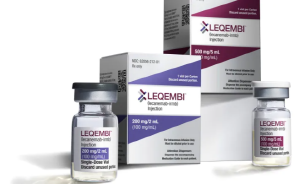
- New dementia drug Leqembi receives approval
- by Lee, Hye-Kyung May 27, 2024 05:48am
- The new drug ‘Leqembi (lecanemab-irmb),’ which reduces the rate of disease progression and slows cognitive decline from Alzheimer's disease, has received marketing authorization in Korea. The Ministry of Food and Drug Safety (MFDS) announced on Thursday that it has approved Eisai Korea’s Leqembi, a new drug for Alzheimer's disease. Leqembi was approved as a treatment to slow the progression of mild cognitive impairment (MCI) and mild dementia due to Alzheimer's disease.’ The drug has been proven to reduce the rate of disease progression and slow cognitive decline by selectively binding to amyloid beta (Aβ) aggregates, which are a known cause of Alzheimer's disease. However, its efficacy and safety in patients whose condition has progressed to moderate or severe Alzheimer's disease have not been confirmed. The MFDS shared the results of the safety and efficacy review with the Health Insurance Review and Assessment Service prior to Leqembi’s approval to help shorten the reimbursement review period to enable quicker access to the Alzheimer's disease treatment. Under the approval and reimbursement linkage system, Leqembi’s reimbursement review is expected to start upon its approval. Following the U.S. (July 2023), Japan (September 2023), and China (January 2024), Korea will become the fourth country to approve Leqembi’s use in the world. However, the problem is the price of the drug. In the U.S., Leqembi costs about KRW 35 million per year; in Japan, it costs KRW 27 million. As this means that it would cost tens of millions of won to slow down the progression of mild dementia, patients in Korea are left with no option but to wait for its reimbursement.
- Policy
- Tepmetko reapplies for reimb in Korea for the third time
- by Lee, Tak-Sun May 27, 2024 05:48am
- Tepmetko Tab (tepotinib, Merck) is applying for reimbursement in Korea for the third time after failing to set a reimbursement standard at the Cancer Disease Deliberation Committee (CDDC) stage in March. With no other treatment available for patients with MET-mutation positive metastatic non-small-cell lung cancer (NSCLC), the industry’s focus is on whether Tepmetko will succeed in receiving reimbursement approval this time. According to industry sources on the 26th, MSD recently applied for reimbursement of Tepmetko to the Health Insurance Review and Assessment Service. This is the third reimbursement application the company has filed for the drug. Tepmetko, which was approved in Korea in November 2021, started its reimbursement journey in earnest in 2022. In its first attempt, the company sought to receive reimbursement for Tepmetko as a treatment for locally advanced or metastatic non-small cell lung cancer with a confirmed MET exon 14 skipping mutation but failed at the HIRA’s CDDC stage in February last year. After the first failure, the company reorganized its data and made its second attempt last October. However, the company’s second attempt was also unsuccessful. In March, the CDDC again failed to set reimbursement standards. The company voluntarily withdrew their application in April thereafter. After taking a break, the company is now seeking reimbursement for the third time. No other drug for MET-mutation-positive NSCLC has successfully received reimbursement in Korea. Another same-class drug Tabrecta (capmatinib, Novartis) also failed to receive reimbursement after its 2021 approval and is now reportedly focusing on nonreimbursed sales. Although patients with MET mutations account for a small percentage (3-4%) of patients with metastatic NSCLC, the patients are in desperate need of a targeted therapy option due to their poor prognosis. In February, the company received traditional approval from the US FDA based on additional data. The company is known to be seeking reimbursement in Korea with the efficacy data that continues to accumulate. It has already passed the drug committees (DCs) of 13 major medical institutions in Korea and is being prescribed on a non-reimbursement basis through patient assistance programs. Therefore, the industry’s attention is on whether Tepmetko can pass the difficult Korean health insurance market barriers and receive reimbursement in its 3rd attempt.
- Policy
- Companies can apply for multiple clinical protocols at once
- by Lee, Hye-Kyung May 24, 2024 05:48am
- Pharmaceutical companies can now apply for multiple clinical trial at the same time for a single investigational drug that is being approved for the first time. The measure is presumed to have been implemented to accelerate global entry of domestic pharmaceutical companies. The Ministry of Food and Drug Safety has upgraded its computer system that manages same-ingredient investigational drugs to allow companies to apply for multiple clinical trial protocols at the same time. According to the pharmaceutical industry on the 23rd, the MFDS has prepared a follow-up measure to the 16th Task of the 'Food and Drug Regulatory Innovation 3.0' plan it had announced on May 2nd. Until now, every investigational new drugs was managed under one approval number for systematic management and to facilitate batch changes of quality data, so companies had to receive approval for one initial clinical trial protocol, then additionally apply for changes to add protocols. However, there has been industry opinion that it is difficult to conduct clinical trials swiftly in Korea during multinational clinical trials, as the company is required to add a protocol again if it seeks to target a different disease after receiving approval for the first protocol. Regarding this, MFDS Director Kyung-Seung Shin, Director of the Clinical Trials Policy Division at MFDS said, "In the case of clinical trials, multiple protocols are submitted for a single drug candidate to test it on multiple diseases, and the successful outcome of some of the trials lead to the drug’s final approval.” Shin explained, "It has been pointed out that the formulation, content, and route of administration cannot be clearly specified because the MFDS manages each drug candidate under one approval number. From now on, it will be possible to apply for a single clinical trial that contains various trial protocols at once for a same-ingredient drug” The MFDS expects the simultaneous application for clinical trials for a same-ingredient drug to accelerate the domestic industry's initiation of global clinical trials. However, even though companies can apply for multiple protocols of a first-approved investigational new drug at the same time, companies would need to submit the data and fees for each protocol approval application separately. However, for quality changes, the company would need to separately apply for approval of the change in each protocol. This means that quality changes cannot be applied unilaterally to all trial protocols. Also, companies can apply for additional protocols (modifications) after receiving initial protocol approval as in the past.
