
- LOGIN
- MemberShip
- 2026-05-03 03:25:51
- Policy
- 32 med schools in KOR confirm their admission quota
- by Lee, Jeong-Hwan May 02, 2024 05:52am
- Prime Minister Han Duck-soo. The 32 medical schools that were assigned increased medical admission quota from the government confirmed their final medical admission quota for the 2025 academic year. After withdrawing the initial announcement of increasing the medical school admission quota to 2,000 students, the government allowed universities to adjust their intake autonomously. As a result, the expansion of the 32 medical schools is anticipated to be around 1,550 students. The Korean Council for University Education (KCUE) plans to review changes to next year's college admissions process, including medical school admission quotas submitted by each university. It will notify the universities of the decisions by the end of this month. On May 1st, Prime Minister Han Duck-soo chaired the "Central Disaster and Safety Countermeasures Headquarters Meeting regarding the doctors' collective" at the Government Complex Seoul. During the meeting, he stated, "The 32 medical schools across the country that have increased their quotas have determined the admission quotas for the 2025 academic year and submitted them to the KCUE." The nine regional national universities have decided to reduce 50% of the previously allocated expansion quotas and recruit accordingly. Most private universities have decided to fully utilize the expansion quotas or reduce them slightly by 10 to 20 students. If Soonchunhyang University, Dankook University, Konyang University, and Cha University, which have not disclosed the exact expansion size, decide to recruit 100% of the allocated expansion quotas, the total number of medical school admissions for next year is estimated to be around 1550. According to Han, the KCUE is scheduled to disclose the results of each university’s medical school admission quota on May 2nd. "The President and the main opposition party leader had a long conversation on Monday regarding national affairs. They discussed the medical school expansion and healthcare reform in particular," Han said. "This reflects the support and desire for healthcare reform." "The government will continue communicating effectively with the National Assembly throughout the healthcare reform process," Han added. "We strongly encourage the medical community to engage in dialogue with the government actively." "If the medical community brings forward a scientific and rational single proposal, the discussion on the expansion scale beyond the 2026 academic year is possible," Han said. "However, it is regrettable that another group of hospital professors plans to go on strike this Friday," he added. “While patients feel anxious, some professors say they are to leave their side,” Han said. “I urge medical school professors to continue to stay by the patient's side as they have done so far, and residents and medical students should also return now,” Han emphasized. The Prime Minister also suggested that they plan to discuss allowing doctors to hold additional positions at 119 emergency centers and metropolitan emergency medical situation rooms to respond to emergency patients. Han explained, "We are working to immediately improve regulations in the medical field to allow general practitioners to treat patients in emergency rooms of other medical institutions and permit trauma center specialists to provide emergency room and inpatient care outside their centers." "Today at the Central Disaster and Safety Countermeasures Headquarters meeting, We will discuss ways to facilitate cooperation between universities and hospitals to ensure swift approval for doctors who wish to work in 119 emergency centers and metropolitan emergency medical situation rooms, thereby enhancing emergency patient response capabilities," Han added.

- Policy
- Gov’t will announce preferential pricing measures by June
- by Lee, Jeong-Hwan May 02, 2024 05:52am
- The government plans to prepare and announce the standards for providing preferential drug prices to pharmaceutical companies that have led healthcare innovation through R&D investment, supply of essential medicines, and job creation by June at the latest. The government will also provide preferential drug pricing for drugs that use domestic APIs and establish a procedure to promptly raise drug prices of drugs experiencing supply instability due to rising costs by June. Also, for efficient health insurance drug expenditures, the MOHW will devise a mid-to-long-term strategy to integrate the currently fragmented mechanisms for adjusting the upper limit of insured drug prices, while also promoting clinical reevaluation of listed drugs and rationalization of the price-volume agreement (PVA) system. The MOHW made the announcement through the '2024 Implementation Plan for the 2nd Comprehensive National Health Insurance Plan' on the 30th. The MOHW plans to prepare a preferential treatment system for innovative new drugs, establish a stable supply support system for essential medicines, and promote efficient drug price expenditures through the detailed plan for the 2nd Comprehensive National Health Insurance Plan. ▲Advancing the preferential treatment system for innovative new drugs=The MOHW will strengthen compensation for innovative growth efforts, including fostering a virtuous cycle for new drug development through R&D investment, etc. This is to support the creation of a sustainable pharmaceutical and biotechnology innovation ecosystem. To this end, the evaluation criteria and procedure regulations for medical care benefits of medicines will be revised by the first half of this year. Specifically, the government will ease the standard for cost-effectiveness evaluations of new drugs that meet the innovation evaluation criteria, such as those that demonstrate clinical superiority. Preferential pricing will be applied to companies that lead healthcare innovation, including companies that invest in R&D, supply essential drugs, create jobs, and ensure stable supply. The detailed action plan will specify how the innovativeness of new drugs should be defined to apply a flexible scope for acceptance during cost-effectiveness evaluations. The plan will apply preferential pricing for new drugs made by pharmaceutical companies with a high R&D ratio and expand subjects for the risk-sharing agreement (RSA) scheme. It will allow RSA to be applied to life-threatening or chronically debilitating diseases that do not qualify for the current special exception of calculations. The MOHW estimates the budget for the program to be around KRW 81.9 billion. ▲Strengthening the support System for a stable supply of essential medicines=To ensure the stable supply of essential medicines in terms of health security, prices of essential drugs will receive preferential treatment upon listing, and drugs with low profitability will be protected. The MOHW has decided to give generics of designated ingredients of national essential drugs a higher drug price than other generics if they are newly registered using domestic ingredients. The preferential rate is 68% of the original drug price, which is higher than the 59.5% granted to first listed generics. In the case of generic drugs, the upper limit will be raised if a listed generic drug designated as a national essential medicine changes its API from foreign to domestic. Also, the government will establish a procedure to quickly raise the price of drugs that have become difficult to produce due to unstable drug supply and rising costs after COVID-19. The government plans to shorten the period required to raise drug prices from '210 days or more' to '30 days or more' by streamlining the review process for the Health Insurance Review and Assessment Service's upper limit increase adjustment criteria and simultaneously negotiating drug prices with the National Health Insurance Service. It will also strengthen the adequacy of compensation for drugs that fall under the drug shortage prevention program by reflecting the manufacturing cost and adjusting the upper limit for herbal medicines covered by Korean medicine insurance. To this end, the MOHW will revise the standards used for determining and adjusting medicines that fall under the MOHW's notification by the first half of this year. Its expected budget is around KRW 75.6 billion. Efficient management of drug expenditures= The government will also maintain rational expenditure management and financial sustainability of Korea’s national health insurance through drug price reevaluations and ensure both drug quality and reasonable cost. As a mid-to-long-term strategy, the government plans to integrate the currently fragmented drug price ceiling adjustment mechanism. The government plans to order a policy research service in May to establish an integrated drug price adjustment mechanism that can accommodate for the authorities’ plans above. More specifically, the research will analyze the current status of the drug price follow-up system as a whole, compare its performance with overseas cases, and prepare a system improvement plan tailored to domestic conditions. Drugs that have been listed for a long time but lack clinical utility will be selected and reevaluated based on current standards. If they fail to prove clinical utility, reimbursement of those drugs will be restricted. Also, the government will maintain a rational follow-up system by adjusting the reimbursement range and drug price through the reevaluation of reimbursement adequacy and reevaluation through comparison with foreign drug prices. The government will also rationalize the PVA system. For example, the government plans to increase the price discount rate for drugs with high claims amounts, such as those whose claims exceed KRW 30 billion. It will also expand the exclusion criteria for the PVA system. The government explained that the PVA system will be improved by expanding the current standard of less than KRW 2 billion to less than KRW 3 billion. Losses incurred during the stay of execution of rebate drug price cuts will be collected afterward to minimize financial losses. To solidify these plans, the MOHW will revise the standards used for determining and adjusting medicines within the first half of this year. The MOHW has estimated the drug cost savings incurred by the administrative action to be around KRW 242.8 billion.
- Policy
- Industry fumes over government's drug price reeval plan
- by Lee, Tak-Sun Apr 30, 2024 05:50am
- The pharmaceutical industry continues to criticize the government's plan to reevaluate Korea’s drug prices based on foreign drug prices. Not only is the industry unconvinced about the purpose of the reevaluation itself, but the industry believes that the government's proposal has been designed to disadvantage the pharmaceutical industry while disregarding existing evidence. As a result, the industry is reluctant to accept the government's proposal this time as final. However, what they worry is that the government will proceed with the reevaluations using the ‘A8 average price excluding the highest and lowest price’ standard nevertheless. The government’s foreign drug price reevaluation plan seeks to adjust Korea’s insurance ceiling price of off-patent drugs by comparing it with the highest price of the same drug in A8 countries. According to industry sources on the 29th, the government proposed the average price of the A8 countries (Japan, France, Germany, Italy, Switzerland, the United Kingdom, and Canada), excluding the highest and lowest prices, as the adjustment standard for the pricing reevaluations at the 8th meeting for the foreign drug price comparison reassessment that was held on the 26th. This news has sparked outrage from many in the pharmaceutical industry. The industry’s position is that the reevaluation using foreign drug prices is a redundant follow-up mechanism and that the government should conduct a research service or pilot project to evaluate its effect before commencing the project in earnest. Some argue that if it is inevitable to implement the program, the adjustment standard should be set as the 'A8 adjusted average price.’ An industry official said, "The A8 adjusted average price is the most reasonable option, as it has been used as a standard in the comparative reevaluation using foreign drug prices in the past and is also being used for new drug listings.” The A8 adjusted average price had been 1 of the 4 options originally proposed by the government. The industry has simulated the 4 adjustment standards proposed by the government and found that the 'A8 adjusted lowest price' will bring the most price reduction, followed by the 'A8 adjusted average price excluding the highest and lowest', then the 'A8 adjusted median price', and finally the 'A8 adjusted average price'. In other words, the government's proposal is the second worst. Another industry official said, "The impact of excluding the lowest price is minimal because there is not much price difference between the countries, but if the highest price is excluded, the price reduction rate will become immense." On the other hand, if the A8 adjusted average price is used as the standard, the price reduction effect is said to be slight. In the industry, there is talk that the government clearly intends to reduce the price of off-patent drugs to save health insurance finances through the measure. An industry official said, “Using the A8 adjusted average price that excludes the maximum and minimum prices has not been used for reevaluations or new drug registrations, and has an equity issue to continuously use the mechanism for the follow-up management of drug prices in the future. The government seems to be trying to refer to that standard without reason, as the effect of drug price cuts is small with existing methods,” expressing discontent. The government plans to hold additional meetings to gather industry opinions regarding its proposal. However, there are those in the industry who believe that even if the government receives more opinions, it will be difficult to change the evaluation standard already set out by the government. An official from a domestic pharmaceutical company said, "This is the first proposal presented by the government after 8 meetings, so it will be difficult to overturn it again. However, industry opinions on subjects for exclusion, detailed criteria, and reduction rates may likely be reflected.” However, despite the government's proposal, it is still unclear whether the reevaluations will be conducted within the year. As the supply and demand of drugs continue to be unstable after the COVID-19 pandemic, the government would be conscious of public opinion that the reevaluation should be postponed as a sharp reduction in drug prices could worsen the supply shortage.
- Policy
- Cancellation of Forxiga approval, HK inno.N gets indication
- by Lee, Tak-Sun Apr 30, 2024 05:50am
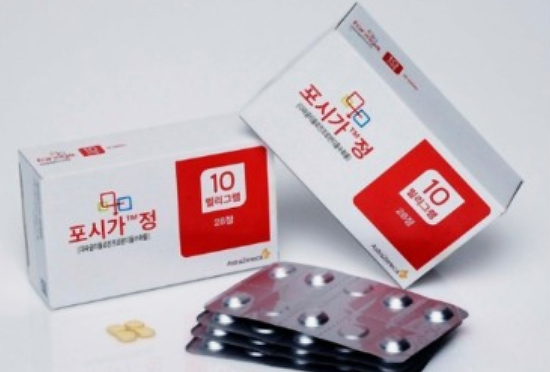
- Forxiga (left), canceled its approval in South Korea, and Dapa N (right), inherited Forxiga’s indication. AstraZeneca Korea voluntarily canceled its Korean approval for ‘Forxiga (dapagliflozin propanediol hydrate), an oral diabetes treatment, valued at KRW 50 billion. As reimbursement will be canceled soon, Forxiga’s exit from the Korean market is imminent. After the approval cancellation, Forxiga indication was transferred to HK inno.N’s generic ‘Dapa N tab.’ Meanwhile, attention is gathered to the outcome of ongoing negotiations for a price-volume agreement (PVA). As the reimbursement cancellation has been scheduled, the variable would be whether the ceiling price will be reduced or maintained. AstraZeneca has been trying to retain the drug price as other countries selling Forxiga might reference the Korean pricing. According to industry sources on the 29th, the approval for Forxiga tab was voluntarily canceled on April 25. From now on, domestic distribution under the name of Forxiga is no longer possible. Following the cancellation of the approval, it is expected to be deleted from the reimbursement listing. Reimbursement deletion is anticipated on June 1st, but insurance coverage will be provided for a certain duration as a matter of custom. Along with the cancellation of Forxiga’s approval, its indication has been transferred to the company’s partnering company HK inno.N’s generic ‘Dapa N tab 10 mg.’ While the generics launched in April of last year only have indications for diabetes due to patent issues, AstraZeneca transferred the indication to its partnering company HK inno.N through granting approval documents. Consequently, Dapa N 10 mg currently has indications for diabetes, chronic heart failure, and chronic kidney disease, and its reimbursement critieria include diabetes and heart failure. What matters from now is whether Forxiga will be able to maintain its current ceiling price of KRW 734. AstraZeneca’s Forxiga successfully defended its price even during customary drug pricing reduction after generics launched last year, through the court’s suspension of execution. However, PVA negotiations became the variable. The National Health Insurance Service (NHIS) tried to negotiate a drug pricing reduction last year for Forxiga, which had increased usage (claimed amount). The first negotiation did not meet an agreement, and the NHIS and AstraZeneca Korea are currently in the final negotiation until May 20th. As Forxiga is expected to be no longer reimbursed starting June 1st, whether the PVA negotiations-reflected ceiling price will be adjusted before Forxiga leaves the Korean market is a matter of interest. The industry expects that AstraZeneca will put all efforts into maintaining the current ceiling price in consideration of other countries that sell Forxiga.
- Policy
- New PVA operation system will be implemented from May
- by Lee, Tak-Sun Apr 30, 2024 05:49am
- The detailed operation standards for the Price-Volume Agreement negotiations will change drastically from May. The reduction rate will be applied differently depending on the amount of each drug’s insurance claims, and products with annual claims of less than KRWk 3 billion will be excluded. In addition, the discount rate of drugs that have been subject to negotiations more than 3 times will be reduced. The National Health Insurance Service (NHIS) announced on April 29 that it will completely reorganize the 'Detailed Operating Guidelines for Price-Volume Agreement Negotiations’ from May. The PVA system adjusts drug prices through negotiation for drugs whose costs increased by a certain level and is a major post-marketing drug price management system used to manage drugs with a large financial impact. Recently, the need to improve the system has emerged in order to prepare for the structural issue of drug costs continuously increasing due to the increase in high-priced drugs such as 'one-shot treatment drugs' and rapidly aging society. To address the issue, the NHIS prepared the ground for improvement based on internal and external research and then organized a PVA system improvement council in 2023 with the MOHW and the pharmaceutical industry to come up with an effective and acceptable PVA system improvement plan. In the revised guidelines, the reference formula is linked to the amount of insurance claims filed for each drug so that drugs with higher claims amounts would receive a higher reduction rate and drugs with lower claims amount would receive a lower reduction rate, compensating for the limitations in Korea’s current reference formula that only focuses on the increased usage rate. In addition, the exclusion criteria that had been set at 'less than KRW 2 billion in claims’ was raised to 'less than KRW 3 billion in claims’ when conducting PVA negotiations to improve the efficiency of the system. In addition, in order to create a sustainable and innovative pharmaceutical and bio-industry ecosystem and foster an environment that ensures a stable supply and demand of drugs, the government decided to reduce the reference formula reduction rate by 30% on the third round of negotiations if the same drug is subject to PVA negotiations 3 times within 5 years and is an innovative pharmaceutical company or a company with an R&D ratio of 10% or higher. In addition, for drugs whose usage has temporarily increased due to unavoidable reasons such as the COVID-19 pandemic, the government introduced a 'one-time reimbursement agreement system' that refunds claims based on another reference formula reduction rate that is different from the existing price adjustment formula, expanding the pharmaceutical companies' options. Director Hae Min Jung of the Department of Drug Management at NHIS said, "The NHIS has been overseeing the overall PVA system, from target selection through usage monitoring to drug price reduction, and saved an average of about KRW 40 billion of health insurance finances per year. I expect the reform to result in additional financial savings of approximately KRW 10 billion per year.” He added, “We would like to express our gratitude to the relevant organizations, pharmaceutical industry, and related experts for their cooperation in coming up with the system improvement plan, and we hope that the organic cooperation between stakeholders will continue for our mutual benefit." The revised 'Detailed Operating Guidelines for Price-Volume Agreement Negotiations’ will take effect on May 1, 2024, and the revised guidelines will be applied to drugs that are being monitored or negotiated as of the effective date.

- Policy
- Gov’t discloses draft for overseas drug price reevals
- by Lee, Tak-Sun Apr 29, 2024 05:50am
- The Korean government presented a draft of its plan during a meeting for the foreign drug price comparison reevaluations that was held on the 26th. The government’s foreign drug price comparison reevaluation was planned by the government to adjust the price of off-patent drugs by comparing their price to the upper limit of A8 countries (Japan, France, Germany, Italy, Switzerland, the United Kingdom, and Canada). The plan was included in the government's 2nd Comprehensive National Health Insurance Plan as a measure to strengthen the fiscal soundness of Korea’s health insurance finances. At the 8th meeting that was held on the morning of the 26th at the Kukje Electronics Center in Seocho-gu, Seoul, the government presented a single proposal based on the opinions collected from the industry. It is understood that the government chose one of the 4 adjustment options (A8 adjusted average price, A8 adjusted minimum price, A8 adjusted median price, and A8 adjusted excluded average price) that it had proposed at the beginning of the first round of talks late last year. However, both sides emphasized that the draft was not final. Representatives from the MOHW, the Health Insurance Review and Assessment Service, the Korea Pharmaceutical and Bio-Pharma Manufacturers Association, the Korean Research-based Pharmaceutical Industry Association, the Korea Biomedicine Industry Association, and other officials from the pharmaceutical industry. "The government proposed a daft, but it is not final," said a government official, adding, "We have asked the pharmaceutical industry for their opinions, and will need to hold another meeting next time. Nothing has been decided yet, including when the plan will be implemented and how the prices will be reassessed.” A pharmaceutical industry representative who attended the meeting also said that the proposal is not final and that more meetings would need to be held for further discussions. "The meeting was held based on the contents presented by the 3 organizations,” the official said, adding, "The government made a single proposal, but it cannot be regarded as final. Additional meetings are inevitable for the government to reach a consensus with the industry." On the other hand, the industry expressed concerns that the government's proposal this time will become the final proposal. The government has also asked the media to refrain from reporting on the government's proposal as the final plan until a finalized version is available. However, the predominant view across the industry is that the reevaluations will be initiated sooner rather than later. This is because the government is planning to invest KRW 10 trillion into healthcare finances over 5 years for essential healthcare as part of its healthcare reform, during which it will seek to stabilize finances by reducing the price of generic drugs. The pharmaceutical industry’s point is that it is not too late to start the comparative reevaluation of overseas drug prices after observing how much financial savings the government has made through existing reevaluations, such as the reevaluation of the upper limit amount and the reevaluation of drug reimbursement adequacy, and added that a preparatory period would needed before the foreign drug price comparison reevaluation to conduct pilot projects or research services. The public and private sectors are expected to start discussing the government’s proposal soon. However, as the pharmaceutical industry disagrees with the purpose of the reevaluation itself, a bumpy road is expected until a final draft is prepared.
- Policy
- Jardiance under review for expanding reimb to kidney disease
- by Lee, Tak-Sun Apr 29, 2024 05:49am
- Boehringer Ingelheim Korea 'Jardiance tab (empagliflozin, Boehringer Ingelheim Korea),' SGLT-2 class of treatment, is considered for expanding reimbursement to kidney disease, in addition to its current reimbursement for diabetes and cardiac failure. As Forxiga, a competing drug in the same class as Jardiance, is expected to withdraw from the Korean market in the second half of the year, Jardiance’s expanded areas may lead to an increase in market share. According to industry experts on the 25th, Jardiance 10 mg is undergoing review by the Health Insurance Review and Assessment Service (HIRA). HIRA has recently received academic opinions and supplementary documents from the pharmaceutical compnay. The efficacy and effectiveness of Jardiance 10 mg have been demonstrated in three diseases, including type 2 diabetes, chronic cardiac failure, and chronic kidney disease. Among these diseases, Jardiance is covered by reimbursement for type 2 diabetes and chronic cardiac failure. For chronic cardiac failure, Jardiance is reimbursed when administered at a safe dosage as part of standard treatment for patients with chronic heart failure characterized by reduced systolic heart failure, with an ejection fraction measurement under 40%. Last October, it was approved for chronic kidney disease indication. Regardless of the status of accompanying type 2 diabetes, Jardiance can be used to reduce the risk of death caused by the progression of kidney disease or cardiovascular diseases. The company has applied for reimbursement expansion at the HIRA following receiving additional indication approval from the Ministry of Food and Drug Safety (MFDS). Its competitor, Forxiga (dapagliflozin, AstraZeneca Korea), also has indications for diabetes, cardiac failure, and kidney disease. While it is reimbursable for diabetes and cardiac failure, patients need to cover the cost out of pocket when using it to treat kidney disease. Forxiga is expected to withdraw from the market in South Korea in the second half of the year. When Forxiga withdraws, Jardiance will become the only remaining original product with three indications in diabetes, cardiac failure, and kidney disease. If Jardiance is approved for reimbursement for chronic kidney disease, it is expected to have a more significant share in the SGLT-2 inhibitor market. However, reports indicate that Forxiga’s indications are being transferred to its joint-sales partner HK inno.N’s generics. Consequently, HK inno.N may pursue reimbursement expansion for these generics. Pharmaceutical companies in South Korea are preparing to launch a generic version of Jardiance in March 2025.
- Policy
- Pharma companies with 'superior R&D·K-made drug ingredients
- by Lee, Jeong-Hwan Apr 26, 2024 05:48am
- Starting this year, under the 2nd comprehensive National Health Insurance Plan (hereafter, referred to as NHI Plan), the government will provide preferential drug pricing for new drugs developed by pharmaceutical companies with high R&D costs. Additionally, the plan will expand the scope of the risk sharing agreement (RSA) for severe diseases. This year’s plan includes offering preferential drug pricing for national essential medicines that use drug ingredients manufactured in South Korea. Additionally, it includes a process for promptly increasing the price of medicine with a supply shortage. On the 25th, the Ministry of Health and Welfare (MOHW) held the 9th Health Insurance Policy Review Committee, conducted a review, and made a decision on the implementation of the 2nd comprehensive National Health Insurance Plan 2024. This year's implementation plan for the NHI Plan consists of four major directions: ▲Ensuring essential healthcare supply and fair compensation ▲ Reducing healthcare disparities and ensuring a healthy life ▲ Improving the financial sustainability of health insurance ▲ Establishing a stable supply system and a good circulation structure. The plan includes the 15th primary task and the 75th detailed task. Based on stable financial management, the MHOW has announced plans to invest over KRW 1.4 trillion in essential medical areas this year to support the implementation of the four major tasks outlined in the previously announced healthcare reform measures. Will establish a stable supply chain·good circulation structure Pharmaceutical companies are expected to focus their attention primarily on this year’s NHI Plan, particularly on innovative new drugs and supply stabilization. The MOHW announced that it would improve the system for supporting the development of innovative medical technology that provides treatment options for diseases without treatment and also the system for addressing supply shortages. For innovative new drugs, the MOHW will specify the criteria for innovativeness, aiming to offer a flexible scope for the consideration of economic evaluation. The plan will provide preferential pricing for drugs developed by pharmaceutical companies with a high proportion of R&D investment. It also includes measures to expand the scope of RSA for treatments used to treat severe diseases that irreversibly worsen the quality of life. In terms of stabilizing supply shortages, the plan will set the basis for providing preferential drug pricing for national essential medicines that use ingredients manufactured in South Korea. And it will also include a process for promptly increasing the prices of drugs with supply shortages. In addition, it will establish a system for selecting and monitoring essential medical supplies facing shortages. In terms of medical devices, the plan involves expanding the deferment criteria and period for innovative medical devices' evaluation and extending their pre-use period in medical settings. Furthermore, it aims to expand the utilization of the National Health Insurance data for public and scientific research purposes and for self-directed health management. It will also support international cooperation efforts. The plan involves increasing the provision of big data to private entities, allowing the external transfer of low-risk pseudonymized information, and supporting the utilization of medical data through health information highways. This year’s National Health Insurance fund is estimated to be KRW 2.6 trillion, currently in the black. However, the MOHW announced plans to manage the finances efficiently, considering prolonged use of the emergency medical system, changes to medical usage, and other circumstances. Additionally, over KRW 1.4 trillion will be invested in this year’s essential healthcare field. The MOHW will ensure stable finance management and support the implementation of the reform package announced in February. In Q1, over KRW 1.12 trillion will be invested to strengthen compensation in shortages such as childbirth, pediatrics, and critical emergencies. Additionally, in Q2, more than KRW 27.6 billion will be allocated to enhance compensation in medical fields focusing on severe disease and essential healthcare. In Q3, KRW 50 billion will be invested to compensate the field focusing on severe psychological disorders. In Q4, over KRW 150 billion will be invested to expand the implementation of an alternative payment system to solve the regional and essential healthcare gaps. Will provide essential healthcare·reasonable compensation Investments will be increased in pediatric surgery and treatments, as well as in closed wards within tertiary general hospitals with high workloads and resources but relatively low evaluation. In 2023, medical institution revenue and expenses, the impact of the third phase of relative value unit revision, the expansion of panel hospitals, and cost surveys and analyses for fee adjustments will be analyzed. The results report is scheduled to be released in the second half of this year. A public policy cost will be introduced to maintain maternity infrastructure and to sustain personnel and facilities in the severe pediatric field. The MOHW plans to implement six pilot businesses with an alternative payment system. This system will offer differential compensation based on the quality of medical assessments and the achievement of treatment goals, not quantity. In detail, the post-management compensation of the hospitals offering services of children’s public specialized medical centers will be expanded from 9 to 14 hospitals. The first-year business will be implemented for hospitals participating in strengthening cardio-cerebrovascular disease network and a medical system for severe diseases. The implementation of a pilot business will be reviewed following a research on establishing a model for an emergency medical center·a mother and child medical center·a regional medical program pilot business. The MOHW also plans to establish a basis for payment system reform, including measures for innovative accounts or innovative centers and an achievement-centered review and evaluation system.
- Policy
- Prolia and Ryaltris adjust drug pricing
- by Lee, Tak-Sun Apr 23, 2024 05:40am
- Prolia. Amgen Korea and Chong Kun Dang Pharmaceutical will voluntarily reduce the price of 'Prolia,' which they are jointly selling. As the government expanded the administration guidance of osteoporosis medicines, Prolia, which is expected to see an increase in sales following the reimbursement expansion, voluntarily adjusted the ceiling price of the drug. Prolia recorded sales of KRW 151.1 billion last year (according to IQVIA), ranking second in the domestic pharmaceutical sales in Korea, following Keytruda. Some products, such as Yuhan’s 'Ryaltris Nasal Spray,' will lower the ceiling price due to increased usage. According to industry sources on the 22nd, the ceiling price of Prolia Prefilled Syringe (denosumab) will be reduced from KRW 162,600 to KRW 156,100 starting May 1st. This measure was taken as part of the reimbursement expansion. The government aims to support senior healthcare by increasing the reimbursable period to two years after treating osteoporosis, which has a preventative effect on bone fractures. The drug is currently reimbursable when the bone density is below -2.5 (T-score value). But starting in May, it is reimbursable for up to two years when the T-score is below -2.0 or up to -2.5. The expanded reimbursement scope is expected to benefit 44,773 patients. As part of the reimbursement scope expansion, the company selling Prolia voluntarily lowered the drug pricing under the agreement with the National Health Insurance Service (NHIS). The impact of the reimbursement expansion of osteoporosis medicines, following the voluntary drug pricing reduction, on the first annual finance is expected to be around KRW 5.6 billion. Prolia has dominated the osteoporosis medicine market since its domestic launch in 2017. Its co-promotion agreement with Chong Kun Dang Pharmaceutical yielded synergistic effects. In 2019, Prolia became the top-selling drug after receiving reimbursement coverage as a first-line osteoporosis treatment. This drug is a biologic that targets RANKL, which is essential for the formation, activation, and survival of bone-destructing osteoclasts. Last year, Prolia was ranked second among the medicines with the highest performance in South Korea. According to IQVIA’s report on sales figures, Prolia recorded sales of KRW 151.1 billion, second only to the anticancer immunotherapy drug Keytruda, which generated KRW 398.7 billion. Its voluntary price reduction is anticipated to relieve the patients’ co-payment burden and save National Insurance funds. Ryaltris. Meanwhile, Yuhan’s allergic rhinitis treatment, 'Ryaltris Nasal Spray (momethasone furoate/olopatadine),' which was included in reimbursement, saw a more than 30% increase in claimed amount compared to the expected amount. As a result, the reimbursement ceiling price was adjusted under the negotiated agreement based on the price-volume agreement (PVA, Type GA). Initially, an agreement was reached during the drug pricing negotiations for an expected claim amount of KRW 1.02 billion for this drug. However, it is expected that the actual sales will exceed this amount. Based on the outpatient prescription sales reported in last year's UBIST data, it was KRW 3.3 billion. Starting in May, the price of Ryaltris Nasal Spray (18 mL) will be adjusted from KRW 6,197 to KRW 5,893, and Ryaltris Nasal Spray (31 mL) will be adjusted from KRW 12,396 to KRW 11,789.
- Policy
- HK inno.N starts developing a Lixiana generic
- by Lee, Hye-Kyung Apr 23, 2024 05:36am
- HK inno.N is joining the race to develop a generic version of the NOAC (novel oral anticoagulant) drug Lixiana (edoxaban). The Ministry of Food and Drug Safety recently approved clinical trials to evaluate the bioequivalence of the Lixiana generic ‘IN-G00002’ and IN-R00002 (Lixiana). The IN-G00002 bioequivalence trial will evaluate the candidate’s efficacy in ▲reducing the risk of stroke and systemic embolism in patients with non-valvular atrial fibrillation (NVAF); ▲treating deep vein thrombosis and pulmonary embolism, and ▲reducing the risk of recurrence of deep vein thrombosis and pulmonary embolism. The clinical trial will be conducted at Suck Kyung Medical Foundation Central Hospital from July this year to July next year, and involve 60 adults aged 18 and older. Although Lixiana's patent expires on Nov. 10, 2026, the drug's PMS (post-marketing surveillance) period ended on Aug. 24, 2021, leading to applications for approval of follow-on drugs. Hanmi Pharmaceutical, Kolmar Korea, HK inno.N, Kolmar Pharma, Hutecs Korea, Chong Kun Dang, Samjin Pharm, Dong-A ST, and Sinil Pharmaceutical filed a passive trial to confirm the scope of the composition patent that expires on August 21, 2028, and received a confirmation in July 2020. As a result, 29 generics have been approved, starting with Dong-A ST's Edoxia ODT in December 2021. However, the substance patent for Lixiana is valid until November 10, 2026, so there are still 2 more years left before the generics can be released into the market. Against this backdrop, the NOAC market has been growing constantly. According to the market research institution UBIST, the NOAC market, which was worth KRW 147.2 billion in 2018, reached the KRW 200 billion mark in 2021, posting KRW 222.9 billion. In 2022, the market expanded further to KRW 242.5 billion.
