
- LOGIN
- MemberShip
- 2026-05-03 08:42:00

- Policy
- President Yoon stands on expanding quota to 2,000
- by Lee, Jeong-Hwan Mar 20, 2024 05:44am
- President Yoon Suk Yeol. President Yoon Suk Yeol reaffirmed the government’s plan to increase the medical school enrollment quota to 2,000 and stated, “Korea’s policy related to the number of doctors is not meeting the standards of the current era and actual needs, repeating the history of failure. Doctors’ licenses should not be used as a tool to intimidate Korean citizens and raise anxiety.” President Yoon presided over a Cabinet meeting at the presidential office in Yongsan and stressed, “The medical reform we are facing is our duty for the benefit of citizens, and it is a request from citizens.” And adding, “Korea’s policy related to the number of doctors is not meeting the standards of the current era and actual needs, repeating the history of failure.” “Delaying the expansion will eventually result in greater harm to the Korean citizens,” Yoon said. “Moreover, a much larger expansion will be needed in the future, and social controversies and conflicts surrounding medical reforms will also intensify every year. If citizens must constantly plead with their doctors for healthcare, can we truly say that the country is functioning properly?” In particular, “A stepwise approach or delaying expansion will not save the lives of the citizens nor accomplish medical reform to stop the collapse of regional and essential healthcare,” Yoon explained. “I hope trainee doctors and doctor organizations participate in a discussion about detailed measures to implement medical reform instead of engaging in fights outside of hospitals,” Yoon said. “I have been leading government-public discussions and will continue to hold sessions about medical reform in the form of government-public discussions.” Finally, Yoon mentioned visiting Asan Medical Center in Seoul to meet with hospital officials, pediatric obstetricians, and nurses. “I hope the medical staff who left will return to patients and join these staff,” Yoon said. “I will make a promise as a president to talk face-to-face with citizens about medical reform.”
- Policy
- Essential medical devices will be designated by next year
- by Lee, Hye-Kyung Mar 20, 2024 05:44am
- The Ministry of Food and Drug Safety is considering establishing a system to designate national essential medical devices. More specifically, the government plans to set a specific scope of medical devices that are essential for healthcare, such as rapid antigen test kits and life support devices that were necessary during COVID-19 but were difficult to supply stably through the market’s function alone. Nam-hee Lee, Director-General of Medical Device Safety at MFDS At a briefing with the MFDS’s correspondent journalists briefing, Nam Hee Lee, Director-General of the Pharmaceutical Safety Bureau at MFDS, said, "The need to designate essential medical devices has emerged as with pharmaceuticals amid the COVID-19 crisis. However, no specific scope has been set for the medical devices, and it is necessary to discuss how to designate local or existing licensed medical devices, so we will need to conduct a study first." For pharmaceuticals, the Pharmaceutical Affairs Act defines national essential medicines, and the government has designated and is managing 448 items as national essential medicines as of 2024. "There are frameworks set under the law to manage rare medical devices and medical devices subject to supply interruption reports, but the COVID-19 crisis has revealed global supply chain issues and that we rely on overseas import for many medical devices. In part, we need to localize medical devices, and there are medical devices we have the technology for but are not produced due to profitably issues, so we need to study this." Various areas such as infectious disease treatment and life support devices are emerging as candidates for essential medical devices, and Lee said, "The concept of essential medical devices is expected to be similar to that of the essential medicines. However, since there is no legal definition, we will conduct a research service this year and hope to see visible results by next year.” Another rising issue for MFDS this year is the ‘Digital Medical Products Act,’ which was enacted in January. The Digital Medical Products Act covers not only digital medical devices with digital technologies such as digital sensors and mobile applications, but also digital medical and health support devices that apply digital technologies for medical support and health maintenance and improvement, and digital convergence medicines that combine these devices and medicines. Under the act, a regulatory system for clinical trials, approval, and post-approval management has been established to efficiently and systematically evaluate the safety and efficacy of digital medical products based on digital characteristics such as the use of artificial intelligence and network connectivity. (From the left) Sang Hyun Kim, Director of the Medical Device Management Division, Nam-Hee Lee, Director-General of the Pharmaceutical Safety Bureau, Hong-Mo Sung, Director of the Medical Device Policy Division, Seung-Young Lee, Director of the Innovative and Diagnostic Medical Devices Policy Division Director-General Lee said, “We will prepare sub-statues so that digital medical products can be quickly commercialized. It will be beneficial to the industry if our law can be used to promptly provide devices to the public and will position Korea as a global leader." Last year, the digital therapy devices Somzz’ and Welt's ‘WELT-I’ were designated as the first and second digital therapy devices. However, it took more than 10 months from the approval to actual prescriptions, and it will take time for their reimbursement as the clinical outcome data has not been accumulated in hospitals. Director-General Lee said, “The Ministry of Health and Welfare is thinking about various ways to improve the system, and has first decided to designate products as innovative medical devices to enable integrated review. However, we are devising ways to enter the devices into the insurance system in some form, because reimbursement is possible only after the evaluation results of the product." However, when the next digital therapeutic devices, such as the third and fourth devices, are approved by the end of the year, Lee expected the innovative medical device designations to shorten the time to their prescriptions in the clinic first on a non-reimbursed basis. If it is designated as an innovative medical device, it will be subject to an expedited approval review, which currently takes more than 600 days on average. So I believe the clinical prescription period of the No. 3 product will be shortened further."
- Policy
- Liver cancer therapy, ‘Stivarga’ set for 2nd RSA renewal
- by Lee, Tak-Sun Mar 19, 2024 05:44am
- Stivarga. It has been reported that a risk sharing agreement (RSA) has been renewed for the second time for Stivarga (regorafenib; Bayer Korea), a second-line treatment for liver cancer. The news comes two months before the reimbursable RSA contract for Stivarga is set to expire on May 31st. According to industry sources on the 18th, the National Health Insurance Service (NHIS) agreed to renew a RSA with Bayer for Stivarga. Under the RSA, Stivarga is expected to receive reimbursement for five years until May 2029. Stivarga was first listed In June 2016 as reimbursable under RSA for the first time for treating gastrointestinal stromal tumor (GIST). Then, since May 2018, it has been reimbursable through RSA for a second-line treatment for hepatoma. In May 2020, Stivarga successfully received the first contract renewal. The contract duration is four years until May 31st, 2024. At the time of the first renewal, Stivarga’s list price was reduced by 7%. After the price cut in January 2022, the current maximum list price is KRW 303,868. It has not been confirmed whether it will receive a price cut in the list price in this contract renewal. However, it is anticipated that there will be a change in the actual price. Stivarga is a second-line treatment for liver cancer, used after Nexavar, the first-line treatment. Its out-patient prescription amount was KRW 9.3 billion won, down 24% from the previous year. Overall sales of existing targeted anticancer therapies are slowing down as immunotherapy with reimbursement emerged. According to Real World Data, which involved 182 Asian patients (Korea, China, and Taiwan), median Overall Survival (OS) with Stivarga was 16.3 months, an improvement of about 54% compared to the previous Phase 3 clinical study, ‘RESORCE.’
- Policy
- Sotyktu, Adtralza set for reimbursement listing
- by Lee, Tak-Sun Mar 18, 2024 05:49am
- Sotyktu. Two drugs, plaque psoriasis drug 'Sotyktu (deucravacitinib)' and atopic dermatitis drug 'Adtralza (tralokinumab)' have completed the negotiation with the National Health Insurance Service (NHIS) and may soon be listed for reimbursement. Additionally, the upper price limit of Soliris (eculizumab) is expected to be reduced following the expansion of reimbursement for neuromyelitis optica. According to industry sources on the 15th, Sotyktu and Adtralza concluded negotiations with the NHIS to receive reimbursement. Sotyktu is the first TYK2 inhibitor to be approved in South Korea for treating adult patients with moderate to severe plaque psoriasis. It is administered orally once a day for convenience. The drug was approved by the Ministry of Food and Drug Safety (MFDS) last August and cleared the review by the Drug Reimbursement Committee of the Health Insurance Review and Assessment Service (HIRA) in December. BMS Pharmaceutical, the company for Sotyktu, agreed to the evaluation price suggested by the Drug Reimbursement Committee. Notably, the company accepted an amount below the standard for negotiation exemption, solely negotiating for the anticipated claim amount. BMS Pharmaceutical and Yuhan recently made a joint promotion agreement for Sotyktu. When the drug gets listed on reimbursement next month, Sotyktu will likely be distributed through the marketing network of Yuhan-BMS. Adtralza. LEO Pharma’s 'Adtralza' is a treatment for atopic dermatitis with an underlying mechanism of neutralizing interleukin-13 (IL-13). Adtralza approval is expected to expand the treatment options for atopic dermatitis as Dupixent (dupilumab) is the only biologic available for treating the disease. Like Sotyktu, Adtralza is expected to be listed for reimbursement after one year of approval. It was approved last August and cleared for review by the Drug Reimbursement Committee in November Adtralza began negotiations with the NHIS in last November and it has recently come to an agreement. Currently reimbursed for atypical hemolytic uremic syndrome (aHUS) and paroxysmal nocturnal hemoglobinuria (PNH), Soliris is expected to receive approval for additional reimbursement for neuromyelitis optica spectrum disorder (NMOSD). Soliris is under pre-review by the HIRA. It is reported to be a high-priced new drug, valued at approximately KRW 500 million. Since 2015, the financial burden of the drug has been mitigated through Risk Sharing Agreements (RSA) but transitioned to regular listing in October 2019. Soliris. The company submitted the request for expanding Soliris’ reimbursement to neuromyelitis optica in 2021, but it took some time to be listed for reimbursement. After concluding negotiations with the NHIS, the coverage by reimbursement is expected to begin next month. With the reimbursement expansion, the current upper price limit of KRW 5,130,000 is expected to be reduced.
- Policy
- Anticipated shortage of Merck’s fertility drug ‘Gonal-F’
- by Lee, Hye-Kyung Mar 15, 2024 05:49am
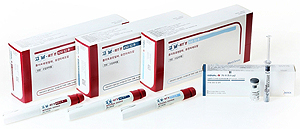
- Merck has announced that 300/450/900IU Gonal-F Pen are expected to be short in supply. The shortage of Merck’s 'Gonal-F Pen,' which is the world’s first recombinant follicle stimulating hormone (r-FSH), is expected. Merck has announced that three, 300/450/900IU, of the four volumes of Gonal-F Pen approved by the Ministry of Food and Drug Safety (MFDS) are expected to be short in supply. Currently, the 150IU volume is in stock. Gonal-F, a medication for treating infertility, was approved in South Korea in 2007, following approvals in Europe in 1995 and the United States in 1997. It is used in 100 countries worldwide. Due to temporary supply delays stemming from manufacturing plant schedule, domestic supply shortages are expected from the 15th. “We are taking all necessary measures to ensure a smooth supply of our products. Once production at the manufacturing plant resumes, domestic supply is expected to return to normal after April 30th,” Merck stated. Gonal-F is a self-injectable medication used in female fertility procedures to induce follicular maturation and ovulation. Produced using the FBM (Filled-by-mass) method, it reduces batch-to-batch variability from 20% in other infertility treatments to 2%. It is primarily used for anovulation disorders, such as polycystic ovary disease (PCOD), and for ovarian stimulation and ovulation induction in assisted reproductive technology (ART). The Gonal-F prefilled pen form simplifies self-injection by providing clear dosage and administration information, reducing the burden of self-injection with a quick administration time of approximately 5 seconds. In 2020, Gonal-F imports totaled approximately KRW 10 billion when combining the sales of three dosages: 300IU at $1,473,768, 450IU at $915,755, and 900IU at $5,002,681, according to the import performance data from the MFDS. “Treatments can be substituted with Gonal-F 150IU or recombinant human follicle-stimulating hormone (FSH), which is currently approved and marketed,” Merck stated, anticipating that the supply disruption would have a minimal impact. Besides Gonal-F Pen, another medicine that contains the active ingredient follitropin alpha is Yooyoung Pharm’s 'Bemfola Prefilled Pen,' which had an import report of $1,517,095 in 2022. Additionally, Merck’s FDA-approved 'Pergoveris' is available. Pergoveris contains the active ingredients follitropin alpha, recombinant human follicle-stimulating hormone (r-hFSH), and lutropin alfa, recombinant human luteinizing hormone (r-hLH). Pergoveris can be used to treat severe infertility in patients who have deficiencies in both follicle-stimulating hormone and luteinizing hormone.

- Policy
- Gov't will specify scope of expense report details disclosed
- by Lee, Jeong-Hwan Mar 15, 2024 05:49am
- The Ministry of Health and Welfare recently met with physician and pharmacist organizations and the pharmaceutical, biotech, and medical device industries to collect opinions on setting the ‘scope of disclosure of expense reports’ that are prepared to report the expenses legally paid by pharmaceutical and biotech companies and medical devices to doctors and pharmacists. At the meeting, doctors' and pharmacists' organizations and the pharmaceutical, biotech, and medical device industries expressed their opinions that disclosing too much detailed information, such as the names of doctors and pharmacists and medical institutions, could lead to privacy violations or leakage of trade secrets. After reviewing the submitted opinions and consulting with legal experts, the MOHW plans to hold another meeting with medical and pharmaceutical organizations and the pharmaceutical, biotech, and medical device industries next month to deliver the final scope of information that will be disclosed in the expense reports. An MOHW official explained so regarding the government’s expense report disclosure system at a meeting with the press corp. The expense report on economic interests is a system that creates and stores information on items legally provided by pharmaceutical companies, medical devices, distributors, etc. to doctors and pharmacists to improve transparency and self-regulation of drug and medical device transactions. The system was introduced to Korea in 2018 and is known as the 'K-Sunshine Act' after a similar law in the United States. The scope of disclosed information in expense reports in the pharmaceutical, bio, and medical device sectors is a hot topic in the healthcare industry. This is because the disclosed information can directly or indirectly affect the activities between doctors and pharmacists and companies depending on whether the names of doctors and pharmacists, names of medical institutions and pharmacies, and license numbers are included. The MOHW is pondering over disclosing the list of doctors and pharmacists. The MOHW explained that it is seeking advice from legal experts including law firms, as there is potential for legal disputes due to the clash of private and public interests as individual and corporate information is disclosed. Under the current law, 7 categories of economic benefits are allowed to be provided to healthcare providers: sample products, support for academic conferences, support for clinical trials, product presentations, discounts under pharmacy payment terms, post-marketing surveys of medical devices, and use for performance verification before purchase. The MOHW held a meeting with providers including the Korean Medical Association, the Korean Pharmaceutical Association, the Korea Pharmaceutical and Bio-Pharma Manufacturers Association, and the Korea Medical Devices Industry Association, as well as the pharmaceutical, biotechnology, and medical device industries, to finalize the scope of the disclosed information on expense report on legitimate economic interests. At the meeting, the providers requested a conservative scope of disclosure, citing concerns about privacy violations and trade secret leaks. The ministry plans to deliver and finalize the scope of information disclosure, including whether to disclose the list of doctors, at a meeting in April after internal review and external legal advice. A MOHW official said, "For example, for conferences, only the amount supported and the name of the conference is disclosed in the expense report. For product briefings, the amount supported and the list of attending doctors are disclosed. "For medical devices, the list of doctors in charge without the amount supported is disclosed to obtain MFDS approval.” The official added, "We plan to disclose the amount of money spent to check the performance of medical devices. However, whether to disclose of the list of doctors will be finalized after internal discussions. If the pharmaceutical, biotech, and medical device industries submit their 2023 expense reports by June, the information will be disclosed on the HIRA’s website by the end of December.” “The Ministry of Health and Welfare will actively promote the disclosure of information about the expense reports by preparing pamphlets for conferences and other events to spread awareness.” Meanwhile, on December 29 last year, the MOHW first disclosed the results of a survey on expense reports on economic interest (expenses) legally provided to doctors and pharmacists in 2022 by pharmaceutical companies, and medical device distributors. At the time, a total of 11,889 pharmaceutical and medical device companies submitted data, of which 3,274 companies provided economic benefits. The amount of benefits provided amounted to KRW 808.7 billion in monetary value, and to 20.47 million items in terms of products.
- Policy
- HIRA’s CDDC seeks to revise current regulations
- by Lee, Tak-Sun Mar 15, 2024 05:48am
- The current regulation that randomly selects members for each Cancer Disease Deliberation Meeting will be deleted. The measure was prepared to maintain consistency in the committee’s deliberations. In addition, the Korean Association for Lung Cancer will be added as a recommended organization given that lung cancer drugs are often on the agenda. The Health Insurance Review and Assessment Service issued a notice of the proposed amendments to the Operating Regulations for the Severe Disease Review Committee (Cancer Disease Review Committee, CDDC) on the 13th of this month. The amendments were made for the following reasons: ▲ to specify the legal grounds for establishing the committee in detail ▲ to update the committee's composition practice according to the occurrence of organizations with a low number of recommendations ▲ to change the method of selecting attendees due to the continuous occurrence of agendas for specific cancer types (to maintain consistency in deliberations by including members with continuum when organizing meetings) ▲ to amend the lack of the term of office clause for HIRA members ▲ and to strengthen expertise by adding organizations related to frequent agendas to the recommended organizations. In particular, the current random selection regulation will be removed to maintain the expertise and consistency of the committee members during meetings. Article 3, Paragraph 1 of the current regulations stipulates, "The committee shall consist of no more than 25 members randomly selected for each meeting.” However, since a variety of anticancer drugs are reviewed by the Cancer Disease Deliberation Committee, the committee decided to delete the reregulate as it may be difficult to establish consistent reimbursement standards while replacing members every time. A HIRA official said, “We are already flexibly adjusting the composition of the committee members to reflect the characteristics of the drugs, but decided to remove the regulation to maintain expertise and consistency in our deliberations.” Accordingly, the regulation will be changed to "consist of no more than 25 members, including 9 clinical experts, but may consider Appendix 2 with reference to the specialty and contents of each meeting’s agenda. Appendix 2 refers to the experts recommended by expert societies, and the Korean Lung Cancer Society has been added in the recent amendment. This is a reflection of the recent increase in the number of lung cancer treatments presented on the agenda. The composition of the committee will also be changed. The number of clinical experts recommended by the director will increase from 2 to 3, while the number of experts recommended by health-related organizations will decrease from 3 to 2. In addition, the number of reviewers for solid cancer and hematologic cancer drugs will be changed from 2 reviewers each to 2 reviewers. In addition, the wording of Article 14 regarding the disclosure of review results will be revised. Although the current regulation states that “the committee shall not disclose the results of deliberations,” when the disclosed information is deemed to negatively affect the public's right to receive reimbursement, the reimbursement policy of the Ministry of Health and Welfare, or when to harm the reimbursement order, the revised regulation leaves open the possibility of disclosure, by changing the phrase to “may not disclose the results of deliberations.” The opinion inquiry period for the proposed amendment will end on the 19th. Meanwhile, the 10th Cancer Disease Review Committee recently began its two-year term. The 10th committee consists of 40 members and is chaired by Professor Ho-Young Lim of the Samsung Medical Center.
- Policy
- MFDS starts regulatory innovation program for Big Techs
- by Lee, Hye-Kyung Mar 14, 2024 05:42am
- The Ministry of Food and Drug Safety (MFDS) announced that will be operating a ' 2024 Big Tech Company Regulatory Innovation Program’ again this year to provide continuous regulatory support to domestic digital medical device companies. Last year, the MFDS identified the exact needs of the industry through the Big Tech Company Regulatory Innovation Program and selected 5 regulatory improvement tasks in the field of AI medical devices for regulatory improvement, and this year, the program has been expanded to include not only AI medical devices but also digital medical devices and increased the number of participating companies. In addition to the Big tech companies that have previously participated in the program including KT, LGU+, Naver, Kakao Brain, and Kakao Healthcare, this year, SKT, Samsung Electronics, Samsung Fire & Marine Insurance, and Hyundai Motor Company, will be included as participants. When looking at the main business areas of the newly added companies, SKT is developing a pet AI healthcare service (X Caliber: X-ray-based animal image diagnosis assistant), while Samsung Electronics is developing wearable devices and applications to monitor blood pressure, ECG, etc. In addition, Samsung Fire & Marine Insurance is developing an application (Anyfit Plus) that provides meaningful healthcare services to health insurance subscribers, and Hyundai Motor is developing a wearable rehabilitation robot. The MFDS will hold meetings with each company from March to monitor the business progress and implementation plans of each company, discover additional regulatory improvement tasks, and share results of the MFDS’s regulatory improvement, and will hold semi-annual meetings with all big tech companies participating in the program. The MFDS said, "We expect the Big Tech Company Regulatory Innovation Program 2024 to achieve field-oriented regulatory innovation that companies can practically experience, and plan to do our best to ensure that our regulations can serve as a reference for global regulations and support the companies’ growth into leaders in the global digital medical device market.”
- Policy
- Chong Kun Dang also enters low-intensity atorvastatin mkt
- by Lee, Hye-Kyung Mar 14, 2024 05:42am
- Amid fierce competition in the hyperlipidemia drug market to develop 2nd generation ‘statin + ezetimibe’ combination drugs using low-strength statins, some low-dose atorvastatin products are also soon to enter the market. On the 12th, the MFDS approved Chong Kun Dang's ‘Lipilou Tab 5mg.’ It is a 5 mg low-strength single tablet that contains atorvastatin calcium trihydrate. This is the second single low-dose atorvastatin drug to be approved after Yuhan Corp’s 'Atorvastatin 5mg' in May last year. Chong Kun Dang owns 3 ‘Lipilouzet Tab’ combination drugs that contain atorvastatin and ezetimibe. The three contain the same dose of ezetimibe of 10 mg, with different doses of atorvastatin of 10mg, 20mg, and 40 mg. The company also owns monotherapy atorvastatin in 10mg, 20mg, 40mg, and 80mg doses as ‘Lipilou Tab,’ and the lineup has been extended with the addition of the 5mg formulation. With the approval of the low-strength monotherapy drug, Chong Kun Dang is expected to also develop a combination drug using the 5 mg atorvastatin and expand its Lipilouzet lineup. In Korea, the development of the low-dose statin-based hyperlipidemia combination drug was pioneered by Hanmi Pharmaceutical. In September 2021, Hanmi Pharmaceutical received approval for ‘Rosuzet Tab 10/2.5mg,’ a combination of rosuvastatin 2.5 mg and ezetimibe. After being released in October of the same year with reimbursement, the drug’s sales have been rapidly increasing in the market. According to the market research institution UBIST, outpatient prescriptions for Rosuzet in 2022 reached KRW 140.3 billion, up 14% year-on-year. The rising demand for low-dose rosuvastatin has prompted other companies to develop combination products based on low-dose rosuvastatin. Following Daewoong Pharmaceutical's approval of Crezet Tab 10/2.5 mg, which contains the same ingredient-dose combination as Rosuzet in August 2022, Yuhan Corp released ‘Rosuvamibe,’ HK Inno.N ‘Rovazet,’ and GC Biopharma ‘Daviduo’ in their product lineup. Yuhan Corp then introduced a low-dose(5 mg) atorvastatin product, continuing the low-dose boom in hyperlipidemia treatment that began with rosuvastatin. To date, no 5 mg low-dose atorvastatin calcium trihydrate has been granted reimbursement in Korea. With Yuhan Corp having established a foothold in the hyperlipidemia market, the addition of Chong Kun Dang’s product is expected to open up the low-dose atorvastatin market shortly.
- Policy
- Poteligeo and Livtencity may likely be reimbursed in April
- by Lee, Tak-Sun Mar 14, 2024 05:42am
- Two rare disease drugs, Poteligeo (mogamulizumab, Kyowa Kirin Korea) and Livtencity (maribavir, Takeda Pharmaceuticals Korea), are likely to be added to the reimbursement list next month after completing pricing negotiations with the National Health Insurance Service. According to industry sources on the 13th, the companies have completed pricing negotiations with the NHIS for the two drugs. Accordingly, the drugs will likely be reimbursed from April if the negotiation results are reported to the Health Insurance Policy Deliberation Committee at the end of this month. The two drugs are both rare disease drugs that have passed the Health Insurance Review and Assessment Service's Drug Reimbursement Evaluation Committee review in December last year. Poteligeo Inj is a treatment for patients with mycosis fungoides (MF) or Sézary syndrome (SS). MF and SS are two typical types of cutaneous T-cell lymphoma (CTCL), a chronic condition that causes disfiguring lesions, itching, and psychological stress that affects the patient’s quality of life. Poteligeo is a a humanized monoclonal antibody (mAb) that targets CC chemokine receptor 4 (CCR4), which is frequently expressed on leukemic cells of certain hematologic malignancies including CTCL, such as MF and SS. Livtencity is an antiviral drug used to treat post-transplant cytomegalovirus (CMV) infection. is a virus that remains asymptomatic and latent after infection, but reactivates when the immune system is compromised, such as after organ transplantation, causing serious disease. Livtencity is an oral antiviral agent that inhibits viral proliferation by reducing the activity of the UL97 protein kinase,’ which is involved in the replication and proliferation of the cytomegalovirus. Kyowa Kirin accepted the negotiated price at the DREC level and negotiated only the estimated reimbursement amount with the NHIS for Poteligeo. In addition, whether ‘Enthertu 100mg Inj (trastuzumab deruxtecan),’ a targeted therapy for breast 100 mg (trastuzumab deruxtecan, Daiichi Sankyo, Korea) and 7 morning sickness drugs (doxylamine succinate -pyridoxine hydrochloride) will also be listed for reimbursement in April is receiving attention. Currently, Enhertu, which patient groups have been requesting coverage, was dramatically approved in February after struggling through the pharmacoeconomic evaluation process. The government plans to expedite the drug's reimbursement due to the high demand from society. Negotiations are currently underway with the MFDS on its reimbursed price and is likely to be approved in April. The coverage of morning sickness drugs is being promoted as a government measure to support pregnant women with the promise of exceptional treatment. Although negotiations are yet to begin, the process is expected to progress rapidly.
