
- LOGIN
- MemberShip
- 2026-05-03 13:58:26
- Policy
- Competition intensifies in 3-combo drug mkt for COPD·asthma
- by Lee, Tak-Sun Feb 23, 2024 05:48am
- GSK’s triple therapy for COPD, Competition in the market for three-drug combinations used to treat COPD (chronic obstructive pulmonary disease) and asthma has become somewhat complicated. Kolon Pharma’s Trimbow, which was introduced in January, triggered the competition, and GSK’s Trelegy Ellipta, which had enjoyed its sole lead in the market till then, strengthened its line-up in response. According to industry sources on the 22nd, GSK Trelegy Ellipta will be reimbursed for the treatment of asthma in addition to COPD starting next month. The Ministry of Health and Welfare issued a pre-announcement of the amendment to the revised drug reimbursement standards that Trelegy Ellipta will be reimbursed for the treatment of "severe asthma that is not adequately controlled with a combination of moderate-or high-dose inhaled corticosteroids and a long-acting inhaled beta-2 agonist,” starting on March 1st. With the reimbursement, Trelegy Ellipta’s competitivity in the market will increase further as it will be available for severe asthma in addition to its existing indication for moderate-to-severe COPD in adults. Trelegy Ellipta had been dominating the Korean market with its low drug price but is now facing competition with Kolon Pharm's Trimbow inhaler which was introduced in January. Moreover, the new inhaler can be used for both asthma and COPD. With Trelegy Ellipta’s reimbursement also extended to COPD, the two drugs will now be fully engaged in a one-on-one competition. The price of Trelegy Ellipta is slightly less expensive. Its price remains the same at KRW 45,602 per box even with the coverage expansion. Trimbow is only KRS 1,000 more expensive, at KRW 46,669. However, Trimbow seems to have scored a win by obtaining a higher price than Trelegy Ellipta. Trimbow has both asthma and COPD indications, and was regarded as an alternative to Novartis’s triple therapy ‘Enerzair Breezhaler 150/50/160μg’ (upper limit price KRW 65,502) for asthma and ‘Trelegy Ellipta (upper limit price (upper limit price KRW 45,602)’ for COPD, and was priced below 90% of the weighted average price of the two drugs. If Trimbow only owned an indication for COPD, its price would have been set lower than that of Trelegy Ellipta, however, owning the two indications allowed for the drug to receive a price higher than that of Trelegy Ellipta. Therefore, the competition between the two drugs are likely to begin in earnest due to their similar indications and prices. In addition to adding the asthma indication Trelegy Ellipta, GSK was successful in receiving reimbursement for its higher-dose Trelegy 200 Ellipta Inhaler to the list this time. However, Trelegy Ellipta 200® Inhaler is only used for asthma. Therefore, its alternative, ‘Enerzair Breezhaler 150/50/160μ (upper limit price KRW 74,115)’ became the basis for its pricing negotiations. As a result, Trelegy Ellipta 200® Inhaler was listed at KRW 65,500 per box, after accepting a price below 90% of its alternative. With the reimbursement extension for its Trelegy Ellipta and the new listing of the Trelegy Ellipta 200®, GSK will now be able to adopt a two-track strategy in Korea’s asthma inhaler market. Industry analysis is that the new additions will contribute to broadening the choice for patients in Korea, with the lower-priced Trelegy Ellipta and the higher-priced, higher-dose Trelegy Ellipta 200. Also, GSK voluntarily reduced the price of its 2 inhaled single-agent products to help ease the financial burden of the patients. The price of Arnuity 100 Elipta (fluticasone furoate) for asthma was reduced from KRW 19,973 to KRW 17,376, and Incruse Elipta (umeclidinium bromide) for COPD was reduced from KRW 38,438 to KRW 34,978. The measure is considered to have been made in strategic response to the introduction of Kolon’s triple therapy product. Going forward, a key question for the triple combination market is whether AstraZeneca will introduce its Breztri Aerosphere in the market. The drug received conditional approval from the Drug Reimbursement Evaluation Committee in May of last year, that its reimbursement would be adequate if it is priced below the assessed value. The company has since applied for reevaluation to DREC, but no results have been disclosed since. However, when listed, it would be difficult for Breztri Aerosphere, which only has an indication for COPD, to receive a price higher than that of Trelegy Ellipta, which currently has the lowest price.
- Policy
- Gov't 'Too soon to price immune-oncology drugs by indication
- by Lee, Jeong-Hwan Feb 22, 2024 05:49am
- MOHW Director Chang-Hyun Oh(left) and NHIS Deputy Minister Hae-Min Jung is explaining the administrative procedures for the indication-specific drug pricing system The Ministry of Health and Welfare has reaffirmed its stance that it will use the health insurance finances saved by the follow-up management measures, including reevaluation of benefit adequacy and reevaluation of the reimbursement standards and conditions, to reimburse drugs that have proven their innovativeness, such as immuno-oncology and targeted-anticancer drugs. Regarding introducing a differentiated drug pricing system for immuno-oncology drugs by indication in Korea, the NHIS said that more social consensus is needed and that it would first need to gather patients' opinions on paying different prices for the same drug by cancer type and spend the administrative costs required to change the health insurance claims system, such as assigning separate billing codes. Chang-Hyun Oh, Director of Pharmaceutical Benefits at MOHW, and Hae-Min Jung, head of the Department of Drug Management at the NHIS, made such comments at a forum discussion on the 10-year achievements and challenges of the introduction of immuno-oncology drugs that was hosted by Rep. Jong-sung Lee of the People Power Party on the 20th. Regarding the future insurance coverage of anti-cancer drugs, Oh said that he would focus on strengthening patient access, especially for cancer types with no reimbursed treatment. To this end, Oh urged pharmaceutical companies seeking reimbursement to thoroughly prepare a financial sharing plan. The implication is that immuno-oncology drugs are relatively expensive, so pharmaceutical companies need to take on a drastic range of financial sharing in order to get their drugs reimbursed quickly. In particular, Oh promised to operate the reimbursement system with the concept that reimbursing immuno-oncology drugs strengthens essential medical care. "We have already announced an essential medical care policy that saves healthcare finances that are being leaked or overused for use as additional resources. In the pharmaceutical field, we will also mobilize follow-up management systems such as reevaluation of reimbursement adequacy and reevaluation of reimbursement standards and conditions to rationalize expenditures and reduce unnecessary finances, and reflect them in innovative drug prices." He added, "Foreign countries would not have applied immuno-oncology reimbursement at once either. Korea is also just going through the due process. Due to their high price, the companies need to take special care in submitting the financial-sharing plan to accelerate their reimbursement. We are expanding coverage of cancer types for immuno-oncology drugs, and will prioritize patient access to immuno-oncology drugs.” Jung explained that to enable the indication-specific drug pricing system, changes would need to be made to Korea’s health insurance claims system, such as assigning a separate billing code and preparing a separate refund plan for differences in patients’ out-of-pocket expenses. In other words, consultations with relevant organizations and social consensus are further needed to introduce the indication-specific drug pricing system. Jung also raised the need to collect patients' opinions, as insurance drug prices may increase when additional cancer types are added to the reimbursement list. "If the indication-specific drug pricing system is introduced, drug prices may increase when other cancers are added for reimbursement. We also need to consider whether patients will be willing to accept different out-of-pocket costs for different cancers. The patient-specific flexibility and price opacity when signing risk-sharing agreements need to be considered.” Jung added, "The single price-weighted average price method also requires separate codes for each indication, and it is difficult to predict usage, which can lead to the need for later settlement of prices. Multi-year multi-indication systems are also quite rare overseas. Therefore, some uncertainties lie in indication-specific contracts, so it is important to consider whether the industry will be willing to accept these variables.” "The realization of the multi-indication reimbursement system should be a collaborative effort between relevant organizations, patients, and the government; It requires discussions on ensuring patient access to care, as well as the clinical innovativeness of the drug, the financial capacity of national health insruance, and administrative costs associated with the separate billing codes."
- Policy
- ‘Gavreto’ withdrawn from KOR amid reimb rejection
- by Lee, Hye-Kyung Feb 21, 2024 05:45am
- BPM made a decision to discontinue selling and developing Gavreto in all countries except the United States and China. ‘Gavreto Cap. 100mg (pralsetinib),’ previously managed by Roche Korea, will be withdrawn from the Korean market. In February 2023, Roche announced its decision to terminate the global partnership agreement with Blueprint Medicines Corporation (BPM), the drug’s original developer. Furthermore, Gavreto did not clear the reimbursement hurdle, leading to the voluntary withdrawal of its Biologics License Application (BLA). Gavreto will no longer be available in South Korea as BPM, the original developer of Gavreto, does not hold a division in Korea, and a search for a new partner has been unsuccessful. “Gavreto has not been prescribed since June 2023, and there are currently no patients using the drug,” Roche Korea said reporting to the Ministry of Food and Drug Safety (MFDS) recently. “The company has 134 in stock, with the last import date being April 11th.” Gavreto was granted a BLA approval in South Korea for its use as a treatment for non-small cell lung cancer (NSCLC) on March 29th, 2022. As targeted therapies for RET(REarranged during Transfection) gene mutation, Gavreto and ‘Retevmo Cap. (selpercatinib)’ were expected to be competitors in the market. However, the two drugs went different paths in Korea. Retevmo was deemed suitable for reimbursement by the Cancer Drug Review Committee of the Health Insurance Review and Assessment Service (HIRA). Gavreto, on the other hand, received a non-reimbursement decision. However, Retevmo failed to be listed for reimbursement due to unsuccessful drug pricing negotiations with the National Health Insurance Service (NHIS). Currently, there are no RET-targeted therapy that are eligible for reimbursement. RET, which is one of the essential imaging biomarkers for cancer, can cause malignant tumors by a fusion with another gene or point mutations. Certain types of cancers, including lung cancer, breast cancer, and colorectal cancer, are associated with RET mutations. The frequency of RET mutations in NSCLC is about 2-6%, while RET fusion mutations in thyroid cancer are reported to be up to 40%. “While there is no identical drug to Gavreto available, a similar formulation called Retevmo with the same indication is available in the market,” Roche stated. “Considering the small number of eligible patients for this indication, it appears appropriate to use targeted therapy for RET gene mutations within the same class.” The withdrawal of Gavreto is not limited to South Korea. “On January 8th of this year, BPM made a decision to discontinue selling and developing Gavreto in all countries except the United States and China,” said Roche. “(In South Korea), we plan to voluntarily withdraw the BLA after completing the import discontinuation reporting process.”
- Policy
- President Yoon asks doctors to 'stop collective action'
- by Lee, Jeong-Hwan Feb 21, 2024 05:45am
- President Yoon, President Seok-Yul Yoon said, "Doctors should not hold the lives and health of the people hostage and take collective action, no matter what,” in response to doctors who submitted a collective resignation letter and medical students who decided to take a collective leave of absence in protest to the government’s plan to increase medical school admissions. President Yoon made it clear that increasing the number of medical school seats by 2,000 is the minimum amount necessary to fill essential and regional medical gaps and to train medical scientists and medical entrepreneurs for the advanced bio-healthcare industry. In other words, the president has directly expressed the position that there is no turning back, such as reducing the number of medical school admissions through collective action by doctors. However, he also reaffirmed his commitment to continue government investment and support for essential fields, rural areas, and medical education, and that he will build an environment of trust by reducing judicial risks for doctors. At 2 p.m. on the 20th, President Yoon presided over the 9th Cabinet Meeting and made the above remarks regarding the increase in medical school admissions. President Yoon pointed out that despite the government meeting with doctors' organizations 28 times to explain the inevitability of healthcare reform and promising measures such as reducing judicial risks for doctors, strengthening the compensation system for essential doctors, and supporting investment in regional healthcare, the public's health has been threatened by the resignation of doctors. He criticized that by submitting resignations, which led to the cancellation of surgeries and postponement of cancer patients' operations, the doctors have abandoned their responsibilities and put the public's health at risk. "Protecting the life and safety of the people is the reason for the existence of the state, along with national security and public safety. It is the most basic constitutional responsibility of the government. The state must protect the lives and health of the people by efficiently managing medical resources. Doctors may not be public servants like soldiers or the police, but they must never deny care as a group.” The president also added that the need for healthcare reform in Korea has been long overdue. He cited the case of a nurse at one of the Big 5 hospitals who collapsed on duty in July 2022 and died without being able to receive surgery due to the lack of doctors. From President Yoon's view, the incident demonstrates the serious situation of essential medical care in Korea, and the urgent need for medical reform to train doctors for essential medical care, but 30 years have passed without any government being able to propose a solution. "The demand for medical services is growing rapidly, but the supply is not keeping up with the demand. The number of essential medical personnel has decreased even more significantly, and medical care in rural areas has collapsed accordingly. This collapse of local essential medical care puts the health and safety of those living in rural areas at serious risk.” "Until now, the government has continuously failed to increase the medical school enrollment quota by even a single student. Even if we increase the number from next year, the first medical school graduates will not graduate until 2031, and it will take at least 10 years to produce specialists to strengthen essential medical care. It will not be until 2035 that the increase of 2,000 essential medical doctors will be realized." "Increasing the medical school enrollment quota is the need of the hour. The arguments and fears that the quality of medical education will decline are not correct. The government will continue to invest in and support medical education. We are committed to the people and healthcare reform. For local doctors who excel in cancer surgery and critical care, the government will publicize their performance and achievements widely and correct the blind preference for medical services in Seoul." He added, “Korea's medical capabilities are among the best in the world, but the reality of healthcare in rural areas is miserable. Please join us in carrying out the healthcare reform that cannot be delayed. We will create an environment where doctors can treat with confidence by fairly compensating local essential and serious medical care and reducing judicial risks. Expanding medical schools is also essential to train medical scientists and medical entrepreneurs for the advanced bio-healthcare industry."
- Policy
- Multiple low-dose Kerendia Rx subject to reimb cuts
- by Lee, Tak-Sun Feb 20, 2024 06:00am
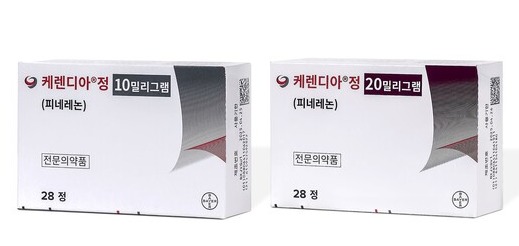
- Kerendia Tab, a new drug for chronic kidney disease with diabetes mellitus that was reimbursed in February this year, was added to the list of low-content multiple-dose prescription reimbursement cuts. As the price for the high and low-dose formulations were set the same for the drug, there is virtually no incentive to prescribe multiple doses. According to industry sources 18th, the Health Insurance Review and Assessment Service on Monday added Kerendia (finerenone, Bayer) to its list of cost-effective formularies. The price of Kerendia 10 mg and Kerendia 20 mg are the same at 1,670 won per tablet. It is indicated as a treatment for adult patients with chronic kidney disease (CKD) and type 2 diabetes (T2D) to reduce the risk of end-stage kidney disease (ESKD) and a sustained decrease in estimated glomerular filtration rate (eGFR), and cardiovascular death, nonfatal myocardial infarction, and hospitalization for heart failure. The initial dose is based on the patient’s eGFR. Patients who are eGFR ≥ 60 mL/min/1.73m2 start with an initial dose of 20 mg once daily, and those 25 ≤ eGFR < 60 mL/min/1.73m2 start with an initial dose of 10mg once daily. As the dose is set according to each patient’s condition, and both the 10mg and 20mg doses were released at the same time, there is little incentive to prescribe two 10mg doses. This is why the company strategically set the price for the low and high doses the same for the drug. Its domestic price of 1,670 won is significantly lower than the A7 adjusted average price. Among the A7 countries, Kerendia is listed in 6 countries except France - the United States, Japan, Germany, Italy, Switzerland, and the United Kingdom, with an adjusted average price of 6,810 won for 10 mg and 6,910 won for 20 mg. The drug is recommended as a treatment for chronic kidney disease patients with type 2 diabetes in clinical practice guidelines in Korea and abroad, and its cost-effectiveness was recognized through pharmacoeconomic evaluation and succeeded in being listed for reimbursement just 1 year and a half after it was approved in June 2022. The National Health Insurance Service expects the drug to be used by around 16,324 people a year and has reportedly agreed with the company on KRW 9.95 billion ($9.9 billion) as the expected claims amount. It is the first blockbuster drug for a chronic disease released in a long time. Chong Kun Dang signed a copromotion agreement with Bayer on the 6th of this month. With Chong Kun Dang, which has a large sales and distribution network in Korea, joining in on its sales, Kerendia is expected to quickly land in the domestic market. Meanwhile, in addition to Kerendia, Januglip Tab. 50mg, 100mg, Esoum Tab 20mg, and 40mg were also included in the list of oral drugs that require cost-effective use.
- Policy
- Hanmi launches Zytiga generic combo after first generic
- by Lee, Tak-Sun Feb 16, 2024 06:00am
- Hanmi Pharmaceutical, which attracted wide attention by launching the first generic version of the prostate cancer treatment Zytiga last year, set out to target the market again by quickly developing a combination drug. On the 14th, the Ministry of Food and Drug Safety approved Hanmi Pharmaceutical's Abiteron Duo Tab 500/2.5mg. The product is a combination drug that combines abiraterone and prednisolone. The original drug is Janssen’s ‘Zytiga Tab 500mg (abiraterone acetate).’ Hanmi Pharmaceutical received approval for the first generic version of Zytiga, ‘Abiteron Tab 500mg,’ last year, and released the drug at a more economical price than the original in October of the same year. Currently, Zytiga costs KRW 11,746 per tablet, while Abiteron costs KRW 8,537. From November last year, the co-payment rate for abiraterone drugs was reduced from 30% to 5%. This is expected to reduce the financial burden on the patients and increase their usage. In this context, Hanmi Pharmaceutical introduced a new combination drug that even the original company did not have. The newly approved ‘Abiteron Duo Tab’ is used in combination with androgen deprivation therapy (ADT) for the treatment of patients newly diagnosed with high-risk metastatic hormone-sensitive prostate cancer (mHSPC). It is administered once daily, and the dosage is two tablets. Hanmi’s Zytiga generic was released last yearThe fact is that Zytiga and Abiteron are both used in combination with prednisolone, a steroidal hormone that is synthesized in the adrenal cortex. Therefore, patients taking Zytiga or Abiteron must take two 500 mg tablets per day, plus an additional 5 mg of prednisolone. This is a total of three tablets, but those who take Abiteron Duo need to only take two tablets, which shows improved convenience. Hanmi Pharmaceutical will focus on increasing its market share with both its single-agent generic Abiteron and combination generic Abiteron Duo. Zytiga is a blockbuster drug that posted KRW 18.3 billion in outpatient prescriptions last year (source: UBIST), and if Hanmi, a latecomer to the market, can secure its competitiveness by improving product quality, its generic version is also expected to post high sales.
- Policy
- MFDS will inspect growth hormones and cold chains this year
- by Lee, Hye-Kyung Feb 16, 2024 05:59am
- The Ministry of Food and Drug Safety has included 'medical institutions and pharmacies handling growth hormone drugs' and 'cold chain compliance of high-risk items such as vaccines' in this year's planned inspections. The ' Biopharmaceuticals and Herbal Medicine Bureau’s Basic Plan for Manufacturing and Distribution Management in 2024,' which was released by the MFDS on the 15th, contains this year's planned joint surveillance for biopharmaceutical manufacturers and importers, drug advertisers, and wholesalers. The planned joint surveillance program is designed to preemptively respond to hazardous factors that threaten public safety, including growth hormone drugs, which became an issue during last year's National Assembly inspections. At the NA audit, Rep. Young-Joo Kim of the Democratic Party of Korea pointed out that “Growth hormone drugs are being misused on children and adolescents who are a little shorter than their peers to grow taller, which is not the purpose of the approved indication.” And requested a follow-up report on its abuse and misuse. In Korea, growth hormone drugs are indicated for: ▲ growth failure in children due to pituitary growth hormone secretion disorder ▲ idiopathic short stature (ISS) in children ▲ growth failure in children whose bone ends are not closed and confirmed as Turner syndrome by chromosomal analysis ▲ growth disorder in short children born small for gestational age (SGA), however, most of them are used off-label on-site as 'height growth injections'. According to data from the MFDS, the National Health Insurance Service, and the Health Insurance Review and Assessment Service, of the 10.66 million growth hormone injections supplied to 5,761 medical institutions nationwide from September 2021 to September 2023, only 3%, 307,000 were prescribed to patients with reimbursement, and the other 97% were prescribed without reimbursement for height growth. As a result, the MFDS plans to include false and exaggerated advertisements of growth hormone drugs as a target for joint surveillance this year and check whether hospitals, clinics, pharmacies, etc. are directly promoting 'injections to increase height' in their advertisements. The MFDS conducts year-round monitoring of social issue items, including mass advertising of specialized drugs and illegal distribution. This year, the MFDS plans to expand the scope of online advertisements to include social media in the joint monitoring of growth hormone drugs, as well as false and exaggerated advertisements. In addition, the cold chain management status of wholesalers handling high-risk products such as vaccines and refrigerated and frozen storage products will be intensively checked. For this year's regular monitoring of biopharmaceuticals, the authorities included the decision to continuously monitor the data integrity of biopharmaceuticals. The MFDS assesses the risk of domestic manufacturing plants twice a year using independent risk assessment indicators tailored to the characteristics of biopharmaceuticals. This year, 22 sites are scheduled for regular inspections. The company is notified 7 days in advance of the surveillance in accordance with the Framework Act on Administrative Investigation, without coordinating the schedule in advance.
- Policy
- ‘Trelegy 200 Ellipta’ concludes negotiations with the NHIS
- by Lee, Tak-Sun Feb 15, 2024 05:59am
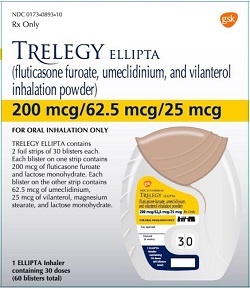
- ‘Trelegy 200 Ellipta Inhaler,’ a COPD triple combination therapy, has completed the negotiations with the NHIS in Korea. ‘Trelegy 200 Ellipta Inhaler,’ a triple combination therapy for COPD, has completed the negotiations with the National Health Insurance Service (NHIS). The drug is expected to be listed for health insurance reimbursement soon. According to industry experts on the 13th, ‘Trelegy 200 Ellipta Inhaler,’ a COPD triple combination therapy, has completed the negotiations with the NHIS and is expected to be listed for reimbursement after the final reporting to the Health Insurance Policy Review Committee. This drug has a unique feature of doubling the dosage of GSKs first triple combination therapy Trelegy Ellipta (ICS/LABA/LAMA). ‘Trelegy 200 Ellipta’ is used as a maintenance therapy for adults with asthma when the combination of long-acting beta2-adrenergic agonist and inhaled corticosteroid therapy is not providing adequate control. It contains three ingredients: fluticasone furoate, umeclidinium, and vilanterol. A combination of three ingredients provides enhanced therapeutic effects compared to existing drugs. The inclusion of LAMA in a drug combination is anticipated to help patients with asthma that is not adequately controlled with double therapy of ICS/LABA. When Trelegy 200 Ellipta is listed for reimbursement, the market for COPD triple combination therapy will become even more competitive. In January, Kolon Pharmaceutical released Trimbow (beclomethasone dipropionate plus formoterol fumarate hydrate plus glycopyrronium bromide), a single inhaler triple combination therapy. Clinical trials have shown that Trimbow has significant treatment effects by reducing exacerbations of moderate to severe symptoms, improving respiratory function, and enhancing the quality of life. Furthermore, Trimbow has been shown to improve respiratory function and reduce exacerbations of moderate to severe symptoms in patients with asthma. These results demonstrate that Trimbow is effective in managing symptoms and has a good safety profile in patients with COPD or asthma. Trimbow is advantageous for patients with small airway problems because its extra-fine particles can penetrate small airways. Trelegy 200 Ellipta passed the Drug Reimbursement Committee of the Health Insurance Review and Assessment Service (HIRA) last November. Afterwards, it was under negotiations with the NHIS.
- Policy
- The guidelines for PVA will be revised soon
- by Lee, Tak-Sun Feb 15, 2024 05:58am
- The National Health Insurance Service (NHIS) is likely to seek opinions from the pharmaceutical industry soon to revise the operational guidelines on the price-volume agreement (PVA) program. The revised guidelines draw attention as they include an agenda for easing on products that have reduced their prices more than three times in five years, as announced last year. According to industry experts, on the 14th, the NHIS plans to revise the PVA negotiation’s operational guidelines, including an agenda announced last December regarding easing the PVA for innovative new drugs. The pharmaceutical industry expects the NHIS to conclude revising the guidelines before the type ‘Da’ monitoring starts in April. Therefore, the NHIS will likely consult with pharmaceutical organizations, including the Korea Pharmaceutical and Bio-Pharma Manufacturers Association (KPBMA), for their opinions. What is most interesting is the agenda focusing on easing regulations for products that have reduced their prices more than three times. On December 22nd, the Biohealth Innovation Committee, chaired by the Prime Minister, released a report stating that pharmaceuticals produced by companies that have received an innovative designation or meet the standards will be eligible for an adjusted rate of price reduction on the third round. For instance, drugs that have already undergone two rounds of price reduction through PVA negotiations will receive a reduced rate of price reduction this year. Products undergoing the fourth and fifth rounds of price reductions will be subject to a lower rate of reduction. Upon completion of the revision guidelines this year, many products are expected to receive benefits. The industry anticipates that the rate of price reduction will fall between 30-50%. If the set reduced price is 1,000 won, then 300 won to 500 won may be deducted. However, the final revision measures will be determined following discussions among departments including the Ministry of Health and Welfare (MOHW). According to research conducted in 2022 on the evaluation of achievements and improvement measures of the PVA program, 26 products with the same ingredient have repeatedly undergone price reductions more than three times in 10 years. Among these products, nine from Korean pharmaceutical companies and 17 from multinational pharmaceutical companies have experienced price reductions more than three times. As a result, adjustments are expected to lead to lower reduction rates for many products. The revised guidelines are expected to include differential application of reductions based on claim amounts. Higher reduction rates will likely be applied to higher claim amounts, with 30 billion won as a reference amount. Also, exclusion criteria will likely be updated to include measures that raise the claim amounts to 3 billion won, up from the current claim amount of less than 2 billion won. Furthermore, the guidelines may contain measures for products with temporary increases in volume due to infectious diseases and drug shortages, allowing for a reduction rate or refund. However, the plan to increase the maximum reduction rate from the current 10% to 15% will be reflected through future revisions.
- Policy
- Price cut hold for Forxiga, Xigduo, Atmeg Combi are extended
- by Lee, Jeong-Hwan Feb 14, 2024 05:40am
- The administrative stay of execution of the price reduction disposition for AstraZeneca's diabetes drugs Forxiga (dapagliflozin), Xigduo (dapagliflozin+metformin), and Korea United Pharm’s Atmeg Combigel (atorvastatin 10 mg + omega 3) has been extended, and the insurance ceiling price for the drugs will remain unchanged until June 30. On the 7th, the Ministry of Health and Welfare announced the extension of the stay of execution of these drugs in ‘the drug reimbursement list and reimbursement ceiling price table.’ This is the result of the Seoul Administrative Court's decision to grant AstraZeneca and United Pharmaceuticals Korea's request to suspend enforcement of drug price cuts as filed by AstraZeneca and Korea United Pharmaceuticals. AstraZeneca filed for the stay of execution, claiming that the price reduction was unfair due to the difference in indications between the original Forxiga and generic drugs. Korea United Pharm also filed for a stay of execution after its 2-year drug price premium was terminated due to the listing of other 'atorvastatin 5 mg + omega-3 combination drugs' that contain different dosages of the ingredients. The company had received the pricing premium because there had been fewer than 3 generic companies that produced the same ingredient. As a result, the price of Forxiga will remain at KRW 734, and the price of Xigduo XR Tab 10/500 mg and 10/1000 mg will remain at KRW 736. The MOHW’s reduced price is KRW 514 for Forxiga, KRW 473 for Xigduo 10/500 mg, and KRW 512 for Xigduo 10/1000 mg. The insurance ceiling price of Atmeg Combigel will remain at KRW 1,219. The MOHW’s reduced price was KRW 960.
