
- LOGIN
- MemberShip
- 2026-05-03 13:58:23
- Policy
- Moderna produced the most drugs in Korea in 2023
- by Lee, Hye-Kyung Jan 04, 2024 05:33am
- Moderna Korea has surpassed Celltrion and Hanmi Pharmaceutical and became the largest domestic pharmaceutical manufacturer in Korea in 2022. The item that drove Moderna’s lead was the COVID-19 vaccine ‘Spikevax Inj,’, which accounted for 100% of Moderna Korea's total production value of KRW 1.275 trillion. According to the '2023 Food and Drug Statistics Yearbook' recently published by the Ministry of Food and Drug Safety, the top 20 domestic pharmaceutical companies in 2022 in terms of the amount of drug production are Moderna Korea, No. 1, Celltrion, No. 2, Hanmi Pharmaceutical, No. 3, Chong Kun Dang, and No. 5, GC Biopharma. Hanmi Pharmaceutical, which ranked first in 2018 and 2019, and Celltrion, which ranked first in 2020 and 2021, lost the top spot to Moderna Korea in 2022 due to the rise in supply of vaccines amid the spread of COVID-19. Among the top 20 pharmaceutical companies in Korea, the companies with the highest manufacture amount exceeding KRW 1 trillion were Moderna Korea (KRW 1.275 trillion), Celltrion (KRW 1.226 trillion), Hanmi Pharmaceutical (KRW 1.018 trillion), and and Chong Kun Dang (KRW 1.594 trillion). Two dosage forms of Spikevax were ranked first and second in terms of production of single products, followed by Celltrion's Remsima 100mg at KRW 184.9 billion, Handok's Plavix Tab 75mg at KRW 153.4 billion, and HK Inno.N's K-Cab 50mg at KRW 152.3 billion, Daewoong Pharmaceutical's 'Nabota' at KRW 127 billion, GC Biopharma’s 'GC Fluquadrivalent Prefilled Syringe Inj' at KRW 116.6 billion, and Chong Kun Dang’s ‘Chong Kun Dang’s Gliatorin Soft Cap' at KRW 107.9 billion, among drugs with an annual production amount that exceeds KRW 100 billion for a single item. In particular, although reimbursement was reduced due to reimbursement revaluations for choline alfoscerate, the production of Chong Kun Dang’s Gliatorin Soft Capsule and Daewoong Bio's Gliatorin Soft Capsule (KRW 97.2 billion), representative choline alfoscerate products, still ranked 8th and 9th in Korea. Among the top 20 global pharmaceutical companies, in 2022, AbbVie ($73 billion) ranked first, followed by Johnson & Johnson ($71 billion), then Novartis ($57 billion), Novo Nordisk ($50 billion), then Bristol-Myers Squibb ($49 billion). The top 10 finished drug imports for 2022 were also listed, with Comirnaty Inj Veklury Intravenous Lyophilized Powder for Injection ranking No. 1, followed by Comirnaty 2 Injection 0.1mg/m, Spikevax Inj, Keytruda Inj, then Prolia Prefilled Syringe ranking the fifth.
- Policy
- Comprehensive Health Insurance Plan to be released soon
- by Lee, Jeong-Hwan Jan 03, 2024 05:40am
- With the government's plan to announce the 2nd National Health Insurance Comprehensive Plan being postponed from December last year to January of this year, the pharmaceutical industry is anxiously awaiting what policy direction will be included in the new plan regarding drug expenditures. The pharmaceutical industry’s wishes are that the plan should include policies to promote and revitalize domestic generics and incrementally modified drugs that can serve as cash cows in securing research and development (R&D) investment costs for new drug development. On Jan. 1, the Ministry of Health and Welfare is known to be in the final stages of formulating the second health insurance plan, which will be in place for 5 years from this year (2024) to 2028. The MOHW had aimed to release the plan in December last year, but postponed the announcement, saying it needed more time to reflect the newly announced policies. This implied that the MOHW was not finished organizing the policies it had finalized last year, such as setting a public policy fee to support essential healthcare and the reform of the drug pricing system to reflect innovation value, into the comprehensive plan. The industry’s eyes are on the drug expenditure management direction that will be included in the new health insurance plan. In particular, domestic pharmaceutical companies are concerned that if the MOHW includes a new mechanism for reducing drug prices in addition to the post-listing reimbursement management of generic drugs that are already in place, this will dampen the industry’s drive for new drug R&D. In the study on the establishment of a comprehensive health insurance plan released by the Korea Institute for Health and Social Affairs in October last year, no mention had been made of the need to introduce a new drug price reduction model for generic drugs. However, the study suggested a policy to expand the targets subject to reevaluation for drug reimbursement adequacy review and to reevaluate generics by comparing their drug prices with the overseas A8 countries (Japan, France, Germany, Italy, Switzerland, the United Kingdom, the United States, and Canada). It also revealed plans to improve the effectiveness of the actual transaction price investigation and management system, reorganize the targets of the Price-volume Agreement system, and revise its formula. Furthermore, the MOHW had set criteria for easing the application of the PVA system for drugs made by innovative pharmaceutical companies or equivalent in the reform plan for the drug pricing system that recognizes the innovation value of drugs. Despite such improvements, domestic pharmaceutical companies are nervous as the MOHW is still known working on a drug price reduction model for generics. A domestic pharmaceutical company official said, "We hope that the new health insurance plan will not include a new price reduction mechanism. We also need to up with a reasonable reorganization plan for the post-listing management measures that are already in place. Also, we would like to discuss the permanence of the drug price reduction dispositions." The official added, "Although a drug pricing system that reflects innovation value has been introduced, it is partly focused on new drugs or essential drugs with low monetization. We need more measures to encourage generic development, which is the source of cash generation, to strengthen Korea’s new drug development momentum.” Another domestic company official said, "I hope that the MOHW will hold a closer ear to the voices of companies with the aim of advancing post-management mechanisms including the PVA system. In the big picture, I hope that the new plan will include short- and long-term policies to save health insurance finances and revitalize the pharmaceutical market to exceed the performance made this year.”

- Policy
- Subject drugs with claims over KRW 5 bil for price nego
- by Lee, Tak-Sun Jan 03, 2024 05:40am
- A study has shown that more drugs need to be subject to PVA negotiations due to the expanded scope of use. In other words, the current standard, which sets the expected additional claims amount in the KRW 10 billion range needs to be expanded to KRW 5 billion, and drugs with an expected increase rate of more than 100 % should also be subject to negotiations. Such results were disclosed as part of the 'Study on the Performance and Improvement of the Scope of Use Expansion Negotiation System' that was conducted as a research service for the National Health Insurance Service (Research Institute Yonsei University, Industry-Academia Cooperation Center, Professor Euna Han). The research team said, “The current system was introduced in 2014 and has been maintained for 10 years without any revision. With the continued rise in national health insurance’s drug expenditures and the increasing number of drugs with multiple indications, many of which are expensive RSA drugs, there is a clear need for revision of the system.” The research team said, "It is important to review the performance of the expanded use negotiation system, which proactively manages drug costs for expanded use of drugs, represented by expanded indications, and to prepare development plans to strengthen the capability of the system,” and suggested short- and long-term improvement measures. As a short-term improvement plan, the researchers first proposed that the criteria for the selection of negotiation targets need to be expanded from the current estimated additional claims amount of KRW 10 billion or more to an estimated additional claims amount of KRW 5 billion or more and to establish new criteria for selection of negotiation targets based on the estimated additional claims amount (e.g., an increase of 100% or more). Secondly, as a measure to improve the performance of the negotiation system, the researchers proposed that the reduction rate set through prior adjustments should be increased, which is considered one of the price criteria used during negotiation. In addition, the researchers also proposed differentiated drug price cuts based on the rate of increase in claims, not by just the additional claims amount. In the long term, the researchers proposed that drugs subject to focus management (e.g., drugs with annual claims of more than KRW 30 billion or annual expenditures of more than KRW 300 million per person) should be selected and be designated as mandatory negotiation targets when expanding their scope of use, regardless of the selection criteria. Second, although the current system that manages the expanded scope of use uses the period one year before and after the expansion of use as the reference period, considering that the amount of usage and claims for one year after the expansion may differ from the use amount and claims made in the mid-to-long-term. Therefore, the researchers requested the government to consider post-management measures such as financial impact assessment and drug price adjustment measures accordingly from the mid-to-long-term perspective. The researchers also suggested strengthening the linkage with the Price-Volume Agreement system in the short term to minimize the loss in the monitoring period arising from the expansion of the scope of use and in securing the sustainability of health insurance by strengthening reimbursement management.
- Policy
- 430K osteoporotic fractures in 2022, a steep rise over 20 yr
- by Lee, Tak-Sun Jan 02, 2024 05:45am
- There has been a yearly increment of 7.8% in patients with fractures due to osteoporosis, marking a staggering 346% increase compared to 20 years ago. Joint research conducted by National Health Insurance Service (NHIS) (Chariman: Jung Ki Suck) and The Korean Society for Bone and Mineral Research (Chariman: Ha Yong-Chan) has presented research findings titled ‘Reporting the incidences of osteoporotic fractures and re-fractures among Koreans over 50 years old,’ based on the National Health Insurance Big Data for the periods of 2002 to 2022. The overall incidence of osteoporotic fracture totaled 434,470 patients in 2022, a 34.2% increase compared to 323,806 patients in 2012, and a 346.2% increase compared to 97,380 patients in 2002. Additionally, it shows a yearly increment of 7.8%. Over the last 20 years, the overall incidence of osteoporotic fractures has steadily increased, with a yearly average rate of 8.1% increase in men and a 7.6% increase in women. A yearly rate of osteoporotic fracture incidences based on the National Health Insurance Big Data for the periods of 2002 to 2022. There has been a yearly increment of 7.8% in patients with fractures due to osteoporosis, marking a staggering 346% increase compared to 20 years ago. When considering gender differences, the prevalence of fracture was 3.1 times higher in women (329,104 people) than men (105,366 people). Among men, 29.1% were in their 60s, while 33.1% of women were in their 80s. (Unit: n, %) As of 2022, out of a total of 434,470 fracture patients, 31.0% were in their 80s (134,549), 26.3% were in their 70s (114,273), 26.4% were in their 60s (114,886), and 16.3% were in their 50s (70,762), demonstrating a steep increase with advancing age. When considering gender differences, the prevalence of fracture was 3.1 times higher in women (329,104 people) than men (105,366 people). Among men, 29.1% were in their 60s, while 33.1% of women were in their 80s. Wrist and ankle fractures were common in the ages of 50s to 60s, and the number of vertebral and hip joint fractures increased with age. The 1-year mortality rate for patients with hip joint fractures exhibited a decreasing trend from 18.9% in 2006 to 15.9% in 2020 but increased again to 18.2% in 2021. In contrast, the 1-year mortality rates of hip fracture or vertebral fracture remained without any changes over the years up to 2020, but saw an increase in 2021, presumably due to the effects of Covid-19. During the last 20 years, the rate of osteoporotic fracture patients receiving osteoporosis-treating medications within a month is 22.0% in 1 month, 28.9% in 3 months, 32.2% in 6 months, and 35.5% within a year. In terms of medications, the highest prescription rate within a year following a fracture was for bisphosphonate class drugs 30.8%, followed by denosumab 3.3%, Selective estrogen-receptor (ER) modulators (SERMs) 2.9%, parathyroid hormones (PTH) 0.7%, and romosozumab 0.15%. The prescription rate for fracture treatments within a year following a fracture showed a steady increase for both men and women over the years. A 2.5 times higher proportion of women, with a rate of 46.9%, started treatments within a year compared to men, with a rate of 18.7%. In terms of fracture localizations, the highest prescription rate within a year following a fracture was the vertebral fracture with 52%, and the lowest was the ankle fracture with 15%.
- Policy
- 5-year relative survival rate of cancer 72.1% in 2021
- by Lee, Jeong-Hwan Jan 02, 2024 05:45am
- The five-year relative survival rate for cancer patients increased by 6.6% points in 10 years and has become 72.1%. In Korea, thyroid cancer was the most common, followed by colorectal, lung, and stomach cancers. On December 28th, the Ministry of Health and Welfare (Minister Kyoo-Hong Cho) and the Central Cancer Registry Cancer (National Cancer Center, Director Hong-Gwan Seo) released the 2021 National Cancer Registry statistics (cancer incidence, relative survival rate, prevalence, etc.). The number of new cancer cases in 2021 was 277,523, an increase of 27,002 (10.8%) compared to 2020. This is analyzed to be a result of a resurgence in the use of healthcare services, including cancer screenings, which had decreased due to the COVID-19 pandemic, and an expansion of the scope of registration screening subjects made according to changes in cancer registration guidelines. The most common cancer in 2021 was thyroid cancer (35,303, up 19.1% from 2020), followed by colorectal, lung, stomach, breast, prostate, and liver cancers. The incidence of stomach, colorectal, liver, and cervical cancers, which are cancer types targeted by the National Cancer Screening Program, has been decreasing for the past decade, while the incidence of breast cancer has been increasing for the past 20 years. The 5-year relative survival rate for cancer patients diagnosed in the last 5 years ('17-'21) was 72.1%, indicating that 7 out of 10 cancer patients survived for more than 5 years. The 5-year relative survival rate for cancer patients has continued to increase and is 6.6% points higher than the rate found for cancer patients who were diagnosed around 10 years ago (’06-’10, 65.5%). As of January 1, 2022, 2,434,089 people had cancer. 1 out of every 21 people (4.7% of the total population) had cancer, and 1 out of every 7 people aged 65 and older (1,194,156 cancer patients) had cancer. In particular, as of 2021, more than half (60.8%) of people with cancer survived for more than 5 years after being diagnosed, amounting to 1,795,366, which is an increase of 111,396 survivors compared to the previous year (1,361,840 survivors).

- Policy
- Revising the PE exemption system… focuses on 'deferral'
- by Lee, Tak-Sun Jan 02, 2024 05:44am
- The ‘Pharmacoeconomic Evaluation Exemption System', which was first implemented in 2015, will be completely transformed in the new year. In the future, the system will defer rather than exempt companies from submitting required data, increasing the possibility of drugs being evaluated after listing. According to the industry on December 29th, the study on 'Preparation of a plan to improve the pharmacoeconomic evaluation data submission waiver system’ that was conducted as the Health Insurance Review and Assessment Service’s research service in February, has been completed. The results of the study, which mention the need to redesign the system to defer data submission rather than omit it, are expected to be used to make systemic improvements. As a result, drugs subject to deferral of pharmacoeconomic evaluation data submission will also prepare evidence for the agreements it had made when it was listed through prior assessments. The system, which was implemented in 2015, is applied to rare disease drugs and anticancer drugs for which no alternatives exist. This year, it was also applied to pediatric drugs that have proven to improve quality of life. However, the HIRA believes that these drugs need to undergo a post-marketing cost-effectiveness evaluation, given how expensive these drugs are. The need for post-marketing evaluation of PE exemption drugs was also mentioned at the public hearing for the ‘Performance-based reimbursement management plan for drugs using RWD/RWE’ that was held last November. At the time, Mi-Young Yoo, Director-General of the Pharmaceutical Benefits at HIRA, said, “Since the introduction of the positive listing system in 2006, many drugs have been listed for reimbursement through various systems including the PE exemption system to enable better patient access. So this is now the time a post-listing measure needs to be implemented. Although social consensus should be made on its need, such a management system can be a way to ensure an appropriate level of financial soundness within limited insurance.” This implied that RWD (Real-World Data) can be used to post-evaluate drugs that have omitted pharmacoeconomic evaluations. At the ‘2023 Korean Association of Health Technology Assessment Winter Conference' that was held on the 1st of the previous month, experts raised voices that the system should be redesigned so that the exemptions are switched to deferrals. Accordingly, HIRA is expected to improve the overall system to introduce post-evaluation of PE exemption drugs this year, based on the results of the research service.
- Policy
- Peramiflu shortages may require gov. intervention
- by Lee, Tak-Sun Dec 29, 2023 05:39am
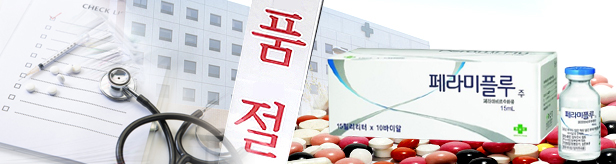
- The government is poised to implement supply control of Peramiflu inj., an injection for transfusion, following the management of oral influenza treatment, Tamiflu. Peramiflu inj. is experiencing out-of-stock in medical services due to a recent increase in demand. Health Insurance Review and Assessment Service (HIRA)’s Korea Pharmaceutical Information Service (KPIS) designated two types of Green Cross’s Peramiflu Inj. (peramivir), after receiving reports through the information channel, as drug shortages, and plans to provide inventory information on these drugs. The information service has been operating a channel for receiving reports on drug shortages since July. Reporting on drug supply shortages is open to anyone, including associations, groups, doctors and pharmacist, and the public. HIRA discloses information on the inventory of drugs that are experiencing supply shortages by analyzing distribution status and identifying drugs currently facing supply issues. Until now, Peramiflu Inj. has not been registered on the drug shortages list. However, remaining stocks of three oseltamivir products, including Tamiflu, have been distributed following the drug shortages designation. Regarding Tamiflu, the government released Tamiflu from the national drug reserve into the market. Starting last week, pharmacists have been gradually releasing the stock for 180,000 people. Green Cross’s Peramiflu is an original drug that contains peramivir as active ingredient. Although it is a non-reimbursed drug, there are 15 generics available in the market. Generic drugs have not been reported to the drug shortages information channel. “HIRA is currently assessing management strategy to address the drug shortages; for example, sharing information about the drugs that have been reported through the information channel with a public-private consultative body,” stated a representative from the HIRA. The issue of Peramiflu abuse was discussed during the second meeting of the 'respiratory diseases joint-departments taskforce' on the 27th. Medical experts, including those from Korean Society of Pediatric Infectious Diseases and The Korean Pediatric Society, have expressed concerns that healthcare providers prioritize the prescription of injections over oral pills, despite both being equally effective. Peramivir ingredient is designated as a national essential medicine. Therefore, whether the government will actively pursue drug supply management for peramivir ingredient is of interest.
- Policy
- True Set, a triple hypertension therapy, to face generics
- by Lee, Tak-Sun Dec 28, 2023 06:02am
- Generics of Yuhan’s True Set Tab., a triple-combination drug for hypertension with rapid sales growth, are already gearing up for competition. True Set, a triple-combination drug that contains telmisartan, amlodipine besylate, and chlorthalidone, received approval in August 2019. Subsequently, True Set was released to the market in November following reimbursement approval. True Set’s re-examination period is set to expire in August 22, 2025, which is a year and 8 months from now. Given these circumstances, generic companies are actively pursuing opportunities for generic entry. The MFDS approved Jeil Pharm’s bioequivalence trial protocol for JLP-2202 on 21st. A comparative drug contains Telmisartan 80mg, Amlodipine Besylate 6.935mg, and Chlorthalidone 25mg as active ingredients. A currently authorized drug for the market is True Set Tab. 80/5/25mg. Released in November 2019, True Set Tab. recorded an annual outpatient prescription sales of 10 billion won, in just two years. According to the data from UBIST, True Set Tab.’s outpatient prescription sales recorded 16.8 billion won, with a cumulative outpatient prescription sales in Q3 reaching 13.4 billion won, breaking last year’s record and showing potential for rapid growth. Currently, Daiichi Sankyo Korea’s Sevikar HCT (Olmesartan Medoxomil/Amlodipine Besylate/Hydrochlorothiazide), Amosartan Plus (Amlodipine Camsylate/Losartan potassium/Amlodipine Camsylate), and True Set (Telmisartan/Amlodipine Besylate/Chlorthalidone) are dominating the triple-combination drug market. Among these, generics for Sevikar HCT has already been released in the market. Amosartan Plus and True Set remain exclusive in the market. However, drug product patent for Amosartan Plus is expiring in November 2036. Additionally, Amosartan Plus contains Amlodipine Camsylate, which is exclusively produced by Hanmi Pharm, making it difficult for generic companies to approach immediately. Since True Set does not have a relevant patent, and its re-examination is set to be completed three years from now, generic companies have been eyeing the drug. Korean pharmaceutical companies are facing limited opportunities for generic development due to the scarcity of original drugs with expiring patents. Therefore, many companies, including Jeil Pharm, are awaiting to seize the opportunity to manufacture True Set generics.
- Policy
- Reform should drive development of 2 homegrown blockbusters
- by Lee, Jeong-Hwan Dec 27, 2023 06:03am
- The government expressed the will to encourage pharmaceutical companies to invest in research and development (R&D) and secure the momentum of developing two homegrown blockbuster drugs through the reform of the drug pricing system to reflect innovative value. Above all, the government has made it clear that it will strengthen the sustainability of national health insurance finances by reducing the proportion of pharmaceutical expenses, and at the same time, investing the funds generated by trimming the insurance drug prices of drugs that violate the purpose of selective benefits into innovative new drugs and essential drugs. In particular, the government said it had devised the reform of the drug pricing system to strengthen the supply chain of essential drugs in terms of health security, which arose as a key issue of concern during the COVID-19 pandemic. On the 22nd, Director Chang-Hyun Oh, Director of Pharmaceutical Benefits at MOHW, said at a meeting with the press corp to explain the implications of the 'Plan to Reflect the Innovation Value of New Drugs and Improve the Drug Price System for Health Security' that was recently passed by the Health Insurance Policy Review Committee. The Ministry of Health and Welfare will revise the drug pricing system to favor the drug prices of domestically developed new drugs made by innovative pharmaceutical companies and support the export of domestic new drugs at the listed price after applying the risk-sharing agreement system homegrown new drugs exported overseas. The government will also ease regulations on drug price reductions based on the Price-Volume Agreement system and establish regulations on preferential drug prices for botanical drugs. New drugs that are recognized as innovative will be exceptionally recognized for cost-effectiveness even if they exceed the ICER threshold during pharmacoeconomic evaluations and will be applied eased evaluation standards when being reviewed for RSS renewals. Also, the government will provide preferential pricing for drugs based on natural products that demonstrate superiority and innovation. To strengthen the national security of pharmaceuticals, a system will be operated to grant a 68% drug pricing premium for up to 10 years (basic 5 years, additional 5 years) for national essential drugs that use domestic APIs. Chang-Hyun Oh, Director of Pharmaceutical Benefits at MOHW explains the background and goals of the reform of the drug pricing system reflecting innovation value In addition, the evaluation criteria for adjusting the upper limit for national essential drugs will be relaxed, and the cost preservation procedure will be simplified, through measures such as ordering prior drug pricing negotiation, if the cost increase factor of supply and demand insecurity drugs is proven. Oh said he hopes the reforms will lead to stronger investment in new drug R&D by pharmaceutical companies and the development of real blockbuster drugs. "Until now, we have streamlined many procedures to strengthen coverage of serious drugs. However, there were not many cases where we raised the appraisal value of drugs (preferential drug prices).” So this time, we seek to first focus on rewarding innovative value (during drug pricing). This will encourage pharmaceutical companies to invest more in R&D, which will increase jobs and lead to the development of new drugs." Oh continued, "Korea is aiming to develop two blockbuster drugs by 2027, and for that, there needs to be a drive that recognizes innovative value within the national health insurance system. Next, the global supply chain has been severely disrupted by COVID-19. We did a lot of work last year, such as urgently raising the price of acetaminophen, but in the end, we concluded that it is important to increase localization and self-sufficiency of necessary drugs." "We devised a reform plan that emphasizes the need to create an environment for domestic pharmaceutical companies to produce their own drugs, with the belief that this, to a certain extent, would stabilize drug supply during disasters such as the spread of infectious diseases. Adding premium pricing for drugs using APIs from Korea and limiting it to national essential drugs was to build external rationale, as well as conflict with the FTA and WTO trade issues. Also, we were worried that creating a system that favors only our country would violate the law, and prioritize national essential drugs because of their rightful preferential status." Regarding the revision of the Price-Volume Agreement system (PVA), Oh said that a proposal to adjust the price discount imposed on drugs by a certain percentage is likely for drugs that are subject to price reductions more than 3 times in 5 years. However, he said that it is difficult to disclose the exact percentage. For example, when the domestic new drug K-CAB was repeatedly subjected to PVA price cuts, the ministry said that if the developer, HK Inno. N, was designated as an innovative pharmaceutical company, part of the price reduction would be removed. When asked how the government plans to balance drug costs in health insurance finances, Oh said, "Currently, drug costs account for 23.3% of NHI medical expenditures, and I don't know how much it will go down (with the reform), but we are aiming for 21% to 22%. We will continue to narrow down drugs that do not meet the purpose of selective reimbursement. Also, we're going to cut reimbursement of drugs that don't fit the actuarial principle of the system. Naturally, there will be savings, and if we use them for innovation, it may serve as an incentive for pharmaceutical companies to develop new drugs."
- Policy
- Swiss’s Idorsia applies for the reimb of its first product
- by Lee, Tak-Sun Dec 27, 2023 06:03am
- The Korean subsidiary of the Swiss pharmaceutical company Idorsia has started the reimbursement process for the drug upon receiving approval for Pivlaz Inj (clazosentan sodium). The drug, which is used to prevent cerebral vasospasm, is expected to be sold by Handok in Korea, with the company also conducting domestic clinical trials. According to industry sources on the 26th, Idorsia Pharmaceuticals Korea (President: Minbok Lee) recently applied for the reimbursement of its Pivlaz Inj to the Health Insurance Review and Assessment Service. The company quickly started the reimbursement listing process after obtaining marketing authorization from the Ministry of Food and Drug Safety on July 7. The drug is a selective endothelin A receptor antagonist indicated for the prevention of cerebral vasospasm, vasospasm-related cerebral infarction, and cerebral ischemic events in adults who have undergone craniotomy or procedures after aneurysmal subarachnoid hemorrhage. The company explained that Pivlaz is the first drug approved in Korea to prevent both cerebral vasospasm and its complications. At least 25% of patients diagnosed with aneurysmal subarachnoid hemorrhage die, and approximately 50% of survivors suffer neurological deficits. Globally, the disease affects 6.7 people per 100,000 people per year and 9 people per 100,000 in Korea. In a Phase III trial that was conducted in Japan, Pivlaz significantly reduced the incidence of cerebral vasospasm-related complications and all-cause mortality within 6 weeks of subarachnoid hemorrhage, which confirmed its safety. Another Phase II trial that was jointly conducted in Korea and Japan enrolled 74 Korean patients. Handok has been conducting domestic clinical trials and licensing the product in collaboration with Idorsia. Both are expected to jointly take charge of reimbursement and sales as well. Idorsia recently launched its insomnia drug Quviviq in the U.S. and Europe, and arose as one of the hottest pharmaceutical companies in the country, recording sales of KRW 100 billion in Q2 2022 alone. Domestic clinical trials for Quviviq have also been carried out by Handok since 2019 in Korea. Japan’s Sosei Group holds all of the sales rights for Quviviq. In July, the Sosei Group acquired Idorsia's pharmaceutical business in the Asia-Pacific region, excluding China, for approximately 65 billion yen. With the acquisition, Sosei Group now reportedly holds all of the shares of Idorsia's Japanese and Korean subsidiaries. In addition to Pivlaz, Sosei plans to market insomnia treatment Quviviq and up to seven other products from Idorsia's global pipeline in Asia-Pacific.
