
- LOGIN
- MemberShip
- 2026-06-21 05:58:57

- Company
- Severe asthma biologic 'Nucala' available in the 'Big 5'
- by Eo, Yun-Ho Sep 24, 2024 05:46am
- Product photo of GSK The biologic antibody drug 'Nucala' is now available for prescription at tertiary general hospitals. According to industry sources, GSK's Nucala (mepolizumab), a treatment for severe neutrophilic asthma, has passed the drug committees of the 'Big 5' tertiary hospitals, including Samsung Medical Center, Seoul University Hospital, Seoul Asan Medical Center, and Sinchon Severance Hospital, and Seoul St. Mary's Hospital. After being listed to the reimbursement list in November, this drug is becoming more widely available in hospitals. Nucala is an anti-interleukin (IL)-5 that reduces counts of neutrophils, a type of white blood cell contributing to asthma. It can be prescribed to ▲patients with neutrophil counts of 150 cells/㎕ or more at the start of treatment ▲adult patients with severe neutrophilic asthma who have neutrophil counts of 300 cells/㎕ or more within 12 months of treatment as an add-on maintenance therapy. The efficacy of Nucala has been demonstrated through the Phase 3 DREAM, MENSA, and SIRIUS studies. The MENSA study results were published in NEJM in 2014. The study involved patients with severe asthma who had worsened symptoms despite the previous use of several agents, such as high-dose inhaled corticosteroids (ICS). The investigators enrolled patients with neutrophil counts of 150 cells/㎕ or more (300 cells/㎕ or more a year before) at the time of the initial screening test. The patients were given mepolizumab or placebo, and they were monitored for annual rate of worsened symptoms. The results showed that patients administered an intravenous injection of mepolizumab 75 mg had a 47% reduction in the annual rate of worsened symptoms compared to the placebo group. The patients administered a subcutaneous injection of mepolizumab 100 mg had 53% reduction in the rate. Furthermore, the quality of life improved, and patients had higher satisfaction with asthma control than the placebo group. The SIRIUS study involved patients who use oral corticosteroids (OCS) and evaluated the changes in OCS dosage after 20-24 weeks of mepolizumab treatment. The study results showed that the mepolizumab 100 mg patient group had a 50% reduction in the OCS dose compared to the placebo group and significantly improved asthma control satisfaction and quality of life evaluation. The study was the first research to prove that an antibody drug can reduce OCS dosage. It was published in the European Respiratory Journal (ERJ) in 2014. Meanwhile, drugs with similar mechanisms to Nucala are Teva-Handok's 'Cinqair (reslizumab)' and AstraZeneca’s 'Fasenra (benralizumab).' Cinqair was listed to the reimbursement list at the same time as Nucala, and Fasenra was listed since July.
- Company
- Hugelsets sights on Indonesia with botulinum toxin Letybo
- by 어윤호 Sep 23, 2024 09:40am
- Hugel and its Indonesian partnerParvus host a launch event of botulinum toxin Letybo at Shangri-La JakartaHugel Inc., a leading global medical aesthetics company, said on Monday it had hosted a launch event of Letybo last week at Shangri-La Jakarta in Indonesia, the second-largest medical aesthetics market in Southeast Asia, to promote the clinical efficacy of the botulinum toxin. The event comprised online and on-site lectures on techniques and trends of Letybo treatment. The lectures were led by Dr. Konstantin Frank, a plastic surgery resident at Ocean Clinic, Marbella in Spain, and medical aesthetics industry leaders in Indonesia. Prior to the launch event, Hugel conducted a hands-on workshop on the safe and effective treatment of botulinum toxin for local doctors. Dr. Frank delivered an anatomy lecture on Letyboinjection for Asians and performed live demonstrations for around 350 healthcare and medical professionals. “We are pleased to have launched our premium botulinum toxin product Letybo in Indonesia, Southeast Asia’s second-largest medical aesthetics market after Thailand. Hugel will continue to engage with local practitioners through seminars and workshops for promotion ofLetybo’s prowess,” a Hugel official said.
- Company
- Why royalties for Yuhan’s Leclaza were reduced $300mil
- by Chon, Seung-Hyun Sep 23, 2024 05:51am
- The maximum contract amount for Leclaza, which was licensed out to Janssen by Yuhan Corp, has been reduced by USD 350 million. This reduction was due to the termination of research to develop Leclaza as a next-generation anti-cancer drug. Yuhan Corp received USD 210 million as upfront payment and development and approval milestones for the licensing agreement and is eligible to receive up to USD 740 million upon further development and sales. Pic of Yuhan Corp headquartersOn the 20th, Yuhan Corp publicly announced that the maximum deal for Leclaza’s technology transfer agreement with Janssen Biotech has been reduced by USD 350 million (KRW 406.5 billion) from USD 1.255 billion to USD 950 million. The company explained that the reduction was due to “partial corrections to the agreement due to the termination of collaborative research and development of next-generation (4th generation) EGFR (epidermal growth factor receptor) targeted anticancer therapy.” In November 2018, Yuhan Corp licensed out its anti-cancer drug Leclaza to Janssen Biotech. The total value of the agreement, including a non-refundable upfront payment of USD 50 million, amounted to USD 1.25 billion. The term of the agreement is from the date of the agreement until the expiration of the country-specific patent rights or 12 years from the date of the first commercial sale in each country, whichever comes later. The technology transfer agreement also included rights to develop a fourth-generation EGFR tyrosine kinase inhibitor (TKI). Third-generation EGFR TKIs were primarily developed for the treatment of NSCLC with EGFR gene mutations, most notably the T790M mutation. The T790M mutation occurs in patients who show resistance to existing first- and second-generation EGFR TKIs. According to the company, 4th generation EGFR TKIs target a broader genetic mutation profile than existing EGFR TKIs as they selectively inhibit key mutations that lead to resistance to 1st to 3rd generation EGFR TKIs. Janssen had studied the combination of the 3rd generation EGFR-targeted cancer drug Leclaza and Johnson & Johnson's bispecific antibody amivantamab. Janssen successfully completed the clinical trial for Leclaza in combination with amivantamab and received U.S. Food and Drug Administration (FDA) approval last month for the combination of Leclaza and Rybrevant as a first-line treatment for adult patients with locally advanced or metastatic NSCLC who have a confirmed EGFR exon 19 deletion or exon 21 L858R substitution mutation. “The significant reduction in the incidence of secondary resistant EGFR mutations in patients treated with the Leclaza and amivantamab combination reduces the need for further development of a 4th generation EGFR TKI,” the company said. In other words, the company explained the combination of Leclaza and amivantamab has been so effective that it has ended attempts to develop a next-generation drug. Yuhan has received a total of USD 210 million from Janssen since licensing out Leclaza. In November 2018, Yuhan received a USD 50 million upfront payment for the transfer of Leclaza’s technology. In April 2020, Yuhan received a USD 35 million milestone payment from Janssen. At the time, Johnson & Johnson paid Yuhan the additional milestone payment for initiating a clinical trial for the Rybrevant and Leclaza combination. In November 2020, Johnson & Johnson paid an additional USD 65 million milestone to Yuhan Corp when it started subject recruitment for the trial. Yuhan Corp will also receive an additional USD 60 million in technology fees for the FDA’s approval of Leclaza. Of the total license fee revenue, 40% is paid to the original developer, Oscotec. In 2016, the company acquired the rights to develop the preclinical drug Leclaza from Oscotec and its subsidiary Genosco. The total value of the agreement had been KRW 1.5 billion. Of the amount, KRW 1 billion was set to be paid within 30 days of the signing of the agreement and KRW 500 million was to be paid after the approval of Phase I clinical trials. Additional milestone payments of up to USD 740 million (KRW 984.2 billion) still remain as future development and sales milestones for Leclaza. Yuhan Corp is also currently independently conducting a global Phase III clinical trial for Leclaza. Janssen did not participate in the trial.
- Company
- Will the high-priced Hemgenix be reimbursed in Korea?
- by Whang, byung-woo Sep 23, 2024 05:50am
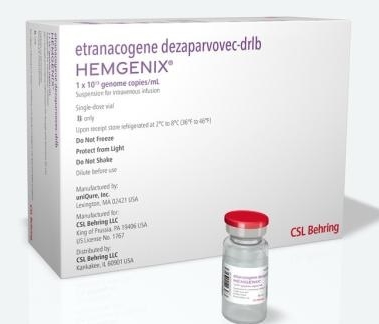
- The reimbursement listing process for Hemgenix (etranacogene dezaparvovec-drlb), a 'one-shot' treatment for hemophilia B that shows its effect as a single dose that received domestic approval recently, has been gaining attention in Korea. Pic of Hemgenix According to industry sources on the 21st, the Ministry of Food and Drug Safety (MFDS) recently approved CSL Behring Korea's hemophilia B gene therapy Hemgenix for the treatment of hemophilia B in adults. Hemgenix is used to treat moderate-to-severe hemophilia B (congenital blood clotting factor IX deficiency) in adults without a history of Factor IX inhibitors. Hemophilia is divided into two types, hemophilia A and hemophilia B, based on differences in the distribution of blood clotting factors VIII and IX, and the treatment approach differs depending on the type. Hemophilia B is a congenital bleeding disorder caused by a single gene defect and is caused by a deficiency in coagulation factor IX (blood coagulation factor 9), a protein that helps blood coagulation and is mainly produced in the liver. According to the 2019 White Paper on Hemophilia, the total number of hemophilia patients in Korea was 2,509, of which 1,746 (69.6%) were hemophilia A and 434 hemophilia B patients. Hemgenix delivers a functional gene that activates the production of blood clotting factor IX, enabling patients to produce factor IX on their own, and can reduce bleeding continuously in the long term with just a single injection. The recent availability of extended half-life therapies for hemophilia B has increased the convenience of prophylaxis. While the standard half-life therapies required 104 days of administration per year (based on twice-weekly infusions), the newer extended half-life agents are administered once every 7 to 14 days. However, the newer therapies have limitations despite the increased convenience due to the need for continuous treatment and the unavailability of a cure. In this context, the company is expected to apply for Hemgenix’s reimbursement focusing on the fact that it only needs to be administered once. According to industry sources, CSL Behring Korea is preparing to apply for reimbursement of Hemgenix. The company is expected to apply as early as the first half of next year. In the US, the drug is priced at KRW 4.7 billion (USD 3.5 million), making it virtually impossible for patients to pay on their own, so the company’s reimbursement challenge was naturally the next step. A pharmaceutical industry insider said, “There is a consensus among industry insiders that it would not be easy for CSL Behring Korea to receive reimbursement due to Hemgenix’s very high price. However, as the benefits provided by the drug are clear, the company will likely take a multifaceted approach for its reimbursement in Korea.” If and when the company applies for reimbursement, it is expected to emphasize Hemgenix’s role as a one-shot treatment. While hemophilia B may not be considered life-threatening, patients can die from cerebral or organ bleeding, therefore the company may appeal to the drug’s value as a next-generation treatment that prevents the risks associated with regular intravenous infusions. “Hemgenix offers a unique and innovative approach that enables patients to produce their factor XI, and can fundamentally change the hemophilia treatment paradigm,” said Ki-Woon Kim, CEO of CSL Behring Korea. The issue is in its price. CSL Behring Korea's other hemophilia B drug, Idelvion (albutrepenonacog alfa), is priced at KRW 1,800 per IU/vial, from the lowest 250 IU/vial to the highest 2,000 IU/vial. Hemgenix’s dose is first determined based on age (below 12 or 12 years and older) and then applied a formula to determine the dosage based on body weight. For example, an 80kg patient with severe hemophilia B whose levels are approximately 50% of the normal level would require 3,080 IU of treatment. Simple calculation shows that this translates to 17.4 doses of Idelvion per year, which is a significant difference when comparing the U.S. drug price, even when considering its lifelong use. However, there are variables, such as the fact that the ultra-high priced drugs listed in Korea were given a price lower than those abroad. “At this point, we believe the biggest hurdle in reimbursement will be the burden of drug price on Korea’s national health insurance finances,” said a pharmaceutical industry official. “We expect CSL Behring Korea's track strategy and how convincing the therapeutic benefit and need of Hemgenix is to the government will be the key to its reimbursement in Korea.”

- Company
- Will restrictions on oral SMA drug Evrysdi be lifted?
- by Eo, Yun-Ho Sep 23, 2024 05:50am
- Whether the prescription restrictions set on the oral spinal muscular atrophy (SMA) treatment ‘Evrysdi’ may be lifted is gaining attention in Korea. According to Dailypharm coverage, Roche Korea applied to expand the reimbursement of its SMA treatment Evrysdi (risdiplam), which is currently allowed up to 2 bottles per day, and the agenda is currently under review by the Korea Health Insurance Review and Assessment Service. The need to expand Evrysdi’s reimbursement coverage has been continuously raised not only by the pharmaceutical company but also by prescribers on-site. In fact, relevant academic societies and patient organizations have also submitted their statements to HIRA. Spinraza is currently reimbursed for the treatment of 5q Spinal Muscular Atrophy in patients who received a genetic diagnosis of 5q SMN-1 deficiency or mutation that ▲ have 3 or fewer copies of SMN2 even before the onset of symptoms, and are less than 6 months old at the time of treatment initiation; or ▲ have SMA types 1-3 with clinical symptoms and signs related to SMA and are not on permanent ventilation. However, the prescription volume restriction under the then-new reimbursement standards has resulted in unmet patient demand on-site. According to the reimbursement standards, Evrysdi is prescribed on an in-patient basis and is allowed a maximum of 2 bottles per prescription for long-term use. This is enough for adolescent and adult patients weighing 20kg or greater to take for about 3 weeks, which poses a challenge for patients with limited mobility and their caregivers to visit the hospital once every three weeks to refill their prescriptions. In addition, additional visits to perform motor function assessments are required to continue receiving the medication, which may require more frequent visits than the reimbursement standards, increasing the burden on patients and their caregivers. Oral medications have the advantage of being oral - therefore being easy to take - which can significantly reduce the burden of hospital visits. However, it has been noted that the restriction set on the prescription volume may serve as a barrier for patients in need of oral medications. Therefore, the industry’s eyes are focused on whether the reimbursement standards for Evrysdi may be improved this time. Currently, Evrysdi is the only oral option available in the SMA space, with Biogen's Spinraza (nusinersen) and Novartis' Zolgensma (onasemnogene abeparvovec-xioi) being prescribed for SMA in Korea.
- Company
- Peter Trang will head Business Operations at Takeda Korea
- by Whang, byung-woo Sep 20, 2024 05:51am
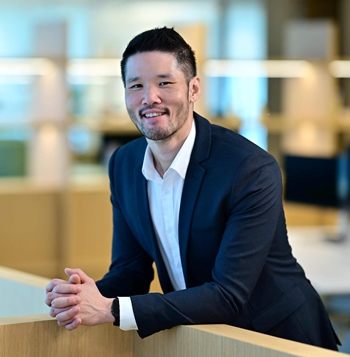
- Peter Trang, Head of Business Operations, Takeda Korea On the 19th, Takeda Korea announced that it appointed Peter Trang from Australia as the new Head of Business Operations. The new head joined Takeda Pharmaceuticals Australia in 2016 as Business Insights Manager, then moved on and became the Strategy Lead of the Growth & Emerging Markets Business Unit (BU), which oversaw operations in more than 30 countries, including Australia. In this role, he developed geographic, commercial, and long-term strategies, including post-merger strategy and franchise-specific strategic direction and guidance for the Growth & Emerging Markets BU, helping Takeda build a differentiated portfolio and contributing to the double-digit growth of the Growth & Emerging MarketsBU countries. Takeda Korea’s Business Operations analyzes corporate capabilities and sets goals from a company-wide perspective. Building on his global experience, Trang is expected to help shape and direct Korea's contribution to Takeda's global presence, which is spread across over 80 countries, through business planning, performance management and evaluation, issue and resource management, and by securing a sustainable pipeline. “Our unit will actively support other business units to build capabilities for a better future in the ever-changing environment, and make every effort to bring innovative medicines to patients in Korea,” said Peter Trang, the new Head of Business Operations at Takeda Korea. “Drawing on my experience in the Growth & Emerging MarketsBU, I will make the best efforts to bring positive influence to patients in Korea. “We see Mr. Trang’s appointment as an opportunity to strengthen the company’s organizational capabilities as it brings together business planning and strategic planning, which are like interlocking cogs in a wheel,” said Donghoon Lee, Director of Human Resources at Takeda Korea. ”We believe his appointment will serve as a driver of growth, building on the flexible and collaborative organizational culture that Takeda Korea has established over the years, to create an environment that enables us to work organically and agilely with our headquarters.” Meanwhile, Sehee Lee, who had been leading both the Business Planning Department and the Data, Digital & Technology Department, will now dedicated to leading the company's digital transformation efforts. Lee will continue to lead the company's digital transformation efforts to unlock the value of data and digital to deliver exceptional experiences for patients and customers and embed digital strategies into the business to drive sustainable growth and productivity for the organization.
- Company
- Ipsen Korea appoints Yang mi-sun as new CEO
- by Eo, Yun-Ho Sep 20, 2024 05:51am
- Ipsen Korea named Yang Mi-sun as the new CEO. Ipsen Korea has appointed Yang Mi-sun, AstraZeneca Korea’s former Business Unit Director, as the new Chief Executive Officer (CEO). Sources said that Ipsen Korea has appointed its new CEO, replacing former CEO Audrey Schweitzer after the end of her term. Audrey Schweitzer has been in charge of Ipsen Korea since 2021. Yang is an industry specialist with extensive knowledge and 20 years of experience working in Korean and overseas pharmaceutical companies. Yang obtained a degree from Chung-Ang University College of Pharmacy and has held positions for various medicines in South Korean and overseas pharmaceutical companies, including Samil-Pharm, Bayer, and MSD, since 2000. Yang worked at MSD Korea for 10 years since 2008, where she was responsible for respiratory disease marketing and served as Specialty Business Unit Manager and anti-cancer agent marketing manager. Yang brings broad experience and understanding of sales and marketing of various diseases. Yang served as a Business Unit Head for HIV & Antifungal Business and Digital marketing at Gilead Sciences in 2017, and she previously led the anti-cancer business unit at AstraZeneca Korea since 2021 before the current appointment. Meanwhile, Ipsen was established in 1929 in France. The company focuses on medicines for cancer, rare diseases, and neuroscience. Since late 2010, Ipsen has been trying a new approach by acquiring biopharmaceutical companies specializing in rare diseases and neuroscience. In 2017, Ipsen acquired U.S.-based Merrimack Pharmaceuticals, the developer of the metastatic pancreatic cancer treatment Onivyde, for US$1.25 billion (around KRW 1.65 trillion). In February 2019, Ipsen acquired Clementia Pharmaceuticals, a biotech venture specializing in rare bone diseases, for US$ 1.3 billion (around KRW 2 trillion).
- Company
- Inventage Lab to codevelop a long-acting injectable with BI
- by Lee, Seok-Jun Sep 20, 2024 05:51am
- Inventage Lab (CEO Ju-Hee Kim) announced on the 19th that it has signed an agreement with Boehringer Ingelheim, a German multinational pharmaceutical company, to co-develop a long-acting injectable formulation for a new peptide drug. Inventage Lab will develop a long-acting injectable formulation based on Boehringer Ingelheim's drug candidate and supply samples for preclinical trials. Following Boehringer Ingelheim's internal evaluation process, the two companies will collaborate on clinical development and enter into a global supply agreement for joint response to clinical development, clinical sample manufacturing, and commercialization. After the product launch, a separate agreement may be signed for the technology transfer of the manufacturing platform to support global market expansion. Inventage Lab’s platform utilizes high-quality polymer microspheres to create long-acting injectable formulations. It is a formulation platform that can achieve long-lasting effects while minimizing the side effects of the drug (API). The fact that Boehringer Ingelheim, with its expertise in technology procurement and high standards of validation, decided to partner with Inventage Lab for this important development project, proves the differentiated technological level of the IVL-DrugFluidic® platform technology in the global market. An official from Inventage Lab said, “This co-development project has significance as it is not a typical case of a biotech company proposing a specific pipeline to a major pharmaceutical company, but the Big Pharma’s selecting a technology supplier and advancing the formulation based on the Big Pharma’s own demand and needs”
- Company
- Samsung Bioepis recruits Lina Choi as new global head
- by Nho, Byung Chul Sep 19, 2024 05:48am
- Lina Choi named as new global head for Samsung Bioepis. Samsung Bioepis garners attention as the company recruits specialists to strengthen its global entry capacity. Sources said that Samsung Bioepis has recruited Linda Choi, Vice President, as the Head of Global Commercial in August. Choi studied pharmacy at Ohio State University College of Pharmacy and has 28 years of experience in multinational pharmaceutical companies. She is recognized as a specialist with expertise in sales and marketing. Choi started a career at Eli Lily in the United States, where she served as Senior Director. At UCB Biopharma in Belgium, Choi was the chief operating officer for global marketing. Before joining Samsung Bioepis, Choi also served as the Chief Operating Officer (COO) at AVANIR, Japan's Otsuka Holdings subsidiary, and ADESIS, a U.S.-based CDMO. By recruiting Choi, who has years of experience in the global biopharmaceutical industry, Samsung Bioepis is expected to further strengthen biosimilar product sales in the global market. Samsung Bioepis has commercialized 9 biosimilar products in immunology, oncology, ophthalmology, and hematology. Partnering with Biogen, Organon, and Sandoz, Samsung Bioepis sells 8 products in Europe and 4 in the United States. In addition to partnership deals, Samsung Bioepis focuses on establishing an independent sales network overseas. For 'Episcli,' a rare disease drug launched in Europe in July 2023, Samsung Bioepis' local subsidiary was responsible for direct sales. Samsung Bioepis has become the company with the most FDA-approved biosimilar antibody products after obtaining eight marketing authorizations from the U.S. FDA. The company expects to launch Stelara biosimilar (U.S. product name, 'Pyzchiva') in the United States. Samsung Bioepis plans to expand its product portfolio for various diseases in the global market.
- Company
- Will Columvi be reviewed for reimb by CDDC in OCT?
- by Eo, Yun-Ho Sep 19, 2024 05:48am
- Demand is rising for the reimbursement of ‘Columvi,’ the first bispecific antibody treatment option for lymphoma, in Korea. The Korea Leukemia Patients Organization has requested the CD20-CD3 bispecific antibody for diffuse large B-cell lymphoma (DLBCL) Columvi (glofitamab) be redeliberated at the Health Insurance Review and Assessment Service's Cancer Disease Deliberation Committee meeting that will be held in October. In addition, the organization urged the manufacturer, Roche Korea, to come up with a financial sharing plan to accelerate the drug’s reimbursement listing. “Columvi is a third-line treatment that can be immediately used in situations where death can occur within a few months,” said KIPO, adding, “Patients with diffuse large B-cell lymphoma who have failed two or more lines of treatment strategies are sincerely awaiting Columvi’s prompt health insurance reimbursement listing.” The drug was presented for deliberation to the CDDC last July but failed to make the cut for reimbursement. However, Roche recently submitted an application again for its reimbursement. It remains to be seen if the hopes of the medical community and patient groups for Columvi’s reimbursement listing will be fulfilled this time. Columvi was approved in Korea last December for the treatment of adult patients with relapsed or refractory diffuse large B cell lymphoma (DLBCL), after two or more lines of systemic therapy. The drug is a third-line treatment option for DLBCL, like Novartis’s chimeric antigen receptor (CAR)-T-cell therapy Kymriah (tisagenlecleucel). The two drugs have different benefits; therefore the choice will likely be based on each patient's condition and circumstance. Columvi demonstrated efficacy in Phase I/II NP30179 trial in 155 patients with relapsed or refractory DLBCL after two or more prior systemic therapies. Results showed that Columvi achieved a complete response (CR) of 40% and an overall response rate(ORR) of 52%. The efficacy was also consistent across all subgroups. The most common adverse event was cytokine release syndrome (CRS). Adding to the encouraging data, at the 2024 Congress of the European Hematology Association (EHA 2024), the company unveiled the results of the Phase III STARGLO study, which demonstrated an improvement in overall survival (OS) with Columvi. The STARGLO study enrolled patients with relapsed or refractory (R/R) diffuse DLBCL who were not eligible to receive an autologous stem cell transplant after one or more prior systemic therapies, or who had received two or more prior systemic therapies. In the primary analysis (median follow-up 11.3 months), Columvi and gemcitabine+oxaliplatin (GemOx) combination significantly improved the primary endpoint of OS with a 41% lower risk of death compared to rituximab+GemOx. Seok Jin Kim, Professor of Hematology and Oncology at Samsung Medical Center, said, "There had been much unmet need in DLBCL for more effective third-line treatment options for patients who fail first-line or experience repeated relapses. We expect the introduction of Columvi to significantly improve the outcomes for patients with relapsed or refractory lymphoma in Korea." Although the drug is non-reimbursed, the drug can be prescribed in various general hospitals in Korea. The drug has passed the drug committees (DCs) of Samsung Medical Center, Seoul Asan Medical Center, Sinchon Severance Hospital, Seoul National University Bundang Hospital, Seoul National University Hospital, Ulsan University Hospital, Korea University Anam Hospital, Wonju Severance Christian Hospital, and Chonnam National University Hwasun Hospital.
