
- LOGIN
- MemberShip
- 2026-06-23 12:58:08
- Company
- Onureg, PO acute leukemia drug, is scheduled to be proposed
- by Eo, Yun-Ho Apr 06, 2023 05:53am
- Onureg, a maintenance therapy for acute myeloid leukemia, is on its way to entering insurance coverage. As a result of the coverage, Onureg is scheduled to be presented to the Pharmaceutical Reimbursement Evaluation Committee of the Health Insurance Review and Assessment Service on the 6th. It has been about four months since the passage of the Cancer Diseases Review Committee in December of last year. On March 23, 2022, this drug was approved for maintenance therapy in adult patients with acute myeloid leukemia who achieved CR or CRi after induction therapy, with or without consolidation therapy, and for whom HSCT is unsuitable. As the first and only treatment option that clinically extended the survival period for AML patients unable to undergo hematopoietic stem cell transplantation who had failed to prolong OS despite several R&D attempts over the years, the critical question is whether Onureg can be recognized for its clinical value. Onureg confirmed the efficacy and safety in phase 3 clinical trial of QUAZAR AML-001 in 472 patients with AML. As a result of the study, the mOS of the patient group who took Onureg was 24.7 months, extending the survival time by about 10 months compared to 14.8 months of the placebo group. At 1 year and 2 years of treatment, the survival rate in the Onurec group was 73% (vs. 56% vs. placebo group) and 51% (vs. 37% vs. placebo group), respectively, all higher than those in the placebo group. RFS also confirmed that the Onureg group reached 10.2 months, 5.4 months longer than the placebo group (4.8 months), reducing the risk of recurrence. The proportion of patients without recurrence after 6 months of treatment was 67% in the Onureg group and 45% in the placebo group. Meanwhile, Onureg has been recognized for its clinical usefulness in major overseas countries such as the UK and Australia and is being recommended for reimbursement to patients to be treated.
- Company
- Patients and policy are trending in the pharma industry
- by Eo, Yun-Ho Apr 06, 2023 05:53am
- The opening of new positions that didn’t exist before indicates the considerable need for the positions. Recently, Korean subsidiaries of multinational pharmaceutical companies that mainly supply new drugs have opened up two new positions - GA (Government Affairs) and PA (Patient Advocacy). The changes seem to be in line with the trend in the new drug industry. In the era of ‘high-priced new drugs,’ the government and pharmaceutical industries are having difficulty seeing eye-to-eye when setting the drug price, and the reimbursement listing of new drugs has become the factor that determines the success or failure of a new drug. Issues that cannot be resolved through direct communication with ‘relevant ministries’ have been accumulating,, and pharmaceutical companies have been searching for new methods of communication like the National Assembly. As a result, the need to connect with the National Assembly, patients, the government (other than directly related ministries), and the media has risen. ◆External affairs personnel increased by 1.6 times during the past 5 years...18 people were newly hired So how many have actually increased? According to Dailypharm's coverage, the GA and PA personnel at 15 major multinational companies increased by 158% over the past five years. The number, which had been 31 people in 2018 became 49 as of 2023. 9 companies have increased recruitment during the period, and one company had newly established a department. Companies including Novartis, Takeda Pharmaceutical, Sanofi, Astellas Pharma, Amgen, and Janssen have all more than doubled their relevant workforce. MSD has the most related personnel of 7 , followed by Janssen (6), Novartis (5), AstraZeneca (5), and Pfizer (5). More specifically, the 15 companies had 20 GA and 16 PA managers in total. Also, more than half of the multinational pharmaceutical companies had personnel in charge of the GA and PA tasks combined, a choice that the companies may have made due to the size of the company. Whatever the reason, the choice also reflects the fact that the two positions are closely related to each other. Among the 6 companies that showed no changes in the number of personnel in the area, 3 are planning to recruit more personnel this year. An executive from multinational pharmaceutical company A said, “Most of the companies had no GA or PA representatives 5 years ago. Usually, the MA representatives took care of the entire external affairs tasks. Considering the size of the Korean subsidiaries of multinational pharmaceutical companies, the number of people in the area has been increasing rapidly.” The official added, "Our company also has a small number of employees dealing with external affairs, but we have decided to hire two new people this year. Just as the MAs had in the past, we expect the roles of GA and PA will become increasingly important." ◆KRPIA organizes a separate committee...to increase patient focus The Korean Research-based Pharmaceutical Industry Association (KRPIA) is also focusing on its ‘Policy’ committee that focuses on government affairs. The Healthcare Policy Committee had been originally concurrently run by MA managers, and there was not much activity. But the times have changed. The committee is now receiving support from its board of directors which consists of multinational pharmaceutical company CEOs. A member of the board of directors at KRPIA said, "In addition to patients, the public's interest in new drugs has been increasing. Due to the rising interest, the association’s need to communicate with the National Assembly, civic groups, and patient groups has also increased. In order to reflect these needs, the KRPIA’s Healthcare Policy Committee needs to also increase its activity. This is a big agenda that the KRPIA is concentrating on these days.” A separate committee has not yet been established for patients. However, a separate task force in charge of ‘patients’ has been established and is active under KRPIA’s Public Affairs & Communications Committee. A KRPIA official said, “With the new drug reimbursement environment becoming increasingly difficult and patients' voices for rapid reimbursement of new drugs rising, pharmaceutical companies are seeking to find a win-win solution through communication and cooperation with the government and patients.” The official added, “The involvement of patient associations or patient groups is a basic consideration in most stages from the development of new drugs by pharmaceutical companies to the policy decision-making process of the government in the United States and Europe. The process of how well we work with the government and patients will become ever more important in drawing a social consensus."
- Company
- Active M&A for global cell and gene therapy
- by Hwang, Jin-joon Apr 05, 2023 05:47am
- OVIS BCMA CAR-T, KyuloselIn the field of cell and gene therapy, which is considered a next-generation drug, an M&A worth 3.4 trillion won was completed. Domestic biopharmaceutical companies are conducting R&D in the field of cell and gene therapy as a future food source. CDMO companies are entering the CDMO business for cell and gene therapy through M&A and factory expansion. ◆ 3.4 trillion won worth of M&A According to the industry on the 4th, Sartorius, a German-based global biopharmaceutical company, announced on the 31st of last month (local time) that it would acquire French Polyplus, a producer of raw materials for cell and gene therapy, for 2.4 billion euros (approximately 3.4 trillion won). Sartorius carried out this M&A to strengthen its capabilities in the field of cell culture medium portfolio and key material provision services related to cell gene therapy. The M&A will be conducted through Sartorius Stedim Biotech, a Sartorius subsidiary in France. The acquisition process is expected to be completed in the third quarter of this year. Expectations for the growth potential of the cell and gene therapy market are high. According to pharmaceutical market research firm Evaluate Pharma, the global cell and gene therapy market grew at an average annual rate of 49.1% from $7.47 billion in 2021. Yes, it is expected to grow to 55.59 billion dollars by 2026. During the same period, it is expected to show higher growth compared to the average annual growth rate of 5.7% for chemically synthesized drugs and 5.2% for antibody drugs. ◆Domestic pharmaceuticals are also interested in the field of cell and gene therapy Domestic biopharmaceutical companies have selected the field of cell and gene therapy as one of their new growth engines and are conducting R&D. Chong Kun Dang established 'Gen2C', a gene therapy research center, in the Omnibus Park of Seoul St. Mary's Hospital last year. It is a strategy to strengthen expertise in the field of gene therapy and establish itself as a leading company centered on Gen2C. Centered on researchers in the field of gene therapy at Hyojong Research Institute, the company plans to develop rare and incurable treatments for undruggable targets, which have high unmet needs and have been difficult to develop with existing methods. Chong Kun Dang also signed an MOU with CDMO, a cell gene therapy product, and ENCell, a next-generation stem cell therapy development company, for strategic investment and joint research on cell and gene therapy products. It plans to accelerate joint R&D and production processes for advanced biopharmaceuticals. Since last year, LG Chem has been concentrating its capabilities on advancing the establishment of an innovative cell therapy platform technology. LR19023, a next-generation CAR-T cell therapy, is under development. In the preclinical stage, the effect is confirmed through cancer model animal tests. LG Chem plans to develop LR19023 as a solid cancer treatment. HK inno.N paid attention to cell therapy products such as CAR-T and CAR-NK as future growth engines in 2020 and built a cell and gene therapy platform in Hanam, Gyeonggi Province. Currently, four CAR-T and CAR-NK cell therapies are being developed with the Bio Research Center as the main focus. To increase the success rate of treatment development and speed up market entry, technology for blood cancer and solid cancer treatment was transferred from global companies. For the localization of the technology, it is also researching CAR-T and CAR-NK cell therapy products on its own. Earlier this year, GC Cell transferred the technology of 'AB-205', a drug candidate for T-cell lymphoma, to Artiva Biotherapeutics, a US affiliate. This is an allogeneic umbilical cord blood-derived NK cell therapy using CAR that targets CD5 expressed in T-cell lymphoma. GC Cell will work with Artiva Biotherapeutics to lead a phase 1 clinical trial that meets domestic and US Food and Drug Administration (FDA) guidelines. GC Cell and Artiva Biotherapeutics plan to jointly develop drugs by conducting phase 2 clinical trials in the Asian and North American markets, respectively. CDMO companies such as SK Pharmteco, Samsung Biologics, and Lotte Biologics are accelerating their entry into the field of cell and gene therapy. Based on its localization strategy in 2021, SK Pharmteco entered the CDMO business, mainly in the US and Europe. By acquiring Yposkesi in France in 2021, it began targeting the cell and gene therapy CDMO field. Last year, it became the second largest shareholder of CBM, an American cell and gene therapy CDMO company. Samsung Biologics plans to start a business in the CDMO field of next-generation medicines, such as cell and gene therapy, through the establishment of the fifth plant. Samsung BioLogics CEO John Lim said, "We will continue to expand production capacity by promoting the establishment of the 2nd Bio Campus in Songdo, Incheon" after the board of directors' resolution in March. We plan to build facilities and research facilities to nurture next-generation drug technology.” Lotte Biologics entered the pharmaceutical CDMO field by acquiring BMS' Syracuse plant in the US in January. The Syracuse plant plans to make additional investments to strengthen its capabilities, including new product orders and process development. In addition to the antibody-drug CDMO, the facility is planned to be converted so that it can produce finished drugs (DP) and cell and gene therapies.
- Company
- Celltrion discloses interim results of global phase 3 Eylea
- by Hwang, Jin-joon Apr 05, 2023 05:45am
- Researchers at Celltrion are researching candidate materials. (Photo by Celltrion)On the 3rd, Celltrion disclosed the interim results based on the 24th week of the global phase 3 clinical trial of CT-P42, an eye disease treatment Eylea biosimilar. Celltrion is conducting clinical trials for 52 weeks on 348 DME patients in 13 countries, including Germany and Spain. The interim results released this time are the results of clinical progress up to 24 weeks. Celltrion is conducting clinical trials by dividing it into two groups: the CT-P42 administration group and the original drug administration group. The primary endpoint is the change in BCVA value measured at week 8 from baseline. As a result of the measurement, CT-P42 satisfied the predefined equivalence criteria. Secondary evaluation indicators, such as efficacy, safety, and immunogenicity evaluation, showed similar trends to the original drugs. Celltrion plans to complete the remaining phase 3 clinical trials and apply for CT-P42 approval to major countries such as the US and Europe within this year. Eylea, the original drug of CT-P42, is a blockbuster eye disease treatment developed by Regeneron in the US. It is used as a treatment for DME and wAMD. Eylea's material patent is set to expire in June this year in the US and in May 2025 in Europe. As of last year, Eylia's global sales were $9.75699 million.
- Company
- CHMP gave a positive opinion on the approval of Soliris
- by Jung, Sae-Im Apr 05, 2023 05:44am
- On the 31st of last month, Samsung Bioepis announced that it had obtained a positive opinion for the item approval of 'EPYSQLITM (Eculizumab)', a treatment for rare diseases, from the Committee for Medicinal Products for Human Use (CHMP) under the European Medicines Agency (EMA). EPYSQLITM is a biosimilar of Alexion's paroxysmal nocturnal hemoglobinuria (PNH) treatment 'Soliris'. It is an expensive drug with annual treatment costs of hundreds of millions of won, and its annual global sales reached 3.762 billion dollars (approximately 4.7 trillion won) last year. EPYSQLITM is the first product developed by Samsung Bioepis in the field of hematology. It is expected that it will be able to obtain official sales permission after the final review by the European Commission (EC), which usually takes about 2 to 3 months. Samsung Bioepis has currently commercialized a total of six biosimilar products in the European market. With the recommendation of EPYSQLITM permission, it has been able to diversify its business portfolio into hematology following autoimmune, oncology, and eye disease treatments. The company demonstrated pharmacokinetic equivalence between EPYSQLITM and the original drug through a phase 1 clinical trial conducted on healthy volunteers from November 2018 to March 2019. Then, from August 2019 to October 2021, a phase 3 study was conducted on patients with PNH to confirm clinical equivalence with the original drug. Samsung Bioepis has also carried out an extended supply of SB12 free of charge for up to two years to patients participating in the clinical trial, considering the burden of drug price for PNH treatment. An official from Samsung Bioepis said, "EPYSQLITM is a drug that can realize the essential meaning of biosimilar development by enabling improved patient accessibility of ultra-high-priced biopharmaceuticals," adding, "Providing more treatment opportunities for patients suffering from rare diseases. I will try to do it," he said.
- Company
- Hanmi internationally introduces 7 new drug candidates
- by Hwang, Jin-joon Apr 04, 2023 05:53am
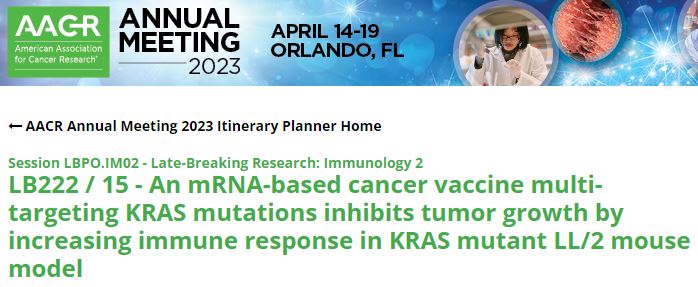
- Hanmi Pharmaceutical unveils mRNA cancer vaccine and new targeted anticancer lead compound at AACR2023. (Photo AACR) Hanmi Pharmaceutical is revealing its messenger ribonucleic acid (mRNA) cancer vaccine and new targeted anticancer lead compounds. The company reinforced its anticancer pipeline by adding next-generation anticancer drug technologies and targets to its existing major anticancer drug pipeline that has been making smooth progress in preclinical trials. According to industry sources on the 2nd, Hanmi Pharmaceutical will be presenting 7 abstracts related to its anticancer pipeline at the American Association for Cancer Research (AACR) Annual Meeting 2023 held in Orlando, Florida from the 14th (local time) to the 19th. At AACR 2023, the company will unveil abstracts about 2 lead compounds in its new anticancer pipeline. One will be about enhancing antitumor activity by inhibiting the YAP/TAZ-TEAD that targets the Hippo pathway, and the other is about an mRNA cancer vaccine. Also, Hanmi Pharmaceutical will be making abstract presentations on how its novel SOS1 inhibitor, HM99462, demonstrates antitumor activity against KRAS-mutant cancers, how its EZH1/2 dual inhibitor HM97662 demonstrates antitumor activity in T-cell lymphoma, the effect of combining use of HM97662 with an immune checkpoint inhibitor, the antitumor effect of its IL-2analog, HM16390, and how BH3120, a bispecific antibody that targets the G-1BB and PD-L1 simultaneously, stimulates T cells in tumor tissue preferred manner. The published abstracts showed that Hanmi’s lead compounds that target the Hippo pathway exhibited dose-dependent growth inhibitory effects in Hippo pathway-altered cancer cell lines. Its safety profile was also confirmed in vitro. Hanmi’s lead compounds that target the Hippo pathway also showed effective tumor growth inhibition activity within tolerable doses in cancer cell xenograft mouse models. The company plans to initiate preclinical studies after establishing a candidate substance for a preclinical study. In addition to the lead compound for the new anticancer drug that targets the Hippo pathway, Hanmi Pharmaceutical also disclosed the results of preclinical studies related to 4 candidates in its major pipeline through abstracts in advance. According to the abstracts, the SOS1 inhibitor HM99462 showed effective tumor growth inhibition activity within tolerable doses when administered alone in cancer cell xenograft mouse models harboring various KRAS mutations. Also, the combination of HM99462 with KRAS G12C or MEK inhibitors led to synergistic anti-tumor activity in both in vitro and in vivo models. HM99462 is currently in IND enabling GLP-toxicity studies and is palnning to initiate a clinical study in early 2024. At the meeting, Hanmi Pharmaceutical also disclosed the antitumor activity of HM97662 in T-cell lymphoma. The enhancer of zeste homology 2 (EZH2) and its homolog EZH1 are types of enzymes known to induce solid cancers like blood cancer. Hanmi confirmed the tumor growth inhibition effect of oral administration of HM97662 in EZH1/2 co-expressed lymphoma cell mouse xenograft model. The company also presented two papers on preclinical studies conducted on its IL-2 analog, HM16390. After administering HM16390 once a week for two weeks in mouse models with melanoma, complete response (CR) was observed in 89% and 100% of the mice at 2.1mg/kg and 8.5 mg/kg, respectively. The median overall survival was also dose-dependently prolonged median overall survival from 15 to 38 days at the dose range of 0.34 to 42 mg/kg. Also, in mouse models with melanoma, the combined use of HM16390 with PD-1 targeted immune checkpoint inhibitors once a week for 4 weeks, CR was increased from 22% with monotherapy to 88% with combination therapy. In addition, Hanmi’s Chinese subsidiary, Beijing Hanmi Pharm disclosed preclinical study results of its bispecific antibody that is designed to target two different targets imultaneously with the Pentambody™ platform. Pentambody is a next-generation, bispecific antibody platform technology that allows one antibody to bind to two different targets simultaneously. Beijing Hanmi Pharm confirmed that BH3120 showed strong antitumor efficacy in multiple tumor models, and that the combination of BH3120 with a PD-1 antagonist showed synergic effects of continuing to activate the T-cells while reducing immune-related side effects. In he toxicology studies conducted so far with cynomolgus monkeys, the No Observed Adverse Effect Level (NOAEL) of BH3120 was determined to be 200 mg/kg. Abstracts of preclinical studies related to mRNA cancer vaccines have not yet been published. The contents that will soon be disclosed are the preclinical results of a clinical study suppressing tumor growth in a KRAS mutant LL/2 mouse model using a multi-target mRNA-based cancer vaccine. Previously, Hanmi Pharmaceutical announced that it had successfully developed its own mRNA platform at the JP Morgan Healthcare Conference 2022 held in January last year. In addition to developing a COVID-19 vaccine, the company has been promoting the application of the mRNA platform in the fields of metabolic diseases, anticancer, cardiovascular and renal diseases, enzyme replacement therapy, etc.
- Company
- Medytox paid service fees of KRW 97.7B in 4 years
- by Kim, Jin-Gu Apr 04, 2023 05:52am
- The service fees paid out by Medytox during the past 4 years have reached nearly KRW 100 billion. Since 2019, disputes related to botulinum toxin had risen simultaneously in the United States and Korea, which led to an increase in the litigation costs and fees the company has spent. The amount of annual service fee payouts decreased after the legal dispute in the US ended with a settlement, but with the risk of litigation in Korea and abroad still unresolved, the company has been spending more than KRW 15 billion a year in litigation fees. ◆Company paid KRW 97.7 billion for 4 years since 2019 as service fees due to a surge in litigation costs According to the Financial Supervisory Service on the 4th, Medytox paid out KRW 16.1 billion as service fees last year. Its fees, which were around KRW 6.6 billion in 2018, had risen over fivefold to KRW 35.1 billion by 2019. Then, a total of 97.7 billion won was paid out during the 4 years that followed, including KRW 29.7 billion in 2020, KRW 16.8 billion in 2021, then KRW 16.1 billion last year. A sizeable amount of the fees Medytox paid out were legal costs. In general, litigation costs of a company are included as service fees under Selling, General, and Administrative expenses in financial statements. In addition to litigation costs, the service fee includes royalties, accounting advisory fees, royalties for using patent rights, and credit card payment fees. Medytox The sharp increase in service fees paid out by Medytox coincides with the time when the company's botulinum toxin dispute in the United States began in earnest. In January 2019, Medytox filed a lawsuit against Daewoong Pharmaceutical and Daewoong Pharmaceutical's US partner Evolus, to the US International Trade Commission (ITC) for infringement of trade secrets. The intensified dispute over botulinum toxin raised the company’s litigation expense, and as a result, the service fees paid for the 4 years alone reached near KRW 100 billion. This is 13% of Medytox's sales of KRW 726.7 billion that it had earned during the same period. Also, it is more than the combined operating profit of 4 years (KRW 69.8 billion). ◆ Fees decreased due to the settlement of the U..S dispute... 'Litigation risk' still remains Medytox's service fees have been decreasing since the company settled the ITC dispute in the US in early 2021. However, compared to 2018, which was before the various legal dispute began in earnest, the service fee payments the company is paying out are still more than double compared to before. The industry expects the service fees of over KRW 10 billion may be inevitable for a while as the litigation risk against Medytox has not yet been completely dissolved. Medytox is currently embroiled in more than 4 legal disputes. The first is the domestic civil lawsuit against Daewoong Pharmaceutical that remains unclosed. Medytox won the first trial in the civil lawsuit earlier this year, but Daewoong Pharmaceutical appealed. Given that the two sides are in a tense confrontation, the case is highly likely to continue on and be tried by the Supreme Court. Also, the company filed an administrative lawsuit claiming that the disposition that canceled the license was unfair Against the Ministry of Food and Drug Safety. In 2020, the MFDS has decided to cancel the license of Medytox products one after another, and Medytox filed a lawsuit to cancel the disposition. In addition, the Seoul Western District Prosecutors' Office indicted 6 botulinum toxin companies including Medytox for being in violation of the Pharmaceutical Affairs Act. They were accused of selling to domestic exporters without obtaining approval for national lot release from the MFDS. A legal dispute is also ongoing with its Chinese partner. Medytox officially announced that Gentix Ltd., a subsidiary of the Chinese company Bloomage Biotechnology, had filed a claim for damages against Medytox with the Singapore International Arbitration Centre (SIAC) earlier this year. The amount claimed for damages was HKD 750 million (approximately KRW 118.8 billion). The company had established Medybloom China with Bloomage Biotechnology in 2015 to prepare entry into the Chinese market. Medytox had planned to sell its botulinum toxin product to the Chinese market through the newly established company. However, the plan was put to a halt in July last year with Bloomage announcing intentions to terminate its cooperative relationship with Medytox. At the time, Bloomage is said to have pointed to how Medytox did not supply products for sale as the reason for termination.

- Company
- Pharma companies face the crisis ‘head-on'
- by Chon, Seung-Hyun Apr 03, 2023 05:49am
- The major listed pharmaceutical and bio companies were found to have significantly increased their R&D personnel over the past 3 years, during the COVID-19 pandemic. 9 out of 10 companies increased their research personnel, and the number increased by 25% during the past 3 years. According to the Financial Supervisory Service on the 31st, the total number of research personnel in major listed companies in Korea increased by 11.7% from the previous year to reach 6,417. Among the listed biopharmaceutical companies, the 30 with the highest sales that own research personnel were reviewed for research. Compared to before the COVID-19 outbreak, pharmaceutical companies in Korea have greatly increased the number of their R&D personnel. The number of researchers at 30 pharmaceutical companies increased by 4.2% from 5,122 in 2019 to 5,339 in 2020. In 2021, the number increased by 7.6% to reach 5,747, and the rate of increase was even greater last year. Over the past 3 years, the number of research personnel at the companies increased by 25.3%. R&D personnel at major listed pharma and bio companies (Unit: persons, Data: FSS) The numbers signify the companies' active investment in R&D personnel for new substances amid the unstable environment from COVID-19. The R&D investment amount of 30 major pharmaceutical and bio companies increased by 42.2% from KRW 1.917 trillion to KRW 2.726 trillion in 3 years. The number of R&D personnel increased in 26 of the 30 companies during the past 3 years. In other words, 9 of 10 companies had increased investments in R&D personnel. By individual company, Samsung Biologics’ R&D personnel increased by 354 over the past 3 years from 254 in 2019 to 608 last year. The number of R&D personnel at Samsung Biologics increased by 77 and 69 in 2020 and 2021, respectively, and then by 608 last year. R&D investments have also increased due to an increase in contract manufacturing organization (CMO) and contract development organization (CDO) orders for the comapny's biopharmaceutical drugs. Samsung Biologics recorded sales of KRW 3.00 trillion last year, and become the first company to exceed sales of KRW 2 trillion and 3 trillion at once among domestic pharmaceutical and bio companies. R&D investments by Samsung Biologics have increased more than fivefold in 3 years from KRW 48.5 billion in 2019 and reached KRW 268.2 billion last year. The number of R&D personnel at Daewoong Pharmaceutical was 379 last year, which is a 239 increase from 3 years ago. The number of R&D personnel at Daewoong Pharmaceutical increased from 140 in 2019 to 231 in 2020 when its personnel from its development unit were added to the count. The number then increased by 51 and 97 in 2021 and last year, respectively. The analysis is that the company has further strengthened R&D investments after making visible R&D achievements with Fexclu and Envlo. Daewoong Pharmaceutical's R&D investment increased by 43.2% from KRW 140.6 billion in 2019 to KRW 201.4 billion in 3 years. SK Bioscience's R&D personnel increased by 165 from 124 in 2019 to become 289 last year. SK Bioscience is one of the companies that received the most attention for developing a vaccine during the COVID-19 crisis. In June of last year, SK Bioscience became the first Korean company to successfully commercialize a homegrown COVID-19 vaccine, SkyCorione Multi Inj. SK Bioscience's R&D expenses soared 273.0% from KRW 30.3 billion in 2019 to KRW 113 billion last year. Based on last year, Yuhan Corp’s R&D personnel was 345, up 80 from the 265 it had had 3 years ago. Celltrion, Dong-A ST, and GC Pharma have increased the number of their R&D personnel by more than 70 over the past 3 years. In addition, Dongkook Pharmaceutical, Daewon Pharmaceutical, Huons, Kyongbo Pharmaceutical, and Shinpoong Pharmaceutical increased their R&D personnel by more than 20 over the past 3 years. As of last year, Celltrion had the largest size of R&D personnel with 721 researchers. Celltrion has 55 doctoral-level and 345 master's-level personnel conducting research in its Biotechnology Research Division, New Drug Research Division, Approval Division, Clinical Development Division, Medical Division, Chemical Product Development Division, etc. Samsung Biologics had hired 608 R&D personnel. The company is conducting research activities at MSAT BU, CDO Development Center, its Bio Research Center, etc. Among traditional pharmaceutical companies, Hanmi Pharmaceutical had the largest number of researchers with 584 researchers. Chong Kun Dang and GC Pharma hired more than 500 R&D personnel.
- Company
- Hugel appoints Seok-yong Cha, former CEO
- by Lee, Seok-Jun Apr 03, 2023 05:49am
- Hugel announced on the 31st that the 22nd regular general meeting of shareholders and board of directors was held and that former vice chairman of LG H&H, another non-executive director Seok-yong Cha was appointed as Hugel's new chairman and chairman of the board of directors. Chairman Cha Seok-yong served as the CEO of LG Household & Health Care for 18 years from 2005 to 2022. He set records for 17 consecutive years of sales and operating profit growth. In particular, through a total of 28 significant mergers and acquisitions (M&A), it strengthened the portfolio of each business division and expanded the market to North America, China, and Japan, and grew LG Household & Health Care into a global company as well as the number one in the domestic beauty industry. Chairman Cha also served as president of P&G Korea and CEO of Haitai Confectionery. With the recruitment of Chairman Cha Seok-yong, Hugel is expected to gain strength in leaping into the global top tier. Based on Chairman Cha's know-how in the aesthetic field and experience in pioneering overseas markets, the company plans to advance further its global strategy for botulinum toxin, fillers, and cosmetics, and accelerate growth by strengthening new business development activities. Brent L. Saunders, who previously served as Chairman of Hugel's Board of Directors, will serve as Chairman of the newly created Advisory Board. An official from Hugel expected, "The new chairman Cha Seok-yong will lead Hugel's global growth with the support of shareholders along with the existing board of directors based on business insights that cross various industries as well as aesthetics."
- Company
- AstraZeneca appoints Suyeon Kim as head of AZ Singapore
- by Eo, Yun-Ho Apr 03, 2023 05:49am
- AstraZeneca has appointed Suyeon Kim (49) from AstraZeneca Korea as General Manager of AstraZeneca Singapore. Suyeon Kim, who has been serving as the Head of the International Oncology Franchise at AstraZeneca, officially took office as General Manager on the 27th of last month. After entering Pfizer Korea as a marketing representative 20 years ago, Kim built her marketing career serving various posts at various multinational pharmaceutical companies, including at Novartis Korea's Oncology Business Unit. After joining AstraZeneca in 2016, Kim served as the Business Unit Director of Oncology and drove the growth of the company’s targeted anticancer therapy ‘Tagrisso,’ and has been serving as the International Oncology Brand Director of Lung Cancer since 2020. With the appointment, AstraZeneca placed Koreans as heads in three of its Asian subsidiaries. In addition to Suyeon Kim, the Korean subsidiary of AstraZeneca Korea is being led by Sang-Pyo Kim (53) since 2018, and the Indonesian subsidiary is being led by Sewhan Chon (49) since 2020.
