
- LOGIN
- MemberShip
- 2026-06-20 16:39:46

- Company
- US postpones 'Drug Tariffs', but industry eyes the situation
- by Kim, Jin-Gu Apr 04, 2025 05:57am
- The US Trump administration announced reciprocal tariffs against the entire world, but “postponed” the application of tariffs on pharmaceuticals, because it is “considering separate industry-specific tariffs” on semiconductors, key minerals, and pharmaceuticals. The domestic pharmaceutical and bio industry is relieved for now but is keeping a close eye on the White House's next move. As the U.S. has been the largest exporter of pharmaceuticals for 3 consecutive years, the specific tariff rates and items subject to the tariffs are expected to have a significant impact on the profits and losses of companies. US President Donald Trump announced on the 2nd (local time) that he would impose a 25% reciprocal tariff on South Korea. However, pharmaceuticals were excluded from this measure. The White House explained that it would impose separate tariffs on pharmaceuticals. The White House said in a separate briefing after President Trump's announcement of tariffs that “this measure does not apply to items already subject to tariffs such as automobiles, steel, aluminum, and lumber under Section 232 of the Trade Expansion Act.” It went on to explain that “President Trump is also considering separate industry-specific tariffs on semiconductors, pharmaceuticals, and key minerals, so these items are also not included in the reciprocal tariffs.” The domestic pharmaceutical and biopharmaceutical industry expressed relief for the time being because the companies have bought time to respond to the US drug tariff, at least temporarily. There are various ways for the pharmaceutical and biopharmaceutical industry to respond to the US drug tariff. In the short term, the method of moving stockpiles to the US in advance can be used. In the mid-to-long term, the industry is also considering producing products directly in the US or outsourcing manufacturing to US companies. Celltrion has secured sufficient inventories of biosimilars that can be procured locally until the third quarter of 2025. In addition, if tariffs are actually applied, the company plans to focus on exporting APIs, which are subject to lower tariffs, rather than finished drugs, which are subject to relatively higher tariffs. Furthermore, in the mid-to-long term, the company is also considering securing manufacturing facilities in the United States. SK Biopharmaceuticals, which sells the new epilepsy drug ‘Xcopri (cenobamate)’ in the United States, has a structure in which it manufactures active pharmaceutical ingredients in Korea, packs them in Canada, and then exports them to the United States. SK Biopharmaceuticals has been promoting this local production strategy in the United States for several years to stabilize its supply chain, and after transferring production technology and completing the verification procedures, it received approval from the US FDA in the second half of last year. Samsung Bioepis, which exports biosimilars to the US, is already cooperating with several contract manufacturing organizations (CMOs) overseas, so it is expected to be able to quickly adjust its strategy if a tariff is imposed. However, as the possibility of imposing tariffs on pharmaceuticals remains high, the pharmaceutical and biopharmaceutical industry is paying close attention to the specific tariff rates for pharmaceuticals and the items subject to tariffs. In this regard, President Trump announced at a press conference on the 18th of last month that the tariff on pharmaceuticals would be “25% or higher.” Some predict that basic and essential drugs will be exempted from tariffs. They note that public opinion in the United States is negative about imposing tariffs on basic and essential drugs. In the case of Huons, it exports lidocaine injections to the United States. This product is a basic drug that is in short supply in the United States and is said to have only one or two local manufacturers. So even if tariffs are imposed on pharmaceuticals, such basic drugs are expected to not be subject to them. The same is true for GC Biopharma. GC Biopharma exports the blood product Alyglo to the United States. Blood products are essential medicines in the United States, and there has been a shortage of supply in the country for several years. The company expects that blood products, including Alyglo, will not be subject to tariffs. In the United States, there is ongoing criticism that tariffs should not be imposed on basic and essential medicines. The Association for Accessible Medicines (AAM), a US generic drug lobby group, has expressed concern that if tariffs are imposed on medicines, the number of medicines in short supply, currently at 127, will surge to 215. The Kaiser Family Foundation, a US non-profit health organization, has warned that imposing tariffs on pharmaceuticals could cause the US healthcare spending growth rate to jump from the current 5% to as much as 60%. The United States has been Korea's largest pharmaceutical export destination for 3 consecutive years since 2022. Last year, pharmaceuticals exported from Korea to the United States amounted to USD 1.35809 billion (about KRW 2 trillion). This is an 18% increase compared to USD 903.3 million in 2023. However, the pharmaceutical trade balance with the United States has been in the red. The trade deficit with the United States was USD 1.1317 billion in 2022, USD 955.54 million in 2023, and USD 292.07 million last year.
- Company
- Qarziba may be prescribed in general hospitals in KOR
- by Eo, Yun-Ho Apr 03, 2025 05:55am
- Qarziba, an immunotherapy drug that targets neuroblastoma, may now be prescribed at general hospitals in Korea. According to industry sources, Recordati Korea's immunotherapy drug for high-risk, recurrent, and refractory neuroblastoma, Qarziba Inj (dinutuximab beta), has passed the drug committees (DCs) of the ‘Big 5 general hospitals’ in Korea, including Samsung Medical Center, Seoul National University Hospital, Asan Medical Center, and Severance Hospital. The company has been expanding the drug’s prescription in Korea since receiving reimbursement listing in December last year. As the first drug covered through the approval-evaluation-negotiation linkage system, the drug was approved only 13 months after it was approved in Korea. According to the Ministry of Health and Welfare notice, children from 12 months or older to less than 20 who have not received anti-GD2(disialoganglioside2) antibody treatment before with ▲high-risk neuroblastoma (INSS stage 4 disease or stage 2-3 and have MYCN gene amplification’ and have shown partial or better response to induction chemotherapy and have had hematopoietic stem cell transplant and initiated within 6 months of the transplant, and ▲recurrent or refractory neuroblastoma may receive Qarziba with reimbursement. The drug demonstrated its effect through major pivotal studies, including the Phase III APN311-302 trial. Main results showed that the 5-year event-free survival (EFS) rate for the Qarziba treatment group (378 patients) among high-risk neuroblastoma patients recieivng maintenance therapy was 57%, and the five-year overall survival (OS) rate was 64%, which was statistically significantly higher than that of the control group (466 patients) that did not receive Qarziba immunotherapy., which was 42% and 50%, respectively. Ji-won Lee, a professor of the Department of Pediatric Hematology-Oncology at Samsung Medical Center, said, “This disease has a particularly poor prognosis and a large disease burden, so it is very important to implement an appropriate maintenance therapy that can minimize minimal residual disease (MRD) to prevent recurrence when treating neuroblastoma. Qarziba has significantly improved the survival of patients with high-risk neuroblastoma as maintenance therapy compared to those that did not receive maintenance immunotherapy, shifting the treatment paradigm.” “Major overseas guidelines, such as the International Society of Pediatric Oncology Europe Neuroblastoma (SIOPEN) and the National Comprehensive Cancer Network (NCCN), have already recommended anti-GD2 antibodies such as Qarziba as standard maintenance immunotherapy for high-risk neuroblastoma,” said Jung-yoon Choi, Professor of the Department of Pediatrics at Seoul National University Children's Hospital. ”With the Korean patients also able to receive the global standard of care, I believe this will change the treatment environment in Korea.”

- Company
- "COVID-19 differs from influenza…vaccination essential"
- by Whang, byung-woo Apr 03, 2025 05:55am
- "COVID-19 can lead to 'long COVID,' and its progression tends to be more severe among the elderly and immunocompromised individuals. It is crucial to emphasize COVID-19 prevention as the saying goes, 'an ounce of prevention is worth a pound of cure.' After the announcement of the endemic in 2023, COVID-19 has repeatedly mutated, thus regarded as becoming a 'resident virus' that makes a comeback similar to influenza. Although determining the exact seasonal pattern of COVID-19 may require more time, the government provides vaccination to high-risk groups, such as individuals aged 65 and older. Professor Woo Joo Kim in the Department of Infectious Diseases at Korea University Guro HospitalDuring a meeting with Daily Pharm, Dr. Woo Joo Kim, a professor in the Department of Infectious Diseases at Korea University Guro Hospital, emphasized the importance of reducing the disease burden by putting efforts into increasing the COVID-19 vaccination rate. Currently, the legal status of COVID-19 has been designated as a class 4 infectious disease in South Korea after the endemic announcement in 2023. Like influenza, COVID-19 is categorized as an infectious disease requiring daily monitoring. Despite the initial expectation that COVID-19 will show seasonal spikes, it has not demonstrated a clear seasonal pattern like influenza. Dr. Kim explained, "COVID-19 is likely in a 'transition period.' The severity is lowered compared to the earlier phase of the pandemic due to vaccination, but it is yet to be defined as a seasonal virus," adding, "In the past few years, COVID-19 made a comeback in around January-February and around August. However, it is yet too soon to generalize." "Over the past four years, the severity of COVID-19 has diminished compared to its early phase, thanks to immunity acquired through vaccination and natural infection. However, high-risk groups, including the elderly, individuals with underlying conditions, immunocompromised patients, pregnant women, and residents of long-term care facilities, continue to face a significant burden of disease, with a high risk of severe illness or death," Dr. Kim said. Dr. Kim's attention to the COVID-19 vaccine during this transitional period is because COVID-19 exhibits infection characteristics distinct from those of influenza. While both diseases may be perceived as similar, there are clear differences in infection patterns, causative pathogens, and complications. The influenza virus causes influenza, whereas COVID-19 is caused by SARS-CoV-2. "The COVID-19 virus not only targets the respiratory system but also invades the vascular system, kidneys, and other organs, causing a systemic infection with higher severity and fatality rates," Dr. Kim stated. "Long COVID, affecting the entire body as a sequela, can occur, and its impact tends to be more severe in older individuals or those with weakened immune systems." Although COVID-19 and influenza share similar symptoms and some complications, which can lead to them being conflated, experts warn that this may result in the risks of COVID-19 being underestimated, calling for heightened vigilance." For these reasons, the government is currently administering COVID-19 vaccines to high-risk groups, including individuals aged 65 and older, immunocompromised persons aged at least 6 months, and residents of facilities vulnerable to infections, to prevent severe illness and death. The ongoing issue is whether to include the COVID-19 vaccine in the National Immunization Program (NIP). There is a growing consensus that incorporating the COVID-19 vaccine into the NIP is essential to boost vaccination rates for the currently administered vaccines." Dr. Kim said, "In addition to preventing infections, hospitalizations, and deaths at the individual level, incorporating the COVID-19 vaccine into the NIP is essential for sustaining our national population. For instance, by systematically benchmarking the well-established NIP for the influenza vaccine in individuals 65 and older, we can effectively plan and implement a similar strategy for the COVID-19 vaccine." There is ongoing concern about determining the optimal vaccination schedule, as it remains difficult to predict the precise timing of the COVID-19 surge. Dr. Kim emphasized, "When establishing the vaccination schedule for the COVID-19 vaccine, it is crucial to base decisions on scientific evidence regarding the outbreak period, the duration of antibody persistence, and the vaccine's ability to counter emerging variants." He advised, "Antibodies may not form adequately or may quickly be depleted in individuals with severe immunocompromise. It is advisable to tailor the dosing frequency and timing based on each patient's immune status." Dr. Kim added, "High-risk groups such as immunocompromised individuals and residents of long-term care facilities face a significantly higher risk of severe illness if infected, yet their vaccination rates remain low. If we were to improve COVID-19 vaccination rates, government's promotional activities is essential." "COVID-10 vaccination can be compared to wearing a seat belt, lowering severity" Currently, two mRNA COVID-19 vaccines are available in Korea. Aside from a minor difference in antigen dosage (approximately 30 to 50 micrograms) their basic compositions, including encapsulation in lipid nanoparticles, are virtually identical. In clinical practice, healthcare providers typically use whichever vaccine is distributed to their institutions and available for immediate use. However, due to differences in domestically imported volumes, over 80% of vaccinations administered during 2023–2024 were Pfizer's Comirnaty. In global Phase 3 trials, Comirnaty demonstrated a 95% preventive efficacy across COVID-19–naïve and previously infected participants, with overall safety profiles remaining favorable. Dr. Kim explained, "mRNA vaccines like Comirnaty induce a robust T-cell immune response, ensuring that the benefits of preventing severe disease and death are sustained over a long period. The Korea Disease Control and Prevention Agency also strongly emphasizes these outcomes when recommending COVID-19 vaccination." One of the concerns raised about COVID-19 vaccines has been safety issues that emerged during the pandemic. However, Dr. Kim believes that confidence in the vaccine's safety has increased. He noted, "Among high-risk groups such as those aged 65 and older or individuals with underlying conditions, no significant adverse reactions have been observed, and the benefits of vaccination are substantially greater," adding, "With sufficient vaccination experience now accumulated and those who experienced adverse reactions subsequently excluded from further dosing, the incidence of adverse events in recent vaccination cohorts is very low." He particularly compared vaccination to wearing a 'seat belt.' Although wearing a seat belt can be uncomfortable and does not guarantee 100% prevention of injuries, it significantly reduces the risk when an accident occurs. Similarly, COVID-19 vaccination is essential to lower the risks of infection and severe disease. Lastly, Dr. Kim stressed that a coordinated effort at the individual, societal, and government levels remains critical for effective COVID-19 management. Dr. Kim said, "High-risk groups, such as the elderly and those with underlying conditions, must recognize their risk of infection and proactively get vaccinated, and if they experience symptoms, they should promptly seek diagnosis and treatment," adding, "I believe including the COVID-19 vaccine in the NIP can be expedited if individuals actively voice their concerns." "On a societal level, we need to foster a 'take a break when you're sick' culture, and at the government level, it is essential to establish an independent monitoring system solely for COVID-19," Dr. Kim added. "The government must quickly set vaccination schedules and develop promotional strategies based on up-to-date data on the latest COVID-19 outbreak patterns, disease burden, and the efficacy and safety of vaccines."
- Company
- J&J MedTech launches PFA Varipulse platform
- by Whang, byung-woo Apr 03, 2025 05:54am
- Pic of Varipulse Johnson & Johnson MedTech announced on the 1st that it will launch the Varipulse platform, an arrhythmia treatment solution that uses three-dimensional pulsed field ablation (PFA), in Korea. As the most common arrhythmia in the world, Atrial fibrillation (AFib) is a condition in which the atria beat irregularly and rapidly. In particular, the prevalence of atrial fibrillation in Korea is on the rise with the aging population. According to the Korean Heart Rhythm Society, the incidence of this disease has increased by about 1.5 times in the last 10 years, and about 1 million people are suffering from atrial fibrillation in Korea. The Varipulse platform is the first 3D pulsed field ablation treatment solution in Korea developed for the treatment of drug-refractory paroxysmal atrial fibrillation. PFA has recently gained attention as a treatment for atrial fibrillation and is an innovative treatment that reduces the side effects of conventional radiofrequency ablation and cryoballoon ablation. PFA uses an electric field (pulse field) to selectively remove lesion tissue that causes arrhythmia, minimizing damage to surrounding normal tissue and shortening procedure time and patient recovery time. Currently, Varipulse is the only PFA solution introduced in Korea that has been developed based on a three-dimensional cardiac mapping (3D mapping) system. The technology creates a precise three-dimensional image of the anatomical structure of the left atrium and allows the catheter to be accurately tracked in real-time. The size of the Varipulse Catheter can be adjusted to fit each patient's heart anatomy, allowing for an optimized procedure fit for each patient's heart shape. Also, the Varipulse platform can minimize patient radiation exposure by integrating a 3D cardiac structure mapping function with intracardiac echocardiography (ICE) to provide real-time images of the heart during PFA therapy. These innovative features are expected to shorten procedure time and significantly improve patient treatment outcomes. “We are pleased to be able to hasten the introduction of the innovative PFA treatment with Varipulse to many atrial fibrillation patients in Korea, following in the United States, Europe, Japan, China, and Canada. We expect that the launch of Varipulse will contribute to the improvement of atrial fibrillation patients and treatment in Korea,” said Jinyong Oh, Managing Director of Johnson & Johnson MedTech's North Asia region Oh added, “We will continue to work on fostering a patient-centric treatment environment and introduce innovative solutions to contribute to the development of Korea’s medical field.” Meanwhile, Johnson & Johnson MedTech established a medical technique education center for the treatment of cardiac arrhythmia at its Yongsan headquarters in Seoul last year, providing education and training to healthcare professionals on procedures related to the treatment of arrhythmia.

- Company
- ‘Leclaza combo will become the sole standard of care’
- by Son, Hyung Min Apr 03, 2025 05:54am
- Professor Byoung-chul Cho of the Department of Oncology at Yonsei Cancer Center “The Leclaza + Rybrevant combination therapy has shown a clear improvement in survival compared to Tagrisso monotherapy in the MARIPOSA trial. I am confident that this combination therapy will become the sole standard treatment for EGFR-positive non-small cell lung cancer in the future.” On the 31st, Professor Byoung-chul Cho of the Department of Oncology at Yonsei Cancer Center (Director of the Lung Cancer Center) held a briefing session on the MARIPOSA trial at Kiwoom Securities in Yeouido to evaluate the clinical trial results. The MARIPOSA trial compares the efficacy and safety of the combination of Leclaza and Rybrevant with the single-agent treatment using Targrisso, which is currently used as the first-line treatment for EGFR-positive non-small cell lung cancer. The final overall survival (OS) results of this study were unveiled at the European Lung Cancer Conference (ELCC 2025), which was held in Paris, France for 4 days starting on the 26th of this month. Leclaza is a new EGFR-positive non-small cell lung cancer drug developed by Yuhan Corp and is a third-generation tyrosine kinase inhibitor (TKI) that targets exon 19 and exon 21 (L858R). Janssen's parent company Johnson & Johnson has secured global rights to Leclaza and has been conducting a clinical trial of a combination therapy using Rybrevant, a targeted treatment option targeting the exon 20 and MET mutations. The results presented at this year's ELCC 2025 are the final OS analysis. OS is one of the important indicators for determining the clinical value of anticancer drugs. OS refers to the overall survival period from the start of treatment to the time of death. OS includes not only the side effects and complications of the treatment but also patients who died from causes other than cancer. Phase III MARIPOSA Study Design The clinical trial was conducted to compare the efficacy and safety of the Leclaza+Rybrevant combination with Tagrisso monotherapy in 1,074 patients with non-small cell lung cancer with the Exon19 and L858R mutations who had no previous treatment experience. Leclaza monotherapy was included to evaluate the contribution component of Rybrevant. Patients were randomly assigned to the Leclaza + Rybrevant group (429 patients), the Tagrisso group (429 patients), and the Leclaza group (216 patients) in a 2:2:1 ratio. After tracking patients for a median of 37.8 months, the Leclaza+Rybrevant group showed a statistically significant improvement in survival compared to the Tagrisso group (p-value

- Company
- Korea's drug pricing system on US tariff on pharmaceuticals
- by Kim, Jin-Gu Apr 02, 2025 05:56am
- The United States Trade Representative (USTR) As the Trump administration's tariff against the world will go into effect immediately, a report has been released alleging that Korea's drug pricing and innovative pharmaceutical company certification policies are being unfairly imposed in the United States. According to the KoreaBIO on the 1st, the United States Trade Representative (USTR) issued a report on trade barriers affecting 59 major exporting countries on March 31. A notable section of the report focuses on Korea's policies for pharmaceuticals and medical devices, arguing that Korea's drug pricing, reimbursement, and innovative pharmaceutical company certification policies function as trade barriers in the U.S. The report criticized "Korea's drug pricing and reimbursement policies lack transparency. Stakeholders do not get sufficient opportunity to offer substantive input during policy changes." Regarding the innovative pharmaceutical company certification policy, the report said, "While certain companies receive benefits such as tax credits, R&D support, and preferential pricing, no explanations are provided to companies denied certification," adding, "The United States calls on South Korea to enhance transparency and ensure that stakeholders have opportunities to express their views." These criticisms are similar to those raised earlier this year by the U.S. pharmaceutical industry association PhRMA. PhRMA said, "The value of innovative American drugs is not adequately recognized in Korea. Korean pricing agencies often rely on outdated cost-effectiveness thresholds, and the evaluation process suffers from limited transparency and predictability." These criticisms are similar to those raised earlier this year by the U.S. pharmaceutical industry association PhRMA. PhRMA said, "The value of innovative American drugs is not adequately recognized in Korea. Korean pricing agencies often rely on outdated cost-effectiveness thresholds, and the evaluation process suffers from limited transparency and predictability." Further stating, "It violates both the obligation for fair treatment of domestic industries and the spirit of the Korea-US FTA." On April 2 (local time), the Trump administration announced that it would officially announce reciprocal tariffs on major trading partners, including South Korea. President Donald Trump announced, "The results could be revealed as early as the evening of the 1st or 2nd." South Korea's pharmaceutical and biotech industries are closely monitoring this development. Korea’s pharmaceutical and biotech industry is recording a trade deficit against the United States. However, concerns are mounting that companies exporting pharmaceuticals to the U.S. could face significant setbacks if tariffs above a certain threshold are imposed. Moreover, reciprocal tariffs are imposed due to perceptions that Korea's innovative pharmaceutical company certification, pricing, and reimbursement policies are unfair. There will likely be increased pressure to reform these systems. In response, the Ministry of Health and Welfare (MOHW) has recently revised the certification criteria for innovative pharmaceutical companies, introducing separate certification categories for global pharmaceutical companies. The MOHW plans to make these improvements by September.
- Company
- Olympus Korea appoints Tamai Takeshi as new head
- by Whang, byung-woo Apr 02, 2025 05:56am
- Tamai Takeshi, new Representative Director of Olympus Korea Olympus Korea, a global medical company, announced on April 1 that it has appointed Tamai Takeshi as its new Representative Director as of April 1. The new Representative Director Takeshi Tamai joined Olympus Korea in 2004 as a marketing manager in the medical business division and served as the General Manager of the medical division in 2012. In 2024, he served as the Vice President of Olympus Korea and has driven the growth of Olympus Korea based on his deep understanding of the Korean market. In addition to the Korean market, Takeshi led the medical endoscopy business in Asia and demonstrated strategic leadership in the global MedTech market. In 2011, he served as the Senior Manager of corporate innovation at the Olympus Group, where he oversaw corporate improvement efforts. In 2017, he was appointed the Vice President of the Asia-Pacific GI & Respiratory Business in the Asia-Pacific Region. At the time, Takeshi was regarded to have greatly contributed to the growth of Olympus as a global medical company, expanding regional sales and market share. As the new Representative Director of Olympus Korea, Takeshi Tamai will focus on leading the company's continued growth in the Korean market and realizing its vision as a global medical company that prioritizes patient safety and quality improvement. In addition, based on a deep understanding of the Korean healthcare environment, the company plans to focus on expanding solutions that can provide better value to healthcare professionals and patients. Tamai Takeshi said, “Olympus Korea is taking the lead in fostering a patient-centered medical environment utilizing its medical technology. We will continue our endeavors to achieve sustainable growth as a company trusted by domestic medical staff and patients, and contribute to the development of the Korean medical industry.” Meanwhile, Olympus Korea is a global medical company that provides diagnostic and therapeutic solutions such as medical endoscopes, laparoscopes, and surgical equipment and is contributing to the development of the domestic medical industry through products that have proven their efficacy and safety in clinical settings.
- Company
- Sanofi launches new dosage form of Praluent with reimb
- by Whang, byung-woo Apr 02, 2025 05:56am
- Pic of Praluent Sanofi announced on the 1st that a 300 mg dose form of its PCSK9 inhibitor Praluent (alirocumab) will be launched in April with health insurance reimbursement in Korea. According to this announcement, Praluent 300 mg may now be reimbursed when used in patients with primary hypercholesterolemia and mixed dyslipidemia who have been administered a combination of statins and ezetimibe but have not responded sufficiently (LDL-C levels have not decreased by 50% or more from the baseline or LDL-C ≥ 100 mg/dL) and in cases of statin intolerance. In addition, if a patient with atherosclerotic cardiovascular disease has received a combination of the maximum tolerated dose of a statin and ezetimibe but has not responded sufficiently (LDL-C level has not decreased by more than 50% from the baseline or LDL-C ≥ 70 mg/dL), the patient may be eligible for health insurance reimbursement for his/her additional use of Praluent. While maintaining the LDL-C lowering effect similar to the existing dose, Praluent 300 mg allows administration at 4-week (Q4W) intervals, increasing treatment convenience and patient compliance. With the reimbursed launch, Praluent has become the only PCKS9 inhibitor in Korea to offer 3 doses: 75 mg, 150 mg, and 300 mg. As a result, Praluent has been approved for the treatment of cardiovascular risk reduction in patients with atherosclerotic cardiovascular disease (ASCVD) at all doses. This will enable personalized treatment for patients, allowing healthcare professionals to select the appropriate dose according to the patient's treatment goals and individual characteristics. The LDL-C-lowering effect of Praluent 300 mg was confirmed through the PK/PD study. It showed an LDL-C-lowering effect from the third day after a single dose, recording a maximum average reduction of 73.7% on the 22nd day. This LDL-C lowering effect was maintained for 43 days, showing a longer-lasting effect than the existing Praluent 75 mg (lasting 8 days) and 150 mg (lasting 15 days). The background is that “LDL-C is a strong risk factor for cardiovascular disease, the number one cause of death worldwide, therefore thorough management is essential, especially in high-risk patients,” said Kyung-Eun Bae, General Manager of Sanofi Korea. “With the launch of the 300 mg dose of Praluent, we expect to provide a more effective and convenient additional treatment option for Korean patients who have been unable to sufficiently control their LDL-C levels with existing treatments or who have found it difficult to manage their medication schedules.” “Sanofi will continue to efforts save lives and improve the quality of life of patients in Korea through our integrated cardiovascular disease treatment portfolio, which includes Praluent,” added Bae.
- Company
- 'Rezurock' for cGVHD can be prescribed at 'Big 5' hospitals
- by Eo, Yun-Ho Apr 02, 2025 05:56am
- Product photo of Rezurock 'Rezurock,' a treatment for chronic graft-versus-host disease (cGVHD), is now being prescribed in general hospitals. According to industry sources, Sanofi Korea's ROCK2 inhibitor Rezurock (belumosudi) has passed the drug committees (DC) of the 'Big 5' tertiary general hospitals, including Samsung Medical Center, Seoul National University Hospitals, Seoul St. Mary's Hospital, Asan Medical Center in Seoul, Sinchon Severance Hospital, as well as medical institutes, including Korea University Anam Hospital, Seoul National University Bundang Hospital, Ulsan University Hospital, and Chonnam National University Hwasun Hospital. Rezurock is the process of reimbursement listing. Getting listed will lead to prescriptions on a full-scale. Sanfoi has recently applied for reimbursement of the drug. Rezurock was approved by the U.S. Food and Drug Administration (FDA) via an accelerated approval process. It was also approved in South Korea in August last year and launched in November with a non-reimbursement status. It works by selectively inhibiting ROCK2, a signaling pathway modulating chronic graft-versus-host disease (cGVHD)'s inflammatory response and fibrotic process. cGVHD is a complication that occurs in half of patients who received autologous stem cell transplantation. Patients with cGVHD may be few due to the disease's nature, but the disease occurs in half of the patients who receive the transfer. It is a severe and life-threatening disease that requires treatment. 70% of patients who do not experience adequate treatment effects with the steroids used in first-line treatment do not respond to second-line treatments. Therefore, almost half of patients require third-line treatment, indicating limitations in conventional therapies. Consequently, it is to be watched whether Rezurock, with its reimbursement, will be established as a new treatment option. Meanwhile, Rezurock's clinical trial involved patients who failed to respond to two or more lines of systemic therapy. Patients treated with Rezurock recorded an overall response rate (ORR) of 75%, demonstrating superior effects compared to conventional treatment. Notably, in areas where improvement is difficult with conventional therapy, such as joints, liver, and lung, it also showed ORR of 71%, 39%, and 26%, respectively. Professor Heeje Kim in the Department of Hematology at Seoul St. Mary's Hospital (Hematology Hospital's Director) said, "42% of patients with cGVHD have symptoms across the whole body, leading to significant worsening of quality of life. Since the host response that occurs in lung and liver can critically affect patients with blood cancer, treatments that would effectively manage such response have been in need."
- Company
- Vaxneuvance's 'immunogenicity' brings competitive edge
- by Whang, byung-woo Apr 02, 2025 05:56am
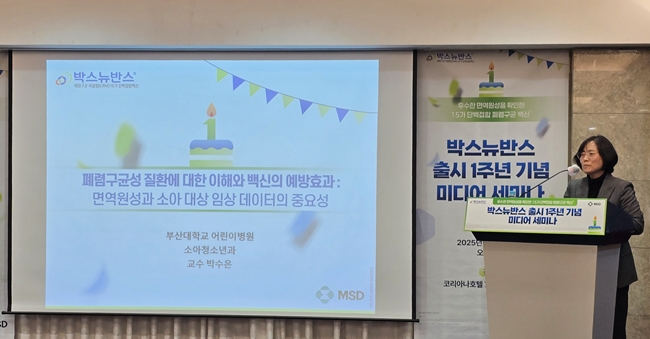
- Soo-Eun Park, Professor of pediatrics at Pusan National University Yangsan With changes in the market for pneumococcal vaccines ahead, MSD Korea has begun to defend its market share by highlighting the “immunogenicity” of Vaxneuvance. Last year, the product was launched and added to the National Immunization Program (NIP), accelerating its market penetration. Celebrating its first year in the NIP, the company has been emphasizing Vaxneuvance’s clinical benefits to gain a competitive edge. On the 1st, MSD Korea held a Vaxneuvance media seminar to highlight the changes and implications of Vaxneuvance’s first year as part of the NIP. Vaxneuvance, which was approved at the end of 2023, has the characteristics of a 15-valent vaccine, adding serotypes 22F and 33F to the existing 13-valent vaccine. The vaccine was added to the NIP a month after its approval, and NIP vaccination with the vaccine became available for children aged 2 months to under 5 years old upon its launch in April last year. At the time of its launch, it quickly expanded its market presence by highlighting the addition of a new serotype. The number of cross-vaccinations has also increased along with the initial vaccination with Vaxneuvance. Vaxneuvance has clinical data on cross-immunization with existing PCV13 vaccines, enabling cross-vaccination. Cross-immunization with the PCV13 vaccine and Vaxneuvance showed comparable immunogenicity and safety for 13 common serotypes compared to being vaccinated with a single 13-valent vaccine. At the media seminar, the company highlighted Vaxneuvance’s competitiveness as its immunogenicity. In other words, the company is emphasizing the need to choose a highly immunogenic product to prevent invasive pneumococcal disease (IPD), which has a high fatality rate in children. The standard for immunogenicity defined by the WHO is “the ability of a vaccine to induce a measurable immune response,” and the standard for specific serotypes of immunogenicity is “IgG concentration of 0.35 ㎍/mL or higher.” Vaxneuvance has confirmed superior immunogenicity in serotypes 3, 22F, and 33F compared to an existing vaccine in a global Phase III pediatric pivotal clinical trial. In addition, it showed superior immunogenicity compared to existing vaccines in serotype 3, which remains the main cause of invasive pneumococcal disease (IPD) in children, and clinical trials were also conducted on infants and toddlers in Korea to confirm its immunogenicity and stability. Soo-Eun Park, professor of pediatrics at Pusan National University Yangsan (President, the Korean Society of Pediatric Infectious Diseases), said, “IPD in children under the age of 5 has decreased significantly compared to before the introduction of PCV, but it occurs most frequently in infants under the age of 1, both in Korea and abroad. If the preventive effect of serotype 3 and others increases through the vaccination of infants with PCV15, we can also expect indirect prevention of IPD in the elderly.” The key is what strategy Vaxneuvance will adopt after the release of PCV20 Prevnar 20, which is expected to be released this year. According to industry sources, the Korea Disease Control and Prevention Agency recently reviewed the introduction of PCV20 in the NIP for children as a result of the first vaccination expert committee meeting. As a result of the deliberation by the Korea Expert Committee on Immunization Practices, it was decided that PCV20 would be introduced as a national immunization program (NIP) in the same way as PCV13 and Vaxneuvance (PCV15), which were previously covered by the NIP, in terms of the target population and standard vaccination timing. At this point, it seems that cross-immunization will be the key to the early market competition. Children under 6 months of age who have received one or more doses of the 13-valent vaccine can complete the vaccination schedule with Vaxneuvance. According to deliberation results of the Korea Expert Committee on Immunization Practices, Prevnar 20 can be administered as the 4th booster dose after completing the 3 initial doses with Prevnar 13. So infants aged 6 months or less that received their initial vaccine as Prevnar 13 will have the option to complete their vaccination with Prevnar 13 and complete their vaccination schedule with Vaxneuvance after or with an additional dose of Prevnar 20 after the basic vaccination with Prevnar 13. However, based on the approved indications, no indication allows administration with Prevnar 20 after Vaxneuvance. This means that it is not possible to cross-immunize with Vaxneuvance or Prevenar 20 when their initial vaccine is Vaxneuvance or Prevenar 20. In response, Professor Park said, “It is difficult to say which of the current 15-valent and 20-valent vaccines is the better choice on the premise that NIP will be applied to all, and the United States has not recommended any vaccine as a priority. Although the 20-valent vaccine prevents more serotypes, there are theoretical concerns about its immunogenicity over some serotypes, which require consideration. In the beginning, I think it will be divided according to market choice.”
