
- LOGIN
- MemberShip
- 2026-06-14 02:56:53
- Product
- Prof Seong-Hoon Kim's research team reveals the mechanism
- by Jung, Heung-Jun May 30, 2023 05:33am
- From left, Yonsei University Prof. Seong-Hun Kim, Korea University Prof. Hwang Kwang-Yeon, Yonsei University Dr. Ina Yoon It is expected that domestic researchers will speed up the development of a new fibrosis treatment by uncovering the mechanism of action of Bersiporocin, which is being developed as a treatment for idiopathic pulmonary fibrosis. Yonsei University Professor Seong-Hoon Kim and Dr. Ina Yoon's research team conducted joint research with Professor Kwang-Yeon Hwang (Department of Biotechnology) of Korea University to identify the molecular mechanism that can explain the efficacy and safety of Bersiporocin at the same time. The research results were published in the world-renowned medical journal ‘EMBO Molecular Medicine’ on the 22nd (local time). Idiopathic pulmonary fibrosis is an incurable disease in which collagen is abnormally accumulated in the lungs and the function of the lungs is lost. It is a fatal disease with a poor prognosis, with a 5-year survival rate of only 40% after diagnosis. In particular, the existing approved treatments have severe side effects, so the development of new treatments is urgently needed. Bersiporocin inhibits the activity of prolyl-tRNA synthetase 1 (hereinafter referred to as PARS1), which is in charge of collagen synthesis and exhibits therapeutic effects. In the meantime, many researchers around the world have tried to treat fibrosis by regulating the activity of PARS1, but since PARS1 is an essential enzyme for maintaining life, excessive inhibition of PARS1 activity can cause side effects, making it difficult to develop new drugs. Suppressing the activity of PARS1 at a level that is safe for patients while exhibiting therapeutic effects has been the most important technology for new drug development. PARS1 exists in the form of a pair of two enzymes, and through this study, it was found that Bersiporocin binds asymmetrically to the pair of enzymes, thereby preventing excessive activity inhibition, thereby minimizing the side effects of the drug while exhibiting efficacy. Professor Kim Seong-Hoon said, “In order to realize precision medicine and secure the ability to develop new drugs at a global level, it is urgent to discover new drug targets with new mechanisms.” It is of great significance to prove that it is possible.” Bersiporocin is a first-in-class drug being developed by Daewoong Pharmaceutical as a treatment for idiopathic pulmonary fibrosis.
- Product
- The expansion of OTC medicine at convenience stores
- by Kim JiEun May 24, 2023 05:32am
- As safe household medicines enter their 10th year of introduction, public opinion is forming that the items and places where they can be used should be expanded with the weapon of ‘resolving the gap in medicines and strengthening access rights’. Starting with the application for a special case for demonstration of safe household medicine unmanned vending machines last year, organizations are moving in earnest to improve access to medicines, such as expanding household medicine items, based on public opinion. Currently, an application for the installation of an unmanned vending machine for safety and emergency medicine is being applied for in the regulatory sandbox of the Ministry of Trade, Industry, and Energy, and an expert advisory meeting and deliberation are ahead. After going through the first expert advisory committee meeting at the end of last year, it is pending, and if the second expert meeting is held, the possibility that the pilot project will be passed at the plenary meeting cannot be ruled out. Recently, an association of civic groups calling for the expansion of safety and household medicine items has been created and is attracting attention. The group, which started its activities under the name of ‘Citizens’ Network for Safe Household Medicines’, plans to begin its official activities on the 30th, starting with the ‘Press Conference to Announce the Results of Public Demand Survey for Safe Household Medicines in Convenience Stores’. The demand survey to be announced on this day was conducted in advance by a civic group called 'Consumer Public Interest Network', which participated as a safety deliberation member on behalf of civic groups at the 2018 Safety Household Medicine Designation Deliberation Committee. It was also the organization that claimed it. In addition, the Korea Chamber of Commerce and Industry, which has consistently insisted on the need for remote dispensing and drug delivery, is also conducting a public opinion poll to improve drug access. The Korea Chamber of Commerce and Industry (KCCI) announced that after the revision of the Pharmaceutical Affairs Act, which allowed the sale of household medicines at convenience stores, sales of safe household medicines nearly tripled. The Korean Chamber of Commerce and Industry argues that it is necessary to improve access to medicines in order to strengthen the right to public health, and as a solution in this survey, ▲extended operation of pharmacies until 9:00, ▲Introduction of unmanned vending machines for safe household medicine, ▲Expansion of installation of remote video dispensing machines, ▲Designation of 24-hour pharmacies as regional bases, etc. also presented. The Korean Pharmaceutical Association is closely watching these movements of organizations that have set out to form a public opinion with accessibility and convenience as their weapons. An official from the pharmaceutical association said, “We are currently aware of the related content and are discussing countermeasures.” The official also said, “With regard to the application for a special case for demonstration of an unmanned vending machine for household medicine, there has been no special progress since the deliberation was suspended.”
- Product
- Diabetes Association also paid attention to 'zero' drinks
- by Choi, sun May 18, 2023 05:45am
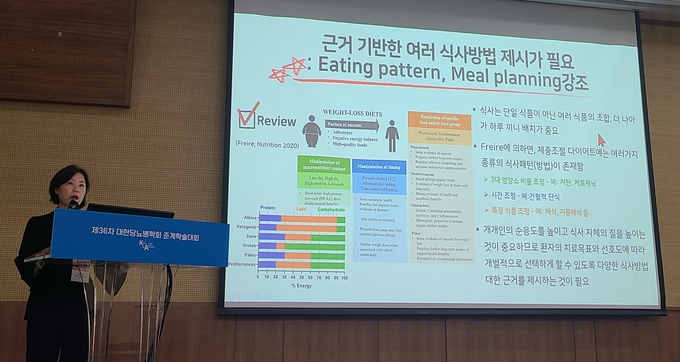
- Possible inhibition of glycemic response and increased risk of cardiovascular events This year, while the American Diabetes Association recognized intermittent fasting and time-restricted eating as part of a meal pattern based on research results that help reduce weight and improve blood sugar, the Korean Diabetes Association also reviewed low-carbohydrate diets and non-nutritive sweeteners. The Diabetes Association acknowledged the Mediterranean diet and the DASH diet, which have accumulated some evidence, while asking for a cautious approach in that non-nutritive sweeteners have mixed results. On the 12th, the Korean Diabetes Association held a spring academic conference at the Kimdaejung Convention Center in Gwangju, and disclosed the results of the review of evidence and revision work conducted by the Food and Nutrition Committee of the society. Professor Lim Jeong-hyeon, Seoul National University Hospital, Food and Nutrition Division (Cancer Committee, Korean Society of Clinical Nutrition) Numerous studies have already shown that healthy eating habits, including the Mediterranean, vegetarian, low-fat, low-carbohydrate, and DASH (salt-restricted diets designed to reduce blood pressure in people with hypertension), improve blood sugar, reduce weight, and reduce the risk of cardiovascular disease. being confirmed Because of this, the American Diabetes Association and other major treatment guidelines recommend individualizing various dietary patties and using them appropriately. In particular, according to the research results that time-restricted meals are helpful for weight loss and blood sugar improvement, in 2023 the American Diabetes Association included intermittent fasting and time-restricted meals as one type of meal pattern, and whether or not this was reflected in Korea has emerged as a matter of interest. This month, the Korean Society for Obesity published guidelines for low-carbohydrate diets that limit carbohydrate intake to 10-45% of total energy intake. situation you are doing. In the midst of this, the Korean Diabetes Association also presented an appropriate answer. The revised guidelines of the Korean Diabetes Association are largely divided into ▲ intake of carbohydrates in a form rich in dietary fiber ▲ refrain from sugar-sweetened beverages to minimize the intake of added sugars ▲ limited use of non-nutritive sweeteners for a short period of time. “The 2021 recommendation did not recommend an extreme diet method that did not prove long-term benefits,” said Lim Jeong-hyun, professor of nutrition at Seoul National University Hospital (Cancer Committee of the Korean Society of Clinical Nutrition). The method was observed and reflected in the 2023 recommendation.” "Mediterranean, vegetarian, low-fat, DASH, and low-carbohydrate eating patterns have demonstrated long-term benefits," he said. "Therefore, these eating patterns can be adapted according to goals and preferences (limited recommendations)." He said, “The American Diabetes Association revised the carbohydrate section of medical nutrition therapy in 2022 to emphasize the quality intake of carbohydrates. We presented the rationale for this and added an ultra-low-carbohydrate diet to the dietary pattern session.” In fact, as a result of analyzing 10 RCTs involving 1376 type 2 diabetes patients, it was found that glycated hemoglobin and body mass index decreased according to carbohydrate restriction. Professor Lim said, "In a 2022 meta-analysis study of 50 RCTs for patients with type 2 diabetes, reducing carbohydrate intake to less than 45% of total energy intake showed improvements in several indicators such as body weight, lipids, and glycated hemoglobin." For each 10% reduction, A1C decreased by 0.2%, FPG by 0.34mmol/L, and body weight by 1.44kg, and all serum lipid indicators were improved.” He said, "Up to 6 months, the rest of the indicators showed a linear decrease in the 40% carbohydrate diet, but triglycerides and LDL cholesterol showed a U-shaped shape." Although they decreased, their weight showed a U-shaped pattern." "Because a meal is a combination of various foods, there can be many patterns in a weight control diet," he said. It is important to increase individual compliance, such as using a Mediterranean diet or Mediterranean diet, and to allow patients to choose individually according to their goals and preferences, and to provide evidence for that.” In view of the consistent increase in the risk of developing diabetes when consuming sugar-sweetened beverages, the society recommended refraining from sugar-sweetened beverages while urging caution against consuming beverages that have been replaced with non-nutritive sweeteners. Professor Lim said, “The risk of diabetes rises by 51% when you consume one or more sugary drinks a day, and a 10% reduction in sugar-sweetened beverage intake consistently reduces the risk of diabetes.” It should be recommended to replace it with coffee.” He said, “The problem is that the effect of replacing sugar-sweetened beverages or sugar-sweetened beverages with artificial sweeteners is inconsistent. "I haven't made a clear statement," he said. He said, “In a 2021 study, sucralose and saccharin inhibited the blood sugar response, and a study published in NATURE this year showed that erythritol increased the risk of major cardiovascular events.” For this purpose, the use of non-nutritive sweeteners for a short period of time can be considered on a limited basis.”
- Product
- Olumiant set the first milestone for circular hair loss
- by Hwang, byoung-woo Apr 20, 2023 05:58am
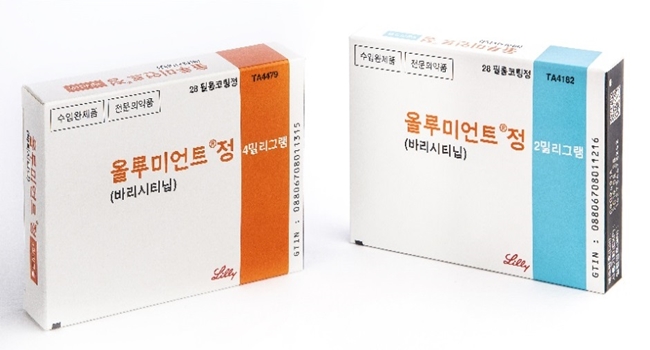
- As Olumiant is listed as a treatment for severe alopecia areata in adults for the first time in Korea, expectations are growing as to how much impact it will have. Experts say that there are many positive factors, such as increased interest in hair loss disease, as it is a treatment that has already been in high demand. However, some point out that future tasks such as a clear distinction between mild and severe in alopecia areata and the establishment of guidelines must be preempted in order for new indications to quickly take root. According to the pharmaceutical industry on the 4th, the Ministry of Food and Drug Safety approved Lilly's oral JAK inhibitor Olumiant as the first treatment for severe alopecia areata in adults in Korea. A specific target is severe alopecia areata in adult patients aged 18 years or older. It is true that there was no approved treatment for alopecia areata before the approval of Olumiant. Previously recommended treatments had limited evidence to support their effectiveness. Professor Kim Moon-beom (Pusan National University Hospital, Dermatology), president of the Korean Hair Society, said, "Severe alopecia areata has suffered from treatment limitations due to the low public awareness of alopecia areata and the absence of approved drugs for patients with alopecia areata." The society has already started efforts to improve the treatment environment for patients with severe alopecia areata through the revision of the treatment guidelines since last year.” Won Jong-hyeon, public relations director of the Hair Society (Seoul Asan Medical Center, Dermatology Department) said, "It is a drug that has been in standby demand for patients with severe hair loss, so it is expected that prescriptions and intake will become active with approval." It is positive that it has become a new hope for hair loss patients or patients who have experienced side effects for which the existing immunosuppressive treatment was not easy.” Olumiant's approval for severe alopecia areata in adults was based on the randomized, double-blind, placebo-controlled Phase 3 clinical trials BRAVE-AA1 and BRAVE-AA2. Both studies included Korea. The primary endpoint of the BRAVE-AA1 and BRAVE-AA2 studies was the proportion of patients achieving a SALT score of 20 or less (more than 80% hair-covered scalp) at week 36. Olumiant 2mg and 4mg showed superiority to placebo in terms of hair regrowth effect at 36 weeks. In BRAVE-AA1, the rates of achieving a SALT score of 20 points or less at week 36 of the Olumiant-administered group were 38.8% (4mg) and 22.8% (2mg), which were statistically significantly higher than 6.2% of the control group (placebo). If so, can Olumiant's indication for severe alopecia areata in adults leads to immediate prescription as long as there was a waiting demand? In the clinical field, in order for new drugs to take root more quickly, it is the view that a clear distinction between severe and mild conditions in alopecia areata and the establishment of a treatment guide should be given priority. According to the guideline for the treatment of alopecia areata published last year by the Hair Society, oral JAK inhibitors are systemic immunosuppressive agents (systemic steroid ± oral cyclosporine therapy) or diphenylcyclopropenone, DPCP and It is recommended as a first-line treatment agent. Regarding this, PR director Won said, "For future prescriptions, it is expected that the risk of side effects, including age, tumor occurrence, and presence of comorbidities, will be considered." The aspect of being able to do so will also be a consideration in the prescription,” he explained.
- Product
- Prescription of flu Txs rise with the spread of influenza A
- by Kang, Hye-Kyung Apr 05, 2023 05:48am
- Pharmacies are busy dispensing treatments due to the resurgence of influenza A, which has become prevalent again after December last year. Although a flu outbreak in March, the start of the new school year, is common, due to the lifting of the mask-wearing regulation and the varying temperature in the spring season, the adeno, rhino, paraviruses, and pneumonia are spreading at the same time, and turning into a full-blown epidemic. Flu prescriptions have been increasing with the spread of influenza A According to the pharmaceutical industry, prescriptions for flu treatments (oseltamivir phosphate) have been increasing with the resurgence of influenza A. In addition, the number of patients visiting hospitals for colds and high fevers has also increased, leading to an increased number of prescriptions and dispensing for those patients. Pharmacist A who owns a pharmacy near an otolaryngology hospital said, “We started to receive flu prescriptions one by one since last week, and the number of prescriptions has been increasing. There are cases where 4-5 students from one class is being diagnosed with the flu. So we are using the flu treatments that I had set out to one side to return.” According to the pharmacist, patients are being prescribed oseltamivir alone or with cold medicines. The pharmacist said, “Although some of the suspension powders are out of stock, we have stockpiled some drugs during the flu epidemic last year, and we also have 30mg and 45mg formulations in stock, so I don’t think there will be a stock shortage situation.” Another pharmacist, B, said, “This season’s flu is characterized by chills, headache, muscle pain, cough, sore throat, etc. along with high fever. I think respiratory diseases are spreading due to the lifting of the mask-wearing regulation and the varying temperature in the spring season. In addition to the flu, the adeno, rhino, parainfluenza viruses, and pneumonia are also spreading.” According to the Korea Disease Control and Prevention Agency, the proportion of suspected influenza patients (patients with suspected symptoms) was 13.2 per 1,000 outpatients, which is an increase from 11.7 in the previous week, and 2.7 times higher than the epidemic standard of 4.9. Also by pathogen detection rates, 4.9% of the patients were detected with influenza, 16.4% with rhinovirus, and 10.4% with the respiratory syncytial virus (RSV). Among hospital inpatients with acute respiratory infections, 31.9% were reported with rhinovirus, 27.9 with RSV, and 15.9% with parainfluenza virus. New patients with severe acute respiratory infections also increased, with influenza at 3.5% and pneumonia at 52.1%. Care Insight (www.careinsight.co.kr), an on-site pharmacy data analysis service, analyzed the number of flu prescriptions from March 26th to April 1st this year and found that the amount increased by 3.3% compared to the previous week. Pharmacist B said, “Students from the same class are leaving early or submitting a leave of absence due to the flu, and the wait time at otolaryngology clinics increased to exceed an hour in general.” Due to this spread of respiratory diseases in schools, local governments have been recommending influenza vaccination to children and pregnant women "Children that go to school as well as pregnant women who may have an increased risk of complications such as premature birth and childbirth of underweight infants with infection, should be vaccinated. Children aged 6 months to 13 and pregnant women are eligible for free vaccinations by April 30, therefore, if you are eligible, it’s not too late. Visit a designated medical institution and get vaccinated."
- Product
- No. of Paxlovid prescriptions drop at pharmacies
- by Jung, Heung-Jun Apr 05, 2023 05:47am
- Contrary to the government’s plans to expand the number of pharmacies in charge of COVID-19 treatments to 6,000, the number has not increased from 4,000 due to reduced prescriptions. Moreover, pharmacies handling the COVID-19 treatments are predicting that more pharmacies would be applying to cancel their designation from the second half of the year. As the disease control and prevention authorities plan to stop providing free COVID-19 treatments in the first half of next year, pharmacies that currently supply the drugs will also have to set up an exit strategy. Pharmacy A from Seoul said, “Prescriptions are at most 1-2 a day. In the meantime, the government increased the number of pharmacies, and hospitals reduced their prescriptions. So there is no reason to increase the number of pharmacies. Some pharmacies may wish to immediately drop their supply, but many are keeping their stockpile just in case patients come.” The proportion of COVID-19 patients over the age of 60 who are eligible to use oral treatments has also been gradually decreasing. According to Korea Disease Control and Prevention Agency, the daily average number of confirmed COVID-19 cases remained in the 10,000 range, and the proportion of confirmed patients over the age of 60 decreased from 26.2% in the first week of March to 21.7% in the fourth week. Both the number of confirmed cases and the proportion of patients over the age of 60 are declining (Source: KDCA) 7,981 patients over the age of 60 were prescribed oral COVID-19 treatments in the second week of this month. When making simple calculations and dividing it by the 4,000 pharmacies, this is equivalent to each pharmacy dispensing two courses of oral COVID-19 treatments a week. With the prescription rate not rising as expected, there have been talks about providing incentives to prescribing doctors. In March, Gi-Seok Jeong, Director-General of the Special Response of the Central Disaster and Safety Countermeasure Headquarters, requested the government to consider providing a separate fee for COVID-19 prescriptions. Although the degree may vary depending on the pharmacy, pharmacies have been experiencing a sharp drop in prescriptions of COVID-19 treatments in general. Pharmacy B in Gyeonggi Province said, “In the past, patients from far away came or reached me for prescriptions, but due to an increase in pharmacies that supply the treatments, I haven’t seen any patients for quite some time.” Pharmacy C in Seoul said, “The number of prescriptions decreased much and is rare these days. With the number of contraindicated drugs increasing, hospitals now do not seem to be actively prescribing them if they are not necessary, he said. "However, no pharmacy in our region has canceled their designation yet." The treatment will be supplied free of charge until this year. Patients will be charged a fee from the first half of next year. (Source: KDCA) Also, the authorities recently announced their plan to offer free treatment only until the second half of this year under a phased program. Under the program, COVID-19 treatments will be applied health insurance from the first half of next year. However, since oral COVID-19 drugs are expensive and cost around KRW 900,000, the key question is how much of the actual cost should be borne by the patients. Pharmacies expect a steeper drop in prescriptions when free supply is discontinued. Pharmacy A said, "An increasing number of pharmacies will stop supplying them before an insurance copayment rate is set, and I expect that will be around the end of the year."
- Product
- It is difficult to solve the problem of expensive generics
- by Mar 16, 2023 05:46am
- The Pharmaceutical Association for a Healthy Society (CEO Hyung-geun Shin) submitted an opinion against the 'Partial Amendment to the National Health Insurance Act' proposed by Representative Kim Min-seok, saying that the problem of expensive generics cannot be solved with penalty-type rebates. On the 14th, the pharmaceutical association said, "The proposed amendment contains the contents of replacing existing drug price cuts and reimbursement suspension administrative measures with penalty surcharges, and applying the changed statute when the standard for pharmaceutical disposition is lighter. "It is a law to make fools of pharmaceutical companies that do not provide rebates, and it is self-evident that it will continue to increase the price of Korean generics, which are famous for being the most expensive among OECD countries," he said. They pointed out that practical measures have not been prepared for the rebate issue. In 2014, the National Assembly and civil society joined forces to enact the 'rebate two-out system' to punish illegal kickbacks. It is that they continue to claim that access is restricted. They said, "Although this claim threatens the basic principle of 'same ingredients can be substituted for preparation', which has been maintained by the NHIS for a long time, the NHIS accepts the pharmaceutical company's argument and imposes a penalty of 30-50% of the drugs subject to suspension of reimbursement. "Even in this situation, citing the patient's right to access medicines as a reason is no different from simply arguing for the rebate itself to be allowed," he pointed out. The Pharmaceutical Association said, "Korea is known to be the most expensive country for generic drugs among OECD countries through various studies, and accordingly, pharmaceutical companies provide various rebates to healthcare institutions to promote sales, and healthcare institutions pay more than to purchase cheaper drugs. In order to receive more money and valuables, prescriptions for more expensive drugs are induced, and the structure in which the proportion of Korean pharmaceutical expenditures continues to rise is repeating itself,” he emphasized. “Pharmaceutical rebates are not just punishments for unfair trade, but an act that threatens health insurance finances, patients’ wallets, and patients’ health,” he said. “The current drug pricing method, which guarantees high generic prices, must also be improved as soon as possible,” he urged. He also ordered the National Assembly to "strengthen the rebate punishment and eliminate rebates from medical sites, and this will protect the health of patients and the finances of the NHIS."
- Product
- Daewoong/Novartis promise to cooperate
- by Kim JiEun Feb 27, 2023 05:57am
- On the 22nd, the Korea Pharmaceutical Association (Chairman Choi Kwang-Hoon) disused stock medicine return TF (Team Leader Jung Hyeon-cheol) held a meeting with Daewoong Pharmaceutical and Novartis Korea regarding the return of unused stock medicine and announced that they had agreed to actively cooperate in a settlement. In the case of Daewoong Pharmaceutical, through a meeting with the pharmaceutical society, wholesale shipments are 100%, returns are collected from base logistics within 1 month after being received, the balance is deducted for the settlement method, and a separate settlement rate is deducted for other return processing conditions. It was confirmed that there is no criterion. In addition, at the meeting with the Pharmacy Association, Novartis Korea explained that the return of unused medicines in stock is carried out only when the Pharmacy Association returns business is implemented, and regarding the practice guidelines for return work, 100% of the wholesale shipment price is collected in the reverse order of wholesale transactions, and the settlement method is warehousing. Explained how to deduct the balance within 3 months after The Pharmaceutical Association said at this meeting that these pharmaceutical companies explained that there were some setbacks due to the fact that the contents of the Pharmacy Returns Project were not clearly communicated to practitioners. The pharmacist association agreed to increase contact with pharmaceutical companies in the future and seek ways to coexist at the same time and explained that through this meeting, they had a meaningful time listening to pharmaceutical companies' difficulties related to the promotion of the pharmacists' return business and discussing solutions. Jeong Hyeon-cheol, head of the return TF team, said, “We will continue to hold meetings with pharmaceutical companies that have not participated in the return business in March to do our best to achieve the best results among all unused inventory drug return businesses.” Team leader Jeong also said, “The unwanted inventory drug return TF will continue to cooperate with pharmaceutical companies and distributors so that all returns from pharmacies can be collected without a hitch by the end of March, and settlement can be made sequentially from April.” said. Meanwhile, through this meeting, 143 pharmaceutical companies agreed to cooperate with the pharmacist association's return business, and 102 pharmaceutical companies confirmed detailed guidelines such as settlement rates. The association plans to provide related data to local branches or distribution associations at the end of this month, along with interim aggregated data for entering pharmacy returns.
- Product
- Australian supply of Tylenol 500 mg is embarrassing
- by Kang, Hye-kyung Feb 16, 2023 05:52am
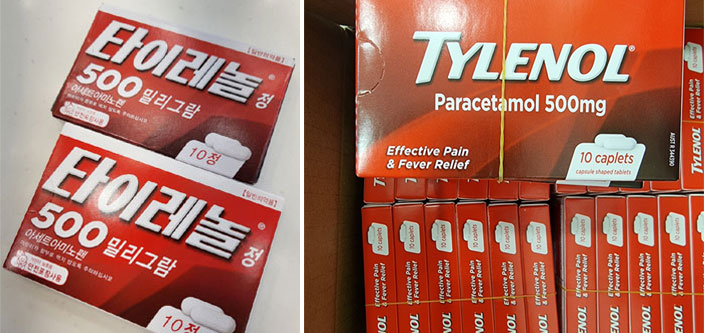
- 500mg of existing Tylenol and 500mg of Australian Tylenol supplied to pharmacies Pharmacists seem to be confused as 500mg of Tylenol products arrive one after another at pharmacies that ordered 500mg of Tylenol at the end of January due to supply increase issues. Pharmacists who bought the product before the price hike responded that the newly distributed Tylenol is expected to cause confusion among pharmacists as well as ordinary consumers as it has different packaging and ingredient names from existing products. Pharmacist A said, "I ordered a completely different product when I heard that the supply price of all Tylenol products will increase by 18% from March. The problem is consumer resistance. Although it is said to be an emergency drug for the smooth supply of antipyretic analgesics in Korea, it is greatly different from existing products, and the ingredient name is also specified as paracetamol, which is feared to cause resistance from consumers. Pharmacist A said, "I have to explain it to consumers, but I don't know how to understand that acetaminophen and paracetamol are the same ingredients," adding, "I'm worried that consumers will resist." Since the efficacy and effect are also specified as "Effective Pain & Fever Relief," some say that it should be written manually or attached to a notice. Pharmaceutical company A said, "The expiration date is also May 2024, which is shorter than the existing products (2025), so caution is required when selling them, and there are places that inevitably consider returning them." Johnson & Johnson Korea is an Australian product that urgently introduced Tylenol, which arrived at the pharmacy, and explains that it has the same ingredients and contents as existing products. An official from a pharmaceutical company said, "It is an Australian product that was urgently introduced by the Tylenol brand with approval from the Ministry of Food and Drug Safety and the KODC for smooth supply of antipyretic painkillers in Korea." The official said, "Australian Tylenol has the same expiration date of 36 months as the existing Tylenol 500mg. Johnson & Johnson Korea is making many efforts to supply Tylenol stably in the market in line with changing domestic market demand."
- Product
- Viatris Korea, "Viagra's supply expected on Jan 23"
- by Kim JiEun Jan 19, 2023 05:58am
- Viatris Korea announced short-term out-of-stock for some products, including Viagra, while predicting normal supply this month. On the 16th, Viatris Korea sent a notice to hospitals, pharmacies, and drug wholesalers on the 16th, saying, "Viagra, Viagra Film, Cardura-XL, Detrusitol Short-Term Out of Stock." In the announcement, the company said, "Based on the currently available information, we mainly expect the time when normal supply is possible on January 23, 2023." He added, "We deeply apologize for the inconvenience caused to medical treatment or work due to this short-term out-of-stock," adding, "We will continue to do our best for a stable supply." The items subject to the announcement have been out of stock not only at online malls for drugs but also at wholesalers since the end of the sales rights of Jeil Pharmaceuticals at the end of last year. The industry expected Menarini Korea to take over the next batch of sales rights for these items, but negotiations with Viatris Korea have not been completed so far.
