- LOGIN
- MemberShip
- 2026-09-19 13:02:17
- Expanded clinical use of orphan drug 'Joenja' in children
- by Lee, Hye-Kyung | translator Hong, Ji Yeon | 2024-12-06 05:56:55
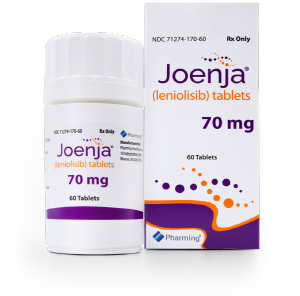
The meeting record of the Central Pharmaceutical Affairs Advisory Committee (CPAC), released by the Ministry of Food and Drug Safety (MFDS) on December 4, indicates that there has been a consultation regarding the application for approval of a medication on clinical trial intended for therapeutic use, which is currently undergoing clinical trials in a foreign country.
It was reported that the medication is Joenja, a treatment for activated phosphoinositide 3-kinase delta syndrome (APDS).
In June, Joenja was designated as an orphan drug.
APDS is caused by mutations in one of the genes encoding PIK3CD or PIK3R1 that is needed for the development and function of immune cells.
The disease occurs in 1 in 1-2 million people.
Patients exhibit autoimmunity and inflammatory symptoms.
Symptoms include ears infections, paranasal infections, and upper·lower respiratory infections.
Lymph nodes or the spleen may enlarge, and patients have increased risk of developing cancer, such as lymphoma.
The approval of Joenja was based on the results of multinational, triple-blinded, placebo-controlled, randomized clinical 2/3 trials.
The clinical trial involved 31 APDS patients over 12 years old.
At the recent CPAC meeting, discussions were held on the age range eligible for approval based on pediatric administration·dosage and predicted through pharmacokinetic (PBPK) modeling data and case studies from a compassionate use program (10 patients).
The CPAC concluded that approval could be granted for patients aged four years and older, with further discussions required for those under four.
Regarding the PBPK modeling data, one committee member stated, "Metabolism is proportional to body weight and liver volume, with differences of about 20% observed even among adults, making application in children reasonable." "However, since kidney function, liver function, and body composition become similar to adults only after two, predicting results for patients under two years old is challenging." Most committee members state that the submitted modeling document presents no significant issue.
One committee member commented, "FDA reports indicate that medication use in ages 4-11 will not pose any problem based on the modeling result.
However, the applications below the age of 4 or 2 must need further discussion." Another committee member stated, "The CYP cell maturity is similar after age 2, larger liver size and hepatic clearance.
We believe that this has been incorporated in the modeling." Once patients start taking medication, they are likely to continue treatment.
Therefore, concerns have arisen that administration should only begin after safety results are reviewed.
However, the committee chair noted that data collection could be challenging since the target population comprises children with rare diseases.
Regarding this, "The medication has been designated as an orphan drug in both the U.S.
and Korea, with four additional approved cases," the MFDS stated.
"We need consultation on whether the clinical trial data from U.S.
approval, submitted as evidence of safety and efficacy, along with the modeling data and case studies from 10 patients, can substitute for therapeutic confirmatory or exploratory clinical trial results." Consequently, it was concluded that CPAC must give a green light, as the unapproved status in South Korea and CPAC's opposition to access would deny Korean patients treatment opportunities.
Meanwhile, since the currently available 70 mg product is a film-coated tablet that children may be unable to swallow, the company plans to provide the medication in 10 mg and 30 mg tablets.
-

- 0
댓글 운영방식은
댓글은 실명게재와 익명게재 방식이 있으며, 실명은 이름과 아이디가 노출됩니다. 익명은 필명으로 등록 가능하며, 대댓글은 익명으로 등록 가능합니다.
댓글 노출방식은
댓글 명예자문위원(팜-코니언-필기모양 아이콘)으로 위촉된 데일리팜 회원의 댓글은 ‘게시판형 보기’와 ’펼쳐보기형’ 리스트에서 항상 최상단에 노출됩니다. 새로운 댓글을 올리는 일반회원은 ‘게시판형’과 ‘펼쳐보기형’ 모두 팜코니언 회원이 쓴 댓글의 하단에 실시간 노출됩니다.
댓글의 삭제 기준은
다음의 경우 사전 통보없이 삭제하고 아이디 이용정지 또는 영구 가입제한이 될 수도 있습니다.
-
저작권·인격권 등 타인의 권리를 침해하는 경우
상용 프로그램의 등록과 게재, 배포를 안내하는 게시물
타인 또는 제3자의 저작권 및 기타 권리를 침해한 내용을 담은 게시물
-
근거 없는 비방·명예를 훼손하는 게시물
특정 이용자 및 개인에 대한 인신 공격적인 내용의 글 및 직접적인 욕설이 사용된 경우
특정 지역 및 종교간의 감정대립을 조장하는 내용
사실 확인이 안된 소문을 유포 시키는 경우
욕설과 비어, 속어를 담은 내용
정당법 및 공직선거법, 관계 법령에 저촉되는 경우(선관위 요청 시 즉시 삭제)
특정 지역이나 단체를 비하하는 경우
특정인의 명예를 훼손하여 해당인이 삭제를 요청하는 경우
특정인의 개인정보(주민등록번호, 전화, 상세주소 등)를 무단으로 게시하는 경우
타인의 ID 혹은 닉네임을 도용하는 경우
-
게시판 특성상 제한되는 내용
서비스 주제와 맞지 않는 내용의 글을 게재한 경우
동일 내용의 연속 게재 및 여러 기사에 중복 게재한 경우
부분적으로 변경하여 반복 게재하는 경우도 포함
제목과 관련 없는 내용의 게시물, 제목과 본문이 무관한 경우
돈벌기 및 직·간접 상업적 목적의 내용이 포함된 게시물
게시물 읽기 유도 등을 위해 내용과 무관한 제목을 사용한 경우
-
수사기관 등의 공식적인 요청이 있는 경우
-
기타사항
각 서비스의 필요성에 따라 미리 공지한 경우
기타 법률에 저촉되는 정보 게재를 목적으로 할 경우
기타 원만한 운영을 위해 운영자가 필요하다고 판단되는 내용
-
사실 관계 확인 후 삭제
저작권자로부터 허락받지 않은 내용을 무단 게재, 복제, 배포하는 경우
타인의 초상권을 침해하거나 개인정보를 유출하는 경우
당사에 제공한 이용자의 정보가 허위인 경우 (타인의 ID, 비밀번호 도용 등)
※이상의 내용중 일부 사항에 적용될 경우 이용약관 및 관련 법률에 의해 제재를 받으실 수도 있으며, 민·형사상 처벌을 받을 수도 있습니다.
※위에 명시되지 않은 내용이더라도 불법적인 내용으로 판단되거나 데일리팜 서비스에 바람직하지 않다고 판단되는 경우는 선 조치 이후 본 관리 기준을 수정 공시하겠습니다.
※기타 문의 사항은 데일리팜 운영자에게 연락주십시오. 메일 주소는 dailypharm@dailypharm.com입니다.