- LOGIN
- MemberShip
- 2026-07-31 01:02:01
- ‘New head, new drugs…Bayer’s transition has just begun'
- by Eo, Yun-Ho | translator Kim, Jung-Ju | 2024-03-25 05:59:28
The difference is in how quickly you resolve the situation and carry on.
The multinational pharmaceutical giant Bayer Korea was certainly ‘stuck’ at one point.
Although the company had released and successfully sold liver cancer treatments ‘Nexavar’ and ‘Stivarga,’ the anticoagulant ‘Xarelto,’ and the wet age-related macular degeneration treatment ‘Eylea,’ no news of the next 'big thing' had risen for a while.
Also, some of the company’s new drugs were approved but had difficulty receiving reimbursement.
But Bayer pushed through and has carried on.
In the past 6 months, the company has launched the heart failure drug Verquovo and chronic kidney disease drug Kerendia with reimbursement, exerting the company’s strong foothold in the market as a cardiovascular powerhouse.
There was also another notable major change in the company.
For the first time in the company's 70 years of existence, a Korean head was appointed to lead the company.
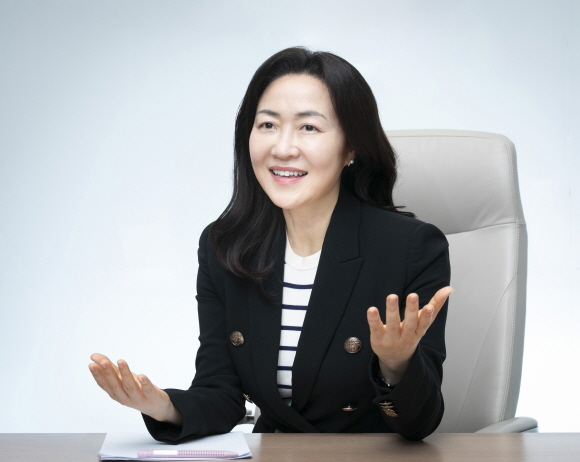
The new CEO, Jin-A Lee (53) took over in November last year.
This holds great significance and symbolism as the company had previously been led only by foreigners, including Friedrich-Wilhelm Gause, Niels Hessmann, and Ingrid Drechsel.
Amid the whirlwind of change, Dailypharm met up with Jin-A Lee, CEO of Bayer Korea to learn more about Bayer's transition, the new products and the new leader..
-You are the first Korean CEO of Bayer Korea.
Has the company's policy changed? This year marks the 69th anniversary of Bayer's launch in Korea, and we will be celebrating our 70th year next year.
As with all global companies, the connection between the global headquarters, regional subsidiaries, and local markets is essential in promoting growth in the early stages of new market entry.
That's why competent leaders from global headquarters had been appointed.
However, these days, about 80% of global pharmaceutical companies are appointing local leadership to head their subsidiaries.
I believe I can explain Bayer's unprecedented decision to appoint a Korean representative at this point in time in two ways.
First, due to the rising importance of the Korean market, the company has demonstrated its leadership and capabilities, exposed to various opportunities and experiences.
Korea is already a very competitive market and we have high expectations on its sustainable growth, especially as an insurance market.
Another reason is Korea’s excellent R&D environment.
Many global companies including Bayer have been conducting clinical trials in Korea, and Korea’s value in early clinical trials to Phase III, Phase IV, and even RWD (Real-World Data) research has become more prominent.
- Bayer had been slow in releasing new drugs.
And the recent launch of Verquovo and Kerendia seems to mark the start of a generational change in the company’s pipeline.
What expectations do you have for the new drugs that were recently launched? Bayer is known for its broad portfolio of therapies in cardiovascular, ophthalmology, cancer, and women's health.
As you may well know, it is also one of the world's top 5 pharmaceutical companies in the cardiovascular market, driven by sales of Aspirin and Xarelto.
We believe Verquvo and Kerendia will continue on the legacy.
The drugs were developed specifically to address the growing complexity of complex chronic diseases and this will be innovative growth drivers in the heart and kidney sector amid the aging population.
In that aspect, we are also particularly excited about Kerendia.
Among patients with diabetes, which is a major chronic disease, up to 40% of the patients with type 2 diabetes are known to have chronic kidney disease, and type 2 diabetes accounts for half of the causes of end-stage renal failure in Korea.
Unfortunately, no new reimbursed treatment option was introduced to this field for 20 years.
And Kerendia became the first drug to target the unmet need in chronic kidney disease.
- Let's talk about anti-cancer drugs.
Many multinational companies are now focusing on strengthening their anticancer capabilities.
It's become a trend.
Bayer was considered a leader in liver cancer for a long time but hasn’t shown much progress since then.
In Korea, the prostate cancer drug Nubeqa has been approved but is yet to be used actively in the field.
In the case of Nubeqa, we are making multifaceted efforts to improve its access for prostate cancer patients in Korea in accordance with the domestic situation.
However, it is still too early to give concrete updates on our progress.
Most global pharmaceutical companies are indeed focusing on anticancer drugs these days, but Bayer seeks to provide new treatment options for a variety of diseases based on a balanced portfolio.
Of course, this means that we will continue to work and discover innovative products in the field of cancer as well.
- As you are Korean, you must have a good understanding of the Korean insurance reimbursement system.
How do you plan to communicate with the government and the company hereon?
As Korea has a single-payer market, limitations do exist due to limited finances.
No matter how good or innovative a drug is, if it doesn't meet Korea’s insurance standards or doesn't meet the pharmacoeconomic evaluation criteria, it cannot be introduced into the country.
This is very unfortunate.
However the government is open to granting reimbursement for necessary drugs, so I think the role of the company is very important in communicating the value of our drugs, so we will focus on closing the gap between the two.
For example, NTRK gene fusion cancer is a very rare cancer with a very small patient population, so we expected its reimbursement to be difficult.
But Vitrakvi was successfully granted reimbursement based on its clinical efficacy and safety profile.
We also worked tirelessly to convey the need for Kerendia and Verquvo in the Korean market to the global headquarters, and as a result, we were able to quickly release the drugs to the Korean market.
-Bayer's organizational structure is changing at the headquarters level.
The company has announced a new way of operations called ‘Dynamic shared ownership (DSO),’ which is a significant shift at the company level, organizing divisions by disease rather than by pipeline.
A Korean subsidiary of another pharmaceutical company had face difficulties localizing such changes.
Based on that, it seems a more flexible approach would be needed to apply the transition to your business operations. That is a very possible problem.
Although DSOs can be termed differently in different companies, the model is becoming a trend in the global market.
The idea is to create an agile organization that is better able to respond to situations to deliver value for patients and healthcare providers, but I would like to emphasize how Bayer is implementing the system differently in different countries, unlike others.
Last year, the global CEO of Bayer held a conference with all of Bayer's subsidiaries.
He said that changing the management system is similar to building a house and that you can't build an identical house in each country because the soil is different, and the environment is different.
In other words, the big picture is the same, such as cutting through bureaucracy and simplifying approval processes, but the details and contextual decisions need to be tailored to each country.
-

- 0
댓글 운영방식은
댓글은 실명게재와 익명게재 방식이 있으며, 실명은 이름과 아이디가 노출됩니다. 익명은 필명으로 등록 가능하며, 대댓글은 익명으로 등록 가능합니다.
댓글 노출방식은
댓글 명예자문위원(팜-코니언-필기모양 아이콘)으로 위촉된 데일리팜 회원의 댓글은 ‘게시판형 보기’와 ’펼쳐보기형’ 리스트에서 항상 최상단에 노출됩니다. 새로운 댓글을 올리는 일반회원은 ‘게시판형’과 ‘펼쳐보기형’ 모두 팜코니언 회원이 쓴 댓글의 하단에 실시간 노출됩니다.
댓글의 삭제 기준은
다음의 경우 사전 통보없이 삭제하고 아이디 이용정지 또는 영구 가입제한이 될 수도 있습니다.
-
저작권·인격권 등 타인의 권리를 침해하는 경우
상용 프로그램의 등록과 게재, 배포를 안내하는 게시물
타인 또는 제3자의 저작권 및 기타 권리를 침해한 내용을 담은 게시물
-
근거 없는 비방·명예를 훼손하는 게시물
특정 이용자 및 개인에 대한 인신 공격적인 내용의 글 및 직접적인 욕설이 사용된 경우
특정 지역 및 종교간의 감정대립을 조장하는 내용
사실 확인이 안된 소문을 유포 시키는 경우
욕설과 비어, 속어를 담은 내용
정당법 및 공직선거법, 관계 법령에 저촉되는 경우(선관위 요청 시 즉시 삭제)
특정 지역이나 단체를 비하하는 경우
특정인의 명예를 훼손하여 해당인이 삭제를 요청하는 경우
특정인의 개인정보(주민등록번호, 전화, 상세주소 등)를 무단으로 게시하는 경우
타인의 ID 혹은 닉네임을 도용하는 경우
-
게시판 특성상 제한되는 내용
서비스 주제와 맞지 않는 내용의 글을 게재한 경우
동일 내용의 연속 게재 및 여러 기사에 중복 게재한 경우
부분적으로 변경하여 반복 게재하는 경우도 포함
제목과 관련 없는 내용의 게시물, 제목과 본문이 무관한 경우
돈벌기 및 직·간접 상업적 목적의 내용이 포함된 게시물
게시물 읽기 유도 등을 위해 내용과 무관한 제목을 사용한 경우
-
수사기관 등의 공식적인 요청이 있는 경우
-
기타사항
각 서비스의 필요성에 따라 미리 공지한 경우
기타 법률에 저촉되는 정보 게재를 목적으로 할 경우
기타 원만한 운영을 위해 운영자가 필요하다고 판단되는 내용
-
사실 관계 확인 후 삭제
저작권자로부터 허락받지 않은 내용을 무단 게재, 복제, 배포하는 경우
타인의 초상권을 침해하거나 개인정보를 유출하는 경우
당사에 제공한 이용자의 정보가 허위인 경우 (타인의 ID, 비밀번호 도용 등)
※이상의 내용중 일부 사항에 적용될 경우 이용약관 및 관련 법률에 의해 제재를 받으실 수도 있으며, 민·형사상 처벌을 받을 수도 있습니다.
※위에 명시되지 않은 내용이더라도 불법적인 내용으로 판단되거나 데일리팜 서비스에 바람직하지 않다고 판단되는 경우는 선 조치 이후 본 관리 기준을 수정 공시하겠습니다.
※기타 문의 사항은 데일리팜 운영자에게 연락주십시오. 메일 주소는 dailypharm@dailypharm.com입니다.
- “Drug pricing intervention contributes to the crisis in essential healthcare and shortage of drugs”
- Reporter's view | Lee, Jeong-Hwan