- LOGIN
- MemberShip
- 2026-07-31 14:07:19
- KRPIA “Narrowing the gap with gov. on appropriate pricing"
- by Eo, Yun-Ho | translator Byun Kyung A | 2020-08-31 05:57:56

As the age of ‘high-cost drug’ has emerged, the government and the pharmaceutical industry’s discrepancy when viewing the drug pricing is increasingly widening.
Korean Research-based Pharmaceutical Industry Association (KRPIA), an organization representing the multinational companies in South Korea, is raising its voice to narrow the discrepancy.
The two parties also have had points they agree on.
Last year, the South Korean health authority has expanded scope of risk sharing agreement (RSA) subjects and also announced a plan to further extend the RSA system on follow-on drugs and widen the pharmacoeconomic evaluation (PE) exemption system this year.
Nevertheless, they have a mountain of tasks to work on as well.
Recently, KRPIA had a conflict with National Health Insurance Service (NHIS) when it presented the revised drug pricing negotiation guideline.
The government and the industry still have many issues to talk over, such as adding more drugs subject to negotiation and authorized pricing reduction, adding drugs approved with Phase III clinical evidence in development as subject for RSA, and amending detailed operational guideline for negotiating price-volume agreement (PVA).
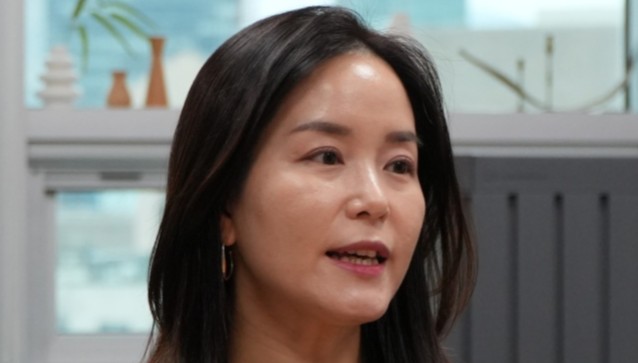
Daily Pharm met with KRPIA CEO Lee Youngshin, as she celebrates one year anniversary of her appointment, and got to listen to her opinions up close on what KRPIA sees in the age of high expectation and changes.
For the past one year, which part did the organization concentration on? Each member company has different priority, but we are more focusing on common issues we all face instead of their respective interest.
Currently, the organization has about 50 active groups, consisting of seven committees and various TF teams and working groups.
With various agenda on the table, we are constantly discussing on solutions for the companies to mutually advance forward.
A clear advantage is having conversations with committees formed with respective expertise.
The collective expertise helps us find good solutions.
The organization is trying to create a communicational platform taking in account not only for the industry, but also for other various stakeholders.
-The common denominator that resonates with all stakeholders and priority, we assume, would be the ‘drug pricing.’ Let’s hear the organization’s wider perspective on the drug pricing and relevant issues.
Besides KRPIA, many of stakeholders put the drug pricing first on the agenda.
When the government creates regulation and environment that does not acknowledge the value of new drug by claiming the logic of drug pricing is keeping them low, the Korean pharmaceutical companies would also struggle to develop new drugs.
For a single new drug to be developed, a company has to invest trillions of wons along with that many of human resources for over a decade of time.
An appropriate drug pricing should be guaranteed to generate a positive cycle of constantly investing and seeking for innovative new drugs.
South Korea’s national income per capita has exceeded USD 30,000, and also by growing out as a developing country, the country has consolidated its position as an advanced country.
When Korea’s pharmaceutical and bio companies develop and export their new drugs, we would wish for them to be priced at an appropriate pricing in other advanced countries.
There could be various opinions on what is an appropriate pricing for a drug, but for advanced countries like South Korea, using the OECD average pricing would be a reasonable answer.
-It seems like the government and companies should narrow the gap between different notions of an ‘appropriate drug pricing.’ Now that the ultra expensive drugs are released to the market, the health authority’s concerns are deepening.
Highly expensive drugs capable of shaking up the whole market are emerging.
These expensive drugs would continue to make their ways to the market.
The traditional drugs have bloomed from chemicals, but the cost of these drugs would grow further as they are branching out from new technologies in bio, cell and gene therapies.
KRPIA also wishes to supply treatments with inexpensive pricing.
Considering the innovativeness and social needs of a new drug, we need to have further discussion on flexibly applying ICER threshold value.
In other words, RSA is the answer to mutually benefit everyone—the government, company and patients.
KRPIA wants the RSA system to operate in more flexible manner, as an improved framework of RSA could have the government and companies meet eye to eye on highly expensive drugs.
-As the ‘drug pricing’ has become the key agenda KRPIA deals with, the expertise in ‘government affairs’ with related government bodies are now ever so crucial.
But concerned voices are growing as Vice-chairman Lee Sang Suk has left the organization, followed by Senior Director Sean Kim of Market Access and Healthcare Policy.
The organization has been consistently working on government affairs.
The time when KRPIA’s Senior Director Sean Kim of Market Access and Healthcare Policy Committee left the organization overlapped with the time when Health Insurance Review and Assessment Service’ (HIRA) major personnel transfer happened.
And because the government has been on overdrive amid COVID-19, many of the work could not progress as we hoped to.
Regardless, the organization is still engaging with the government bodies to provide them our perspectives and recommendations.
Fortunately, we have recently decided on the successor of former Senior Director Sean Kim.
The organization newly appointed Senior Director Kim Minyoung, a senior manager at Amgen Asia.
The senior director is an excellent specialist with 25 years of expertise in market access and healthcare regulations.
As she has impeccable network with the government officials, we have high hopes on her.
-The headquarters of multinational companies have been lately involved with so many corporate M&A or split-up cases.
And they have caused some problems in job security within the working environment.
In some extreme cases, there were a couple of suicide cases within the member companies.
Shouldn’t the organization step in and address the issue?
The decisions on corporate M&As are made by the headquarters.
Such cases have happened before, and they would stay the same in the future.
Comparatively, the Korean companies tend not to go through that many M&A cases.
The cultures in the headquarter countries and Korea have seem to differ from each other.
In last year, the organization newly formed HR Committee.
For the organization to handle the labor union issues, we have legal restrictions.
However, for the relevant company management to have open conversations as much as possible, we would seek for opportunities to provide any sort of help possible.
-When speaking of drug pricing and financial cost, many of the experts argue the drug pricing structure should be changed to enhance the patients’ access to new drugs.
While promoting the use of generics, some say the unnecessary expenditure on pharmaceuticals, like on chronic diseases, should be reduced.
But KRPIA seems to reserve its opinion on generic.
That would be correct.
The organization has never issued an official statement on it.
It would be inappropriate for the organization to have a say in the sensitive topic affecting other stakeholders, as generics are a big part of Korean pharmaceutical companies.
Generics have been the foundation of the Korean pharmaceutical industry, and it serves as a major income source of the Korean companies.
One of the biggest strength the Korean pharmaceutical industry has is that every company has their own manufacturing facility.
In a wider sense, we need to seek opportunities to export more Korean-made generics to the global market.
-Recently, KRPIA had a dispute with NHIS.
Sources say the organization submitted official statement regarding problems in NHIS meeting operation, lack of transparency in guideline revision, and illogic in pricing negation procedure.
After having a meeting with NHIS, the participants were gravely disappointed in the government body.
Despite our request, NHIS handed out the revised guideline at the meeting and collected them back immediately, only allowing the organization representatives to talk about limited opinions.
As the guideline would work as a practical regulation to affect upper-level standards and statutes, NHIS should clearly disclose the guideline and finalize the legislation process after accepting all opinions.
We welcome the government body’s decision to hold regular quarterly meetings, but we would advise NHIS to contemplate with the organization to draw up prospective improvements at the meeting.
-We had sources reporting the organization having conversations on recommending different drug pricings for each indication.
Setting different pricing for different indication in same substance drugs is essential to enhance patients’ treatment access.
Australia and many other countries have adopted the system and we have submitted relevant recommendation to HIRA and NHIS.
Although it would be challenging to implement the indication-basis drug pricing in Korea, where a single pricing is given to a single drug, the organization would continue to work with the government to introduce the system.
-

- 0
댓글 운영방식은
댓글은 실명게재와 익명게재 방식이 있으며, 실명은 이름과 아이디가 노출됩니다. 익명은 필명으로 등록 가능하며, 대댓글은 익명으로 등록 가능합니다.
댓글 노출방식은
댓글 명예자문위원(팜-코니언-필기모양 아이콘)으로 위촉된 데일리팜 회원의 댓글은 ‘게시판형 보기’와 ’펼쳐보기형’ 리스트에서 항상 최상단에 노출됩니다. 새로운 댓글을 올리는 일반회원은 ‘게시판형’과 ‘펼쳐보기형’ 모두 팜코니언 회원이 쓴 댓글의 하단에 실시간 노출됩니다.
댓글의 삭제 기준은
다음의 경우 사전 통보없이 삭제하고 아이디 이용정지 또는 영구 가입제한이 될 수도 있습니다.
-
저작권·인격권 등 타인의 권리를 침해하는 경우
상용 프로그램의 등록과 게재, 배포를 안내하는 게시물
타인 또는 제3자의 저작권 및 기타 권리를 침해한 내용을 담은 게시물
-
근거 없는 비방·명예를 훼손하는 게시물
특정 이용자 및 개인에 대한 인신 공격적인 내용의 글 및 직접적인 욕설이 사용된 경우
특정 지역 및 종교간의 감정대립을 조장하는 내용
사실 확인이 안된 소문을 유포 시키는 경우
욕설과 비어, 속어를 담은 내용
정당법 및 공직선거법, 관계 법령에 저촉되는 경우(선관위 요청 시 즉시 삭제)
특정 지역이나 단체를 비하하는 경우
특정인의 명예를 훼손하여 해당인이 삭제를 요청하는 경우
특정인의 개인정보(주민등록번호, 전화, 상세주소 등)를 무단으로 게시하는 경우
타인의 ID 혹은 닉네임을 도용하는 경우
-
게시판 특성상 제한되는 내용
서비스 주제와 맞지 않는 내용의 글을 게재한 경우
동일 내용의 연속 게재 및 여러 기사에 중복 게재한 경우
부분적으로 변경하여 반복 게재하는 경우도 포함
제목과 관련 없는 내용의 게시물, 제목과 본문이 무관한 경우
돈벌기 및 직·간접 상업적 목적의 내용이 포함된 게시물
게시물 읽기 유도 등을 위해 내용과 무관한 제목을 사용한 경우
-
수사기관 등의 공식적인 요청이 있는 경우
-
기타사항
각 서비스의 필요성에 따라 미리 공지한 경우
기타 법률에 저촉되는 정보 게재를 목적으로 할 경우
기타 원만한 운영을 위해 운영자가 필요하다고 판단되는 내용
-
사실 관계 확인 후 삭제
저작권자로부터 허락받지 않은 내용을 무단 게재, 복제, 배포하는 경우
타인의 초상권을 침해하거나 개인정보를 유출하는 경우
당사에 제공한 이용자의 정보가 허위인 경우 (타인의 ID, 비밀번호 도용 등)
※이상의 내용중 일부 사항에 적용될 경우 이용약관 및 관련 법률에 의해 제재를 받으실 수도 있으며, 민·형사상 처벌을 받을 수도 있습니다.
※위에 명시되지 않은 내용이더라도 불법적인 내용으로 판단되거나 데일리팜 서비스에 바람직하지 않다고 판단되는 경우는 선 조치 이후 본 관리 기준을 수정 공시하겠습니다.
※기타 문의 사항은 데일리팜 운영자에게 연락주십시오. 메일 주소는 dailypharm@dailypharm.com입니다.
- “Drug pricing intervention contributes to the crisis in essential healthcare and shortage of drugs”
- Reporter's view | Lee, Jeong-Hwan