- LOGIN
- MemberShip
- 2026-09-25 19:48:16
- Who holds the key to end financial toxicity?
- by Lee, Hye-Kyung | translator Byun Kyung A | 2019-12-22 21:52:33

But it’s expensive” Patient: “How much is it?” Doctor: “It’s about 10 million won per month”.
Patient: “Can I get fully recovered”.
Doctor: “It’s not guaranteed”.
Patient: “It’s too expensive”.
Doctor: “Discuss and decide with your family after checking the price, if you have a private insurance.” At a policy seminar convened on Dec.
19 about enhancing coverage for immunotherapy, President Baek Jin-young Korea Kidney Cancer Association enacted a common conversation between a doctor and kidney cancer patient.
The seminar was organized by Lawmaker Kim Kwang-soo at a seminar room in the National Assembly Member’s Office Building.
President Baek said, “During the three-minute counseling time, cancer patients have to listen to a doctor talk about financial toxicity first than the severity of their own health.
It happens quite often.” Professor Kim Hee-jun of Chung-Ang University Hospital and Professor Park Ji-hyun of Konkuk University Medical Center Department of Hemato-oncology nodded their heads at President Baek’s story.
Professor Kim stated, “It’s dishearteningly relatable.
Once when a colleague visited and listened to a conversation between my patient and me, she commented it sounded like I was selling a private insurance.
I have to ask patients about their private insurance status and limits.
And even if I show a survival rate graph after the talk, I know they are not paying an attention anymore.” She added, “When Obdivo announced its launch in Korea in 2015, I was excited.
But it’s disheartening that I cannot use it for all patients.” President Baek and Professor Kim proposed that the special case benefit applying five percent patient copayment rate from first-line therapy could be raised.
President Baek claimed “Cancer patients should also stop being stubborn about the five percent copayment rate, but embrace the opportunity to choose different options with higher copayment rate.
It is also crucial for pharmaceutical company, patient and government to share the initial risk of uncertainty in treatment efficacy, and to establish reasonable standard of reimbursement.” Professor Kim also added, “At first, I was grateful for the five-percent copayment rate.
But the more new drugs were launched, the longer patients had to fight against cancer.
Back in the day, cancer patients had about less than a year to survive.
But the survival period has gotten longer.
We need to carefully consider raising the copayment rate a little bit for all cancer patients to benefit from the system.” Professor Lee Dae-Ho of Seoul Asan Medical Center Department of Oncology pointed out, “The root of all problem is money.” The professor elaborated, “We need to consider if the people would be happy to enhance coverage on four major severe diseases, and if they would be happy to spend their tax money on cancer patients,” and “I also don’t mean to reduce the price of drugs for those pharmaceutical companies trying to bring new drugs to Korean patients.” “It’s skeptical if profit-seeking pharmaceutical companies are truly for the patients,” because it is “unconvincing for insurer paying for the health insurance expenditure [to expand coverage on anticancer treatment], when the companies demand for improved access on new drug, but don’t put an effort to lower their drug price,” the professor added.
New drug reimbursement application, it’s up to pharmaceutical companies After a series of criticisms from the panels, Ministry of Health and Welfare (MOHW) defended their position with vulnerable financial situation.
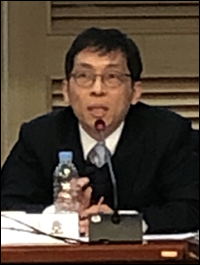
Deputy Director Choi Kyung-ho of Pharmaceutical Benefit Division at MOHW urged, “Besides people’s overestimation of immunotherapy as a miracle elixir, it is still an unknown territory as an insurer who has to pay for the insurance expenditure.
We need at least a tool to confirm its response rate to grant insurance reimbursement”.
Accordingly, Health Insurance Review and Assessment Service (HIRA) is conducting a RWD research for post-marketing evaluation, and National Health Insurance Service (NHIS) is conducting a study on expenditure efficiency for financial feasibility.
Deputy Director Choi noted, “We always feel sorry for patients and their family, and we are regretful that we cannot provide the right weapon for medical profession to fight against cancer with.
However, it is also regretful that all the responsibility for the unfortunate state is blamed on the government”.
The government basically pointed out the public thinking the government is keeping the last key back to end the pharmaceutical company’s tug-of-war against the government, insurer and NHIS with the new drug pricing negotiation.
Deputy Director Choi elaborated, “The government is not the one with the last key.
MOHW, NHIS and HIRA exist to keep health insurance expenditure justifiable.
As the insurance finance is not from a bottomless pot, the ministry set the drug pricing regulation for pharmaceutical companies to apply for reimbursement with according to their drug’s financial impact and patient protection measures and to have negotiation with government for the reimbursement listing.”
The government asks for new drug’s response rate, financial toxicity, and clinical data to base reimbursement decision.
But some companies don’t even speak a word.
We are not to name names, but the pharmaceutical companies are the ones holding back the key”, the deputy director reprehended.
The government official also mentioned of a foreign financial support system, Cancer Drugs Fund.
Deputy Director Choi said, “Some have suggested a sort of ‘money pot’ is needed when setting up the National Health Insurance Comprehensive Plan.
So we are trying to make an individual account to cover anticancer and rare disease treatments with money saved from reevaluating drugs with low efficacy or not delivering expected effect”.
Regarding the five-percent special case reimbursement rate, the official said “We are considering on expanding selective reimbursement scope.” “We are contemplating a realistic solution like preliminary pricing reduction for a limited number of cancer patients.
Although monotherapy exists, also having a combination therapy makes the situation complicated.
We would do our best to improve patient’s new drug accessibility,” said the deputy director.
-

- 0
댓글 운영방식은
댓글은 실명게재와 익명게재 방식이 있으며, 실명은 이름과 아이디가 노출됩니다. 익명은 필명으로 등록 가능하며, 대댓글은 익명으로 등록 가능합니다.
댓글 노출방식은
댓글 명예자문위원(팜-코니언-필기모양 아이콘)으로 위촉된 데일리팜 회원의 댓글은 ‘게시판형 보기’와 ’펼쳐보기형’ 리스트에서 항상 최상단에 노출됩니다. 새로운 댓글을 올리는 일반회원은 ‘게시판형’과 ‘펼쳐보기형’ 모두 팜코니언 회원이 쓴 댓글의 하단에 실시간 노출됩니다.
댓글의 삭제 기준은
다음의 경우 사전 통보없이 삭제하고 아이디 이용정지 또는 영구 가입제한이 될 수도 있습니다.
-
저작권·인격권 등 타인의 권리를 침해하는 경우
상용 프로그램의 등록과 게재, 배포를 안내하는 게시물
타인 또는 제3자의 저작권 및 기타 권리를 침해한 내용을 담은 게시물
-
근거 없는 비방·명예를 훼손하는 게시물
특정 이용자 및 개인에 대한 인신 공격적인 내용의 글 및 직접적인 욕설이 사용된 경우
특정 지역 및 종교간의 감정대립을 조장하는 내용
사실 확인이 안된 소문을 유포 시키는 경우
욕설과 비어, 속어를 담은 내용
정당법 및 공직선거법, 관계 법령에 저촉되는 경우(선관위 요청 시 즉시 삭제)
특정 지역이나 단체를 비하하는 경우
특정인의 명예를 훼손하여 해당인이 삭제를 요청하는 경우
특정인의 개인정보(주민등록번호, 전화, 상세주소 등)를 무단으로 게시하는 경우
타인의 ID 혹은 닉네임을 도용하는 경우
-
게시판 특성상 제한되는 내용
서비스 주제와 맞지 않는 내용의 글을 게재한 경우
동일 내용의 연속 게재 및 여러 기사에 중복 게재한 경우
부분적으로 변경하여 반복 게재하는 경우도 포함
제목과 관련 없는 내용의 게시물, 제목과 본문이 무관한 경우
돈벌기 및 직·간접 상업적 목적의 내용이 포함된 게시물
게시물 읽기 유도 등을 위해 내용과 무관한 제목을 사용한 경우
-
수사기관 등의 공식적인 요청이 있는 경우
-
기타사항
각 서비스의 필요성에 따라 미리 공지한 경우
기타 법률에 저촉되는 정보 게재를 목적으로 할 경우
기타 원만한 운영을 위해 운영자가 필요하다고 판단되는 내용
-
사실 관계 확인 후 삭제
저작권자로부터 허락받지 않은 내용을 무단 게재, 복제, 배포하는 경우
타인의 초상권을 침해하거나 개인정보를 유출하는 경우
당사에 제공한 이용자의 정보가 허위인 경우 (타인의 ID, 비밀번호 도용 등)
※이상의 내용중 일부 사항에 적용될 경우 이용약관 및 관련 법률에 의해 제재를 받으실 수도 있으며, 민·형사상 처벌을 받을 수도 있습니다.
※위에 명시되지 않은 내용이더라도 불법적인 내용으로 판단되거나 데일리팜 서비스에 바람직하지 않다고 판단되는 경우는 선 조치 이후 본 관리 기준을 수정 공시하겠습니다.
※기타 문의 사항은 데일리팜 운영자에게 연락주십시오. 메일 주소는 dailypharm@dailypharm.com입니다.