- LOGIN
- MemberShip
- 2026-09-14 17:08:29
- Comb cancer therapy issue has been resolved
- by Whang, byung-woo | translator Hong, Ji Yeon | 2025-04-21 05:53:36
Changes will be brought to the health system as a patient's existing co-payment amount will remain the same for ongoing chemotherapy when a reimbursed cancer drug combined with a newly developed, non-reimbursed new drug.
Previously, insurance coverage for combination therapy comprising two drugs was unavailable, placing a financial burden on patients.
The recent changes to this policy are viewed positively.
However, as more combination therapies with new drug-new drug combinations are being approved, there are discussions about the need to establish procedures.

Previously, if a non‑reimbursed drug was added to a regimen already covered by reimbursement, even the previously reimbursed drugs would lose their coverage, increasing patients' out‑of‑pocket costs.
After the announcement, patient organizations and academics have proposed suggestions.
In response, the Health Insurance Review and Assessment Service (HIRA) convened a Cancer Drug Review Committee (CDRC) meeting in October 2024 to establish a review policy for determining the reimbursement status of major combination therapies.
Under the revisions, adding a non‑reimbursed anticancer drug to an existing reimbursed regimen will not affect the co-payment rate for the reimbursed drugs.
In detail, a new clause states, 'When combining a reimbursed chemotherapy regimen with another anticancer drug, the existing co-payment for the previously initiated chemotherapy shall continue to apply to that regimen.' A pharmaceutical industry employee remarked, "The combination anticancer therapy included in this notice are first-line treatments that account for a relatively small share of the National Health Insurance expenditure, so there have been calls for improvement," and added, "We were expecting changes after the April 30 CDRC meeting, but it's good news to see the draft notification issued so quickly.
From a pharmaceutical company perspective, this change is truly significant." The partial revision notice announced by the MOHW exemplifies the case of AstraZeneca’s immuno‑oncology drug Imfinzi (durvalumab), which was under discussion for biliary tract cancer reimbursement last year.
At that time, the CDRC maintained Imfinzi as non‑reimbursed for first‑line treatment of biliary tract cancer while recognizing reimbursement only for the other combination therapy drugs, gemcitabine and cisplatin chemotherapy (GemCis).
New drug+new drug combination therapy gains attention, demands for improving the reimbursement process↑ As issues for combination therapy comprising an existing first‑line chemotherapy agent with a new drug are likely to be resolved, interest is growing in whether a reimbursement process for "new drug + new drug" combinations can be established.
In fact, with more multinational companies having applied for reimbursement of combination therapies that include innovative anticancer agents, requests for a formalized process have continued.
According to discussions at the March 'Policy forum on improving cancer patient access to combination therapies,' 54 anticancer combination therapies have been approved in South Korea over the past five years.
Of these, 28 cases add a new drug to an existing therapy, and 26 are combinations of two new drugs.
In other words, roughly half of the recently approved combination therapies involve two novel agents.
There are suggestions for institutional policies to ensure that reimbursement can be reviewed quickly and rationally when a combination therapy includes drugs from different companies.
The Korea Research-based Pharmaceutical Industry Association (KRPIA) has formed a working group to devise solutions.
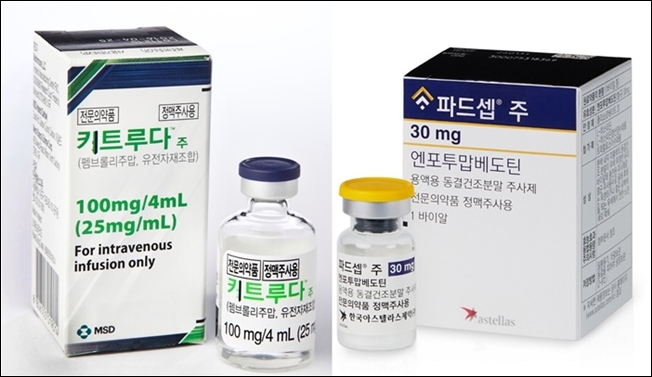
When two new drugs from different companies are used for combination therapy, each company's circumstances, such as volume‑based pricing or price-volume agreement, make simultaneous reimbursement applications difficult.
Currently, there is no basis for the two companies to coordinate their reimbursement status.
If only one company applies, proving cost‑effectiveness can be problematic, and the therapy may remain split between reimbursed and non‑reimbursed drugs, contrary to the system's intent to reduce patient burden.
While the government acknowledges the need for reforms, it also recognizes that it cannot mandate private pharmaceutical companies to comply.
At the forum, Hee‑Yeon Park of the MOHW explained, "When combining new drugs+new drugs, we need additional measures.
We are reviewing various approaches for reimbursement mediation, but there are aspects we cannot mandate due to each company's circumstances." Several ideas have been proposed similar to official notifications regarding generic drug pricing application cases.
According to pharmaceutical industry sources, generics that enter the market after a delay instead of immediately after the patent expiry file for drug pricing review, HIRA will notify the original manufacturer, allowing the company to decide its response strategy.
There is also a proposal to have HIRA notify other manufacturers when one company applies for an anticancer combination therapy reimbursement.
Because companies do not publicly disclose their reimbursement applications, having HIRA coordinate and guide the review could aid in setting the directions.
Additionally, experts have suggested applying a more flexible ICER threshold for combination therapies, recognizing that such regimens typically involve longer treatment durations than monotherapies.
Therefore, proven innovative combinations should warrant a relaxed ICER criterion.
A KRPIA official commented, "Several companies have agreed on the need to establish a clear process for combination therapy.
We are gathering exemplary cases from abroad and will propose recommendations once we agree on the necessary steps."
-

- 0
댓글 운영방식은
댓글은 실명게재와 익명게재 방식이 있으며, 실명은 이름과 아이디가 노출됩니다. 익명은 필명으로 등록 가능하며, 대댓글은 익명으로 등록 가능합니다.
댓글 노출방식은
댓글 명예자문위원(팜-코니언-필기모양 아이콘)으로 위촉된 데일리팜 회원의 댓글은 ‘게시판형 보기’와 ’펼쳐보기형’ 리스트에서 항상 최상단에 노출됩니다. 새로운 댓글을 올리는 일반회원은 ‘게시판형’과 ‘펼쳐보기형’ 모두 팜코니언 회원이 쓴 댓글의 하단에 실시간 노출됩니다.
댓글의 삭제 기준은
다음의 경우 사전 통보없이 삭제하고 아이디 이용정지 또는 영구 가입제한이 될 수도 있습니다.
-
저작권·인격권 등 타인의 권리를 침해하는 경우
상용 프로그램의 등록과 게재, 배포를 안내하는 게시물
타인 또는 제3자의 저작권 및 기타 권리를 침해한 내용을 담은 게시물
-
근거 없는 비방·명예를 훼손하는 게시물
특정 이용자 및 개인에 대한 인신 공격적인 내용의 글 및 직접적인 욕설이 사용된 경우
특정 지역 및 종교간의 감정대립을 조장하는 내용
사실 확인이 안된 소문을 유포 시키는 경우
욕설과 비어, 속어를 담은 내용
정당법 및 공직선거법, 관계 법령에 저촉되는 경우(선관위 요청 시 즉시 삭제)
특정 지역이나 단체를 비하하는 경우
특정인의 명예를 훼손하여 해당인이 삭제를 요청하는 경우
특정인의 개인정보(주민등록번호, 전화, 상세주소 등)를 무단으로 게시하는 경우
타인의 ID 혹은 닉네임을 도용하는 경우
-
게시판 특성상 제한되는 내용
서비스 주제와 맞지 않는 내용의 글을 게재한 경우
동일 내용의 연속 게재 및 여러 기사에 중복 게재한 경우
부분적으로 변경하여 반복 게재하는 경우도 포함
제목과 관련 없는 내용의 게시물, 제목과 본문이 무관한 경우
돈벌기 및 직·간접 상업적 목적의 내용이 포함된 게시물
게시물 읽기 유도 등을 위해 내용과 무관한 제목을 사용한 경우
-
수사기관 등의 공식적인 요청이 있는 경우
-
기타사항
각 서비스의 필요성에 따라 미리 공지한 경우
기타 법률에 저촉되는 정보 게재를 목적으로 할 경우
기타 원만한 운영을 위해 운영자가 필요하다고 판단되는 내용
-
사실 관계 확인 후 삭제
저작권자로부터 허락받지 않은 내용을 무단 게재, 복제, 배포하는 경우
타인의 초상권을 침해하거나 개인정보를 유출하는 경우
당사에 제공한 이용자의 정보가 허위인 경우 (타인의 ID, 비밀번호 도용 등)
※이상의 내용중 일부 사항에 적용될 경우 이용약관 및 관련 법률에 의해 제재를 받으실 수도 있으며, 민·형사상 처벌을 받을 수도 있습니다.
※위에 명시되지 않은 내용이더라도 불법적인 내용으로 판단되거나 데일리팜 서비스에 바람직하지 않다고 판단되는 경우는 선 조치 이후 본 관리 기준을 수정 공시하겠습니다.
※기타 문의 사항은 데일리팜 운영자에게 연락주십시오. 메일 주소는 dailypharm@dailypharm.com입니다.