- LOGIN
- MemberShip
- 2026-09-17 03:36:46
- AZ "Expanding Asia-based evidence…solid cancer trt options"
- by Son, Hyung Min | translator | 2025-12-11 08:40:41
AstraZeneca (AZ) highlighted the importance of building clinical evidence and a research network in Asia while presenting new therapeutic options across major solid tumor area.
The company announced that it aims to have its treatments administered to one in three liver cancer patients, one in three bile duct cancer patients, and one in seven gastric cancer patients by 2030, emphasizing that Asia is the core driver of this vision.
AstraZeneca explained that 60–70% of patients participating in its gastrointestinal (GI) cancer clinical trials are recruited from Asia, and with approximately 50 research sites operating across the region, Asia is playing a central role in global development.명이다.
Key data unveiled for breast, lung, and GI cancers..."Survival improvement consistent in Asian patients"
According to industry sources on December 10, AstraZeneca held a media briefing at the recent European Society for Medical Oncology Asia (ESMO Asia 2025) annual meeting in Singapore. Senior global executives from AZ uniformly stated that Asia is emerging as the central axis for new drug development, clinical evidence generation, and early diagnostic technology, moving beyond being just a participating region.
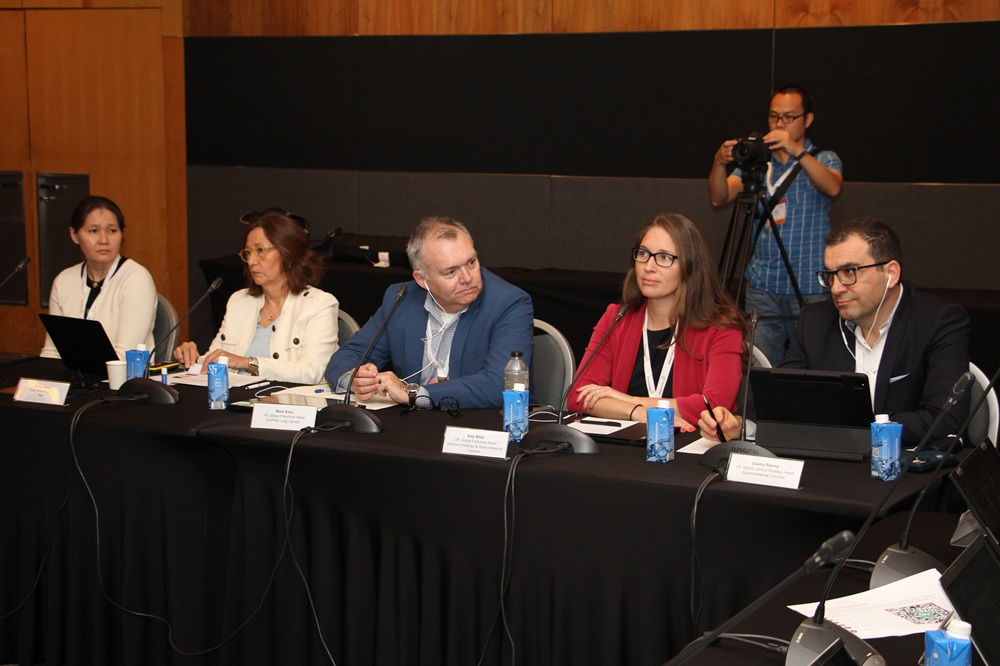
The executives particularly emphasized that the research disclosed at the conference, focusing on cancers with high incidence and unmet clinical needs in Asia, including lung, breast, and gastrointestinal cancers, will become "the evidence driving future changes to the global standard of care."
AstraZeneca summarized and shared the latest data presented at the conference across major cancer types, including HER2-positive breast cancer, triple-negative breast cancer (TNBC), EGFR-mutated lung cancer, and early-stage gastric, liver, and bile duct cancers.
First, in breast cancer, the key updates included ▲the potential of 'Enhertu (trastuzumab deruxtecan) + Perjeta (pertuzumab)' as a first-line therapy for HER2-positive metastatic breast cancer ▲Enhertu's role in the neoadjuvant preoperative setting ▲survival improvements demonstrated by 'Datroway (datopotamab deruxtecan)' in PD-L1-negative TNBC patients. It was strongly highlighted that the effects observed in the Asian patients were consistent with global findings.
Sylvia Varela, Vice President for AstraZeneca, explained, "The Enhertu-based combination therapy in HER2-positive metastatic breast cancer showed the potential to surpass the limitations of the existing standard of care, and Datroway showed survival improvement in first-line triple-negative breast cancer, where immunotherapy is challenging. The shift towards ADC-centric treatment in breast cancer is fully underway."
For lung cancer, clinical data were released concerning Asian patient characteristics, where EGFR mutations are particularly prevalent.
Mark Sims, Vice President for AstraZeneca, noted that the 'Phase 3 NeoADAURA' study of neoadjuvant Tagrisso confirmed maintenance of patient quality of life and the Phase 3 'FLAURA2' study (Tagrisso + chemotherapy) achieved a median Overall Survival (OS) of nearly 4 years.
Sims assessed, "The strategy of moving therapeutic intervention to an earlier stage, from early-stage disease to metastatic disease, is yielding definitive results in Asian patients as well. Furthermore, consistent PFS improvement was reported in the Asian subgroup analysis for the savolitinib combination strategy targeting MET resistance mechanisms."
For major GI cancers, including gastric, liver, and bile duct cancers, positive data for the immune checkpoint inhibitor 'Imfinzi (durvalumab)' were also presented across. Key studies included ▲MATTERHORN study, which demonstrated a new treatment axis in early-stage gastric cancer ▲SIERRA study, which confirmed therapeutic benefit for patients with hepatocellular carcinoma (liver cancer) with high unmet needs ▲TOURMALINE study, which demonstrated additional potential for the Imfinzi + gemcitabine combination.
Katy Miller, Vice President for AstraZeneca, stressed, "A total of four GI-related studies were selected for oral presentation at ESMO Asia. This clearly demonstrates the high level of interest the oncology community has in these disease groups, and how critical these diseases are in the Asian region."
Strengthening next-generation platform, precision medicine, and combination strategies
Given the high cancer burden in Asia, AstraZeneca stated that the region will also be the center of development for next-generation oncology platforms.
AstraZeneca presented its multi-mechanistic pipeline, including ▲next-generation ADCs (HER2, CLDN18.2) ▲the TIGIT-based bispecific antibody rilvegostemab ▲GPC3 CAR-T and T-cell engagers ▲next-generation PARP and PRMT5 inhibitors, and EGFR/MET-targeted radioconjugates. The core strategic directions presented were 'early stage intervention, precision targeting strategies, and presenting new combination possibilities to overcome resistance.
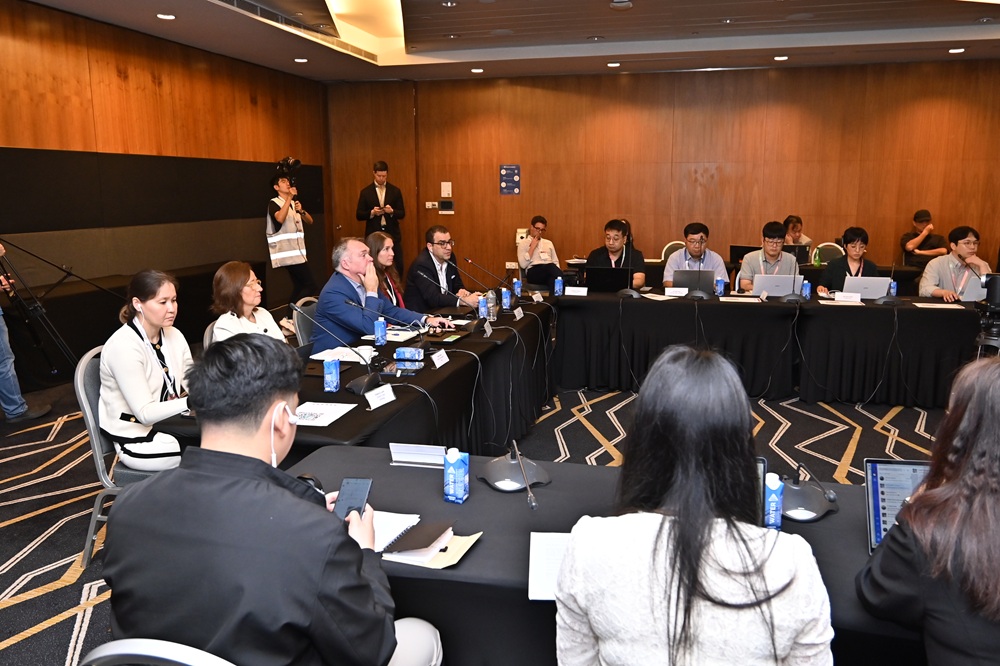
Through this presentation, AstraZeneca clearly affirmed that Asia will play a decisive role in the future global oncology ecosystem.
Since 60–70% of clinical trial participants are recruited from Asia and the majority of research is based on Asian data, evidence from Asia is expected to become even more important in future drug approval and reimbursement discussions.
Osama Rahma, Vice President for AstraZeneca, stated, "We aim to move effective treatments to the earlier stages of the disease, because the earlier we intervene, the closer we can lead more patients to a cure," and added, "60–70% of patients participating in GI cancer clinical trials are recruited from Asia, and approximately 50 active clinical trial sites are operating across the region. We will continue our close collaboration with researchers and clinicians throughout Asia."
VP Varela stated, "The proportion of cancer patients in Asia is continuously increasing. Cancer burden in Asia is expected to grow further due to population growth, aging, industrialization, increased exposure to environmental and occupational carcinogens, and lifestyle changes," and emphasized, "AstraZeneca aims to launch 20 new medicines by 2030, half of which are in oncology. Our vision is to eliminate cancer as a cause of death through therapeutic innovation and achieve health equity by improving access to diagnosis, treatment, and early detection."
-

- 0
댓글 운영방식은
댓글은 실명게재와 익명게재 방식이 있으며, 실명은 이름과 아이디가 노출됩니다. 익명은 필명으로 등록 가능하며, 대댓글은 익명으로 등록 가능합니다.
댓글 노출방식은
댓글 명예자문위원(팜-코니언-필기모양 아이콘)으로 위촉된 데일리팜 회원의 댓글은 ‘게시판형 보기’와 ’펼쳐보기형’ 리스트에서 항상 최상단에 노출됩니다. 새로운 댓글을 올리는 일반회원은 ‘게시판형’과 ‘펼쳐보기형’ 모두 팜코니언 회원이 쓴 댓글의 하단에 실시간 노출됩니다.
댓글의 삭제 기준은
다음의 경우 사전 통보없이 삭제하고 아이디 이용정지 또는 영구 가입제한이 될 수도 있습니다.
-
저작권·인격권 등 타인의 권리를 침해하는 경우
상용 프로그램의 등록과 게재, 배포를 안내하는 게시물
타인 또는 제3자의 저작권 및 기타 권리를 침해한 내용을 담은 게시물
-
근거 없는 비방·명예를 훼손하는 게시물
특정 이용자 및 개인에 대한 인신 공격적인 내용의 글 및 직접적인 욕설이 사용된 경우
특정 지역 및 종교간의 감정대립을 조장하는 내용
사실 확인이 안된 소문을 유포 시키는 경우
욕설과 비어, 속어를 담은 내용
정당법 및 공직선거법, 관계 법령에 저촉되는 경우(선관위 요청 시 즉시 삭제)
특정 지역이나 단체를 비하하는 경우
특정인의 명예를 훼손하여 해당인이 삭제를 요청하는 경우
특정인의 개인정보(주민등록번호, 전화, 상세주소 등)를 무단으로 게시하는 경우
타인의 ID 혹은 닉네임을 도용하는 경우
-
게시판 특성상 제한되는 내용
서비스 주제와 맞지 않는 내용의 글을 게재한 경우
동일 내용의 연속 게재 및 여러 기사에 중복 게재한 경우
부분적으로 변경하여 반복 게재하는 경우도 포함
제목과 관련 없는 내용의 게시물, 제목과 본문이 무관한 경우
돈벌기 및 직·간접 상업적 목적의 내용이 포함된 게시물
게시물 읽기 유도 등을 위해 내용과 무관한 제목을 사용한 경우
-
수사기관 등의 공식적인 요청이 있는 경우
-
기타사항
각 서비스의 필요성에 따라 미리 공지한 경우
기타 법률에 저촉되는 정보 게재를 목적으로 할 경우
기타 원만한 운영을 위해 운영자가 필요하다고 판단되는 내용
-
사실 관계 확인 후 삭제
저작권자로부터 허락받지 않은 내용을 무단 게재, 복제, 배포하는 경우
타인의 초상권을 침해하거나 개인정보를 유출하는 경우
당사에 제공한 이용자의 정보가 허위인 경우 (타인의 ID, 비밀번호 도용 등)
※이상의 내용중 일부 사항에 적용될 경우 이용약관 및 관련 법률에 의해 제재를 받으실 수도 있으며, 민·형사상 처벌을 받을 수도 있습니다.
※위에 명시되지 않은 내용이더라도 불법적인 내용으로 판단되거나 데일리팜 서비스에 바람직하지 않다고 판단되는 경우는 선 조치 이후 본 관리 기준을 수정 공시하겠습니다.
※기타 문의 사항은 데일리팜 운영자에게 연락주십시오. 메일 주소는 dailypharm@dailypharm.com입니다.