- LOGIN
- MemberShip
- 2026-09-16 04:14:05
- Industry asks NHIS to defer February vote on drug price cuts
- by Lee, Jeong-Hwan | translator | 2026-01-06 08:25:10
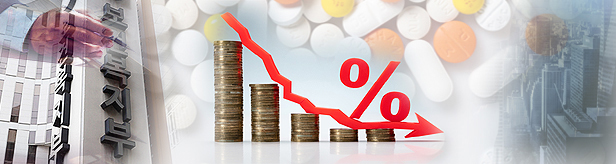
The pharmaceutical industry is voicing concerns that the government's plan to push through a drug pricing system, which includes price cuts for domestically produced generic medicines, for approval by the Health Insurance Policy Deliberation Committee (HIPDC) next month (February), represents overly hasty administration.
Industry consensus is that because the government failed to adequately collect industry opinions when it announced the reform plan late last November—lowering the pricing benchmark for generics from 53.55% of the originator price to the “40% range”—it is necessary to resume consultations in the new year before obtaining the approval of the Health Insurance Policy Deliberation Committee, and then set a new implementation date for the drug pricing system reform plan.
The demand is that postponing or deferring the timing of the generic drug price reduction from July this year to next year or later is necessary to ensure domestic pharmaceutical companies' management predictability and the normal execution of their business plans.
Some members of the National Assembly’s Health and Welfare Committee are also paying close attention to these concerns, raising questions over whether changes will occur in the government’s administrative timetable.
According to domestic pharmaceutical industry sources on the 5th, the Ministry of Health and Welfare (MOHW), the government agency responsible for the drug pricing system reform plan, has not yet initiated a formal process to gather opinions from pharmaceutical companies regarding the reform plan, including generic drug price cuts and pricing incentives.
On November 28 last year, the MOHW reported the reform plan to the HIPDC, publicly announcing its intention to reduce the generic pricing benchmark from 53.55% of the original drug’s price to the 40% range.
At the same time, the ministry disclosed plans to finalize the reform through a HIPDC vote in February this year and to fully implement the revised pricing system and price reductions starting in July.
At the time, domestic pharmaceutical companies reacted strongly, criticizing the ministry for abruptly announcing the plan without providing sufficient prior explanation regarding the specific pricing rate, the scope of generics subject to price cuts, or the targets and methods for pricing incentives.
Pharmaceutical companies are criticizing the Ministry for failing to show any signs of reviewing or partially reflecting the industry's demands even now, over a month after the Health Insurance Review and Assessment Service report and into the new year.
Industry stakeholders complain that the ministry has not retreated even marginally from its unilaterally disclosed proposal, instead adhering strictly to the government plan—creating an environment in which meaningful dialogue between the MOHW and the pharmaceutical industry cannot take place.
In fact, Jeong-Kee Hong, Executive Director of the Korea Pharmaceutical and Bio-Pharma Manufacturers Association (KPBMA), strongly appealed for a deferral of implementation during a National Assembly policy forum on the drug pricing reform held last December, pointing out how the proposed timeline was excessively tight, undermining predictability, and that insufficient analysis had been conducted on the reform’s negative impact on the pharmaceutical industry.
At the time, Executive Director Hong stated, “When pursuing drug price reductions, prior evaluation and analysis of the long-term impact on the pharmaceutical industry must be conducted first, and the effects on employment, production bases, and supply chains must also be examined. Notifying the industry of price reductions just 7 months before the system implementation makes it difficult for pharmaceutical companies to establish business plans and ensures no predictability.”
Despite these industry appeals, the MOHW has shown little indication of establishing a consultation channel until now, prompting growing skepticism within the pharmaceutical sector regarding the plan to finalize the reform at the February HIPDC meeting.
Against a backdrop of mounting uncertainty in the pharmaceutical industry—driven by the COVID-19 pandemic and rising trade barriers imposed by major economies such as the United States—industry voices warn that the MOHW’s focus on cutting health insurance expenditures, rather than regulatory innovation to support domestic new drug R&D, could ultimately threaten national security and pharmaceutical sovereignty.
Accordingly, the pharmaceutical industry is expected to intensify calls for the MOHW to moderate the pace of its drug price cut measures.
Mr. A, a drug pricing manager at a top domestic pharmaceutical company, stated, “We need to critically assess whether cutting generic drug prices to save KRW 1 trillion in health insurance funds is truly the top administrative priority the Ministry should pursue, given Korea's current situation. Throughout the prolonged COVID-19 pandemic, conflicts over medical policies and healthcare gaps, pharmaceutical companies have dedicated their management efforts to new drug R&D amid significant uncertainty. At this point, reducing generic prices to the 40% range is difficult to understand in terms of urgency or appropriateness.”
Mr. B, another executive from a top pharmaceutical company, also stated, “While the Minister of Health and Welfare and the Vice Minister in charge of the pharmaceutical industry have consecutively published opinion pieces in media outlets expressing strong strong commitment to generic drug price reduction and strengthening the sustainability of the national health insurance finances, there has been no visible effort to establish a discussion table for collecting industry feedback on their strong opposition. Rather than repeating and reinforcing the government's drug pricing system reform plan already reported to the HIPDC, what is needed now is a consultative approach that proactively accommodates industry demands and promises the possibility of revising the reform plan.”
As industry opposition persists, the National Assembly is closely monitoring the MOHW’s handling of the pricing reform.
Some members of the Health and Welfare Committee are questioning the rationality of rushing implementation without sufficiently accommodating industry concerns, and there is a growing sense that legislative mediation may be necessary if government–industry tensions escalate.
An official from a ruling-party lawmaker’s office on the committee remarked, “There is concern that the policy of applying differential pricing to generics for domestic pharmaceutical companies that have expanded investment in new drug R&D was not sufficiently reflected in this drug pricing system, and we partially share that view. We are currently communicating with the pharmaceutical industry to determine whether the MOHW’s drug pricing system reform truly sends a policy signal encouraging competition based on innovation rather than rebates.”
The official continued, “It's difficult for the National Assembly to hastily take on the legislative branch's mediation role before conflicts even arise. The domestic pharmaceutical industry has sufficiently voiced its opposition to the policy, and since the consultation process with the government is still ongoing, we need to observe the situation a bit longer. If the government implements the drug price reduction reform plan quickly and the resulting shock to the pharmaceutical industry is significant, then some level of incentive measures should follow to offset it to a certain extent."
-

- 0
댓글 운영방식은
댓글은 실명게재와 익명게재 방식이 있으며, 실명은 이름과 아이디가 노출됩니다. 익명은 필명으로 등록 가능하며, 대댓글은 익명으로 등록 가능합니다.
댓글 노출방식은
댓글 명예자문위원(팜-코니언-필기모양 아이콘)으로 위촉된 데일리팜 회원의 댓글은 ‘게시판형 보기’와 ’펼쳐보기형’ 리스트에서 항상 최상단에 노출됩니다. 새로운 댓글을 올리는 일반회원은 ‘게시판형’과 ‘펼쳐보기형’ 모두 팜코니언 회원이 쓴 댓글의 하단에 실시간 노출됩니다.
댓글의 삭제 기준은
다음의 경우 사전 통보없이 삭제하고 아이디 이용정지 또는 영구 가입제한이 될 수도 있습니다.
-
저작권·인격권 등 타인의 권리를 침해하는 경우
상용 프로그램의 등록과 게재, 배포를 안내하는 게시물
타인 또는 제3자의 저작권 및 기타 권리를 침해한 내용을 담은 게시물
-
근거 없는 비방·명예를 훼손하는 게시물
특정 이용자 및 개인에 대한 인신 공격적인 내용의 글 및 직접적인 욕설이 사용된 경우
특정 지역 및 종교간의 감정대립을 조장하는 내용
사실 확인이 안된 소문을 유포 시키는 경우
욕설과 비어, 속어를 담은 내용
정당법 및 공직선거법, 관계 법령에 저촉되는 경우(선관위 요청 시 즉시 삭제)
특정 지역이나 단체를 비하하는 경우
특정인의 명예를 훼손하여 해당인이 삭제를 요청하는 경우
특정인의 개인정보(주민등록번호, 전화, 상세주소 등)를 무단으로 게시하는 경우
타인의 ID 혹은 닉네임을 도용하는 경우
-
게시판 특성상 제한되는 내용
서비스 주제와 맞지 않는 내용의 글을 게재한 경우
동일 내용의 연속 게재 및 여러 기사에 중복 게재한 경우
부분적으로 변경하여 반복 게재하는 경우도 포함
제목과 관련 없는 내용의 게시물, 제목과 본문이 무관한 경우
돈벌기 및 직·간접 상업적 목적의 내용이 포함된 게시물
게시물 읽기 유도 등을 위해 내용과 무관한 제목을 사용한 경우
-
수사기관 등의 공식적인 요청이 있는 경우
-
기타사항
각 서비스의 필요성에 따라 미리 공지한 경우
기타 법률에 저촉되는 정보 게재를 목적으로 할 경우
기타 원만한 운영을 위해 운영자가 필요하다고 판단되는 내용
-
사실 관계 확인 후 삭제
저작권자로부터 허락받지 않은 내용을 무단 게재, 복제, 배포하는 경우
타인의 초상권을 침해하거나 개인정보를 유출하는 경우
당사에 제공한 이용자의 정보가 허위인 경우 (타인의 ID, 비밀번호 도용 등)
※이상의 내용중 일부 사항에 적용될 경우 이용약관 및 관련 법률에 의해 제재를 받으실 수도 있으며, 민·형사상 처벌을 받을 수도 있습니다.
※위에 명시되지 않은 내용이더라도 불법적인 내용으로 판단되거나 데일리팜 서비스에 바람직하지 않다고 판단되는 경우는 선 조치 이후 본 관리 기준을 수정 공시하겠습니다.
※기타 문의 사항은 데일리팜 운영자에게 연락주십시오. 메일 주소는 dailypharm@dailypharm.com입니다.