- LOGIN
- MemberShip
- 2026-09-14 12:19:13
- Rare disease drugs to be reimbursed within 100 days
- by Lee, Jeong-Hwan | translator | 2026-01-06 08:25:15
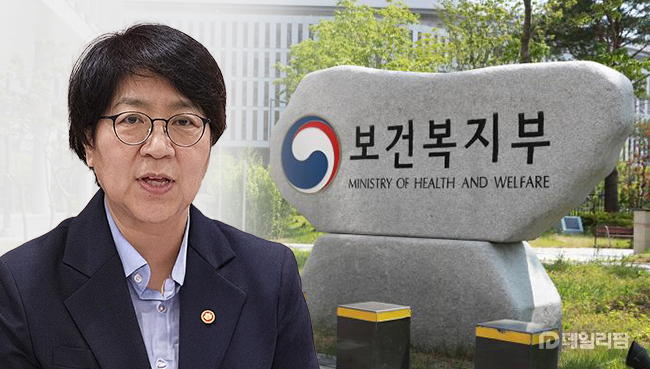
Starting in the new year, the government will shorten the timeline for National Health Insurance (NHI) reimbursement listing of rare disease treatments from the current 240 days to 100 days, strengthening patient access to medicines.
To address frequent shortages of essential medicines, the government proposed ‘activating made-to-order manufacturing’ by establishing a public production and distribution network through collaboration between the government, pharmaceutical/distribution/medical associations, and pharmaceutical companies.
Under this model, the government requests production of frequently out-of-stock drugs from manufacturers and purchases the entire output for supply.
By expanding the emergency import of treatments and contract manufacturing, the government aims to create an environment where patients can obtain treatments without difficulty, even if private supply ceases due to low demand.
In addition, patient co-insurance payments under the NHI special reimbursement calculation scheme for rare and severe intractable diseases will be further reduced.
On the 5th, the Ministry of Health and Welfare (MOHW), the Ministry of Food and Drug Safety (MFDS), and other relevant agencies jointly announced measures to strengthen support for rare and severe intractable diseases.
Rare Drugs to be listed within 100 days… approval-evaluation-pricing parallel review to continue
From the new year, the government will significantly reduce the time required for NHI listing of rare disease treatments from within 240 days to within 100 days.
Furthermore, the government will continue its pilot program for ‘parallel approval-evaluation-price negotiation’ for rare disease drugs, where it is difficult to establish robust efficacy and safety evidence due to extremely small patient populations. This program reduces the time required for drug price approval and listing from the current 330 days to 150 days, a reduction of 180 days.
The first pilot program included Qarziba and Bylvay Cap, while the second pilot program is currently underway with three selected drugs.
Prices for rare disease treatments will be set at a certain level relative to the average price in reference countries.
Expansion of emergency import and made-to-order manufacturing for rare essential and shortage drugs
Furthermore, to ensure access to treatments even if pharmaceutical companies halt manufacturing or imports due to low demand, the government is expanding emergency imports and custom manufacturing.
First, medications for self-treatment that patients previously had to purchase directly overseas will be converted into emergency import items for at least 10 products starting this year to stabilize supply.
Emergency import refers to a system in which the government directly procures drugs from overseas and supplies them when the domestic supply is disrupted.
While an emergency import system already exists through the Korea Orphan and Essential Drug Center, ultra-low-demand products have often been excluded. Expanding the scope of emergency imports aims to address these limitations.
If an emergency import drug was previously eligible for reimbursement, reimbursement price applications will be prioritized, and existing emergency import drugs will also be allowed to apply for reimbursement.
In particular, to ensure a stable domestic supply of essential medicines at risk of discontinuation, the government will activate made-to-order manufacturing through a public production and distribution network involving the government, pharmaceutical companies, distributors, medical associations, and industry groups.
Last year, KRW 810 million was allocated to manufacture 7 drugs through made-to-order manufacturing. This year, an additional KRW 500 million will be allocated to expand production to two more drugs.
Under this system, the government shares information on drugs scheduled for supply discontinuation with the pharmaceutical industry. The Korea Orphan and Essential Drug Center analyzes prescription and supply history, demand, and regulatory issues, after which pharmaceutical companies decide whether to proceed based on production intent and required budget. Public production projects are then implemented through product transfer, new approvals, or manufacturing contracts.
The government plan is to expand from the current 7 items to 17 items by 2030, adding 2 items annually starting this year.
This would mean 25% of the 40 essential drugs requested for emergency import by the medical field would be converted to public production.
When expanding emergency import and made-to-order-manufactured items, priority will be given to treatments for rare diseases.
Reduced patient co-insurance costs through enhanced special reimbursement support
To reduce the financial burden of high-cost care for patients with severe diseases, the government will strengthen special reimbursement schemes that lower NHI co-insurance payment rates.
For high medical expenses related to rare and severe intractable diseases, the patient's co-insurance payment rate will be further reduced from the current 10%.
Taking into account factors such as the need for continuous treatment and management and the burden of high medical costs, a reduction plan will be prepared in the first half of this year, followed by approval by the Health Insurance Policy Deliberation Committee, with implementation scheduled for the second half of the year.
Furthermore, starting this January, 70 additional diseases, including congenital functional short bowel syndrome, will be added to the list of rare diseases eligible for special billing exceptions, with continuous expansion planned.
The re-registration process for rare and intractable diseases will also be reorganized to be more patient-centerd. Until now, the government required separate test results for 312 specific rare and intractable diseases upon re-registration.
Reflecting field feedback that additional testing is unnecessary given the incurable nature of these conditions, unnecessary testing requirements will be eliminated during re-registration.
Support for low-income patients through the rare disease medical expense assistance program will also be expanded.
The income and asset criteria separately applied to households with dependent family members will be phased out starting in 2027, expanding support for low-income individuals.
Customized medical nutrition support based on disease-specific needs will continue to expand. The government currently provides special formula milk and low-protein instant rice to rare disease patients requiring dietary management. Since September last year, it has additionally provided special corn starch for patients with glycogen storage disease.
This year, based on a survey of the current status of special diet usage and additional demand, the government plans to review expanding the range of supported items and support the development of new products.
-

- 0
댓글 운영방식은
댓글은 실명게재와 익명게재 방식이 있으며, 실명은 이름과 아이디가 노출됩니다. 익명은 필명으로 등록 가능하며, 대댓글은 익명으로 등록 가능합니다.
댓글 노출방식은
댓글 명예자문위원(팜-코니언-필기모양 아이콘)으로 위촉된 데일리팜 회원의 댓글은 ‘게시판형 보기’와 ’펼쳐보기형’ 리스트에서 항상 최상단에 노출됩니다. 새로운 댓글을 올리는 일반회원은 ‘게시판형’과 ‘펼쳐보기형’ 모두 팜코니언 회원이 쓴 댓글의 하단에 실시간 노출됩니다.
댓글의 삭제 기준은
다음의 경우 사전 통보없이 삭제하고 아이디 이용정지 또는 영구 가입제한이 될 수도 있습니다.
-
저작권·인격권 등 타인의 권리를 침해하는 경우
상용 프로그램의 등록과 게재, 배포를 안내하는 게시물
타인 또는 제3자의 저작권 및 기타 권리를 침해한 내용을 담은 게시물
-
근거 없는 비방·명예를 훼손하는 게시물
특정 이용자 및 개인에 대한 인신 공격적인 내용의 글 및 직접적인 욕설이 사용된 경우
특정 지역 및 종교간의 감정대립을 조장하는 내용
사실 확인이 안된 소문을 유포 시키는 경우
욕설과 비어, 속어를 담은 내용
정당법 및 공직선거법, 관계 법령에 저촉되는 경우(선관위 요청 시 즉시 삭제)
특정 지역이나 단체를 비하하는 경우
특정인의 명예를 훼손하여 해당인이 삭제를 요청하는 경우
특정인의 개인정보(주민등록번호, 전화, 상세주소 등)를 무단으로 게시하는 경우
타인의 ID 혹은 닉네임을 도용하는 경우
-
게시판 특성상 제한되는 내용
서비스 주제와 맞지 않는 내용의 글을 게재한 경우
동일 내용의 연속 게재 및 여러 기사에 중복 게재한 경우
부분적으로 변경하여 반복 게재하는 경우도 포함
제목과 관련 없는 내용의 게시물, 제목과 본문이 무관한 경우
돈벌기 및 직·간접 상업적 목적의 내용이 포함된 게시물
게시물 읽기 유도 등을 위해 내용과 무관한 제목을 사용한 경우
-
수사기관 등의 공식적인 요청이 있는 경우
-
기타사항
각 서비스의 필요성에 따라 미리 공지한 경우
기타 법률에 저촉되는 정보 게재를 목적으로 할 경우
기타 원만한 운영을 위해 운영자가 필요하다고 판단되는 내용
-
사실 관계 확인 후 삭제
저작권자로부터 허락받지 않은 내용을 무단 게재, 복제, 배포하는 경우
타인의 초상권을 침해하거나 개인정보를 유출하는 경우
당사에 제공한 이용자의 정보가 허위인 경우 (타인의 ID, 비밀번호 도용 등)
※이상의 내용중 일부 사항에 적용될 경우 이용약관 및 관련 법률에 의해 제재를 받으실 수도 있으며, 민·형사상 처벌을 받을 수도 있습니다.
※위에 명시되지 않은 내용이더라도 불법적인 내용으로 판단되거나 데일리팜 서비스에 바람직하지 않다고 판단되는 경우는 선 조치 이후 본 관리 기준을 수정 공시하겠습니다.
※기타 문의 사항은 데일리팜 운영자에게 연락주십시오. 메일 주소는 dailypharm@dailypharm.com입니다.