- LOGIN
- MemberShip
- 2026-09-14 11:36:33
- "Regulatory hurdle eliminated to simply refund-type RSA"
- by Lee, Jeong-Hwan | translator Hong, Ji Yeon | 2025-03-28 06:37:28
Even drugs that have been subject to fines or other administrative sanctions can still have their prices increased through negotiations with the National Health Insurance Service (NHIS) if supply shortages disrupt patient care.
For example, if a pharmaceutical company that produces plasma fractionation products can prove production cost increases based on additional research into pricing models for raw plasma and related inputs, the government covers not only past losses but also future cost escalations, a policy to raise prices accordingly.
This measure is regarded as a notable case of eliminating regulatory hurdle.
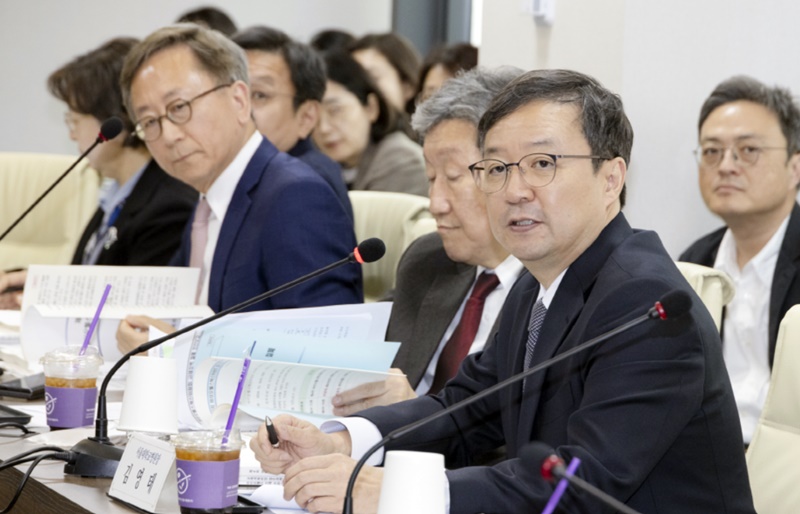
On March 25, the government convened the 6th Bio-Health Innovation Commission at the ARPA-H Promotion Team conference room on the 16th floor of City Tower in Jung-gu, Seoul, chaired by Director Kim Young-tae, Vice Chairman from the private sector and Director of Seoul National University Hospital, to discuss improvements to so-called "killer regulations." The Ministry of Health and Welfare (MOHW) suggested several regulatory improvement initiatives, including enhancements to the repeated re-evaluation process for risk-sharing agreements, revisions to the evaluation criteria for drug price caps, and establishment of a cost-calculation methodology for plasma fractionation products.
Under revised guidelines, drugs subject to a basic refund-type RSA contract that has been used for more than 10 years can exempted from the utility and cost-effectiveness assessment during the 'third-contract termination evaluation.' The MOHW believes these changes will help resolve issues such as the devaluation of new drugs due to repeated re-evaluation under risk-sharing agreements and the consequent delays in the domestic introduction of new therapies.
As of January of this year, the MOHW improved the evaluation criteria so that even drugs facing administrative sanctions, such as fines, can be considered for ceiling price adjustments to enhance patient treatment access and ensure pharmaceutical access.
In cases where drug supply shortages may disrupt patient care, it has become possible to negotiate with the NHIS to raise drug prices.
Furthermore, the government implemented the regulatory revision to improve plasma fractionation products' stable supply and cost-effectiveness.
After a decision by the Health Insurance Policy Deliberation Committee, a change has been made to the price ceiling for plasma fractionation products that are already listed.
If a manufacturer can substantiate, based on additional research into pricing models for raw plasma and similar inputs, that cost-increasing factors exist, then prices may be raised not only to cover past losses but also to account for future cost escalations.
The MOHW has also relaxed the criteria for accepting efficacy evidence in high-risk advanced regenerative medicine clinical trials.
In order to alleviate the burden associated with such high-risk studies of advanced regenerative medicine, the 'Guidelines for Reviewing and Preparing Advanced Regenerative Medicine Clinical Trial Plans' have been revised to establish exception criteria for safety and efficacy evidence.
Through these measures, institutions conducting regenerative medicine trials will be able to choose appropriate testing methods that can adequately demonstrate safety and efficacy, even if there are variations in administration routes or methods, provided that additional supporting data justifying changes in clinical design are submitted in line with the specific characteristics of each study.
Monitoring implementation of Bio-Health Training Strategies An assessment of the progress of 81 bio-health training projects, managed by nine ministries in 2024, revealed that a total of 44,800 bio-health professionals have been trained.
This figure far exceeds the target of 22,100 reported to the 2nd Bio-Health Innovation Commission last year.
The government analyzed that this substantial increase is due to growing interest in the bio-health sector, which has led to the establishment of new courses, increased demand for education, and an expansion of educational institutions.
In detail, in one of the four major areas of bio-health human resource development, such as "industry-based school education," enhanced practical training and strengthened industry-academia linkages have produced approximately 16,400 professionals.
In addition, around 20,000 individuals have been trained in the area of production and regulatory science, including workforce development (through institutions like K-NIBRT), regulatory science, and continuing education for current employees.
Furthermore, to support the NEXT semiconductor leap through core research human resource development, via initiatives in AI-driven drug development, specialized graduate schools, and programs for physician-scientists, about 8,000 professionals have been trained, and projects aimed at stimulating local employment and linking job creation with start-up support have also been successfully advanced.
This year, in line with the plans of the various ministries, 10 of the original 81 projects that have either been completed or will not be pursued this year will be excluded, while 7 new projects will be initiated.
In total, 26,900 professionals are planned to be trained across 78 projects.
Additionally, the government will focus on expanding interdisciplinary education, practical talent development programs, and initiatives for training professionals in new technology sectors within school curriculum.
Furthermore, the Bio-Health Innovation Commission has reviewed research findings reflecting input from industry and academic experts on the persistent mismatch between the supply and demand of bio-health professionals, and is now discussing future strategies based on these insights.
The research identified the primary factors contributing to the human resource mismatch as a lack of industry input in university curriculum, a skewed focus in human resource development that leaves a gap in understanding specialized fields such as new technologies, and a shortage of expert personnel (professors and instructors).
In response, the Commission agreed on the importance of cultivating professionals tailored to corporate needs, training professionals to meet future demands in new technologies, and training globally competitive expert instructors.
Going forward, the government plans to publish a '2025 Bio-Health Talent Development Business Guide' in May to boost awareness and participation among job seekers, schools, and educational institutions regarding these talent development initiatives.
Going forward, the government plans to publish a '2025 Bio-Health Talent Development Business Guide' in May to boost awareness and participation among job seekers, schools, and educational institutions regarding these talent development initiatives.
Director Kim stated, "At today’s meeting, we were able to discuss topics on a government-wide support plan to maximize industry capabilities by reviewing the implementation status of bio-health human resource development projects and improvements in regulatory issues," adding, "We will continue to monitor these issues regularly at the level of the Bio-Health Innovation Commission and strive to ensure that today’s discussions are reflected in government policies, aimed to achieve clear outcomes."
-

- 0
댓글 운영방식은
댓글은 실명게재와 익명게재 방식이 있으며, 실명은 이름과 아이디가 노출됩니다. 익명은 필명으로 등록 가능하며, 대댓글은 익명으로 등록 가능합니다.
댓글 노출방식은
댓글 명예자문위원(팜-코니언-필기모양 아이콘)으로 위촉된 데일리팜 회원의 댓글은 ‘게시판형 보기’와 ’펼쳐보기형’ 리스트에서 항상 최상단에 노출됩니다. 새로운 댓글을 올리는 일반회원은 ‘게시판형’과 ‘펼쳐보기형’ 모두 팜코니언 회원이 쓴 댓글의 하단에 실시간 노출됩니다.
댓글의 삭제 기준은
다음의 경우 사전 통보없이 삭제하고 아이디 이용정지 또는 영구 가입제한이 될 수도 있습니다.
-
저작권·인격권 등 타인의 권리를 침해하는 경우
상용 프로그램의 등록과 게재, 배포를 안내하는 게시물
타인 또는 제3자의 저작권 및 기타 권리를 침해한 내용을 담은 게시물
-
근거 없는 비방·명예를 훼손하는 게시물
특정 이용자 및 개인에 대한 인신 공격적인 내용의 글 및 직접적인 욕설이 사용된 경우
특정 지역 및 종교간의 감정대립을 조장하는 내용
사실 확인이 안된 소문을 유포 시키는 경우
욕설과 비어, 속어를 담은 내용
정당법 및 공직선거법, 관계 법령에 저촉되는 경우(선관위 요청 시 즉시 삭제)
특정 지역이나 단체를 비하하는 경우
특정인의 명예를 훼손하여 해당인이 삭제를 요청하는 경우
특정인의 개인정보(주민등록번호, 전화, 상세주소 등)를 무단으로 게시하는 경우
타인의 ID 혹은 닉네임을 도용하는 경우
-
게시판 특성상 제한되는 내용
서비스 주제와 맞지 않는 내용의 글을 게재한 경우
동일 내용의 연속 게재 및 여러 기사에 중복 게재한 경우
부분적으로 변경하여 반복 게재하는 경우도 포함
제목과 관련 없는 내용의 게시물, 제목과 본문이 무관한 경우
돈벌기 및 직·간접 상업적 목적의 내용이 포함된 게시물
게시물 읽기 유도 등을 위해 내용과 무관한 제목을 사용한 경우
-
수사기관 등의 공식적인 요청이 있는 경우
-
기타사항
각 서비스의 필요성에 따라 미리 공지한 경우
기타 법률에 저촉되는 정보 게재를 목적으로 할 경우
기타 원만한 운영을 위해 운영자가 필요하다고 판단되는 내용
-
사실 관계 확인 후 삭제
저작권자로부터 허락받지 않은 내용을 무단 게재, 복제, 배포하는 경우
타인의 초상권을 침해하거나 개인정보를 유출하는 경우
당사에 제공한 이용자의 정보가 허위인 경우 (타인의 ID, 비밀번호 도용 등)
※이상의 내용중 일부 사항에 적용될 경우 이용약관 및 관련 법률에 의해 제재를 받으실 수도 있으며, 민·형사상 처벌을 받을 수도 있습니다.
※위에 명시되지 않은 내용이더라도 불법적인 내용으로 판단되거나 데일리팜 서비스에 바람직하지 않다고 판단되는 경우는 선 조치 이후 본 관리 기준을 수정 공시하겠습니다.
※기타 문의 사항은 데일리팜 운영자에게 연락주십시오. 메일 주소는 dailypharm@dailypharm.com입니다.