- LOGIN
- MemberShip
- 2026-07-31 05:08:11
- Access to later-line therapy for kidney cancer remain unchanged
- by Son, Hyung Min | translator Alice Kang | 2026-05-28 10:27:43
Although treatment for advanced renal cell carcinoma (kidney cancer) is rapidly shifting toward immuno-oncology-based combination therapies, Korea’s treatment environment still lags behind global guidelines.
In particular, even after immunotherapy combinations became established as first-line standard treatments, access to second-line therapies following disease progression remains limited. As a result, advances in treatment outcomes are not being fully translated into continuity of care for actual patients.
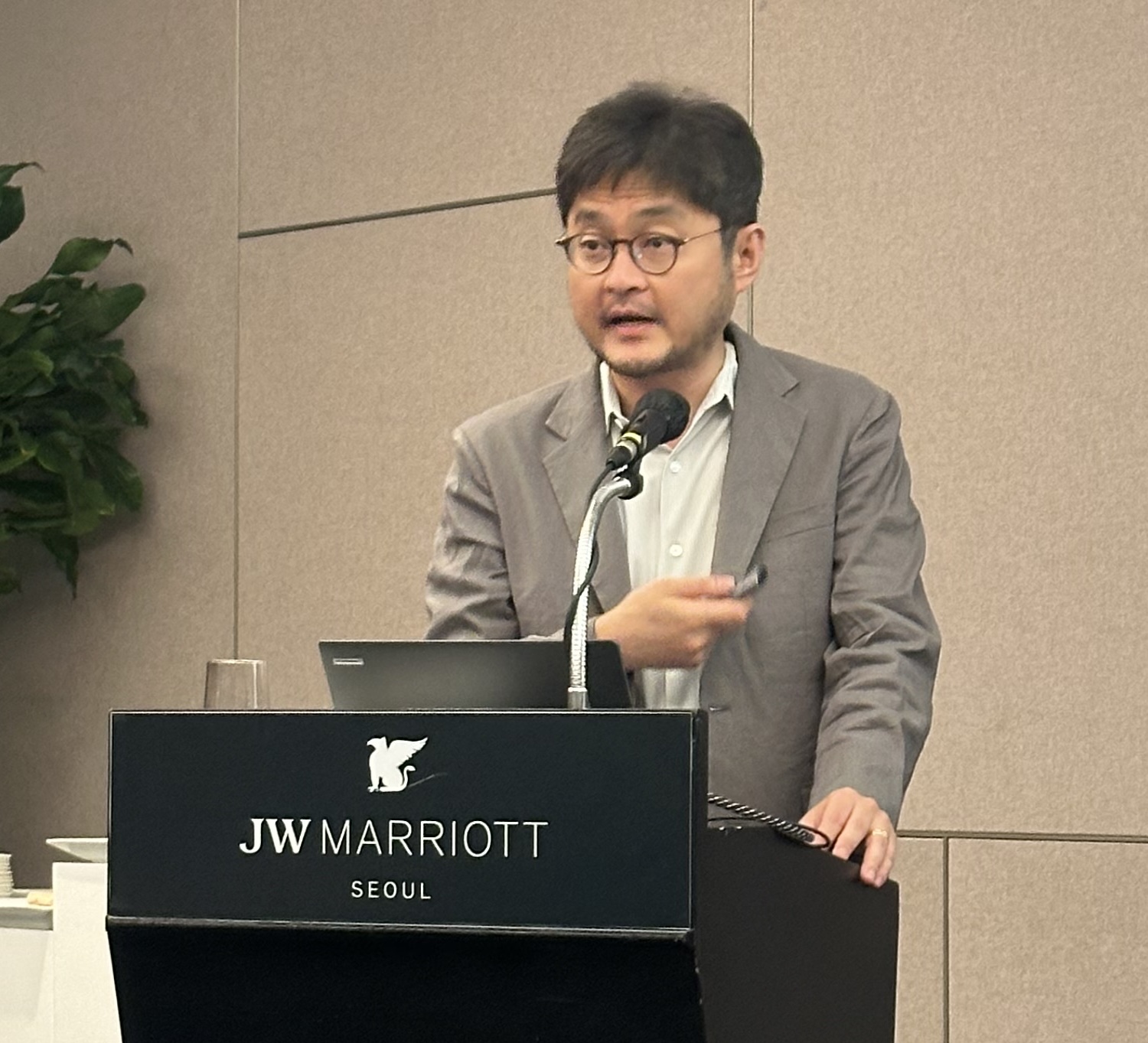
On the 26th, Ipsen Korea held a press conference at the JW Marriott Hotel in Seocho-gu, Seoul, in celebration of World Kidney Cancer Day in June, highlighting the current treatment environment and patient access challenges in renal cell carcinoma. At the event, quality-of-life issues faced by kidney cancer patients and their families, along with the limitations of the domestic second-line treatment environment following immunotherapy, were presented as key topics.
In Ho Kim, a professor of Medical Oncology at Seoul St. Mary’s Hospital, explained, “Renal cell carcinoma is one of the cancer types that has seen the most rapid advancements in treatment over the past decade. Thanks to advances in immunotherapy and targeted therapy, treatment environments now allow not only long-term disease control but also long-term survival in some patients.”
Renal cell carcinoma is the most common type of kidney cancer, accounting for approximately 90% of all cases. While it often presents with no specific symptoms in the early stages, as the disease progresses, symptoms such as hematuria, flank pain, and fatigue may appear. In advanced stages, a cure through surgery alone is difficult, making drug therapy the cornerstone of treatment.
Shift toward immunotherapy combination strategies…changes in first-line treatment strategies
Current treatment strategies for advanced renal cell carcinoma are selected based on patient risk categories. In clinical practice, physicians use the International Metastatic Renal Cell Carcinoma Database Consortium (IMDC) risk classification to divide patients into favorable-, intermediate-, and poor-risk groups. In intermediate- and poor-risk groups, immunotherapy-based combinations have effectively become the global standard.
Professor Kim stated, “In the past, treatment focused on targeted therapy monotherapy, but immunotherapy combinations have changed the treatment paradigm. Particularly in the intermediate and poor-risk groups, the combination of Opdivo (nivolumab) and Yervoy (ipilimumab) has demonstrated survival benefits and established itself as a major first-line treatment strategy.”
Currently, the first-line immunotherapy combinations approved in Korea for renal cell carcinoma include: ▲Opdivo + Yervoy ▲Opdivo + Cabometyx (cabozantinib) ▲Keytruda (pembrolizumab) + Lenvima (lenvatinib) ▲Keytruda + Inlyta (axitinib). Combinations involving immunotherapy plus immunotherapy or immunotherapy plus targeted therapy have improved survival rates and disease control compared to conventional targeted therapy monotherapy approaches, driving major changes in renal cell carcinoma treatment strategies.
However, Korea’s reimbursement environment is considered insufficient to keep pace with treatment advances. Currently, the only reimbursed immunotherapy combination is Opdivo + Yervoy for IMDC intermediate- and poor-risk patients. Insurance coverage is also limited to a maximum of 2 years. In contrast, immunotherapy plus targeted therapy combinations widely recommended in global treatment guidelines are not reimbursed.
Limitations in access to follow-up therapy highlighted
The problem lies in the period following first-line immunotherapy. While many patients in Korea currently use the Opdivo plus Yervoy combination therapy, which is covered by insurance, the options available for subsequent treatment after disease progression are limited.
In Korea, reimbursable drugs for second-line renal cell carcinoma treatment are limited to certain VEGF-targeted anticancer agents, such as Sutent (sunitinib), Votrient (pazopanib), and Inlyta. Meanwhile, Cabometyx, which is recommended as a key subsequent therapy option in international guidelines, is not only non-reimbursed but also limited in actual use.
International guidelines from the NCCN, ESMO, and EAU recommend cabozantinib as a major follow-up treatment option after first-line immunotherapy-based therapy. However, Korean approval is limited to ‘advanced renal cell carcinoma patients previously treated with VEGF-targeted therapy.’ As a result, patients who received immunotherapy combinations in the first line face structural barriers to using Cabometyx under the current label.
Cabometyx demonstrated improvements over everolimus in progression-free survival (PFS), overall survival (OS), and objective response rate (ORR) in the METEOR study. Median PFS reached 7.4 months, OS was 21.4 months, and ORR was 24%, confirming clinical efficacy across all three major endpoints in second-line renal cell carcinoma treatment.
Kim stated, “While patients in Korea frequently use the Opdivo plus Yervoy combination therapy as first-line treatment, there remains a structural gap that makes it difficult to naturally transition to evidence-based follow-up treatment afterward.”
He further emphasized, “To translate the treatment outcomes of renal cell carcinoma into real-world patient care, we need to discuss improving access not only to first-line treatment but also to subsequent lines of therapy to ensure continuity in treatment.”
-

- 0
댓글 운영방식은
댓글은 실명게재와 익명게재 방식이 있으며, 실명은 이름과 아이디가 노출됩니다. 익명은 필명으로 등록 가능하며, 대댓글은 익명으로 등록 가능합니다.
댓글 노출방식은
댓글 명예자문위원(팜-코니언-필기모양 아이콘)으로 위촉된 데일리팜 회원의 댓글은 ‘게시판형 보기’와 ’펼쳐보기형’ 리스트에서 항상 최상단에 노출됩니다. 새로운 댓글을 올리는 일반회원은 ‘게시판형’과 ‘펼쳐보기형’ 모두 팜코니언 회원이 쓴 댓글의 하단에 실시간 노출됩니다.
댓글의 삭제 기준은
다음의 경우 사전 통보없이 삭제하고 아이디 이용정지 또는 영구 가입제한이 될 수도 있습니다.
-
저작권·인격권 등 타인의 권리를 침해하는 경우
상용 프로그램의 등록과 게재, 배포를 안내하는 게시물
타인 또는 제3자의 저작권 및 기타 권리를 침해한 내용을 담은 게시물
-
근거 없는 비방·명예를 훼손하는 게시물
특정 이용자 및 개인에 대한 인신 공격적인 내용의 글 및 직접적인 욕설이 사용된 경우
특정 지역 및 종교간의 감정대립을 조장하는 내용
사실 확인이 안된 소문을 유포 시키는 경우
욕설과 비어, 속어를 담은 내용
정당법 및 공직선거법, 관계 법령에 저촉되는 경우(선관위 요청 시 즉시 삭제)
특정 지역이나 단체를 비하하는 경우
특정인의 명예를 훼손하여 해당인이 삭제를 요청하는 경우
특정인의 개인정보(주민등록번호, 전화, 상세주소 등)를 무단으로 게시하는 경우
타인의 ID 혹은 닉네임을 도용하는 경우
-
게시판 특성상 제한되는 내용
서비스 주제와 맞지 않는 내용의 글을 게재한 경우
동일 내용의 연속 게재 및 여러 기사에 중복 게재한 경우
부분적으로 변경하여 반복 게재하는 경우도 포함
제목과 관련 없는 내용의 게시물, 제목과 본문이 무관한 경우
돈벌기 및 직·간접 상업적 목적의 내용이 포함된 게시물
게시물 읽기 유도 등을 위해 내용과 무관한 제목을 사용한 경우
-
수사기관 등의 공식적인 요청이 있는 경우
-
기타사항
각 서비스의 필요성에 따라 미리 공지한 경우
기타 법률에 저촉되는 정보 게재를 목적으로 할 경우
기타 원만한 운영을 위해 운영자가 필요하다고 판단되는 내용
-
사실 관계 확인 후 삭제
저작권자로부터 허락받지 않은 내용을 무단 게재, 복제, 배포하는 경우
타인의 초상권을 침해하거나 개인정보를 유출하는 경우
당사에 제공한 이용자의 정보가 허위인 경우 (타인의 ID, 비밀번호 도용 등)
※이상의 내용중 일부 사항에 적용될 경우 이용약관 및 관련 법률에 의해 제재를 받으실 수도 있으며, 민·형사상 처벌을 받을 수도 있습니다.
※위에 명시되지 않은 내용이더라도 불법적인 내용으로 판단되거나 데일리팜 서비스에 바람직하지 않다고 판단되는 경우는 선 조치 이후 본 관리 기준을 수정 공시하겠습니다.
※기타 문의 사항은 데일리팜 운영자에게 연락주십시오. 메일 주소는 dailypharm@dailypharm.com입니다.
- “Drug pricing intervention contributes to the crisis in essential healthcare and shortage of drugs”
- Reporter's view | Lee, Jeong-Hwan