- LOGIN
- MemberShip
- 2026-09-13 10:24:49
- New drugs for ovarian cancer obtain reimbursement
- by Son, Hyung Min | translator Hong, Ji Yeon | 2026-07-16 08:52:14
The treatment landscape for ovarian cancer is rapidly changing, including early maintenance therapy to the post-recurrence, platinum-resistant stage.
Given that expanded reimbursement for PARP inhibitors is possible, antibody-drug conjugates (ADCs) and immunotherapies have demonstrated survival benefit in platinum-resistant ovarian cancer, further shaping patient-specific, biomarker-driven treatment strategies.
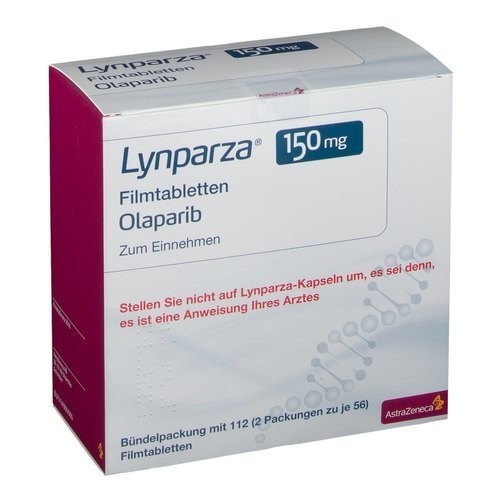
According to industry sources on July 16, the Pharmaceutical Reimbursement Evaluation Committee (PREC) of the Health Insurance Review and Assessment Service (HIRA) recently recognized the reimbursement appropriateness of 'Lynparza (olaparib)' as a first-line maintenance therapy for homologous recombination deficiency (HRD)-positive advanced ovarian cancer.
Specifically, Lynparza passed the PREC review as a maintenance therapy in combination with bevacizumab for adult patients with HRD-positive, high-grade epithelial ovarian, fallopian tube, or primary peritoneal cancer who have responded to first-line platinum-based chemotherapy combined with bevacizumab.
This decision opens the possibility of expanding Lynparza's reimbursement, previously centered on BRCA-mutated patients, to include HRD-positive patients. Furthermore, in platinum-resistant ovarian cancer, the folate receptor alpha (FRα)-targeted ADC 'Elahere (mirvetuximab soravtansine)' is undergoing the reimbursement process. At the same time, the immunotherapy 'Keytruda (pembrolizumab)' recently added a new indication, expanding treatment options across the entire spectrum of ovarian cancer.
A significant majority of ovarian cancer cases are diagnosed at an advanced stage. Even if patients respond to surgery and platinum-based chemotherapy, approximately 70% to 80% experience recurrence. A key characteristic of the disease is that as recurrences repeat, resistance to platinum-based chemotherapies develops, making treatment increasingly difficult.
This PREC decision is significant in that it opens the possibility of broadening the patient population eligible for early maintenance therapy in ovarian cancer.
Recently, the importance of early maintenance therapy, considering not only progression-free survival (PFS) to delay recurrence but also overall survival (OS), has been increasing in ovarian cancer treatment.
Lynparza demonstrated long-term survival in BRCA-mutant patients in the SOLO-1 study and in HRD-positive patients in the PAOLA-1 study. Notably, the long-term follow-up results of PAOLA-1 supported the clinical value of early maintenance therapy, showing that the combination of Lynparza and bevacizumab reduced the risk of death by 38% in HRD-positive patients.
Another PARP inhibitor, 'Zejula (niraparib)', is also reimbursed under national health insurance for first-line ovarian cancer maintenance therapy. The industry expects therapeutic strategies for selecting maintenance therapies to be further strengthened by comprehensively considering BRCA mutations, HRD status, and prior therapies.
Platinum-resistant ovarian cancer, The era of ADC therapy
The treatment landscape for platinum-resistant ovarian cancer is also changing.
Previously, non-platinum chemotherapies such as pegylated liposomal doxorubicin, topotecan, and paclitaxel were primarily used.
However, their treatment response rates and survival benefits were limited, making this a therapeutic area with highly unmet medical needs, with some studies reporting objective response rates (ORRs) in the single digits.
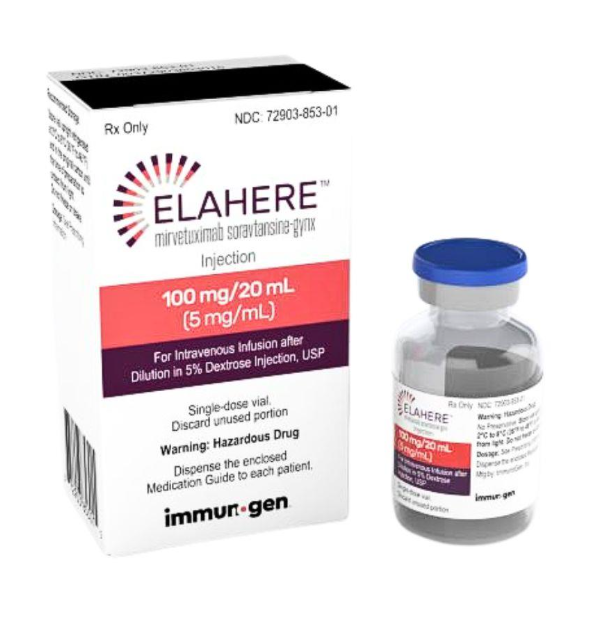
In this situation, Elahere, which secured domestic approval last December, presented a new treatment option as the first folate receptor alpha (FRα)-targeted ADC for ovarian cancer. Its national health insurance reimbursement process also began in earnest after passing the Cancer Disease Review Committee (CDRC) this past May.
Elahere operates by selectively binding to FRα on the surface of cancer cells and then releasing a cytotoxic payload inside the cell. Approximately 35% to 40% of ovarian cancer patients are known to be FRα-positive, meeting the treatment criteria, and its expression is reported to remain relatively consistent from the time of diagnosis through the recurrence stage.
In the MIRASOL study, Elahere extended the median OS to 16.46 months compared with conventional chemotherapy, approximately 4 months longer than the control group (12.75 months).
It also achieved an ORR of 42.3%, demonstrating a rare, statistically significant improvement in OS in the platinum-resistant ovarian cancer setting.
Keytruda joins the race…expanding the role of immunotherapy
Immunotherapy has also entered the treatment arena for platinum-resistant ovarian cancer.
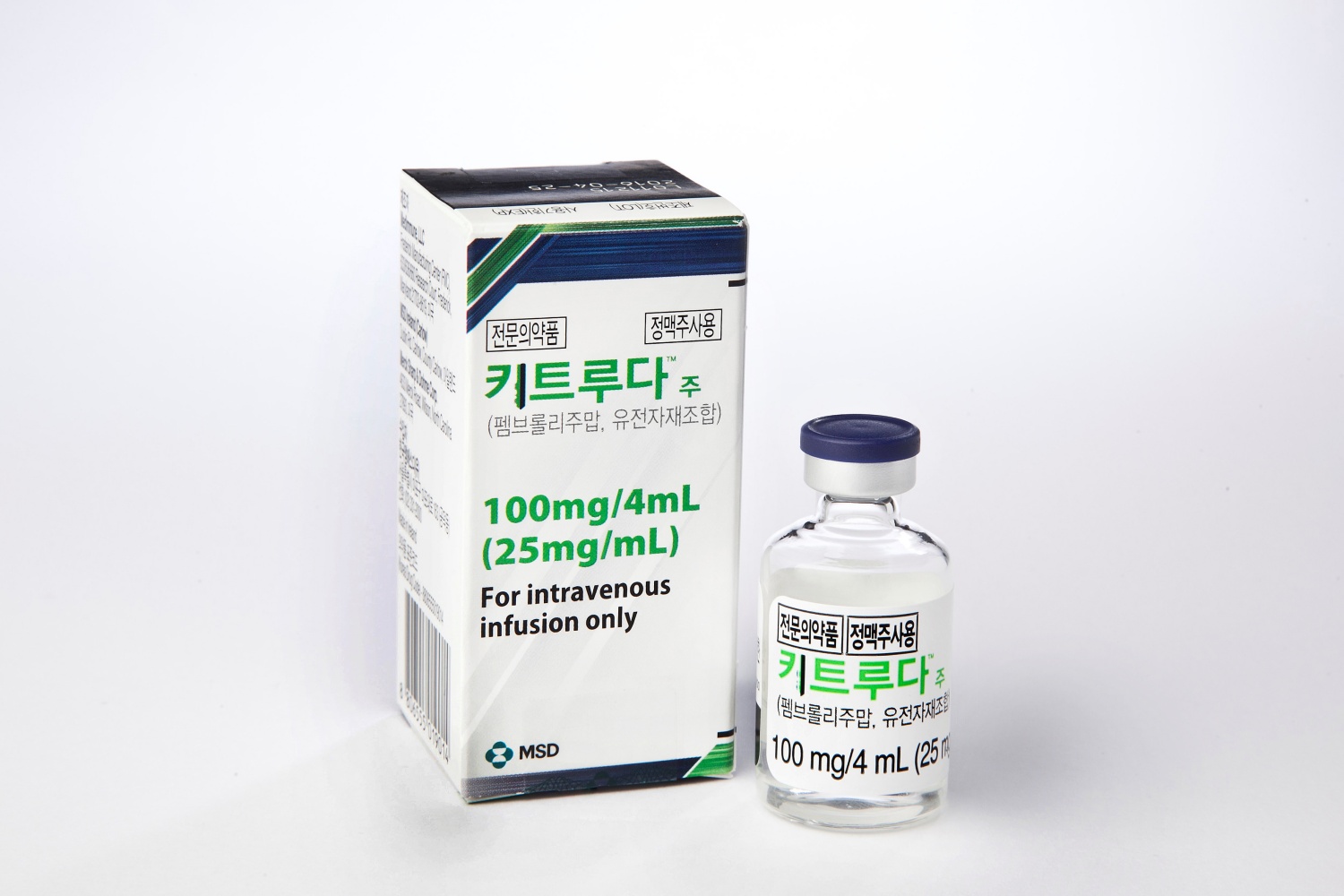
Keytruda recently added a therapeutic indication for patients with platinum-resistant epithelial ovarian, fallopian tube, or primary peritoneal cancer whose tumors express PD-L1 (CPS 1 or higher) and who have received 1 to 2 prior lines of systemic therapy.
In the KEYNOTE-B96 study that served as the basis for approval, the Keytruda combination therapy reduced the risk of disease progression or death by 28% and the risk of death by 24%, confirming statistically significant improvements in both PFS and OS. The median OS for the Keytruda group was 18.2 months.
While conventional immunotherapies previously failed to demonstrate meaningful survival improvements in ovarian cancer, KEYNOTE-B96 study is considered highly significant because it demonstrated clinical efficacy by specifically selecting PD-L1-positive patients.
Previously, ovarian cancer treatment was primarily limited to surgery and platinum-based chemotherapy, and targeted therapy was limited to choosing a PARP inhibitor based on BRCA mutation status.
Recently, the paradigm is rapidly transitioning toward biomarker-driven therapeutic strategies, such as expanding maintenance therapy eligibility based on HRD status and selecting ADCs or immunotherapies based on FRα or PD-L1 expression post-recurrence.
Opinions are also emerging that the importance of companion diagnostics (CDx) will grow alongside therapeutics. The prevailing outlook is that identifying key biomarkers, such as BRCA, HRD, FRα, and PD-L1, at the initial stage of diagnosis to inform the design of patient-specific treatment sequences will become the new standard of care.
-

- 0
댓글 운영방식은
댓글은 실명게재와 익명게재 방식이 있으며, 실명은 이름과 아이디가 노출됩니다. 익명은 필명으로 등록 가능하며, 대댓글은 익명으로 등록 가능합니다.
댓글 노출방식은
댓글 명예자문위원(팜-코니언-필기모양 아이콘)으로 위촉된 데일리팜 회원의 댓글은 ‘게시판형 보기’와 ’펼쳐보기형’ 리스트에서 항상 최상단에 노출됩니다. 새로운 댓글을 올리는 일반회원은 ‘게시판형’과 ‘펼쳐보기형’ 모두 팜코니언 회원이 쓴 댓글의 하단에 실시간 노출됩니다.
댓글의 삭제 기준은
다음의 경우 사전 통보없이 삭제하고 아이디 이용정지 또는 영구 가입제한이 될 수도 있습니다.
-
저작권·인격권 등 타인의 권리를 침해하는 경우
상용 프로그램의 등록과 게재, 배포를 안내하는 게시물
타인 또는 제3자의 저작권 및 기타 권리를 침해한 내용을 담은 게시물
-
근거 없는 비방·명예를 훼손하는 게시물
특정 이용자 및 개인에 대한 인신 공격적인 내용의 글 및 직접적인 욕설이 사용된 경우
특정 지역 및 종교간의 감정대립을 조장하는 내용
사실 확인이 안된 소문을 유포 시키는 경우
욕설과 비어, 속어를 담은 내용
정당법 및 공직선거법, 관계 법령에 저촉되는 경우(선관위 요청 시 즉시 삭제)
특정 지역이나 단체를 비하하는 경우
특정인의 명예를 훼손하여 해당인이 삭제를 요청하는 경우
특정인의 개인정보(주민등록번호, 전화, 상세주소 등)를 무단으로 게시하는 경우
타인의 ID 혹은 닉네임을 도용하는 경우
-
게시판 특성상 제한되는 내용
서비스 주제와 맞지 않는 내용의 글을 게재한 경우
동일 내용의 연속 게재 및 여러 기사에 중복 게재한 경우
부분적으로 변경하여 반복 게재하는 경우도 포함
제목과 관련 없는 내용의 게시물, 제목과 본문이 무관한 경우
돈벌기 및 직·간접 상업적 목적의 내용이 포함된 게시물
게시물 읽기 유도 등을 위해 내용과 무관한 제목을 사용한 경우
-
수사기관 등의 공식적인 요청이 있는 경우
-
기타사항
각 서비스의 필요성에 따라 미리 공지한 경우
기타 법률에 저촉되는 정보 게재를 목적으로 할 경우
기타 원만한 운영을 위해 운영자가 필요하다고 판단되는 내용
-
사실 관계 확인 후 삭제
저작권자로부터 허락받지 않은 내용을 무단 게재, 복제, 배포하는 경우
타인의 초상권을 침해하거나 개인정보를 유출하는 경우
당사에 제공한 이용자의 정보가 허위인 경우 (타인의 ID, 비밀번호 도용 등)
※이상의 내용중 일부 사항에 적용될 경우 이용약관 및 관련 법률에 의해 제재를 받으실 수도 있으며, 민·형사상 처벌을 받을 수도 있습니다.
※위에 명시되지 않은 내용이더라도 불법적인 내용으로 판단되거나 데일리팜 서비스에 바람직하지 않다고 판단되는 경우는 선 조치 이후 본 관리 기준을 수정 공시하겠습니다.
※기타 문의 사항은 데일리팜 운영자에게 연락주십시오. 메일 주소는 dailypharm@dailypharm.com입니다.